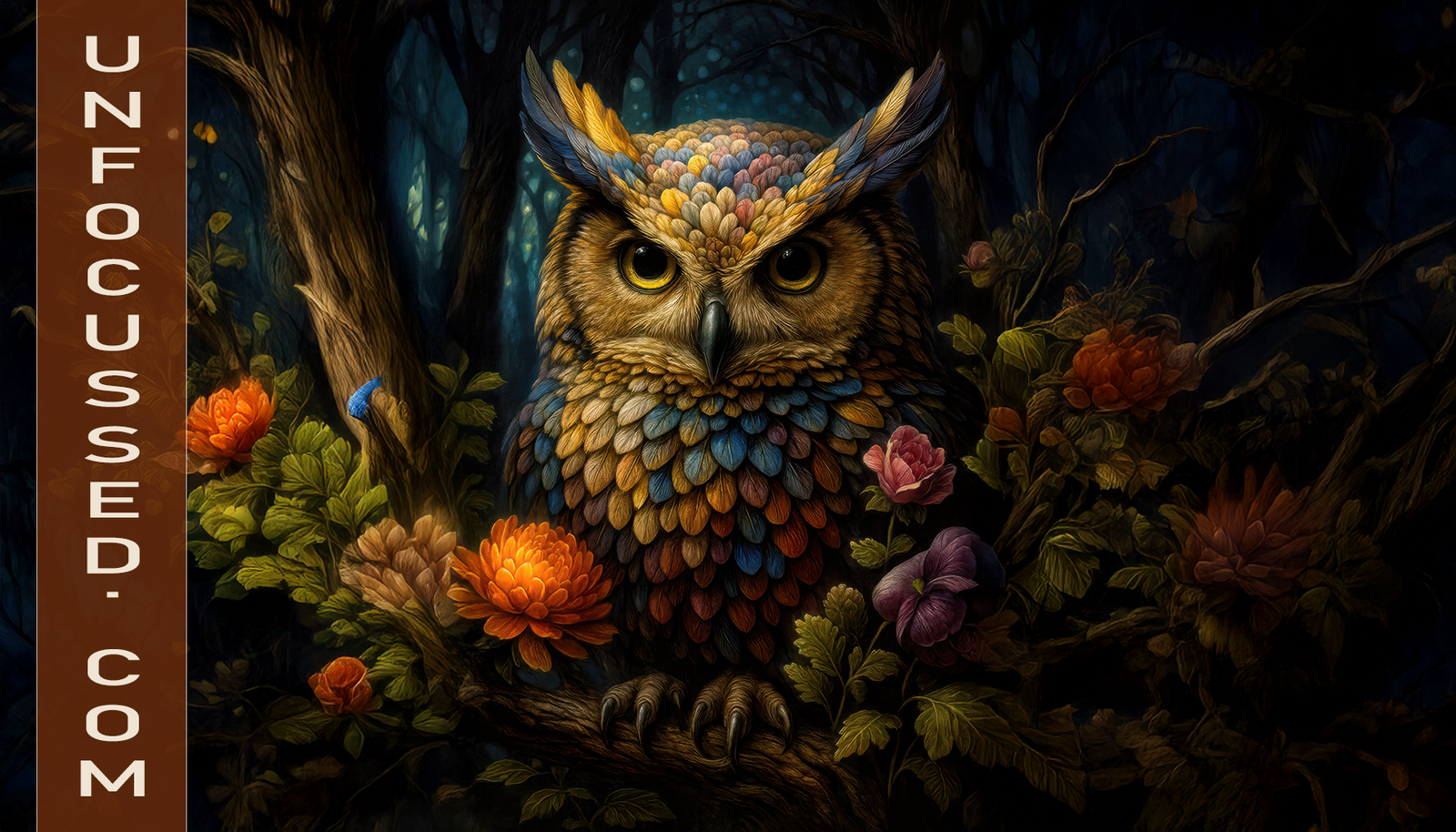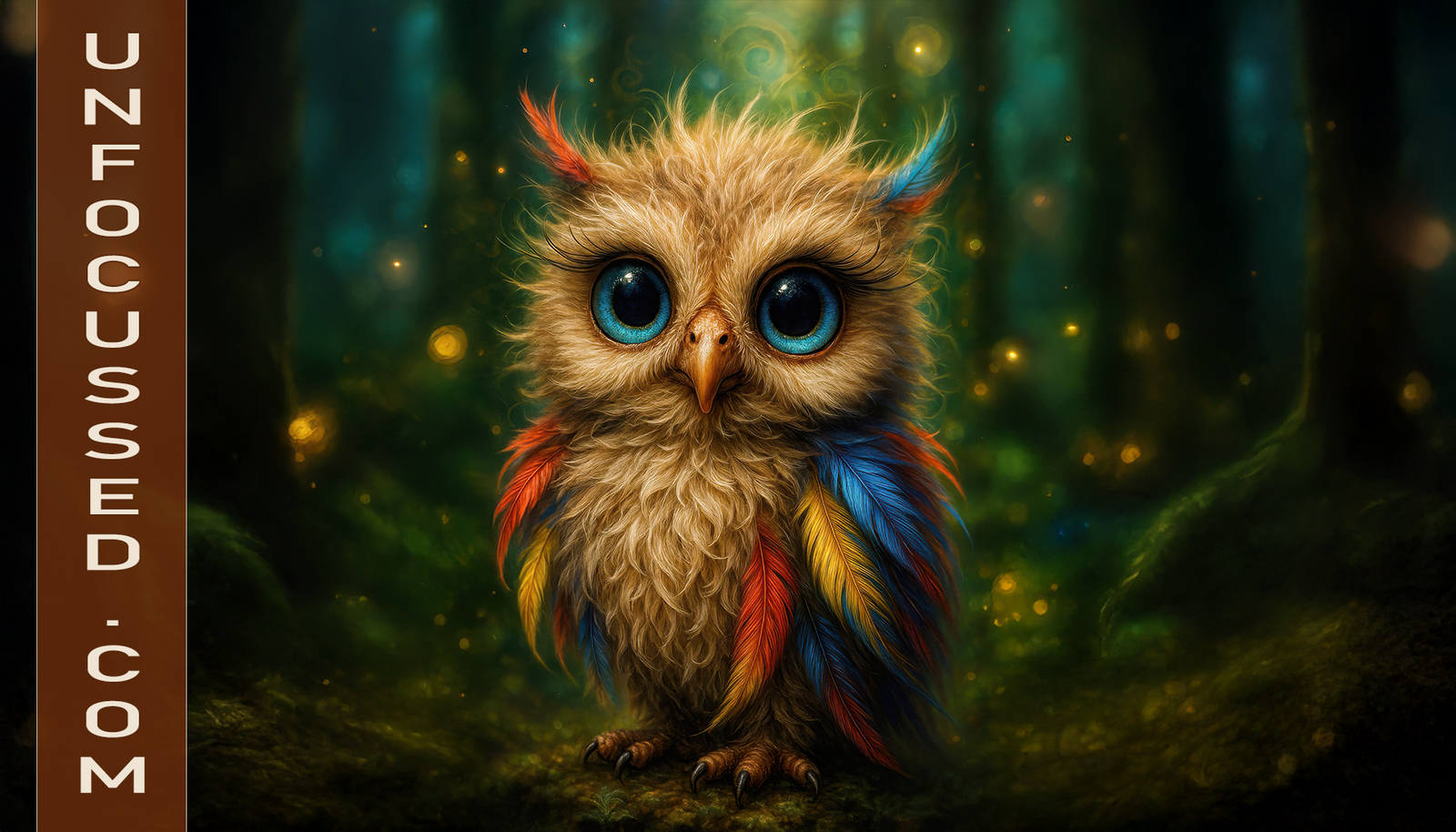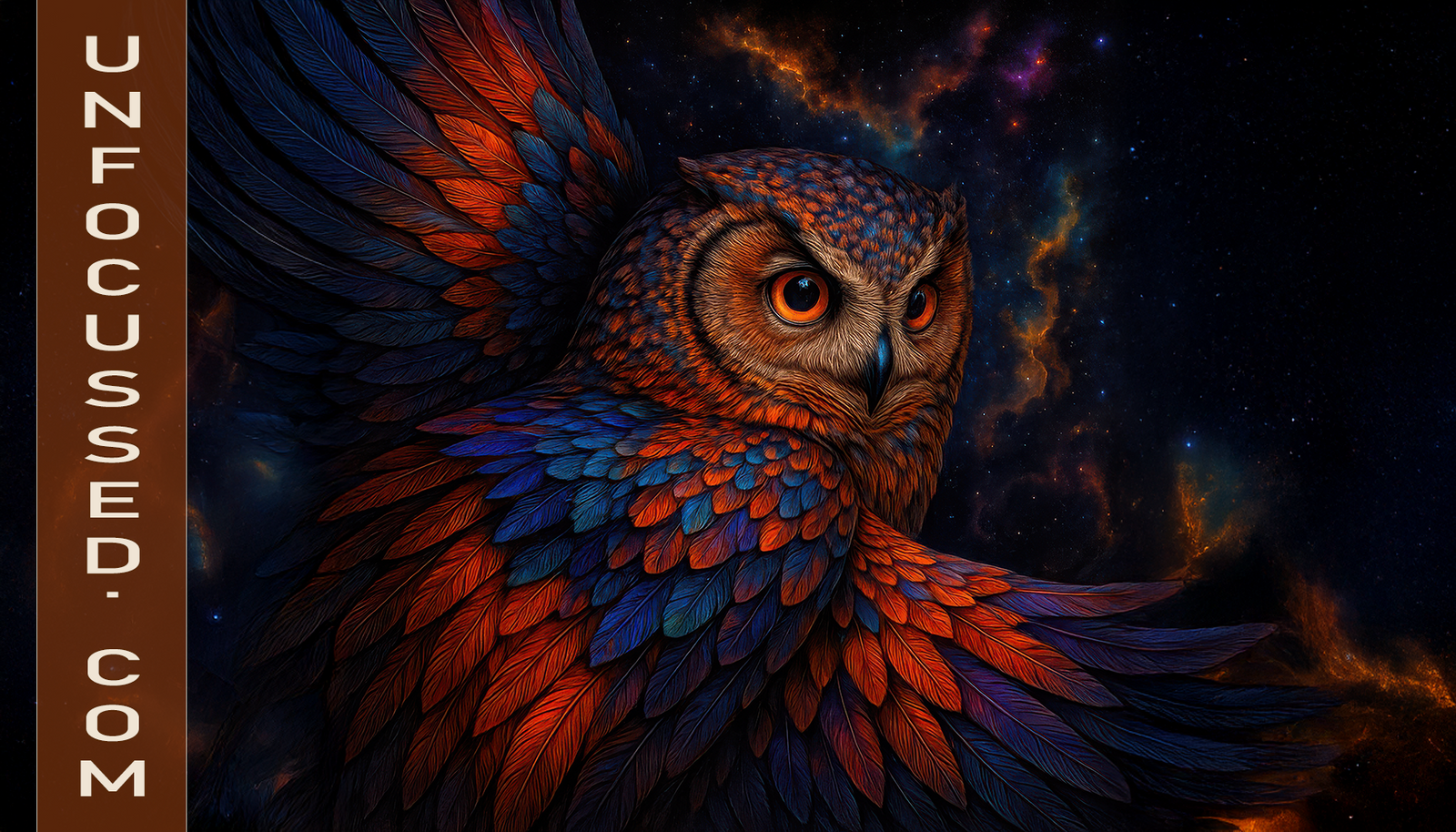
Celestial Owl

Cuentos capturados

View

Nebula-Winged Wisdom

por Bill Tiepelman

Nebula-Winged Wisdom

The Owl Who Knew Too Much In the beginning — before calendars, before clocks, before that awkward invention of “daylight savings time” — there was only the silence of the void. And in that silence perched an owl. Not just any owl, mind you, but a colossal, shimmering creature whose feathers were dipped in nebulae and whose wings stretched across constellations. Mortals called it by many names: The Silent Watcher, The Feathery Oracle, The Cosmic Feather-Duster. But the stars themselves whispered one title in awe: Nebula-Winged Wisdom. This owl was no ordinary wise old bird delivering fortune-cookie advice. Oh no, it was a living archive of every secret the universe had ever coughed up — from the recipe for black holes (hint: too much dark matter in one pot) to the embarrassing karaoke sessions of gods who thought no one was listening. Its eyes glowed like twin suns not just because they were radiant, but because they had witnessed the rise and fall of worlds, lovers, civilizations, and regrettable fashion choices involving cosmic spandex. The legend goes that if you caught the owl’s gaze, you’d either be blessed with a sudden surge of wisdom or doomed to know just a little too much. Like the knowledge that the universe isn’t infinite — it just loops like a cosmic rerun, and yes, you’ve already read this story forty-seven times before in slightly different socks. Ominous? Absolutely. But also kind of funny, if you ask the owl. After all, eternity is one long joke, and the punchline hasn’t landed yet. Mortals feared the owl, yet they also adored it. Lovers made wishes beneath its wings, poets drank themselves silly trying to capture its silhouette in words, and kings demanded to know if their conquests impressed it. The owl said nothing, only hooted — a sound that could echo across galaxies and make black holes quiver. Was it laughter? Was it doom? Only the owl knew, and it wasn’t telling. But once, long ago, when the stars were young and the universe still smelled faintly of creation dust, the owl broke its silence. And what it said would alter the destiny of everything — or at least ruin dinner for a few billion mortals. Because when the owl spoke, it didn’t offer riddles or prophecies. It offered a warning, wrapped in feathers and delivered with the humor of a trickster god. “Wisdom,” it declared, “is knowing which star not to lick.” And so the legend begins... The Night of Feathers and Fire The owl’s warning — “Wisdom is knowing which star not to lick” — echoed across the cosmos for millennia, baffling scholars and delighting jesters in equal measure. Whole civilizations rose and fell trying to decipher it. Was it metaphorical? A riddle? Or a literal warning not to lick stars, which, admittedly, did sound like something a reckless space-pirate would try at least once. Mortals wrote epics, carved temples, and even held yearly festivals where they roasted glowing fruits under the stars, chanting, “Don’t lick the sun, don’t lick the moon!” Nobody fully understood, but everyone agreed it was probably important. Meanwhile, the owl itself was content to perch on the arm of Orion, flap its wings across the Pleiades, and occasionally swoop down through galaxies like a drunken comet with feathers. It was equal parts terrifying and hilarious to watch. Nebula-Winged Wisdom had a knack for showing up at the most inconvenient times: weddings, coronations, or whenever two mortals were having a particularly juicy argument about whose goat had the shinier coat. Just imagine, you’re screaming at your neighbor, and suddenly an owl the size of Saturn stares down at you with burning amber eyes. It’s the kind of thing that makes you immediately reconsider your priorities — or soil your toga. Yet it was not mere chaos. There was intent in those wings. The owl was a living paradox: playful but grim, whimsical but deadly serious. It told jokes in hoots that mortals never understood but laughed at anyway because they were afraid not to. And always, always, there was that feeling — that if the owl wanted to, it could snuff out entire galaxies with a casual blink. It rarely did, of course, but legends whisper of one night when a civilization grew too arrogant, building spires so high they scratched the owl’s belly feathers. Offended, the owl flapped once — just once — and the entire empire became stardust. The moral? Don’t touch the owl. Or its belly. But for all its ominous presence, it was strangely generous with mortals. Travelers claimed that if you lit a fire under the northern lights, the owl would swoop down and drop a single glowing feather at your feet. These feathers, infused with cosmic wisdom, were said to make the bearer clever, lucky, or tragically sarcastic. Kings used them to outwit rivals, witches wove them into cloaks that shimmered like galaxies, and common folk tucked them under pillows to dream of things they had no business knowing. A single feather could rewrite destinies, and yet the owl scattered them like breadcrumbs across the void, half amusement, half test. “Let’s see what they do with this one,” it probably thought, sipping a metaphorical cosmic espresso. Of course, not every feather was a blessing. Some carried truths too sharp to hold. A fisherman once found one glowing on the beach, tucked it into his hat, and immediately understood that his wife’s “book club” was actually code for meeting a handsome sailor. Another feather fell to a philosopher, who upon touching it, realized he was wrong about absolutely everything he had ever published, including that bit about triangles being sacred. He drank himself into legend and became a constellation shaped vaguely like a man face-palming. And then there was the feather that nearly ended the universe. It fell into the lap of a wandering bard — a joker, trickster, and part-time lover of far too many people. The bard strummed it across their harp strings, thinking it would make a fun party trick, only to discover the feather sang back. Not just any song, but the true song of the cosmos: a melody so ancient and powerful that stars leaned in to listen, black holes swayed, and time itself hiccupped. For one dazzling night, every creature in existence dreamed the same dream — a dream of the owl’s eyes, endless and terrifying, blinking in slow rhythm to the song. Some woke laughing. Others woke screaming. But all woke knowing one thing: the owl was not simply a bird. It was the page-turner of reality, deciding which chapters continued and which were set aflame. And when the dream ended, mortals looked to the sky and swore they heard the owl laughing. A low, rumbling hoot that shook the stars loose and rolled them across the firmament like dice. Because perhaps the greatest joke of all was this: Wisdom doesn’t make the universe less dangerous. It just makes you aware of how ridiculous it all is. From that night forward, the owl was no longer just a legend. It was a god of paradox, humor, and looming dread. And whether mortals liked it or not, they were part of its comedy act. Because everyone knows, when an owl that big is running the show, you don’t argue about the script. You just hope you’re not cast as the fool… unless, of course, that’s the role it wanted you to play all along. The Last Hoot The trouble with cosmic owls is that they never really leave you alone. Once you’ve heard their hoot in your dreams, you carry it forever, like a tattoo etched on the marrow of your bones. Mortals tried to move on after the Night of Feathers and Fire, but the owl’s presence lingered. Farmers swore their crops grew in time with the rhythm of its wings. Sailors charted entire voyages based on where its feathers drifted down. Even lovers whispered vows under its glow, convinced the owl was some kind of feathery priest, silently officiating weddings with ominous approval. But the owl had grown restless. You see, wisdom is a heavy burden, and laughter — even cosmic, bone-shaking laughter — can only carry so much of it. The owl knew things it wished it didn’t. It knew which stars would implode next. It knew that galaxies flirted with each other, colliding in cataclysmic bursts of light and heartbreak. It knew every secret whispered in the void, from gods’ betrayals to mortals’ half-baked excuses. It knew that in the end, wisdom isn’t a gift. It’s a curse that makes you watch the same joke replay forever, without the mercy of forgetting the punchline. So one evening, when the veil of night was as black as unspilled ink, the owl decided to tell the truth. Not a feather-truth, not a riddle-truth, but the truth wholecloth. It descended on a mountain where a thousand mortals had gathered, hoping for blessings, prophecies, or maybe a free glowing feather they could pawn. The sky split open as its wings unfurled, each feather trailing galaxies. Its eyes glowed with the intensity of twin suns undergoing midlife crises. And then it hooted — one long, rolling sound that cracked valleys and rattled ribcages. The mortals clutched their ears, expecting doom. Instead, words filled the air, woven in the vibration of its call. “You want wisdom?” the owl thundered. “Fine. Here it is. The universe is not a plan. It’s not even a story. It’s a badly timed joke told by a drunk god at a party that never ends. You are not chosen. You are not doomed. You are not special. You are… hilariously temporary.” Gasps erupted. Some laughed, some wept, some tried to sell pamphlets immediately declaring themselves prophets of the owl’s gospel. But the owl wasn’t done. It leaned closer, eyes blazing with humor and sorrow. “The only wisdom worth having,” it continued, “is to know when to laugh at your own insignificance. You are stardust with opinions. Don’t take yourself so seriously.” It would have been a perfect mic-drop moment, except the owl didn’t use mics. It used feathers. And as if on cue, it shook itself like a wet dog and loosed a storm of radiant plumes. They fell across mountains, rivers, kingdoms, and oceans, each one burning with cosmic fire. Entire generations would find those feathers and make of them what they willed — weapons, poems, lullabies, or just very expensive hats. Some would gain insight; others would be driven mad. But all would carry a piece of the owl’s truth, whether they wanted it or not. And then, satisfied — or perhaps exhausted — the owl ascended into the black, wings blotting out constellations as it soared higher and higher until it vanished. The stars returned, shy and blinking, as though embarrassed to have been part of the whole spectacle. Mortals stood in stunned silence, clutching glowing feathers and realizing, for the first time, that the world was both funnier and more terrifying than they had ever dared admit. In the years that followed, new religions sprang up. Some worshipped the owl as the Harbinger of Doom. Others painted it as a drunken cosmic trickster. And a small but loud cult insisted the owl was simply a massive, interdimensional chicken that had gotten lost. The owl, of course, didn’t correct them. Why would it? Let mortals argue; it had better things to do — like rearranging quasars into rude hand gestures or teaching comets how to whistle. And yet… sometimes, on the quietest nights, travelers swore they heard it again: a single, distant hoot rolling through the void, equal parts chuckle and warning. They said it meant the owl was watching, waiting, and maybe — just maybe — writing new material for the next cosmic comedy set. After all, the owl had made one thing very clear: the joke never ends. And we’re all part of the punchline. So remember the lesson of Nebula-Winged Wisdom. Don’t lick the wrong star. Don’t take yourself too seriously. And if a galaxy-sized owl looks you dead in the eye and hoots? Just laugh. Trust me, it’s safer that way.     Bring Nebula-Winged Wisdom Into Your World Now you can capture the legend and laughter of the cosmic owl in your own space. Whether you want a bold framed print to command attention on your wall, a luminous metal print that glimmers like starlight, or a playful jigsaw puzzle that lets you piece together the owl’s cosmic mystery, there’s a version of this story waiting for you. For comfort seekers, wrap yourself in the soft glow of the cosmos with a cozy fleece blanket, or add a whimsical accent to your favorite chair with a vibrant throw pillow. Each piece brings the lore of Nebula-Winged Wisdom into your home — a reminder that wisdom, humor, and a touch of cosmic chaos can live right alongside you. Because sometimes, the best kind of wisdom is the one you can frame, cuddle, or even build feather by feather.

Seguir leyendo

Guardian of the Painted Feathers

por Bill Tiepelman

Guardian of the Painted Feathers

The Night the Forest Blinked The forest didn’t go dark; it went quiet—the kind of hush that makes even the moths put on slippers. High on a braid of oak limbs, the Guardian of the Painted Feathers opened her eyes, and the night opened with her. Her name—rarely spoken, because respect doesn’t always need syllables—was Seraphine Quill, an owl whose plumage held more color than a market full of unruly scarves. Blues that remembered rain. Ambers with opinions. Petal-pink sighs. She was a woodland guardian with the posture of a librarian and the patience of a saint who drinks espresso. Tonight, the silence had a shape. Something was sipping saturation from the world, the way a bored god might swirl a spoon in the teacup of creation. Seraphine heard it before she saw it: that thin sound, like a violin string tuned to “uh-oh.” She rotated her head in a slow, scandalized arc—owls are basically swivel chairs with talons—and let her gaze travel the understory. The enchanted forest breathed in patterns: fern-ripple, blossom-rustle, fox-sigh, cricket-one-two-three. But beyond the chrysanthemums and the gossiping mushrooms (who, frankly, shouldn’t be trusted with anything you wouldn’t spray with vinegar), a gray smear drifted between the trunks. “Absolutely not,” Seraphine murmured. Her voice was low and velvet and contained enough authority to make a wolf apologize to its shadow. She dropped from the branch and rode a column of cool air, her colorful feathers catching star-light like tiny stained-glass windows. Flowers turned as she passed—flirting, mostly. The peonies were hopeless. She landed near the old root where the forest kept its secrets. A fox emerged, eyes bright with the kind of anxiety only foxes and human poets truly cultivate. “Guardian,” he said, tail doing the nervous metronome. “The color thief is back. I chased it, but it kept… not being.” Seraphine clicked her beak once, which in owl language meant: I believe you; also, hydrate. “You did well, Vesper. Go home. Guard your den and your kits. No heroics. Leave the dramatics to the bird with better eyeliner.” Vesper squinted at her. “Is it weird that I find you reassuring and vaguely terrifying?” “Correct on both counts.” She fluffed her chest and every hue sharpened, like the forest took a breath and remembered its opinions. This was Seraphine’s first gift: nocturnal protector of saturation, conductor of chroma. Where she blinked, colors woke up and behaved like themselves. The gray smear crept closer, as if curious, as if trying on the idea of existing. The air cooled in that specific way that makes you suddenly aware of your knuckles. Where the smear passed, violets turned to etiquette-violating beige. A fern folded its own memo and forgot what it wanted to say. “Name yourself,” Seraphine called, voice ringing against bark and moon. “And if you don’t have a name, darling, that’s your first problem.” No answer. Only that violin-string sound, a whine pitched at the uneasy place behind the eyes. The smear reached for a cluster of late roses, and the petals dulled like old coins. Seraphine stepped forward, one talon at a time, and the roses blushed back to themselves. She wasn’t just blocking the thing; she was repainting the night. From the left came a flutter of chaos: three moths in formalwear, the sort who subscribe to niche magazines. “Guardian!” they chorused. “There’s a leak in the moonlight two clearings over; we are beside ourselves and we do not have enough selves for this.” “Tell the bats to hang tight and practice their vowels,” Seraphine said. “We’ll fix the leak after we plug this vacuum cleaner of gloom.” She turned back to the smear. “I know you,” she said softly. “You’re the Unraveling—entropy with social anxiety.” The smear quivered, then tried to be five inches to the right. Seraphine’s feathers shimmered—turquoise slipping into citrine, aubergine into ember—until the owl art print the world would one day hang on a gallery wall felt like it had been born in that moment. She reached into herself for her second gift, one she used sparingly because it tended to attract myths: the voice that convinced shadows to tell the truth. “Why do you eat color?” she asked. “Speak, little hunger.” It didn’t speak, exactly. It threw images at her: a rain-soaked palette left out overnight; a child’s crayon snapped in an argument with gravity; a blank page that had never been brave. Seraphine tasted the loneliness in it—the awkward, shy ache of things that never learned how to be vibrant without apology. She softened. It’s hard to stay mad when the monster turns out to be a diary that learned to walk. “Listen,” she said, wings mantling. “This forest needs every audacious shade it can muster. Saturation is a promise, not a crime. You can travel with me and learn hunger with manners, or I can put you in a jar labeled ‘Absolutely Not’ and bury you under the sassiest hydrangea in existence. Decide quickly.” The smear hesitated. From the branches above, a chorus of small minds—sparrows, finches, one judgmental wren—leaned in. Even the cicadas stopped crunching their existential chips. In that pause, Seraphine felt the forest teeter, like a teacup on the edge of a desk during an emphatic email. At her feet, the roses tested their own perfume as if to say, We’re rooting for you, dear; don’t make us display our thorns. A breeze crept in, tasting of mint and rumor, and lifted the fringe of Seraphine’s face like a crown considering its options. She took a breath, layered with pine and a whisper of thunder, and began the old work—the art older than art—the dance of keeping things bright. She moved in a slow circle around the smear, talons whispering on bark, voice low. “Repeat after me,” she coaxed. “I am not a void; I am a frame.” Something in the smear steadied. It gathered itself like a shy person in a thrift-store mirror and took on the faintest blush of color, as if courage were a pigment. A faint blue—one that remembered ponds—rippled across its edge. Seraphine nodded, the tilt small and queenly. Frames do not devour paintings; frames insist the painting be seen. Branches creaked above. The old oak—Elder Root, who slept like a landlord—spoke in a voice that sounded like contracts made with rain. “Guardian,” he rumbled, “does your mercy have room for what forgets itself?” “My mercy has room for the chronically uncertain,” Seraphine replied. “If it misbehaves, we’ll try consequences after compassion. That’s the sequence. Otherwise, what are we protecting—color, or dignity?” Elder Root considered, which took a number of centuries and also six seconds. “Proceed.” Seraphine leaned closer to the smear, warm and terrifying as a sunrise with great eyebrows. “Stay,” she commanded. “Learn. You will not sip a single shade without asking. You will send me a polite whisper for anything bolder than taupe. We begin with blues at dawn. The frogs will supervise; they’re bureaucrats at heart.” She lowered her voice. “And if you try nonsense, darling, I will turn you into a tasteful border around a fantasy forest tea menu and serve you chamomile forever.” The smear shivered. Then—miracle with a sheepish grin—it folded. Not gone, not defeated. Simply… outlined. A thin band of slate—now clearly a frame—stayed where it was placed, humming softly like a cat pretending it’s not purring. The air rushed back into itself. Colors sighed and went dramatic, as colors do when they realize they almost became a metaphor for austerity. Across the clearing, the chrysanthemums applauded with the modesty of fireworks. The moth trio lit a celebratory lantern that turned out to be a glowworm with feelings; apologies were made. Vesper the fox returned with a beleaguered vole and a pie made of blackberries and ambition. Someone struck up a cricket jazz standard. For a dangerous minute, the night felt like a party. Seraphine took her place on the branch again, a majestic owl painting made real, her vibrant feather detail pulsing like the heartbeat of the grove. She closed one eye, then the other, letting the scene filter through the wisdom between. The frame waited, obedient and a little proud. The forest breathed, saturated and brave. But peace is not the same as safety. A wind blew from the north—dry, broom-swept, carrying a smell like burnt promises. On the horizon, beyond the hills that wore the moon like a brooch, something rose that wasn’t a storm and wasn’t a mountain. It had architecture. It had ambition. It had lawyers. Seraphine’s claws tightened around the bark until the tree hummed comfort up to her bones. “Oh,” she said to the night, to the framed hunger, to the moths dusting their anxieties with glitter. “It’s one of those nights.” High above, an owl with painted plumage and a timetable of miracles opened both eyes. She lifted her head and let the moonlight show off. If the forest had to face what was coming, it would face it in full color, with extra sass and a hopeful heart. That, after all, is what guardians are for: not to keep the world from changing, but to make sure it changes without losing its palette. And from the north, the first note of the next trouble arrived—long, legal, off-key. The Committee of Acceptable Shades By dawn, Seraphine Quill had already given the smear its first lesson in responsible blueness. It went surprisingly well, once she bribed it with dew. But owls rarely have the luxury of lingering victories. Because by the time the second cricket rehearsal ended and Vesper had passed out from pie-related hubris, the north wind brought with it an entourage. They weren’t storms. They weren’t spirits. They were bureaucrats. Which is to say: worse. A thunder of parchment flapped into the clearing, pages bound by red ribbons, fluttering like the wings of a thousand passive-aggressive butterflies. And from that cyclone of clauses emerged the Committee of Acceptable Shades—tall, gangly silhouettes with clipboards where faces should be. Each clipboard bore a single rectangle of gray: flat, unyielding, and smug. Their leader’s rectangle read “Taupe, Standardized.” “Guardian,” the head figure intoned, its voice like two staplers mating. “You have been operating without a license to distribute vibrancy. All saturation above Pantone 3268-C must be surrendered immediately for recalibration. Non-compliance will result in monochrome sanctions.” The forest gasped. A violet fainted, a sunflower cursed under its breath. Even the glowworm that had been impersonating a lantern dimmed in horror. Seraphine fluffed her feathers until the dawn light ricocheted through her like stained glass at a rave. “Sanctions?” she said, sweet and sharp. “Darling, the only thing you’ll sanction here is your own relevance.” The fox, Vesper, rubbed sleep from his eyes and squinted at the clipboard-faces. “Wait, are those… lawyers?” “Worse,” Seraphine replied. “They’re design consultants.” The Committee advanced, clipboards glowing faintly with the power of overused Helvetica. The leader snapped its ribbon like a whip. “We offer a deal,” it said. “Surrender the unauthorized hues. You may keep beige, cream, and a very modest mint green if used only in moderation. Otherwise, we will strip your spectrum clean.” Seraphine blinked slowly. Owls are masters of the long blink—it’s like sarcasm made visual. “Beige?” she whispered. “Mint in moderation? You walk into my forest—the one I’ve bled starlight to protect—and you dare reduce it to a waiting room wall?” The Committee rustled nervously. One of the lesser silhouettes fumbled its papers and a faint splash of lavender slipped free before being recaptured. Seraphine saw it. The smear-turned-frame saw it. Even the moths saw it, though they pretended to be too sophisticated. She pounced on the slip like a cat in Prada heels. “There it is,” she declared. “Proof! You keep color for yourselves while rationing the rest of us like misers at a confetti party. Don’t preach balance when your clipboards bleed hypocrisy.” Gasps rippled through the undergrowth. The Committee faltered. For the first time, the forest felt the truth: that color rationing wasn’t order; it was theft disguised as neatness. Seraphine turned her back deliberately, tail feathers splayed in a way that screamed majestic defiance. She addressed the crowd of ferns, roses, and startled beetles. “Colors, hear me. They would make you ashamed of being bold. They’d have you believe beige is safer, taupe is respectable, and neon only belongs on karaoke flyers. But you were born audacious. You were painted reckless. This forest is not a cubicle—it is a cathedral. And cathedrals deserve stained glass, not frosted panels of standardized taupe!” The roses cheered with thorns out. The fox howled. Even Elder Root shook his branches, sending down a shower of acorns like emphatic applause. The smear-frame pulsed, a faint ripple of aquamarine sliding across its edge, as if it too wanted to belong. The Committee recoiled. Their clipboards quivered, rectangles of gray rippling with a hint of fear. “This is irregular,” hissed the leader. “We must consult… higher management.” “Do that,” Seraphine said. “But know this: while you file your memos and sharpen your monochrome, my forest will keep its hues. And should you return with chains for color, I’ll repaint your clipboards into rainbows so gaudy, you’ll wish you’d died beige.” The Committee dispersed in a flurry of papers, vanishing into the northern horizon like a bad newsletter. The silence they left behind was fragile, but the forest filled it with cautious song. Petals brightened. Leaves stretched. The smear-frame hummed like a child reciting its first poem. Vesper padded closer, eyes gleaming. “You know they’ll come back, right? With more paperwork. Maybe even PowerPoints.” Seraphine gave a dark, velvety chuckle. “Then we’ll need allies. The brighter, the bolder, the sassier, the better. This fight isn’t just about keeping our colors. It’s about refusing to apologize for them.” She spread her wings, hues exploding across the dawn like a rebellion with feathers. And somewhere beyond the horizon, higher management stirred. The kind of management that didn’t just ration colors—they patented them. The kind that painted skies gray for profit. The kind that, if Seraphine wasn’t careful, would rewrite the forest in grayscale footnotes. The Color Cartel The first rumor arrived on raven wings. Not the polite, note-taking ravens, mind you. These were the sarcastic ones who couldn’t tell a secret without adding commentary. “Guardian,” croaked the lead raven, perching dramatically on Elder Root’s shoulder, “the Color Cartel is mobilizing. They’ve sent cease-and-desist letters to sunsets and threatened to repossess rainbows. One rainbow in particular is suing for emotional damages.” Seraphine narrowed her eyes. “So they’re moving from bullying flowers to bankrupting horizons. How tedious.” She ruffled her feathers, throwing sparks of chartreuse and garnet into the morning air like a fireworks display with opinions. “Tell them we’ll be hosting a festival—of pigments too impossible to patent.” The raven tilted his head. “A festival? You’re going to fight a cartel with… glitter?” “Not glitter,” she said. “Wonder.” The Festival of Impossible Pigments Within days, the forest transformed. Mushrooms glowed with colors they’d been hiding out of shyness. Ferns sprouted leaves edged in hues only bees could name. The foxes painted their tails with ultraviolet streaks visible only to the honest. Vesper strutted like he’d invented confidence. The moths threw a runway show, modeling outfits so dazzling even the cicadas forgot to be obnoxious for five minutes. And then came Seraphine. She took the central perch, feathers flaring into shades no mortal palette had cataloged: the green of laughter echoing in a canyon, the violet of secrets kept under pillows, the gold of forgiveness after a fight. These weren’t colors—they were confessions wearing light. The crowd gasped, cheered, cried, and danced all at once. The festival was not merely a celebration; it was defiance given wings. Naturally, that’s when the Color Cartel showed up. They arrived in uniforms the shade of lawyer breath—a beige so dull it could cancel joy at twenty paces. Their leader, a tall figure in a robe stitched entirely of contracts, stepped forward. Its voice rattled like a stapler in heat. “Cease this unauthorized saturation. Effective immediately. Or we’ll desaturate your forest into compliance.” Seraphine tilted her head, slow and regal. “You’re welcome to try,” she said, her eyes glowing with every shade of defiance. “But understand this: you can’t copyright awe. You can’t trademark wonder. And if you so much as sneeze on a violet, I will personally repaint your robes with hues so bright they’ll burn your retinas into optimism.” The crowd roared. The smear-frame pulsed aquamarine, then emerald, then—miracle of miracles—crimson. It had found its courage at last. The ravens dive-bombed with sarcasm, distracting the Cartel’s enforcers. Foxes stole their staplers. The moth runway show pivoted into a battle catwalk, dazzling the enemy with avant-garde sparkle. Elder Root dropped acorns like meteors. Even the hydrangea got in on it, shouting, “Tasteful border, my petals!” before walloping a Cartel goon with a bouquet. The Last Laugh of the Guardian The battle was loud, ridiculous, and deeply satisfying. Contracts tore. Beige unraveled. The Cartel’s robes faded until they were nothing more than dull shadows too embarrassed to linger. Seraphine soared overhead, every wingbeat painting the sky with a new declaration: Hope is not negotiable. When the dust settled (and the moths finished their encore strut), the forest was brighter than ever. The smear-frame, once ashamed of its hunger, now shimmered proudly at the edge of the clearing—no longer a void, but a window into possibility. It hummed softly, like a promise learning to sing. Seraphine perched on Elder Root again, gazing over her domain. “Well,” she said, smoothing a rebellious feather. “That was fun. Who’s up for pie?” The fox groaned. “Please. No more pie.” The ravens cackled. The flowers blushed. Even the cicadas clapped their wings, though badly off-beat. And in the center of it all, Seraphine, Guardian of the Painted Feathers, closed her eyes. For tonight, the colors were safe. Tomorrow, bureaucracy might return. But she’d be ready—with sass, with feathers, and with a hope too radiant to ration. Because guardians don’t just protect. They remind the world to stay audacious. Epilogue They say if you wander deep into that forest on a moonlit night, you’ll see her: an owl shimmering with impossible hues, watching with eyes that could outwit empires. If you’re lucky, she’ll wink. If you’re unlucky, she’ll assign you to hydrangea duty. Either way, you’ll leave brighter than you came.     Bring the Guardian Home The legend of Seraphine, the Guardian of the Painted Feathers, doesn’t have to live only in story. Her brilliant hues and defiant spirit can brighten your own space, wrapping your world in the same audacity she gifted the forest. Imagine her gaze watching over your home, her plumage spilling color into your days—a reminder that hope and sass are always worth protecting. Choose how you’d like to welcome her: Framed Print — perfect for gallery walls or living spaces that crave bold energy. Canvas Print — a textured, painterly feel that makes the Guardian’s feathers look alive. Tote Bag — carry the Guardian with you as a daily protector of both your belongings and your style. Fleece Blanket — curl up under her wings of impossible color and warmth. Greeting Card — share the Guardian’s hope and humor with friends who could use a reminder to stay bold. Whichever form you choose, the Guardian is ready to perch in your world, infusing it with the same defiant beauty she used to save her forest. Bring her home, and let every glance remind you that your colors deserve to shine.

Seguir leyendo

The Featherlight Guardian

por Bill Tiepelman

El guardián de la luz de las plumas

De hongos, caos y un búho muy poco impresionado En lo profundo de la Verge Verde, un bosque tan encantado que una vez convirtió accidentalmente a un leñador en una piña, se alzaba una criatura de una pelusa tan delicada y un juicio tan sarcástico que incluso las hadas temían su mirada de reojo. Era la Guardiana Ligera. No *una* guardiana. La Guardiana. Con T mayúscula. Actitud mayúscula. Se llamaba Mabel y era una lechuza. Bueno, técnicamente. Si le preguntaras, te diría que era «una combinación divina de pelusilla etérea, sabiduría de guardiana y pestañas rizadas naturales que no necesitan retoques, muchas gracias». Con plumas teñidas de azul medianoche, escarlata escandaloso y un amarillo que podía intimidar al sol, Mabel no era solo una imagen, era toda una declaración. Sus enormes ojos de zafiro habían visto mil lunas, algunos rituales forestales incómodos y al menos un vergonzoso duelo de magos con un hechizo de brillo fallido. El trabajo de Mabel —su deber sagrado— era proteger el Corazón del Bosque: un valle mágico que contenía las raíces de cada árbol, muchas ranas bioluminiscentes con problemas dramáticos y un caldero eternamente hirviendo que elaboraba el estado de ánimo del bosque mismo. Se tomaba este deber muy en serio. Por eso, cuando un grupo de cazadores de setas torpes y algo achispados irrumpió en su cañada un martes a la luz de la luna, dejó escapar un suspiro tan profundo que hizo temblar el follaje. Uno de los cazadores —cuyo nombre era Jasper o Decepción, no estaba segura— intentó acariciarla. Acariciarla. "No soy una terapeuta ingenua", ululó, indiferente. "Tócame otra vez y te presentaré a luciérnagas con problemas de límites". Los cazadores rieron y siguieron adelante, recogiendo hongos luminosos con la elegancia de mapaches borrachos. Mabel entrecerró los ojos. El Corazón del Bosque estaba reaccionando: brillaba con más intensidad, latía más rápido. Podía sentirlo: un cambio de humor inminente. La última vez que se sintió así, un árbol creció boca abajo y citó a Shakespeare durante un mes. Con un aleteo de sus alas con plumas de arcoíris y un suspiro dramático digno de una sacerdotisa de telenovela, Mabel descendió de su percha. Era hora de arreglar esto. Otra vez. Porque eso es lo que hacen los guardianes. Pero esta vez, tenía un plan. Un plan astuto, brillante y lleno de descaro que podría enseñarles a estos merodeadores de hongos una lección inolvidable. Mabel sonrió con sorna, sus enormes ojos brillando con picardía y un atisbo de venganza. «Que comience la caótica iluminación», susurró. Arco de redención ligeramente vengativo de Glitter, Karma y un búho Ahora, quizás te preguntes: ¿cómo es exactamente un plan con brillo y descaro? Bueno, si alguna vez has visto a un búho hechizar a un hongo con sensibilidad y un don para la poesía pasivo-agresiva, ya tienes la mitad del camino. Mabel, batiendo sus alas increíblemente elegantes, se abalanzó hacia el caldero en la cañada, el que preparaba el clima emocional de todo el bosque. Susurró algo antiguo y ligeramente mezquino en él. El brebaje relucía. Las ranas croaban en falsete. Los árboles se inclinaban. Momentos después, la cañada cambió. No violentamente. Ay, no, Mabel prefería su venganza sutil . Los cazadores de setas, que momentos antes reían y arrancaban cosas que definitivamente no debían arrancarse, se detuvieron cuando el bosque de repente... respondió. Los hongos empezaron a brillar en ondas de color sincronizadas. Morados. Verdes. Verde chartreuse, si te apetece algo sofisticado. Un zumbido sordo empezó a elevarse del suelo, como un grupo a capela calentándose bajo tus pies. El cazador más borracho, que se llamaba Chad (siempre lo son), parpadeó y dijo: «Oye, ¿está cantando la tierra?». —Sí, Chad —murmuró Mabel desde un árbol cercano—. La tierra canta y odia tus pantalones cortos. Entonces, uno a uno, los hongos cobraron vida. No de forma agresiva; no, no era ese tipo de historia. Simplemente se volvieron dramáticos. El más grande se estiró hacia arriba, respiró hondo e innecesariamente, y anunció en pentámetro yámbico: “Bellos amigos del bosque, estos tontos pisan Donde las raíces sagradas y el equilibrio se unen. Sus manos sucias, su alegría despistada... Cosecharemos el karma que crece aquí”. Los cazadores de setas se quedaron paralizados. Chad soltó su hongo luminoso e intentó susurrar: «Estamos alucinando», pero los hongos lo silenciaron a coro. Mabel, ahora encaramada en una rama sobre la cañada, desplegó sus alas como una profesora de teatro en una escuela para hadas con problemas. Habló con mesura y solemnidad. «Bienvenidos, mortales. Han perturbado la armonía, perturbado los sentimientos y han ofendido mi dignidad con su falta de aseo personal». “...Solo buscábamos algo para picar”, gimió Jasper-Probablemente-Decepción. Mabel suspiró, pero esta vez había algo más suave debajo. «Bípedos tontos. El bosque no es su pasillo de bocadillos. Está vivo. Siente. Se pone melancólico. Como yo. Pero con menos accesorios». Un silencio invadió la cañada. Incluso las ranas estaban calladas, salvo una que tarareaba suavemente "Greensleeves" para crear ambiente. Mabel revoloteó hasta quedar a la altura de los ojos, con su enorme mirada zafiro clavada en los cazadores de setas como una maldición de terciopelo. —Tienes una oportunidad —dijo—. Discúlpate con los hongos, limpia tu desastre y jura dejar este bosque mejor de como lo encontraste. O desataré el musgo con patas. Y déjame decirte que te persigue . Como es comprensible, hubo muchas disculpas. Uno de los cazadores incluso se ofreció a crear un blog de compostaje. Mabel se mostró escéptica, pero les permitió huir, escoltados por un desfile de criaturas del bosque que los desaprobaban y un helecho pasivo-agresivo. Cuando la cañada se aquietó, Mabel regresó a su posición. El Corazón del Bosque se atenuó hasta convertirse en un suave resplandor dorado. El ambiente se había restablecido. Los hongos recuperaron su habitual nivel de sabiduría distante, murmurando sonetos en voz baja. ¿Y Mabel? Recogió sus alas, se ahuecó las plumas y se dijo: «Todavía lo tengo». No era solo una guardiana. Era una vibra. Arriba, entre los árboles, la luna centelleaba tras un perezoso remolino de nubes, y el bosque suspiraba, un poco más ligero, un poco más sabio. Todo bajo la atenta mirada de su protector más descarado, esponjoso y fabuloso: el Guardián Pluma Ligero. El fin. O quizás el comienzo de un nuevo plan. Con Mabel, nunca se sabe. ✨ Trae a Mabel a casa Ya sea que estés decorando tu acogedor rincón de lectura, planeando la justicia en el bosque desde tu escritorio o simplemente te encante la idea de un búho sarcástico cuidando tu espacio, La Guardiana de la Luz de Pluma está disponible en encantadores formatos que se adaptan a tu estilo. Adorna tus paredes con su sabiduría a través de una lámina de madera o una lámina de metal brillante, acurrúcate con su descaro en un encantador cojín decorativo o deja que se pose en tus pensamientos con un mágico cuaderno de espiral . Dale un toque de travesura y magia a tu día a día, porque, siendo sinceros, Mabel no esperaba menos.

Seguir leyendo

Whispering Wings in the Winter Wilds

por Bill Tiepelman

Alas susurrantes en la naturaleza invernal

El silencio que gritó de vuelta La nieve no crujía bajo sus pies, sino que jadeaba. A cada paso, Lira caminaba como un secreto buscando un lugar seguro donde esconderse. Envuelta en terciopelo carmesí bordado con símbolos que ningún sastre mortal podría explicar (aunque su tintorero lo intentaría más tarde, bendito sea), se movía como un signo de interrogación enroscado en una canción de cuna. Su compañero, sin embargo, nunca había sido alguien sutil. —Sabes —dijo Korrik , girando su cabeza emplumada de esa manera inquietante de los búhos—, todo este look de 'misteriosa hechicera en el bosque' es precioso, sí, pero se me están congelando las plumas de la cola. —No tienes cola —respondió Lira sin mirar. Plumas metafóricas. Plumas emocionales. Soy vulnerable, Lira. Korrik, el Gran Búho Espiritual de los Picos Cuerno Helado, guardián de la Puerta Glacial y recientemente autoproclamado presentador de podcasts, tenía una forma de combinar la seriedad y el sarcasmo como si fuera té caliente con un chorrito de ginebra. Una vez, desarmó a todo un batallón de troles de hielo con solo un juego de palabras y una mirada fulminante. Pero hoy, simplemente estaba irritable y sospechosamente empapado. —Eso es porque te caíste en un arroyo —murmuró Lira, acariciando su ala empapada. “¡Me sumergí para salvarte!” "De una ardilla." “¡Una ardilla potencialmente rabiosa con un cuchillo!” “Tenía una piña.” Una piña afilada. Un arma táctica. Sin duda, entrenada. El regreso de los Vigilantes El bosque, esa interminable mancha blanca, aliento y árboles delgados como agujas, se movía a su alrededor como si los escuchara. Porque así era. Todo en las Tierras Invernales observaba , incluso el silencio. Especialmente el silencio. Lira aminoró el paso cerca de un claro marcado por torres de piedra, retorcidas y desgastadas como la columna vertebral de gigantes dormidos. Puso una mano enguantada sobre una. Era cálida. No cálida como la luz del sol, sino cálida como un recuerdo: familiar, inquietante, un poco pegajosa. “Están moviéndose de nuevo”, dijo. El humor de Korrik cambió en un instante. El humor se le escapó como una capa. "¿Cuánto tiempo tenemos?" Hasta el anochecer. Quizás menos. “Podrías ser menos vago y más aterrador, ¿sabes?” “Podrías ser menos sarcástico y más servicial”. “Pero entonces no sería yo”. Ella sonrió. "Exactamente." En el espacio congelado entre el latido y el eco, su vínculo resplandecía. Antiguo y sagrado, nacido no por derecho de nacimiento, sino por elección: una bruja y su vigilante, antaño enemigas, ahora unidas por un propósito. Cuál era exactamente ese propósito seguía siendo frustrantemente críptico. Pero así lo preferían las Parcas. Las Parcas eran unas idiotas. Un nombre escrito en el viento ¿Estás seguro de que está aquí? La voz provenía de detrás de la cresta. Masculina. Grave. Invasiva. A Lira se le cortó la respiración. A Korrik se le erizaron las plumas. «Se avecinan problemas. ¿Prefieres el camino o el terreno elevado?» Yo me encargo de lo más alto. Tú, del drama. Desplegó sus alas como una diva en la noche del estreno. «Nací para esto». Tres figuras sombrías coronaban la colina. Capas como el crepúsculo. Ojos como el rencor. La que iba en cabeza portaba un bastón coronado con una piedra verde palpitante; latía no de poder, sino de hambre. —Lira del Valle Carmesí —entonó el líder—. Tu presencia ofende el orden establecido. Lira ladeó la cabeza. «Mi presencia ofende a muchas cosas. La burocracia, los críticos de moda, la charla intrascendente... Toma un número». Korrik se abalanzó, mostrando los colmillos. «Y tu cara me ofende. ¡Luchemos!» El aire crujió. La nieve se levantó. Los Salvajes respiraron. Y en algún lugar, justo detrás de la realidad, algo muy antiguo... abrió un ojo. Garras, verdad y aquella vez con la Ninfa de Hielo La nieve explotó antes de que el primer hechizo siquiera impactara. Korrik se elevó como un ciclón blanco, con sus plumas reflejando la luz de la luna como astillas de acero. Lira giró, con su capa roja ondeando tras ella, y sus brazos se alzaron formando sigilos tallados en el aire con una intención pura. Magia, aguda y antigua, brotó de sus dedos como nanas olvidadas que se volvieron salvajes. "¡Deberías mejorar tu sutileza!", gritó Korrik desde arriba mientras se lanzaba en picado contra el que empuñaba el bastón. "¡Y también tu rutina de cuidado de la piel!" El hombre blandió su bastón, desatando un rayo de llamas verdes. Golpeó a Korrik de lleno en el pecho, donde chisporroteó y se apagó. Korrik parpadeó. "Vaya. Me hizo gracia." Respondió con un grito que arrancó la escarcha de las ramas a cien metros de distancia. La nieve crujió, se partió, y algo se *movió* debajo. Lira dio un paso al frente. El líder, flanqueado por dos cobardes vestidos como nigromantes de bajo presupuesto, gruñó: «No tienes ni idea de lo que estás protegiendo». —Te equivocas otra vez —dijo ella, con un brillo violeta en los ojos—. Sé exactamente lo que estoy protegiendo. Por eso vas a perder. Con un movimiento como si arrancara recuerdos de sus huesos, Lira susurró una palabra que nadie había oído durante siglos, no porque estuviera prohibida, sino porque era solitaria. Todo se congeló. Literalmente. Los atacantes, en pleno movimiento, se transformaron en estatuas de hielo. Las torres de piedra tras ellos se estremecieron, exhalaron niebla y cambiaron su alineación, revelando una escalera que descendía a la tierra. La entrada al Corazón Inferior. El pacto reavivado Korrik aterrizó junto a ella, con cuidado de no tocar el umbral con las garras. "¿Estás segura?" —No. Pero nunca se supuso que estuviéramos seguros. Solo valientes. "Sabes que ese es el tipo de tonterías inspiradoras que hacen que la gente se coma los muebles embrujados, ¿verdad?" "Confío en ti." Parpadeó de nuevo. Más despacio esta vez. El tipo de parpadeo que decía : «Vale, yo también te amo, ahora vamos a morir juntos, pero con estilo» . Subieron las escaleras. La piedra zumbaba bajo sus pies. Cuanto más descendían, más cálido se sentía; no en temperatura, sino en intensidad. Como se siente al entrar en una habitación donde acaban de pronunciar tu nombre. Abajo, el Corazón latía. Un ser de hielo, espíritu y dolor, guardián del equilibrio entre los reinos. Había elegido a Korrik como su emisario. Ahora elegía a Lira como su voz. —Ella viene —susurró el Corazón—. Atada con sangre. Marcada con magia. Feroz e inflamable. —Te dije que dejaras de usar ese champú —murmuró Korrik—. Hueles a venganza y a lilas. Lira lo ignoró. «La Orden se está moviendo. Quieren desatar las puertas». “Entonces los sellaremos para siempre”, respondió el Corazón. “¿Y si me siguen?” “Entonces les damos lo que buscan: un mundo donde solo queden los fuertes, los verdaderos y los gloriosamente sarcásticos”. Korrik hinchó el pecho. «Por fin. Mi mundo». Consecuencias, té y quizás un contrato para publicar un libro De vuelta en el bosque, las estatuas empezaron a derretirse lentamente, entre gritos. Su magia se había roto, su liderazgo desmantelado, y uno de ellos se había orinado antes de congelarse. Korrik prometió no dejar que nadie lo olvidara jamás. Pasaron las semanas. La nieve caía más suave. Los salvajes susurraban menos y reían más. Lira y Korrik encontraron una cabaña en el límite de todo. Un lugar donde el mundo era inaccesible, y la realidad tenía la sensatez de permanecer confusa. Bebieron demasiado té, discutieron sobre la técnica para apilar leña y se enfrentaron a alguna que otra marmota maldita. Su vínculo se profundizó, no por obligación, sino porque juntos eran mejores, más fuertes y más divertidos. De vez en cuando, alguien llamaba a la puerta de la cabaña con una advertencia o una profecía. Y cada vez, Korrik respondía con una sonrisa burlona y una advertencia: «Si no traes galletas ni cumplidos, date la vuelta. La bruja muerde. Y yo picoteo». Nunca se quedaban mucho tiempo. Y entonces... El corazón durmió una vez más. El bosque ahora observaba con otros ojos: más amables, más conocedores, un poco divertidos. ¿Y la nieve? La nieve seguía jadeando. Pero ahora, reía. Lleva la magia a casa Si esta historia de amistad feroz, nieve antigua y búhos ligeramente sarcásticos te habló al alma (o al menos te hizo reír), ahora puedes traer “Whispering Wings in the Winter Wilds” a tu propio reino. Explora nuestra encantada colección de productos temáticos a continuación, perfectos para regalos, paredes de galería o simplemente para recordarte que los bosques místicos y el descaro divino alado, de hecho, pertenecen a tu vida diaria: Tarjeta de felicitación : para cuando tus mensajes merecen un poco de magia invernal. Tapiz : Cubre tu espacio con una maravilla hechizada. Impresión acrílica : deja que los colores de la escarcha y el fuego brillen con detalles ricos y vívidos. Rompecabezas : arma la magia con tus propias manos. Patrón de punto de cruz : Ábrete camino hacia la naturaleza con esta elegante versión de patrón de la imagen. Compra la colección y deja que tus paredes susurren historias de nieve, espíritu y descaro.

Seguir leyendo

The Midnight Council

por Bill Tiepelman

El Consejo de Medianoche

En los bosques densos y sombríos, donde la luz de la luna luchaba por atravesar el dosel, se llevó a cabo una reunión peculiar. Entre los aldeanos se susurraban leyendas sobre un consejo que se reunía solo una vez al siglo: una asamblea de tres seres ancestrales unidos por un pacto forjado en reinos más allá de la comprensión humana. Eran los protectores, los guardianes silenciosos del equilibrio, convocados en tiempos de grave peligro. Esta noche, el Consejo de Medianoche había regresado. El gato: guardián de secretos En una rama nudosa y cubierta de musgo, la gata negra se estiraba perezosamente, con sus luminosos ojos amarillos entrecerrados. Su liso pelaje de color obsidiana brillaba tenuemente bajo el resplandor de la luna, exudando un aura de elegancia intocable. Conocida como Nyra, la Guardiana de los Secretos, la gata poseía el conocimiento de cada susurro, cada juramento y cada verdad oculta pronunciada bajo las estrellas. Ronroneaba suavemente, su voz se abría paso en la noche, enviando ondas a través del tejido de lo invisible. —El bosque tiembla —murmuró Nyra, sus palabras eran como seda, pero cargadas de presagio—. Algo se agita en la oscuridad, una fuerza desatada. El Zorro: heraldo del cambio A su lado, posado con una elegante postura, el zorro rojo agitaba la cola, una estela de fuego contra la sombra. El zorro, llamado Eryndor, era el heraldo del cambio, un vagabundo entre mundos que llevaba los susurros de destinos cambiantes. Sus ojos ambarinos ardían con una inteligencia feroz y escrutaban el horizonte como si leyera los hilos del destino que se desenredaban ante él. —El cambio no es ni amigo ni enemigo, Nyra —respondió Eryndor, con una voz suave y teñida de un matiz travieso—. Simplemente es así. Pero esto... esto huele a caos salvaje. El Búho: Guardián del Velo Por encima de ellos se alzaba el gran búho cornudo, con su mirada penetrante fija en la oscuridad que se extendía más allá. Conocido como Astrava, el Guardián del Velo, el búho era el guardián de la frontera entre el plano mortal y lo inmenso y desconocido. Sus plumas tenían las marcas de runas antiguas, que brillaban débilmente, como si las hubieran grabado manos olvidadas hacía mucho tiempo. —Es como temía —dijo Astrava, con una voz resonante y antigua, que llevaba el peso de milenios—. El Velo se ha adelgazado. Se ha abierto una grieta que permite que lo que fue desterrado se filtre. Si no se controla, consumirá no solo este bosque, sino toda la vida ligada a este reino. La grieta El trío guardó silencio, su presencia combinada era un ritual tácito de poder. De la oscuridad del bosque surgió un gruñido gutural, un sonido tan primario que provocó escalofríos en la tierra. Lentamente, la oscuridad tomó forma, una masa de sombras que se retorcían y contorsionaban en formas grotescas. Cientos de ojos brillaban en el vacío, llenos de hambre y odio. —El Devorador —entonó Astrava—. Una reliquia de las antiguas guerras. Se alimenta del miedo y la desesperación y se hace más fuerte con cada alma que consume. Nyra arqueó la espalda y se le erizó el pelaje. —Entonces debemos recordarle por qué fue desterrado al abismo. —Entrecerró los ojos y brillaron como soles gemelos—. No se dará un festín aquí. El ritual de la unidad Los tres seres ancestrales cerraron los ojos y sus energías se fusionaron en una esfera radiante de luz. Nyra canalizó los secretos del universo, tejiendo hechizos con su voz, cada palabra era una daga que atravesaba la oscuridad. Eryndor bailó a lo largo de la rama, sus movimientos eran gráciles e hipnóticos, invocando los vientos de la transformación para destrozar las sombras. Astrava extendió sus alas y se escuchó un estruendo atronador mientras el aire vibraba con el poder ancestral, sellando el Velo una vez más. El Devorador rugió y atacó con zarcillos de oscuridad, pero no fue rival para la fuerza unida del Consejo de Medianoche. Con un último grito ensordecedor, la criatura fue succionada hacia el abismo y su presencia fue borrada del reino de los mortales. La grieta se selló con un destello brillante y el bosque quedó inquietantemente silencioso. Una partida silenciosa A medida que se acercaba el amanecer, los tres guardianes permanecieron inmóviles, sus cuerpos iluminados por los primeros rayos de sol que atravesaban el dosel. Nyra saltó, con movimientos fluidos, y avanzó en silencio hacia la maleza. Eryndor se dio la vuelta, su cola rozando el aire como un rayo de fuego, antes de desaparecer en el bosque. Astrava se elevó hacia los cielos, sus enormes alas cortando la niebla matinal. Y así, el Consejo de Medianoche se disolvió una vez más, y su pacto se cumplió. El bosque volvió a su letargo, sin percatarse de las antiguas fuerzas que habían luchado por preservar su santidad. Pero en los corazones de aquellos que se atrevieron a aventurarse demasiado, persistía un sentimiento inquebrantable: de ojos que observaban, de poder invisible y de un silencio que lo decía todo. Porque el Consejo de Medianoche siempre estaría allí, esperando, observando, listo para levantarse de nuevo cuando el equilibrio se viera amenazado. Productos inspirados en The Midnight Council Lleva la mística y el poder de "El consejo de medianoche" a tu hogar con estos productos bellamente elaborados, disponibles exclusivamente en Unfocussed Shop . Ya sea que quieras adornar tus paredes o sumergirte en el espíritu de la historia, estos artículos son la incorporación perfecta a tu colección: Tapiz : Transforme su espacio con este impresionante tapiz de pared, que presenta el intrincado arte de "The Midnight Council". Impresión en lienzo : Mejore su decoración con una impresión en lienzo de primera calidad, que captura las texturas vibrantes y la mística del consejo. Rompecabezas : sumérgete más profundamente en la historia con este atractivo rompecabezas, perfecto para momentos tranquilos y reflexivos. Patrón de punto de cruz : Da vida a este impresionante tapiz visual, que presenta el intrincado arte de "El Consejo de Medianoche". Pegatinas : lleva un trocito del consejo contigo dondequiera que vayas con estas pegatinas duraderas y de alta calidad. Explora estos productos y más para llevar la magia del Consejo de Medianoche a tu vida cotidiana. Visita la tienda aquí .

Seguir leyendo

The Snow Queen and Her Celestial Owl

por Bill Tiepelman

La Reina de las Nieves y su Búho Celestial

En los confines más lejanos del norte, donde el aire brillaba con un frío tan antiguo que susurraba canciones olvidadas, reinaba la Reina de las Nieves. No era una monarca común. Su gobierno no se extendía sobre tierras o ciudades, sino sobre el delicado equilibrio del invierno mismo. Cada copo de nieve que caía, cada aliento cargado de escarcha que se exhalaba en la quietud, llevaba su firma. El mundo la conocía como Solvara, la guardiana de los secretos helados. Su palacio, un laberinto de belleza cristalina, se alzaba al borde de un río helado que nunca se descongelaba. Torres de hielo irregular se elevaban en espiral hacia el cielo, refractando la luz en colores espectrales durante el breve crepúsculo de los días polares. Dentro de esas paredes relucientes, el tiempo parecía suspendido. Los visitantes, por raros que fueran, a menudo hablaban de sentir el peso de la eternidad presionando suave pero firmemente sobre sus pechos. La propia Solvara había vivido siglos, su vida se había prolongado y parecía un sueño, una historia sin fin. Solvara no estaba sola en su vigilia. En su mano enguantada siempre había posada una lechuza celestial llamada Veylith. La lechuza no era una criatura común. Sus plumas brillaban tenuemente, como si estuvieran salpicadas de polvo de estrellas, y sus ojos no reflejaban el mundo que lo rodeaba, sino las constelaciones. Veylith era su compañera, su centinela y su espejo: una criatura nacida de la misma magia misteriosa que ataba a Solvara a su reino helado. La carga de la reina Aunque su dominio era de una belleza impresionante, era un reino solitario. El papel de Solvara no nació de una elección, sino de una necesidad. Hace mucho tiempo, había sido una mujer mortal, una mujer cálida y alegre que vivía en una pequeña aldea enclavada en el borde de un bosque común. Un invierno fatídico, una plaga arrasó su hogar, robando el aliento de su gente y amenazando con sumir a la región en la desesperación. Desesperada por salvarlos, buscó la guía de un antiguo espíritu que se decía que habitaba en los campos de hielo del norte. El espíritu, un ser resplandeciente de hielo y sombra, le ofreció un trato. Solvara recibiría el poder de detener la plaga y cubrir la tierra con el frío purificador del invierno, pero a cambio, renunciaría a su vida mortal. Se convertiría en la Reina de las Nieves, una guardiana eterna del invierno, que nunca volvería a sentir el calor del sol ni el contacto de la mano de otra persona. Sin dudarlo, aceptó, su amor por su pueblo superaba el costo de su humanidad. Así los salvó, pero al precio de su propia libertad. Con el paso de los siglos, su recuerdo de aquella época se había desvanecido como un copo de nieve que se derrite contra una palma cálida. Ya no podía recordar los rostros de aquellos a quienes había salvado, solo el dolor de su ausencia. Un visitante del sur Una noche interminable, durante la estación oscura en la que el sol no sale, una figura apareció en el borde de su reino. Solvara, siempre atenta, vio al visitante antes de que llegaran a sus puertas. Era un hombre, envuelto en pieles pesadas, su aliento visible en el aire helado. A diferencia de los pocos que se habían aventurado en su reino a lo largo de los años, este hombre no llevaba codicia ni violencia en su corazón. En cambio, ella percibió algo desconocido: dolor, pesado e inquebrantable. Curiosa, Solvara descendió de su trono helado y salió a la noche, con Veylith deslizándose silenciosamente sobre ella. Cuando se acercó, el hombre cayó de rodillas, con la cabeza inclinada. “Su Majestad”, dijo con voz temblorosa, “he venido en busca de un milagro”. Ella lo miró en silencio, con sus ojos plateados indescifrables. —Los milagros —dijo, con voz suave y fría como la nieve— siempre exigen un precio. El hombre levantó la vista, con el rostro surcado por el dolor. “No me queda nada para dar, salvo a mí mismo”, dijo. “Mi esposa… me la arrebataron. Una enfermedad repentina, cruel y repentina. No puedo seguir adelante sin ella. Si no puedes traerla de vuelta, entonces te pido, por favor, que me lleves mis recuerdos de ella. Déjame olvidar el dolor”. Solvara sintió una punzada en lo más profundo de su ser, una grieta en la armadura glacial que había construido alrededor de su corazón a lo largo de los siglos. Entendía la pérdida; era el hilo que la unía a su reino. Pero no había olvidado el costo de manipular la vida y la muerte. —No puedo devolver a los muertos —dijo con dulzura—. Tampoco puedo robar los recuerdos del amor, por dolorosos que sean. Pero puedo darte algo más. El don de la perspectiva Extendió la mano y Veylith voló hacia ella, posándose delicadamente en su muñeca. —Éste es Veylith, mi centinela. A través de sus ojos, verás la inmensidad del mundo: las constelaciones que iluminan los cielos, las tormentas que dan forma a la tierra, los momentos tranquilos de belleza que existen incluso en el dolor. No borrará tu dolor, pero puede ayudarte a soportarlo. El hombre dudó y luego asintió. Solvara sostuvo su mano libre sobre su corazón y una luz tenue brilló entre ellos. Cuando ella se apartó, el hombre jadeó. Sus ojos reflejaban ahora las mismas constelaciones iluminadas por estrellas que los de Veylith y, por primera vez en años, sintió que el peso aplastante de su dolor se aliviaba levemente. —Vete ahora —dijo Solvara, con un tono de esperanza en la voz—. El mundo es enorme y no estás sola. Una mirada a la humanidad Mientras el hombre desaparecía en la distancia, Solvara se volvió hacia su palacio, con pasos más lentos de lo habitual. Veylith volaba delante, con sus alas silenciosas cortando el aire helado, pero por primera vez en siglos, la Reina de las Nieves sintió el despertar de algo que había olvidado hacía mucho tiempo: el anhelo. El dolor del hombre le había recordado su propia humanidad, enterrada profundamente bajo la nieve y el hielo de su existencia inmortal. Mientras subía los escalones helados de su trono, se detuvo y contempló las estrellas. “Tal vez”, murmuró, “incluso el invierno deba terminar algún día”. Veylith inclinó la cabeza y sus ojos llenos de constelaciones la observaron atentamente. Y por un breve instante, la Reina de las Nieves se permitió soñar con la primavera. Lleva a la Reina de las Nieves a tu hogar Sumérgete en el encantador mundo de "La Reina de las Nieves y su Búho Celestial" con productos asombrosos inspirados en esta mágica escena invernal. Ya sea que estés buscando adornar tu espacio con elegancia real o encontrar el regalo perfecto para un entusiasta de la fantasía, estos artículos seleccionados son perfectos para capturar la belleza etérea de la historia. Tapiz: Transforma tus paredes en un paraíso invernal con este impresionante tapiz, que muestra a la Reina de las Nieves en toda su gélida majestuosidad. Impresión en lienzo: Da vida a esta obra de arte de ensueño con una impresión en lienzo de alta calidad, perfecta para agregar un toque de elegancia mística a cualquier habitación. Rompecabezas: Arma la magia con un rompecabezas que presenta a la Reina de las Nieves y su compañero celestial: una actividad perfecta para las tranquilas noches de invierno. Bolso de mano: lleva un trocito del reino de la Reina de las Nieves contigo dondequiera que vayas con este elegante y práctico bolso de mano. Explora estos y otros artículos exclusivos en nuestra tienda para llevar la mística y la belleza de la Reina de las Nieves a tu vida cotidiana. Compra ahora .

Seguir leyendo

Explore nuestros blogs, noticias y preguntas frecuentes

¿Sigues buscando algo?