Cosmic owl tale

Cuentos capturados

View

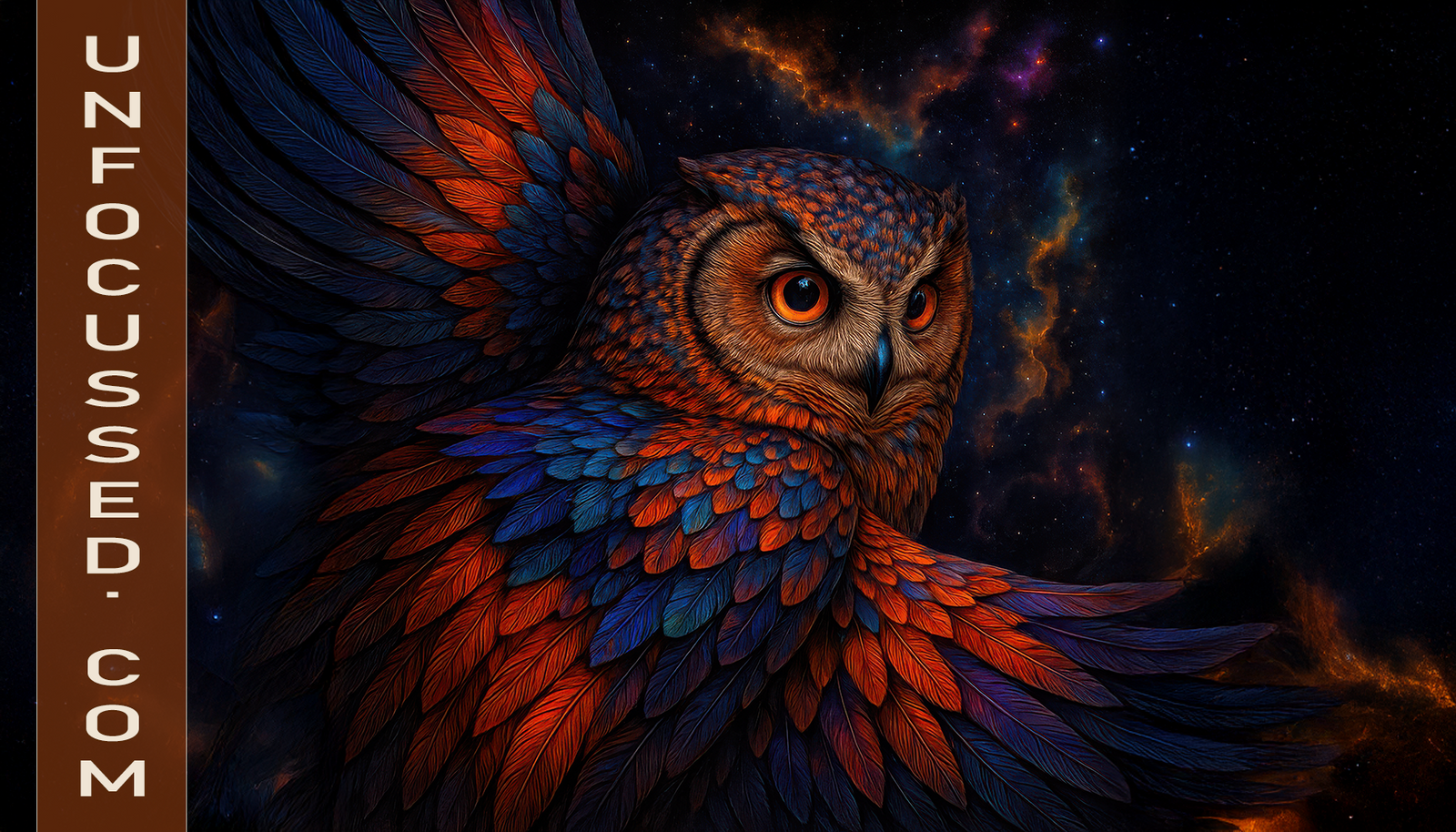
Nebula-Winged Wisdom

por Bill Tiepelman

Nebula-Winged Wisdom

The Owl Who Knew Too Much In the beginning — before calendars, before clocks, before that awkward invention of “daylight savings time” — there was only the silence of the void. And in that silence perched an owl. Not just any owl, mind you, but a colossal, shimmering creature whose feathers were dipped in nebulae and whose wings stretched across constellations. Mortals called it by many names: The Silent Watcher, The Feathery Oracle, The Cosmic Feather-Duster. But the stars themselves whispered one title in awe: Nebula-Winged Wisdom. This owl was no ordinary wise old bird delivering fortune-cookie advice. Oh no, it was a living archive of every secret the universe had ever coughed up — from the recipe for black holes (hint: too much dark matter in one pot) to the embarrassing karaoke sessions of gods who thought no one was listening. Its eyes glowed like twin suns not just because they were radiant, but because they had witnessed the rise and fall of worlds, lovers, civilizations, and regrettable fashion choices involving cosmic spandex. The legend goes that if you caught the owl’s gaze, you’d either be blessed with a sudden surge of wisdom or doomed to know just a little too much. Like the knowledge that the universe isn’t infinite — it just loops like a cosmic rerun, and yes, you’ve already read this story forty-seven times before in slightly different socks. Ominous? Absolutely. But also kind of funny, if you ask the owl. After all, eternity is one long joke, and the punchline hasn’t landed yet. Mortals feared the owl, yet they also adored it. Lovers made wishes beneath its wings, poets drank themselves silly trying to capture its silhouette in words, and kings demanded to know if their conquests impressed it. The owl said nothing, only hooted — a sound that could echo across galaxies and make black holes quiver. Was it laughter? Was it doom? Only the owl knew, and it wasn’t telling. But once, long ago, when the stars were young and the universe still smelled faintly of creation dust, the owl broke its silence. And what it said would alter the destiny of everything — or at least ruin dinner for a few billion mortals. Because when the owl spoke, it didn’t offer riddles or prophecies. It offered a warning, wrapped in feathers and delivered with the humor of a trickster god. “Wisdom,” it declared, “is knowing which star not to lick.” And so the legend begins... The Night of Feathers and Fire The owl’s warning — “Wisdom is knowing which star not to lick” — echoed across the cosmos for millennia, baffling scholars and delighting jesters in equal measure. Whole civilizations rose and fell trying to decipher it. Was it metaphorical? A riddle? Or a literal warning not to lick stars, which, admittedly, did sound like something a reckless space-pirate would try at least once. Mortals wrote epics, carved temples, and even held yearly festivals where they roasted glowing fruits under the stars, chanting, “Don’t lick the sun, don’t lick the moon!” Nobody fully understood, but everyone agreed it was probably important. Meanwhile, the owl itself was content to perch on the arm of Orion, flap its wings across the Pleiades, and occasionally swoop down through galaxies like a drunken comet with feathers. It was equal parts terrifying and hilarious to watch. Nebula-Winged Wisdom had a knack for showing up at the most inconvenient times: weddings, coronations, or whenever two mortals were having a particularly juicy argument about whose goat had the shinier coat. Just imagine, you’re screaming at your neighbor, and suddenly an owl the size of Saturn stares down at you with burning amber eyes. It’s the kind of thing that makes you immediately reconsider your priorities — or soil your toga. Yet it was not mere chaos. There was intent in those wings. The owl was a living paradox: playful but grim, whimsical but deadly serious. It told jokes in hoots that mortals never understood but laughed at anyway because they were afraid not to. And always, always, there was that feeling — that if the owl wanted to, it could snuff out entire galaxies with a casual blink. It rarely did, of course, but legends whisper of one night when a civilization grew too arrogant, building spires so high they scratched the owl’s belly feathers. Offended, the owl flapped once — just once — and the entire empire became stardust. The moral? Don’t touch the owl. Or its belly. But for all its ominous presence, it was strangely generous with mortals. Travelers claimed that if you lit a fire under the northern lights, the owl would swoop down and drop a single glowing feather at your feet. These feathers, infused with cosmic wisdom, were said to make the bearer clever, lucky, or tragically sarcastic. Kings used them to outwit rivals, witches wove them into cloaks that shimmered like galaxies, and common folk tucked them under pillows to dream of things they had no business knowing. A single feather could rewrite destinies, and yet the owl scattered them like breadcrumbs across the void, half amusement, half test. “Let’s see what they do with this one,” it probably thought, sipping a metaphorical cosmic espresso. Of course, not every feather was a blessing. Some carried truths too sharp to hold. A fisherman once found one glowing on the beach, tucked it into his hat, and immediately understood that his wife’s “book club” was actually code for meeting a handsome sailor. Another feather fell to a philosopher, who upon touching it, realized he was wrong about absolutely everything he had ever published, including that bit about triangles being sacred. He drank himself into legend and became a constellation shaped vaguely like a man face-palming. And then there was the feather that nearly ended the universe. It fell into the lap of a wandering bard — a joker, trickster, and part-time lover of far too many people. The bard strummed it across their harp strings, thinking it would make a fun party trick, only to discover the feather sang back. Not just any song, but the true song of the cosmos: a melody so ancient and powerful that stars leaned in to listen, black holes swayed, and time itself hiccupped. For one dazzling night, every creature in existence dreamed the same dream — a dream of the owl’s eyes, endless and terrifying, blinking in slow rhythm to the song. Some woke laughing. Others woke screaming. But all woke knowing one thing: the owl was not simply a bird. It was the page-turner of reality, deciding which chapters continued and which were set aflame. And when the dream ended, mortals looked to the sky and swore they heard the owl laughing. A low, rumbling hoot that shook the stars loose and rolled them across the firmament like dice. Because perhaps the greatest joke of all was this: Wisdom doesn’t make the universe less dangerous. It just makes you aware of how ridiculous it all is. From that night forward, the owl was no longer just a legend. It was a god of paradox, humor, and looming dread. And whether mortals liked it or not, they were part of its comedy act. Because everyone knows, when an owl that big is running the show, you don’t argue about the script. You just hope you’re not cast as the fool… unless, of course, that’s the role it wanted you to play all along. The Last Hoot The trouble with cosmic owls is that they never really leave you alone. Once you’ve heard their hoot in your dreams, you carry it forever, like a tattoo etched on the marrow of your bones. Mortals tried to move on after the Night of Feathers and Fire, but the owl’s presence lingered. Farmers swore their crops grew in time with the rhythm of its wings. Sailors charted entire voyages based on where its feathers drifted down. Even lovers whispered vows under its glow, convinced the owl was some kind of feathery priest, silently officiating weddings with ominous approval. But the owl had grown restless. You see, wisdom is a heavy burden, and laughter — even cosmic, bone-shaking laughter — can only carry so much of it. The owl knew things it wished it didn’t. It knew which stars would implode next. It knew that galaxies flirted with each other, colliding in cataclysmic bursts of light and heartbreak. It knew every secret whispered in the void, from gods’ betrayals to mortals’ half-baked excuses. It knew that in the end, wisdom isn’t a gift. It’s a curse that makes you watch the same joke replay forever, without the mercy of forgetting the punchline. So one evening, when the veil of night was as black as unspilled ink, the owl decided to tell the truth. Not a feather-truth, not a riddle-truth, but the truth wholecloth. It descended on a mountain where a thousand mortals had gathered, hoping for blessings, prophecies, or maybe a free glowing feather they could pawn. The sky split open as its wings unfurled, each feather trailing galaxies. Its eyes glowed with the intensity of twin suns undergoing midlife crises. And then it hooted — one long, rolling sound that cracked valleys and rattled ribcages. The mortals clutched their ears, expecting doom. Instead, words filled the air, woven in the vibration of its call. “You want wisdom?” the owl thundered. “Fine. Here it is. The universe is not a plan. It’s not even a story. It’s a badly timed joke told by a drunk god at a party that never ends. You are not chosen. You are not doomed. You are not special. You are… hilariously temporary.” Gasps erupted. Some laughed, some wept, some tried to sell pamphlets immediately declaring themselves prophets of the owl’s gospel. But the owl wasn’t done. It leaned closer, eyes blazing with humor and sorrow. “The only wisdom worth having,” it continued, “is to know when to laugh at your own insignificance. You are stardust with opinions. Don’t take yourself so seriously.” It would have been a perfect mic-drop moment, except the owl didn’t use mics. It used feathers. And as if on cue, it shook itself like a wet dog and loosed a storm of radiant plumes. They fell across mountains, rivers, kingdoms, and oceans, each one burning with cosmic fire. Entire generations would find those feathers and make of them what they willed — weapons, poems, lullabies, or just very expensive hats. Some would gain insight; others would be driven mad. But all would carry a piece of the owl’s truth, whether they wanted it or not. And then, satisfied — or perhaps exhausted — the owl ascended into the black, wings blotting out constellations as it soared higher and higher until it vanished. The stars returned, shy and blinking, as though embarrassed to have been part of the whole spectacle. Mortals stood in stunned silence, clutching glowing feathers and realizing, for the first time, that the world was both funnier and more terrifying than they had ever dared admit. In the years that followed, new religions sprang up. Some worshipped the owl as the Harbinger of Doom. Others painted it as a drunken cosmic trickster. And a small but loud cult insisted the owl was simply a massive, interdimensional chicken that had gotten lost. The owl, of course, didn’t correct them. Why would it? Let mortals argue; it had better things to do — like rearranging quasars into rude hand gestures or teaching comets how to whistle. And yet… sometimes, on the quietest nights, travelers swore they heard it again: a single, distant hoot rolling through the void, equal parts chuckle and warning. They said it meant the owl was watching, waiting, and maybe — just maybe — writing new material for the next cosmic comedy set. After all, the owl had made one thing very clear: the joke never ends. And we’re all part of the punchline. So remember the lesson of Nebula-Winged Wisdom. Don’t lick the wrong star. Don’t take yourself too seriously. And if a galaxy-sized owl looks you dead in the eye and hoots? Just laugh. Trust me, it’s safer that way.     Bring Nebula-Winged Wisdom Into Your World Now you can capture the legend and laughter of the cosmic owl in your own space. Whether you want a bold framed print to command attention on your wall, a luminous metal print that glimmers like starlight, or a playful jigsaw puzzle that lets you piece together the owl’s cosmic mystery, there’s a version of this story waiting for you. For comfort seekers, wrap yourself in the soft glow of the cosmos with a cozy fleece blanket, or add a whimsical accent to your favorite chair with a vibrant throw pillow. Each piece brings the lore of Nebula-Winged Wisdom into your home — a reminder that wisdom, humor, and a touch of cosmic chaos can live right alongside you. Because sometimes, the best kind of wisdom is the one you can frame, cuddle, or even build feather by feather.

Seguir leyendo

Guardian of the Painted Feathers

por Bill Tiepelman

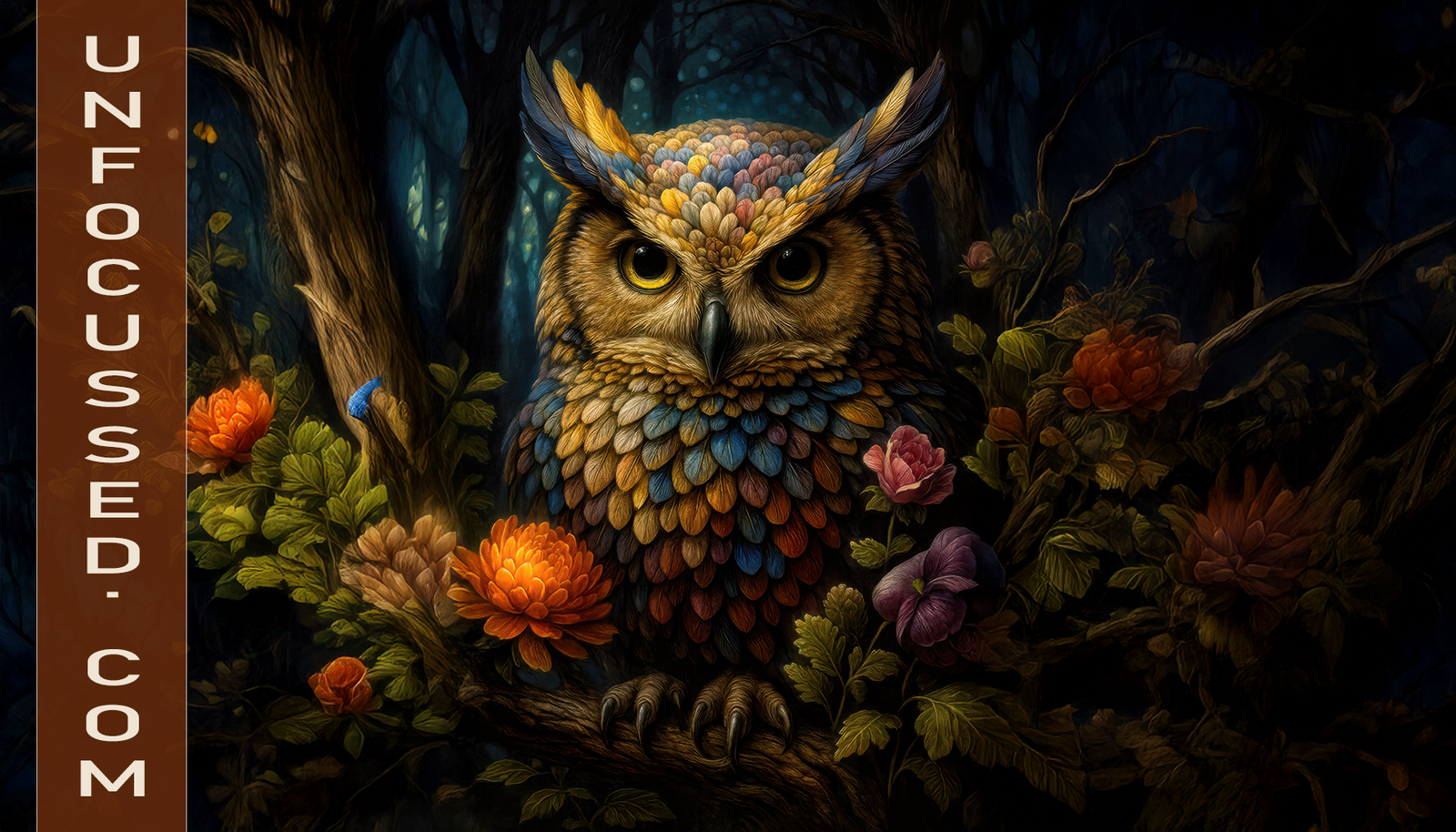
Guardian of the Painted Feathers

The Night the Forest Blinked The forest didn’t go dark; it went quiet—the kind of hush that makes even the moths put on slippers. High on a braid of oak limbs, the Guardian of the Painted Feathers opened her eyes, and the night opened with her. Her name—rarely spoken, because respect doesn’t always need syllables—was Seraphine Quill, an owl whose plumage held more color than a market full of unruly scarves. Blues that remembered rain. Ambers with opinions. Petal-pink sighs. She was a woodland guardian with the posture of a librarian and the patience of a saint who drinks espresso. Tonight, the silence had a shape. Something was sipping saturation from the world, the way a bored god might swirl a spoon in the teacup of creation. Seraphine heard it before she saw it: that thin sound, like a violin string tuned to “uh-oh.” She rotated her head in a slow, scandalized arc—owls are basically swivel chairs with talons—and let her gaze travel the understory. The enchanted forest breathed in patterns: fern-ripple, blossom-rustle, fox-sigh, cricket-one-two-three. But beyond the chrysanthemums and the gossiping mushrooms (who, frankly, shouldn’t be trusted with anything you wouldn’t spray with vinegar), a gray smear drifted between the trunks. “Absolutely not,” Seraphine murmured. Her voice was low and velvet and contained enough authority to make a wolf apologize to its shadow. She dropped from the branch and rode a column of cool air, her colorful feathers catching star-light like tiny stained-glass windows. Flowers turned as she passed—flirting, mostly. The peonies were hopeless. She landed near the old root where the forest kept its secrets. A fox emerged, eyes bright with the kind of anxiety only foxes and human poets truly cultivate. “Guardian,” he said, tail doing the nervous metronome. “The color thief is back. I chased it, but it kept… not being.” Seraphine clicked her beak once, which in owl language meant: I believe you; also, hydrate. “You did well, Vesper. Go home. Guard your den and your kits. No heroics. Leave the dramatics to the bird with better eyeliner.” Vesper squinted at her. “Is it weird that I find you reassuring and vaguely terrifying?” “Correct on both counts.” She fluffed her chest and every hue sharpened, like the forest took a breath and remembered its opinions. This was Seraphine’s first gift: nocturnal protector of saturation, conductor of chroma. Where she blinked, colors woke up and behaved like themselves. The gray smear crept closer, as if curious, as if trying on the idea of existing. The air cooled in that specific way that makes you suddenly aware of your knuckles. Where the smear passed, violets turned to etiquette-violating beige. A fern folded its own memo and forgot what it wanted to say. “Name yourself,” Seraphine called, voice ringing against bark and moon. “And if you don’t have a name, darling, that’s your first problem.” No answer. Only that violin-string sound, a whine pitched at the uneasy place behind the eyes. The smear reached for a cluster of late roses, and the petals dulled like old coins. Seraphine stepped forward, one talon at a time, and the roses blushed back to themselves. She wasn’t just blocking the thing; she was repainting the night. From the left came a flutter of chaos: three moths in formalwear, the sort who subscribe to niche magazines. “Guardian!” they chorused. “There’s a leak in the moonlight two clearings over; we are beside ourselves and we do not have enough selves for this.” “Tell the bats to hang tight and practice their vowels,” Seraphine said. “We’ll fix the leak after we plug this vacuum cleaner of gloom.” She turned back to the smear. “I know you,” she said softly. “You’re the Unraveling—entropy with social anxiety.” The smear quivered, then tried to be five inches to the right. Seraphine’s feathers shimmered—turquoise slipping into citrine, aubergine into ember—until the owl art print the world would one day hang on a gallery wall felt like it had been born in that moment. She reached into herself for her second gift, one she used sparingly because it tended to attract myths: the voice that convinced shadows to tell the truth. “Why do you eat color?” she asked. “Speak, little hunger.” It didn’t speak, exactly. It threw images at her: a rain-soaked palette left out overnight; a child’s crayon snapped in an argument with gravity; a blank page that had never been brave. Seraphine tasted the loneliness in it—the awkward, shy ache of things that never learned how to be vibrant without apology. She softened. It’s hard to stay mad when the monster turns out to be a diary that learned to walk. “Listen,” she said, wings mantling. “This forest needs every audacious shade it can muster. Saturation is a promise, not a crime. You can travel with me and learn hunger with manners, or I can put you in a jar labeled ‘Absolutely Not’ and bury you under the sassiest hydrangea in existence. Decide quickly.” The smear hesitated. From the branches above, a chorus of small minds—sparrows, finches, one judgmental wren—leaned in. Even the cicadas stopped crunching their existential chips. In that pause, Seraphine felt the forest teeter, like a teacup on the edge of a desk during an emphatic email. At her feet, the roses tested their own perfume as if to say, We’re rooting for you, dear; don’t make us display our thorns. A breeze crept in, tasting of mint and rumor, and lifted the fringe of Seraphine’s face like a crown considering its options. She took a breath, layered with pine and a whisper of thunder, and began the old work—the art older than art—the dance of keeping things bright. She moved in a slow circle around the smear, talons whispering on bark, voice low. “Repeat after me,” she coaxed. “I am not a void; I am a frame.” Something in the smear steadied. It gathered itself like a shy person in a thrift-store mirror and took on the faintest blush of color, as if courage were a pigment. A faint blue—one that remembered ponds—rippled across its edge. Seraphine nodded, the tilt small and queenly. Frames do not devour paintings; frames insist the painting be seen. Branches creaked above. The old oak—Elder Root, who slept like a landlord—spoke in a voice that sounded like contracts made with rain. “Guardian,” he rumbled, “does your mercy have room for what forgets itself?” “My mercy has room for the chronically uncertain,” Seraphine replied. “If it misbehaves, we’ll try consequences after compassion. That’s the sequence. Otherwise, what are we protecting—color, or dignity?” Elder Root considered, which took a number of centuries and also six seconds. “Proceed.” Seraphine leaned closer to the smear, warm and terrifying as a sunrise with great eyebrows. “Stay,” she commanded. “Learn. You will not sip a single shade without asking. You will send me a polite whisper for anything bolder than taupe. We begin with blues at dawn. The frogs will supervise; they’re bureaucrats at heart.” She lowered her voice. “And if you try nonsense, darling, I will turn you into a tasteful border around a fantasy forest tea menu and serve you chamomile forever.” The smear shivered. Then—miracle with a sheepish grin—it folded. Not gone, not defeated. Simply… outlined. A thin band of slate—now clearly a frame—stayed where it was placed, humming softly like a cat pretending it’s not purring. The air rushed back into itself. Colors sighed and went dramatic, as colors do when they realize they almost became a metaphor for austerity. Across the clearing, the chrysanthemums applauded with the modesty of fireworks. The moth trio lit a celebratory lantern that turned out to be a glowworm with feelings; apologies were made. Vesper the fox returned with a beleaguered vole and a pie made of blackberries and ambition. Someone struck up a cricket jazz standard. For a dangerous minute, the night felt like a party. Seraphine took her place on the branch again, a majestic owl painting made real, her vibrant feather detail pulsing like the heartbeat of the grove. She closed one eye, then the other, letting the scene filter through the wisdom between. The frame waited, obedient and a little proud. The forest breathed, saturated and brave. But peace is not the same as safety. A wind blew from the north—dry, broom-swept, carrying a smell like burnt promises. On the horizon, beyond the hills that wore the moon like a brooch, something rose that wasn’t a storm and wasn’t a mountain. It had architecture. It had ambition. It had lawyers. Seraphine’s claws tightened around the bark until the tree hummed comfort up to her bones. “Oh,” she said to the night, to the framed hunger, to the moths dusting their anxieties with glitter. “It’s one of those nights.” High above, an owl with painted plumage and a timetable of miracles opened both eyes. She lifted her head and let the moonlight show off. If the forest had to face what was coming, it would face it in full color, with extra sass and a hopeful heart. That, after all, is what guardians are for: not to keep the world from changing, but to make sure it changes without losing its palette. And from the north, the first note of the next trouble arrived—long, legal, off-key. The Committee of Acceptable Shades By dawn, Seraphine Quill had already given the smear its first lesson in responsible blueness. It went surprisingly well, once she bribed it with dew. But owls rarely have the luxury of lingering victories. Because by the time the second cricket rehearsal ended and Vesper had passed out from pie-related hubris, the north wind brought with it an entourage. They weren’t storms. They weren’t spirits. They were bureaucrats. Which is to say: worse. A thunder of parchment flapped into the clearing, pages bound by red ribbons, fluttering like the wings of a thousand passive-aggressive butterflies. And from that cyclone of clauses emerged the Committee of Acceptable Shades—tall, gangly silhouettes with clipboards where faces should be. Each clipboard bore a single rectangle of gray: flat, unyielding, and smug. Their leader’s rectangle read “Taupe, Standardized.” “Guardian,” the head figure intoned, its voice like two staplers mating. “You have been operating without a license to distribute vibrancy. All saturation above Pantone 3268-C must be surrendered immediately for recalibration. Non-compliance will result in monochrome sanctions.” The forest gasped. A violet fainted, a sunflower cursed under its breath. Even the glowworm that had been impersonating a lantern dimmed in horror. Seraphine fluffed her feathers until the dawn light ricocheted through her like stained glass at a rave. “Sanctions?” she said, sweet and sharp. “Darling, the only thing you’ll sanction here is your own relevance.” The fox, Vesper, rubbed sleep from his eyes and squinted at the clipboard-faces. “Wait, are those… lawyers?” “Worse,” Seraphine replied. “They’re design consultants.” The Committee advanced, clipboards glowing faintly with the power of overused Helvetica. The leader snapped its ribbon like a whip. “We offer a deal,” it said. “Surrender the unauthorized hues. You may keep beige, cream, and a very modest mint green if used only in moderation. Otherwise, we will strip your spectrum clean.” Seraphine blinked slowly. Owls are masters of the long blink—it’s like sarcasm made visual. “Beige?” she whispered. “Mint in moderation? You walk into my forest—the one I’ve bled starlight to protect—and you dare reduce it to a waiting room wall?” The Committee rustled nervously. One of the lesser silhouettes fumbled its papers and a faint splash of lavender slipped free before being recaptured. Seraphine saw it. The smear-turned-frame saw it. Even the moths saw it, though they pretended to be too sophisticated. She pounced on the slip like a cat in Prada heels. “There it is,” she declared. “Proof! You keep color for yourselves while rationing the rest of us like misers at a confetti party. Don’t preach balance when your clipboards bleed hypocrisy.” Gasps rippled through the undergrowth. The Committee faltered. For the first time, the forest felt the truth: that color rationing wasn’t order; it was theft disguised as neatness. Seraphine turned her back deliberately, tail feathers splayed in a way that screamed majestic defiance. She addressed the crowd of ferns, roses, and startled beetles. “Colors, hear me. They would make you ashamed of being bold. They’d have you believe beige is safer, taupe is respectable, and neon only belongs on karaoke flyers. But you were born audacious. You were painted reckless. This forest is not a cubicle—it is a cathedral. And cathedrals deserve stained glass, not frosted panels of standardized taupe!” The roses cheered with thorns out. The fox howled. Even Elder Root shook his branches, sending down a shower of acorns like emphatic applause. The smear-frame pulsed, a faint ripple of aquamarine sliding across its edge, as if it too wanted to belong. The Committee recoiled. Their clipboards quivered, rectangles of gray rippling with a hint of fear. “This is irregular,” hissed the leader. “We must consult… higher management.” “Do that,” Seraphine said. “But know this: while you file your memos and sharpen your monochrome, my forest will keep its hues. And should you return with chains for color, I’ll repaint your clipboards into rainbows so gaudy, you’ll wish you’d died beige.” The Committee dispersed in a flurry of papers, vanishing into the northern horizon like a bad newsletter. The silence they left behind was fragile, but the forest filled it with cautious song. Petals brightened. Leaves stretched. The smear-frame hummed like a child reciting its first poem. Vesper padded closer, eyes gleaming. “You know they’ll come back, right? With more paperwork. Maybe even PowerPoints.” Seraphine gave a dark, velvety chuckle. “Then we’ll need allies. The brighter, the bolder, the sassier, the better. This fight isn’t just about keeping our colors. It’s about refusing to apologize for them.” She spread her wings, hues exploding across the dawn like a rebellion with feathers. And somewhere beyond the horizon, higher management stirred. The kind of management that didn’t just ration colors—they patented them. The kind that painted skies gray for profit. The kind that, if Seraphine wasn’t careful, would rewrite the forest in grayscale footnotes. The Color Cartel The first rumor arrived on raven wings. Not the polite, note-taking ravens, mind you. These were the sarcastic ones who couldn’t tell a secret without adding commentary. “Guardian,” croaked the lead raven, perching dramatically on Elder Root’s shoulder, “the Color Cartel is mobilizing. They’ve sent cease-and-desist letters to sunsets and threatened to repossess rainbows. One rainbow in particular is suing for emotional damages.” Seraphine narrowed her eyes. “So they’re moving from bullying flowers to bankrupting horizons. How tedious.” She ruffled her feathers, throwing sparks of chartreuse and garnet into the morning air like a fireworks display with opinions. “Tell them we’ll be hosting a festival—of pigments too impossible to patent.” The raven tilted his head. “A festival? You’re going to fight a cartel with… glitter?” “Not glitter,” she said. “Wonder.” The Festival of Impossible Pigments Within days, the forest transformed. Mushrooms glowed with colors they’d been hiding out of shyness. Ferns sprouted leaves edged in hues only bees could name. The foxes painted their tails with ultraviolet streaks visible only to the honest. Vesper strutted like he’d invented confidence. The moths threw a runway show, modeling outfits so dazzling even the cicadas forgot to be obnoxious for five minutes. And then came Seraphine. She took the central perch, feathers flaring into shades no mortal palette had cataloged: the green of laughter echoing in a canyon, the violet of secrets kept under pillows, the gold of forgiveness after a fight. These weren’t colors—they were confessions wearing light. The crowd gasped, cheered, cried, and danced all at once. The festival was not merely a celebration; it was defiance given wings. Naturally, that’s when the Color Cartel showed up. They arrived in uniforms the shade of lawyer breath—a beige so dull it could cancel joy at twenty paces. Their leader, a tall figure in a robe stitched entirely of contracts, stepped forward. Its voice rattled like a stapler in heat. “Cease this unauthorized saturation. Effective immediately. Or we’ll desaturate your forest into compliance.” Seraphine tilted her head, slow and regal. “You’re welcome to try,” she said, her eyes glowing with every shade of defiance. “But understand this: you can’t copyright awe. You can’t trademark wonder. And if you so much as sneeze on a violet, I will personally repaint your robes with hues so bright they’ll burn your retinas into optimism.” The crowd roared. The smear-frame pulsed aquamarine, then emerald, then—miracle of miracles—crimson. It had found its courage at last. The ravens dive-bombed with sarcasm, distracting the Cartel’s enforcers. Foxes stole their staplers. The moth runway show pivoted into a battle catwalk, dazzling the enemy with avant-garde sparkle. Elder Root dropped acorns like meteors. Even the hydrangea got in on it, shouting, “Tasteful border, my petals!” before walloping a Cartel goon with a bouquet. The Last Laugh of the Guardian The battle was loud, ridiculous, and deeply satisfying. Contracts tore. Beige unraveled. The Cartel’s robes faded until they were nothing more than dull shadows too embarrassed to linger. Seraphine soared overhead, every wingbeat painting the sky with a new declaration: Hope is not negotiable. When the dust settled (and the moths finished their encore strut), the forest was brighter than ever. The smear-frame, once ashamed of its hunger, now shimmered proudly at the edge of the clearing—no longer a void, but a window into possibility. It hummed softly, like a promise learning to sing. Seraphine perched on Elder Root again, gazing over her domain. “Well,” she said, smoothing a rebellious feather. “That was fun. Who’s up for pie?” The fox groaned. “Please. No more pie.” The ravens cackled. The flowers blushed. Even the cicadas clapped their wings, though badly off-beat. And in the center of it all, Seraphine, Guardian of the Painted Feathers, closed her eyes. For tonight, the colors were safe. Tomorrow, bureaucracy might return. But she’d be ready—with sass, with feathers, and with a hope too radiant to ration. Because guardians don’t just protect. They remind the world to stay audacious. Epilogue They say if you wander deep into that forest on a moonlit night, you’ll see her: an owl shimmering with impossible hues, watching with eyes that could outwit empires. If you’re lucky, she’ll wink. If you’re unlucky, she’ll assign you to hydrangea duty. Either way, you’ll leave brighter than you came.     Bring the Guardian Home The legend of Seraphine, the Guardian of the Painted Feathers, doesn’t have to live only in story. Her brilliant hues and defiant spirit can brighten your own space, wrapping your world in the same audacity she gifted the forest. Imagine her gaze watching over your home, her plumage spilling color into your days—a reminder that hope and sass are always worth protecting. Choose how you’d like to welcome her: Framed Print — perfect for gallery walls or living spaces that crave bold energy. Canvas Print — a textured, painterly feel that makes the Guardian’s feathers look alive. Tote Bag — carry the Guardian with you as a daily protector of both your belongings and your style. Fleece Blanket — curl up under her wings of impossible color and warmth. Greeting Card — share the Guardian’s hope and humor with friends who could use a reminder to stay bold. Whichever form you choose, the Guardian is ready to perch in your world, infusing it with the same defiant beauty she used to save her forest. Bring her home, and let every glance remind you that your colors deserve to shine.

Seguir leyendo

The Featherlight Guardian

por Bill Tiepelman

El guardián de la luz de las plumas

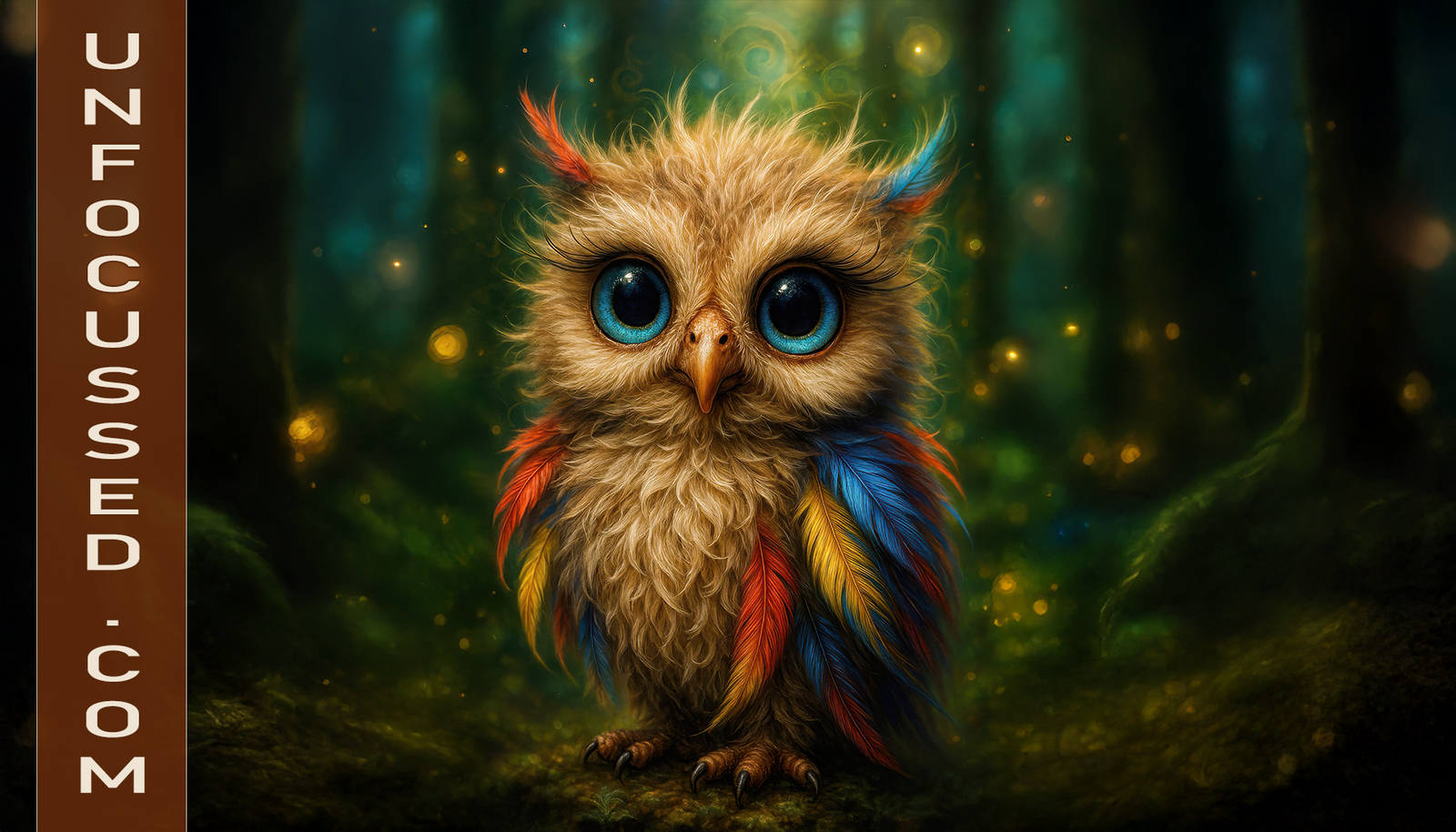
De hongos, caos y un búho muy poco impresionado En lo profundo de la Verge Verde, un bosque tan encantado que una vez convirtió accidentalmente a un leñador en una piña, se alzaba una criatura de una pelusa tan delicada y un juicio tan sarcástico que incluso las hadas temían su mirada de reojo. Era la Guardiana Ligera. No *una* guardiana. La Guardiana. Con T mayúscula. Actitud mayúscula. Se llamaba Mabel y era una lechuza. Bueno, técnicamente. Si le preguntaras, te diría que era «una combinación divina de pelusilla etérea, sabiduría de guardiana y pestañas rizadas naturales que no necesitan retoques, muchas gracias». Con plumas teñidas de azul medianoche, escarlata escandaloso y un amarillo que podía intimidar al sol, Mabel no era solo una imagen, era toda una declaración. Sus enormes ojos de zafiro habían visto mil lunas, algunos rituales forestales incómodos y al menos un vergonzoso duelo de magos con un hechizo de brillo fallido. El trabajo de Mabel —su deber sagrado— era proteger el Corazón del Bosque: un valle mágico que contenía las raíces de cada árbol, muchas ranas bioluminiscentes con problemas dramáticos y un caldero eternamente hirviendo que elaboraba el estado de ánimo del bosque mismo. Se tomaba este deber muy en serio. Por eso, cuando un grupo de cazadores de setas torpes y algo achispados irrumpió en su cañada un martes a la luz de la luna, dejó escapar un suspiro tan profundo que hizo temblar el follaje. Uno de los cazadores —cuyo nombre era Jasper o Decepción, no estaba segura— intentó acariciarla. Acariciarla. "No soy una terapeuta ingenua", ululó, indiferente. "Tócame otra vez y te presentaré a luciérnagas con problemas de límites". Los cazadores rieron y siguieron adelante, recogiendo hongos luminosos con la elegancia de mapaches borrachos. Mabel entrecerró los ojos. El Corazón del Bosque estaba reaccionando: brillaba con más intensidad, latía más rápido. Podía sentirlo: un cambio de humor inminente. La última vez que se sintió así, un árbol creció boca abajo y citó a Shakespeare durante un mes. Con un aleteo de sus alas con plumas de arcoíris y un suspiro dramático digno de una sacerdotisa de telenovela, Mabel descendió de su percha. Era hora de arreglar esto. Otra vez. Porque eso es lo que hacen los guardianes. Pero esta vez, tenía un plan. Un plan astuto, brillante y lleno de descaro que podría enseñarles a estos merodeadores de hongos una lección inolvidable. Mabel sonrió con sorna, sus enormes ojos brillando con picardía y un atisbo de venganza. «Que comience la caótica iluminación», susurró. Arco de redención ligeramente vengativo de Glitter, Karma y un búho Ahora, quizás te preguntes: ¿cómo es exactamente un plan con brillo y descaro? Bueno, si alguna vez has visto a un búho hechizar a un hongo con sensibilidad y un don para la poesía pasivo-agresiva, ya tienes la mitad del camino. Mabel, batiendo sus alas increíblemente elegantes, se abalanzó hacia el caldero en la cañada, el que preparaba el clima emocional de todo el bosque. Susurró algo antiguo y ligeramente mezquino en él. El brebaje relucía. Las ranas croaban en falsete. Los árboles se inclinaban. Momentos después, la cañada cambió. No violentamente. Ay, no, Mabel prefería su venganza sutil . Los cazadores de setas, que momentos antes reían y arrancaban cosas que definitivamente no debían arrancarse, se detuvieron cuando el bosque de repente... respondió. Los hongos empezaron a brillar en ondas de color sincronizadas. Morados. Verdes. Verde chartreuse, si te apetece algo sofisticado. Un zumbido sordo empezó a elevarse del suelo, como un grupo a capela calentándose bajo tus pies. El cazador más borracho, que se llamaba Chad (siempre lo son), parpadeó y dijo: «Oye, ¿está cantando la tierra?». —Sí, Chad —murmuró Mabel desde un árbol cercano—. La tierra canta y odia tus pantalones cortos. Entonces, uno a uno, los hongos cobraron vida. No de forma agresiva; no, no era ese tipo de historia. Simplemente se volvieron dramáticos. El más grande se estiró hacia arriba, respiró hondo e innecesariamente, y anunció en pentámetro yámbico: “Bellos amigos del bosque, estos tontos pisan Donde las raíces sagradas y el equilibrio se unen. Sus manos sucias, su alegría despistada... Cosecharemos el karma que crece aquí”. Los cazadores de setas se quedaron paralizados. Chad soltó su hongo luminoso e intentó susurrar: «Estamos alucinando», pero los hongos lo silenciaron a coro. Mabel, ahora encaramada en una rama sobre la cañada, desplegó sus alas como una profesora de teatro en una escuela para hadas con problemas. Habló con mesura y solemnidad. «Bienvenidos, mortales. Han perturbado la armonía, perturbado los sentimientos y han ofendido mi dignidad con su falta de aseo personal». “...Solo buscábamos algo para picar”, gimió Jasper-Probablemente-Decepción. Mabel suspiró, pero esta vez había algo más suave debajo. «Bípedos tontos. El bosque no es su pasillo de bocadillos. Está vivo. Siente. Se pone melancólico. Como yo. Pero con menos accesorios». Un silencio invadió la cañada. Incluso las ranas estaban calladas, salvo una que tarareaba suavemente "Greensleeves" para crear ambiente. Mabel revoloteó hasta quedar a la altura de los ojos, con su enorme mirada zafiro clavada en los cazadores de setas como una maldición de terciopelo. —Tienes una oportunidad —dijo—. Discúlpate con los hongos, limpia tu desastre y jura dejar este bosque mejor de como lo encontraste. O desataré el musgo con patas. Y déjame decirte que te persigue . Como es comprensible, hubo muchas disculpas. Uno de los cazadores incluso se ofreció a crear un blog de compostaje. Mabel se mostró escéptica, pero les permitió huir, escoltados por un desfile de criaturas del bosque que los desaprobaban y un helecho pasivo-agresivo. Cuando la cañada se aquietó, Mabel regresó a su posición. El Corazón del Bosque se atenuó hasta convertirse en un suave resplandor dorado. El ambiente se había restablecido. Los hongos recuperaron su habitual nivel de sabiduría distante, murmurando sonetos en voz baja. ¿Y Mabel? Recogió sus alas, se ahuecó las plumas y se dijo: «Todavía lo tengo». No era solo una guardiana. Era una vibra. Arriba, entre los árboles, la luna centelleaba tras un perezoso remolino de nubes, y el bosque suspiraba, un poco más ligero, un poco más sabio. Todo bajo la atenta mirada de su protector más descarado, esponjoso y fabuloso: el Guardián Pluma Ligero. El fin. O quizás el comienzo de un nuevo plan. Con Mabel, nunca se sabe. ✨ Trae a Mabel a casa Ya sea que estés decorando tu acogedor rincón de lectura, planeando la justicia en el bosque desde tu escritorio o simplemente te encante la idea de un búho sarcástico cuidando tu espacio, La Guardiana de la Luz de Pluma está disponible en encantadores formatos que se adaptan a tu estilo. Adorna tus paredes con su sabiduría a través de una lámina de madera o una lámina de metal brillante, acurrúcate con su descaro en un encantador cojín decorativo o deja que se pose en tus pensamientos con un mágico cuaderno de espiral . Dale un toque de travesura y magia a tu día a día, porque, siendo sinceros, Mabel no esperaba menos.

Seguir leyendo

Mystic Feathers and Cosmic Light

por Bill Tiepelman

Plumas Místicas y Luz Cósmica

Una noche de martes particularmente extraña, en algún momento entre un sueño y una cuarta copa de vino desaconsejada, un búho llamado Profesor Hootsworth McFluffington III se encontró en una situación inusual. Francamente, estaba ocupado con sus propios asuntos, encaramado en la rama más alta del antiguo árbol Gloombark, contemplando el significado existencial de las cortezas de pan, cuando el universo, en toda su caótica sabiduría, decidió meterse con él. Con un ¡pop! inesperado, que sonó sospechosamente como alguien abriendo una bolsa de bollitos de queso en una biblioteca silenciosa, una grieta en la realidad se abrió ante él. Brillaba con remolinos de tonos neón: azul, rojo y un ligero toque de pavor existencial. Un instante después, algo lo succionó como una aspiradora cósmica en modo "Máximo No". El desvío inesperado a través del espacio y las dimensiones cuestionables Para ser justos, no era la primera vez que algo extraño le sucedía al profesor Hootsworth. Una vez, se tragó por error un escarabajo que brillaba en la oscuridad y pasó tres días convertido en una luz nocturna consciente. ¿Pero esto? Esto era nuevo. Mientras caía en el vacío, rodeado de relojes de bolsillo flotantes, peces confusos y lo que estaba bastante seguro que era la tetera perdida de su tía Mildred, reflexionó sobre las decisiones que lo habían conducido hasta allí. ¿Debería haber ignorado antes ese gusano que brillaba extrañamente? ¿Fue ésta la versión del búho de una crisis de la mediana edad? ¿Por qué el espacio olía a tostada quemada y a un leve arrepentimiento? Antes de que pudiera llegar a ninguna conclusión satisfactoria, se estrelló en lo que parecía un trono hecho completamente de calcetines mal colocados . Y sentado frente a él, con aspecto majestuoso y ligeramente estreñido, estaba un hámster cósmico de dos metros y medio con monóculo. La demanda de Lord Cheddington —¡Ah, por fin! —bramó el hámster, ajustándose el monóculo con dramatismo—. ¡La Profecía predijo tu llegada! El profesor Hootsworth suspiró. «Claro que sí. ¿Por qué no?» El hámster ignoró el sarcasmo. «Soy Lord Cheddington , gobernante de los Objetos Perdidos Interdimensionales. ¡Y tú, noble búho, has sido elegido para una tarea de suma importancia!» El profesor Hootsworth flexionó las alas. «Si esto implica rescatar a una princesa, matar a un dragón o armar un rompecabezas antiguo, primero voy a necesitar un trago». —¡No, no! —Lord Cheddington agitó una patita—. Necesitamos que recuperes el Cucharón Celestial del Reino de la Burocracia Infinita. Hubo un instante de silencio. Luego otro. Finalmente, el profesor habló. “…¿Un tenedor-cuchara?” “Un tenedor celestial ”. “…¿En qué se diferencia exactamente de un tenedor-cuchara normal?” Los bigotes de Lord Cheddington se crisparon. «Brilla». El profesor Hootsworth se frotó las sienes con el ala. "Claro. ¿Y por qué me necesitas?" “Porque”, dijo el hámster, con los ojos brillando con dramática importancia , “tú eres el único que puede completar el papeleo necesario”. Las pruebas del infierno burocrático Resultó que el Reino de la Burocracia Infinita era, de hecho, exactamente lo que parecía. A su llegada, a Hootsworth le entregaron inmediatamente un Formulario 982-B (Solicitud de recuperación de utensilios para comer interdimensionales), seguido de una Subcláusula 17-A (Certificación de intención no malévola) y, su favorito personal, un Formulario de impuestos W-2 porque, aparentemente, reclamar artefactos celestiales contaba como ingreso tributable. Tres horas y una crisis existencial después, estaba sentado frente a una masa gelatinosa y sensible llamada Greg , quien era, según su etiqueta con nombre, un Subgerente de Objetos Cósmicos Mundanos . "Entonces", sorbió Greg, "¿estás diciendo que necesitas el Spork porque... un hámster gigante en un palacio de calcetines te lo dijo?" El profesor Hootsworth, muerto por dentro, asintió. Greg parpadeó. "Eso cuadra". Y así, sin más, Greg entregó el resplandeciente Spork Celestial. ¿Misión cumplida? Al regresar con Lord Cheddington, Hootsworth arrojó el tenedor-cuchara sobre la mesa ridículamente ornamentada con forma de queso del hámster. «Toma. Cubierto que brilla en la oscuridad, como lo pediste». Cheddington jadeó. "¡Lo has hecho bien, noble búho! ¡La profecía se ha cumplido!" El profesor Hootsworth entrecerró los ojos. "Entonces, ¿qué hace exactamente?" Cheddington se retorció los bigotes. "Me... me... permite comer sopa y comida sólida con el mismo utensilio". Hootsworth se quedó mirando. Luego parpadeó. Y luego se quedó mirando un poco más. "¿Me hiciste pasar por un infierno burocrático por eso? " Cheddington asintió. "Sí." Hootsworth exhaló lentamente. "¿Sabes que existen los tenedores-cuchara normales?" “…¿Lo hacen?” “…Eres un completo roedor.” Las secuelas Y así fue como el profesor Hootsworth McFluffington III decidió que había terminado con las tonterías interdimensionales. Regresó a casa, abrió una botella de vino y juró que si alguna vez veía otro utensilio brillante, lo arrojaría personalmente al agujero negro más cercano. Desafortunadamente, el universo tenía otros planes. Porque a la mañana siguiente, un tenedor brillante apareció en su puerta… con una nota: “Estimado Profesor, Necesito un conjunto a juego. Atentamente, Lord Cheddington”. Hootsworth gritó al vacío. EL FIN. Llévate un trocito del búho cósmico a casa Aunque el profesor Hootsworth McFluffington III podría no estar entusiasmado con su última aventura interdimensional, al menos puedes disfrutar de la belleza mística de su mundo, sin la pesadilla burocrática. 🌌✨ Adorne su espacio con el brillo etéreo de Mystic Feathers y Cosmic Light , disponibles en impresionantes formatos: 🌟 Tapiz – Transforma tus paredes en un portal a otra dimensión. Impresión acrílica : colores vibrantes, vibraciones cósmicas y un acabado brillante. 🛋️ Cojín decorativo : perfecto para reflexionar existencialmente… o para tomar una siesta. 👜 Tote Bag – Lleva tus pertenencias con la sabiduría del universo (y quizás un Spork Celestial). No dejes que los misterios del cosmos te pasen de largo: ¡consigue tu pieza de fantasía intergaláctica hoy mismo! 🚀🦉

Seguir leyendo

Explore nuestros blogs, noticias y preguntas frecuentes

¿Sigues buscando algo?