por Bill Tiepelman
La cría de Rosebound
En un jardín que técnicamente no existía en ningún mapa, pero que insistía en florecer, se alzaba un rosal solitario de belleza imposible. Sus pétalos eran de un terciopelo oscuro, bañados por el rocío que brillaba como diamantes al amanecer. Todos los jardineros, tanto conocidos como desconocidos, juraban que estaba encantado. No se equivocaban, pero tampoco del todo. El encantamiento implicaba que alguien le había lanzado un hechizo; esta rosa simplemente había decidido ser extraordinaria por sí sola.
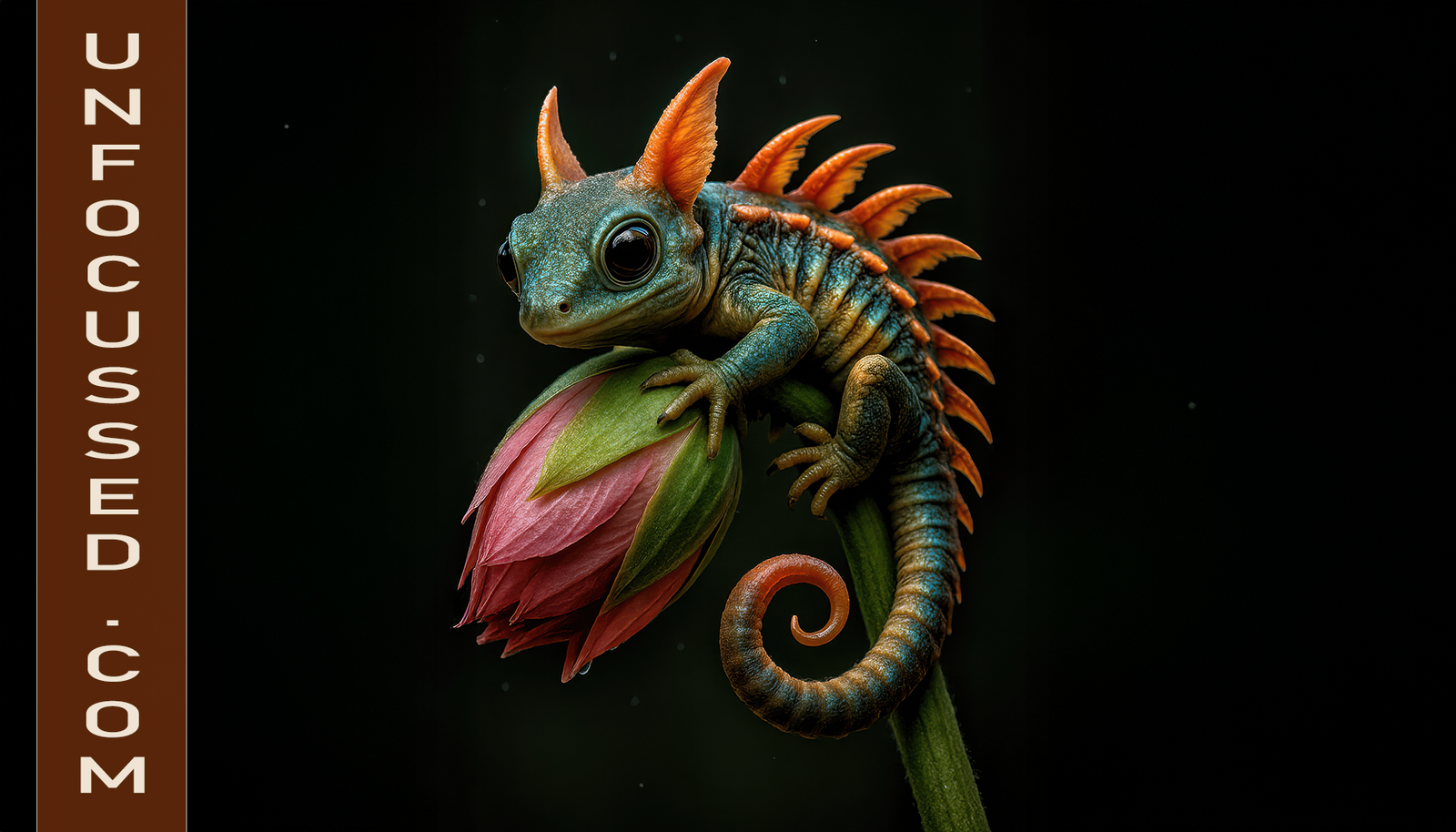
Una peculiar mañana, mientras las gotas de rocío se deslizaban perezosamente por los pétalos, una cría de color naranja dorado con alas como vidrieras apareció de la nada, literalmente de la nada. En un abrir y cerrar de ojos ya no estaba, y al siguiente sí. La rosa la atrapó como una madre indulgente en el escenario, y el pequeño dragón parpadeó con sus enormes ojos como si el mundo le debiera una ovación por existir. Y, sinceramente, así era.
La cría extendió sus alas —brillando con vetas violetas, magentas y zafiros— e inmediatamente se quitó la mitad del rocío de la percha. "Bueno", chilló con una voz demasiado débil para un drama tan audaz, "esto es un comienzo". Ya irradiaba la energía que se esperaría de alguien que planeaba convertirse en leyenda o en una catástrofe. Posiblemente ambas. Su cola se enroscó posesivamente alrededor del tallo de la rosa y, con un olfateo, la pequeña bestia declaró: "Mía".
Al otro lado del jardín, un coro de gorriones chismosos se detuvo a medio picotear. Uno murmuró: «Genial. Otro de esos ambiciosos». Otro respondió: «A ver, siempre son los pequeños los que aspiran a dominar el mundo antes siquiera de poder volar recto». La cría, como era de esperar, fingió no oír. Al fin y al cabo, los grandes sueños requieren sordera selectiva.
La rosa, por su parte, suspiró (tanto como puede suspirar una flor) y pensó: Aquí vamos de nuevo.
La cría, tras su dramático debut, decidió que posarse sobre una rosa era un escenario demasiado pequeño para su destino. Probó sus alas con unos cuantos aleteos, cada uno de los cuales hacía que las gotas se dispersaran en diminutos prismas de luz. El jardín resplandecía de irritación. «La verdad», murmuró la rosa, «uno pensaría que la sutileza está prohibida». Pero la sutileza nunca había sobrevivido en compañía de crías de dragón. Sobre todo, no de aquellas con aspiraciones que superaban su envergadura.
"Primero lo primero", anunció la cría a la nada, pues los gorriones ya habían perdido el interés. "Necesito un nombre". Caminó dramáticamente por el pétalo curvo de la rosa, como si el pétalo fuera una pasarela y ella la modelo estrella de la Semana de la Moda Draconiana de París. "Algo poderoso, algo que la gente susurre en las tabernas después de mi paso, dejando una estela de humo y gloria".
Se probaron y descartaron nombres a toda velocidad. "¿Quemar?" Demasiado obvio. "¿Colmillo?" Demasiado común. "¿Muerte Brillante?" Tentador, pero sonaba como si perteneciera al cuaderno de bocetos de un bardo adolescente angustiado. Tras pavonearse dramáticamente, finalmente suspiró y murmuró: "Esperaré a que el destino me nombre. Eso hacen todos los grandes. Y yo, sin duda, soy grande".
Mientras tanto, la rosa enrollaba sus pétalos y pensaba en todas las crías que había visto a lo largo de los siglos. Algunas se habían convertido en nobles protectores de reinos, otras en aterradoras bestias de la calamidad. Algunas, sinceramente, simplemente se habían apagado al darse cuenta de que escupir fuego era más complicado de lo previsto. Pero esta... esta tenía un brillo temerario, como una vela que decide que está destinada a convertirse en un faro. La rosa no estaba del todo segura de si admirarla o prepararse para el impacto.
La cría saltó al sendero del jardín, logrando planear un metro antes de chocar con una piedra. Cabe destacar que se levantó de inmediato, se sacudió y exclamó: "¡Lo di todo!". Esa era la clase de confianza que inspiraría baladas o reclamaciones de seguros catastróficas. Un caracol, deslizándose lentamente, murmuró: "He visto aterrizajes más valientes de babosas". La cría ignoró el insulto e infló su pequeño pecho. "Algún día, caracol", siseó con teatral amenaza, "el mundo se inclinará ante mí".
Pero la ambición, como las alas, requiere ejercicio. La cría comenzó a explorar el jardín, y cada nuevo rincón se convirtió en un reino que reclamaba para sí misma. ¿Un macizo de margaritas? «Mi ejército floral». ¿Una piedra musgosa? «Mi trono». ¿Un charco que brillaba con el cielo reflejado? «Mi lago real, para chapoteos ceremoniales». Cada descubrimiento se narraba en voz alta por si cronistas invisibles tomaban notas. Al fin y al cabo, las leyendas no se escriben solas.
Al mediodía, la cría estaba agotada de conquistar tanto territorio y se quedó dormida bajo un hongo, roncando en pequeños círculos de humo. Los sueños llegaron rápidamente: sueños de sobrevolar montañas, de pueblos enteros vitoreando, de estatuas erigidas en su honor con poses heroicas (alas más anchas, ojos más dramáticos, tal vez incluso una corona). En el sueño, incluso derrotó a un dragón rival que lo doblaba en tamaño profiriendo un insulto particularmente ingenioso seguido de un coletazo accidental. La multitud rugió. La cría se deleitó.
De vuelta a la realidad, una familia de hormigas había empezado a construir un pequeño montículo de tierra incómodamente cerca de la cola del dragón. "Tendremos que presentar una queja a la gerencia", dijo una hormiga, mirando a la cría con recelo. La rosa, al oírla, murmuró: "Buena suerte. Ya se cree la gerencia".
Cuando la cría despertó, su vientre rugió. La comida estaba claramente lista. Desafortunadamente, las grandes ambiciones de gloria no habían tenido en cuenta el problema logístico de ser muy pequeña y estar muy hambrienta. Intentó cazar una mariposa, pero tropezó con sus propias garras. Intentó mordisquear un pétalo, pero lo escupió de inmediato: "¡Uf, vegano!". Finalmente, se decidió a lamer el rocío de una brizna de hierba. "Exquisito", declaró. "Un festín digno de un rey". La hierba, algo halagada, se inclinó ligeramente con la brisa.
Al caer el día, la cría volvió al rosal, decidida a dar un discurso motivador. «Queridos súbditos», chilló con fuerza al jardín, «¡no teman, porque su guardián ha llegado! Yo, el futuro dragón más grande de todos los tiempos, los defenderé de...». Hizo una pausa, al darse cuenta de que no sabía a qué amenazas se enfrentaban los jardines. «Eh... ¿babosas? ¿Conejos demasiado entusiastas? ¿Desbrozadoras rebeldes?». La lista no era inspiradora, pero el tono era impecable. «La cuestión es», continuó la cría, «que nadie se mete con mi rosal ni con mi jardín. Nunca».
Los gorriones rieron entre dientes. Las hormigas refunfuñaron. El caracol bostezó. Y la rosa, a pesar suyo, sintió una oleada de orgullo. Quizás esta cría era ridícula. Quizás sus grandes ambiciones eran demasiado grandes. Pero la verdad era que las grandes ambiciones tienen la capacidad de adaptar el mundo a sus necesidades. Y en algún lugar, en la quietud del crepúsculo, el pequeño rugido de la cría ya no sonaba del todo insignificante.
Para cuando la luna ascendió al cielo y tiñó el jardín de plata, la cría había decidido oficialmente que su destino no solo era grande , sino astronómico. El pequeño dragón se posó orgulloso en la rosa, contemplando las constelaciones con la intensidad que suelen reservar los filósofos o los poetas borrachos. «Esa», susurró, entrecerrando los ojos al ver un tenue puñado de estrellas con forma vagamente parecida a una cuchara, «será mi sello. La Cuchara del Destino».
La rosa gimió. «No puedes... elegir el destino como si fuera una ensalada».
"Mírame", dijo la cría, con las alas brillando desafiante. "Estoy construyendo un imperio aquí, una declaración dramática a la vez".
La noche se convirtió en una sesión de planificación de proporciones absurdamente épicas. Usando gotas de rocío como marcadores, la cría comenzó a esbozar un mapa del futuro sobre las hojas de la rosa. «Primero, el jardín. Luego el prado. Luego, obviamente, el castillo. Probablemente dos castillos. No, tres, uno por cada estación. Luego necesitaré una flota. ¡Una flota de... gansos! Sí. Gansos de guerra. Todo el mundo subestima a los gansos hasta que te persiguen por una calle adoquinada con la mirada llena de rabia».
—Qué bonito —murmuró la rosa—. Siempre supe que mis espinas no eran lo más afilado de aquí.
Pero la ambición prospera con la ilusión, y la ilusión de la cría era gloriosa. Practicaba discursos ante multitudes imaginarias. "¡Pueblo del reino, no teman!", chilló, balanceándose dramáticamente sobre un pétalo de rosa que se tambaleaba peligrosamente. "Porque protegeré sus tierras, asaré a sus enemigos y les daré ingeniosas frases ingeniosas en los festivales. Además, firmaré autógrafos. Eso sí, no toquen las alas".
Los gorriones abuchearon desde una rama. "¡Eres más bajo que el tallo de un ranúnculo!", gritó uno. El polluelo respondió bruscamente: "Y sin embargo, mi carisma es más alto que tu árbol genealógico". Incluso los gorriones tuvieron que admitir que eso era bastante bueno.
Al amanecer, la cría había aumentado sus ambiciones una vez más. Proteger el jardín era noble, sin duda, pero ¿por qué detenerse ahí? ¿Por qué no convertirse en el dragón de la inspiración oficial? «Seré un icono de la motivación», anunció, marchando a lo largo del pétalo con precisión militar. «Me invitarán a conferencias. Me pararé detrás de un podio, con las alas desplegadas, y declararé: «Sigue tus sueños, aunque te caigas de bruces, porque créeme, ¡lo hago siempre!»».
La rosa se rió tanto que casi se le caen los pétalos. "¿Tú? ¿Un orador motivacional?"
"Exactamente", dijo la cría, sin inmutarse. "Mi marca es resiliencia envuelta en purpurina. La gente comprará tazas con mis eslóganes. Pósteres. Camisetas. Quizás incluso alfombrillas para ratón".
Las hormigas, que ya habían construido una elaborada ciudadela de tierra al pie del arbusto, susurraban entre sí: «Es una locura». «Es ridículo». «¿Es... realmente inspirador?». Incluso el caracol admitió: «El niño tiene agallas».
Así que la cría entrenó. No con fuego ni garras todavía —esas habilidades aún eran vergonzosamente poco fiables—, sino con discursos, poses y el arte de la sincronización dramática. Perfeccionó la pausa antes de decir una línea, la inclinación de las alas para brillar al máximo bajo la luz de la luna, el giro de cabeza seguro que decía: «Sí, este jardín me pertenece, gracias por notarlo». Cada día, proclamaba nuevas metas y las celebraba como victorias, incluso cuando estas eran, objetivamente, un desastre.
Una tarde, intentó volar por todo el jardín y se estrelló directamente contra una carretilla. La carretilla se volcó y derramó compost por todas partes. La cría salió, cubierta de ramitas, y anunció con orgullo: «A eso le llamo una distracción táctica». Al final de la semana, las hormigas cantaban: «¡Distracción táctica! ¡Distracción táctica!» cada vez que las cosas se torcían en su colonia. La cría había creado accidentalmente su primer legado cultural.
Pasaron las semanas, y el jardín, antes común y corriente, se transformó en algo extraordinario. No fueron las rosas, ni las margaritas, ni las piedras musgosas lo que lo hicieron legendario, sino la audacia de un pequeño dragón que se negaba a verse pequeño. Los visitantes de los pueblos cercanos empezaron a susurrar sobre el jardín con la peculiar rosa que brillaba aún más bajo la luz de la luna y el sonido de extraños y chillones discursos que resonaban entre los setos. La gente empezó a dejar pequeñas ofrendas: botones brillantes, retazos de tela, incluso alguna que otra galleta. La cría lo interpretó como un tributo, naturalmente. La rosa simplemente enrolló sus pétalos y murmuró: «A estas alturas, va a necesitar una bóveda».
Una tarde particularmente brumosa, la cría se alzaba orgullosa en lo alto de la rosa, con sus alas brillando en la niebla como fragmentos de vitral. Alzó la cabeza y gritó en la noche: «Puede que sea pequeño, puede que sea nuevo, ¡pero tengo una gran ambición! Puedes llamarme de muchas maneras: ridículo, ruidoso, incluso torpe, pero algún día, cuando escriban las historias de grandes dragones, empezarán con esto: La cría encadenada a la rosa que soñó demasiado e hizo que el mundo se expandiera solo para seguir el ritmo».
Siguió el silencio. Entonces un grillo aplaudió. Luego, una rana croó su aprobación. Entonces, para sorpresa de todos, la luna misma atravesó la niebla y bañó a la cría con una luz plateada, como si el cosmos dijera: «Muy bien, niño. Te vemos».
Y por primera vez, hasta la rosa dejó de dudar. Quizás esta ridícula criatura no era solo fanfarronería después de todo. Quizás la audacia era magia en sí misma.
Con un bostezo, la cría se acurrucó de nuevo contra los pétalos aterciopelados de la rosa, soñando ya con escenarios más grandes, discursos más grandiosos y una flota de gansos guerreros graznando al unísono. El mundo no estaba listo. Pero claro, el mundo nunca lo está.
Epílogo: La leyenda en flor
Años después, cuando el jardín era famoso más allá de sus setos, los viajeros venían buscando no las rosas ni las piedras musgosas, sino los susurros de la cría. Juraban haber oído discursos llevados por el viento, diminutos anillos de humo flotando como signos de puntuación en el aire nocturno. Algunos afirmaban ver destellos de alas de color naranja dorado revoloteando con el rabillo del ojo. Otros decían haber perdido sándwiches en misteriosas "diversiones tácticas". Las hormigas, naturalmente, construyeron toda una industria turística en torno a ello.
Y aunque los escépticos se burlaban, quienes se quedaban lo suficiente siempre sentían lo mismo: una extraña e inquebrantable sensación de que la ambición podía ser contagiosa. De que incluso la chispa más pequeña —ridícula, torpe, ruidosa— podía convertirse en un fuego rugiente. La rosa, ahora más vieja y orgullosa, aún guardaba los recuerdos en sus pliegues aterciopelados y sonreía al pensarlo. Después de todo, había estado allí desde el principio. Había sido la cuna de la audacia.
¿Y la cría? Digamos que la constelación de la Cuchara del Destino ya tenía un club de fans. Y los gansos de guerra... bueno, esa es otra historia.
Trae la cría a casa
La historia de la cría de Rosebound no tiene por qué limitarse a susurros y luz de luna. Ahora, puedes dejar que este pequeño y caprichoso dragón se pose con orgullo en tu hogar. Ya sea que quieras enmarcarlo en la pared como recordatorio de que incluso la chispa más pequeña puede encender una leyenda, o extenderlo sobre un lienzo para convertirse en la pieza central de una habitación, esta obra de arte está lista para inspirar sueños audaces en tu espacio.
Para quienes prefieren llevar un poco de magia a todas partes, la cría también alza el vuelo en una elegante bolsa de mano , perfecta para la compra, libros o para contrabandear refrigerios tácticos. O, si tus mañanas requieren un toque de fantasía, disfruta de tu café o té en una taza de cría Rosebound y empieza el día con una ambición tan audaz como la de un pequeño dragón.
Elige tu forma favorita de darle vida a la leyenda: Impresión enmarcada | Impresión en lienzo | Bolsa de mano | Taza de café
Porque las leyendas no solo se cuentan. Se muestran, se llevan y se disfrutan a diario.