

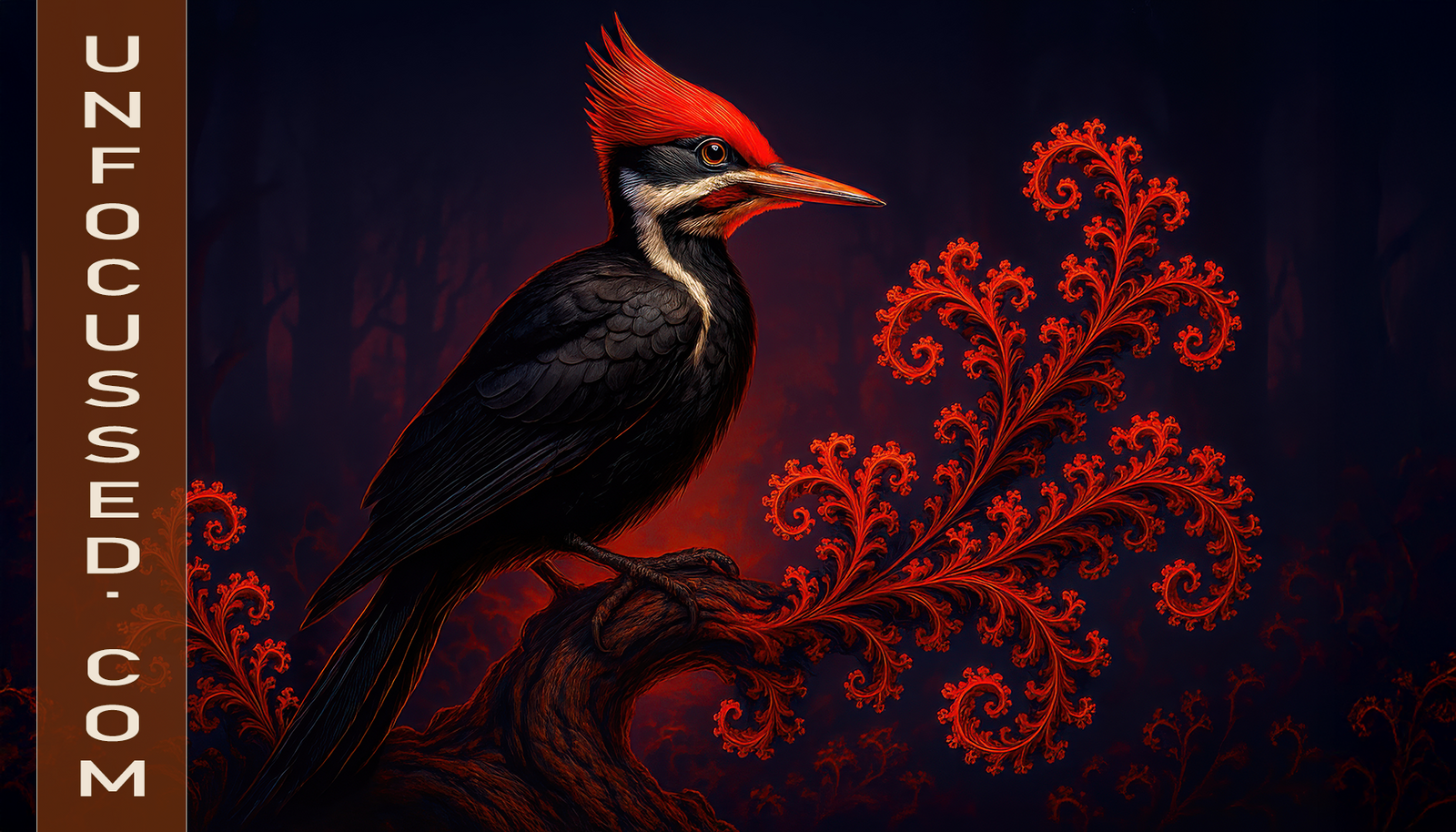
por Bill Tiepelman
Infierno en la rama
Si les preguntas a los observadores de aves en el inicio del sendero cómo suena un pájaro carpintero crestado , te darán tres respuestas: un mono de la selva con un expreso, un carpintero con carné sindical y sin paciencia, y el tono de llamada exacto que les hace perder los binoculares en el barro. Escuché los tres la mañana en que conocí a la máquina del caos de corona carmesí que más tarde se convertiría en la estrella reticente de mi portafolio y el santo patrón de mi adicción a la cafeína. El bosque aún estaba húmedo por la noche, el sotobosque humeaba como una tetera, y de la silueta de los troncos negros surgió una risa —kik-kik-kik— que cortó la niebla como una columna de chismes en un pequeño pueblo. Estaba allí para una foto, lo que llamo una " excursión fractal ", porque aparentemente no puedo fotografiar un pájaro en una rama como un adulto normal. No, mi marca requiere una rama que se enrosque en una ardiente filigrana espiral como si la Madre Naturaleza hubiera tomado un taller con MC Escher y luego se hubiera puesto picante con un soplete. Los arces habían jugado conmigo, enviando nudos y líquenes en arabescos, pero esta percha, esta rama en espiral pintada con brasas , parecía forjada por un herrero con un título en arte y un resentimiento. La enmarqué, ajusté mi ISO y le prometí al bosque que esta vez sería de buen gusto. El bosque, veterano de mis promesas, permaneció escéptico. Entra nuestro protagonista: un crestado del tamaño de un pollo flaco y el doble de crítico. Llegó como un cometa lanzado, niveló la cresta roja como un cartel de "No me hables hasta que haya golpeado" , y se montó en la rama con el equilibrio atlético de un equilibrista que también había cursado algunos semestres de carpintería. Su pico —llamémoslo por su nombre, un cincel gótico— golpeó la corteza una vez, dos veces, y luego ¡BAM!, un golpe tan decisivo que las hormigas presentaron una queja en el lugar de trabajo. "Buenos días", susurré, como si el pájaro hablara inglés y prefiriera las aperturas suaves. "Solo una pose. Hiperrealista. Bosque melancólico. Infierno en la rama. Serás mercancía". El pájaro carpintero giró lentamente —un ojo ámbar, luego el otro— como un maître decidiendo si mis zapatos eran aceptables. Satisfecho, o al menos resignado, extendió su cola en un brillante abanico negro, con adornos blancos como signos de puntuación, y me presentó un perfil que pondría celoso a un búho. Por si no eres observador de aves, este es el momento en que los que hacen listas de vida susurran: "¡Dios mío, la aplicación Merlín tenía razón!", e intentan no chillar. No chillo. Exhalo muy fuerte y finjo que lo planeé. La rama bajo él —mi diva del sacacorchos— empezó a brillar con la mañana. Del tronco a la punta, las texturas se elevaban en rosetas espirales , cada curva captando una luz roja como la brasa. Podía sentir cómo la composición encajaba: la mirada de un pájaro a la derecha, penachos fractales desplegándose como helechos hechos fuego , un bosque en sombras suave como el terciopelo tras todo. Esta es la parte donde los profesores de arte dicen "líneas guía" y yo asiento como si hubiera descubierto la geometría personalmente. Tamborileó de nuevo —tat-tat-tat-TAT— y una flotilla de hormigas organizó una evacuación de emergencia. Es un mito que las hormigas pileateds sean caóticas; son ingenieras con plumas, que ejecutan modelos probabilísticos con cada golpe. Probó, escuchó si había huecos y se puso a trabajar en la zona exacta donde la corteza tenía una pequeña ondulación, de esas que solo un pájaro con 50 millones de años de experiencia en la fabricación de herramientas notaría. Volaron astillas. Olí savia. En algún lugar, una ardilla murmuró el equivalente en el bosque a «otra vez no». "Sabes que estás de moda", dije, porque el cerebro humano adulto necesita conversación incluso cuando el público es un pájaro. "Tu especie es básicamente la celebridad del bosque oriental. La gente oye un redoble de tambores y de repente son fotógrafos de vida silvestre. Nos encanta tu cresta carmesí . Nos encanta tu iluminación tenue . Nos encanta que seas una excavadora con delineador de ojos". El pájaro carpintero se detuvo, ladeó la cabeza y observó las curvas de la rama como si las estuviera escuchando. Luego, con deliberación, dio tres pasos más arriba —clic, clic, clic— y se ubicó justo en el remolino dorado donde el follaje en espiral creaba un halo. Si hubiera leído mi lista de fotos, no podría haberlo hecho mejor. Encuadré con más precisión, dejé que el fondo se oscureciera como el carbón y observé cómo los rojos se saturaban hasta que parecían brasas en cámara lenta . Mi obturador susurró mil pequeños síes. En el sendero que había detrás de mí, se formó una pequeña procesión de observadores de aves, de esos con sombreros con parasol y bolsillos para refrigerios y, presumiblemente, pólizas de seguro de vida para cuando un búho cornudo observa de reojo a su chihuahua. Se quedaron paralizados en ese silencio colectivo que significa «oh, ya estamos en la iglesia ». Alguien susurró « Infierno en la rama », como si hubiera leído el título en mi cabeza, y sentí el delicioso cosquilleo de una foto que se ganaba su título mientras aún se estaba haciendo. "¿Qué busca?", susurró un observador de aves novato. Quise decir: redención. Quise decir: sinergia de marca. Pero la verdad era más simple. " Hormigas carpinteras ", murmuré. "Grandes. El filet mignon de la proteína. Y tal vez el prestigio de parecer un signo de exclamación viviente". El ave obedeció extrayendo una (hormiga, no signo de exclamación) y tragándola con la insulsa profesionalidad de un sumiller catando en un vaso de cartón. Entonces el bosque realizó su truco de magia favorito: la dilatación del tiempo. La luz se deslizó un centímetro, la rama pasó de naranja sangre a granate, y el pájaro carpintero, como si conociera la teoría del color, se reposicionó paso a paso hasta que la regla de los tercios se alineó como habíamos ensayado. Se quedó quieto el tiempo suficiente para que el obturador susurrara una ráfaga, luego se giró bruscamente para fulminar con la mirada a un rival que se adentraba en el barranco. La risa volvió a sonar, la típica del mono de la selva, y un escalofrío recorrió la fila como un saludo de estadio para gente muy callada. Podría haber empacado allí mismo. La imagen estaba en la cámara y bullía en mi cabeza, ya titulada, ya enmarcada, ya rogando por convertirse en una lámina de bellas artes con un papel tan grueso que podría acallar un rumor. Pero el pájaro no había terminado su actuación. Se esponjó, sacudió una bola de nieve de polvo de corteza y dio un último redoble de tambor que resonó en los troncos negros y rebotó como aplausos. Y como soy, a pesar de la evidencia, un profesional, le di las gracias. En voz alta. Con sentimiento. La clase de gratitud que se reserva para los baristas y el flujo creativo desatascado. "Estuviste radiante", dije. "Fuiste como el Infierno en la Rama ". El pájaro carpintero parpadeó una vez, dos veces, y luego, como un actor de teatro al oír una señal, se elevó hacia la luz humeante. Cruzó como una flecha el cañón de árboles, una franja escarlata que se redujo a una coma en la oración del bosque, y desapareció. Los observadores de aves exhalaron. Alguien se secó los ojos. Alguien más me preguntó qué configuración usé, y les di la respuesta clásica: «Todas». Nos reímos con la risa de alivio de quienes reciben lo que buscan y un poco más. Revisé la pantalla de nuevo y, sí, allí estaba: el pájaro carpintero crestado, majestuoso como un mito, la rama fractal desplegándose como una llama, el bosque oscuro lo contenía todo como una caja de terciopelo. El tipo de marco que hace que una pared diga gracias . Claro, aún no sabía qué aguardaba en lo más profundo de esos árboles, ni por qué el pájaro carpintero eligió esa particular percha iluminada por las brasas , ni qué geometría inquieta crecía bajo la corteza como un alfabeto secreto. Eso era un problema para mi yo del futuro, aventurero fotográfico y ocasional entusiasta de las malas decisiones. Mi yo del presente simplemente cerró los ojos, escuchó los ecos moribundos del tambor y marcó el punto del GPS con un nombre: Infierno en la rama . Lo que hice a continuación habría hecho suspirar a un guardabosques y asentir a un poeta con aprobación. Pero esa es la segunda parte, y a este bosque le encantan los finales en suspenso casi tanto como a mí. El bosque de brasas Lo que pasa con los pájaros carpinteros —y puedes citarme en la próxima reunión de Audubon— es que no aparecen por casualidad. Aparecen como signos de puntuación en el bosque, interrumpiendo tu frase con un punto o un signo de exclamación, y luego te retan a reescribir todo el párrafo a su alrededor. El momento de Infierno en la Rama de esa mañana podría haber sido el final perfecto para mi caminata. Podría haber regresado al inicio del sendero, satisfecho y con cafeína, agarrando mi cámara como un jugador de póker que se aleja de la mesa mientras aún lleva ventaja. Pero la satisfacción no alimenta la curiosidad, y la cafeína te hace sentir demasiado confiado. Seguí la dirección de su vuelo. No era acecho. Era… interés profesional. Los observadores de aves lo llaman "seguimiento" si quieren que suene respetable, y "paparazzi carpintero" si no. Mis botas crujían sobre la hojarasca cubierta de escarcha; cada paso sonaba absurdamente fuerte en el silencio de la catedral. En algún lugar más adelante, volví a oír el débil tamborileo, ahora más lento, como si estuviera trabajando en una corteza particularmente resistente o en un crucigrama con solo vocales. Los fractales de las ramas detrás de mí aún brillaban en mi mente, pero la atracción hacia adelante era irresistible. Después de todo, ¿para qué valía la pena abandonar ese escenario? El terreno cambió sutilmente. Los robles dieron paso a pinos más viejos, con sus troncos rectos como absolutos morales, pero marcados por décadas de fuego y rayos. La maleza se aclaró, reemplazada por una alfombra de agujas que amortiguaba mis pasos. Y entonces lo vi: un claro que no debería existir, al menos no con esa geometría. Los árboles formaban un círculo casi perfecto, y en el centro crecía un arce gigante y retorcido, con sus ramas en espiral formando patrones tan complejos que parecían obra de un relojero cósmico. La luz en ese espacio era más extraña, más cálida, como si el dosel la filtrara a través de una vieja botella de brandy. Y allí estaba, mi pájaro carpintero, aferrado al tronco como si le debiera dinero. Su cresta reflejaba la luz filtrada y se encendía como una corona fundida. Martillaba con golpes firmes y deliberados, cada uno de los cuales arrojaba al suelo una pequeña capa de corteza rojiza. El árbol parecía responder —no me preguntes cómo— a su ritmo, con las ramas en espiral flexionándose imperceptiblemente al compás, como un bailarín estirándose antes de una actuación. Me agaché, hice zoom y encuadré. Esta no era la rama del Infierno ; era algo completamente distinto. Si la rama anterior era una obra de arte funcional, este árbol era un altar. Cada nudo y protuberancia brillaba tenuemente, los rojos y dorados se intensificaban con cada rayo de luz matutina. Había fotografiado muchas estructuras fractales antes —helechos, escarcha, los remolinos accidentales en un tarro de mantequilla de cacahuete—, pero esto era diferente. Las espirales no eran aleatorias; hablaban . Los patrones dirigían la mirada hacia el interior, hacia un hueco en el tronco justo encima del pico industrioso del pájaro carpintero. Fue entonces cuando percibí el olor: resina, sí, pero atenuado por algo más cálido, casi dulce, como canela y papel viejo. El pájaro carpintero se detuvo, ladeó la cabeza y miró fijamente al hueco, como si esperara una respuesta. Juro que oí algo: un leve clic, como el sonido de una máquina de escribir enterrada bajo el musgo. Reanudó el martilleo y el clic cesó. Sentí un hormigueo. La naturaleza adora sus misterios, y yo acababa de entrar en uno con una cámara como pase de entrada. En algún lugar arriba, una sombra se cernía entre las copas de los árboles. No era otro pájaro carpintero, era demasiado grande. Levanté la vista justo a tiempo para ver cómo un ala ancha se perdía en la luz del sol. ¿Un halcón? Quizás. O tal vez ese habitante del bosque que solo ves una vez y que luego pasas el resto de tu vida intentando demostrar que no era producto de una mañana descafeinada. Volví a mirar el árbol. Mi pájaro carpintero se había movido más alto, más cerca del hueco, con las garras agarrando la corteza con esos dedos perfectos de zigodáctilo —dos adelante, dos atrás— como si lo hubieran diseñado en un laboratorio para desafiar las alturas. Me acerqué un poco más, el fotógrafo en mí negociando con la parte de mi cerebro que sabía más. Los patrones espirales en la corteza se volvieron hipnóticos de cerca. Diminutas crestas captaban la luz como los bordes de un manuscrito iluminado, curvándose hacia adentro en arcos deliberados. Mi lente lo absorbió todo. Cuanto más me acercaba, más se repetían los patrones, no solo en la corteza, sino en las formas de las hojas sobre mi cabeza, en la curva de las plumas de la cola del pájaro carpintero, en la ondulación del musgo bajo mis pies. Era la silenciosa admisión del bosque: los fractales no eran un truco artístico. Eran el plano . El pájaro carpintero dejó de martillar y me miró con esa expresión que solo los pájaros y los orientadores de instituto pueden poner: sospecha y lástima a partes iguales. Entonces, sin previo aviso, metió la cabeza en el hueco y sacó... algo. No era un insecto. No era savia. Era pequeño, plano y relucía como latón viejo. Lo sujetó delicadamente con el pico, se giró hacia mí y —esto se lo discutiría a cualquiera— asintió. Una vez. Luego pasó volando junto a mí en un destello carmesí y de sombra, con el objeto aún sujeto en el pico. Giré para seguirlo, tropecé con una raíz y di una media vuelta sin gracia que me dejó de espaldas, mirando fijamente la espiral del dosel. Para cuando logré subir, ya no estaba. El claro estaba en silencio; el único sonido era el leve crujido de las ramas en un viento que no sentía. El arce se alzaba sobre mí, con espirales girando en mi visión periférica, retándome a acercarme. Lo hice. Mis dedos rozaron el borde del hueco. La madera estaba cálida, de una forma antinatural, y al tacto las espirales parecían profundizarse, las ranuras se apretaban formando un patrón que parecía menos veta de madera y más… escritura a mano. Tomé una foto, luego otra, revisando la reproducción obsesivamente. En cada imagen, las espirales se movían ligeramente, como si el árbol no estuviera posando, sino conversando . Y en el centro mismo del hueco, enmarcada por la veta ondulada, había una huella tenue y perfecta: el contorno de una pluma. No era de un pájaro carpintero: demasiado larga, demasiado estrecha. No la reconocí, y eso me molestó más de lo que quería admitir. Cuando por fin me alejé, volví a marcar el GPS, etiquetándolo como "Ember Grove". El camino de regreso se me hizo más largo; cada árbol, de repente, me parecía sospechoso por su geometría. Para cuando el aparcamiento apareció a la vista, me había convencido de que todo era solo un efecto de luz, un sueño febril de rojos y dorados. Pero esa noche, cuando subí las fotos a mi ordenador, la verdad me devolvió la mirada con un detalle milimétrico: las espirales eran reales. La pluma era real. Y en la esquina de un fotograma, medio oculto por un desenfoque de movimiento, estaba el pájaro carpintero —con la cresta resplandeciente, los ojos fijos en el objetivo—, aún con ese brillo misterioso en el pico. No dormí mucho. No dejaba de pensar en el hueco, el olor, el chasquido, en cómo la rama de Inferno y el arce del bosque compartían la misma geometría ondulada. Y me preguntaba una y otra vez: ¿qué necesidad hay en el bosque de un pájaro carpintero como cerrajero? Cualquiera que haya sido la respuesta, tuve la clara e inquietante sensación de que estaba esperando que regresara. El secreto del cerrajero He hecho muchos viajes de ida y vuelta a lugares interesantes para sacar fotos, pero este no se sentía como mi excursión habitual de "veamos si la garza sigue ahí". Esto se sentía... cargado. Como si el bosque y yo tuviéramos una conversación inconclusa, y el pájaro carpintero (mi supuesto cerrajero) fuera el único que tuviera la llave de repuesto. Pasé tres días intentando actuar como un humano normal: editando otras fotos, respondiendo correos electrónicos, fingiendo que no estaba buscando en Google "mitología del pájaro carpintero crestado" a las 2 a. m. Spoiler: resulta que en cierto folclore nativo, son mensajeros. En otros, son constructores de los dioses. En mi cerebro sobrecafeinado, ahora eran ambas cosas, y también posiblemente el equipo de mantenimiento del bosque. Cuando por fin regresé, era antes del amanecer. Quería llegar antes de que la luz convirtiera el bosque en un cliché de Instagram. El aire era tan cortante que me quemaba los pulmones, y el primer coro de pájaros aún se estaba calentando. Mis botas recordaban el camino sin que yo pensara; mi cuerpo era una brújula preparada para "escabullirse en situaciones cuestionables". De vez en cuando, oía un martilleo lejano —tres golpes, pausa, tres golpes— como si el pájaro carpintero estuviera tocando su propio timbre. Para cuando llegué al claro, la luz se filtraba a través del follaje como latón fundido, igual que antes. El arce esperaba, sus espirales prendiéndose el primer fuego del día. Y allí estaba, con la cresta ensanchada y la cola en alto, golpeando una nueva sección de corteza justo debajo del hueco. El ritmo era constante, casi ceremonial. Levanté la cámara, casi esperando que saliera volando como la mayoría de los pájaros que se respetan cuando aparece un paparazzi. En cambio, saltó de lado, ofreciéndome una vista perfecta de lo que había estado haciendo: un anillo de agujeros poco profundos que formaban una forma geométrica precisa. Una cerradura, me di cuenta. O al menos el equivalente a una para un pájaro. Cada agujero estaba espaciado con una simetría asombrosa, como si lo hubiera medido con un calibrador. Mi nerd del arte interior estaba emocionado; mi humano racional interior estaba empezando a sudar. Me mantuve agachado, avanzando lentamente. No pareció importarle. De hecho, empezó a golpear los agujeros en secuencia —delante, izquierda, derecha, abajo— como si estuviera introduciendo un código. Siguió un golpe sordo, no el crujido quebradizo de la corteza, sino el movimiento sordo y resonante de la madera al moverse en algún lugar más profundo. Las espirales de la veta se estremecieron. El hueco se oscureció, luego se profundizó, como si el espacio mismo se estirara. No podía respirar. El pájaro carpintero se hizo a un lado, ladeó la cabeza hacia mí y —de nuevo, juro que esto ocurrió— movió el pico hacia el hueco en un clarísimo «tu turno» . Todo mi ser me gritaba: «No metas la mano en agujeros desconocidos del bosque» . Pero la curiosidad es una droga, y ya estaba bajo el efecto del aroma a resina y del antiguo secreto que este árbol estuviera tramando. Puse la cámara en vídeo, me la colgué del hombro y metí la mano. La madera no solo estaba cálida; latía débilmente, como un latido en la madera vieja. Mis dedos rozaron algo suave y fresco. Lo rodeé con la mano y lo liberé. Era el mismo objeto que había visto días antes —plano, como de latón—, pero ahora podía apreciar los detalles. Un medallón, no más grande que un posavasos, grabado con los mismos patrones en espiral que la corteza, que irradiaban desde un único símbolo de pluma en el centro. La pluma tenía incrustaciones de algo oscuro, quizá obsidiana, que parecía absorber la luz en lugar de reflejarla. Alrededor del borde, con letras demasiado finas para haber sido talladas por manos humanas, había una inscripción. No era inglés. No era ninguna escritura que yo conociera. Los caracteres también eran fractales: diminutas curvas dentro de curvas, tan intrincados que no podía seguir sus líneas sin perderme. Detrás de mí, el pájaro carpintero tamborileó una vez, agudo y decidido. El suelo bajo el arce se estremeció lo suficiente como para sentirlo a través de mis botas. Miré hacia arriba, casi esperando que el cielo se abriera, pero en cambio vi movimiento en las espirales sobre mi cabeza. Las ramas estaban... moviéndose. Lentamente, imperceptiblemente al principio, luego con deliberada gracia. Las ramas se desenredaban y reenredaban formando nuevos patrones, cerrando el claro como el iris de un ojo. La luz se filtraba por huecos específicos, iluminando el medallón en mi palma. La pluma incrustada brilló, y por un breve y escalofriante segundo, oí el mismo clic de antes, pero ahora más fuerte, más rápido, como una máquina de escribir invisible terminando una frase. —De acuerdo —le susurré al pájaro, porque el silencio habría sido peor—. Tú ganas. ¿Qué es esto? ¿Por qué yo? El pájaro carpintero solo parpadeó y se lanzó a la rama espiral justo encima de mi cabeza. Inclinó el pico hacia el cielo y gritó: un fuerte y resonante kik-kik-kik que rebotó entre los troncos. Casi de inmediato, unas siluetas se movieron al borde del claro. Sombras, pero… no del todo. Algunas altas y estrechas, otras bajas y ramificadas, todas deslizándose entre rayos de luz dorada como si pertenecieran a un reloj más lento que el mío. No pude distinguir sus rostros, solo el brillo de sus ojos reflejando la luz del medallón. No se acercaron. Simplemente observaron. Sentí el peso del momento como se siente el peso del agua profunda. El medallón estaba tibio ahora, casi caliente. Las espirales grabadas en él parecían arrastrarse bajo mis dedos, reorganizándose como piezas de un rompecabezas. Una forma se resolvió en algo familiar: un mapa. No un mapa de arriba a abajo con ríos y montañas, sino un mapa de conexiones: espirales conectadas con espirales, ramas con ramas. Y en el centro, la pluma. La misma pluma grabada en el árbol, la misma pluma incrustada en el medallón. La misma pluma que ahora me daba cuenta de haber visto en los sutiles patrones de la rama de Inferno días atrás. Las sombras al borde del claro se agitaron. El pájaro carpintero volvió a cantar, esta vez más suave. Las espirales de la corteza del arce comenzaron a disminuir, y las ramas volvieron a su posición original. La luz volvió a su habitual filtro dorado; el claro volvió a ser un simple círculo de árboles. Lo que fuera que hubiera estado observando se fundió con el bosque sin hacer ruido. El medallón se enfrió en mi mano y el mapa grabado se congeló en su lugar. El pájaro carpintero descendió hasta el tronco del arce, se acercó sigilosamente a mí y, con la precisión de un joyero inspeccionando una piedra preciosa, golpeó el medallón una vez con el pico. Luego se elevó, con la cresta ardiendo como la última brasa de un fuego moribundo, y desapareció entre las copas de los árboles. El claro volvió a quedar en silencio. Demasiado silencio. Me quedé allí un buen rato, atento a cualquier cosa: un crujido, un redoble de tambor, una risa. Nada. Finalmente, me guardé el medallón en el bolsillo de la chaqueta y comencé a caminar lentamente de vuelta al sendero. Cada espiral en la corteza a lo largo del camino me llamó la atención. Cada patrón en el musgo parecía demasiado deliberado. Para cuando llegué a mi coche, había dejado de decirme que estaba imaginando cosas. No era así. El bosque guardaba secretos, y mi amigo el pájaro carpintero era uno de sus guardianes. Esa noche, dejé el medallón en mi escritorio, bajo una lámpara. El símbolo de la pluma parecía ahora apagado, común y corriente. Pero al apagar la luz, brilló tenuemente: un rojo intenso, como una brasa, el color de una cresta que corta la niebla matutina. No sé si lo volveré a ver. No sé adónde lleva el mapa ni por qué decidió dármelo. Pero sí sé una cosa: la próxima vez que oiga esa risa de mono de la selva, como si fuera café expreso, estaré listo. Cámara en una mano, medallón en la otra, esperando a que mi cerrajero abra otra puerta que ni siquiera sabía que existía. Y quizás, solo quizás, ese sea el objetivo. El bosque no te da respuestas. Te da llaves, poco a poco, y confía en que te fijes en las cerraduras. Solo tienes que seguir el sonido de los martillazos y esperar ser lo suficientemente astuto para abrirlas. Trae “Infierno en la rama” a tu mundo Deja que la ardiente elegancia del pájaro carpintero y las hipnóticas curvas de la rama fractal iluminen tu espacio con nuestra exclusiva mercancía Infierno en la Rama . Ya sea que busques una pieza llamativa para tus paredes, una obra de arte funcional para tu día a día o un rompecabezas táctil para sumergirte en él, este diseño te acerca el misterio del bosque. Muestra el dramatismo y los colores vivos en una lámina metálica para un impacto moderno y luminoso, u opta por una lámina enmarcada atemporal que transforma tu pared en una galería. Si buscas algo que puedas llevar a la naturaleza, o al mercado de agricultores, la bolsa de tela te permite llevar la luz del bosque a dondequiera que vayas. Y para momentos de tranquilidad y consciencia, construye la magia curva a curva con nuestro rompecabezas . Independientemente de la forma que elijas, cada pieza captura los mismos colores intensos , detalles hiperrealistas y energía mística que hicieron inolvidable la imagen original. Invita a la leyenda del pájaro carpintero cerrajero a tu hogar: nunca sabes qué puertas podría abrir.


