

par Bill Tiepelman
Rire dans le noir
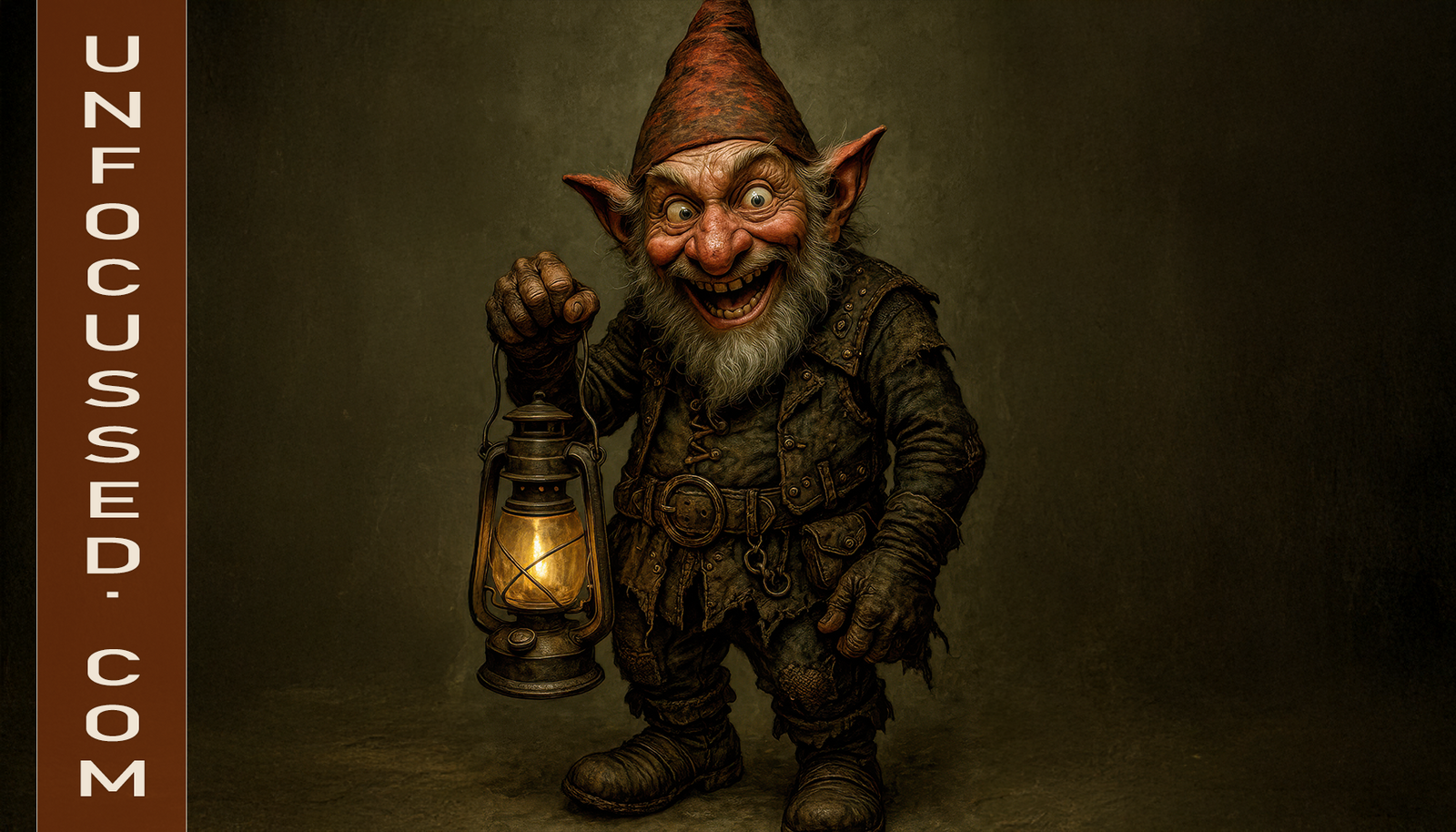
Le porteur de lanterne apparaît À Mirewood, tout le monde connaissait les règles de la forêt. Les anciens les enseignaient à l'école, le tavernier les griffonnait au dos de serviettes tachées de bière, et la vieille grand-mère Bipple les hurlait à quiconque s'approchait trop près de la lisière. C'étaient des règles simples, faciles à retenir, mais la plupart les ignoraient jusqu'à ce qu'il soit trop tard. Ne sifflez jamais après la tombée de la nuit. (Cela attire l'attention.) Ne suivez jamais les rires dans les bois. (Ce ne sont pas vos amis.) Si vous voyez une lanterne qui se balance là où il ne devrait pas y en avoir, courez. Bien sûr, les voyageurs de passage connaissaient rarement ces règles. Et, fidèles à leur nature, ils avaient tendance à se moquer des superstitions locales, jusqu'à ce que la superstition elle-même surgisse des buissons et se présente avec un sourire si large qu'il en était presque douloureux. Cette superstition avait un nom – ou du moins plusieurs variantes. Certains l'appelaient Grimble. D'autres, Snagtooth. Quelques-uns prétendaient qu'il s'appelait Darryl, mais ces gens-là avaient sans doute beaucoup bu et avaient peut-être la fâcheuse habitude de tout appeler Darryl. Quel que soit son nom, la vérité demeurait : il était un porteur de lanterne. Ni un guide, ni un bienfaiteur, ni un ami. Un porteur de lanterne , et si vous aperceviez sa lumière, vous étiez déjà en danger. La nuit où commence notre histoire, il n'y avait pas de lune, le ciel était lourd de nuages et les bois étaient plus sombres que le ventre d'une vache. Un groupe de marchands fatigués, leurs ânes croulant sous des sacs de navets, d'oignons et un seul tonneau d'une substance étrangement liquide, descendaient le chemin du Vieux Creux. Leurs bottes s'enfonçaient dans la boue, ils étaient de mauvaise humeur et leurs conversations se résumaient à des murmures de plaintes sur le prix des navets. Ils ne l'ont pas remarqué tout de suite. Une faible lueur, comme la dernière braise d'un feu mourant, qui flottait entre les arbres. Peut-être un feu follet, peut-être le reflet du clair de lune sur l'écorce humide… mais alors, il y a eu le son. Le rire. Oh, ce rire ! Tout commença par un hoquet, comme si quelqu'un avait avalé un kazoo. Puis ce fut un rire strident qui fit trembler les feuilles, siffla dans les sous-bois et résonna jusqu'à la moelle épinière des voyageurs, les raidissant comme des cordes de violon. C'était un rire qui disait : « Oui, je sais exactement où vous allez. Et non, vous n'aimerez pas ça en y arrivant. » Un des ânes brailla nerveusement. Le plus jeune marchand murmura : « Tu as entendu ça ? » Le plus âgé fit semblant de ne rien entendre. Après tout, nier la réalité coûtait moins cher qu'une thérapie. Et puis- Il apparut. Une silhouette trapue, pas plus d'un mètre vingt, mais deux fois plus large, surgissant des arbres comme si la forêt elle-même l'avait recraché. Son gilet de cuir semblait avoir été cousu à la va-vite par quelqu'un qui avait une mauvaise vue et aucun sens des proportions. Ses bottes s'affaissaient, rapiécées à l'infini, ressemblant plus à des rapiéçages qu'à des bottes. Ses gants grinçaient de crasse et sa boucle de ceinture était tordue, prenant la forme d'un cercle qui avait dû jadis se dessiner. Mais les marchands ne fixaient pas ses vêtements. Ils fixaient son visage. Ses oreilles pointues, dressées comme des poignées de dague. Ses yeux, ronds et exorbités, qui luisaient d'une gaieté démente. Son nez – rouge, bulbeux, de ceux qui témoignent de siècles de mauvais choix de vie. Et, bien sûr, sa bouche. Cette bouche énorme, terrifiante, magnifique, qui s'étendait presque d'une oreille à l'autre et dévoilait une dentition qui semblait provenir de plusieurs espèces différentes et agencée sans aucun plan apparent. Il sourit. La lanterne qu'il tenait à la main oscilla, projetant une lueur dorée qui dansait sur les visages pâles et horrifiés des marchands. « HA ! HA ! HA ! TU ES PERDU, N'EST-CE PAS ? » Le rire qui suivit ne pouvait provenir d'une créature de sa taille. Il était tonitruant, ridicule, résonnant entre les arbres comme un chœur de démons ivres s'essayant à chanter des chants de marins. Un des ânes s'assit en signe de protestation. Un autre se mit à ronger ses rênes. Les marchands serraient leurs navets contre eux pour se réconforter. Personne ne bougea. La forêt sembla retenir son souffle. Puis, d'une voix bien trop enjouée pour la situation, le porteur de lanterne dit : « Ne t'inquiète pas. Je connais un raccourci. » Le raccourci Dans la plupart des contes, lorsqu'un étranger souriant, à l'allure de lutin, surgit de la forêt à minuit et vous propose un raccourci, le plus sage est de refuser, de s'incliner poliment et de courir dans la direction opposée jusqu'à ce que vos chaussures prennent feu. Malheureusement, les marchands ne sont pas réputés pour leur goût de l'aventure, ni pour leur prudence. Ils sont en revanche connus pour leur avidité et leur impatience. Le plus jeune marchand s'éclaircit la gorge nerveusement. « Un raccourci, dites-vous ? » Le sourire du porteur de lanterne s'élargit, ce qui semblait médicalement impossible. « Oh oui. Le chemin le plus rapide vers le village. Rapide comme l'éclair, plus rapide qu'un éternuement, plus rapide qu'une oie tombant dans un puits. » « Une oie qui tombe d’un… quoi ? » demanda le plus vieux marchand, les sourcils froncés comme des chenilles en colère. La créature cligna des yeux, l'air parfaitement sérieux, puis rejeta la tête en arrière et éclata d'un rire si violent que son chapeau faillit s'envoler. La forêt se joignit à elle, les échos résonnant dans les branches jusqu'à donner l'impression que la forêt elle-même riait aux éclats. Voilà son problème : dès qu'il se mettait à rire, tout riait. Les arbres craquaient de rire. Le vent sifflait. Même les ânes laissaient échapper des hee-haws surpris et indignes qui ressemblaient étrangement à des ricanements. Les marchands frissonnaient, car il n'y a rien de plus sinistre qu'un âne qui se moque de vous. Pourtant, l'idée de gagner deux jours de voyage était trop tentante. Les marchands échangèrent des regards. Leurs bottes étaient boueuses, leur humeur maussade, et le tonneau de liquide suspect était déjà à moitié vide. Un raccourci leur permettrait de retrouver plus vite chaleur, bière et sécurité. Assurément, se disaient-ils, une créature dotée d'un tel sens de l'humour ne pouvait être dangereuse. « Allez-y, monsieur », dit courageusement le plus jeune marchand, bien que sa voix se soit brisée à trois endroits différents. « Monsieur ? » Le porteur de lanterne se tenait la poitrine comme s'il était mortellement blessé. « Ai-je l'air d'un monsieur ? Mon cher garçon, je suis un professionnel ! » « Un professionnel… quoi ? » demanda le marchand le plus âgé, d’un air suspicieux. « Guide professionnel des objets perdus ! » rugit la créature en agitant sa lanterne avec emphase. « Moutons égarés ! Pièces de monnaie perdues ! Chaussettes égarées ! Sens de l'orientation perdu ! Je retrouve tout. Sauf la virginité. Celle-ci a tendance à rester perdue. » Les marchands toussèrent, gênés. Un âne renifla. Au loin, un corbeau croassa, manifestant son désapprobation. Et ainsi, contre l'avis de tous les contes populaires jamais écrits, les marchands suivirent le porteur de lanterne hors de la route principale. Sa lanterne flottait devant eux comme une luciole sous l'effet de la caféine, plongeant et oscillant, disparaissant parfois complètement avant de réapparaître avec un cri soudain de « BOUH ! » qui faisait péter les ânes de terreur. Le chemin qu'il leur avait fait emprunter n'en était pas un. Il serpentait à travers des sous-bois qui accrochaient leurs vêtements, traversait des ruisseaux qui trempaient leurs bottes et passait sous des branches qui semblaient se baisser exprès, mais trop tard. À chaque fois qu'ils trébuchaient, à chaque fois qu'ils juraient, à chaque fois qu'ils butaient contre une bûche qui n'était pas là un instant auparavant, le Porteur de Lanterne riait. Un rire fort, long et rauque, comme celui d'un vieux joueur d'orgue de Barbarie qui tente de s'éteindre en jouant. Après ce qui leur parut une éternité, les marchands, essoufflés, couverts de boue et plus que jamais incertains de leurs choix de vie, marmonnèrent l'un d'eux : « Vous êtes sûrs que c'est plus court ? » « Plus court que quoi ? » demanda innocemment le guide, les yeux pétillants. «Que la route !» « Oh oui », dit-il en rayonnant. « Plus court que la route. Plus court aussi que l'éternité, plus court qu'une girafe, plus court que… » Il se pencha près de lui, son nez frôlant presque la joue du marchand, « plus court que votre patience . » Il rejeta la tête en arrière et éclata d'un nouveau rire tonitruant. Le son était si fort et si contagieux que les marchands se surprirent à rire nerveusement, puis à glousser, puis à éclater de rire, sans pouvoir expliquer pourquoi. Leurs rires se mêlèrent aux siens, jusqu'à ce que la forêt ne soit plus qu'un carnaval bruyant de rires, de hurlements, de ricanements et de reniflements. Cela dura encore et encore, jusqu'à ce qu'ils se sentent ivres de joie, étourdis et pris de vertiges, trébuchant dans l'obscurité, les larmes ruisselant sur leurs joues. Et puis, tout aussi brusquement, les rires cessèrent. Le silence. Un silence lourd, suffocant. Un silence qui vous oppresse les oreilles jusqu'à vous faire entendre votre propre sang bouillonner comme une soupe dans une marmite. Les marchands clignèrent des yeux, haletants, et réalisèrent que le porteur de lanterne n'était plus devant eux. Il était derrière eux. Souriant. Immobile. Toujours souriant. « Maintenant, » murmura-t-il d'une voix tranchante comme un couteau raclant un os. « Nous y voilà. » Les marchands regardèrent autour d'eux. Ils n'étaient pas sur une route. Ils n'étaient pas près d'un village. Ils se tenaient dans une clairière cernée d'arbres aux troncs tordus et tortueux, aux formes étranges. Les nœuds de l'écorce semblaient les observer, le visage figé en plein rire. Des racines s'enroulaient sur le sol comme des doigts squelettiques. Et au centre de tout cela se trouvait un puits de pierre, vieux et rongé par la mousse, dont l'ouverture était plus noire que le ciel nocturne. Le porteur de lanterne leva sa lampe. Son sourire s'élargit encore. « Le raccourci, déclara-t-il fièrement, vers l'endroit précis où vous n'avez jamais voulu être . » Et puis il rit de nouveau. Plus fort que jamais. Un rire qui laissait présager que la troisième partie de cette histoire allait être bien pire. Le Puits des Échos La clairière retint son souffle. Les marchands, blottis les uns contre les autres, serraient leurs oignons comme des reliques sacrées, fixant le puits de pierre moussue au centre. L'air était humide et terreux, avec une légère odeur de fer, comme si la forêt avait rongé de vieux clous. Tout là-haut, un corbeau croassa une fois, puis se ravisa. Le silence revint. « Eh bien, » dit le plus vieux marchand en forçant un rire qui ressemblait plus à un hoquet, « merci pour vos… services, mon ami. Nous allons, euh, nous en aller maintenant. » Les yeux du porteur de lanterne s'écarquillèrent. Son sourire se crispa. Il se pencha en avant, sa lanterne oscillant, jusqu'à ce que sa lueur projette d'étranges ombres sur son visage. « Vous êtes déjà en route ? Mais vous venez à peine d'arriver … Vous ne voulez pas voir ce qu'il y a à l'intérieur ? » Il pointa un doigt trapu vers le puits. La mousse frissonna. Les pierres grincèrent comme si elles se souvenaient d'un mauvais souvenir. Le plus jeune marchand laissa échapper un petit cri. « À l'intérieur ? Non, non, on n'a pas le temps… vraiment… » « À L'INTÉRIEUR ! » hurla le Porteur de Lanterne, et son rire retentit, tonitruant, résonnant entre les arbres jusqu'à faire trembler les racines de joie. Les marchands se bouchèrent les oreilles, mais en vain. Son rire leur pénétra le crâne, résonna dans leur cerveau et s'échappa par leurs narines comme de la fumée. Ils ne pouvaient y échapper. Ils ne pouvaient même pas réfléchir. Les ânes braillèrent de panique, tirant sur leurs rênes. L'un d'eux recula, trébucha sur une racine et atterrit directement sur le tonneau de liquide bouillonnant. Le tonneau se brisa, déversant un flot d'une substance âcre qui siffla au contact du sol. La forêt l'absorba goulûment, et les arbres frémirent de plaisir. « Oh, c'est tout simplement délicieux », soupira rêveusement le Porteur de Lanterne en humant les vapeurs. « Cela me rappelle mon enfance. Rien de tel qu'un bon solvant pour faire ressurgir la nostalgie. » Le plus vieux marchand, rassemblant le peu de courage qui lui restait de ses os ridés, s'avança. « Écoute-moi bien, petit diable. Nous en avons assez de tes manigances. Nous exigeons… » Il n'eut pas le temps de finir. La lanterne du Porteur de Lanterne s'illumina d'une lumière blanche éblouissante, si vive que les marchands reculèrent en titubant, se protégeant les yeux. La clairière sembla se déformer. Le puits s'élargissait, s'élevait, ses pierres gémissant, jusqu'à ressembler à une gueule affamée. Du plus profond de lui, quelque chose bougea. Quelque chose gloussa. Quelque chose de très grand, de très vieux et de parfaitement éveillé . « Tu l’entends ? » murmura le Porteur de Lanterne, soudain calme, respectueux, presque tendre. « C’est le Puits des Échos. Il recueille tous les rires jamais perdus dans les bois. Les gloussements des enfants qui se sont aventurés trop loin. Les rires étouffés des chasseurs qui ne sont jamais revenus. Même un ou deux ricanements de prêtres qui auraient dû être plus avisés. » Les marchands frissonnèrent. Le son montait du puits : des rires superposés, des centaines de voix entremêlées, certaines stridentes, d’autres gutturales, d’autres hystériques, d’autres encore sanglotant malgré les rires. Ce n’était pas que du bruit. C’était une faim insatiable . Le plus jeune marchand laissa tomber son sac d'oignons. Les bulbes roulèrent à travers la clairière, dévalant vers le bord du puits. Un oignon bascula et tomba. Pendant un instant, rien ne se passa. Puis, dans le puits, les rires l'engloutirent d'un rot satisfait. « Eh bien, » dit le porteur de lanterne, rayonnant de fierté, « le dîner est réglé. » La panique s'empara des marchands. Ils s'enfuirent vers les arbres en trébuchant et en hurlant. Mais peu importe la direction qu'ils prenaient, la clairière s'étendait avec eux. Le puits restait au centre. Les arbres se courbaient, enserrant le monde comme un chapiteau de carnaval cruel. Ils étaient pris au piège d'une farce, et la chute était imminente. Le Porteur de Lanterne dansait en rond, brandissant sa lanterne, agitant ses jambes trapues et hurlant de joie. Ses yeux pétillaient. Ses dents brillaient. Sa voix résonnait comme celle d'un bourreau jubilatoire. « Ne voyez-vous pas ? Vous en faites partie maintenant ! Vous êtes venus chercher un raccourci, et vous ne partirez jamais ! Vous rirez, rirez et rirez encore, jusqu'à ce qu'il ne reste plus que des échos ! » Un à un, les marchands se mirent à rire. D'abord un rire nerveux. Puis un sifflement. Puis une hystérie hurlante et impuissante. Leurs corps se plièrent en deux, leurs visages se tordirent, les larmes ruisselant sur eux. Ils se tenaient les côtes, incapables de respirer, incapables de s'arrêter. Leurs rires se mêlèrent aux voix du puits, aspirés vers le bas, entraînés dans les ténèbres avides jusqu'à ce que leurs propres échos rejoignent le chœur éternel. Même les ânes gloussaient. Un rire terrible, braillard, à glacer le sang, qui aurait été drôle s'il n'avait pas été si horriblement déplacé. Leurs rênes claquaient tandis qu'ils se cabraient et roulaient, leur rire tombant dans le puits, englouti tout entier. Finalement, le silence retomba. La clairière était déserte. Seul le porteur de lanterne demeurait, debout près des pierres moussues, sa lanterne luisant d'une faible lueur dorée. Il fredonnait un air en tapotant du pied, comme si de rien n'était. « Eh bien, » dit-il gaiement en jetant un coup d'œil autour de lui, « c'était amusant. » Il ajusta son chapeau, rota et essuya une larme de son œil exorbité. « Mais j'espère que la prochaine fournée apportera de meilleures friandises. Des oignons, vraiment ? Beurk ! » Il fit demi-tour et retourna en se dandinant dans la forêt, sa lanterne oscillant au gré du vent. Son rire flottait derrière lui comme de la fumée, s'enroulant entre les arbres et dérivant le long du vieux chemin creux vers le prochain groupe de voyageurs qui pensaient que la superstition n'était que de vieilles histoires ridicules. Et le puits attendait. Toujours en attente. Avide du prochain rire dans l'obscurité. Ramenez le porteur de lanterne chez vous (si vous l'osez) Si l'histoire de Rire dans le Noir vous a fait rire (ou vous a glacé le sang), vous pouvez inviter le malicieux Porteur de Lanterne dans votre propre univers. Son sourire inquiétant et sa lanterne lumineuse perdurent dans une série de produits artistiques de haute qualité, parfaits pour les amateurs de fantaisie macabre et d'humour gothique. 🖼️ Tirages encadrés – Apportez son charme troublant à vos murs grâce à un cadre magnifiquement réalisé. ✨ Impressions sur métal – Faites briller sa lanterne encore plus fort grâce à des finitions métalliques audacieuses et modernes. 💌 Cartes de vœux – Envoyez un peu de joie effrayante (et peut-être un rire ou deux) par la poste. 🔖 Autocollants – Ajoutez une touche de fantaisie effrayante à votre ordinateur portable, votre journal ou votre flacon de potion préféré. Quelle que soit la forme que vous choisissiez, vous emporterez avec vous un fragment de l'étrange magie du Porteur de Lanterne. Mais… soyez prudent lorsque les lumières s'éteignent. Son rire a la fâcheuse tendance à vous retrouver.


