par Bill Tiepelman
Une partie d'échecs épique
Ouvertures et présages
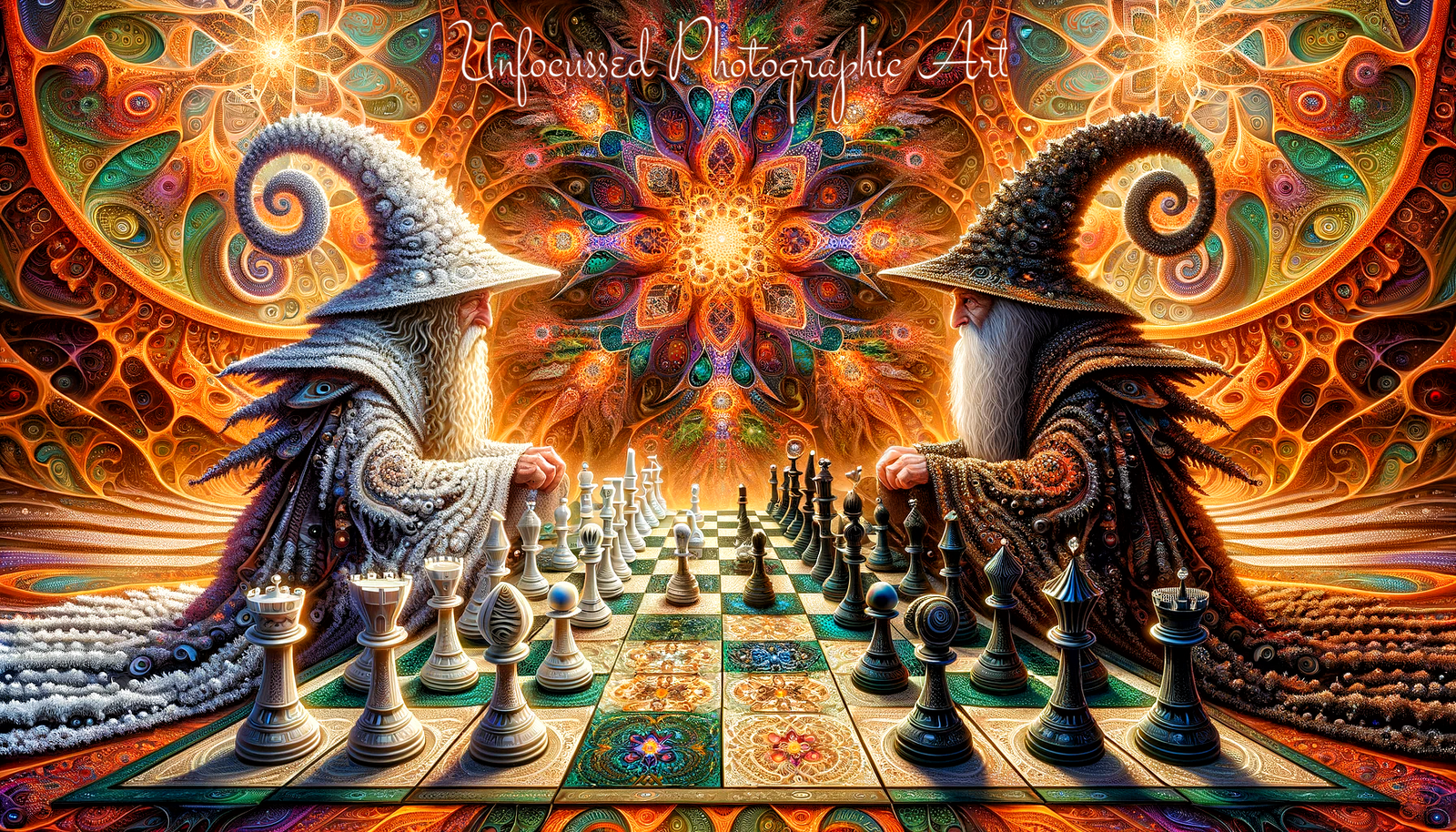
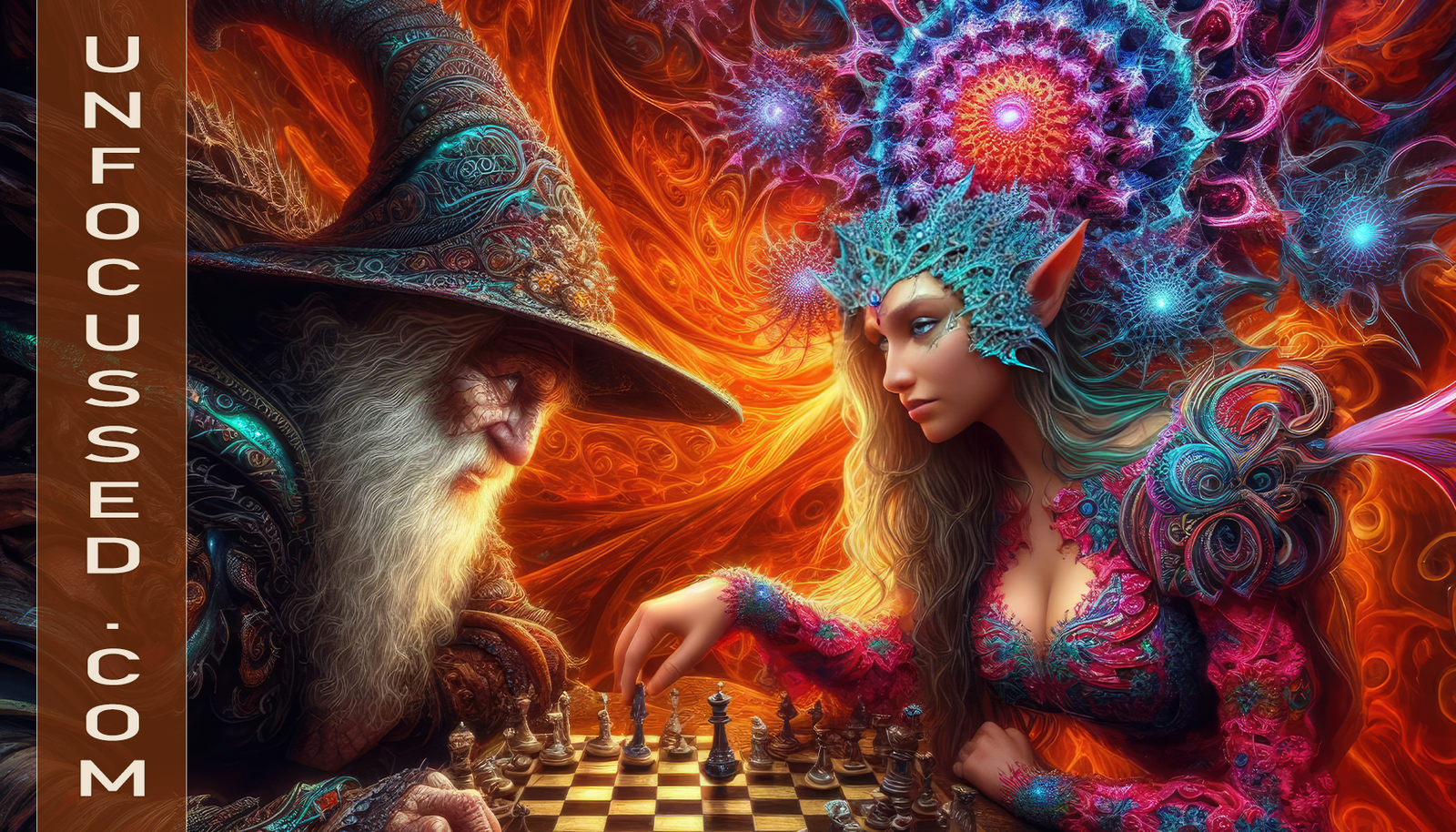
Le silence régnait dans la salle, comme si l'on pouvait entendre la poussière murmurer. Des bougies vacillaient dans leurs appliques en fer, projetant des ombres sur la pierre, telles des chats noirs grimpant aux rideaux. D'un côté de la table sculptée, un magicien buriné, vêtu d' une robe rouge brodée , dont le tissu écarlate était orné de constellations qui n'apparaissent que lorsque la lune se fait dramatique, était assis. En face de lui, un dragon aux écailles pourpres, dont les ailes arquées évoquaient le cristal d'une cathédrale – membranes améthyste, entretoises veinées de bronze et une légère odeur de tonnerre. Entre eux : soixante-quatre cases du destin. Pas de boules de feu. Pas de bâton tournoyant. Ce soir, comme les bardes le murmureraient plus tard d'un rythme douteux, c'était l' affrontement entre les échecs des magiciens et ceux des dragons , entre l'esprit et le mythe , entre le silence et les battements du cœur .
« Tu sais qu’ils ont baptisé une ouverture à mon nom », dit le dragon, affichant un sourire carnassier. « Le Dragon de la Sicile. Très flatteur. Très juste. Beaucoup de… chaleur. »
« Je préfère les lignes tranquilles », dit le magicien d'une voix douce comme l'eau profonde. Il ajusta sa barbe comme un général repliant une bannière et avança un pion du bout des doigts, comme s'il prêchait à une assemblée restreinte. Le pion trembla, s'illumina de l'intérieur et laissa une faible traînée d'étincelles rouges. Les enchantements s'agitèrent : le match de ce soir avait des règles . Si le magicien perdait, les Protections de Bienvenue de la cité – des sorts qui transformaient les armées hostiles en touristes désorientés – s'effondreraient pendant un an et un jour. Si le dragon perdait, il libérerait le Trésor des Souvenirs , un caveau de mémoires volées qui faisait oublier aux héros où ils avaient laissé leur courage et aux poètes égarer leurs vers.
Le dragon pinça délicatement son pion d, tel un chirurgien manipulant une vérité dangereuse. « Centre ouvert, ciel ouvert », ronronna-t-il en l'avançant pour relever le défi. À l'atterrissage, l'échiquier exhala un souffle de givre. Derrière les pièces, de minuscules orages se formèrent – des nuages gros comme des dés à coudre, hantés par des tonnerres gros comme des virgules. C'était du réalisme fantastique épique , mais avec des règles. Chaque coup se traduisait par un phénomène aux confins de la réalité ; les erreurs brisaient tout ; les coups de génie réparaient tout et parfois même, le laissaient meilleur qu'avant.
Au troisième coup, le cavalier du magicien bondit – littéralement – balayant l'échiquier d'un arc de cercle écarlate, atterrissant avec un toc satisfaisant en f3. Un petit renard roux de lumière fila le long de la colonne et s'enroula autour de la base du cavalier. « Compagnon », murmura le magicien, comme s'il parlait à un vieux chien qui connaissait le nom secret du tonnerre.
Le dragon répondit par un fou qui se faufila en diagonale, tel une pensée que l'on s'efforçait d'ignorer. « Tu sens la bibliothèque, dit-il. Et le vieux thé. Et les discours de victoire répétés dans les toilettes. »
« Projection », dit le magicien, les yeux pétillants. Il déplaça un pion, jetant l'avenir derrière l'idée de sécurité. Le roi sculpté glissa de deux cases et la tour bondit par-dessus avec l'agilité d'un acrobate. Chaque pièce de ce jeu d'échecs enchanté avait sa propre personnalité : les tours ressemblaient à des bastions à tête de lion ; les fous étaient des prières à double tranchant ; la reine avait l'air étrangement d'une personne dont on pourrait tomber amoureux en prenant une décision désastreuse.
Ils échangeaient des coups de rythme et de menace. Les pions s'évaporaient en volutes de fumée. Un chevalier capturé se transforma en une rose de bois qui s'enflamma aussitôt, sans s'en formaliser. L' art stratégique et fantastique du plateau les attirait toujours plus près. Le bas de la robe du magicien bruissait sur les dalles comme des feuilles mortes ; les ailes du dragon frémissaient en micro-pulsations qui faisaient hocher la flamme des bougies, tel un public restreint à un concert très privé.
« Pourquoi caches-tu ta queue ? » demanda le magicien d'un ton désinvolte, les yeux rivés sur les cases, comme s'il parlait de pluie avec un orage. Les anneaux du dragon s'agitèrent, sans rien révéler.
« Un vieux pari », dit le dragon. « Je l'ai perdu contre un poète qui menaçait de faire rimer "améthyste" avec "irrésistible". J'ai écarté la tentation. » Il déplaça un chevalier avec une grâce ridicule. C'est bon. Pas dangereux, plutôt un sourcil levé dans une pièce bondée.
Le magicien para, un mouvement souple aux dents acérées. Leur conversation mêlait humour et désir ; tous deux savouraient la tension. Les pupilles du dragon se contractèrent, puis se dilatèrent, telles les vagues de l'océan hésitant entre calme et agitation. « Tu joues contre l'homme, pas contre l'échiquier », dit-il.
« Je joue le siècle », répondit le magicien. « Vous autres dragons, vous raisonnez en âges ; nous, les magiciens, nous raisonnons en modifications . » Il avança un pion qui n'était pas tout à fait un piège, du moins jusqu'à ce qu'on le regarde pour la troisième fois – alors, c'était la seule chose qu'on pouvait voir. Un duel mystique bourdonnait sous la table ; le visage de lion sur le piédestal plissa les yeux et sembla songer à une reconversion.
Le milieu de partie frappa comme une fanfare dans une cathédrale. Les tactiques explosèrent – clouages, fourchettes, attaques surprises – comme si les règles attendaient d'être invitées à une fête plus grandiose. Le dragon sacrifia un fou, et pendant un instant, les flammes de l'applique s'inclinèrent horizontalement, murmurant un « ouah ». Le magicien accepta avec un froncement de sourcils qui aurait fait s'excuser un nuage d'orage. « Calculé », dit-il.
« Évidemment », répondit le dragon, mais un soupçon de doute se glissa entre ses écailles. Il tenta de soulever une tour ; celle-ci se cambra, se transforma en balcon et songea à faire payer un loyer. La reine du magicien pirouetta le long d'une colonne, un éclair de soie rouge, une rumeur de parfum à la cannelle et de décisions impossibles à minuit. Une œuvre d'art épique, en effet – chaque case un projecteur, chaque coup une réplique lue avec un timing dévastateur.
Les minutes s'étirèrent en une heure ; l'heure s'étira en une légende pratiquant le yoga . Au-delà du hall, la ville dormait sous des sceaux protecteurs, tels des fils d'or brodés sur du velours. Un faux pas et le tissu s'accrochait. Le magicien frotta du pouce le bord de la table où le sculpteur sur bois avait dissimulé un minuscule visage – le sien – bouche bée d'étonnement. Il plaça son cavalier sur la case e5 avec la tendresse d'une dernière lettre. « Ancré », dit-il.
« Immobilisé », rétorqua le dragon, mais sa voix s'était adoucie. Il appréciait cela, plus que ses trésors, plus que le brouhaha des acclamations, plus que la satisfaction théâtrale de brûler les sourcils d'un héros. Ici, tandis que sa stratégie enchantée bourdonnait et que la robe du magicien se plissait en plis significatifs, il pouvait faire comme si le monde était une énigme qui aimait être résolue.
L'échiquier se lisait comme une confession. Un squelette tactique se dessinait sous la position : si le dragon avançait son pion g, un ouragan de possibilités s'ouvrirait ; si le magicien déplaçait sa dame en h5, la ville entendrait des cloches que personne n'avait commandées. La pression montait jusqu'à ce que respirer devienne un geste qu'on pourrait regretter.
« Tu souris », dit le dragon.
« Je peux me le permettre », répondit le magicien. « Vous êtes sur le point de choisir entre l'avidité et la gloire. »
La griffe du dragon planait au-dessus du roi noir . Étrange intention : nul ne s’empare du monarque si tôt sans projeter un acte excentrique ou d’une beauté bouleversante. Il la souleva – les bougies s’éteignirent, un phénomène complexe pour une flamme – et la déposa avec un clic qui résonna dans la salle comme une prophétie se remémorant ses paroles.
« Long est le chemin qui serpente à travers l'orgueil », murmura le dragon, un proverbe d'une espèce qui mesure les après-midi en millénaires. Ses ailes se resserrèrent contre son dos ; les veines de bronze vibrèrent. « Échec. »
Le magicien ne regarda pas le roi. Il fixa les yeux du dragon. Il y vit un avenir se ramifier comme du givre sur du verre : un chemin empli de fumée et de sirènes, un autre bordé de soie rouge et de rires soulagés. Il sourit une seconde fois – le sourire discret et inquiétant de celui qui sait où se trouve la trappe, car il l’a installée lui-même lors de travaux de rénovation.
Il prit une pièce à laquelle aucun conteur ne s'attendrait et la déplaça d'une case, d'un geste ni tendre ni cruel. L'échiquier s'illumina. Dehors, les enfants respiraient. Quelque part, un poète avait perdu puis retrouvé le mot juste pour « violet » .
« À vous de jouer », murmura le magicien, et une petite tempête se déchaîna dans la gorge du dragon, l'éveillant.
L'enfer du milieu de partie
Les serres du dragon planèrent au-dessus de l'échiquier, ses griffes frémissant comme des diapasons frappés par la foudre. Ses pupilles se rétrécirent en fentes prédatrices, puis – lentement, comme si ce mouvement portait le poids d'un cortège funèbre – il avança une tour. La case grinça sous son poids. Une vibration parcourut la salle, faisant trembler la poussière de mortier qui se détachait du plafond. La tour se transforma en une forteresse miniature hérissée de balistes, toutes pointées vers le flanc fragile du magicien.
« Ça y est, ça commence », dit le dragon d'une voix veloutée et tranchante. Un sourire narquois se dessina sur son museau écailleux. « Ta position est… appétissante. »
Le magicien haussa un sourcil effilé et caressa sa barbe. « Vous avez pris la vulnérabilité pour un appât. Ça arrive aux novices… et aux reptiles. » Il fit avancer un pion. Celui-ci s'avança docilement, puis se métamorphosa en un minuscule phénix cramoisi qui poussa un cri strident, projetant des étincelles comme des applaudissements furieux. La salle s'obscurcit un instant, puis la lumière revint, plus crue et plus vive, comme si les murs eux-mêmes avaient compris qu'ils assistaient à un moment historique.
Le milieu de partie était une véritable symphonie, un feu d'artifice haletant . Chaque capture avait des conséquences dramatiques : les pions se dissolvaient en nuages de fumée âcre ; les fous hurlaient en latin en se réduisant en cendres ; un cavalier explosait en une pluie de pièces d'argent qui s'entrechoquaient sur la table avant de se dissiper en brume. Chaque dénouement semblait bouleverser la réalité. Dehors, les remparts protégeant la ville vacillaient comme des bougies dans l'orage. Les fenêtres tremblaient. Les chiens s'éveillaient. Les bébés rêvaient de dragons qu'ils n'avaient jamais vus.
Le dragon se pencha, son souffle si chaud qu'il fit trembler la barbe du magicien. « Un seul faux pas, vieil homme, et je dévorerai tes pions comme des cacahuètes salées. »
« Tu me prends pour un prudent », répliqua le magicien, poussant sa reine dans le danger avec l'assurance d'un joueur qui parie l'argent du loyer et gagne des royaumes. Elle atterrit en une pirouette, sa robe d'obsidienne sculptée flottant au vent, ses yeux rougeoyants comme un battement de cœur. Échec.
Les écailles du dragon ondulaient du violet à l'indigo tandis qu'il plissait les yeux pour observer la position. « Courageux. Ou stupide. La différence se joue souvent après coup. » Il grogna et lança un fou en avant, s'emparant d'un pion avec une telle férocité que l'échiquier se fendit en diagonale comme une cicatrice de foudre. Les bougies flamboyèrent latéralement, rugissant comme une foule de supporters de football.
Le magicien répliqua sans hésiter, une tour s'abattant sur lui. La forteresse se déploya, faisant surgir des tours si hautes que leurs ombres se projetaient sur les ailes du dragon. Les yeux du magicien brillèrent. « Tu t'es construit une cage. »
Le dragon laissa échapper un rire sinistre. « Tu confonds architecture et prison. » Sa queue – enfin, son fantôme, l'espace vide qu'elle occupait – frémit d'une menace latente. « Laisse-moi te montrer comment les dragons brisent les murs. »
L'échiquier trembla lorsque sa reine, une bête de flamme violette couronnée de lumière orageuse, traversa la diagonale. Le bruit ressemblait moins à un coup qu'à une avalanche qu'on invite à danser. La tour du magicien hurla en se brisant, ses tours s'effondrant sur elles-mêmes avec la dignité tragique d'une cité-État trahie par un urbanisme défaillant.
Les pièces se faisaient rares. La chaleur étouffante de la salle s'intensifiait, l'air saturé d'ozone et la tension dramatique palpable. La robe humide du magicien collait à son dos ; la sueur perlait sur son front, mais ses yeux restaient rivés sur l'échiquier. Le souffle du dragon s'amplifiait, caverneux, chaque expiration embuant les lunettes du magicien. C'était désormais une guerre d'usure , aucun des deux ne voulant céder, chacun persuadé que l'autre craquerait le premier.
« Tu le sens ? » demanda le sorcier d’une voix calme mais perçante. « Les protections extérieures nous écoutent. Elles connaissent l’enjeu. Elles veulent que je gagne. »
« Ils veulent du drame », rétorqua le dragon. « Victoire ou défaite, ils chanteront mes louanges. Qui chantera vos louanges, sorcier, quand vous ne serez plus là ? Les bibliothécaires ? » Il eut un sourire cruel et promut un pion. Celui-ci atteignit le dernier rang et se transforma en une reine couronnée de flammes. « J'en ai maintenant deux. »
Le magicien expira lentement, comme pour chasser la poussière d'un secret. Il déplaça un cavalier. Le petit cheval de bois galopa en hennissant bruyamment et atterrit sur la case fa7. À l'instant précis où il frappa, le monde extérieur se tut . Plus un souffle de vent, plus un craquement de bois, plus un aboiement. Le silence d'un événement terriblement ingénieux qui allait se produire.
Le sourire suffisant du dragon s'estompa. Son coccyx tressaillit à l'endroit où aurait dû se trouver sa queue manquante. « C'est… gênant. »
Les lèvres du magicien se tordirent en un sourire acéré comme du verre brisé. « Oh non, mon ami écailleux. C'est échec et mat, cinq coups d'avance. Tu ne t'en es juste pas encore rendu compte. »
Pour la première fois, les pupilles du dragon se dilatèrent sous l'effet de la peur. Non pas de la terreur — les dragons ne connaissaient pas ce mot — mais de la suspicion viscérale et nauséabonde d'avoir été dupé.
Les torches se penchèrent vers l'intérieur, s'efforçant de voir. L'air vibrait d' un suspense épique . Les griffes du dragon raclaient le bois. Les mains du magicien planaient au-dessus de la table comme celles d'un chef d'orchestre sur le point de faire monter une symphonie en crescendo.
Puis, le magicien bougea. Un seul mouvement. Un mouvement discret, presque ennuyeux , qui bouleversa toute la situation comme une table de taverne après une mauvaise main de cartes.
Le dragon rugit, faisant trembler la salle jusque dans ses fondations. Mais au fond de lui, sous toute cette bravade et ces flammes, il le savait déjà : la fin approchait, et elle ne lui appartenait pas.
Le règlement de comptes final
Le rugissement du dragon fit trembler la salle comme le tonnerre fracassant une cloche de cathédrale. La poussière retombait des poutres sculptées des siècles plus tôt par des moines qui n'auraient jamais imaginé que leur travail du bois serait un jour témoin d'un tel spectacle. L'échiquier trembla, ses cases rougeoyant de rouge et de violet, comme si le feu et la foudre s'étaient entendus pour le partager. Et pourtant, le magicien restait immobile, sa robe rouge drapée comme un sermon prêt à être prononcé, les yeux pétillants d'une joie habituellement réservée aux grands crus et à une chute particulièrement cinglante.
« Tu t'es mis dans une situation délicate », dit doucement le magicien. « Ta dame est trop gourmande, tes pions trop ambitieux, ta tour trop sentimentale. » Il poussa un cavalier en avant. Un éclair écarlate jaillit en diagonale. Échec.
Le dragon grogna sourdement, un grondement semblable à celui de montagnes grinçant des dents. Ses griffes frémirent, son esprit s'agita en calculs. Vingt variantes, quarante, cent. Toutes aboutissaient à la même conclusion : son roi emprisonné, traqué et abattu par une logique plus tranchante que n'importe quelle épée. « Impossible », siffla-t-il. « Je suis ancien . J'ai survécu à des empires. J'ai misé des âmes et troqué des soleils. »
« Peut-être », murmura le magicien en déplaçant sa tour comme on ajuste un marque-page. « Mais je m’ennuie depuis cinq cents ans. Et l’ennui engendre des passe-temps très dangereux. »
L'échiquier se contracta, l'air se resserrant comme si la réalité elle-même retenait son souffle. Le dragon s'agita, balayant désespérément sa reine à travers l'échiquier. Mais ses mouvements sonnaient creux, chaque menace contrée avant même d'être prononcée. Les pièces du magicien avancèrent avec l'inéluctabilité des impôts et de la mauvaise poésie. Un pion fut promu en une seconde reine – deux sœurs écarlates chuchotant à l'unisson. La première reine glissa le long de la colonne h, arborant un sourire narquois, tel un amant qui connaît vos secrets. Échec.
Le dragon cracha des flammes qui embrasèrent l'air, mais les protections entourant la salle pulsèrent d'une défiance sereine. Dehors, la tension se dissipa comme une fièvre ; les enfants s'agitèrent, les amoureux s'embrassèrent, les guerriers se retournèrent dans leurs couchettes et marmonnèrent les noms de stratégies qu'ils ne comprenaient pas. Le monde entier se pencha vers l'échiquier, dans l'attente.
Le magicien bougea de nouveau, ni vite, ni lentement – simplement inévitablement. Une tour en d8. Le coup de grâce fut porté avec une précision chirurgicale. Échec et mat.
Un long silence régna. Puis le dragon s'affaissa, ses ailes pendantes comme des bannières mouillées, la mâchoire relâchée par l'incrédulité. Il fixa le roi noir, immobilisé, sans aucun moyen de se défendre, sans plus aucune ruse. Son orgueil se brisa plus fort que la pierre, la puissante arrogance de plusieurs siècles s'écoulant comme une outre percée.
« Tu m’as piégé avec… de la patience », dit-il avec amertume.
« Non », corrigea doucement le magicien en se penchant en arrière sur sa chaise. « Je vous ai piégé avec de l'humour . Vous avez sous-estimé combien il est drôle d'être malin au bon moment. »
Le dragon laissa échapper un rire grave et brisé qui fit jaillir des étincelles sur le plateau dévasté. « Maudit sois-tu, vieil homme. Tu as gagné. Le Trésor des Souvenirs est à toi. Les héros retrouveront leur courage. Les poètes leurs mots. Même les ex-femmes leurs alliances. »
« Bien », dit le magicien en se levant et en époussetant sa robe. « Car j'ai égaré ma pipe depuis trente ans. » Sa reine lui fit un clin d'œil depuis l'échiquier, puis se volatilisa en braises.
Le dragon soupira, son arrogance disparue mais sa dignité intacte. Il inclina sa tête cornue. « Un autre combat, un jour ? »
Le magicien eut un sourire narquois et rabattit sa capuche sur son front. « Seulement si vous apportez des en-cas. J'ai un faible pour les châtaignes grillées. » Dans un tourbillon de soie rouge, il se retourna et disparut dans l'ombre, déjà en train d'imaginer les jeux à venir.
Derrière lui, le dragon restait assis, fixant l'échiquier longtemps après le départ du magicien. Puis il rit de nouveau – un rire lent, grave et résigné. « Échec et mat », murmura-t-il, comme s'il s'exerçait à l'humilité pour la toute première fois.
Et la ville d'en haut, de nouveau en sécurité, rêvait d'un magicien et d'un dragon prisonniers à jamais d'un jeu qui consistait moins à gagner qu'à empêcher le monde de s'ennuyer.
Intégration de produits
Intégrez la légende d' une partie d'échecs épique dans votre univers grâce à des produits d'une grande finesse qui célèbrent la patience du magicien et la fierté ardente du dragon. Chaque objet capture avec un réalisme saisissant et une atmosphère de fantasy épique des illustrations originales, vous permettant d'inviter la magie de la stratégie et du mythe dans votre quotidien.
Imaginez cette scène ornant vos murs sous forme d' affiche encadrée ou de toile imprimée , attirant tous les regards dans n'importe quelle pièce. Ou bien, offrez une touche de magie et d'humour avec une carte de vœux : le moyen idéal de partager cette histoire avec un amateur de fantastique et d'humour.
Pour un défi ludique, mettez votre intelligence à l'épreuve avec une version puzzle de l'œuvre, où chaque pièce évoque une étape du plan machiavélique du magicien. Et si vous préférez emporter ce duel avec vous, le sac fourre-tout vous permet de porter ce duel épique à l'épaule, où que l'aventure vous appelle.
Que vous l'accrochiez, l'offriez, la construisiez ou la transportiez, « Une partie d'échecs épique » est plus qu'une œuvre d'art : c'est une histoire avec laquelle vous pouvez vivre au quotidien.