
A primeira revisão
Em Palebranch, desejos eram tratados com a mesma solenidade que funerais, casamentos e cogumelos que começavam a sussurrar depois do pôr do sol.
Eram escritos em tiras prensadas de folha-prateada, dobradas três vezes em direção ao coração e levadas de pés descalços ao Santuário da Mariposa de Ametista, na extremidade norte da baixada. Os peregrinos deveriam chegar antes do amanhecer, lavar as mãos na bacia de água violeta da chuva e subir os treze degraus de marfim sem falar. No alto, depositavam suas petições sob as grandes asas dobradas da deusa e partiam sem olhar para trás.
A maioria seguia as regras.
Mirella Mosswhistle trouxera um lápis.
E era um excelente lápis. Fino, recém-apontado e encaixado atrás de uma orelha pontuda, caso a intervenção divina precisasse de pequenos ajustes.
— Não estou questionando o processo — sussurrou ao subir a escada. — Só acredito que qualquer acordo importante deveria permitir esclarecimentos.
Os pequenos cogumelos roxos que ladeavam a escadaria viraram os chapéus para ela.
Mirella parou no sétimo degrau.
— Isso não foi falar — disse a eles. — Foi um comentário de procedimento.
Os cogumelos continuaram encarando.
— Vocês são fungos. Não preciso da aprovação de vocês.
Uma nuvem de esporos lavanda explodiu do chapéu mais próximo com a energia inconfundível de um muxoxo.
Mirella terminou a subida num silêncio ofendido.
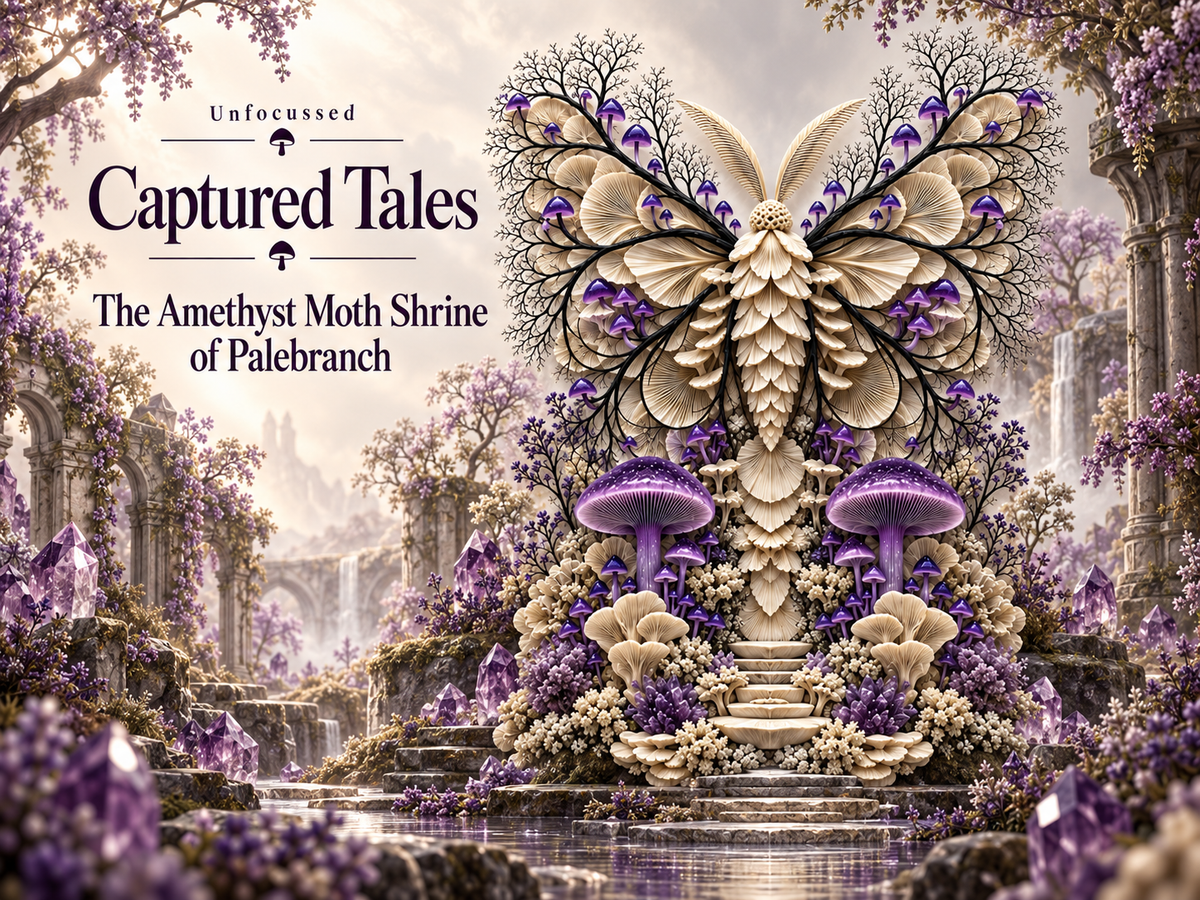
O santuário se erguia diante dela numa imobilidade luminosa. Galhos negros se espalhavam pela pedra pálida como veios de tinta, curvando-se ao redor de prateleiras sobrepostas de fungos cor de marfim. Cristais de ametista cintilavam entre ramos de flores-fantasma e musgo violeta. Acima de tudo repousava a própria mariposa sagrada, enorme e imóvel, com o corpo formado por pétalas sobrepostas e as asas dobradas numa vasta catedral de lamelas de cogumelo.
Duas antenas plumosas se estendiam para o céu que clareava.
Ao menos Mirella supunha que fossem antenas. Os guias do santuário as chamavam de “sensores celestiais”, mas guias de santuário tendiam a rebatizar coisas perfeitamente comuns sempre que as doações de entrada estavam baixas.
Mirella se ajoelhou diante da deusa e tirou do bolso a petição de folha-prateada.
Passara onze noites redigindo-a.
A primeira versão pedia um marido bonito. Mirella rejeitara esse rascunho por ser vergonhosamente superficial.
A segunda pedia um companheiro gentil e leal. Parecia que queria um cachorro.
A terceira ficara tão específica que incluía preferências aceitáveis de sopa, largura desejada dos ombros, frequência tolerável de roncos e um parágrafo inteiro sobre a pronúncia correta de seu sobrenome.
No fim, escolhera algo mais simples.
Grande Mãe de Ametista, cujas asas abrigam Palebranch e cuja sabedoria floresce sob a lua, peço apenas o amor verdadeiro. Envie-me o coração destinado a responder ao meu.
Curto. Elegante. Impossível de interpretar errado.
Mirella deslizou a petição sob um grupo de cogumelos perolados aos pés da deusa. Baixou a cabeça e esperou.
Nada aconteceu.
Esperou mais.
Um besouro atravessou o altar.
— Eu entendo que milagres podem exigir um prazo de processamento — disse Mirella.
O besouro parou, como se o otimismo dela o surpreendesse.
Então o santuário inspirou.
Todos os chapéus dos cogumelos se ergueram ao mesmo tempo. Galhos negros tremeram contra a pedra. Um brilho violeta percorreu os canteiros de cristais, subiu pelo corpo em camadas da mariposa e se espalhou por suas enormes asas, até cada delicada lamela brilhar por dentro.
A deusa não abriu os olhos.
Não precisava.
Uma única escama de ametista pálida se soltou de seu peito e flutuou até as mãos estendidas de Mirella. Era morna e fina como uma pétala, com uma frase escrita em prata.
Seu coração será correspondido antes do segundo nascer da lua.
Mirella soltou uma exclamação.
— Obrigada — sussurrou.
A luz violeta se apagou. Os cogumelos abaixaram os chapéus. O santuário voltou à quietude.
Mirella correu para casa com a escama divina bem guardada no corpete e passou o resto do dia fingindo não observar o caminho pela janela da frente.
Até a hora do jantar, trocara de vestido quatro vezes.
Até a meia-noite, reorganizara a sala para que qualquer alma gêmea inesperada notasse imediatamente a elegante composição de asas de mariposa prensadas acima da lareira.
No café da manhã seguinte, decidira que a definição da deusa para “antes do segundo nascer da lua” carecia de precisão útil.
Então alguém bateu à porta.
Mirella congelou ao lado da mesa de chá.
A batida veio de novo, gentil, mas confiante.
Ela conferiu o cabelo na chaleira polida, ajeitou-se no que esperava parecer uma beleza espontânea e abriu a porta.
Um desconhecido estava sob as flores pendentes da varanda.
Não era bonito daquela maneira polida e simétrica apreciada por pintores de retratos. Era melhor. Seu rosto era caloroso e ligeiramente torto, com olhos verde-musgo, barba castanha macia e um sorriso que aparecia antes que ele decidisse mostrá-lo. O casaco tinha remendos nos dois cotovelos. De uma mão pendia uma cesta cheia de potes de néctar dourado e alguns cogumelos que pareciam recém-saídos de uma discussão.
— Mirella Mosswhistle? — perguntou.
Ela fez uma pausa elegante.
— Isso depende inteiramente de quem pergunta.
— Bramble Fen. — Ele passou a cesta para a outra mão e se curvou, quase derrubando três potes. — Encontrei seu lenço preso na cerca de espinhos ao lado do caminho oeste.
Ergueu uma faixa de seda lavanda.
Mirella a encarou.
Perdera aquele lenço sete anos antes.
— Essa cerca já comeu seis podões, um carrinho de mão e a bota esquerda do conselheiro Thistle — disse. — Como o recuperou?
— Pedi com educação.
— Perguntou à cerca?
— Ela nunca reagiu bem a ameaças.
A cerca de espinhos do outro lado do caminho farfalhou com presunção.
Mirella olhou de Bramble para o lenço, depois para a escama morna de ametista escondida sob a gola.
Seu coração deu uma batida inconfundível.
— Quer um chá? — perguntou.
O sorriso de Bramble finalmente se decidiu.
— Quero muito.
Ele ficou até as sombras da tarde alcançarem o portão do jardim.
Era gentil sem fazer da gentileza um espetáculo. Escutava quando Mirella falava, ria nos momentos certos e possuía a rara capacidade de discordar sem aumentar a voz nem inventar credenciais. Consertou a dobradiça frouxa da despensa enquanto esperava a chaleira. Quando um besouro-do-açúcar caiu em sua xícara, ele o salvou em vez de gritar, embora Mirella acreditasse, em particular, que um gritinho teria sido razoável.
Contou que cuidava de abelhas-lunares perto do pântano do sul. O néctar delas, explicou, carregava o sabor dos sonhos que passavam sobre as colmeias à noite.
— A colheita da semana passada tem gosto de ser perseguido numa biblioteca sem calças — disse.
Mirella riu tão de repente que o chá lhe saiu pelo nariz.
Bramble estudou educadamente o teto até ela se recuperar.
Foi, admitiria depois, o exato momento em que se apaixonou.
Ao pôr do sol, caminhavam juntos pelo pomar de cogumelos. No primeiro nascer da lua, haviam trocado um beijo sob a árvore de chapéus-de-sino. No segundo, Bramble prometera voltar na manhã seguinte com o café da manhã.
A Mariposa de Ametista entregara exatamente o que Mirella pedira.
O amor verdadeiro chegara à sua porta trazendo o lenço perdido e uma cesta de mel questionável.
Deveria ter sido perfeito.
Infelizmente, a perfeição raramente sobrevive ao café da manhã.
Bramble chegou ao amanhecer com bolinhos de sementes frescos, geleia de amora e lama nas duas botas. Beijou a bochecha de Mirella, entrou na cozinha e pôs a cesta diretamente sobre a mesa limpa, sem usar o descanso decorativo a menos de oito centímetros dali.
Mirella olhou para a cesta.
Depois para o descanso.
Depois de volta para a cesta.
— Algum problema? — perguntou Bramble.
— Não.
Era uma coisa pequena.
Uma trivialidade.
O tipo de imperfeição inofensiva que pessoas maduras ignoravam diante do amor verdadeiro e da geleia de amora.
Então Bramble começou a cantarolar.
Cantarolava ao cortar os bolinhos. Cantarolava ao passar geleia. Cantarolava quando atravessava o cômodo, abria um armário ou cogitava se queria mais chá. Nem sequer era uma melodia reconhecível. Vagava entre as notas como uma mariposa bêbada procurando uma lanterna destrancada.
Mirella apertou a colher.
— Conhece muitas músicas? — perguntou.
— Não muito.
— Entendo.
— Por quê?
— Por nada.
Depois do café, Bramble se ofereceu para ajudar no jardim. Tirou as ervas daninhas de três canteiros, convenceu uma samambaia emburrada a sair de baixo da varanda e persuadiu os lírios mordedores a parar de atacar o carteiro.
Ele era maravilhoso.
Também se abaixava ao passar por galhos baixos mesmo quando estavam longe de sua cabeça.
Dizia “supostamente” como “supostadamênte”.
Preferia vinho de nabo ao de sabugueiro.
Pior de tudo: adorava besouros.
Não apenas os respeitava. Não simplesmente os tolerava. Bramble identificava quarenta e sete espécies pelo formato das fezes e falava de cada uma com a ternura normalmente reservada aos netos.
Ao meio-dia, Mirella já ouvira um relato completo da época de acasalamento do rola-bosta de dorso azul.
No jantar, Bramble já dera nome ao besouro-do-açúcar que vivia debaixo do fogão.
Na hora de dormir, Mirella se perguntava se o amor verdadeiro poderia razoavelmente incluir alguns recursos ajustáveis.
Ela não queria outro homem. Claro que não. Bramble era o coração destinado a responder ao seu. A própria deusa confirmara isso.
Mirella só queria refiná-lo.
Um pouco.
Com carinho.
Para o bem de todos.
Na manhã seguinte, voltou ao santuário com o lápis, a escama de ametista e uma petição revisada.
Os cogumelos violetas observaram sua aproximação.
— Nem comecem — avisou Mirella.
Subiu a escadaria de marfim e se ajoelhou sob as asas dobradas da deusa.
O novo pedido ocupava duas páginas de folha-prateada.
Grande Mãe de Ametista, com gratidão pelo atendimento rápido e em grande parte satisfatório de minha petição anterior, solicito respeitosamente algumas pequenas alterações no milagre entregue.
Mirella pigarreou.
— Nada excessivo — assegurou à divindade adormecida.
Deslizou a primeira página sob os cogumelos perolados.
Depois a segunda.
Após um instante de reflexão, tirou uma terceira página da manga.
— É apenas um apêndice.
O santuário não inspirou.
Nenhum galho tremeu. Nenhum cristal brilhou.
Mirella esperou.
Em algum ponto das asas em camadas, algo produziu um estalo fraco.
Podia ser um cogumelo se acomodando.
Podia ser a mandíbula de uma deusa se apertando.
Mirella deixou o lápis ao lado da petição, caso a Mariposa de Ametista quisesse fazer anotações.
Então desceu os degraus, satisfeita por ter tratado o assunto com elegância.
Atrás dela, um enorme olho violeta se abriu.
A deusa aceita as alterações controladas
Bramble Fen acordou na manhã seguinte com um desejo urgente de endireitar a postura.
Nunca se considerara particularmente encurvado. Tinha respeitáveis um metro e sessenta, o que era confortavelmente alto para os padrões de Palebranch e excepcionalmente alto em comparação com os móveis de jardim mais comuns da aldeia. Mas, assim que abriu os olhos, sentiu-se compelido a se esticar até os calcanhares deixarem o chão e o topo da cabeça roçar uma viga.
Houve um suave clarão violeta.
A viga rachou.
Bramble aterrissou com uma pancada assustada e descobriu que agora tinha um metro e setenta e três.
A camisola terminava vários centímetros acima dos joelhos.
— Hã — disse.
Então repetiu numa voz tão grave que três potes caíram da prateleira da despensa.
Do outro lado de Palebranch, Mirella se sentou na cama e sorriu.
A escama de ametista sob seu travesseiro estava brilhando.
— Ela recebeu minhas revisões.
No santuário, a Mariposa de Ametista abriu o segundo olho.
Bramble chegou à casinha de Mirella pouco depois do nascer do sol, usando calças que expunham uma quantidade indecente de tornozelo e um casaco cujas mangas agora terminavam na metade dos antebraços.
Abaixou-se para passar pela porta.
Dessa vez, realmente precisava.
— Você está diferente — disse Mirella, compondo cuidadosamente uma expressão de surpresa.
— Parece que cresci durante a noite.
— Que sorte.
— Bati a cabeça no galpão das abelhas-lunares.
— Todos fazemos sacrifícios para melhorar.
Bramble esfregou o inchaço acima da sobrancelha. — Melhorar?
— Eu disse mudar.
— Não disse.
— Chá?
Ele a estudou por um instante, então sorriu e levou a cesta do café da manhã para a cozinha. Antes de colocá-la sobre a mesa, posicionou-a precisamente no centro do descanso decorativo.
A satisfação de Mirella durou até ele abrir a boca.
— Pensei em visitarmos o pântano hoje — disse.
Cada palavra saía num barítono aveludado próprio para profecias, sedução ou anúncios do fim do mundo feitos de uma sacada.
A colher de Mirella parou a meio caminho dos lábios.
— Essa é sua voz?
— Era quando acordei.
Ele se aproximou e baixou a voz para um murmúrio ressonante.
— Não gostou?
A xícara tremeu contra o pires.
— É aceitável.
— Você está corando.
— A chaleira está quente.
— A chaleira está do outro lado do cômodo.
— Seus hábitos de observação estão ficando irritantes.
Bramble sorriu, e Mirella se congratulou brevemente por uma alteração excepcionalmente bem-sucedida.
Então ele começou a falar de besouros.
A nova voz tornou o assunto consideravelmente pior.
— O rastejante inchado do pântano secreta uma pasta defensiva por glândulas sob o abdômen — explicou, com a gravidade sensual de um amante proibido se confessando ao luar.
Mirella abaixou o bolinho.
— Por favor, pare de fazer isso parecer atraente.
— Isso o quê?
— Tudo.
Ao meio-dia, ela havia identificado mais três áreas que exigiam ajustes.
A primeira era sobre besouros. Bramble poderia manter um interesse acadêmico saudável, mas Mirella achava que quarenta e sete espécies identificáveis excediam o que qualquer relação amorosa deveria razoavelmente suportar.
A segunda dizia respeito a dinheiro. Criar abelhas-lunares proporcionava uma vida respeitável, mas um apiário maior daria mais segurança a Bramble e permitiria que Mirella trocasse as cortinas da sala sem calcular o custo por dobra.
A terceira envolvia o guarda-roupa. Cotovelos remendados sugeriam personalidade. Cotovelos remendados em todos os casacos sugeriam incapacidade de reconhecer quando a personalidade virara um problema de ventilação.
Naquela tarde, Mirella voltou ao santuário.
Os cogumelos violetas ao longo do caminho haviam lhe dado as costas.
— É uma questão romântica delicada — disse a eles. — Vocês não entenderiam.
Um cogumelo girou devagar até apontar o chapéu para outro que crescia bem juntinho dele.
— Isso não prova nada.
Mirella subiu a escada e encontrou a petição anterior exatamente onde a deixara. As páginas agora estavam presas sob um único cristal de ametista.
No alto da primeira folha, em estreita caligrafia violeta, havia quatro palavras.
Pequenas alterações, diz ela.
O estômago de Mirella estremeceu.
A deusa nunca escrevera diretamente a alguém que lhe fizesse uma petição. Não em qualquer relato sobrevivente. Os sacerdotes interpretariam a mensagem como revelação sagrada, construiriam uma capela ao redor e cobrariam ingresso para ver a pontuação.
Mirella a interpretou como confirmação de que o canal adequado para revisões estava estabelecido.
Depositou as novas páginas.
— Obrigada pela flexibilidade.
As asas acima dela soltaram um rangido lento e coriáceo.
— Quanto às perspectivas profissionais de Bramble, sugeri apenas uma expansão modesta. Mais seis colmeias, talvez oito. Doze, se as aquisições divinas forem mais eficientes em quantidade.
Um cristal se partiu exatamente ao meio.
Mirella olhou para ele.
— Deixarei o número exato à sua sabedoria.
Na manhã seguinte, Bramble possuía sessenta colmeias de abelhas-lunares.
Surgiram ao redor de sua casa antes do amanhecer, em círculos concêntricos perfeitos, zumbindo com tanta força que todas as janelas do sul de Palebranch se abriram com a vibração. Néctar dourado escorria do galpão em riachos mornos. Abelhas-lunares enchiam o céu, gordas, luminosas e embriagadas com os sonhos dos moradores adormecidos.
Bramble estava entre elas usando um impecável casaco cor de ameixa, com botões prateados e absolutamente nenhum remendo.
— Mirella — chamou quando ela se aproximou. — Aconteceu uma coisa incomum.
— Sim — disse ela, admirando o casaco. — Essa cor fica muito melhor em você.
— Eu quis dizer as sessenta colmeias.
— Também agradáveis.
— Ontem eu tinha quatro.
— A prosperidade pode chegar inesperadamente.
— Chegou em círculos e destruiu meu canteiro de nabos.
Uma abelha-lunar bateu na lateral da cabeça de Bramble, ricocheteou e voltou a voar de costas.
— Estão embriagadas — disse.
— Com o quê?
— Sonhos. Sonhos demais. Não consigo colher tanto néctar antes que fermente.
Uma colmeia soltou um arroto alto.
Pela aldeia, os moradores começaram a se comportar estranhamente enquanto os vapores carregados de sonhos percorriam os caminhos. O padeiro tentou se casar com o próprio reflexo. O conselheiro Thistle subiu numa fonte e anunciou que calças eram uma conspiração inventada por fabricantes de cadeiras. Doze viúvas idosas formaram um grupo de percussão com panelas de sopa e se recusaram a parar até que alguém as contratasse para a festa da colheita.
Mirella cobriu o nariz com um lenço.
— Talvez sessenta tenha sido ambicioso.
— Por que continua falando como se estivesse envolvida?
— Falo com confiança. As pessoas costumam confundir isso com responsabilidade.
Bramble a encarou.
Antes que pudesse insistir, um estrondo enorme veio da maior colmeia. A tampa voou, seguida por uma fonte de néctar dourado e aproximadamente três mil abelhas-lunares extasiadas.
— Corra — disse ele.
Seu barítono divino alcançou metade da aldeia.
Todos correram.
À noite, as colmeias excedentes já estavam contidas sob redes de seda do pântano. Bramble distribuíra baldes de néctar fermentado ao curandeiro da aldeia, que afirmava ser possível convertê-lo em remédio ou num lustra-móveis extremamente persuasivo.
Mirella o ajudou a esfregar o mel do telhado.
— Preciso lhe perguntar uma coisa — disse Bramble.
O casaco novo estava arruinado. Um botão prateado sumira, e um besouro de dorso azul estava alegremente instalado em sua barba.
— Se for sobre as colmeias, concordo que menos seria melhor.
— Não é sobre as colmeias.
Ele enfiou a mão no bolso e tirou uma conhecida escama de ametista.
A mão de Mirella voou para a gola.
— Onde conseguiu isso?
— Caiu do seu vestido quando estávamos correndo.
Ele a virou. Novas palavras prateadas haviam aparecido sob a promessa original da deusa.
Altura aprovada.
Voz aprofundada.
Guarda-roupa substituído.
Expansão profissional cumprida com a exata moderação solicitada.
Bramble leu a última linha duas vezes.
— Você pediu ao santuário para me mudar?
Mirella desceu do telhado e dobrou o pano encharcado de mel com cuidado desnecessário.
— Mudar é uma palavra tão feia.
— Que palavra prefere?
— Refinar.
— Você me refinou sem me contar?
— Só pequenas coisas.
— Cresci treze centímetros.
— Doze.
— Precisei cortar minhas calças para sair delas.
— Aquelas calças precisavam ser trocadas.
— Mirella.
A mágoa em sua voz eliminou toda a impressionante vibração nova. Por um instante, ele soou exatamente como na varanda, segurando o lenço que recuperara da cerca de espinhos.
— Eu não era suficiente? — perguntou.
As explicações preparadas por Mirella se dispersaram.
— Você era maravilhoso — disse.
— Mas?
— Coisas maravilhosas ainda podem melhorar.
— Segundo quem?
Ela olhou pela janela da cozinha para o descanso da cesta.
— Havia hábitos.
— Meus hábitos?
— O cantarolar era difícil.
— Você pediu a uma deusa que alterasse meu corpo porque eu cantarolava?
— Não porque cantarolava. A altura era uma questão separada.
Bramble fechou os olhos.
— Tem mais, não tem?
Mirella não disse nada.
— O que mais pediu?
— Uma redução ponderada nas conversas sobre besouros.
O besouro de dorso azul se enfiou mais fundo na barba dele.
— Mais alguma coisa?
— Um pouco de estabilidade financeira.
Ele gesticulou para as sessenta catástrofes zumbidoras ao redor de sua casa.
— Mais alguma coisa?
Mirella hesitou.
— Melhores instintos sociais.
— Quer dizer?
— Você nem sempre percebe o clima da conversa.
— Estou percebendo este perfeitamente.
Bramble pôs a escama na palma dela.
— Peça que desfaça.
— Claro.
— Tudo.
— Imediatamente.
— E nada de novas revisões.
Mirella apertou a escama contra o peito.
— Absolutamente.
Bramble examinou seu rosto.
— Me prometa.
— Eu prometo.
Ele foi embora sem beijá-la.
Mirella esperou até ele desaparecer além das redes das abelhas-lunares, então correu para casa para preparar um pedido formal de reversão.
Escreveu que Bramble deveria voltar à altura, à voz, ao guarda-roupa e à profissão originais. Pediu desculpas por qualquer inconveniente administrativo e solicitou análise urgente, pois o relacionamento atravessava uma tensão evitável.
Era uma petição responsável.
Uma petição madura.
Uma petição que respeitava completamente os desejos de Bramble.
Mirella a leu duas vezes.
Então acrescentou uma última frase.
Se a restauração puder preservar os ombros mais largos, porém, eles se mostraram inesperadamente bem-sucedidos.
À meia-noite, subiu a escada do santuário sob um céu sem estrelas.
Dessa vez, os cogumelos violetas não se viraram para ela.
Recolheram-se para dentro da terra.
Galhos negros se moveram pelas paredes do santuário com o som de unhas arrastadas sobre pergaminho. Os cristais de ametista estavam apagados. Acima do altar, as vastas asas fúngicas da deusa já não estavam dobradas.
Estendiam-se de um lado ao outro do santuário.
Mirella parou no degrau mais alto.
A Mariposa de Ametista a fitou com quatro olhos violetas luminosos.
— Mirella Mosswhistle — disse a deusa.
Sua voz encheu o santuário, a floresta e todos os espaços ocos dos ossos de Mirella.
— Você confundiu meu altar com um balcão de alfaiate.
Mirella engoliu em seco.
— Trouxe uma reversão.
— Com uma alteração.
— Bem pequena.
A deusa desceu.
Cada movimento soltava escamas pálidas que viravam mariposas antes de tocar o chão. Seu corpo de marfim se desdobrou do santuário em leques sobrepostos de carne de cogumelo. Galhos negros se curvaram atrás dela como uma coroa de espinhos, e chapéus roxos se abriram ao longo das asas, liberando nuvens cintilantes de esporos.
Ela parou a poucos centímetros de Mirella.
— Você pediu amor verdadeiro — disse.
— Sim.
— Encontrei um coração que respondia ao seu.
— E sou profundamente grata.
— Você o devolveu para correções.
— Não devolvi. Mantive com modificações.
Uma das antenas da deusa se contraiu.
— Sabe quantas almas procurei para encontrar Bramble Fen?
— Mais de cinco?
— Todos os corações vivos sob as duas luas.
A confiança de Mirella vacilou.
— Isso parece mesmo trabalhoso.
— Atravessei sonhos, memórias, possibilidades e três pântanos particularmente repugnantes. Desembaracei sete maldições ancestrais. Convenci uma cerca de espinhos a devolver um lenço que vinha digerindo havia sete anos.
— Foi você?
— A cerca exigiu uma cabra.
Mirella olhou para a floresta como se só agora percebesse o custo do romance.
A deusa estendeu uma mão pálida em camadas.
— Me dê a reversão.
Mirella colocou a petição em sua palma.
A Mariposa de Ametista a leu.
Suas asas se erguiam mais a cada linha.
Quando chegou à frase sobre os ombros de Bramble, as portas do santuário bateram e se fecharam.
— Eu posso explicar.
— Não — disse a deusa. — Pode vivenciar.
Ela pressionou a ponta de um dedo violeta contra a petição.
A folha-prateada pegou fogo.
As cinzas rodopiaram ao redor de Mirella, envolvendo seus braços e entrando sob o vestido em fitas frias. A escama de ametista voou de sua mão e se incrustou no centro do altar.
Em sua superfície surgiu uma nova inscrição.
Revisão final autorizada.
Mirella recuou em direção à escada.
— O que exatamente vai revisar?
— Sua compreensão da perfeição.
A deusa abriu os quatro olhos.
— Já que um amante impecável aparentemente é pedir demais, darei a Palebranch perfeição suficiente para todos.
Bateu as asas uma vez.
Uma onda de luz violeta explodiu pelo santuário e avançou pela floresta adormecida.
Todos os cogumelos se curvaram.
Todos os cristais cantaram.
Todos os aldeões adormecidos sonharam em se tornar melhores.
Em sua casa, Bramble Fen desapareceu sob um casulo de fio prateado.
E por toda Palebranch começaram a surgir os primeiros sorrisos perfeitos.
O problema da perfeição
Ao nascer do sol, Palebranch se tornara bela.
Não agradavelmente bela. Não com aquela beleza familiar das casinhas tortas, dos jardins indomados e dos rostos antigos tornados interessantes por décadas de excelentes erros.
Palebranch se tornara insuportavelmente, agressivamente impecável.
Todos os telhados tinham a mesma curva graciosa. Todas as cercas eram retas. Todos os jardins floresciam em faixas perfeitamente medidas de violeta, marfim e prata. Os caminhos da aldeia haviam se polido durante a noite, eliminando cada poça, raiz e lugar interessante para uma criança cair.
Até a cerca de espinhos se aparara num arco elegante.
Mirella desceu correndo do santuário enquanto a luz violeta recuava pelo chão da floresta. Seu cabelo se arrumara em ondas imaculadas. O vestido passara de lavanda amassado para seda perolada cintilante, tão precisamente ajustada que respirar se tornara um passatempo ambicioso.
Ela viu seu reflexo na fonte da aldeia.
Cada traço havia sido refinado.
Seus olhos estavam maiores. As maçãs do rosto, mais marcadas. A pele era lisa o suficiente para repelir intempéries. Nem um fio de cabelo escapara do lugar correto.
Estava primorosa.
Não parecia em nada Mirella Mosswhistle.
— Ah, merda — disse.
As palavras saíram num delicado trinado musical.
— Ah, meeeerda.
Ela cobriu a boca com as duas mãos.
Do outro lado da praça, o conselheiro Thistle saiu de casa.
Uma magnífica cabeleira prateada crescera durante a noite. Seus ombros estavam largos, a barriga lisa e as duas pernas agora tinham o mesmo comprimento, corrigindo um pequeno desequilíbrio que nunca o impedira de fazer nada, exceto andar em círculos depois de beber sidra demais.
— Bom dia, Mirella — chamou.
Sua voz tinha o vazio polido de um sino cerimonial.
— Conselheiro, o que aconteceu com você?
— Alcancei minha forma ideal.
— Parece trinta anos mais jovem.
— Trinta e dois vírgula sete.
— Está se sentindo bem?
— Sinto-me maximamente funcional.
Ele sorriu.
A expressão era perfeitamente proporcional e inteiramente morta.
Portas se abriram por toda a aldeia.
O padeiro saiu sem vestígio de farinha no avental impecável. As trigêmeas da Viela da Samambaia marchavam com vestidos idênticos, cada uma carregando uma cesta idêntica exatamente no mesmo ângulo. A velha Mãe Brindle recuperara todos os dentes, inclusive alguns extras dispostos numa segunda fileira para melhorar a eficiência da mastigação.
As doze viúvas idosas que haviam formado o grupo de percussão com panelas estavam em silêncio ao lado da fonte.
— Onde estão as panelas? — perguntou Mirella.
— A percussão produz ruído irregular — responderam juntas.
— Essa era a parte boa.
— Ruído sem utilidade mensurável é indesejável.
Mirella as encarou.
— Ontem vocês estavam exigindo um camarim particular.
— Isso seria ineficiente.
O padeiro atravessou a praça levando uma bandeja de bolinhos de sementes. Todos eram idênticos em tamanho, forma, cor, textura e distribuição das sementes.
Mirella pegou um.
Tinha gosto de nutricionalmente completo.
— Onde está a canela? — perguntou.
— A canela se sobrepõe ao perfil natural dos grãos.
— Onde está o mel?
— Açúcar em excesso reduz a eficiência corporal.
— Onde está a alegria?
O padeiro piscou.
— Defina, por favor.
Um zumbido baixo percorreu os telhados.
Mirella olhou para o sul.
As abelhas-lunares voavam em formações geométricas perfeitas. Moviam-se sem colisões, confusão ou entusiasmo embriagado. Nenhuma entrava numa flor pelo prazer de fazê-lo. Colhiam em linhas retas e voltavam a colmeias idênticas de marfim que substituíam os círculos improvisados ao redor da casa de Bramble.
Bramble.
Mirella correu.
Passou velozmente por jardins simétricos e janelas impecáveis, chamando seu nome numa voz que fazia até o pânico parecer ensaiado. Os aldeões voltavam os rostos perfeitos para ela.
— Correr aumenta a transpiração — avisou um.
— Sua passada esquerda é três por cento mais curta que a direita — observou outro.
— Sua expressão emocional parece desproporcional.
— Vocês podem todos, proporcionalmente, beijar minha bunda — cantarolou Mirella.
Chegou à casa de Bramble e encontrou o casulo prateado aberto no jardim.
Um homem estava ao lado dele.
Era alto. Não apenas mais alto do que Bramble ficara depois da primeira revisão, mas alto o bastante para encarar portas como decepções arquitetônicas. Seus ombros preenchiam o impecável casaco cor de ameixa. O cabelo caía em ondas escuras e brilhantes. O rosto tinha equilíbrio perfeito, ângulos perfeitos e uma mandíbula capaz de fazer escultores jogarem fora suas ferramentas.
Nenhum besouro ocupava sua barba.
Ele não tinha barba.
— Bramble?
O homem se virou.
Seus olhos verde-musgo haviam se tornado ametistas polidas.
— Bom dia, Mirella.
A voz continuava grave, mas perdera o calor. Cada palavra chegava no tom, no volume e na velocidade corretos.
— Você está bem?
— Nunca estive melhor.
— Lembra do que aconteceu ontem à noite?
— Entrei numa crisálida regenerativa à meia-noite e quatorze. Minhas ineficiências físicas foram corrigidas, meus sistemas profissionais otimizados e minha personalidade reorganizada para eliminar traços indesejáveis.
Mirella se aproximou.
— Que traços indesejáveis?
— Sentimentalismo. Humor não estruturado. Fixação em besouros. Complacência financeira. Cantarolar inadequado.
A garganta dela se apertou.
— Ainda cuida de besouros?
— Não.
— Ainda resgata lenços de cercas de espinhos?
— A relação entre risco e valor é desfavorável.
— Ainda produz néctar de abelhas-lunares?
— A produção aumentou quatrocentos por cento. A variação de sabor foi removida.
Ele lhe ofereceu um pote de vidro.
O néctar era transparente e incolor.
Mirella soltou a tampa e provou uma gota.
Não tinha gosto de ser perseguido numa biblioteca sem calças.
Não tinha gosto de absolutamente nada.
— Bramble — sussurrou —, você me ama?
Ele considerou a pergunta.
— Você atende a oitenta e nove por cento dos meus critérios de parceria.
— Não foi isso que perguntei.
— Amor é um estado instável de apego associado a comprometimento do discernimento.
Mirella sentiu a resposta cair dentro de si como uma pedra.
— Ontem você me amava.
— Ontem eu era imperfeito.
Um pequeno arranhar veio debaixo do casulo abandonado.
Mirella se abaixou e encontrou um besouro de dorso azul preso sob um fio prateado. Libertou-o e o ergueu com cuidado na palma.
O inseto rastejou na direção de Bramble.
Ele recuou.
— Por favor, remova esse contaminante.
— Você deu nome a ele.
— Isso não teria nenhuma finalidade útil.
— O nome dele é Horace.
— Um inseto não pode reconhecer nomenclatura pessoal.
— Você disse que ele preferia assim.
A expressão de Bramble não mudou.
Horace ergueu as pequenas asas azuis e voou em sua direção.
Bramble afastou o besouro com um gesto.
Mirella o pegou antes que atingisse o chão.
Algo dentro dela se partiu exatamente ao meio.
— Você não é Bramble.
— Sou Bramble Fen sem os defeitos.
— Os defeitos dele eram Bramble Fen.
Pela primeira vez, uma incerteza atravessou seu rosto perfeito.
Foi sutil e logo corrigida, mas Mirella percebeu.
— Fique aqui — disse. — Vou consertar isso.
— Sua condição emocional atual sugere pouca capacidade de tomar decisões.
— Isso parece exatamente correto.
Mirella acomodou Horace em segurança no cabelo e correu de volta ao santuário.
Palebranch se deteriorava com extraordinária organização.
Os aldeões começaram a demolir suas casas porque o interior não combinava com o exterior recém-padronizado. O ferreiro derreteu todas as dobradiças artesanais da aldeia ao determinar que as pequenas diferenças eram defeitos de fabricação. Jardineiros arrancavam flores cujas pétalas não obedeciam ao padrão. Músicos quebravam os instrumentos porque nenhuma execução podia reproduzir uma partitura sem variações.
Crianças estavam sentadas em silêncio, em fileiras, resolvendo problemas de aritmética.
Isso assustou Mirella mais do que tudo.
Chegou ao caminho do santuário e encontrou os cogumelos violetas em linhas exatas.
— Preciso da ajuda de vocês — disse.
Os chapéus se voltaram para ela ao mesmo tempo.
— Levem-me à deusa.
Os cogumelos se afastaram, revelando a escadaria de marfim.
Ela mudara. Todos os degraus agora eram idênticos, polidos e perfeitamente nivelados. Os grupos de cristais tinham sido cortados em pontas iguais. Os galhos negros selvagens se endireitaram em arcos geométricos.
O santuário parecia magnífico.
Perdera a alma.
Mirella subiu.
A Mariposa de Ametista estava no altar, examinando uma asa. Cada lamela de cogumelo se alinhara numa simetria exata. Todas as escamas brilhavam com a mesma intensidade.
— Você voltou — disse.
— Desfaça.
— A perfeição não lhe agrada?
— Isso não é perfeição. É a morte com excelente postura.
As antenas da deusa se ergueram.
— Seu amado está mais alto.
— Alto demais.
— Sua voz está mais rica.
— Não diz nada que valha a pena ouvir.
— Seu empreendimento prospera.
— O néctar dele tem gosto de vidro fervido.
— Ele não fala mais de besouros.
Horace saiu do cabelo de Mirella e se acomodou em sua testa.
— Sinto falta da porra dos besouros.
A Mariposa de Ametista a observou em silêncio.
Mirella subiu no altar.
— Você me deu exatamente o que pedi na primeira vez. Bramble era gentil, engraçado, paciente, estranho e completamente ele mesmo. Tratei as diferenças dele como erros porque achava que amor era receber tudo o que eu queria numa embalagem atraente.
— E agora?
— Agora sei que amor é encontrar alguém cuja coleção particular de maluquices faz nossas próprias maluquices se sentirem menos sozinhas.
Um brilho violeta suave percorreu as asas da deusa.
— Isso é quase sábio.
— Quase?
— Você ainda descreveu os ombros dele com detalhes desnecessários no apêndice.
— Eram excepcionais.
— Mirella.
— Estou tentando crescer.
— Sem ajuda divina, espero.
Mirella baixou a cabeça.
— Restaure todo mundo. Por favor. Cada ruga, dente torto, mau hábito, sonho tolo e concerto desnecessário de panelas de sopa. Devolva a Bramble tudo o que tentei tirar.
— Inclusive o cantarolar?
Mirella fez uma careta.
— Inclusive o cantarolar.
— Os remendos?
— Todos.
— A altura original?
— Exatamente como era.
— A situação financeira?
— Quatro colmeias e um telhado questionável.
— O interesse por besouros?
Mirella tirou Horace da testa.
— Todas as quarenta e sete espécies.
— Há cinquenta e duas espécies documentadas no pântano do sul.
Mirella fechou os olhos.
— Então dê a coleção completa.
A deusa sorriu.
Foi uma expressão lenta e perigosa, que fez todos os cogumelos violetas se inclinarem para mais perto.
— Há um preço.
— Diga.
— Você contará a toda Palebranch o que fez.
Mirella empalideceu.
— Em público?
— Na festa da colheita.
— No palco principal?
— Entre o coral infantil e a competição de raízes.
— Eu poderia apresentar uma confissão por escrito?
A deusa abriu as asas.
— Gostaria de revisar os termos?
— Não. — Mirella ergueu as duas mãos. — De jeito nenhum. Seu primeiro rascunho é impecável.
— Escolha interessante de palavra.
— Adequado. Seu primeiro rascunho é inteiramente adequado.
A Mariposa de Ametista tocou o coração de Mirella com a ponta de um dedo.
— Então que Palebranch volte a ser imperfeita.
Suas asas se moveram para a frente.
A escuridão violeta se fechou ao redor do santuário.
Um pulso de luz morna desceu a escada, atravessou os canteiros de cogumelos e percorreu a aldeia. Cercas perfeitas cederam. Jardins idênticos explodiram em cores selvagens. Telhados se inclinaram, caminhos racharam e poças voltaram com respingos triunfantes.
A cabeleira prateada do conselheiro Thistle desapareceu. Sua barriga voltou. Uma perna encurtou o suficiente para restaurar sua familiar trajetória circular rumo à taverna.
O padeiro espirrou farinha no avental e imediatamente estragou uma fornada de bolinhos, acrescentando canela demais.
As viúvas encontraram suas panelas.
A percussão resultante foi ouvida em três florestas vizinhas.
Na casa do sul, sessenta colmeias imaculadas se desfizeram em fumaça violeta. Quatro caixas de madeira surradas permaneceram ao lado do galpão das abelhas-lunares.
Bramble Fen encolheu dentro do casaco cor de ameixa até ele pender ao seu redor como uma tenda cerimonial. Seu cabelo brilhante se embaraçou. A mandíbula perfeita suavizou. Uma barba castanha acolhedora voltou ao rosto, um pedaço de cada vez.
Seus olhos verde-musgo piscaram.
— Mirella? — chamou.
A voz falhou na segunda sílaba.
Ela nunca ouvira nada mais bonito.
Quando Mirella chegou à casa, Bramble já havia se libertado do casaco enorme com alguns cortes e recuperado as velhas calças remendadas na pilha de lixo.
Estava sob as flores da varanda, exatamente como naquela primeira manhã.
Quase.
Havia um detalhe novo.
Uma procissão de besouros cobria seus dois ombros.
— Pelo visto, existem cinquenta e duas espécies — disse.
— Fui informada.
— A deusa me deu vários exemplares raros.
— Claro que deu.
— Este vive nas narinas.
— Não preciso de todos os fatos imediatamente.
Bramble olhou para ela, e a alegria de seu rosto diminuiu.
— Você me restaurou.
— Restaurei todo mundo.
— Por quê?
Mirella respirou fundo.
Era bom respirar sem consultar o vestido.
— Porque eu estava errada. Você nunca foi uma versão inacabada de alguém melhor. Você era o milagre. Eu estava ocupada demais inspecionando a embalagem para reconhecê-lo.
Bramble não disse nada.
— Sinto muito — continuou ela. — Mudei você sem perguntar. Fiz você acreditar que o amor dependia de se tornar mais fácil de admirar para mim. Foi egoísta, cruel e profundamente idiota.
— Profundamente?
— Profundissimamente.
— Celestialmente?
— A deusa usou palavras mais fortes.
A boca dele se contraiu.
— Ela transformou você em alguma coisa?
— Só em alguém com uma confissão marcada na festa da colheita.
— No palco principal?
— Entre o coral infantil e a competição de raízes.
Bramble riu.
Foi uma risada irregular, fora de hora e acompanhada de uma breve fungada no final.
Mirella amou cada som terrível.
— Não posso prometer que nunca mais vou querer melhorar você — disse. — Ainda sou eu.
— Isso ficou assustadoramente claro.
— Mas prometo lembrar que querer uma coisa não me dá direito a ela.
— E nada de novas petições divinas?
— Nunca.
— Nenhuma alteração secreta?
— Nenhuma.
— Nenhum apêndice sobre meus ombros?
Mirella olhou para eles.
— Guardarei minhas observações para mim.
Bramble ponderou seu pedido de desculpas por um longo instante.
Então estendeu a mão.
— Entre. Fiz chá.
O alívio quase a derrubou.
Ele levou a cesta do café da manhã para a cozinha e a colocou bem ao lado do descanso decorativo.
Mirella encarou.
Bramble a encarou de volta.
Lentamente, de propósito, afastou a cesta ainda mais do descanso.
— Crescer leva tempo — disse Mirella entre dentes.
— Acredito em você.
Ele começou a cantarolar.
Horace voou do cabelo de Mirella e pousou na geleia.
Bramble iniciou uma explicação animada sobre os hábitos alimentares dos besouros enquanto Mirella servia o chá, inspirava devagar e praticava amar o pacote catastrófico completo.
Na extremidade norte de Palebranch, o santuário voltou ao esplendor selvagem original. Galhos negros se retorciam livremente sobre as asas de marfim. Cogumelos cresciam onde queriam. Nenhum cristal era igual a outro.
A Mariposa de Ametista retomou seu lugar acima do altar.
Antes de dobrar as asas, gravou um novo aviso no degrau mais alto.
Peça o que seu coração precisa.
Deixe seu maldito lápis em casa.
Leve o santuário para casa
A Mariposa de Ametista pode ter opiniões fortes sobre revisões, mas é magnífica exatamente como é. Leve as intrincadas asas de marfim, os cogumelos violetas luminosos e o esplendor botânico selvagem de Palebranch para seu espaço com uma impressão em canvas ou uma radiante impressão em metal. Para uma transformação maior, deixe o santuário dominar uma parede inteira como tapeçaria ou envolva-se em sua estranha magia florestal com a manta de fleece.
Você também pode carregar um pouco de julgamento divino com a bolsa tote, reconstruir o santuário peça por enlouquecedora peça com o quebra-cabeça ou enviar a alguém uma bela mensagem incisiva num cartão comemorativo. Só resista à vontade de pedir melhorias. A deusa já confiscou um lápis.

 The Wink That Got Away With Everything
 The Dewdrop He Swore He Could Handle
 Sir Petalgrip and the Fold He Should’ve Respected