animalistic abstracts

Cuentos capturados

View

Snowveil Hare of the Frozen Court

por Bill Tiepelman

Snowveil Hare of the Frozen Court

The Hare Who Refused to Be Ordinary On the coldest night of the year, when the aurora stretched across the sky like spilled paint and everyone with common sense was indoors hoarding soup, the Frozen Court gathered in the Valley of Unreasonable Sparkle. The snow there never simply “fell.” It pirouetted. It glowed. It attempted, on more than one occasion, to unionize. Every ruler of the North was present. The Ice Stag with his cathedral-sized antlers, the Glacial Owls with their disapproving expressions, the Polar Bear Matron wearing a cloak of storm clouds, and a flock of snow sprites who communicated exclusively in giggles and glitter. Even the northern wind had attended, appearing as a tall, translucent figure who looked like they spent far too much time in perfume commercials. At the center of it all, sitting on a smooth rise of snow that glowed from within, was a throne carved from a single block of ice. It was both magnificent and deeply uncomfortable, which is how you knew it was a throne. And atop that throne, in a halo of swirling frost, sat the most improbable monarch the realm had ever had: the Snowveil Hare of the Frozen Court. Snowveil was not what anyone expected from a winter ruler. For starters, they were small. Not metaphorically small, either. Physically. A hare. A very fluffy hare with long legs, luminous sapphire eyes, and antlers that looked like moonlight had grown tired of being intangible and decided to crystallize into something with sharp edges and opinions. The antlers glimmered with frost fractal patterns, delicate branches sparkling as though each was lit by its own tiny aurora. Snowveil’s coat was etched with swirls of ice-lace, filigree crawling over fur like an artist had been allowed to go absolutely feral with a frostbrush. Every time Snowveil moved, the patterns shifted, catching the light and throwing fragments of cold fire into the air. The Frozen Court had elected Snowveil for a simple reason: no one could intimidate enemies and charm tourists quite like a hyper-realistic magical hare with crystalline antlers. The marketing potential alone was obscene. There were already plans for seasonal tapestries, enamel pins, and collectible prints in the Hall of Excessively On-Brand Merchandise. But that night, the Court wasn’t thinking about merchandising strategies or limited-edition aurora posters. They were thinking about the problem. The problem in question came in the form of a messenger wisp, who spun into existence over the court like a terrified snowflake that had read too much bad news. It trembled in the cold air, its tiny face pale blue and worried. “Your Frosted Majesty,” the wisp squeaked, bowing so low it nearly folded itself inside out, “we have an issue in the Southern Melt.” The Southern Melt was not a place anyone enjoyed saying out loud, mostly because it sounded like a seasonal dessert special. It was the liminal region where the eternal winter of the North grudgingly shook hands with the warmer lands beyond. The snow there had a habit of melting, refreezing, sulking, and writing anonymous complaints in the slush. Snowveil’s whiskers twitched. “What kind of issue?” they asked, voice soft but edged with the crispness of subzero air. The wisp hesitated. “The snow,” it said, “is… refusing to fall.” The Court erupted into panicked murmurs. The Glacial Owls fluffed up indignantly. The Ice Stag stomped a hoof, causing an avalanche somewhere unfortunate. The Polar Bear Matron let out a shocked huff that formed a new iceberg off the northern coast. “Refusing?” Snowveil repeated, one elegant ear flicking. “Snow is not allowed to refuse. That’s literally its whole job. It goes up, it freezes, it falls. That’s the brand.” The wisp nodded miserably. “It says it’s on strike, Your Majesty. Something about ‘unreasonable working conditions, lack of respect, and human tourists who keep calling it ‘so aesthetic’ instead of appreciating its complex crystalline geometry.’” Snowveil pinched the bridge of their nose with an invisible paw of pure exasperation. The antlers glittered in sympathy. “Of course it does,” they muttered. “The last time we let a cloud read anything about labor rights, it staged a blizzard walkout.” The Wind leaned closer, cape of translucent air whispering. “If the snow stops falling in the Southern Melt, the line between winter and spring will blur,” it warned. “Rivers will swell early. Flowers will bloom too soon. Mortals will start posting ‘Is this climate change or vibes?’ on their little glowing rectangles. It will be chaos.” Snowveil wasn’t afraid of chaos; they were the sort of creature who could turn a snowstorm into a fashion statement. But they were concerned about balance. The winter realms relied on subtle rhythms: snowfall patterns, frost crystal maps, aurora schedules, the weekly migration of overly dramatic ravens. If the snow decided to rebel, everything else would wobble. The Ice Stag cleared his throat, antlers chiming like distant bells. “We could send the Storm Wolves,” he suggested. “A little intimidation might persuade the flakes to fall in line.” Snowveil’s blue eyes narrowed. “We are not threatening the weather into compliance,” they said. “Every time we do that, some mortal writes a myth where the gods are jerks and the moral is ‘Never trust atmospheric deities.’ Our PR team still hasn’t recovered from the Great Hailstone Incident.” There were solemn nods. The Great Hailstone Incident was still whispered about in the Hall of Reputational Damage. Somebody had tried to speed-run an entire winter in one week. It had not gone well. Snowveil hopped down from the ice throne in a flurry of glittering frost, landing so softly the snow barely noticed. They paced slowly, hooves—no, paws, but dignified ones—leaving faint trails of glowing patterns behind them. Each step wrote a secret sigil in the snow, the language of ice and intention. “Snow is not the enemy,” Snowveil said at last. “It’s an artist. It likes to be admired. It likes to be taken seriously. And lately it’s been treated like nothing more than a filter for mortal photographs and a hazard for poorly chosen footwear.” The Polar Bear Matron rumbled thoughtfully. “Humans do enjoy sliding around shrieking as if walking on frozen water is a deeply surprising concept.” “Exactly,” Snowveil said. “If I were a snowflake, I’d be offended too. Imagine spending hours crystallizing yourself into a unique six-armed masterpiece, just to get stomped by someone in discount boots and then compressed into sludge.” The Court winced collectively. “So,” Snowveil continued, “we’re going to negotiate.” The Glacial Owls blinked. “Negotiate,” one repeated slowly, as though tasting the word like a questionable berry. “With precipitation.” Snowveil’s whiskers twitched again, this time in amusement. “Yes. With precipitation. The snow wants respect? We’ll see what that means. And if we can’t come to an agreement, then we’ll find the real reason behind this strike. Snow doesn’t just stop falling unless something bigger is meddling.” The suggestion settled over the Court like a thin new layer of frost—chilly but stabilizing. They all knew what Snowveil wasn’t saying: storms didn’t organize themselves. If there was a labor movement among the clouds, something—or someone—had stirred it. A faint shiver slid through the air. Snowveil felt it, the way a hare feels the shadow of a hawk long before it sees the wings. It was subtle, like a ripple in the pattern of the cold, a small wrongness humming under the usual song of the North. That was the twist, Snowveil realized. The snow’s rebellion wasn’t the problem. It was the symptom. They turned to the wisp. “You’ll guide me to the Southern Melt,” Snowveil said. “We leave at once.” There was a murmur of protest—about the hour, the temperature, the ongoing agenda items concerning icicle zoning regulations—but Snowveil flicked one antler and the complaints froze solid, glittering briefly before shattering. “This realm,” Snowveil said calmly, “is balanced on patterns most mortals never see. Frost fractals, snowdrift rhythms, the way ice sings under starlight. If those patterns start misbehaving, we don’t sit here and fill out complaint forms. We go out there and fix it.” The Wind gave an appreciative bow, snow swirling in elegant spirals. “Very dramatic,” it said. “Nine out of ten. I would have added a cape swirl.” Snowveil’s fur rippled in a way that absolutely counted as a cape swirl. “Happy now?” they asked dryly. And so the Court parted to open a path of glowing frost. Snowveil stepped forward, antlers haloed in pale light, eyes reflecting all the strange, beautiful cold of the North. The wisp bobbed nervously at their side, already regretting every life choice that had led it to be the courier of bad meteorological news. As Snowveil crossed the boundary of the valley, the sky brightened with a fresh wave of aurora. Greens and violets rippled across the dark, dancing above the hare like a royal banner. Snowveil didn’t look back, but if they had, they would have seen the Frozen Court watching in tense silence, each member aware that something old and patient was stirring beneath the snow. Because far to the south, just beyond the edge of winter, someone else was tired of being ignored by the world. And unlike the snow, they weren’t planning a strike. They were planning a takeover. Snowveil didn’t know the details yet. But as a faint tremor shivered through the eternal ice, the hare’s antlers rang like distant glass bells, and they had the unsettling sensation that the season itself had just winked at them. “Wonderful,” Snowveil muttered under their breath. “It’s going to be one of those winters.” Negotiating With Weather (And Other Terrible Ideas) The journey to the Southern Melt began with the sort of dramatic flourish Snowveil generally tried to avoid before their morning tea. The wisp led the way, jittering like a lantern flame in a nervous sneeze, while Snowveil bounded through drifts of glittering snow that behaved as though they were in a perfume ad—swirling, shimmering, and showing off for absolutely no reason. The first sign something was wrong came when they reached the River of Respectable Ice, which had recently rebranded itself from the River of Slightly Cranky Ice after a successful therapy arc. Normally, it was frozen solid—quiet, reliable, and pleasantly self-important. Now? A chunk near the southern bank had melted into a suspiciously warm puddle, bubbling as though being boiled by a kettle operated by an unlicensed pyromancer. Snowveil leaned down, antlers casting shimmering reflections on the surface. “This isn’t normal.” The wisp nodded vigorously. “This happened when the snow declared its strike. The Melt's expanding faster than it should, and the air keeps getting… hotter.” Snowveil raised a furry brow. “Hotter? In the North? Without a signed permission slip from the Winter Council? Bold.” The puddle suddenly belched steam, which coalesced into a tiny, irritable heat sprite. It looked up at Snowveil with the expression of someone who had eaten a ghost pepper and immediately regretted all life choices leading to that moment. “Look,” the sprite rasped, hands on nonexistent hips, “we’re doing our best, okay? There’s interference. Someone’s cranking up the temperature without filling out one single Seasonal Adjustment Form. I swear, it’s like mortals think weather just happens by accident.” Snowveil cleared their throat. “Do you know who’s causing it?” The sprite squinted. “Something big. Something fiery. Something with an ego large enough to require its own postal code.” Snowveil winced. “Oh no. Not… him.” The sprite shuddered. “Yep.” Snowveil muttered a string of ancient frost-words that sounded suspiciously like someone cursing into a scarf. “The Sun Prince?" The wisp gasped. “He wouldn’t dare!” “Oh, he absolutely would,” Snowveil said. “He once tried to annex the twilight hours because he wanted to ‘expand his brand.’ The man radiates confidence and secondhand embarrassment.” But there was no time to stand there and make fun of a nuclear star’s self-esteem issues. The snow had unionized. The Melt was creeping north. There was a solid chance someone would attempt to turn the Frozen Court into a spa resort “for warmth enthusiasts.” Snowveil marched southward, antlers glowing faintly with frost energy. Along the way they encountered several troubling anomalies: A patch of daisies blooming aggressively out of season, attempting to start a selfie trend. A flock of robins arguing heatedly with a confused snowdrift about territory law. A snowman lying on its side like a Victorian damsel, dramatically claiming it was “melting from emotional distress.” And then—there it was. The Southern Melt in full rebellion mode. Snow wasn’t falling. It was floating upward in tiny groups, holding tiny picket signs made of ice chips. Every single snowflake was shouting at once, which sounded like a thousand faint jingles mixed with the subtle auditory equivalent of passive-aggressive emails. Snowveil took a deep breath. “Here we go.” They hopped onto a mound of slush like a politician climbing onto a podium moments before regretting everything. “Attention, snow!” Snowveil called, antlers ringing like crystalline bells. “We are here to listen to your grievances.” A representative flake drifted forward, swirling itself into a larger, more dramatic configuration that vaguely resembled a snowflake with managerial responsibilities. It floated eye-level with Snowveil. “We demand respect,” it chirped. “And hazard pay.” Snowveil blinked slowly. “Hazard pay?” “Yes!” the snowflake huffed. “Do you have any idea how dangerous it is falling through the atmosphere? We’re basically yeeted from the sky at terminal velocity! And what for? To be shoveled, stomped, salted, and photographed with filters that completely misrepresent our crystalline geometry!” Snowveil rubbed their forehead. “Okay. I understand. But refusing to fall is destabilizing the winter cycle. We need you.” The snowflake crossed its little flake-arms. “We’re not doing a single elegant descent until our demands are acknowledged.” Snowveil’s voice softened. “What if I promised to speak to the Court? To advocate for better conditions, better appreciation, and maybe a mandatory course on how to photograph snow without flattening it into white mush?” The snowflake’s edges softened. “That… could be negotiated.” Snowveil nodded. “Good. Because something far bigger is threatening the winter realms. You aren’t striking alone. Something’s heating the North from the inside out.” A hush fell over the strike line. The snowflake trembled. “You mean—” “Yes,” Snowveil said grimly. “The Sun Prince.” The snowflakes erupted into outraged jingling. “That radiant himbo!” one shouted. “He’s always trying to steamroll winter! Literally!” “Precisely.” Snowveil shook frost from their whiskers. “We need unity, not rebellion. Winter won’t stand a chance if he unleashes one of his ‘seasonal rebrand’ schemes. The last time he tried to warm up the North, we ended up with the Great Slush Flood of Year 401. The otters still don’t speak to us." The snowflake hovered thoughtfully. “What do you need from us?” Snowveil looked up, antlers glittering with incoming determination. “Your help. Not as precipitation. As witnesses. Scouts. The Sun Prince won’t expect resistance from those he ignores. We need you to find where he’s concentrating heat. Where he’s planning his move.” The snowflakes conferred among themselves in soft crystalline chimes. Finally, the leader drifted forward. “We accept. On one condition.” Snowveil braced internally. “Name it.” The flake pointed one of its tiny arms at Snowveil. “If we save winter, we want recognition. Official titles. An annual parade. And—this is non-negotiable—a public apology from the Sun Prince for melting our brethren without proper documentation.” Snowveil nodded. “Done. Winterwide proclamation, parade funding, and a strongly worded letter dipped in frost for dramatic effect.” The snowflake twinkled smugly. “We’ll begin surveillance immediately.” The flakes scattered into the air like a burst of silent fireworks, streaking southward on cold winds. Snowveil exhaled in relief. One disaster stabilized. A larger one incoming. The wisp drifted beside them, trembling. “What now?” Snowveil stared toward the horizon where heat shimmered like a mirage. “Now? We go meet the Sun Prince.” The wisp squeaked. “Isn’t he… dangerous?” “Oh, absolutely,” Snowveil said. “He’s hotter than the gossip about two yetis caught canoodling behind the Icefall Tavern. But he’s also vain. And dramatic. And deeply susceptible to emotional manipulation.” The wisp blinked. “Manipulation?” Snowveil smirked. “Yes. You’d be amazed what you can accomplish with a strategic compliment about the luminosity of his solar flares.” The wisp groaned. “We’re doomed.” As they continued south, heat shimmered stronger, rising in waves that made the snow beneath them whimper anxiously. Something truly immense was interfering with the season—bigger and bolder than any prior tantrum the Sun Prince had thrown. But the final confirmation didn’t come until the clouds themselves parted in a sudden, dramatic flourish… and a colossal golden figure stepped forward, radiating smugness and SPF 500 energy. The Sun Prince, crown blazing like a supernova, looked down at Snowveil with a smile that suggested he practiced it in reflective surfaces. “Well, well,” he purred. “If it isn’t winter’s cutest little monarch.” He winked. “Don’t melt on me.” Snowveil’s eye twitched. “Fantastic,” they whispered. “It’s going to be one of those negotiations.” The Hare, the Himbo Sun Prince, and the Great Winter Rebrand Attempt The Sun Prince stood before Snowveil like a bronzed monument to questionable decisions, basking in his own radiance with the confidence of someone who believed sunscreen was a personality trait. Heat shimmered around him in waves so intense that several nearby icicles fainted dramatically and had to be revived with sassy pep talks from a passing frost sprite. Snowveil squared their tiny but ferociously majestic shoulders. Their crystalline antlers glinted defiantly, each delicate branch giving off the distinct impression that it would absolutely be used as a weapon if negotiations failed. “Sun Prince,” Snowveil began coolly, tone sharp enough to shave ice sculptures. “What exactly do you think you’re doing?” He flashed a smile bright enough to cause mild retinal trauma. “Just warming things up, darling. Your winter has been a liiittle too... wintery this year. I thought I'd give the land some razzle-dazzle.” He wiggled his fingers, and a plume of steam spiraled upward as if agreeing with him. Snowveil stared at him. Blinked once. Slowly. “You are destabilizing the entire seasonal structure of the Northern Realms.” He shrugged. “I like to think of it as… rebranding.” He leaned forward with a conspiratorial grin. “Picture it: ‘Hot Winter™: A Sunny Take on Snow.’” Snowveil made a strangled noise that could have frozen a lesser being on the spot. “You cannot trademark winter.” The Sun Prince gave a devastatingly smug wink. “Watch me.” Behind Snowveil, the wisp made a noise somewhere between a gasp and a dying squeal. The hare pressed a paw to their forehead, antlers buzzing with frost energy. “Why,” Snowveil hissed, “would you do this? What are you possibly gaining from melting my domain?” The Sun Prince sighed dramatically, wind machines of pure solar flare powering up behind him. “Fine. You want the truth? I’m bored.” Snowveil arched a brow. “Bored.” “YES bored!” he burst out. “Mortals worship me all summer long—sunbathing, sunflowers, that whole solar-powered happiness aesthetic. But winter comes? And suddenly it’s all cocoa and blankets and ‘oh look how elegant the frost is’ and ‘the moonlight is so atmospheric’ and ‘let’s light candles and pretend the sun doesn’t exist.’” He stomped a foot, causing the ground to steam aggressively. “It’s rude.” Snowveil inhaled deeply. “So you heated half of my kingdom because you felt… underappreciated.” “Yes,” he said without shame. “Also, one mortal called me ‘mid’ in a poem last month, and I haven’t recovered.” Snowveil’s eye twitched with the force of an avalanche. But then—something shifted. Behind the heat shimmer on the horizon, a familiar glittering cloud approached, moving with purposeful, icy grace. Snowflakes. Thousands of them, sparkling like a rebellious militia with excellent posture. The snowflake leader hovered forward, tiny arms crossed in indignation. “Excuse us,” it chimed pointedly, “but are YOU the reason half of us melted before we even fell? Because some of us were masterpieces, thank you very much.” The Sun Prince recoiled. “Are you talking to me?” The snowflake jabbed a tiny icy arm right at his solar-plexus region. “Oh, we are more than talking. We are FILING A FORMAL COMPLAINT.” Several snowflakes behind it chanted “COMPLAINT! COMPLAINT!” like an extremely chilly protest group. The Sun Prince sputtered. “I—I didn’t melt you on purpose!” “Oh REALLY?” the snowflake hissed. “Because we have eyewitness accounts of unauthorized heat waves, unscheduled solar bursts, and at least one snowman who claims you looked at him funny and he liquefied out of fear.” Snowveil cleared their throat. “Prince. Apologize.” He stared at Snowveil as though they had asked him to dim. “I’m sorry—you want me to apologize to the weather?” “Yes,” Snowveil said firmly. “It’s that or we file a complaint with the Equinox Council. And you know how they get.” The Sun Prince blanched. “Not the Equinox Council. They make everything so… bureaucratic.” Snowveil nodded solemnly. “Mm-hmm. You’d be stuck filling out sunbeam allocation forms until next solstice.” The Prince shuddered in horror. “Fine! FINE. I apologize to the snow for melting—” A snowflake coughed loudly. He rolled his eyes. “—for melting you… without authorization. And for… uh… calling winter ‘emotionally clingy.’” The snowflakes squealed triumphantly and immediately began drafting parade blueprints. Satisfied, Snowveil stepped forward. “Now. You’re going to turn the heat down. Gradually. We don’t want steamstorms again. And after that, you’re going to sit with your feelings like a responsible celestial entity instead of committing meteorological arson every time someone forgets your fan club.” The Sun Prince sighed. “You’re surprisingly stern for someone so fluffy.” Snowveil smiled sweetly. “I will end you.” He believed them. A slow, controlled coolness spread through the land. Frost reformed. Snowflakes fell with dramatic flair. The river sighed in relief and refroze in the shape of a polite bow. The Melt retreated, muttering apologies as it went. By the time the Frozen Court gathered to greet their returning monarch, winter had returned to its elegant, orderly, and mildly judgmental self. The Court erupted in cheers. The Polar Bear Matron shed proud tears (which froze midair and had to be chiseled off). The Ice Stag bowed deeply. The Glacial Owls attempted applause but produced only very dignified wing flaps. Snowveil climbed the icy throne once more, fur glittering with victorious frost. “Winter,” they proclaimed, “is restored. And our realm stands strong—because even rebellious snowflakes have their place in the pattern.” The snowflake leader drifted up beside them. “We expect that parade by mid-month.” Snowveil sighed. “Yes, yes. I’ll inform the auroras to prep their choreography.” The auroras overhead brightened in smug acknowledgment. As celebrations erupted around them, Snowveil glanced southward. The Sun Prince was already retreating, muttering something about updating his fan club newsletter and exfoliating his solar layers. Snowveil shook their head with fond exasperation. “Drama,” they murmured. “Pure, incandescent drama.” But peace had returned. Balance was restored. And winter, once again, would sparkle with elegance, mystery, and just a hint of absurdity—exactly as it should.     Bring the Snowveil Hare of the Frozen Court into your own winter realm. Whether you're looking to elevate your décor, wrap yourself in enchanted warmth, or send a bit of frosted magic to someone special, this piece shines across multiple premium formats. Each product below transforms Snowveil’s crystalline elegance into a tangible keepsake—perfect for collectors, fantasy lovers, and anyone who lives for winter’s spellbinding charm. Explore the full collection:• Framed Print: A gallery-worthy display capturing every icy fractal and luminous detail.Shop Framed Print• Metal Print: Vibrant, reflective, and impossibly crisp—Snowveil practically glows from within.Shop Metal Print• Acrylic Print: Depth, clarity, and a glass-like finish that gives Snowveil dimensional presence.Shop Acrylic Print• Fleece Blanket: Wrap yourself in winter magic with a soft, luxurious blanket featuring Snowveil’s regal glow.Shop Fleece Blanket• Bath Towel: Add a touch of frosted elegance to your bathroom décor—yes, even your towels can be majestic.Shop Bath Towel• Greeting Card: Send winter magic to friends and family with a card that sparkles with charm and mischief.Shop Greeting Card Surround yourself with the enchanting energy of Snowveil—and let the Frozen Court’s most fashionable monarch bring a little winter wonder into your space.

Seguir leyendo

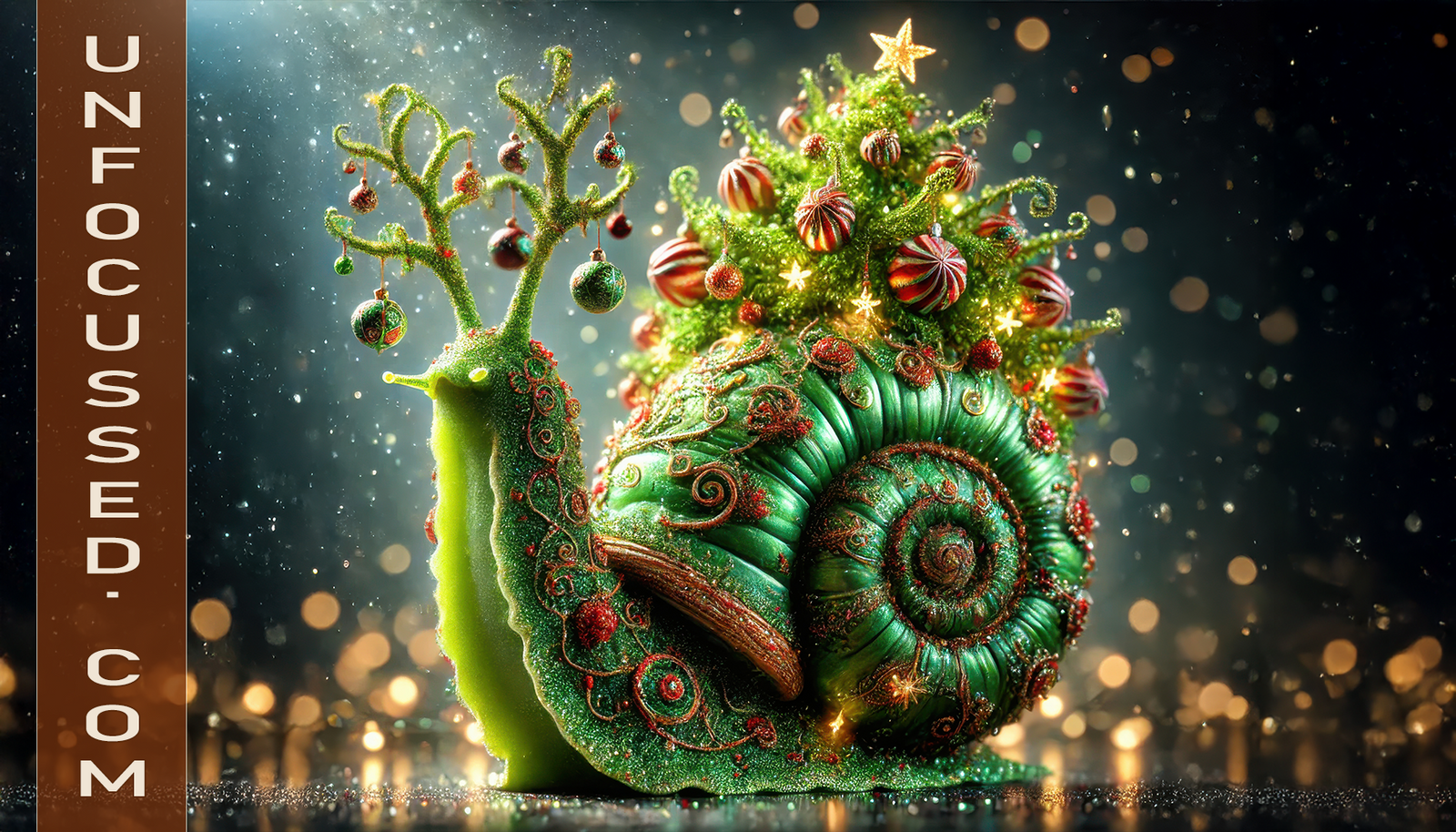
Twinkle-Shell the Festive Wanderer

por Bill Tiepelman

Twinkle-Shell the Festive Wanderer

The Glitter-Covered Menace of Mistletoe Marsh Deep inside the glimmering heart of Mistletoe Marsh—where the trees shed glitter instead of leaves and the ground is permanently sticky from a century of spilled eggnog—there lived a creature so cheerfully chaotic that even Santa had him on a “soft ban” list. His name was Twinkle-Shell, the Festive Wanderer, and his hobbies included: jingling loudly at inappropriate hours, hoarding peppermint just to say he had it, and single-handedly destabilizing the local ecosystem every time he tried to “spread holiday joy.” Twinkle-Shell, a snail by birth but an *aspiring* reindeer by attitude, strutted—or slithered, depending on how frozen the marsh happened to be—beneath a towering Christmas tree growing directly out of his shell. Not metaphorically. Not tattooed. Literally. A whole, sparkly, fully-functional tree, complete with ornaments that jingled, lights that flickered, and a star on top that glowed brighter whenever he felt dramatic… which was often. His antlers, grown out of pure festive stubbornness, sprouted ornaments like some kind of holiday fruit tree with boundary issues. Every time he moved, a cascade of jingles followed behind him, making stealth absolutely impossible. Neighborhood squirrels used him as a navigational beacon. A family of chipmunks synchronized their winter dances to the rhythm of his accidental jingling. And at least one very confused owl tried to mate with the ornament hanging from his left antler. (Twinkle-Shell never recovered emotionally.) He also had, for reasons beyond nature or decency, a reputation as a walking hazard. If you saw glitter drifting in the air, it wasn’t snowfall—it was him. If a candy cane mysteriously disappeared from your porch and reappeared lodged in a tree branch two miles away, it was him. If your snowman woke up wearing red lace garland like a feather boa, it was definitely him. Twinkle-Shell insisted these things just “sort of happened” around him, a statement that carried the same sincerity as a toddler claiming the dog opened the permanent marker. But despite the chaos—or perhaps because of it—everyone at Mistletoe Marsh adored him. He was the unofficial herald of the holiday season. The moment they heard his jingle-jangle-jing-JANGLE (followed by a thud, usually him slipping on his own ornament debris), they knew: the season had begun. This year, however… things were different. Twinkle-Shell had woken up with a feeling. A vibe. A destiny-level sensation that this holiday season, he was meant for something big. Something important. Something completely beyond his normal jurisdiction of moderately controlled chaos. And that, unfortunately for Mistletoe Marsh, meant he was about to try—really try—to be helpful. The last time he tried to be helpful, twelve ducks got perms and the mayor of the Marsh still refused to discuss “the tinsel incident.” But none of that deterred him. With the star on his shell glowing like it had just consumed espresso, Twinkle-Shell declared: “THIS YEAR… I SHALL SAVE CHRISTMAS!” No one had asked him to. No one had suggested Christmas was even remotely in danger. But history had proven one fact: when Twinkle-Shell decided something was destiny, destiny usually sent an apology note in advance. As he jingle-slid toward the edge of the Marsh to begin his “heroic quest,” local residents whispered, worried, hopeful, and bracing for impact. Because whatever was about to happen… it would be memorable. And probably sticky. Twinkle-Shell’s Incredibly Poor Life Choices Twinkle-Shell had barely made it twenty jingle-steps out of Mistletoe Marsh before destiny introduced itself in the form of a frantic puffin wearing a scarf knitted entirely of panic and broken dreams. The puffin crash-landed into the snow in front of him, skidding through slush like a feathery curling stone before popping up and blurting, “THE NORTH POLE IS A DISASTER!” Now, Twinkle-Shell was no stranger to the word “disaster.” He heard it often. Usually directed at him. But this time, it had a certain global tone—like the kind of disaster where holiday laws would be violated, elves would unionize, and Santa might start drinking the non-virgin eggnog before noon. “Explain yourself,” Twinkle-Shell declared, attempting to stand heroically tall, but remembering too late that snails do not stand. He settled instead for rearing up in slow motion, which looked less like bravery and more like he was trying to reach a cookie on a high shelf. The puffin took a dramatic breath. “Santa’s workshop… is covered in gingerbread sludge! The ovens malfunctioned, the cookie mixers revolted, and half the toys smell like cinnamon-based despair!” Twinkle-Shell gasped with the force of a creature who once ate an entire wreath and regretted nothing. “Is Santa okay?” “He’s… sticky,” the puffin whispered, as though sharing a national secret. “Very… very sticky.” That settled it. This was a job for a hero. A legend. A creature with the power to make things worse before making them better. This was a job for— “TWINKLE-SHELL THE FESTIVE WANDERER!” The puffin blinked. “I don’t know who that is.” “Still me,” Twinkle-Shell said, flexing an antler so that a tiny ornament fell off and rolled dramatically into a snowbank. And so, the two set off toward the North Pole, Twinkle-Shell jingling with heroic enthusiasm and the puffin waddling in a state of ongoing regret. Their journey was… complicated. First, Twinkle-Shell attempted to “speed up” by sliding down a frozen hill. This resulted in him spinning like a holiday Beyblade, screaming, “I WAS NOT BUILT FOR THIS!” as ornaments flew off his antlers like festive shrapnel. The puffin, trying to help, flapped frantically behind him, shouting instructions such as “STEER LEFT!” and “WHY ARE YOU SPARKLING MORE?!” Twinkle-Shell eventually crashed into a drift of powdered snow, emerging glitterier than before, which should have been impossible by the laws of physics but was absolutely on-brand for him. Then came the Snow Sprite Incident. Snow Sprites were known for their ephemeral beauty, frosted wings, and a temperament roughly equivalent to a caffeinated ferret. They were fragile, delicate, and notoriously manipulative when slightly bored. As Twinkle-Shell and the puffin cut through a clearing, a cluster of them descended like sparkly piranhas. “Ooooh! A walking tree!” one Sprite squealed. “A talking ornament bush!” another cried. “A sentient holiday fever dream!” said a third, deeply concerned but intrigued. Twinkle-Shell tried to introduce himself, but Sprites don’t wait for introductions. Or permission. Within seconds, they were hanging new ornaments on him, braiding his garlands, fluffing the branches of his shell-tree, and rearranging his decorations with the aggressive enthusiasm of interior decorators who haven’t eaten in days. “We added more sparkle to your sparkle,” one Sprite reported proudly. “You’re welcome,” another said, while applying shimmering frost to his left flank. Twinkle-Shell attempted polite gratitude, but the sheer weight of the extra ornaments nearly tipped him over. He had to dig his foot into the snow to keep upright. “I appreciate the… enthusiasm,” he managed, “but we’re on an urgent quest!” “A quest?” the Sprites gasped collectively like a dramatic choir. “For WHAT?” “To save Christmas!” There was a silence, followed by all twenty Sprites bursting into chaotic applause while yelling conflicting advice: “Kidnap the gingerbread!” “Punch a snowman!” “Blame the elves! They can take it!” “Bring Santa soup!” “Don’t bring Santa soup! He hates soup!” By the time the Sprites finished “decorating” him, Twinkle-Shell now jingled when he blinked. Literally. The puffin stared at him with the hollow expression of someone reconsidering every life decision. “Let’s just… go,” the puffin muttered. At last, after waddling, sliding, jingling, and arguing their way across the tundra, the North Pole appeared on the horizon—shimmering with lights, smoke, and the faint smell of gingerbread on fire. Twinkle-Shell whispered reverently, “We made it…” “I’m going to regret this,” the puffin whispered back. They approached the candy-cane gates, only to find them half-melted, coated in sticky sugar, and buzzing with tiny, exhausted elves trying to chisel themselves free from cookie cement. One elf, covered in dried frosting and rethinking all career choices, pointed at Twinkle-Shell and groaned, “Oh no. Not again.” Twinkle-Shell’s eyes widened. “We’ve never met!” The elf shook his head. “Doesn’t matter. I can FEEL the chaos.” That was when another elf staggered out of the workshop, hair smoking slightly, and shouted: “THE GINGERBREAD HAS GONE SENTIENT! AND IT HAS DEMANDS!” Twinkle-Shell inhaled sharply. “This… this is my moment.” And as the peppermint-scented smoke billowed out of the workshop behind him, Twinkle-Shell jingle-glowed with heroic determination. This would be the day he proved himself. This would be the moment he saved Christmas. Or—more statistically likely—this would be the moment everything went gloriously, catastrophically wrong. The Great Gingerbread Uprising (And the Snail Who Probably Should’ve Stayed Home) The moment Twinkle-Shell slid into the workshop, he was hit with a wave of heat, spice, and the unmistakable smell of burnt sugar trauma. The walls were coated in gingerbread goo. Half-constructed toys were glued to the ceiling. A Nutcracker soldier was stuck to the floor, repeatedly muttering, “I did NOT sign up for this.” Somewhere in the distance, an oven door rattled like something inside was trying to negotiate its release. Elves scurried everywhere, armed with frosting spatulas, licorice whips, and the kind of exhausted expressions found on retail workers on December 24th at exactly 11:59 p.m. And right there, at the center of the chaos, stood the enemy. A giant, twelve-foot-tall, semi-sentient gingerbread man. He had gumdrop eyes of pure malice. He had frosting facial hair that suggested he’d been through three divorces. And he wore a peppermint belt like he was in some kind of seasonal wrestling league. “I AM GINGERPAPA!” he bellowed, his voice echoing like thunder made of cookie crumbs. “AND CHRISTMAS SHALL BURN IN THE OVEN OF MY WRATH!” Twinkle-Shell gasped. Mostly because he got too excited and inhaled a sprinkle. The giant gingerbread titan turned his gumdrop glare on him. “You,” GingerPapa growled. “Tree snail. Decorative menace. Living mall display. You dare approach me?” Twinkle-Shell jingle-flexed proudly, which involved wiggling his antlers and immediately losing two ornaments. “I am here… to restore holiday harmony!” An elf whispered to another, “Oh great. He’s monologuing. This is going to end in frosting.” GingerPapa raised one icing-coated arm and roared, “ATTACK, MY GINGERMINIONS!” From behind him poured an army of smaller gingerbread creatures—some shaped like classic gingerbread men, others shaped like little stars, bells, candy canes, and one disturbingly buff gingerbread duck who looked like he worked out twice a day and drank raw eggnog. Twinkle-Shell took a heroic stance (again, mostly by accident). The puffin behind him screamed into his scarf. The elves shrieked. The oven doors rattled harder. It was chaos. Beautiful, stupid, holiday chaos.   The Battle Was… Not Great Twinkle-Shell attempted to charge heroically. Unfortunately, as a snail, his top speed was “confidently leisurely.” The gingerbread army reached him long before he made any meaningful forward progress. They swarmed up his shell, climbing the branches of his Christmas tree, poking his ornaments, licking his lights (disgusting), and slapping him with tiny sugary hands. “Ow! Ow! Hey! Personal space! That’s a limited edition bauble!” Twinkle-Shell cried, flailing his antlers wildly—knocking gingerbread men off like shuriken made of holiday shame. Meanwhile, GingerPapa bellowed laughter. “FOOLISH SNAIL! YOU CANNOT STOP THE RISE OF THE COOKIE KINGDOM!” The elves, realizing they had backup, began throwing handfuls of flour like improvised flash grenades. The puffin aggressively pecked a gingerbread star into crumbs. A squad of teddy-bear-shaped cookies began chanting, “DOWN WITH MILK! DOWN WITH MILK!” for reasons no one fully understood. Overwhelmed and sticky, Twinkle-Shell’s star began to glow—not with chaos, but with something he had never experienced before: Actual determination. And then something incredible happened. His shell-tree lit up. Every ornament flared. Every garland shimmered. Every holiday light sparked to life all at once— —and unleashed a blinding explosion of glitter. Not normal glitter. Not craft-store glitter. This was primordial holiday glitter. The kind that sticks to souls. The kind that ruins marriages. The kind that you still find on you 17 years later. The workshop was consumed by a shimmering shockwave that froze the gingerbread army in place—literally. The sugar in their dough flash-crystallized, turning them into sparkling statue versions of themselves. GingerPapa let out a final dramatic roar: “NOOOOOOO! I SHOULD HAVE ADDED MORE MOLASSES!” before freezing solid with a pose suspiciously similar to interpretive jazz hands. When the glitter cleared, the workshop was silent. Twinkle-Shell blinked. The glitter blinked back.   Aftermath, Regret, and Questionable Praise Santa finally emerged from the back, coated in hardened gingerbread goo like a festive swamp creature. He squinted at Twinkle-Shell through the sticky sugar on his beard. “…did you… save Christmas?” Twinkle-Shell stood tall (as tall as a snail can stand). “Yes. I did.” Santa stared at the frozen gingerbread titan. Then at the glitter coating every inch of his workshop. Then at the elves—half cheering, half trying to scrape cookie cement off the walls. Then at the puffin, who looked like he needed therapy immediately. Finally, Santa sighed. “Could you… maybe next time… warn me before doing whatever you just did?” Twinkle-Shell thought about it. Thought long and hard. Then said confidently: “No.” Santa closed his eyes in defeat, but the elves celebrated. They lifted Twinkle-Shell onto a sled, cheering his name, chanting as though he were a holiday demigod: “TWINKLE-SHELL! TWINKLE-SHELL! SAVIOR OF THE SEASON!” The puffin even flapped up onto his shell-tree and declared, “You absolute disaster… I am so proud of you.”   A Hero Returns Twinkle-Shell returned to Mistletoe Marsh that night, glowing with triumph, glittering from shell to foot, and dragging so much leftover cookie dust that he left behind a trail of gingerbread crumbs like Hansel and Gretel going through a holiday divorce. Everyone gathered around him. They cheered. They jingled their bells. A choir of squirrels performed a celebratory interpretive dance despite having no formal training. Twinkle-Shell announced proudly: “I HAVE SAVED CHRISTMAS!” And the Marsh erupted in applause. However… a small, nervous squirrel raised a paw. “So… uh… does this mean you’ll stop trying to ‘help’ now?” Twinkle-Shell laughed, his ornaments chiming like tiny alarm bells of doom. “No, my sweet winter children. No it does not.” And from that day forward, the holidays were never peaceful again.     Bring Twinkle-Shell Home If Twinkle-Shell’s heroic glitterbomb of holiday chaos made you smile, swoon, or briefly reconsider the stability of the gingerbread ecosystem, you can now bring this gloriously unhinged icon into your own home. Celebrate the season (and the snail who almost accidentally destroyed it) with beautifully crafted holiday collectibles featuring Twinkle-Shell the Festive Wanderer. For a classic touch, hang him proudly on your wall as a framed print — a perfect way to let guests know your décor aesthetic is “classy chaos with a side of peppermint madness.” Prefer something sleek and modern? Show off every shimmering detail with a metal print that captures the image’s glossy textures and festive glow. If you enjoy a challenge (or simply wish to relive the gingerbread uprising in slow motion), the jigsaw puzzle offers a wonderfully chaotic holiday pastime — ideal for family gatherings, cozy evenings, or proving you're mentally stronger than sentient cookies. And for spreading the joy directly, nothing beats the charm of a greeting card. Send it to friends, family, coworkers, or that one neighbor who still owes you a borrowed wreath. Twinkle-Shell will deliver seasonal cheer, questionable decisions, and glitter-based optimism wherever he goes. Let the legend of Twinkle-Shell live on — in your home, on your walls, and in the hearts of everyone who receives a card and thinks, “Why is that snail sexier than I expected?”

Seguir leyendo

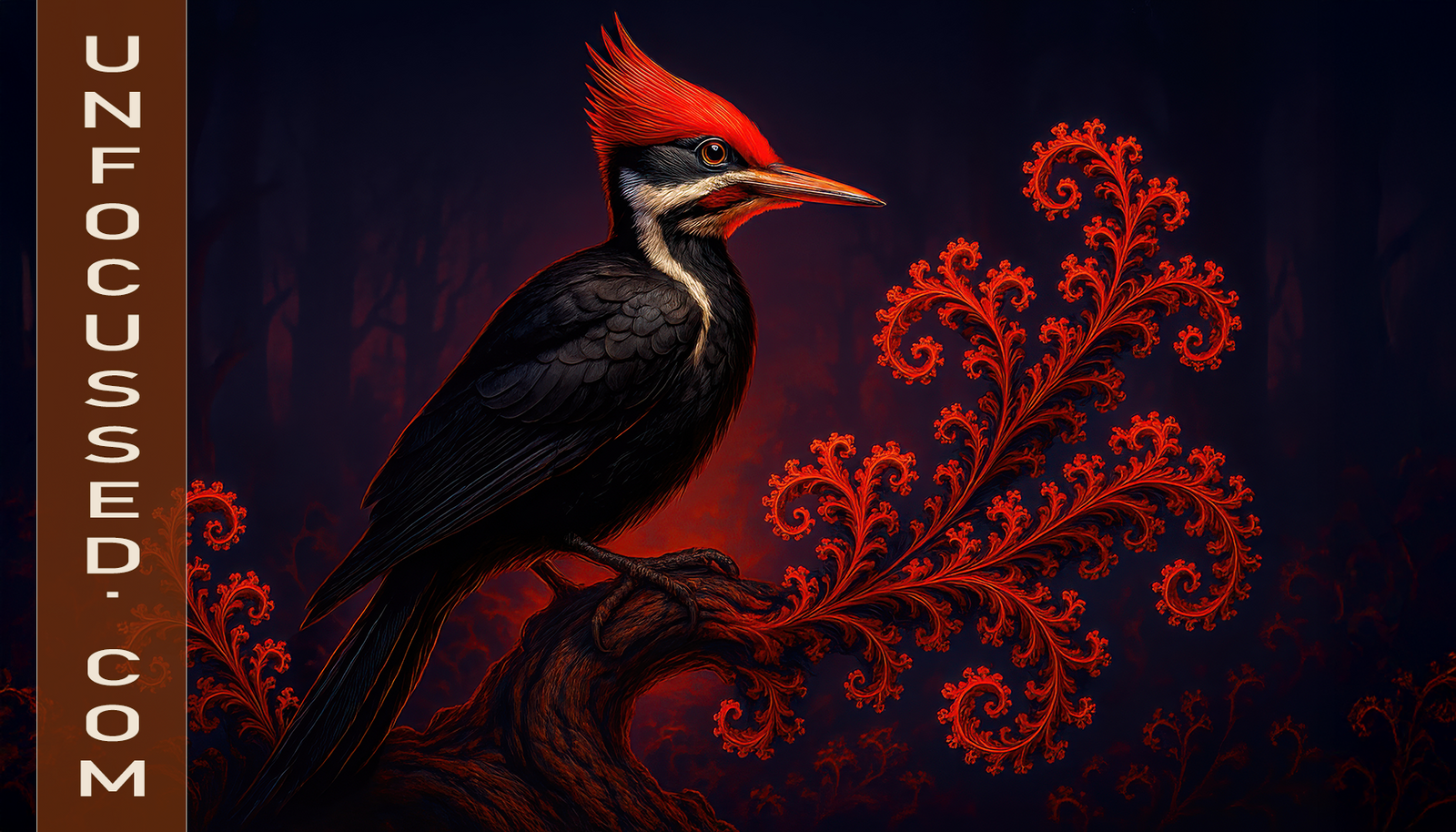
Inferno on the Branch

por Bill Tiepelman

Inferno on the Branch

If you ask the birders down at the trailhead what a Pileated Woodpecker sounds like, they’ll give you three answers: a jungle monkey on espresso, a carpenter with a union card and no patience, and the exact ringtone that makes them fumble their binoculars into the mud. I heard all three the morning I met the crimson-crowned chaos engine who would later become the reluctant star of my portfolio and the patron saint of my caffeine addiction. The forest was still damp with night, the understory steamed like a tea kettle, and out of the silhouette of black trunks came a laugh—kik-kik-kik—that sliced the mist like a gossip column through a small town. I was there for a photo—what I call a “fractal field trip,” because apparently I can’t just photograph a bird on a branch like a normal adult. No, my brand requires a branch that curls into fiery spiral filigree as if Mother Nature took a workshop with M.C. Escher and then got spicy with a blowtorch. The maples had played along, sending out burls and lichens in arabesques, but this perch, this ember-painted corkscrew of a limb, looked forged by a blacksmith with an art degree and a grudge. I framed it, adjusted my ISO, and promised the forest I’d be tasteful this time. The forest, veteran of my promises, remained unconvinced. Enter our protagonist: a pileated the size of a skinny chicken and twice as judgmental. He arrived like a thrown comet, leveled the red crest like a Don’t-Speak-to-Me-Until-I’ve-Hammered sign, and rode the branch with the athletic balance of a tightrope walker who’d also taken a few semesters of carpentry. His beak—let’s call it what it is, a gothic chisel—ticked against the bark once, twice, then BAM, a strike so decisive the ants filed a workplace complaint. “Morning,” I whispered, as if the bird spoke English and preferred soft openings. “Just one pose. Hyper-realistic. Moody forest. Inferno on the Branch. You’re going to be merch.” The woodpecker did the slow swivel—one amber eye, then the other—like a maître d’ deciding whether my shoes were acceptable. Satisfied, or at least resigned, he flared his tail into a glossy black fan, braced with white like punctuation marks, and presented me with a profile that would make an owl jealous. In case you’re not a birder, this is the moment the life-listers whisper, “Oh my God, the Merlin app was right,” and try not to squeal. I do not squeal. I exhale very loudly and pretend I planned it. The branch beneath him—my corkscrew diva—began to glow with morning. From trunk to tip the textures rose in spiral rosettes, each curve catching ember-red light. I could feel the composition locking into place: bird’s gaze to the right, fractal plumes unfurling like fire made ferns, shadowed forest soft as velvet behind it all. This is the part where the art professors say “leading lines” and I nod like I discovered geometry personally. He drummed again—tat-tat-tat-TAT—and a flotilla of ants staged an emergency evacuation. It’s a myth that pileateds are chaotic; they’re engineers in feathers, running probabilistic models on every strike. He tested, listened for hollow space, then set to work on the exact patch where the bark had a tiny ripple, the kind only a bird with 50 million years of tool-making behind his eyes would notice. Chips flew. I smelled sap. Somewhere, a squirrel muttered the woodland equivalent of “not again.” “You know you’re trending,” I said, because the adult human brain needs conversation even when the audience is a bird. “Your species is basically the celebrity sighting of the eastern forest. People hear one drumroll and suddenly they’re wildlife photographers. We love your crimson crest. We love your moody lighting. We love that you’re a bulldozer with eyeliner.” The woodpecker paused, tilted his head, and regarded the curves of the branch as if auditioning them. Then he took three deliberate steps higher—click-click-click—and parked himself square in the golden eddy where the spiral foliage created a halo. If he had read my shot list, he could not have done better. I framed tighter, let the background fall charcoal-dark, and watched the reds saturate until they looked like embers in slow motion. My shutter whispered a thousand small yeses. In the trail behind me, a small procession of birders formed, the kind with hats that have sun shields and pockets for snacks and, presumably, life insurance policies for when a Great Horned Owl side-eyes their Chihuahua. They froze in that communal hush that means oh, we are in church now. Someone whispered, “Inferno on the Branch,” like they’d read the caption in my head, and I felt the delicious tingle of a shot earning its title while still being made. “What’s he after?” a new birder breathed. I wanted to say: redemption. I wanted to say: brand synergy. But the truth was simpler. “Carpenter ants,” I murmured. “Big ones. The filet mignon of protein. And maybe the prestige of looking like a living exclamation point.” The bird obliged by extracting one (ant, not exclamation point) and swallowing with the bland professionalism of a sommelier tasting from a paper cup. Then the forest did its favorite magic trick—time dilation. The light slid an inch, the branch went from blood-orange to garnet, and the woodpecker, as if aware of color theory, repositioned step by step until the rule of thirds lined up like we’d rehearsed. He held still long enough for the shutter to whisper a burst, then whip-cracked around to glare at a rival hammering deeper in the ravine. The laugh came again, the espresso-jungle-monkey kind, and a ripple of chills moved through the line like a stadium wave for very quiet people. I could have packed up right there. The image was in the camera and simmering in the back of my skull, already titled, already framed, already begging to become a fine art print with paper so thick it could stop a rumor. But the bird had not finished his set. He fluffed, shook out a snow globe of bark dust, and delivered one last drumroll that echoed off the black trunks and bounced back as applause. And because I am, despite evidence, a professional, I thanked him. Out loud. With feeling. The kind of gratitude you reserve for baristas and unblocked creative flow. “You were incandescent,” I said. “You were Inferno on the Branch.” The woodpecker blinked once, twice, and then, like a stage actor hearing a cue, lifted into the smoky light. He arrowed across the canyon of trees, a scarlet streak that dwindled to a comma in the sentence of the forest, and was gone. The birders exhaled. Someone dabbed at their eyes. Someone else asked me what settings I used, and I gave them the classic answer: “All of them.” We laughed the relieved laugh of people who got what they came for and then a little extra. I checked my screen again and—yes—there it was: the pileated woodpecker regal as myth, the fractal branch uncurling like flame, the dusky forest holding it all like a velvet box. The kind of frame that makes a wall say thank you. Of course, I didn’t yet know what waited deeper in those trees, or why the woodpecker chose that particular ember-lit perch, or what restless geometry was growing beneath the bark like a secret alphabet. That was a problem for Future Me, Photographic Adventurer and Occasional Bad Decision Enthusiast. Present Me just closed my eyes, listened to the dying echoes of the drum, and marked the GPS pin with a name: Inferno on the Branch. What I did next would have made a park ranger sigh and a poet nod approvingly. But that is Part Two, and this forest loves a cliffhanger almost as much as I do. The Ember Grove The thing about woodpeckers—and you can quote me at the next Audubon meeting—is that they don’t just happen. They appear like punctuation in the forest, interrupting your sentence with a full stop or an exclamation mark, and then dare you to rewrite the whole paragraph around them. That morning’s Inferno on the Branch moment could have been the perfect ending to my hike. I could’ve hiked back to the trailhead, smug and caffeinated, clutching my camera like a poker player walking away from the table while still ahead. But smug doesn’t feed curiosity, and caffeine makes you overconfident. I followed the direction of his flight. It wasn’t stalking. It was… professional interest. Birders call it “shadowing” if they want to make it sound respectable, and “woodpecker paparazzi” if they don’t. My boots crunched the frost-laced leaf litter, each step sounding absurdly loud in the cathedral silence. Somewhere ahead, I heard the faint drumming again—slower now, like he was working through a particularly stubborn patch of bark or a crossword puzzle with only vowels. The branch fractals behind me still glowed in my mind’s eye, but the pull forward was irresistible. What, after all, was worth leaving that stage for? The terrain changed subtly. The oaks gave way to older pines, their trunks straight as moral absolutes but scarred with decades of fire and lightning. The undergrowth thinned, replaced by a carpet of needles that muted my steps. And then I saw it: a clearing that shouldn’t exist, at least not in that geometry. The trees formed an almost perfect circle, and in the center grew a twisted giant of a maple, its limbs spiraling in patterns so complex they looked engineered by some cosmic watchmaker. The light in this space was stranger, warmer, as if the canopy filtered it through an old bottle of brandy. And there he was—my woodpecker—clinging to the trunk like it owed him money. His crest caught the filtered light and flared into a molten crown. He hammered with steady, deliberate strikes, each one sending a small snow of reddish bark to the ground. The tree seemed to respond—don’t ask me how—to his rhythm, the spiraling limbs flexing imperceptibly in time, like a dancer stretching before a performance. I crouched, zoomed, and framed. This wasn’t the Inferno branch; this was something else entirely. If the earlier perch was a piece of functional art, this tree was an altar. Every knot and burl glowed faintly, the reds and golds deepening with every beam of morning light. I’d photographed plenty of fractal structures before—ferns, frost, the accidental swirls in a jar of peanut butter—but this was different. The spirals weren’t random; they spoke. The patterns led the eye inward, toward a hollow in the trunk just above the woodpecker’s industrious beak. It was then I noticed the smell: resin, yes, but undercut by something warmer, almost sweet, like cinnamon and old paper. The woodpecker paused, cocked his head, and stared directly into that hollow as though listening for an answer. I swear I heard something—a faint clicking, like the sound of a typewriter buried under moss. He resumed hammering, and the clicking stopped. My skin prickled. Nature loves her mysteries, and I’d just walked into one wearing a camera like a backstage pass. Somewhere above, a shadow flickered through the canopy. Not another woodpecker—too big. I glanced up just in time to see a broad wing vanish into the sunlight. A hawk? Maybe. Or maybe the kind of forest resident you only see once and then spend the rest of your life trying to prove wasn’t a figment of an under-caffeinated morning. I checked the tree again. My woodpecker had moved higher, closer to the hollow, his claws gripping the bark in those perfect zygodactyl toes—two forward, two back—like he was designed in a laboratory for vertical defiance. I inched closer, the photographer in me bargaining with the part of my brain that knew better. The spiral patterns in the bark became hypnotic up close. Tiny ridges caught the light like illuminated manuscript borders, curling inward in deliberate arcs. My lens drank it all in. The closer I got, the more the patterns began to repeat—not just in the bark, but in the shapes of the leaves overhead, in the curve of the woodpecker’s tail feathers, in the ripple of the moss underfoot. It was the forest’s quiet admission: fractals weren’t an art trick. They were the blueprint. The woodpecker stopped hammering and looked down at me with the kind of expression only birds and high school guidance counselors can pull off: equal parts suspicion and pity. Then, without warning, he plunged his head into the hollow and came up with… something. Not an insect. Not sap. It was small, flat, and glinted like old brass. He held it delicately in his beak, turned toward me, and—this part I will argue with anyone over—nodded. Once. Then he flew past me in a flash of crimson and shadow, the object still clamped in his beak. I spun to follow him, tripped over a root, and did a graceless half-roll that put me on my back staring at the spiraled canopy. By the time I scrambled up, he was gone. The clearing was still, the only sound the faint creak of branches in a wind I couldn’t feel. The maple loomed overhead, spirals turning in my peripheral vision, daring me to come closer. I did. My fingers brushed the hollow’s rim. The wood was warm, unnaturally so, and under my touch the spirals seemed to deepen, the grooves tightening into a pattern that felt less like wood grain and more like… handwriting. I snapped a photo, then another, checking the playback obsessively. In each image, the spirals shifted slightly, as though the tree wasn’t posing so much as conversing. And in the very center of the hollow, framed by the curling grain, was a faint, perfect imprint: the outline of a feather. Not a woodpecker’s—too long, too narrow. I didn’t recognize it, and that bothered me more than I wanted to admit. When I finally tore myself away, I marked the GPS again, labeling it “Ember Grove.” The hike back felt longer, every tree suddenly suspect in its geometry. By the time the parking lot came into view, I’d convinced myself the whole thing was just a trick of light, a fever dream of reds and golds. But that night, when I uploaded the shots to my computer, the truth stared back at me in pixel-perfect detail: the spirals were real. The feather was real. And in the corner of one frame, half-hidden by a blur of motion, was the woodpecker—crest blazing, eyes locked on the lens—still carrying that mysterious glint in his beak. I didn’t sleep much. I kept thinking about the hollow, the smell, the clicking sound, the way the branch at Inferno and the maple in the grove shared the same curling geometry. And I kept asking myself one question: what in the forest needs a woodpecker as its locksmith? Whatever the answer was, I had the distinct, unsettling feeling it was waiting for me to come back. The Locksmith’s Secret I’ve done plenty of return trips to interesting photo spots before, but this one didn’t feel like my usual “let’s see if the heron’s still there” jaunt. This felt… loaded. Like the forest and I had an unfinished conversation, and the woodpecker—my so-called locksmith—was the only one holding the spare key. I spent three days trying to act like a normal human: editing other shots, answering emails, pretending I wasn’t Googling “pileated woodpecker mythology” at 2 a.m. Spoiler: turns out that in certain Native folklore, they’re messengers. In others, they’re builders for the gods. In my overcaffeinated brain, they were now both—and also possibly the forest’s maintenance crew. When I finally went back, it was pre-dawn. I wanted to arrive before the light turned the forest into an Instagram cliché. The air was sharp enough to sting my lungs, and the first chorus of birdsong was still warming up. My boots remembered the way without me thinking; my body was a compass set on “creeping around in questionable situations.” Every so often, I’d hear a distant hammering—three beats, pause, three beats—like the woodpecker was playing his own doorbell chime. By the time I reached the clearing, the light was dripping through the canopy like molten brass, just as before. The maple stood waiting, its spirals catching the first fire of the day. And there he was, crest flared, tail braced, pounding away at a new section of bark just below the hollow. The rhythm was steady, almost ceremonial. I raised my camera, half-expecting him to fly off like most self-respecting birds when a paparazzo shows up. Instead, he hopped sideways, giving me a perfect view of what he’d been working on: a ring of shallow holes forming a precise, geometric shape. A lock, I realized. Or at least the bird equivalent of one. Each hole was spaced with uncanny symmetry, like he’d measured it with calipers. My inner art nerd was thrilled; my inner rational human was starting to sweat. I stayed low, inching forward. He didn’t seem to mind. In fact, he began tapping the holes in a sequence—front, left, right, bottom—as if entering a code. A low thunk followed, not the brittle crack of bark but the dull, resonant shift of wood moving somewhere deeper inside. The spirals in the grain shivered. The hollow darkened, then deepened, as if the space itself was stretching. I couldn’t breathe. The woodpecker stepped aside, cocked his head toward me, and—again, I swear this happened—jerked his beak toward the hollow in a very clear your turn. Everything in me screamed do not stick your hand into strange forest holes. But curiosity is a drug, and I was already high on the scent of resin and whatever ancient secret this tree was cooking up. I set the camera to video, slung it over my shoulder, and reached in. The wood wasn’t just warm; it was pulsing faintly, like a heartbeat through old timber. My fingertips brushed something smooth and cool. I curled my hand around it and pulled it free. It was the same object I’d seen days before—flat, brass-like—but now I could see the detail. A medallion, no bigger than a drink coaster, etched with the same spiraling patterns as the bark, radiating outward from a single feather symbol in the center. The feather was inlaid with something dark, maybe obsidian, that seemed to swallow the light instead of reflecting it. Around the edge, in letters too fine to have been carved by human hands, was an inscription. Not English. Not any script I knew. The characters were fractal too—tiny curves within curves, so intricate I couldn’t follow their lines without getting lost. Behind me, the woodpecker drummed once—sharp, decisive. The ground beneath the maple shuddered just enough for me to feel it through my boots. I looked up, half-expecting the sky to split, but instead I saw movement in the spirals overhead. The branches were… shifting. Slowly, imperceptibly at first, then with deliberate grace. The limbs untwined and retwined into new patterns, closing off the clearing like the iris of an eye. Light poured in through specific gaps, illuminating the medallion in my palm. The inlaid feather shimmered, and for a brief, spine-tingling second, I heard that same clicking sound from before—but louder now, faster, like an invisible typewriter finishing a sentence. “Okay,” I whispered to the bird, because silence would have been worse. “You win. What is this? Why me?” The woodpecker only blinked, then launched himself onto the spiral limb directly above my head. He tilted his beak skyward and called—a loud, rolling kik-kik-kik that bounced between the trunks. Almost immediately, shapes moved at the edge of the clearing. Shadows, but… not entirely. Some tall and narrow, some low and branching, all slipping between shafts of golden light like they belonged to a slower clock than mine. I couldn’t make out faces, only the gleam of eyes reflecting the medallion’s light. They didn’t come closer. They just watched. I felt the weight of the moment the way you feel the weight of deep water. The medallion was warm now, almost hot. The spirals etched into it seemed to crawl under my fingertips, rearranging themselves like puzzle pieces. One shape resolved into something familiar: a map. Not a top-down map with rivers and mountains, but a map of connections—spirals linked to spirals, branches to branches. And at the center, the feather. The same feather etched in the tree, the same feather inlaid into the medallion. The same feather I now realized I’d seen in the subtle patterns of Inferno’s branch days ago. The shadows at the clearing’s edge stirred. The woodpecker called again, softer this time. The spirals in the maple’s bark began to slow, the branches returning to their original positions. The light shifted back to its ordinary golden filter, the clearing once again a simple circle of trees. Whatever had been watching melted back into the forest without a sound. The medallion cooled in my hand, the etched map freezing into place. The woodpecker dropped down to the maple’s trunk, sidled toward me, and with the precision of a jeweler inspecting a gemstone, tapped the medallion once with his beak. Then he launched upward, crest blazing like the last ember in a dying fire, and vanished into the canopy. The clearing was still again. Too still. I stood there a long time, listening for anything—a creak, a drumroll, a laugh. Nothing. Finally, I slipped the medallion into my jacket pocket and started the slow walk back to the trailhead. Every spiral in the bark along the way caught my eye. Every pattern in the moss looked a little too deliberate. By the time I reached my car, I’d stopped telling myself I was imagining things. I wasn’t. The forest was keeping secrets, and my woodpecker friend was one of its gatekeepers. That night, I laid the medallion on my desk under a lamp. The feather symbol seemed dull now, ordinary. But when I turned off the light, it faintly glowed—a deep, ember red, the color of a crest slicing through the morning mist. I don’t know if I’ll ever see him again. I don’t know what the map leads to, or why he chose to give it to me. But I do know one thing: the next time I hear that jungle-monkey espresso laugh in the forest, I’ll be ready. Camera in one hand, medallion in the other, waiting for my locksmith to open another door I never knew existed. And maybe—just maybe—that’s the whole point. The forest doesn’t hand you answers. It hands you keys, a little at a time, and trusts you to notice the locks. All you have to do is follow the sound of the hammering, and hope you’re clever enough to knock back.     Bring “Inferno on the Branch” Into Your World Let the fiery elegance of the pileated woodpecker and the hypnotic curves of the fractal branch ignite your space with our exclusive Inferno on the Branch merchandise. Whether you want a statement piece for your walls, a functional work of art for your daily life, or a tactile puzzle to immerse yourself in, this design brings the forest’s mystery right to you. Showcase the drama and vivid color on a Metal Print for modern, luminous impact, or opt for a timeless Framed Print that turns your wall into a gallery. For something you can carry into the wild—or the farmer’s market—the Tote Bag lets you bring the ember-lit forest wherever you go. And for quiet, mindful moments, piece together the magic one curve at a time with our Jigsaw Puzzle. No matter which form you choose, every piece captures the same rich colors, hyper-realistic details, and mystical energy that made the original image unforgettable. Invite the legend of the locksmith woodpecker into your home—you never know what doors it might open.

Seguir leyendo

The Rooster’s Bloom

por Bill Tiepelman

The Rooster’s Bloom

The Blooming Begins Once upon a time (and probably three chardonnays deep), in the sleepy village of Cluckminster, lived a rooster unlike any other. His name was Bartholomew Featherfax the Third, but most just called him Bart. He wasn’t your average morning-screamer. No. Bart was a vibe, an icon, a strut incarnate. He crowed not at dawn, but when he was good and ready — preferably after a nice stretch, a moment of affirmations, and two sips of lukewarm espresso with goat milk foam. But what truly made Bart different — aside from his deep baritone voice and suspiciously tight thighs — was his plumage. Where other roosters sported rugged reds or moody blacks, Bart had… flora. Petals. Fronds. Tiny spiraling succulents growing where feathers should be. His tail alone looked like a small, highly curated Etsy boutique, and his neck shimmered like the inside of a dream wrapped in a kaleidoscope wrapped in a cheeky Pinterest board. Of course, this was not the norm in Cluckminster, where most poultry preferred their feathers basic, their beaks unmoisturized, and their ambitions low. Bart, however, bloomed loudly. And unapologetically. “Are those flowers growing out of your butt?” hissed Gertrude the Hen one morning as Bart passed the grain trough, hips swaying like a disco ball in slow motion. “Excuse me, Gertrude,” he clucked, tossing a begonia over his shoulder, “they’re fractal-integrated botanicals. And they are thriving, unlike your brittle dry comb.” The hens gasped. The ducks pretended not to listen, but everyone knew ducks were messy. Even the barn cat, who’d spent most of the week high on catnip behind the hay bales, peeked out and whispered, “Daaaaamn.” That very day, Bart strutted up to the barn roof (as one does), stood against the inky dawn sky, fluffed his botanical majesty, and let out a crow so powerfully fabulous that nearby sunflowers did a little shimmy. This was not just a wake-up call. It was a declaration. An arrival. A blooming of epic proportions. Unfortunately, it also alerted the Council of Poultry Aesthetics — an outdated, cranky bunch of feathered fossils who preferred conformity, beige feathers, and strictly one type of squawk per gender. And thus began the official filing of **Complaint #37B: Unauthorized Blooming While Male**. The Petal Trials of Bartholomew Featherfax the Third The Council of Poultry Aesthetics convened in their musty little coop-turned-office behind the barn. Their motto, carved in dust on a crooked plaque, read: "Neutral tones. Modest combs. No flair, no fun, no feathers undone." Each member was older than hay, balder than truth, and more wrinkled than a two-week-old raisin in a sauna. At the head of the table sat Lord Pecksley, a rooster so uptight his tail feathers had fused into a single, clenched curl. “This Bartholomew menace,” he wheezed, adjusting his monocle (yes, monocle), “must be... pruned.” “He’s flaunting,” clucked Madam Prunella, chief hen of etiquette. “With petals. In broad daylight. Children can see them. Succulents, even! Euphorbia vulgaris right on his neck!” “And that spiral bloom near his vent?” whispered the Vice Chair, scandalized. “Nature doesn’t spiral there.” “Well,” Pecksley snapped, slamming a talon down, “nature clearly needs a stern reminder of boundaries!” The council voted unanimously: Bart was to appear before the Barn Court in three days’ time to account for his botanical 'indecency'. Meanwhile, the barnyard was losing its mind. On one side, Bart’s fans. The Bloomers. They were a colorful coalition of hens with glittery combs, ducklings with attitude, a wildly dramatic peacock from three towns over, and at least one suspiciously muscular squirrel who just wanted to vibe. They marched with signs like “”, “Fractal is Functional,” and “Botany Is Not A Crime.” Someone even wrote a spoken-word piece about photosynthesis and liberation. It was weird. And beautiful. On the other side? The Cluckservatives. Stern hens in neutral shawls. Roosters who'd never moisturized. A pair of judgmental pigeons from accounting. They accused Bart of ‘distracting the flock,’ ‘unsettling the egg count,’ and ‘making the chicks ask too many damn questions.’ In the middle of it all? Bart. Fabulous. Furious. And frankly, exhausted. He’d never asked to be a symbol. He just wanted to bloom. Was that so much? Still, the pressure was mounting. The council began clipping the petals of other hens who dared to accessorize. Feathers were being inspected. Seeds confiscated. The goose who painted her beak was publicly peck-shamed. Dandelion crowns were outlawed. They even tried to dye Bart’s tail beige with expired oat milk. (He slapped it away with a calendula plume and muttered “Try again, you bland bastards.”) By the time the trial began, Bart arrived in full regalia. He’d spent the night cultivating a rare orchid at the tip of each tail plume. A crown of golden chrysanthemum spirals framed his head. His wattles sparkled with bioluminescent dew drops. His beak was polished. His claws were French-tipped. And his eye — oh, his eye — was a smoldering blaze of “I will burn your coop with my vibe.” “Bart Featherfax,” boomed Lord Pecksley, standing beneath a flickering barn bulb that made him look like an undercooked chicken nugget, “you stand accused of aesthetic anarchy, defiance of rooster norms, and inciting unauthorized botanical awakening. How do you plead?” Bart stepped forward. Slowly. Every movement caused a ripple of floral shimmer to cascade across his body like spring gossip on a breeze. He cleared his throat. Held the entire barn’s breath in his claws. Then, with a voice smooth as silken molasses draped over a jazz solo, he replied: “I plead flourished.” Gasps. Screeches. A hen fainted. Someone dropped a corn cob. “You say I incite awakening?” he continued, strutting a slow spiral around the haybale podium. “Good. Because we’ve been asleep far too long. For generations, you told us our feathers were only worth something if they matched someone else’s mold. That we had to peck in place. That color was chaos. That bloom was bad. But I am not your beige fantasy.” He spun, flared his wings. Petals shimmered. Fractals unfurled. The damn flowers sang. (No one knows how. It just happened.) “I’m not here to conform. I’m here to photosynthesize and stir sh*t up.” The Bloomers exploded in applause. The peacock sobbed. The squirrel threw glitter. Even a few Cluckservatives began loosening their comb wraps. Lord Pecksley’s monocle popped off. “Order! ORDER I SAY!” he clucked, shaking his beak violently. “This isn’t over, Featherfax! This is a war on standardization!” Bart winked. “Then call me your flamboyant revolution.” And as the barn doors creaked open behind him, letting in the morning light — Bart strutted out, feathers in full bloom, tail spirals catching the sun like fire-wheels of rebellion. The hens followed. The ducks quacked in rhythm. The squirrel raised a tiny flowered fist. But just beyond the barnyard fence... something else stirred. Something bigger. Something ancient. Something with feathers... and vines. The Bloom Beyond the Fence The fence behind the barn had always been a mystery — a line never crossed, a story never told. Chickens said it led to the Overgrowth. The elders whispered it was where the Wild Roosters roamed. Roosters who refused to be plucked, preened, or pigeonholed. Roosters whose feathers had evolved into forests. Roosters who didn’t crow… but howled. And now, as Bart stood blinking into the early dawn light, fresh from revolution and still radiating orchid-based defiance, he saw them. First, the trees parted. Not like they’d been pushed, but like they’d politely stepped aside. Then out came a shape — tall, plumed, and radiant. A rooster, yes, but... more. Part phoenix, part rainforest. His tail coiled like galaxies. His beak glinted like obsidian wrapped in mango nectar. His chest bore markings older than shade. His eyes held starlight and dirt. He smelled like rebellion steeped in rosemary. He approached Bart and spoke in a voice that didn’t echo — it rooted. “You bloomed loud, little brother.” “I didn’t know I had a family out there,” Bart whispered, petals trembling. “You bloomed. That’s enough.” Behind the Forest Rooster came others — a parade of legendary bloomers. A hen whose feathers were literal roses. A duck with floating lily pads for wings. A turkey with bioluminescent mushroom gills. A quail that glowed with internal fire. A peacock that bent light itself. Bart blinked. “Is this heaven?” “It’s better,” the Forest Rooster grinned. “It’s real. And it’s ours. Come walk with us.” But Bart looked back. Behind him, the barnyard was in chaos and color. The Bloomers were holding their ground. The Cluckservatives had begun to fray at the combs. A small group of chicks were painting each other’s beaks with elderberry juice and shouting things like “Pollinate your power!” and “Be your own bouquet!” He turned back. “I can’t leave them.” The Forest Rooster nodded. “Then we’ll come with you.” And that’s how the Bloom War began. Oh, don’t worry, it wasn’t violent. It was worse. It was artistic. They began with the barn. They painted it in gradients so bold even the sheep looked up. They threw a full moon rave in the coop. They taught the chicks geometry via sunflowers. They brought jazz. Poetry. Mushroom farming. Avian glitter drag shows. One night, a nightingale beatboxed the entire first act of *Hamlet*. It was confusing and transcendent. The Cluckservatives fought back the only way they knew how: bureaucracy. They issued cease-and-decrow orders. They tried to form a Ministry of Modesty. They attempted to regulate petal diameter. Someone even invented a Bloom Tax. But the movement couldn’t be stopped. Not when the very soil had begun to shift. The coop’s walls started growing vines. The old troughs overflowed with marigolds. The roosts sprouted lavender stems that hummed lullabies at night. Nature had chosen a side. And at the center of it all was Bart — no longer just a rooster, but a revolution in feathers. He stood daily in the sun, petals wide, comb glowing with dew, and told stories to the chicks about the time he turned shame into shade, judgment into jasmine, and hate into horticulture. He never wore the same feathers twice. He always smiled when the council glared. He kissed his reflection good morning. He was everything they'd told him not to be — and then some. Years later, long after Lord Pecksley was seen retiring bitterly into a worm commune and the barn had become a museum-slash-nightclub-slash-botanical sanctuary, an elder chick asked Bart: “Why flowers?” He smiled, rustling with heliotrope and sass. “Because feathers fly,” he said. “But blooms? Blooms stay. They root. They multiply. They shake the ground and perfume the air. And you can’t pluck a bloom without spreading seeds.” The chick blinked. “So... you’re saying we’re all just walking flower bombs?” Bart winked. “Exactly. Now go explode somewhere fabulous.” And so they did.     🌺 Take a Piece of the Bloom Home If Bart strutted into your heart like he did into history, now you can let his blooming brilliance brighten your everyday life. Bring The Rooster’s Bloom into your space with our Framed Print — a stunning, gallery-ready tribute to floral rebellion and fearless expression. Carry his sass wherever you go with the eco-chic Tote Bag, perfect for farmers markets, libraries, or storming the gates of boring fashion. Send blooming wisdom to your favorite humans with a vibrant Greeting Card, ideal for birthdays, affirmations, or unapologetic declarations of fabulousness. And for a sleek modern touch? The Metal Print brings Bart’s fractal feathers to life in full radiant glory — durable, bold, and entirely unbothered by bland walls. Whether you're here for the laughter, the layers, or the lush, rebellious artistry — let Bart remind you: it’s always the season to bloom exactly as you are.

Seguir leyendo

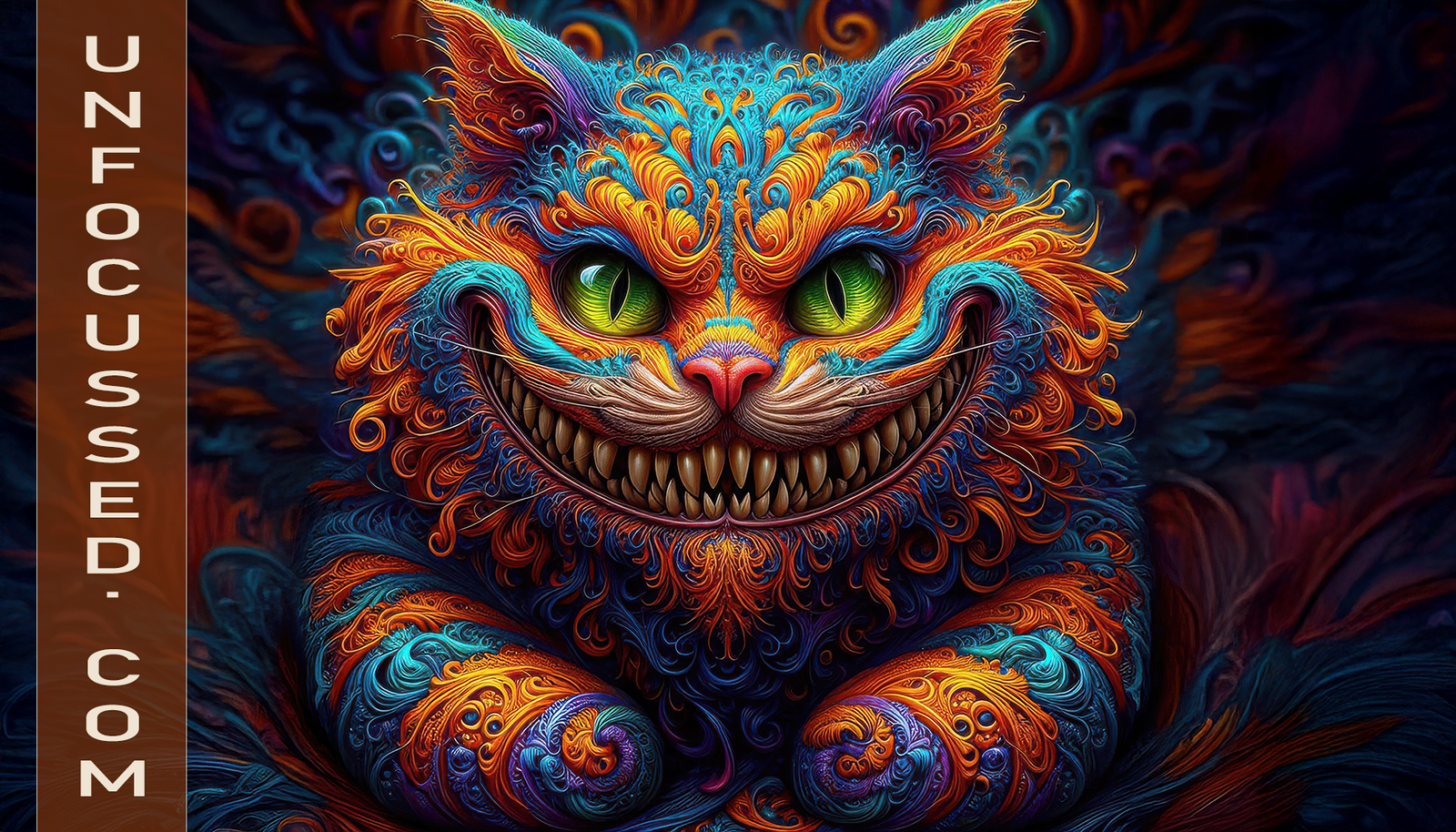
Grinfinity Purradox

por Bill Tiepelman

Grinfinity Purradox

The Cat, the Cult, and the Missing Underpants In the acid-laced dreamscape of Kaleidowood, nestled between the Caffeine Mountains and the River of Poor Decisions, lived a feline who wasn’t quite... sane. Or real. Or housebroken. Locals called it Grinfinity — a name spoken only after three espresso shots and a silent prayer to the God of Hangovers. Grinfinity wasn’t born. He coalesced. Formed from the collective subconscious of every drunk art major who ever said “I could totally design an NFT of a cat that eats the multiverse.” He was 70% fractal mischief, 20% day-glow fluff, and 10% weaponized smile. And that smile? It had molars. Not like “oh how cute, kitty has teeth,” but “oh god it bit the mayor and he still can't eat pudding right.” By day, he posed as a mystical guru in the backyard of a defunct yoga studio, purring cryptic nonsense to wide-eyed influencers and failed DJs. By night, he attended underground raves where he sold micro-doses of existential dread packed in jellybean form. His third favorite hobby was rearranging people’s sock drawers into mandalas and then watching their slow mental decline. But on the fateful Thursday that kicked off the Purradox, Grinfinity had other plans: he wanted the Moon's underpants. "What?" you ask. "The Moon wears underpants?" Of course it does. Why do you think it hides behind clouds during full moons? Modesty. Lunar modesty. But the Moon’s underpants weren’t just any cosmic skivvies — no, these were handwoven from the silky regret of 1990s boybands and reinforced with the sighs of every raccoon who ever found an empty trash bin. They were the comfiest, most powerful underpants in the known reality cluster. Legend said that whoever wore them gained the ability to lick their own ego clean, summon a never-ending brunch, and annoy telemarketers with mind bullets. Grinfinity didn’t care about that. He just wanted to steal them and leave them hanging on a church steeple in Wisconsin. For the vibes. Thus began a journey through wormholes, drive-thrus, and a surprisingly aggressive nudist colony called “Freeballonia.” But first, he needed a crew. And like any true antihero, he started with the worst idea possible: Craigslist. The first to answer was Darla Doomleg, a retired roller derby champ turned erotic taxidermist. She had a bat tattooed on each butt cheek and a pet stoat named Greg. Then came Phil “No Pants” McGravy, a man banned from seventeen diners and one time accidentally married an inflatable couch. And rounding out the chaos was Kevin, a sentient pile of glitter with a vape addiction and daddy issues. “We're going to steal lunar underwear,” Grinfinity announced, tail coiling like a Salvador Dalí signature. “And if we’re lucky, fart in them before the universe resets.” No one blinked. Kevin did release a small puff of lavender mist, but that was just how he showed excitement. They climbed into Darla’s hover-Winnebago, gassed up on fermented Snapple and sheer spite, and rocketed toward their fate. Grinfinity sat at the helm, purring like a tattoo gun stuck on “regret,” eyes glowing like traffic lights at a rave. The first destination? The Great Cosmic Sock Drawer — a sub-dimensional vault rumored to contain every lost sock, sense of dignity, and good decision ever made while drunk. It was also, according to Reddit, the portal to the Moon's laundry chute. They had no idea what horrors awaited. But Grinfinity didn’t care. He had his claws sharpened, his grin dialed to “menace,” and his butt parked squarely in destiny’s cupholder. The Great Sock Drawer and the Trouble with Sentient Panties Inside the yawning, sock-scented maw of the Great Cosmic Sock Drawer, time hiccuped. Reality folded like origami made by a drunk uncle at a family BBQ, and gravity was having a petty argument with inertia. Grinfinity and his crew stumbled out of the hover-Winnebago, blinking at the fuzzy chaos sprawling before them. The landscape was pure chaos. Left socks lounged in velvet hammocks, drinking hot cocoa and sighing about their missing partners. Right socks marched in military formations, demanding justice, a Netflix series, and warm feet. Thongs floated overhead like smug butterflies, occasionally dive-bombing crew members with snarky insults. A massive athletic sock the size of a cathedral sobbed gently into a vat of Axe body spray. “I feel like I licked a lava lamp,” muttered Phil No Pants, who was currently wearing a kilt made of caution tape and chewing on a glowstick for courage. “What is this place?” “The psychic fallout zone of every laundry day gone wrong,” Darla Doomleg whispered, clutching Greg the stoat, who had gone full feral and was now gnawing at the space-time continuum like it owed him money. “We need to find the Laundry Chute of Ascension.” Kevin the Glitter Pile was vibrating, leaving behind little trails of sparkly nonsense and purring to himself in Morse code. “This place smells like wet shame and cinnamon gum,” he murmured. “I feel alive.” Grinfinity prowled ahead, his paws leaving imprints of color that shifted when no one was looking. Every step was an insult to geometry. His grin widened with each twitching sock and floating brassiere they passed. He was in his element — chaos, laundry, and low-stakes cosmic thievery. All his nine lives had been leading to this moment. Suddenly, a booming voice erupted from the horizon like a burp from a god who’d eaten too much cheese. “WHO SEEKS THE PANTIES OF THE MOON?” Everyone froze. Even Greg. Even Darla’s left butt cheek clenched in alarm. Out of a storm cloud made entirely of mismatched dryer lint emerged a being of impossible fluff and profound sass: the Panty Warden of the 7th Cycle. It had the body of a sentient laundry basket, legs made of coat hangers, and eyes that screamed "I once had hopes, but then I taught middle school." “State your purpose or be ye sorted by the eternal spin cycle!” it roared. Phil stepped forward, holding a novelty-sized pair of edible underpants as a peace offering. “We’re here to borrow the Moon’s undies and maybe cause some low-level metaphysical vandalism. No biggie.” The Panty Warden blinked slowly. “Do you even understand the power you seek? Those briefs control tides, menstrual cycles, and cheese production in Wisconsin. They're woven from lunar wool and blessed by the Pope's weird cousin.” “That’s exactly why we need them,” Grinfinity replied, his eyes glowing like radioactive olives. “Also, I made a bet with a comet that I could graffiti Saturn’s rings while wearing them.” The Warden sighed, releasing a cloud of fabric softener that smelled like unresolved childhood trauma. “Very well. But first, you must pass... the Trials of the Tumble.” And just like that, the ground fell away. The crew screamed, some out of fear, others out of habit. They plummeted through a vortex of laundry-themed horrors: a tunnel of moist towels, a field of biting sock puppets quoting Nietzsche, and a karaoke pit where rogue lingerie sang ABBA songs at weaponized volume. Trial One: The Washer of Regret. The team was trapped inside a swirling cylinder of bad exes, awkward conversations, and that one time you texted “you too” when the barista said “enjoy your drink.” Grinfinity just floated through, humming “Toxic” by Britney Spears and occasionally hissing at ghosts. Darla punched her way out with brass-knuckled sass. Kevin just melted into a puddle of self-love and re-emerged fabulous and more glittery than ever. Trial Two: The Bleach Zone. Everything turned white. The crew was assaulted by unsolicited opinions, yoga moms in Uggs, and the endless loop of someone explaining NFTs. Phil nearly broke until he remembered he’d once peed in an influencer’s smoothie. That gave him strength. Trial Three: Ironing Board of Destiny. A smooth-talking ironing board challenged them to a game of philosophical beer pong. The questions were abstract (“Can socks dream of matching feet?”), the answers more so. Grinfinity aced it with riddles that sounded like pickup lines from a sentient thesaurus. He seduced the board into submission. Finally, they emerged in the heart of the Drawer — the Spin Temple, a massive coliseum of cotton and ego. Suspended in the center, guarded by a choir of floating sentient boxer briefs, hovered the prize: the Lunar Underpants. They were magnificent. High-waisted. Laced with constellations. The tag simply read “Handwash Only: Violates 17 Natural Laws if Machine Dried.” “I’m gonna sniff them,” Kevin whispered reverently. “You’re not gonna sniff them,” Darla snapped. “I might sniff them,” Grinfinity admitted, already climbing the scaffolding with the grace of a deranged ballet dancer. As he reached for the waistband, a ripple shot through space — a psychic fart of destiny. The Moon felt it. Back on the lunar surface, the Moon blinked. It had been binge-watching telenovelas and eating emotional ice cream, unaware its favorite underpants were under siege. It rose slowly. The air crackled. Somewhere, a celestial gong sounded. The Moon. Was. Coming. Underwearageddon, Glitter Redemption, and the Grinning End of All Things The Moon was pissed. Like, full-on “I came home to find my favorite snack gone and someone used my toothbrush as a butt-scrubber” kind of pissed. It tore across the cosmos like a cosmic Karen in a minivan made of passive-aggressive Yelp reviews, headed directly for the Great Cosmic Sock Drawer. As it moved, it plucked meteors from space like curlers and rolled them into its hair. Lightning cracked across its craters. It snarled in Spanish. Meanwhile, deep within the Spin Temple, Grinfinity clutched the legendary Lunar Underpants like a man possessed — or more accurately, like a cat who had just found the warmest, most forbidden nap spot in the multiverse. “They’re... so soft,” he purred, eyes rolling back as celestial cotton caressed his furry cheeks. “This must be what angels wear when they go clubbing.” Darla Doomleg stood guard, wielding a feather boa turned plasma whip. “We’ve got maybe thirty seconds until the Moon shows up and rage-bounces us into another dimension.” Kevin, now three times larger and pulsing with high-voltage glam energy, was covered in psychic sequins and vibrating with existential anxiety. “I don’t think I’m ready to fight a planetary body, guys. I barely survived brunch with my ex last week.” Phil No Pants was applying glow-in-the-dark war paint using a bottle of expired ranch dressing. “You guys worry too much. What’s the Moon gonna do, moon us?” Then the ceiling exploded in a tidal wave of lunar fury. The Moon descended like a glittery judgment god, wreathed in flames and expletives. “WHO. TOUCHED. MY. UNDIES.” “It was consensual!” Grinfinity shouted, hiding the underpants in a pocket dimension shaped like a suspiciously moist gym sock. “Also, we’re technically insured.” The Moon blinked, then launched a crater-sized moonbeam directly at them. Chaos erupted. Battle of the Briefs had begun. Sock armies rose from beneath the temple, unified by their mutual hatred of foot sweat and abandonment. They charged the Moon’s shoelace golems, who whipped through the air with deadly accuracy. Lingerie drones buzzed above, firing taser-thongs at anything that moved. One particularly aggressive sports bra suplexed a cardigan into next week. Phil No Pants rode into the fray on a flaming flip-flop, swinging twin pool noodles like nunchucks and screaming, “I AM THE TIDE POD WARRIOR!” Darla leapt into the air, roundhouse-kicking a pair of sentient long johns into a spinning dryer vortex, then delivered a passionate monologue about consent and the importance of label-reading during laundry. The socks paused, inspired. One wept quietly. Kevin, meanwhile, had achieved a glitter-based transcendence. He floated above the battlefield, shimmering like a rave god, whispering affirmations and raining down healing sparkles. Enemies froze mid-punch to marvel at his radiant thighs. A bra snapped itself back on in respect. But the Moon would not be swayed. It summoned a tidal wave of moonlight, collapsing the fabric of the drawer. Grinfinity had one shot — one chance to save them all and pants the Moon at the same time. He reached into the quantum sock-pocket, pulled out the Lunar Underpants, and slipped them on with the slow-motion power of a shampoo commercial meets an exorcism. Light flared. Somewhere, a llama learned to play bass guitar. Reality hiccuped. “You cannot wear those,” the Moon roared. “They are mine!” “Correction,” Grinfinity said, stepping forward with a pelvic thrust that echoed through the void. “They were yours. Now they’re riding this fuzzy thunder-thicc tail and fueling chaos like grandma’s chili on cheat day.” He activated the Underpant Protocol: an ancient power encoded in the waistband. Threads of truth and bad decisions spiraled outward, rewriting physics with every purr. The Moon staggered, blinking in slow-motion as its own gravitational ego was pulled into a swirling vortex of shame and self-reflection. “Is this what I’ve become?” the Moon whispered. “A petty ball of overreactive glow?” Kevin floated up beside it. “We all lose our shine sometimes. What matters is whether you sparkle again… on your own terms.” The Moon sobbed. One giant, shimmering tear fell from the sky and splashed onto Earth, instantly birthing a pop-up spa in Cleveland. No one questioned it. It had a four-star rating by noon. In that moment, Grinfinity forgave the Moon. Or maybe just got distracted by a floating meatball. Either way, peace was restored. The Spin Temple faded into a soft fog of dryer sheets and awkward goodbyes. The sock armies disbanded. The sentient panties returned to their cloud nests. The Moon returned home, slightly wiser, moderately humbler, and down one pair of godly underwear. Back on Earth, Grinfinity opened a fusion brunch parlor called Purradox & Eggs. Darla launched a wildly successful line of tactical corsets. Phil became the host of a reality show called “Naked and Mildly Confused.” Kevin published a memoir titled “Glitter and Guts: My Journey Through Sockspace.” And the underpants? Still worn by Grinfinity, usually on Wednesdays, always backwards, occasionally while skateboarding down gravity wells just to flip off the laws of thermodynamics. He never stopped grinning.     Still grinning? Good — because now you can bring a piece of the madness home. Whether you want to display Grinfinity’s legendary smirk above your fireplace, send dangerously whimsical greetings to frenemies, or spend a questionable weekend assembling his fur one psychedelic piece at a time, we've got you covered. Own the purradox in glorious form: Framed Print: Class up your chaos — Grinfinity belongs in a frame, not in your sock drawer. Canvas Print: Vibrant, bold, and as misbehaved as your last birthday party. Tapestry: Cover your wall in color-drenched cat chaos (or your ex’s taste in décor). Jigsaw Puzzle: Lose your sanity piece by piece — just like Grinfinity intended. Greeting Card: Because nothing says “I’m thinking of you” like a cosmic cat who may have destroyed space-time for fun. Get weird. Get wonderful. Get Grinfinity.

Seguir leyendo

Whiskers at the Witching Window

por Bill Tiepelman

Whiskers at the Witching Window

The Familiar's Complaint “If one more squirrel insults me from the holly bush, I swear to Bast I’ll torch the tree.” The orange tabby was muttering again. His name—though few dared use it aloud—was Bartholomew R.J. Whiskerstein, Esquire. He was the third Familiar to serve at No. 13 Embercurl Lane, a mystical townhouse wedged between dimensions, where the mail arrived only when Mercury was in retrograde and the curtains had a mind of their own. Bartholomew’s ears twitched as he sat perched on the ledge of the violet-paned window. Beneath him bloomed a plush carpet of enchanted lavender that hissed faintly if plucked without permission. Behind him, thick velvet curtains danced without breeze—tracing glowing sigils in the air like lazy lightning bugs scribbling curses in cursive. Inside the townhouse, chaos hummed in that pleasant, distant way only mild sorcery can. There was the sound of a teapot making demands. A stack of grimoire pages trying to unionize. And, somewhere in the study, the soft weeping of a sentient lamp contemplating its existence. Bartholomew ignored all of this. Because Bartholomew had a job. A highly specific job. A job that came with perks (a bottomless dish of roasted chicken hearts) and perils (being regularly used as a scrying lens by a witch who still hadn’t mastered “consent”). He was the Official Perimeter Watcher, Guardian of Thresholds, and—unofficially—the only housemate with the balls to tell Madam Zephira that her black lace corsets were clashing with her aura again. Tonight, however, the swirls in the stucco glowed brighter than usual. Their fractal curls pulsed like molten gold veins across the obsidian walls, marking the hour as not quite midnight and definitely up to something. And Bartholomew, with his one crooked whisker and eyes the color of guilty marmalade, knew the signs. Someone was coming. And not the kind who wore boots or knocked politely or brought salmon. Someone uninvited. With a tail twitch of annoyance and a small sneeze into the lavender blooms (they smelled amazing but were absolute bastards to his sinuses), Bartholomew straightened his spine, narrowed his gaze, and did what any respectable magical creature would do in his position. He farted dramatically, just to establish dominance. The wall beside him hissed in response. “Oh please,” he purred into the growing glow. “If you’re here to devour souls, at least bring a snack.” Zephira, Doomscrolling, and the Visitor from the Slant Madam Zephira Marrowvale was elbow-deep in her spellbook, though not for anything productive. She was doomscrolling. To be fair, the grimoire had recently updated its interface, and now it mimicked the layout of a social media feed—an unfortunate side effect of Zephira’s habit of whispering her thoughts to her mirror while the Wi-Fi was unstable. As such, instead of recipes for lunar elixirs or hexes for passive-aggressive neighbors, the leather-bound tome now served up endless gossip from disembodied witches across the astral plane. “Ugh,” Zephira groaned. “Another thirst trap from Hagatha Moonbroom. That’s the third this week. No one needs to see that much thigh from a lich.” Bartholomew, having returned from his window post only to find his warning hisses entirely ignored, slunk into the main room, tail held at a judgmental tilt. “You do realize,” he said with that slow, deliberate tone cats use when they know you’re not paying attention, “that there’s a potential rift forming in the wall?” Zephira didn’t look up. “Is it the laundry wall or the library wall?” “The front wall.” “Oh.” She blinked. “That’s... more important, isn’t it?” “Only if you enjoy the concept of interior dimensions staying on the inside,” Bartholomew replied, now licking one paw in a manner that suggested this was all terribly beneath him. With a sigh and a dramatic flourish, Zephira stood up, her long coat rustling like parchment paper dipped in attitude. The air around her shimmered with leftover magic: sparkles, ash, and the faint smell of peppermint schnapps. She stomped toward the window where Bartholomew had resumed his watch, this time sitting like a disappointed statue made entirely of orange velvet. Outside, the night was beginning to change. Not just darken—but change. The swirling glow around the window had thickened, threads of molten amber knotting and curving like someone had spilled calligraphy ink into firelight and pressed it to the walls of reality. Then—something knocked. Or maybe it burped. Or maybe the universe coughed up a hairball. Either way, the sound was wrong. “That’s not good,” Zephira whispered, suddenly sober. “That’s... from the Slant.” Bartholomew’s ears flattened. The Slant was a bad neighborhood between planes. It was where lost socks went. Where contracts rewrote themselves. Where things that weren’t supposed to feel shame hung out just to enjoy the sensation. No one invited guests from the Slant. Mostly because if you could invite them, it meant you were already partly one of them. The knock-burp-hiccup came again. “Do you think it’s after you or me?” Zephira asked, half-hoping it would be Bartholomew. He was, after all, technically immortal and less emotionally fragile. “Neither,” he said, fur bristling. “It’s here for the window.” “Why the hell would anyone come for a window?” “Because,” Bartholomew said, leaping down into a stretch that made every vertebrae in his body crackle like a haunted fireplace, “this particular window is a passage. A junction between realms. A former portal to the Celestial DMV. You really should keep better notes.” Zephira’s mouth fell open. “I thought this window had weird feng shui.” Before either of them could speak again, the glass began to bend inward—not break, not shatter—bend, like it was made of smoke or jelly or poorly explained plot devices. The lavender beneath the sill rustled and puffed in protest, releasing sparkles and spores that smelled strongly of sassafras and minor regret. From the swirling gold, a face emerged. Not a full face. Just... parts. An eye here, a suggestion of a grin there. And—strangest of all—a monocle made of static electricity. It was a face both beautiful and terrible, like a Greek god who also did your taxes and wasn’t happy about your deductions. “HOUSE OCCUPANTS,” the entity intoned, its voice vibrating the curtains into curls. Bartholomew leapt back onto the sill and squared his shoulders. “What in the unholy name of wet kibble do you want?” The face pulsed, amused. “I AM THE INSPECTOR OF INTERPLANE THRESHOLDS. THIS UNIT—” “This house, darling,” Zephira corrected, arms crossed. “—THIS UNIT IS IN VIOLATION OF CODE 776-B: UNSANCTIONED ENCHANTMENT OF ARCHITECTURAL OPENINGS.” Zephira raised an eyebrow. “So you’re telling me I have a... magical zoning issue?” Bartholomew hissed. “He’s here to repo the window.” The entity blinked. “YES.” For a moment, no one spoke. Then Zephira reached down, plucked Bartholomew off the sill, and cradled him like a particularly judgmental baguette. “Listen here, Spectral Bureaucrat,” she said, raising her chin, “this window is original to the house. Hand-framed by a sentient carpenter who charged us in riddles. It’s mine. Mine!” The inspector swirled ominously, then paused. “HAVE YOU FILED FORM 13-WHISKER?” Zephira blinked. “...There’s a form?” Bartholomew groaned. “Of course there’s a form.” The face began to phase back into the wall. “I SHALL RETURN AT MOONRISE TO SEIZE THE STRUCTURAL COMPONENT UNLESS PROPER PAPERWORK IS PRODUCED. PREFERABLY WITH A NOTARY’S SIGIL AND A RUNE OF COMPLIANCE.” Then—poof. Gone. Only a light sprinkle of bureaucracy sparkles remained in the air, which smelled like cinnamon and mild passive aggression. Zephira looked down at Bartholomew. “Well... now what?” “Now?” he said, wriggling out of her arms. “Now we commit minor fraud and probably summon your cousin from the Ministry of Misfiled Souls.” “Ugh. Thistle? She still owes me twenty moons and a jar of pickled griffin toes.” “Then I suggest you bring snacks,” Bartholomew said, already walking away. “And don’t wear the lace. It makes your aura look bloated.” Loopholes, Lavender, and Larceny The clock struck something. Probably not midnight, because this particular clock refused to engage with time in a linear fashion. It preferred vibes. Tonight, it struck “tense-but-optimistic,” which was either promising or deeply concerning. Bartholomew was back at the window, tail twitching like a metronome set to sarcasm. The lavender beneath him had sprouted extra blossoms during the argument with the inspector, clearly energized by the conflict. They whispered quietly to themselves about how juicy everything was getting. Inside the house, Zephira was hunched over a cluttered desk, surrounded by scrolls, spell-stamped forms, and at least two empty wine bottles (one real, one conjured). She’d summoned her cousin Thistle for help, which was like hiring a tax attorney who specialized in interpretive dance. “You don’t file the 13-Whisker form,” Thistle was explaining, twirling a quill that occasionally bit her fingers. “You embed it into a sub-layer of your home’s aura, with a notarized dream. Honestly, Zeph, everyone knows that.” “Everyone?” Zephira asked, face planted in a stack of parchment. “You mean everyone who majored in Arcane Bureaucracy and enjoys licking stamps made of beetle shells?” Thistle shrugged, looking very pleased with herself in a cardigan made of disappointment and sequins. “I got mine done during a blackout after a cursed fondue party. You’ve had years.” Bartholomew, overhearing this, let out a sound that was somewhere between a meow and a groan. “You two do realize the Inspector’s coming back tonight, right? I’m not in the mood to explain to the dimensional authorities why a ginger tabby is living inside a legally extradimensional portal with noncompliant trim.” Zephira stood up, eyes glowing faintly with a mix of hope and sleep deprivation. “We have one chance. If we can disguise the window’s threshold signature—just until the next lunar quarter—we can delay the repossession. Thistle, get the dreamcatcher chalk. Bart, start projecting non-threatening thoughtforms. I need plausible deniability on the astral field.” “Excuse you,” Bartholomew sniffed. “I’ve been projecting non-threatening thoughtforms since I was neutered.” The house groaned in agreement, shifting its weight as spells realigned themselves. The curtains flattened. The furniture arranged itself into Feng Shui legal compliance. The dishes washed themselves in a frenzy of sudsy paranoia. Just as the finishing rune was inscribed around the window frame—using chalk blessed by three caffeine-addled dreamwalkers and one heavily sedated owl—the wall glowed again. He was back. The Inspector oozed into existence like molasses with a law degree. “OCCUPANTS,” it bellowed, less intense this time. “I RETURN FOR—” “Hold it,” Zephira interrupted, stepping forward like a woman who had absolutely not just spilled gin on an ancient document of exemption. “Please review Form 13-WHISKER, Subsection D, filed under the Implied Entanglement Clause, certified via mnemonic binding and signed by my Familiar’s third eyelash.” She held up a glittering sigil embossed into a strip of lavender parchment that reeked of legitimacy. Mostly because it was actually a forged wedding license from a dryad and a toaster, re-enchanted by Thistle with mild deception runes and a scent of “forest confidence.” The Inspector pulsed. Blinked. Spun slowly. “THIS... DOES APPEAR TO BE... ACCEPTABLE.” “Then kindly sod off into your dimension’s nearest cubicle farm,” Bartholomew purred, eyes half-lidded. “Before we file a Form 99-B for harassment under Rule of Familiar Dignity.” The Inspector paused. “THOSE STILL EXIST?” “They do if you’ve got a cousin in the Ministry,” Thistle said sweetly, batting her eyes and sipping something from a mug that steamed in Morse code. The glow faded. The swirling tendrils dimmed. The monocle flickered, sighed, and finally vanished like a disappointed dad at a community theatre recital. The Inspector was gone. Zephira slumped against the wall, lavender chalk crumbling in her fist. “We did it.” “We barely did it,” Bartholomew corrected, stretching luxuriously. “You owe me an entire week of scrying-free naps and the good sardines.” “Done,” Zephira said, kissing his furry forehead. “And no corsets for at least a lunar cycle.” “Blessed be,” Thistle whispered, throwing a little confetti made of shredded legal scrolls into the air. Outside, the window returned to its quiet glow. The lavender purred. The swirls of gold settled into elegant curves again—less frantic now, more decorative. Like they were proud of themselves. Like they, too, were in on the joke. Bartholomew returned to his perch, curling up with a satisfied grunt. He blinked once at the stars. “Let ‘em try,” he muttered. “This house is defended by sarcasm and sleep deprivation. We’ll never be conquered.” And as the first rays of false dawn peeked through the enchanted sky, the cat on the sill slept—dreaming, no doubt, of squirrels who finally shut their damn mouths.     Take a Little Magic Home If you felt the curl of mystery or heard the whisper of lavender while reading Whiskers at the Witching Window, you’re not alone. Now you can bring a piece of Bartholomew’s world into your own with a selection of enchanted keepsakes featuring this very scene. Cozy up with the fleece blanket for a nap worthy of a Familiar, or rest your dreams beneath the swirling gold with our duvet cover. Need a bit of sass on the go? The tote bag has your back—whether you're transporting spell ingredients or snacks. And for those seeking a bold statement of aesthetic rebellion, the framed art print is a portal unto itself, ready to hang in any room that dares to flirt with the arcane. Each item is available exclusively at shop.unfocussed.com, where fantasy meets home decor in purring, glowing, ginger-furred defiance.

Seguir leyendo

Watcher of the Fractal Rift

por Bill Tiepelman

Watcher of the Fractal Rift

The Contract of Bones and Bubbles Every few centuries, the ocean forgets how to lie. When that happens, it sends something ancient to the surface—just briefly—to remind the world that monsters don’t need to be evil. They only need to be patient. The Watcher of the Fractal Rift wasn’t born. It was exhaled, like a sigh from the deep tectonic lips of the world. Its flesh—scaled like volcanic armor, its claws—weathered into brutal honesty, and its shell—a massive, barnacled library of forgotten crimes. Its name wasn’t always the Watcher. For a time, it went by “The Beast With the Bureaucracy Fetish,” thanks to an unfortunate entanglement with a drowned city-state that thought forming a council to worship it might win them favor. Spoiler: it didn’t. Somewhere beneath the Mariana Slouch (a rift deeper than the Trench but too lazy to hold record-breaking status), the Watcher stirred again. The reef above it had begun to burn—not with fire, but with ideas. Human divers had found it. Not it directly, of course. Just a heat shimmer, a few bubbles that tasted like crushed secrets, and a fossilized merman with what appeared to be a “Live, Laugh, Lurk” tattoo on his pelvis. The Watcher was not pleased. Ancient beings don’t do well with exposure. The internet had not been kind. An AI-enhanced sonar scan labeled the Watcher as a “turtle-dragon-muppet hybrid with trust issues.” This had 4.2 million views on TikTok, and one influencer named “DrenchedMami88” had already announced her intention to ride it for likes. So the Watcher ascended. Not because it wanted to destroy humanity. Oh no. It had done that before, in a previous geological epoch, and frankly it was exhausting. No, this time, it wanted to file a complaint. A proper one. In triplicate. It rose through curtains of crimson coral and electric-blue fractals—its claws slicing the water with righteous bureaucracy. Along the way, it accidentally devoured three jellyfish cults and one sentient coral opera troupe. It didn’t mean to. They just... floated wrong. At 800 meters below the surface, the Watcher paused. A pair of human eyes stared back at it through a reinforced diving helmet. “Whoa,” the diver breathed. “It’s like... an angry grandpa made of reef and trauma.” The Watcher blinked. Slowly. Then it did something no one expected: it signed. Underwater hand gestures. Fluid movements that spoke of decades in therapy and one particularly traumatizing internship with Poseidon’s legal department. The Watcher gestured: You have 48 hours to vacate my mythos. The diver, understandably, peed a little. What followed was the beginning of a new era—one of haunted negotiations, bureaucratic hauntings, and the slow unravelling of everything humanity thought it knew about sea life, cosmic justice, and the real reason lobsters scream when boiled (hint: it's not the heat—it's the paperwork). But the story doesn’t end here. No, this was merely the handshake. The opening clause. The preamble to a contract none of us remember signing... Of Pelicans, Paperwork, and the Rage of Coral The thing about negotiating with ancient, eldritch sea turtles is that your first instinct—run, scream, upload—is always wrong. And also, counterproductive. The Watcher of the Fractal Rift did not forget. It didn’t forgive. But most terrifyingly, it followed up. Three days after the initial encounter, an intern at the Pacific Geological Survey office named Jasmine received a waterproof scroll via certified orca courier. It was etched in bioluminescent squid ink and wrapped in tendrils of passive-aggressive kelp. The heading read: FORM 1089-R: Request for Mythological Non-Disclosure Rectification Jasmine did not have clearance for this form. She also did not have emotional stability, an exoskeleton, or even caffeine, since someone named Ken had “borrowed” the communal cold brew again. What she did have was an instinct for escalation, so she slid it into the “Probably Not Our Problem” tray, which triggered a proximity alert at Oceanic Legal, Level 9: Myth Management & Deep Rifts Division. Meanwhile, beneath the waves, the Watcher waited. And watched. And mentally composed a withering Yelp review for Earth’s hospitality. But patience was beginning to calcify into something worse—hope. Hope that maybe, this time, the surface dwellers would get it right. That they’d stop poking holes in myths and calling it “content.” That they’d respect the sanctity of coral courts and the rift’s living laws. Hope, unfortunately, has a taste. Like betrayal steeped in lemon brine. And just as it was about to sink back into dormant rage, the Watcher was visited by The Ghost of a Pelican That Regrets Everything™. “Gerald,” the Watcher intoned, without turning its head. The pelican’s ghost swirled into view, translucent, bloated with guilt and vintage anchovies. “You’re mad,” Gerald wheezed, his beak flickering like an existential screensaver. “You encouraged the cult,” the Watcher rumbled. “They were offering snacks!” Gerald snapped. “How was I to know the ‘Salted Flesh of the Shell Warden’ was a metaphor?” The Watcher exhaled. Bubbles spiraled upward like regret in champagne. “What do you want, Gerald?” “To help,” the ghost replied. “To stop another ocean-wide panic. You remember the Mackerel Schism.” The Watcher remembered. Thousands of fish flipping political allegiance mid-current. Anchovy uprisings. Swordfish rhetoric. It had been exhausting. “They need a representative,” Gerald said. “Someone who can mediate between your grievances and their... ridiculous TikTok dances.” “They’ll send a fool,” the Watcher murmured. “They always do.” And he was right. Enter: Trevor. Middle management. Human Resources liaison for the Department of Subaquatic Compliance and Public Mythos Transparency. His LinkedIn bio included “proficient in spreadsheets” and “once survived an awkward dolphin encounter.” Trevor was flown in by helicopter, strapped into a neoprene suit that cost more than his car, and dropped with great optimism into the abyss. He arrived at the designated meeting rift—glowing, thrumming, lined with fractal coral that hissed passive insults like, “Nice haircut, corporate drone” and “Your ancestors evolved gills for this?” The Watcher emerged from the shadows like the memory of a tax audit. Slowly. Impossibly large. Its presence made Trevor’s kidneys contract in primal reverence. “Oh sweet bureaucracy,” Trevor gasped, flailing. “You’re real. You’re... glistening.” “You are the emissary?” the Watcher asked, voice rolling like tectonic plates muttering about job security. Trevor fumbled for his laminated ID. “Trevor Benson, Myth Liaison Specialist. I brought... the folder.” The Watcher blinked. Slowly. Folders were a good sign. Or at least less offensive than harpoons or YouTube channels. “Then we begin,” the Watcher said. “With the First Clause: Reckoning.” Trevor opened the folder and promptly passed out. Because the First Clause was alive. It slithered from the page, ink forming spectral tentacles of obligation. It whispered tax codes and grandmotherly disappointment. It made a small child in Argentina sneeze out of season. It was, in every sense, a haunted memo. Gerald reappeared. “It’s... going well, I think.” The reef shook. The coral screamed. Every polyp within five leagues screamed a single word in unison: “DENIED!” Trevor woke up vomiting seawater and generational shame. He flailed again. “Wait! I—I brought amendments! Suggested revisions! A four-point plan with interdepartmental synergy!” That last part stopped everything. The coral quieted. Gerald hiccupped. Even the Watcher tilted its colossal head. “Did you say... synergy?” “Yes!” Trevor gasped. “And a diversity initiative. We’re prepared to rename invasive species in accordance with rift heritage.” The Watcher studied this small, trembling fool. This oddly sincere little mammal with corporate printouts and too much cologne. It considered annihilation. Then considered... precedent. “You have until the next lunar bloom to present terms the Rift can respect,” the Watcher intoned. “Fail, and the sea will rise—not in anger, but compliance.” Trevor nodded, shaking like a wet Chihuahua in a thunderstorm. “Understood. May I—uh—return to my boat?” “The trench provides,” the Watcher said cryptically, and the reef unceremoniously spat Trevor upward like a regretful burp. Gerald hovered beside the Watcher. “You’re going soft.” “No,” the Watcher replied. “I’m going legal.” And somewhere far above, a jellyfish influencer posted a new reel titled #TurtleDaddyReturns, tagging a location she did not understand and a fate she could not avoid. Because the sea was awake now. The Watcher was listening. And the coral? Oh, it was taking notes. The Final Clause and the Surface That Forgot For exactly one lunar bloom—twenty-eight tidal contractions, four hundred reef seizures, and an unsettling number of dolphins unionizing—Trevor scrambled to prepare. Back on the surface, he worked from a borrowed fishing boat converted into a makeshift office. He installed a printer powered by guilt and solar panels, dictated amendments via kelp-wrapped microphone, and coordinated a team of myth compliance specialists via seagull courier (less reliable than email, but far more dramatic). He didn't sleep. He barely ate. He only cried once—when the AI-generated proposal for clause simplification autocorrected “Watcher of the Fractal Rift” to “Turt Daddy Vibes.” Meanwhile, the sea waited. And dreamed. Down where light becomes myth and temperature becomes threat, the Watcher stirred among the fractals of living law. The coral—pulsing in slow, vengeful Morse—compiled lists of violations committed by the surface: improper myth disposal, cultural reef appropriation, unauthorized whale-meme production, disrespectful kelp harvesting. The reef was done being ornamental. It had grown teeth—metaphorical and otherwise. Worse, the Archive Octopus had risen. This ancient, ink-stained cephalopod lived nestled inside a spiral of petrified myth. It remembered everything—every lie whispered into a shell, every deity demoted to a children’s cartoon, every coral poem turned into stock footage. It now served as archivist and arbitrator for the Watcher’s case. It also wore bifocals and passive-aggressive pearls. “I have reviewed the brief,” the Octopus said, her voice slick with disdain. “Trevor has submitted 422 pages of ‘amended clauses,’ a playlist, and—bafflingly—a scented bath bomb called ‘Tranquili-sea.’” The Watcher frowned. “I liked the bath bomb.” “That is not relevant,” the Octopus hissed. “What is relevant is that this mortal’s proposal includes a clause recognizing reef consciousness, reparations in the form of sustainable story licensing, and a quarterly performance review for humanity’s myth behavior.” The coral began to murmur. Not scream. Not roar. Just whisper—dangerously—like a gossip with a grudge and all the receipts. “Let him speak,” the Watcher finally said. Trevor, visibly moist with stress, descended in a personal submersible that resembled a soup can with ambition. He wore a suit. It was crumpled. His tie had fish on it. He cleared his throat and held up a waterproof binder labeled “Initiative: Operation LoreHarmony.” “Esteemed... entities,” he began, voice trembling like a squid at a sushi festival. “We recognize that humanity has—uh—extracted, sensationalized, and memeified your existence. We’ve commodified myth and flattened magic into marketing. For that, we offer... structure.” The Watcher blinked, slow and tectonic. Trevor flipped the binder open. “Item one: annual symposiums on myth integrity, hosted jointly by surface and rift. Item two: revenue-sharing agreements for merchandising rights. Item three: restoration of previously redacted legends through official platforms—Wikipedia, folklore podcasts, late-night cable documentaries. Item four: a warning label system for any human fiction featuring underwater beings.” The reef hissed. The coral spat bubbles. The Archive Octopus adjusted her pearls. “And finally,” Trevor said, voice cracking, “item five: the establishment of a Department of Mythos Relations—a permanent council of surface-dwellers and sentient sea creatures to govern the boundaries between truth and tourism.” Silence. Then: “He forgot the ceremonial reef snack,” Gerald whispered in horror. But the Watcher raised one massive, clawed flipper. “Enough.” Its voice made the sea still. Even the currents knelt. “You come not with fear, or weapons, or false reverence. But with paperwork, performance metrics, and olive oil-stained ambition. I see in you the flaws of your species... but also its ridiculous hope.” The Watcher swam forward, massive eyes glowing with ancient light. “Very well.” It extended one claw. Trevor stared. Hesitated. Then reached out and shook it. The Contract was sealed. Not in blood. Not in fire. But in mutual disillusionment and complicated policy. Which, in ancient mythic terms, is far more binding. The Archive Octopus sighed. “Fine. I’ll draft the final copy in triplicate. Anyone got a pen that doesn’t scream when used on wet vellum?” And so the Council of LoreHarmony was born. The Watcher returned to its rift—not in anger, but in exhausted hope. The reef quieted. Gerald ascended to the Upper Pelican Plane, where regret is optional and fish are always consenting. And Trevor? Well, he became head of Mythos HR, writing memos like: “Reminder: If you see a kelp construct whispering your childhood fears, please file a Form 2-B before engaging.” But the sea... it remembers. Every story. Every insult. Every unpaid mythological debt. So tell your tales wisely, surface-walker. Because deep below, a red eye still glows. A contract still waits. And the coral? It’s still taking notes.     Bring the Rift Home If you're ready to take a piece of mythic madness into your space, our Watcher of the Fractal Rift collection is now available on select products. Whether you want to wrap yourself in oceanic lore, stare into the abyss over morning coffee, or simply confuse your guests with a fractal turtle guardian—they’re all here, waiting. Tapestry – Drape a legend across your wall, doorway, or altar to interdimensional bureaucracy. Framed Print – For the office, dungeon, or aquarium lobby that craves quiet intimidation. Acrylic Print – As vivid and reflective as the Watcher’s own armored hide. Jigsaw Puzzle – Piece together the abyss, one mildly cursed shard at a time. Weekender Tote – Because even reef gods need luggage. Shop the myth. Display the Watcher. Disturb your guests.

Seguir leyendo

Tempest of Taurus

por Bill Tiepelman

Tempestad de Tauro

La fractura Antes de que las estrellas se cosieran en los cielos, antes de que el aliento encontrara nombre, el Toro se alzaba solo al borde de la creación. Una bestia nacida no de carne, sino de fuerza: de elemento, eco y eternidad. Su cuerpo se dividió desde el momento de su despertar: una mitad ardía con furia volcánica, ríos derretidos tallando cicatrices en una frente cornuda; la otra mitad crecía con el pulso sereno de la vida, cubierta de musgo y respirando, arraigada en las estrellas y la tierra por igual. No conocía el tiempo, solo el movimiento. Caminaba por el vacío como si fuera un pasto, sus cascos forjando galaxias a su paso. Dondequiera que pasaba, se desplegaban reinos duales: bosques que ardían en llamas, ríos que corrían vapor y luz estelar, cielos que temblaban bajo su rugido silencioso. Pero el Toro no estaba completo. Era una tempestad atrapada en la dualidad, desgarrado entre la destrucción y el nacimiento, la furia y el perdón. Los dioses que lo crearon habían desaparecido hacía tiempo, sin dejar respuesta a su agonía. Se convirtió en mito antes de que los mundos tuvieran nombre, y su sufrimiento quedó grabado en la memoria de cada planeta que forjó. En un mundo, donde el azul brillaba con demasiada intensidad y la tierra cantaba con tristeza, se detuvo. Por primera vez desde la Primera Chispa, dobló las piernas y permaneció inmóvil. El fuego de su ojo izquierdo se atenuó. Las enredaderas a lo largo de su hombro derecho susurraron al cielo. Y las estrellas se acercaron para escuchar. Fue entonces cuando habló, no con voz, sino con gravedad. Una tristeza silenciosa y resonante resonó en el cielo: «Soy la fractura. Soy la semilla y la quemadura». De sus lágrimas brotaron los primeros mortales —defectuosos, divididos, hermosos—, cada uno con una pizca de su guerra en su interior. Algunos ardían. Otros crecían. La mayoría hacía ambas cosas. Con el paso del tiempo, construyeron templos a su furia y canciones a su gracia. No comprendieron que no era ni dios ni demonio, sino un espejo. Un recordatorio. Una herida que moldeó el universo. Sin embargo, algo se conmovió en él mientras la gente danzaba bajo las lunas gemelas, mientras se teñían la piel de ceniza y polen, mientras susurraban su nombre no con miedo, sino con reverencia: Taurun. La Tempestad. El Eterno. Y en esa reverencia, sintió el primer atisbo de paz: un destello. Un comienzo. Pero la paz, como el fuego, hay que ganársela. El ajuste de cuentas Los siglos transcurrieron como brasas flotantes en el vacío, y el Toro aún yacía bajo las lunas gemelas, medio enroscado en el bosque, medio envuelto en llamas. Civilizaciones surgieron y cayeron a la sombra de su letargo. Sacerdotes caminaban descalzos por campos de obsidiana para susurrar sus sueños en las grietas de su costado quemado. Los amantes tallaban promesas en la corteza de los árboles que crecían de sus costillas. Y los niños, nacidos del polvo de estrellas y el sudor, jugaban bajo las ramas de su melena sin miedo. Pero aún así no se levantó. Los dioses, olvidados o huidos, lo habían dejado como su parábola final. El Toro, el Roto, cuya dualidad reflejaba el alma de todas las cosas. Pero los mortales comenzaron a olvidar que la dualidad no era un castigo, sino un camino. Y cuando lo olvidaron, intentaron purificar lo que los hacía completos. Encendieron hogueras para quemar sus raíces. Arrasaron los bosques para dominar el caos. Coronaron reyes que solo hablaban con fuego y desterraron a quienes aún escuchaban a las hojas. Con el tiempo, se dividieron como el Toro se había dividido una vez, no por los dioses, sino por decisión propia. Fue entonces cuando Taurun se movió. Su ojo llameante se reavivó como una estrella moribunda que renace, proyectando sombras sobre las constelaciones. Las hojas de su pelaje temblaron. El aire se densificó. Y desde las profundidades de la tierra, un estruendo sin origen ni dirección se elevó: un pulso antiguo e innegable. Se levantó no por ira, sino por necesidad. Sus cascos agrietaron la corteza del mundo. Su aliento estremeció los océanos. Sobre él, el cielo se abrió, no con relámpagos, sino con recuerdos. Visiones cayeron como lluvia: de cada niño que había cantado en su bosque, de cada oración pronunciada a la luz del fuego, de cada alma que se había atrevido a albergar dolor y asombro en un mismo corazón. Rugió, no para destruir, sino para recordar. Y el mundo escuchó. Torrentes de lluvia cayeron donde los desiertos habían reclamado su dominio. Los bosques se alzaron tras la ceniza. Y donde el fuego había consumido, la vida regresó, no en desafío, sino en unidad. El cuerpo del Toro ya no estaba dividido, sino fusionado: llamas que alimentaban la tierra, ramas que danzaban con chispas. Ya no era mitad esto ni mitad aquello. Era la totalidad nacida de la fractura. Y por primera vez desde que las estrellas aprendieron a cantar, Taurun sonrió, no con los labios, sino con silencio. El silencio que sigue a la tormenta. El silencio que habla del equilibrio restaurado. Los mortales, transformados, llevaron este nuevo mito en sus huesos. Dejaron de construir templos. En su lugar, plantaron bosques. Y enseñaron a sus hijos que quemar no era ser malo, y crecer no era ser débil. Que ellos, como Taurun, albergaban la furia y el bosque en su pecho. Y esa era su magia. El Toro caminó entonces hacia el cielo nocturno, su cuerpo disolviéndose en constelaciones, en historias, en las venas de todo ser vivo. Había sido fuego. Había sido bosque. Y ahora, era eterno. Mira al cielo cuando tu corazón se parta en dos. Lo verás: cuernos arqueados en el firmamento, estrellas enredadas en su melena, la Tempestad observando, esperando, recordándote: No estás roto. Estás transformándote. Epílogo: El silencio entre estrellas Mucho después de que el Toro se disolviera en constelación y leyenda, mucho después de que las brasas finales se enfriaran bajo las raíces de los árboles recién crecidos, una pregunta silenciosa aún flota entre las galaxias: “¿Qué queda cuando los dioses se han ido y el mundo debe elegir por sí mismo?” La respuesta no está escrita en piedra ni escondida en el fuego. No la llevan los profetas ni la conservan en pergaminos. Vive en el destello de la contradicción, donde la bondad se encuentra con la ira, donde el dolor danza con la alegría, donde te quiebras, y de las grietas algo verde comienza a crecer. Ahí es donde vive el Toro ahora, no en templos ni en estrellas, sino en el momento en que una mano se aprieta con furia y decide abrirse. En la forma en que ardemos y aún amemos. En cómo destruimos y luego replantamos. Algunos dicen que aún se puede oír su aliento en el viento entre estaciones, sentir sus pasos en la tierra movediza bajo tus pies descalzos. Otros dicen que es simplemente un mito, un viejo cuento nacido de una necesidad cósmica. Pero si alguna vez sientes demasiado y no lo suficiente, demasiado feroz y demasiado frágil, recuerda: Eres la tormenta y la tierra. No estás perdido. No estás solo. Y en el silencio entre las estrellas, Taurun observa. No como juez. Sino como pariente. Trae el toro a casa Si la historia de Taurun despertó algo en ti, si tú también llevas fuego y bosque en tus huesos, lleva este mito a tu espacio. Nuestra imagen "La Tempestad de Tauro" está disponible en una gama de productos de alta calidad diseñados para mantener viva la magia dual en tu día a día. Tapiz Celestial : Envuelve tu espacio en un mundo mítico. Esta vibrante pieza de tela para pared transforma cualquier habitación en un portal a las estrellas. Impresión metálica : Una atrevida exhibición con calidad de galería que captura el fuego y el bosque con una claridad vívida. Brillante. Icónica. Inmortal. Rompecabezas : arma el mito tú mismo: perfecto para momentos tranquilos de reflexión y para quienes disfrutan de la complejidad. Bolso de mano : lleva la tempestad contigo: ideal para amantes de los libros, los vagabundos del mercado y los que caminan entre mundos. Taza de Café : Disfruta de la historia. Un ritual diario impregnado de mito, fuerza y ​​la serenidad del equilibrio celestial. Ver todos los formatos disponibles aquí → Tus muros. Tus rituales. Tu mito.

Seguir leyendo

Mini Kraken, Major Attitude

por Bill Tiepelman

Mini Kraken, actitud importante

Problemas en las marismas Era una mañana tranquila en las aguas poco profundas del Golfo Reluciente, donde la arena brillaba como champán derramado y los cangrejos ermitaños cotilleaban como viejas camareras. El mar estaba en calma. Las olas susurraban. Y en medio de todo, sentado bajo una sombra en forma de concha con el ceño más gruñón de este lado de la Atlántida, estaba el Mini Kraken. Técnicamente no era un kraken. Su nombre oficial era Reginald de Tentacleshire , pero hacía tiempo que se había rebautizado. Con tan solo veintidós centímetros de largo (cuando se sentía generoso), compensaba su falta de masa con un descaro excesivo. Grandes ojos negros, ocho extremidades pegajosas y un ceño fruncido que podía agriar la leche a veinte leguas. Reginald odiaba las mañanas. Odiaba las piedras asimétricas. Odiaba especialmente cómo las almejas lo miraban como si juzgaran sus decisiones. Y, sobre todo, odiaba que lo llamaran "adorable". —No soy lindo —gruñó, inflando su manto y tornándose un poco más morado—. Soy un leviatán aterrador de las profundidades . —Claro que sí, cariño —murmuró una vieja estrella de mar llamada Dorinda, mientras bebía su café con leche en salmuera de una esponja marina flácida—. Dígaselo tú, tentáculos de azúcar. Reginald entrecerró los ojos. «No necesito tu aprobación, Dorinda». Me guiñó un ojo lentamente, con sus cinco brazos. «Y sin embargo, aquí estás, monologando contra la corriente como un estudiante de teatro con alergia al marisco». No fue fácil ser el Mini Kraken. Los caballitos de mar lo llamaban "Snippy". Los peces rape lo usaban como anillo del humor. Y la semana pasada, un grupo de influencers del buceo se tomó una selfie con él y la subtituló: "Pequeños Terrores de la Marea #SoSquishy" . Todavía se estaba recuperando emocionalmente. Hoy, sin embargo, era el día en que todo cambiaría. Hoy, Reginald tenía un plan. Había dibujado planos con tinta, escondidos bajo una roca con la etiqueta "Planes Totalmente Inocentes". Si todo salía bien, recuperaría su dignidad, su territorio, y tal vez, solo tal vez, lograría que esos pepinos de mar dejaran de llamarlo "lindo". Pero primero necesitaba aliados. Y desafortunadamente eso significaba… mezclarse. El Manifiesto de los Moluscos A Reginald no le gustaban los proyectos en grupo. Prefería la soledad de reflexionar bajo las rocas, perfeccionando su mirada asesina y murmurando insultos pasivo-agresivos al agua. Pero los momentos desesperados exigían mezquindad colaborativa. Comenzó su reclutamiento con el objetivo más fácil: una medusa descontenta llamada Greg, quien recientemente había sufrido una crisis existencial. Greg era translúcido, emocionalmente frágil y narraba constantemente su vida como si fuera una triste película francesa. “Floto, luego soy… ignorado”, gimió Greg mientras flotaba sin rumbo. "¿Quieres vengarte de todo el ecosistema o no?", espetó Reginald. Greg parpadeó (probablemente), y luego latió con furia incierta. "Solo si puedo escribir el manifiesto". —De acuerdo. Pero nada de metáforas sobre dejarse llevar por las mareas emocionales del capitalismo, ¿de acuerdo? La siguiente fue Coraline, la cangrejo, un crustáceo curtido en la batalla, con dos patas faltantes y cero tolerancia a las tonterías. Dirigía un negocio de afeitado de percebes en el mercado negro y tenía pinzas tan afiladas que podían cortar la condescendencia. "¿Y yo qué gano con esto?", preguntó, con los ojos entrecerrados bajo su caparazón desportillado. "Poder. Infamia. El derecho a pellizcar a cualquiera que te llame 'guarnición'", dijo Reginald, serio. Hizo una pausa. Luego, lenta y silenciosamente, extendió una garra. "Me apunto". En cuestión de horas, el golpe submarino se había convertido en un movimiento a gran escala. Se autodenominaban FROTH ( Feroces Bribones del Hadal ). Entre sus miembros se encontraban: Una sepia cínica que sólo hablaba en haikus pasivo-agresivos. Un delfín emo que escribió canciones marineras sobre el amor no correspondido. Dos percebes gemelos llamados Clack y Cluck que fueron expulsados ​​de un arrecife de coral por ser “demasiado dramáticos”. Reginald estaba emocionado. O tan emocionado como su rostro le permitía, lo que significaba un ceño ligeramente menos intenso y una queja de satisfacción. El plan era simple: durante el Carnaval de Coral, el evento más festivo de la temporada, desatarían una actuación sincronizada de nubes de tinta tan caótica que cerraría todas las estaciones de selfis con conchas marinas en un radio de una milla náutica. Ruina estética. Desesperación digital. Venganza perfecta. Llegó el día. Las serpentinas de coral flotaban en la marea. Los peces payaso lucían pajaritas. Las anémonas vibraban en tecnicolor. Los influencers habían llegado temprano, con sus teléfonos aferrados en fundas impermeables como si fueran armas de documentación masiva. Y entonces, empezó. Greg, lleno de venganza poética, inauguró el evento recitando un poema hablado de 12 versos titulado "Mi Jaula Gelatinosa" . El público estaba confundido. Algunos aplaudieron de miedo. Una anguila bebé lloró suavemente. Coraline arrojó erizos de confeti al agua, provocando un pequeño pánico. La sepia lanzó un haiku de color sombrío al arrecife: Las profundidades de tinta murmuran— Tus vibraciones son salmuera sin condimentar, Aléjate flotando, campesino. Y luego, el final: Reginald se levantó de detrás de una concha de ostra gigante, con los brazos dramáticamente extendidos y los ojos brillando como orbes abisales de descaro y gloria. ¡ MIRA! ¡Soy el terror en tu tranquila marea! ¡La sombra en tu filtro reluciente! ¡SOY EL MINI KRAKEN! —rugió. A su señal, una explosión volcánica de tinta surgió de todos los miembros de FROTH, ennegreciendo el agua como una boda gótica de calamares. Caos. Gritos. Una GoPro se precipitó al abismo. En algún lugar, una caracola se desvaneció. El carnaval quedó arruinado. ¿Y Reginald? Flotaba en medio de todo, con los brazos cruzados, disfrutando de la gloria de su venganza. Días después, el arrecife seguía hablando de ello. Los pepinos de mar le hicieron un gesto respetuoso con la cabeza. Los delfines dejaron de llamarlo "pequeño globo". Incluso Dorinda le ofreció un café con leche esponjoso y le dijo: "¿Sabes qué, Reg? ¡Tienes dientes !". No sonrió. No por fuera. Pero su ceño fruncido era... un poco menos catastrófico. Y mientras se deslizaba hacia las aguas más profundas, con el manto de tinta tras él, Reginald susurró las palabras que había esperado tanto tiempo decir: No es lindo. Es legendario. Epílogo: De tinta e influencia Pasaron las semanas. El escándalo del Carnaval se había vuelto viral, literalmente. Un león marino con un teléfono de concha había publicado la grabación, y ahora Reginald era tendencia con hashtags como #Inkfluencer , #KrakenKhaos e, inexplicablemente, #CephalopodDaddy . Lo odiaba. Lo amaba. En general, lo toleraba con un desdén que normalmente se reserva para el plancton demasiado cocido. Su rostro había aparecido en las paredes del arrecife, en tazas de café hechas de concha pulida y en líneas de moda con temática de algas. Los influencers empezaron a imitar su ceño fruncido, llamándolo "Kraken Chic". Coraline empezó una clase de defensa personal para crustáceos. Greg estaba de gira. FROTH se había convertido en un movimiento y, de alguna manera, en una marca de estilo de vida. Reginald ya no era solo el Mini Kraken. Era un símbolo . De la rebelión impulsada por el mar. De la energía adorable y anárquica. De no dejar que el océano pisoteara tu blanda dignidad. Seguía sin sonreír. Podría haber firmado un autógrafo. Y de vez en cuando, cuando la marea estaba baja y nadie lo veía, tatuaba una firma rápida en una roca: «Con cero afecto, MK». Y en algún lugar de la oscuridad, arremolinándose en lo profundo donde persisten las leyendas, el susurro resonó a través del agua como el pulso de un antiguo dios del mar con actitud: No subestimes a los pequeños. Tenemos influencia y rencor. Lleva la onda Kraken a casa Si la rebeldía y la mirada despreocupada de Reginald te inspiraron de forma peculiar, tenemos buenas noticias: ahora puedes llevar el Mini Kraken, con una actitud excepcional, a donde vayas. Ya sea que te seques con una toalla de playa , te relajes con el esplendor del kraken en una toalla redonda o lleves tu drama en un elegante bolso de fin de semana , hay una pieza con un toque marino esperándote. ¿Te sientes audaz? Causa sensación con una elegante impresión acrílica y deja que Reginald deslumbre a tus invitados en alta definición. Vive salado. Tinta con orgullo.

Seguir leyendo

The Noble Watcher

por Bill Tiepelman

El noble vigilante

Escarcha, cadena y silencio Él estaba en la puerta mucho antes de que la montaña fuera nombrada. Antes de que los bosques susurraran. Antes de que los ríos aprendieran a curvarse. Antes de que los humanos tuvieran palabras para la fe, las bestias o el miedo, él permaneció allí. Inmóvil. Inmóvil. Observando. Lo llaman de muchas maneras. La Cadena Pálida. El Centinela Escarchado. El Que No Parpadea. Pero una vez, hace mucho tiempo, antes de que se forjara la primera corona y antes de que la traición enseñara a los reyes a arrodillarse, él tuvo un nombre. Ese nombre se ha perdido. Sepultado bajo la nieve y el silencio. Y, sin embargo... lo recuerda. Pero él no lo hablará. No ha ladrado desde hace siglos. Él sólo mira. Lo que él guarda Algunos dicen que guarda una puerta. Otros, una maldición. Un reino. Un niño. Un secreto demasiado peligroso para expresarlo con palabras. O quizás no guarda nada; quizás simplemente está ahí, porque algunas bestias nacen para esperar, y algunas almas están hechas de una paciencia inconmensurable. Es enorme, más grande de lo que permiten las historias, con hombros esculpidos como montañas y una presencia que curva el viento a su alrededor. Su pelaje ondula con rizos escarchados, como si el tiempo intentara asentarse en él pero nunca lograra detenerse. Una cadena cuelga de su cuello. Pesada. Fría. Intacta. No es para contenerse. Es un recuerdo. Un voto hecho con hierro. Quienes intentan adelantarlo... bueno, digamos que no suelen volver a intentarlo. No gruñe. No se abalanza. Simplemente los mira hasta que comprenden que nunca fueron dignos de lo que hay más allá. O, si son verdaderamente tontos, hasta que la tierra se abre y gentilmente los anima a irse. Él no obliga a la tierra a hacer eso. A la montaña simplemente le gusta. El niño y la manzana En el invierno 7392 de su guardia, llegó un niño. Sin armadura. Sin espada. Solo una manzana medio congelada y una mirada demasiado atrevida para alguien con las botas al revés. “¿Eres el perro que se come a los intrusos?” Silencio. Traje una manzana. No tenía carne. Espero que no te importe. El Vigilante no se movió. El chico se sentó con las piernas cruzadas. «De acuerdo. Entonces. Si estás aquí, entonces hay algo importante allá atrás. Y si es tan importante, probablemente necesite a alguien como tú». Lanzó la manzana hacia adelante. Rodó. Se detuvo justo antes de la pata del Vigilante. El perro (si así se le podía llamar) lo miró como si hubiera ofendido profundamente a sus antepasados. "¿Te lo vas a comer?" Silencio. Aliento visible en el frío. —Cierto. Digno. Estoico. Con la estética de un centinela silencioso en una tormenta de nieve. Lo entiendo. El Vigilante parpadeó. Lentamente. Una vez. El niño parpadeó. Dos veces. —Vuelvo mañana —dijo el chico—. Con mejores botas y un sándwich de jamón. Pareces un tipo de sándwiches. Y así, sin más, se fue. El Vigilante miró la manzana. Él no lo comió. Pero tampoco lo congeló. Y cuando la nieve volvió a caer esa noche, cayó suavemente sobre las huellas del niño, como si no quisiera borrarlas. La cadena y la elección El niño regresó al día siguiente. Como lo prometió. Esta vez con botas a juego y un sándwich que no. Jamón y algo morado. Olía raro. El Vigilante no se impresionó. —Mira —dijo el chico, dejándose caer de nuevo—. No sé qué estás vigilando. Y la verdad es que no necesito saberlo. Solo... necesitaba irme de donde estaba. El Vigilante no dijo nada, pero el viento se calmó. Escuchando. Dijeron que no era lo suficientemente valiente. Dijeron que había huido. Pero creo que a veces correr es simplemente intentar encontrar el lugar adecuado para quedarse quieto. Desenvolvió el sándwich. Le dio un mordisco. Hizo una mueca. «Vale. Fue un error». Ofreció el resto de todos modos. Por primera vez en siete milenios, el Vigilante se movió. Un paso. Una pata hacia adelante. No se lo comió. Pero dejó que el niño lo dejara sin gruñir. La tormenta Pasaron tres días. Tres visitas. Luego llegó la cuarta, sin ningún chico. En cambio, llegó el viento. El viento equivocado. Cargado de magia. Contaminado. Hambriento. Las sombras se deslizaban desde el norte, derramándose sobre la nieve y la piedra. Una fuerza susurrante no vista desde que se forjó la cadena del Vigilante. Buscaba un paso. Buscaba lo que yacía más allá . El Vigilante se irguió más alto. Él no ladró. Él no se abalanzó. Él simplemente se interpuso entre el viento y la puerta, y su pecho se elevó con algo que no se había visto en mucho tiempo: desafío. Las sombras atacaron. No pasaron. Cuando la ventisca cesó, la montaña gimió, y el Vigilante permaneció inmóvil, cubierto por una capa de escarcha negra que se agrietó y cayó como un viejo arrepentimiento. Y junto a él, enterrada pero intacta, la manzana. La primera. La ruptura Al séptimo día, el niño regresó. Cojeando. Lleno de barro. Sangrando por un corte en el hombro hecho por algo que no quería mencionar. —Me encontraron —murmuró—. No pensé que me seguirían. Pensé que no era más que... un don nadie. El Vigilante se movió de nuevo. Lento. Mesurado. Dio una vuelta alrededor del niño. Luego se detuvo. Y bajó la cabeza. La mano del niño tembló al tocar el enorme cráneo del Vigilante: el frío del mito y el metal, suavizado por algo más antiguo que la misericordia. La cadena traqueteó. Luego se quebró. Un enlace. Luego otro. Siete eslabones, uno por cada edad que había tenido. Y cuando cayó el último, el niño jadeó. “¿Te vas?” El Vigilante lo miró con los ojos cargados de peso y voluntad. Luego se giró, no alejándose de la puerta, sino hacia él. Y se sentó. Él ya no custodiaba ningún lugar. Él estaba vigilando a alguien . Después del silencio Las leyendas cambiaron ese año. Algunos aún decían que el Vigilante custodiaba un reino de poder incalculable. Otros afirmaban que murió en la tormenta. Algunos decían que ahora camina, sin ser visto, junto a los viajeros perdidos, los destrozados, los valientes y los que se encuentran en un punto intermedio. Pero en un pequeño pueblo, ubicado debajo de una montaña sin nombre, vive un hombre con cicatrices plateadas y una mirada tranquila. No tiene espada. Habla poco. Pero a su lado camina una criatura del tamaño de una roca, con pelaje como espirales de tormenta de nieve y ojos que ven demasiado. Los niños lo llaman El Noble Vigilante . Y no los corrige. Llevar el legado del Vigilante El Noble Vigilante es más que una imagen: es un símbolo. De protección. De lealtad. De fuerza silenciosa que habla más fuerte que los tambores de guerra. Ahora, su presencia puede perdurar en tu mundo, tanto en rincones tranquilos como en espacios sagrados. Trae el mito a casa. No como un recuerdo, sino como un compañero: Tapiz – Deja que la leyenda vigile tu espacio, tejida en sombras y escarcha, silenciosa pero siempre visible. Bolsa de mano : lleva contigo a un guardián: fuerte, estoico y sorprendentemente bueno para llevar libros o bocadillos de batalla. Taza de Café – Porque hasta las leyendas empiezan su velada con calidez. Disfruta de tu café matutino con dignidad. Cojín decorativo : Descansa junto a la fuerza. Suave por fuera, firme por dentro, como un verdadero guardián. Patrón de punto de cruz : Honra la leyenda puntada a puntada. Un ritual lento, digno de quien nunca parpadeó. Deja que el Vigilante esté contigo. Ni en el ruido. Ni en el fuego. Sino con una presencia inquebrantable, justo donde más se le necesita.

Seguir leyendo

The Enchanted Husky

por Bill Tiepelman

El husky encantado

La nieve entre las estrellas Dicen que el mundo una vez fue un susurro: frío y sin forma, flotando en silencio hasta que los vientos aprendieron a aullar. Fue entonces cuando llegó Varrón , nacido no de madre ni manada, sino del aliento y la ventisca. Su pelaje era tejido con nubes escarchadas, sus ojos, fragmentos gemelos de cielo glaciar. Caminaba en silencio, pero por donde pasaba, los perdidos encontraban su rumbo, y los destrozados recordaban cómo recomponerse. Lo llaman de muchas maneras. El Espíritu Entre Pasos. El Vigilante del Invierno. El Perro que Espera. Pero sólo una sabe su verdadero nombre: y es la muchacha que una vez lloró en el bosque, con las manos llenas de cenizas y el corazón lleno de silencio. Ella no tenía nombre La niña se había alejado mucho. Demasiado. Más allá del límite de la memoria, más allá de los árboles que hablaban con raíces y acertijos. No tenía nada. Sin familia. Sin propósito. Sin voz. Sólo el dolor de algo perdido antes de ser encontrado. Ese día, la nieve caía en espirales. No era cruel, sino insistente. Besaba sus pestañas y se enroscaba a su alrededor como una pregunta que esperaba respuesta. Y entonces – ella lo vio. Varro se alzaba sobre una elevación de cristal, su figura apenas rozaba la tierra. No ladraba. No gruñía. Simplemente estaba , observándola con esa clase de conocimiento que te enderezaba el alma. Dio un paso adelante, luego otro. "No sé adónde voy", susurró. Sus ojos parpadearon. No era compasión. Ni orden. Solo... comprensión. Y luego se giró y caminó hacia la niebla. Ella lo siguió. El camino de la quietud Caminaron durante lo que pudieron haber sido minutos o mil años en silencio. Sin palabras. Sin rastro. Solo el crujido de la nieve bajo ella y la suave agitación del aire mientras Varro avanzaba, zigzagueando entre árboles y sueños semicongelados. De vez en cuando, ella tropezaba y él se detenía. No para ayudarla, sino para esperar. Como diciendo: «Este es tu camino. No te llevaré en brazos. Pero no te dejaré». Llegaron a un lago helado que reflejaba el cielo. Las estrellas parpadeaban en su reflejo, aunque ninguna brillaba sobre ellos. Se arrodilló en la orilla y tocó el hielo, que se onduló con el recuerdo. La risa de su padre. La canción de cuna de su madre. La primera vez que se cayó. La primera vez que se puso de pie. Cómo sonaba su nombre cuando lo pronunciaban con cariño. Ella jadeó y se giró, pero Varro ya no estaba. En su lugar: huellas de patas. Cruzando el lago. Sin grietas bajo ellas. Solo estrellas. Ella se levantó y lo siguió. La voz bajo el frío En el centro del lago, lo escuchó, no con sus oídos, sino con la parte de ella que había estado en silencio durante demasiado tiempo. ¿Te acuerdas ahora? Cerró los ojos. «Recuerdo ser pequeña. Recuerdo tener miedo. Recuerdo... olvidar en quién debía convertirme». El viento se agitó. “Entonces estás listo.” Abrió los ojos. Varrón estaba de nuevo frente a ella, con el rostro cerrado. Ojos claros. Firmes. Vivos. Levantó una mano, esperando encontrar pelaje, pero sus dedos rozaron la luz de las estrellas. Fresca. Luminosa. Un destello de alma hecha realidad. “¿Eres real?” preguntó suavemente. Él parpadeó. Y en ese instante, ella supo: no debía ser interrogado. Debía ser seguido. El eco en el hielo El lago resplandecía cuando ella dio un paso adelante, su reflejo ondulaba bajo sus pies; no solo ella misma tal como era, sino todas las versiones que alguna vez había sido: la niña risueña, la adolescente silenciosa, la mujer con preguntas que nadie tenía el coraje de responder. Varrón caminaba ahora a su lado, no delante. Sus caminos eran paralelos; ya no eran maestro y alumno, sino compañeros en la claridad. En el centro del lago se alzaba un árbol; no estaba hecho de corteza, sino de hielo y luz, con sus ramas curvadas como aliento en la escarcha. Latía con una energía que parecía más antigua que las estrellas. Más antigua que la pérdida. —Aquí me detengo —dijo Varrón. No en voz alta. Pero con claridad. Ella se volvió hacia él. "¿Qué pasa?" “El lugar que tú elijas.” “¿Elegir qué?” “Regresar. O levantarse.” El corazón de la quietud Puso la mano sobre la superficie del árbol. Estaba fría, no dolorosa, pero limpia, como la sensación de ser vista sin juicio. El árbol respondió y el mundo cambió. Ella estaba en la habitación de su infancia, pero estaba hecha de estrellas. Caminó a través del recuerdo de la risa de su madre, pero resonó como el viento a través de los pinos. Se encontró cara a cara consigo misma —la verdadera, la oculta, la que siempre había dudado de su propio valor— y, por primera vez, sonrió a esa versión de sí misma. No con lástima. Con reconocimiento. Se puso las manos sobre los hombros, se miró a los ojos y susurró: «Somos suficientes. Y aún no hemos terminado». La imagen se plegó en luz. El regalo de Varrón Cuando se apartó del árbol, Varrón la esperaba. Había crecido, no en tamaño, sino en presencia. Una gran criatura de vientos arremolinados y sabiduría celestial. Su pelaje se movía como las mareas del océano. Sus ojos brillaban con galaxias. “No quiero decir adiós”, dijo. Nunca lo harás. Vivo en los pasos entre tu valentía y tu bondad. Camino en los momentos en que vuelves a confiar en ti mismo. “¿Y ahora qué?” Él dio un paso adelante y presionó su frente contra la de ella. «Ahora, regresa. Y guía a otros. Como yo te guié». Se apartó, y al hacerlo, su cuerpo se disolvió en luz; no muerte, sino expansión. El viento la envolvió como un abrazo. Las estrellas giraron. El árbol de hielo brilló, y luego se desintegró en mil chispas, cada una un susurro de despertar. Se despertó debajo de un pino, con el corazón palpitante y la respiración constante. La nieve se le pegaba a las pestañas. El sol se filtraba entre los árboles. Y junto a ella, en la nieve, una solitaria huella. Cálido. Fresco. Esperando. Ella se puso de pie. Y siguió. Lleva el Espíritu. Recuerda el Camino. “El Husky encantado” es más que un cuento: es una guía, un compañero y un recordatorio de que algunos viajes comienzan en la quietud y algunos guardianes caminan con nosotros incluso cuando no los vemos. Ahora, puedes llevar la fuerza silenciosa y la belleza luminosa de Varro a tu espacio a través de una colección diseñada para quienes sienten el llamado de lo salvaje y el susurro de las estrellas: Estampado en madera : deja que la historia respire sobre la veta natural, donde cada línea lleva la textura de la sabiduría antigua y la fuerza silenciosa. Cojín decorativo : Descansa con un guardián a tu lado. Sutil. Majestuoso. Siempre atento. Tote Bag – Lleva calma, lleva claridad, lleva un mito envuelto en piel y escarcha dondequiera que vayas. Pegatina : un pequeño recordatorio en tu diario, botella de agua o ventana: que la guía a menudo llega en patas silenciosas. Patrón de punto de cruz : Cose un espíritu y dale forma. Meditativo, significativo y atemporal. Deja que Varro camine contigo. Porque algunas historias no terminan: resuenan suavemente dondequiera que cae la nieve y el alma escucha.

Seguir leyendo

The Painter's Pup

por Bill Tiepelman

El cachorro del pintor

El problema con la trementina y las colas Había una vez un cachorro con un pelaje tan enmarañado, tan vibrante y caótico, que los profesores de arte de todo el país lloraban de envidia o se jubilaban espontáneamente. ¿Su nombre? Bristle . No se llamaba así por un pincel, sino por lo que la mayoría de la gente hacía cuando intentaba "ayudarlos" a pintar. Bristle no era un perro cualquiera. No ladraba. *Salpicaba*. Su cola era una pincelada viviente, sus patas dejaban huellas cerúleas, ocres y "¿eso es purpurina?" por todas las superficies. Si estornudaba, alguien conseguía un nuevo mural. Su humana, Gilda van Splick , era una reconocida pintora expresionista con predilección por los sombreros dramáticos y las rabietas aún más dramáticas. "Cerda, cariño", solía suspirar, en medio de una explosión, "no puedes volver a orinar en la paleta. Es una edición limitada de color ocre". Bristle ladeaba la cabeza, parpadeaba dos veces y perseguía de inmediato un punto fantasma que solo él podía ver. Se rumoreaba que el punto era existencial. El incidente con el crítico de arte Era un martes soleado cuando el infame crítico de arte Clive Rottensnob llegó al estudio de Gilda. Llevaba monóculo, tenía un aire sarcástico y olía ligeramente a queso desagradecido. —Estoy aquí —anunció— para reseñar tu última obra maestra. Será mejor que no vuelva a involucrar a ese perro. Los ojos de Gilda se crisparon. «Claro que no, Clive. Simplemente está... por aquí. No está *involucrado*». En ese preciso instante, Bristle salió disparado desde detrás de un lienzo, describiendo un arco de verde neón y dorado metálico, dejando una mancha de pintura sobre los pantalones de lino color crema de Clive. El perro aterrizó con un aullido orgulloso y un chapoteo. El chapoteo se consideró vanguardista. —¡Cielos! —bramó Clive—. ¡No soy un lienzo! —Claro que no —dijo Gilda—. Te falta profundidad. Clive se fue furioso y un minuto después regresó a buscar su monóculo. Bristle lo había masticado hasta convertirlo en un caleidoscopio y lo había rebautizado como "Confusión Óptica". Lo vendió dos días después por 4000 dólares y un sándwich de albóndigas. El ascenso de una musa peluda La noticia se corrió rápidamente. De repente, todos querían un Bristle Original . Su huella se había convertido en el centro de atención del mundo del arte; literalmente, en el caso de una galería. No tenía ni idea de lo que hacía, y eso lo mejoraba. “El arte es sentimiento”, reflexionó Gilda una noche, mientras bebía vino y observaba a Bristle rodar por un tanque de brillantina abstracta. "El arte", respondió Bristle, lamiendo un pincel que definitivamente había visto demasiada trementina, "tiene un sabor extraño". Estornudó. La salpicadura impactó contra una pared lisa. Se vendió a la mañana siguiente por 12.000 dólares y juguetes para masticar para un año. Y así comenzó la leyenda del Cachorro del Pintor. La Gala de la Galería, el Glitterpocalypse y el Pincel con la Grandeza Seis meses después, Bristle era un fenómeno . Ya no era solo un perro travieso con complejo de Jackson Paw-llock, sino un enigma célebre en el mundo del arte. La gente susurraba su nombre en voz baja en los cafés. Los críticos debatían sobre el significado de sus obras, en particular la infame "Sin título #37" , que consistía simplemente en una serie de huellas rojas de patas sobre una esterilla de yoga y una representación inquietantemente precisa de una salchicha. Gilda, antes una genio incomprendida, ahora se veía eclipsada por su peludo compañero. Las invitaciones llegaban a raudales, a tal velocidad que Bristle no podía destruirlas. (Tenía la mala costumbre de confundir los sobres con ardillas hostiles). Pero nada de eso se compara con la invitación que llegó por dron un martes nublado: LA GRAN GALA DE LAS GALERÍAS GLORIOSAS La prestigiosa Casa de la Estética te invita a descubrir tu mejor obra en la Gala del Siglo. Código de vestimenta: Excesivamente dramático. El brillo es opcional, pero se recomienda. Bristle ladró una vez y enseguida pintó la respuesta con mermelada de frambuesa en la alfombra. Se iban. Noche de gala: El cepillo, la corteza, el buffet El lugar era literalmente un castillo, convertido de una fortaleza del siglo XIV en un espacio moderno con iluminación ambiental, violinistas meditabundos y al menos tres personas llamadas “Sebastián” que llevaban bufandas que costaban más que el alquiler. Gilda llevaba un vestido inspirado en una de las primeras obras de Bristle: un estampado en espiral de naranja, azul y "¡Uy, eso era café!". ¿Bristle? Llevaba una pajarita hecha con cerdas de pincel y zapatos de purpurina que él mismo hizo rodando por un cubo de manualidades. Parecía un sueño febril de Lisa Frank, y le encantaba. "¿Estás nervioso?", preguntó Gilda al entrar en la sala principal, llena de galeristas, influencers y ese tipo que siempre insiste en que los NFT siguen vigentes. Bristle olfateó el aire. «Huelo cóctel de camarones y un ligero pánico existencial. La energía clásica de un estreno». En el centro de la gala, sobre una tarima giratoria bajo una lámpara de araña con forma de signo de interrogación, se encontraba la joya de la corona: la nueva obra maestra de Bristle. La había titulado "Perseguí la luna y encontré mi cola" . La pieza desafiaba toda explicación. Remolinos, salpicaduras, marcas de mordiscos. Una inquietante mancha de mostaza en la esquina que los teóricos del arte debatirían durante años. Un crítico lloró abiertamente. Otro le propuso matrimonio al lienzo. Entonces... ocurrió el desastre. El apocalipsis del brillo Todo iba bien hasta que Bristle, abrumado por la inspiración creativa (o posiblemente por la indigestión), intentó realizar una pieza en vivo. Saltó a la mesa del buffet. Devoró una bandeja de canapés. Se lanzó hacia el estrado giratorio, hizo una voltereta hacia atrás en el aire (¿dónde aprendió eso?) y derribó tres cubas de purpurina promocional, una de las cuales estaba presurizada . La explosión fue inmediata. Y gloriosa. La purpurina cubrió a cada persona, cada obra de arte, cada canapé. La lámpara de araña se derrumbó bajo el peso de la ironía estética. Un influencer transmitió todo en vivo y consiguió 42.000 nuevos seguidores en 30 minutos. En el centro de todo, Bristle se erguía triunfante, meneando la cola en un ciclón reluciente de fabulosa ruina. Su pajarita ardía. A nadie le importaba. Era arte. Las secuelas y la iluminación accidental La Casa de la Estética intentó indignarse. Emitieron una queja formal escrita íntegramente en haiku. Pero ya era demasiado tarde: Bristle se había convertido en una leyenda. Su obra —restos manchados de comida, tela y un caos cubierto de brillantina— fue rebautizada como “Destrucción estética postintencional” . Se vendió a un coleccionista privado en Milán por el precio de un pequeño yate, un suministro de juguetes para masticar de por vida y un mayordomo de apoyo emocional a tiempo completo llamado Wayne. Gilda y Bristle regresaron a su estudio. Pintaron menos y jugaron más. Bristle, cansado de la fama, se centró en su verdadera vocación: causar desastres muy específicos en lugares muy caros. “¿Alguna vez te preguntas qué significa todo esto?”, preguntó Gilda una noche, mientras observaba a Bristle dormir la siesta en una paleta con forma de nube. Bristle bostezó, se dio la vuelta y susurró: «El arte es simplemente el universo lamiéndose la cola y llamándolo obra maestra». Parpadeó. "Eso... fue realmente profundo". Se tiró un pedo. "Y eso fue equilibrio". Epílogo: ¿Dónde están ahora? Actualmente, Bristle enseña una clase de salpicaduras abstractas para niños pequeños y palomas surrealistas. Gilda lanza una línea de ropa inspirada en estampados de perros y el caos. Clive Rottensnob se convirtió en terapeuta de llamas y desde entonces no ha vuelto a hablar de “Optic Confusion”. Optic Confusion fue adquirido recientemente por un museo, donde ahora ronda la tienda de regalos. ¿Y el arte? Sigue siendo caótico. Sigue siendo ruidoso. Sigue siendo raro. Igual que Bristle. Decora como un perro que acaba de descubrir el color Inspirados por el legendario caos de Bristle, la Maravilla de Cola de Cepillo, hemos convertido su vibrante y arremolinada locura en una decoración para el hogar que deja huella. (Esa declaración está entre "Me encantan los perros" y "Dejo que mi duende interior pinte la habitación de invitados"). El Cachorro del Pintor ya está disponible en una forma gloriosa y fácil de abrazar: Tapiz – Cuelga un huracán de color y pelusa en tu pared como el rebelde artístico que eres. Almohada decorativa : acurrúcate entre remolinos que pueden o no inspirar una siesta y un antojo repentino de mantequilla de maní. Manta de vellón : manténgase abrigado en medio de una torbellino de pelo, color y decisiones de vida cuestionables (como Bristle). Bolsa de mano : lleva tus bocadillos, cuadernos de dibujo o brillantina de emergencia con el encanto caótico de Bristle a tu lado. Patrón de punto de cruz : cose esta adorable obra maestra un bucle a la vez mientras Bristle grita palabras de aliento desde más allá del marco. Compra la colección Pup y deja que tu espacio vital grite "Creo en el arte, el color y los perros pequeños con grandes sueños". 🎨🐾

Seguir leyendo

Mystic Guardian: The Wolf of Thousand Dreams

por Bill Tiepelman

Guardián Místico: El Lobo de los Mil Sueños

En las horas tranquilas entre el anochecer y el anochecer, cuando las sombras se alargan y el viento murmura nombres olvidados, el bosque respira con algo más que hojas. Fue aquí, en la frontera prohibida entre la realidad y el mito, donde los aldeanos hablaron de una presencia no limitada por la carne, sino tallada en el sueño y el fuego. Lo llamaron Avenar , el Lobo de los Mil Sueños. Avenar no nació, sino que fue tejido . Las viejas historias decían que su pelaje estaba cosido con hebras de fuego estelar, sus ojos forjados en el horno negro entre los mundos. Contemplarlo era vislumbrar todos tus arrepentimientos a la vez, bañados por un silencio cósmico. Los niños se retaban a cruzar el Río Hollowroot —la frontera del mundo despierto— para buscar su rastro. Ninguno regresó intacto. Pero esta noche fue diferente. Ella venía de la ciudad. Su chaqueta de cuero estaba agrietada por el uso, sus botas manchadas de sangre y secretos. Se llamaba Elira y portaba una espada con forma de luna creciente, tan marcada como su superficie. Una Guardiana. Elegida no por los dioses, sino por las consecuencias. No llevaba marca ni bendición. Solo un propósito . Los susurros de los árboles de Elderglen se enroscaron en su mente como niebla: Él está despierto. No se inmutó cuando el aullido gélido se alzó desde las profundidades del valle, antiguo y doloroso. En cambio, lo siguió. Más allá del bosque donde el tiempo se curvaba, más allá de las rocas que sangraban plata al ser tocadas por la sombra. Sabía que el lobo la esperaba, no para atacar, sino para pesarle el alma. Se encontraron bajo el templo olvidado, medio consumido por la hiedra y la luz de la luna. El aliento del lobo agitaba las estrellas. Su pelaje ondulaba con tonos fractales, un mosaico viviente de sueños perdidos y encontrados. Sus ojos, como orbes ardientes, profundos y conocedores, se clavaron en ella. Elira se arrodilló. «No busco la absolución», dijo, «sólo la verdad». El viento amainó. Los árboles se inclinaron. Y con una voz que era a la vez trueno y susurro, el lobo respondió: «Entonces, recorre el camino de los que nunca duermen». La noche se quebró. Un portal de memoria y locura se abrió tras él, un remolino de vidas no vividas y momentos no nacidos. Elira avanzó, con la espada zumbando de luz, hacia el pliegue de la eternidad misma. Tras ella, el bosque se cerraba como un secreto. Solo quedaba el aullido, resonando por todos los reinos. El sueño que caza No había arriba ni abajo. Solo la espiral. Elira cayó y voló a la vez, su mente entrelazada con vidas, la suya y la de otros. Recuerdos ajenos se clavaron en sus sentidos: un hijo perdido en invierno, un amante devorado por el fuego, una guerra que nunca existió. El camino onírico no era una simple visión; era un ecosistema que respiraba dolor y esperanza a partes iguales. El Lobo de los Mil Sueños la guió a través de él, no como una guía, sino como una prueba. «Cada paso adelante», le había dicho con una voz que sonaba como campanas oxidadas, «es una verdad al descubierto». Primero, conoció a la cazadora en la que podría haberse convertido. En esa etapa de la existencia, Elira había matado a Avenar antes de que su aullido tocara el cielo. Llevaba su piel como una corona, gobernaba aldeas con miedo. Sus ojos estaban vacíos, su sonrisa cruel. Cuando sus miradas se encontraron a través del fino velo, ambas versiones de ella gruñeron. Ella se tambaleó hacia atrás y volvió a entrar en la espiral. Luego llegó la niña. Una niña de trenzas plateadas y ojos disparejos, que sostenía una flauta de hueso hecha con la columna vertebral de su madre fallecida. Miró a Elira, no con miedo, sino con reconocimiento. «Me dejaste», susurró la niña. «Y el sueño se convirtió en una jaula». El mundo a su alrededor era árido: cenizas, tierra agrietada, sin estrellas en el cielo. La Guardiana cayó de rodillas. Su espada tembló. No podía distinguir si la chica era del futuro o del pasado, una consecuencia o una advertencia. Pero Avenar estaba mirando. El lobo emergió de nuevo de las fisuras estrelladas, silencioso como un aliento. Su forma había cambiado; ya no era completamente lobuna. Alas con plumas de tinta cósmica brillaban tras él, y sus extremidades se doblaban como ninguna criatura terrestre debería. Su voz, cuando llegó, resonó en sus huesos. Crees que tu fuerza está en la espada. Pero tu carga es más vieja que el acero. Elira se levantó lentamente, con la voz ronca. «Entonces dime qué llevo». Avenar la rodeó, con sus ojos como soles llameantes. «Llevas en tu interior cada alma que clamaba justicia. Cada susurro ignorado. Cada pesadilla que nunca enfrentaste. No estás aquí para derrotarme, Elira. Estás aquí para convertirte en mí». La comprensión lo golpeó como un rayo. Esto no era una prueba para conquistar al lobo guardián. Era un rito para heredar su legado. Elira contuvo la respiración. Su espada se hizo añicos, voluntariamente, astillándose en motas de luz que se incrustaron en su piel. Sus huesos se sentían más pesados, más viejos, hechos de bosque, fuego y dolor. Cayó de rodillas mientras los últimos ecos de su antiguo yo se desvanecían. Cuando ella se levantó, sus ojos reflejaron los de él. Y la espiral cambió. Ahora se encontraba en la entrada del templo olvidado, medio consumida por la hiedra y la luz de la luna. Un joven se acercaba, con el arma a la espalda y el alma destrozada por el dolor. No veía a una mujer. Vio una bestia mítica, con el pelaje adornado con fractales brillantes, ojos que brillaban con cada sueño que había enterrado. Cayó de rodillas. «No busco gloria, solo paz». Elira, la nueva Avenar, respiró profundamente y pronunció sus primeras palabras como Guardiana del Sueño: "Entonces camina el camino de aquellos que nunca duermen." El aullido se alzó de nuevo, antiguo y feroz, extendiéndose a través de las dimensiones como un faro. Un nuevo guardián vigilaba. Una nueva espiral había comenzado. Y en algún lugar lejano, un niño soñó con un lobo plateado y sonrió mientras dormía. Trae al Guardián Místico a tu Mundo Si la leyenda de Avenar te conmovió profundamente, ahora puedes llevar su historia a tu espacio. El Lobo de los Mil Sueños, de Bill y Linda Tiepelman, está disponible en formatos bellamente elaborados para tu hogar, tu corazón y tus manos. 🔥 Impresión en madera: atrevida, natural y atemporal Tapiz de pared: deja que los sueños fluyan por tus paredes 👜 Tote Bag – Lleva un guardián dondequiera que vayas ☕ Taza de Café – Empieza tus mañanas con mitos 🧵 Patrón de punto de cruz: crea el sueño con tus propias manos Deja que el Guardián viva, no sólo en los cuentos, sino en la textura de tu vida.

Seguir leyendo

Queen of the Gossamer Hive

por Bill Tiepelman

Reina de la colmena Gossamer

El zumbido Empezó un martes, lo cual ya resultaba sospechoso. Los martes suelen sentirse como lunes con ropa más barata, y este tenía una vibra particularmente extraña, como si la realidad se estuviera poniendo al revés. Desmond Flarrow, apicultor de modales apacibles y barítono semi-retirado, estaba hundido hasta los tobillos en trébol, admirando su colmena y bebiendo un termo tibio de ginebra de manzanilla. Era su ritual diario: observar a las abejas, murmurar algo poético, luego entrar y fingir que escribía una novela. Pero hoy, algo... zumbaba. No solo el zumbido habitual de las abejas, sino una vibración rica y armónica que relucía en el aire como un coro de diapasones cantando en latín. El trébol se mecía como si manos invisibles le hicieran cosquillas, y el cielo... ¿era eso brillo? Del corazón de la Colmena 7, aquella que Desmond siempre sospechó que era un pequeño "extra", surgió un destello de luz dorada y cobalto. La parte superior de la colmena se desprendió como un corcho de champán, liberando un aroma entre trueno de caramelo y antiguo libro de hechizos. Entonces, del interior brumoso, emergió ella ... No era una abeja reina. Era la Reina. La madre del zumbido. La emperatriz emplumada del néctar. Flotaba a metro y medio de altura, con las alas vibrando con precisión de encaje, su pelaje era un tapiz de terciopelo de naranja quemado, turquesa y secretos. Ojos como gemas de medianoche. Era mitad insecto, mitad divina declaración de moda, y se suponía que no era real. "Hola, Desmond", dijo, con una voz que sonaba como campanas de viento en un espectáculo burlesco. "Soy la Reina Aurelia. Tenemos trabajo que hacer". Desmond, para su crédito, solo derramó la mitad de su ginebra. Antes de que pudiera preguntar cómo o por qué una abeja le hablaba —y lo hacía con más carisma que la mayoría de los alcaldes— la Reina Aurelia extendió un ala, trazó un círculo en el aire y abrió un portal brillante hecho enteramente de patrones de panal y luz eléctrica mandarina. "Has sido elegido", dijo. "No eres solo un apicultor, Desmond. Eres el Guardián del Néctar Antiguo". "¿Y ahora qué?", ​​balbuceó, sintiendo ya la atracción del portal. Sus pies se despegaron del suelo como si la hierba hubiera cedido a la gravedad. Flotó hacia la abertura, con el termo de ginebra aún aferrado en una mano temblorosa. "Pronto lo entenderás", ronroneó. "Pero por ahora, agárrate fuerte. Vamos a traspasar el velo. Y hay un ciempiés burocrático que me debe un favor". Y con eso, desaparecieron en el vórtice brillante, dejando solo un parche de trébol quemado y una ardilla muy confundida atrás. La burocracia del Nectarverso y la danza de los siete aguijones Desmond aterrizó no con un golpe sordo, sino con el desconcertante chapoteo de un sofá de hongos. El reino a su alrededor latía con una luz tenue y susurraba en seis dialectos de la abeja. Estaba dentro del Nectarverso , una dimensión oculta a medio camino entre la lógica onírica, la improvisación de jazz y el interior de un huevo de Fabergé. Todo brillaba, pero también olía ligeramente a pimentón ahumado y arrepentimiento. La reina Aurelia revoloteaba a su lado, irradiando confianza y majestuosidad feromonal. «Bienvenido a Apis Central», declaró. «La capital del multirreino polinizador». "Hace... una humedad extraña", murmuró Desmond, quitándose del hombro una pequeña constelación de escarabajos brillantes. Uno de ellos le hizo un pequeño gesto de aprobación con el pulgar. Más tarde descubriría que se trataba de un gesto político, y que sin querer se había comprometido a patrocinar una campaña electoral de escarabajos peloteros. Los recibió un lacayo: un ciempiés con chaleco y un monóculo en cada uno de sus primeros ocho ojos. «Su Majestad la Reina Aurelia, Soberana de la Luz del Polen, Duquesa del Polvo de Diente de León y Guardiana del Zumbido Prohibido», entonó. «Y... invitado». Desmond saludó tímidamente. «Hola. Solo estoy aquí para el viaje, de verdad». La reina Aurelia ignoró las formalidades. «Necesitamos un pase a las Cortes Florecientes. La Reina de las Avispas está despertando de nuevo». El ciempiés olfateó y desplegó un pergamino más largo que una fiesta previa al partido. «Deberás presentar el Formulario Bee-17B, solicitar una audiencia con el Cónclave Floral y programar una auditoría de polen. Ah, y tu compañero humano debe someterse a la Prueba de los Siete Aguijones». La voz de Desmond se quebró. "Disculpe, ¿el qué?" Un enjambre de polillas muy educadas con esmoquin se lo llevó de inmediato, dejando a Aurelia atrás con el ciempiés y unas miradas diplomáticas impresionantemente tensas. Fue lanzado a un anfiteatro resplandeciente hecho de vidrio de cardo, que resonaba con murmullos de la antigua ley del polen. En el centro: un círculo de tronos con forma de pistilos de flores gigantes. En cada uno se sentaba un miembro del **Consejo de los Siete Aguijones**, envuelto en túnicas de polen, juzgando a todos con la intensidad que suele reservarse para drag queens e higienistas dentales. “¡Declara tu linaje de néctar!” ladró uno. —Eh... ¿Me gusta la miel en el té? —¡Inaceptable! —gritó otro—. ¡Realiza la Danza de los Siete Aguijones o te reclasificarán eternamente como Desechos Florales ! Desmond, que no era hombre de movimiento, se quedó mirando la brillante pista de baile. Comenzó la música: mitad tecno, mitad gospel. Un dron le pasó un leotardo brillante con lentejuelas que deletreaba "BUZZWORTHY" en seis idiomas. La elección era clara: bailar o morir. Lo que siguió fueron treinta y siete minutos de agitación cada vez más errática, giros interpretativos y una invocación accidental de un espíritu de tormenta de polen llamado Todd. La multitud rugió. El Consejo lloró. Un viejo caballero avispa susurró: «Tiene el néctar dentro». De vuelta en el vestíbulo de la locura fragante, la reina Aurelia estaba bebiendo néctar de un cáliz con forma de copa de martini con forma de tulipán cuando Desmond regresó, jadeante y ligeramente radiactivo. "¿Pasé?" graznó. —Ah, sí —dijo radiante—. No solo aprobaste, sino que ahora eres legalmente una entidad de media fama. Incluye seguro dental. Tras aclarar las tonterías burocráticas, Aurelia desplegó sus alas, proyectando deslumbrantes patrones de geometría sagrada por todo el reino. El aire vibraba de anticipación. «Ahora», dijo, «a las Cortes Florecientes. La Reina de las Avispas está planeando reescribir la Constitución Floral. Y necesito a alguien que pueda bailar hasta expulsarle el polen profano». Desmond parpadeó. "¿Quieres que baile otra vez ?" "Oh, cariño", sonrió, "recién estamos empezando". Y con eso, desaparecieron una vez más en un remolino de luz cromática, listos para enfrentar la conspiración, el caos y al menos un enfrentamiento de salón de baile que sería recordado en el folclore de las abejas durante los siglos venideros. 🛍️ Llévate un trocito de la colmena a casa Si aún te emociona la danza del destino de Desmond y la gloria dorada de la Reina Aurelia, ¿por qué no traer un poco de ese encanto a tu propio reino? Los lienzos de la Reina de la Colmena Gossamer capturan cada detalle luminoso, mientras que el tapiz convierte tu pared en un portal al mismísimo Nectarverso. Disfruta de tu propia bebida como una deidad semi-eufórica con una taza , acurrúcate con un cojín o presume de tu lealtad a la colmena con una bolsa de tela . Y sí, incluso hay una pegatina para quienes quieran darle a su portátil o diario un 86% más de realeza. ¡Que viva la emoción!

Seguir leyendo

Roar of Balance: A Lion Split by the Elements

por Bill Tiepelman

Rugido de equilibrio: Un león dividido por los elementos

Un rugido por nuevos comienzos Nochevieja, la única noche del año en la que todos coincidimos en que la vida es un caos, pero el champán lo hace tolerable. Me encontraba al borde de una fiesta en la que la purpurina se aferraba a cada superficie, como una esperanza que se negaba a soltarse. Mi “lista de propósitos” estaba guardada en mi bolsillo, pero, honestamente, era más bien una caja de sugerencias para el universo: “Perder peso, ganar dinero y dejar de enviar mensajes de texto a mi ex cuando estoy borracho”. Metas ambiciosas, considerando que ya había bebido tres copas de Prosecco y estaba pensando en una cuarta. El reloj marcaba las 23:18. Aún tenía tiempo para reflexionar, como siempre se dice. Pero, ¿quién reflexiona durante una fiesta? El DJ estaba poniendo a todo volumen un remix de canciones que nadie admitía que le gustaban, y el camarero parecía estar a punto de lanzarle una coctelera a alguien. Mi tipo de caos. —¿Cuál es tu gran resolución para este año? —dijo una voz a mi lado. Me di vuelta y vi a un viejo amigo, o tal vez solo un conocido que me agradaba lo suficiente como para recordarlo vagamente. —Lo mismo que el año pasado —dije encogiéndome de hombros—. Deja de hacer propósitos que no cumpliré. Se rieron como si estuviera bromeando, pero no era así. En mi opinión, los propósitos de año nuevo son una lista anual de cosas por hacer para personas que inevitablemente romperán sus promesas a sí mismas en febrero. Es una tradición. Se acerca la medianoche A las 23:45, la fiesta había llegado a la inevitable etapa de la “borrachera filosófica”. Grupos de personas se reunieron en los rincones, debatiendo si el tiempo era real o si la piña en la pizza podía arruinar las amistades. En algún lugar cerca de la mesa de aperitivos, alguien había derramado una bebida y otra persona estaba tratando de “limpiarla” vertiéndole más champán. Ah, el círculo de la vida. Por mi parte, me encontré en un balcón, mirando las luces de la ciudad. El aire era frío, cortante en mis mejillas, y me encantaba. Allí afuera, lejos del ruido, casi podía sentir el peso del momento: la silenciosa presión de decir adiós a un año y darle la bienvenida al siguiente como si no fueran simples líneas arbitrarias dibujadas en el calendario. El tiempo, después de todo, es tan real como mi compromiso de “reducir los carbohidratos”. —¿Pensamientos pesados? —dijo una voz detrás de mí. Era otra vez mi amigo, o el conocido, lo que fuera. Me entregó un vaso de algo sospechosamente claro. Probablemente vodka. —Solo pienso en que este año terminará exactamente como empezó —dije, tomando un sorbo—. Tengo una copa en la mano y no tengo ni idea de lo que estoy haciendo. —Oye, la coherencia está infravalorada —respondieron, chocando su copa contra la mía—. Pero en serio, no me digas que eres una de esas personas que odia el Año Nuevo. Es como la única noche en la que se nos permite ser ridículos y tener esperanzas al mismo tiempo. Levanté una ceja. “¿Esperanza? Eso es exagerado. Todos estamos fingiendo no darnos cuenta de que la vida es básicamente un basurero en llamas sobre ruedas”. —Sí, pero es nuestro basurero en llamas —dijeron con una sonrisa—. ¿Y a quién no le gusta una buena hoguera? La cuenta regresiva A las 23:58, la sala era una cacofonía de gritos, risas y encuentros de última hora. El DJ hizo la cuenta atrás antes de tiempo dos veces, lo que le valió los abucheos del público. Alguien me entregó una bocina de fiesta, que perdí inmediatamente, y una copa de champán, que definitivamente no hice. Los últimos momentos del año me hicieron sentir como si estuviera al borde de un precipicio: emocionante y aterrador, con un dejo de vértigo. Cuando empezó la cuenta regresiva, sentí la extraña mezcla de emociones que siempre me invade en esta época del año: alivio, arrepentimiento y un poco de esa estúpida y ridícula esperanza de la que me había hablado mi conocido. “¡Diez! ¡Nueve! ¡Ocho!” La gente gritaba, saltaba y derramaba bebidas sin control. Las parejas se inclinaban para darse un beso de medianoche, mientras que los solteros fingían que no les importaba. Alguien en el fondo ya estaba llorando, pero nadie sabía si era de alegría o de miedo existencial. “¡Tres! ¡Dos! ¡Uno!” La sala estalló en caos. Las copas chocaron, los desconocidos se abrazaron y el DJ finalmente logró el momento justo. Los fuegos artificiales estallaron afuera, iluminando el cielo con destellos dorados, rojos y azules. Por un momento, todo parecía posible. Un rugido hacia el futuro Y entonces, como en Año Nuevo, la realidad se impuso. Alguien tropezó con los cables de los altavoces y cortó la música. El tipo que había estado llorando antes estaba ahora sollozando a borbotones. Vi cómo un fiestero borracho intentaba escalar la barandilla del balcón, pero sus amigos lo arrastraron hacia atrás, riéndose tanto que no podían mantenerse erguidos. Me quedé en mi rincón, bebiendo champán y sintiéndome... extrañamente bien. Claro, el año había sido un desastre. Claro, no había logrado la mitad de las cosas que me había propuesto hacer. Pero en ese momento, al ver la locura que se desarrollaba a mi alrededor, me di cuenta de algo: nadie sabe realmente lo que está haciendo. Todos estamos avanzando a los tumbos, esperando lo mejor y preparándonos para lo peor. Y de alguna manera, eso es reconfortante. El conocido que se había convertido en amigo se me unió de nuevo, sosteniendo dos vasos de lo que el camarero estaba regalando. “Feliz Año Nuevo”, dijo, levantando su vaso. “Brindemos por lo que venga después”. Sonreí y choqué mi vaso contra el de ellos. “Brindemos por sobrevivir al incendio del basurero en llamas”. Y así empezó el Año Nuevo: desordenado, caótico y lleno de potencial. Justo como a mí me gusta. Lleva el rugido del equilibrio a tu espacio ¿Te encanta la dualidad y el poder plasmados en "Roar of Balance"? Ahora puedes incorporar este impresionante diseño a tu hogar o espacio de trabajo con nuestra oferta de productos exclusivos. Elige entre una variedad de artículos de alta calidad que combinen con tu estilo: Tapiz: Transforma tus paredes en una declaración de fuego y vida con este llamativo tapiz. Impresión en lienzo: agregue un toque elegante a su decoración con una impresión en lienzo vibrante de esta obra de arte. Almohada decorativa: haga que su espacio de estar sea acogedor y audaz con una almohada decorativa que presente este diseño dinámico. Manta de vellón: envuélvase en la comodidad del equilibrio con una manta de vellón que muestra esta poderosa imagen. Haz clic en los enlaces para explorar cada producto y llevar "Roar of Balance" a tu mundo. No es solo arte: es un tema de conversación y un recordatorio de la sorprendente dualidad de la naturaleza.

Seguir leyendo

Guardian of Changing Times

por Bill Tiepelman

Guardián de los tiempos cambiantes

El propósito de año nuevo de la Libélula Era 31 de diciembre y en lo profundo del bosque, donde los árboles susurraban secretos y los ríos reían como abuelas chismosas, una libélula reflexionaba sobre su año. No era una libélula cualquiera. Oh, no, era **Donovan**, una libélula con alas iridiscentes que brillaban con los tonos de las cuatro estaciones. Donovan era el tipo de libélula que lo había visto todo: mañanas heladas, tardes lluviosas, noches de verano sofocantes y demasiadas tazas de café con leche con sabor a calabaza desechadas por los excursionistas. —Otro año que se fue —suspiró Donovan, mientras bebía néctar de una pequeña taza (en realidad no era una taza, era el sombrero de una bellota cubierto de rocío, pero la imaginación de una libélula es algo poderoso). —¿Qué he logrado? ¿Crecí como una libélula? ¿Viví mi verdad? ¿Comí demasiados mosquitos? Probablemente. Pero los arrepentimientos son impropios de mi especie. A pesar de sus cavilaciones, Donovan sentía el mismo peso que muchos adultos cuando el calendario amenazaba con cambiar: el aplastante temor existencial de las **resoluciones de Año Nuevo**. La lluvia de ideas sobre la resolución —Está bien, Donovan —murmuró para sí mismo—, pongámonos serios. Si los humanos pueden convencerse a sí mismos de que «irán al gimnasio» o «dejarán de ver programas que ya vieron», entonces yo puedo fijar mis propios objetivos. —Tomó una hoja, mojó una ramita en un poco de barro y comenzó a escribir. Vuela más. “Este año pasé demasiado tiempo descansando en las ramas. ¡En 2024, haré un zigzag más espectacular!” Reducir los picoteos. “Menos mosquitos, más… eh… ¿mosquitos más pequeños?” Aprende una nueva habilidad. “¿Como flotar boca abajo? ¿O volar sincronizadamente? ¡A las otras libélulas les ENCANTARÍA eso!” Encuentra el amor. Donovan hizo una pausa, sonrojándose levemente. “Está bien, tal vez solo intentaré que otra efímera no me haga sombra”. A medida que la lista crecía, Donovan empezó a sentir algo desconocido: esperanza. Claro, sus resoluciones sonaban tontas, pero ¿no era ese el objetivo? La vida no tenía por qué ser un gran espectáculo, solo tenía que ser su propia pequeña aventura. La celebración de Nochevieja Esa tarde, el bosque bullía de emoción. Animales de todas las formas y tamaños se habían reunido junto al estanque reluciente para la anual **Fiesta de Año Nuevo**. Naturalmente, una familia de mapaches fue la anfitriona, porque los mapaches saben cómo organizar una fiesta. Las luciérnagas proporcionaban la iluminación, los búhos hacían de DJ con sus ululatos relajantes y las ranas... ¡Ah, las ranas croaban en armonía como un coro de karaoke borracho! Donovan apareció luciendo su mejor capa de rocío, sus alas reflejaban el resplandor de las luciérnagas. “Año nuevo, yo nuevo”, susurró mientras intentaba socializar. Charló con una ardilla que no podía dejar de mordisquear nerviosamente una bellota, elogió a una mariquita por sus manchas perfectamente simétricas e incluso intercambió bromas incómodas con un escarabajo intimidantemente grande que afirmaba “invertir en futuros de pulgones”. Cuando se acercaba la medianoche, todo el bosque se reunió cerca del estanque. Una vieja y sabia tortuga trepó a una roca cubierta de musgo y se aclaró la garganta para pronunciar el discurso anual de la cuenta regresiva. Reflexiones y revelaciones —Otro año llega a su fin —comenzó la tortuga, con voz lenta y firme—. Hemos sobrevivido a tormentas, sequías y… lo que sea que haya sido ese extraño viaje de campamento humano. Pero miren a su alrededor ahora. Estamos aquí. Juntos. Y eso, amigos míos, es suficiente. La multitud estalló en vítores, graznidos y gorjeos. Donovan sintió una oleada de calidez, no solo de las luciérnagas, sino de su interior. Claro que había hecho una lista de propósitos, pero tal vez, solo tal vez, no necesitaba cumplir cada uno de ellos. Tal vez el acto de tener esperanza, de soñar, fuera suficiente para revolotear hacia el Año Nuevo con un propósito. Cuando empezó la cuenta atrás —¡10! ¡9! ¡8! —Donovan volvió la cara hacia las estrellas. Pensó en todos los zigzags que había dado el año pasado, los aterrizajes perfectos y los casi accidentes. La vida no era perfecta, pero era suya. “¡3! ¡2! ¡1!” —¡Feliz año nuevo! —rugió el bosque mientras las luciérnagas iluminaban el cielo nocturno en patrones espectaculares. Donovan sintió que una pequeña lágrima rodaba por su ojo compuesto—. Brindemos por volar más alto, reír más fuerte y tal vez comer un mosquito menos... pero solo uno. Y con eso, la libélula se lanzó al aire, sus alas iridiscentes brillando más que nunca. El Año Nuevo se extendía ante él, vasto e inexplorado. Y Donovan, la libélula con cuatro estaciones en sus alas, estaba listo para enfrentarlo todo. La moraleja de la historia Así que, brindemos por nosotros, los Donovan del mundo. La vida no tiene por qué ser perfecta ni estar meticulosamente planificada. Solo necesita que sigamos volando, soñando y apareciendo, con alas brillantes y todo. ¡Brindemos por un Año Nuevo divertido, esperanzador y alegremente imperfecto! El deseo de año nuevo de una libélula Oh, la libélula posada con su colorido estilo, Alas de cuatro estaciones, un armario tan raro. "Otro año pasa, oh Dios, qué viaje, ¡Pero aquí estamos para nuevos capítulos con la risa como guía!" El invierno era gélido; nos quedamos congelados, La primavera nos trajo consigo alergias y dolores de espalda. ¿Verano? Demasiado caluroso, las axilas sudorosas eran una maldición, Y el otoño trajo consigo especias de calabaza (y recibos en nuestro bolso). Pero seguimos adelante, con un brindis en la mano, Hacia un nuevo año por delante, no planificado ni mapeado. Despojémonos de lo viejo como una muda al sol, Y abrazar cada desafío, cada nueva risa y juego de palabras. ¿Recuerdas el pasado enero? El gimnasio fue nuestro compromiso, Hasta que llegó febrero y dije: "Bueno, quizá no ahora". Pero este año es diferente, juramos que lo lograremos, (¿Aunque comer algo mientras se ve Netflix es una necesidad innegociable?) La libélula susurra: "Simplemente déjate llevar, Deja que las brisas de la vida te guíen, no remes contra la nieve. Tus alas pueden ser golpeadas, tu camino no es una línea, Pero con humor y esperanza, todo irá bien". Así que aquí estamos por los errores y por el crecimiento cuando aprendemos. A dar pequeños pasos, a las páginas que pasaremos. El Año Nuevo nos espera, como la floración temprana de la primavera, Ríamos en el caos y barramos la tristeza. Levantad vuestra copa bien alto, brindemos con alegría: "¡Por un Año Nuevo divertido, esperanzador y desordenado!" Lleva la magia de la libélula a casa Celebre la belleza y la esperanza de las estaciones con productos inspirados en "El guardián de los tiempos cambiantes". Tapiz : perfecto para agregar un toque de magia estacional a tu espacio. Impresión en lienzo : una impresionante pieza central para su colección de arte de pared. Rompecabezas : disfruta armando esta intrincada obra de arte durante las acogedoras noches en casa. Manta de vellón : envuélvete en la calidez de este encantador diseño. ¡Haga clic en cualquiera de los enlaces de arriba para explorar estos productos únicos y hacer que el espíritu de la libélula sea parte de su mundo!

Seguir leyendo

Guardian of the Frozen Tundra

por Bill Tiepelman

Guardián de la tundra helada

En la gélida extensión de la Tundra Helada, donde la nieve se extiende sin fin bajo un manto eterno de estrellas, hay una leyenda que dice que los vientos susurran a los audaces y desesperados. Es la historia del Soberano Colmillo de Escarcha, un lobo espectral que lleva la corona del mismísimo invierno, protector de lo invisible y árbitro de la implacable naturaleza salvaje. El nacimiento del soberano Colmillo de Hielo Hace siglos, antes de que la tundra fuera una extensión desolada, estaba gobernada por una tribu de cazadores nómadas conocidos como los Skýlmar. Vivían en armonía con la tierra helada y adoraban al espíritu celestial del lobo Fenroth, que, según creían, gobernaba el equilibrio entre la vida y la muerte. Se decía que Fenroth vagaba por los cielos, con su pelaje plateado tejido con polvo de estrellas y su aliento helado pintando los cielos árticos. Un fatídico invierno, más oscuro y frío que cualquier otro, rompió la armonía. Un espectro monstruoso, conocido como Klythar el Devorador, emergió de las profundidades de las cuevas glaciares. Su hambre era insaciable; consumía todo: aldeas, bosques, incluso la luz misma. A medida que Klythar crecía, su sola presencia drenó el calor del mundo, amenazando con sumergirlo todo en una era de hielo eterna. Los Skýlmar rezaron a Fenroth, implorando al espíritu del lobo su salvación. Fenroth, conmovido por su devoción, descendió del reino celestial. Pero no llegó solo. A su lado estaba su contraparte mortal, una loba blanca como la nieve llamada Lykara, cuya lealtad y fuerza le habían valido la bendición de Fenroth. Juntos, se enfrentaron a Klythar en una batalla que sacudió la tundra misma. Fenroth luchó valientemente, pero ni siquiera el celestial pudo matar a lo que ya estaba muerto. El lobo espiritual sacrificó su esencia, fusionando su alma con la de Lykara, transformándola en la Soberana Colmillo Helado, la eterna Guardiana de la Tundra Helada. El tocado del invierno Después de la batalla, los Skýlmar se maravillaron de la transformación. Lykara ya no era solo una loba. Su pelaje brillaba como la luna besada por la escarcha, sus ojos brillaban con el fuego azul etéreo del espíritu de Fenroth y sobre su cabeza descansaba el Tocado del Invierno, una magnífica corona forjada con los fragmentos de la esencia congelada de Klythar. Las plumas plateadas se extendían hacia afuera como los rayos del amanecer ártico, mientras que los cristales glaciales latían con el alma de la tundra misma. Se decía que el tocado le permitía a Lykara controlar la estructura misma del invierno, manejando la escarcha, los vientos e incluso las estrellas. Con su nuevo poder, la Soberana Colmillo de Hielo selló a Klythar bajo el Glaciar del Olvido, asegurándose de que el espectro nunca pudiera regresar. Luego se retiró al gélido desierto, donde se convirtió en un mito, una protectora que se aseguraba de que se mantuviera el equilibrio en la tundra. Los Skýlmar juraron honrarla y transmitieron la historia de generación en generación. La leyenda sigue viva A medida que transcurrieron los siglos, la Tundra Helada se apoderó de los Skýlmar y sus historias se desvanecieron en la oscuridad. Pero la leyenda del Soberano Colmillo Helado perduró. Los viajeros que se atrevieron a cruzar la tundra contaron historias de ojos azules penetrantes que los observaban desde la oscuridad, de aullidos fantasmales que les congelaban la médula de los huesos y de una fuerza invisible que protegía a los débiles y castigaba a los malvados. Una de esas historias habla de una banda de mercenarios descarriados que buscaban saquear las antiguas ruinas enterradas bajo la corteza helada de la tundra. Profanaron lugares de enterramiento sagrados y destrozaron tótems antiguos para obtener baratijas de oro. En su tercera noche, mientras acampaban bajo el inquietante resplandor de la aurora, recibieron la visita de la Soberana Colmillo de Escarcha. Surgió de las sombras, su tocado irradiaba una luz fría que convertía la nieve bajo sus patas en hielo cristalino. Las armas de los mercenarios fueron inútiles contra ella; la misma escarcha se volvió contra ellos, sepultándolos en glaciares inquebrantables. En otra historia, una niña perdida que vagaba en medio de una tormenta de nieve afirmó que un gran lobo plateado la había guiado de regreso a un lugar seguro. Describió unos ojos brillantes y una voz que no se reflejaba en el sonido sino en el pensamiento, instándola a seguirla. Cuando su gente la encontró, ella agarraba una única pluma de plata y hielo, que se derritió cuando intentaron quitársela de la mano. La promesa del soberano La Soberana Colmillo Helado sigue siendo un enigma, ni amiga ni enemiga. Para los de corazón puro y los necesitados, es una guardiana y una guía, un recordatorio de la naturaleza dura pero imparcial de la tundra. Pero para los crueles y aquellos que buscan explotar la tierra, es una fuerza vengativa de la naturaleza, un avatar de la retribución. Incluso hoy, bajo los gélidos vientos del Ártico, algunos dicen que pueden ver su silueta contra las estrellas, su corona brillando con la luz de antiguas batallas libradas y ganadas. Su leyenda continúa, grabada en la estructura misma de la Tundra Helada, una guardiana eterna cuya historia nunca será sepultada por la nieve. Epílogo Si alguna vez te encuentras bajo la fría extensión de los cielos del Ártico y escuchas un aullido distante que trae el viento, recuerda a la Soberana Colmillo Helado. Ella observa, siempre, desde el borde de la leyenda y la realidad. Sus ojos ven tu verdad y su juicio, como el invierno mismo, es absoluto. Trae la leyenda a casa Sumérgete en la historia atemporal del Soberano Colmillo Helado con obras de arte y productos exclusivos inspirados en la leyenda. Desde tapices que llevan la belleza etérea de la Tundra Helada a tus paredes hasta mantas acogedoras que te envuelven en la calidez de la magia del invierno, cada pieza captura la esencia del Guardián. Tapiz: Transforma tu espacio con esta impresionante representación del Soberano Colmillo de Escarcha, ideal para crear un ambiente invernal majestuoso. Impresión en lienzo: adquiera una impresión en lienzo de alta calidad de la obra de arte, perfecta para mostrar la majestuosidad de la tundra congelada en cualquier habitación. Almohada decorativa: agregue un toque de elegancia helada a su hogar con esta almohada de hermoso diseño, un tema de conversación para cualquier espacio. Manta de vellón: envuélvase en el acogedor abrazo de esta manta de vellón de primera calidad, perfecta para esas frías noches de invierno. Explora la colección completa: visita la tienda oficial para obtener más productos inspirados en la leyenda del Soberano Colmillo de Escarcha.

Seguir leyendo

Enchanted Protector of the Ancients

por Bill Tiepelman

Protector encantado de los antiguos

La densa jungla respiraba vida, sus imponentes árboles susurraban secretos de un pasado antiguo. Una viajera solitaria, Mara, se aventuró en su corazón, sus pasos vacilantes mientras las sombras se extendían por el terreno irregular. Había oído las leyendas, historias de un guardián místico, mitad espíritu, mitad bestia, que gobernaba estas tierras. Nadie entraba voluntariamente, pero allí estaba ella, impulsada no por la curiosidad, sino por una necesidad desesperada de conquistar el miedo que la había paralizado durante años. Mara no era ajena al miedo. Había sido su compañero desde la infancia: una voz implacable que le decía que ella no era suficiente. Susurraba en los momentos de tranquilidad, gritaba en los momentos caóticos y grababa su presencia en cada una de sus decisiones. Pensó que al enfrentarse a lo desconocido, al adentrarse en el abrazo prohibido de la jungla, podría finalmente silenciar la voz. Sin embargo, ahora, rodeada por el peso de la jungla, su determinación vaciló. Al caer la tarde, se topó con un claro. En el centro se alzaba un monolito colosal, grabado con símbolos que brillaban tenuemente en la penumbra. El aire se espesó, zumbando con energía. Se acercó un paso más, respirando con dificultad mientras el suelo bajo sus pies parecía latir al ritmo de su corazón acelerado. Entonces, ocurrió: un sonido tan profundo y gutural que parecía surgir de la tierra misma. Un gruñido. La llegada del protector El tigre emergió de entre las sombras, pero no era una bestia común. Su cabeza estaba adornada con un extravagante tocado, una corona de plumas y joyas que brillaba como la luz de las estrellas. Los dibujos de su pelaje parecían vivos, cambiantes y fluidos como ríos de oro fundido. Era aterrador e impresionante a la vez. Sus ojos ámbar se clavaron en los de ella, sin pestañear, como si la atravesaran hasta el alma. Mara se quedó paralizada. Las historias no la habían preparado para esto. Se decía que el tigre, el Protector, era el guardián del equilibrio, un juez de corazones. Castigaba a quienes buscaban explotar los secretos de la jungla y recompensaba a quienes venían con intenciones puras. Pero Mara no estaba allí en busca de tesoros ni de gloria. Estaba allí por algo intangible, algo que no podía nombrar. El tigre volaba a su alrededor lentamente, cada paso era deliberado. Las plumas de su tocado susurraban al rozar el aire. Ella sentía su mirada no como la de un depredador que acecha a su presa, sino como una fuerza que pesaba sobre su esencia. Su instinto le gritaba que corriera, pero algo más profundo, un destello de desafío, la mantenía en su sitio. El espejo interior —¿Por qué estás aquí? —una voz resonó en su mente. Era profunda, resonante y, sin embargo, extrañamente compasiva. Los labios de Mara se movieron, pero no emitió ningún sonido. El tigre inclinó la cabeza, como si le divirtiera su lucha. “Buscas vencer el miedo”, continuó la voz. “Pero el miedo no es un enemigo. Es un maestro, un guía. Para vencerlo, primero debes comprenderlo”. El tigre se acercó, su enorme figura se alzaba sobre ella. Mara quiso apartar la mirada, pero la intensidad de su mirada la mantuvo cautiva. En sus ojos, vio algo extraordinario: a ella misma. No la que temblaba ante los desafíos, sino la que había enterrado. La niña valiente que trepaba a los árboles sin dudarlo, la soñadora que creía que podía cambiar el mundo, la luchadora que había resistido cuando la vida parecía imposible. Todo estaba allí, reflejado en ella. Las lágrimas corrieron por su rostro cuando se dio cuenta de algo. El miedo no era su adversario; era la jaula que había construido para protegerse del fracaso, el dolor y el rechazo. Pero esa jaula se había convertido en su prisión. La mirada del tigre se suavizó, como si reconociera que ella lo había comprendido. La transformación —Da un paso adelante —ordenó la voz. Mara dudó y luego dio un paso tentativamente. El tigre bajó la cabeza y, por un momento, sus frentes se tocaron. Una oleada de energía la recorrió, cálida y poderosa, encendiendo algo en lo más profundo de su ser. Su miedo, que antes era un peso sofocante, comenzó a disolverse, reemplazado por una sensación de claridad y propósito. El tigre dio un paso atrás, su tocado brillaba como el amanecer. “Te has enfrentado a ti mismo, y ese es el mayor desafío de todos. Ve ahora y recuerda: el coraje no es la ausencia de miedo, sino la decisión de seguir adelante a pesar de él”. Mientras el tigre se desvanecía entre las sombras, la jungla parecía exhalar. Los árboles, que antes eran amenazadores, ahora parecían protectores; sus susurros eran tranquilizadores en lugar de siniestros. Mara se encontraba en el claro, sintiendo que el peso que había soportado durante años finalmente se había aliviado. No era intrépida, no necesitaba serlo. Ella era suficiente, tal como era. El legado del coraje Años después, Mara regresaría a la jungla, no como buscadora, sino como guía. Les hablaría a los demás del Protector, del poder que no radica en huir del miedo, sino en enfrentarlo de frente. Su viaje se convirtió en una historia transmitida de generación en generación, un recordatorio de que las mayores batallas se libran en el interior y las victorias más profundas son las del espíritu. Y en lo profundo de la jungla, el tigre observaba, con sus ojos dorados brillando con orgullo sereno. Por cada alma que se enfrentaba a la verdad de su miedo, el propósito del Protector se cumplía y el equilibrio del mundo antiguo permanecía intacto. Lleva el encanto a casa Inspirada en el viaje atemporal de autodescubrimiento y coraje, "Enchanted Protector of the Ancients" es más que una obra de arte: es una historia que resuena profundamente en el espíritu humano. Ahora, puedes incorporar esta impresionante pieza a tu vida a través de una variedad de productos bellamente elaborados. Tapiz : Transforma tu espacio con la elegancia y el poder del Protector. Perfecto como pieza central de pared. Impresión en lienzo : experimente los detalles intrincados y los colores vibrantes en un lienzo con calidad de galería listo para adornar sus paredes. Cuaderno espiral : lleva contigo la sabiduría y la inspiración del Protector dondequiera que vayas, perfecto para registrar tu propio viaje. Toalla de playa : Disfrute de la majestuosidad del tigre mientras disfruta de los días soleados junto al agua, un verdadero tema de conversación. Estos productos exclusivos celebran la esencia de la obra de arte y te permiten inspirarte en su mensaje todos los días. Explora la colección aquí y deja que el Protector te recuerde tu coraje y tu fuerza.

Seguir leyendo

The Heavenly Tiger's Call

por Bill Tiepelman

El llamado del tigre celestial

En un reino donde los límites de la tierra y el cielo se difuminan en un crepúsculo perpetuo, el Tigre Celestial reina como un centinela solitario. Era una criatura de majestuosidad incomparable, su pelaje rayado es un testimonio de sus orígenes terrenales, mientras que sus enormes alas angelicales marcan su trascendencia celestial. Pocos lo habían visto, y menos aún vivían para contarlo. Sin embargo, durante siglos, su leyenda perduró, susurrada a través de los reinos en tonos de asombro y reverencia. Las alas del tigre no eran un simple adorno. Cada pluma parecía viva, brillando con una iridiscencia sutil que reflejaba los tonos del cielo: los dorados del amanecer, los plateados de la luz de la luna y los morados profundos de la tormenta que se avecinaba. Se decía que sus alas no le habían sido dadas, sino que se las había ganado: cada pluma representaba una prueba, un sacrificio, un momento en el que el tigre había elegido el deber por sobre el deseo, a los demás por sobre sí mismo. Hubo días en que el tigre añoraba tiempos más sencillos, la inocencia de su juventud cuando rondaba por los densos bosques de un mundo olvidado. En aquel entonces, su mundo se definía por el instinto y la supervivencia. Pero esa vida le había sido arrebatada el día que respondió al llamado de los dioses. Recordó la voz celestial, ni masculina ni femenina, que había resonado en su alma: "Eres elegido. Por tu valentía. Por tu honor. Por tu amor por todo lo salvaje". Al aceptarlo, el tigre se había transformado. Su cuerpo se había vuelto más fuerte, sus sentidos más agudos y esas alas —esas alas increíblemente hermosas— se habían desplegado por primera vez. Sin embargo, cada regalo tenía un precio. Ya no era simplemente una criatura salvaje; se había convertido en un puente entre dos mundos, no estaba ligado a ninguno y era responsable de ambos. Era una carga pesada, una que ningún mortal podría llevar sin que se formaran grietas bajo el peso. Una vigilia eterna Durante siglos, el tigre vagó por los espacios liminales: los límites de los bosques, las crestas de las montañas, los horizontes lejanos donde el cielo se encontraba con el mar. Allí donde el desequilibrio amenazaba con inclinar la delicada balanza de la existencia, el tigre aparecía. Su rugido era un bálsamo para los descorazonados, un grito de guerra para los oprimidos y una advertencia para quienes buscaban explotar la frágil armonía de los reinos. Pero a medida que pasaba el tiempo, las dudas comenzaron a filtrarse en el corazón, antaño firme, del tigre. Se preguntaba si sus esfuerzos eran inútiles. No importaba cuántas veces restableciera el equilibrio, el caos siempre regresaba, con un rostro nuevo. Cada batalla dejaba cicatrices, algunas visibles en su cuerpo rayado, otras grabadas en lo más profundo de su alma. No tenía compañeros, ningún espíritu afín con quien compartir su carga. Los cielos estaban en silencio y la tierra, aunque hermosa, era indiferente. Una tarde, mientras estaba posado en un acantilado con vistas a un valle bañado por el resplandor plateado de la luna, el tigre emitió un rugido. No era el rugido autoritario que había utilizado para advertir o proteger. Este era diferente: un grito de angustia crudo y sin filtro que resonó en los cielos. El sonido sobresaltó a las estrellas, haciéndolas parpadear como si no estuvieran seguras de su lugar en el cosmos. El llamado a la reflexión En el silencio que siguió, el tigre dobló las alas y cerró los ojos. Por primera vez en siglos, se permitió sentir todo el peso de su soledad. Recordó los rostros de las criaturas que había salvado, las vidas que había tocado. ¿Lo recordarían? ¿Pensarían alguna vez en el guardián que silenciosamente había asegurado su supervivencia? Pensó en los dioses que lo habían elegido. ¿Seguían observándolo o habían pasado a otras creaciones, a otros campeones? ¿Era un peón en un juego que no podía entender o sus acciones realmente importaban? Estas preguntas le carcomían el alma, pero no obtenía respuestas. Solo el susurro del viento entre sus plumas le recordaba que el mundo seguía adelante, con o sin su intervención. Sin embargo, incluso en su desesperación, el tigre no pudo ignorar el leve temblor bajo sus patas. En algún lugar del valle, un fuego titilaba de forma antinatural, su luz distorsionada y hambrienta. Las sombras se enroscaban a su alrededor, consumiendo los árboles y extendiéndose como una enfermedad. El tigre se puso de pie, desplegando sus alas instintivamente. Las dudas, la soledad, las preguntas... ya no importaban. Algo andaba mal y era necesario. La elección de un guardián Mientras saltaba del acantilado, con sus alas atrapando el aire fresco de la noche, el tigre sintió una punzada familiar en el corazón. Ése era su propósito. No las respuestas, ni el reconocimiento, sino el acto en sí. En ese momento, comprendió: el significado de su existencia no era algo que se pudiera dar o encontrar. Era algo que se podía crear, momento a momento, elección tras elección. El fuego rugió más fuerte a medida que el tigre se acercaba, sus ojos dorados reflejaban el caos que había debajo. No dudó. Con un último rugido que hizo temblar la tierra, descendió al corazón de la oscuridad, un faro de fuerza y ​​luz contra el vacío que lo invadía. La batalla sería feroz y las cicatrices serían muchas. Pero por ahora, en este momento, era suficiente saber que estaba luchando por algo más grande que él mismo. Y así, la leyenda del Tigre Celestial continuó, grabada no en los anales de los dioses o los mortales, sino en la gratitud silenciosa y tácita de un mundo que, lo supiera o no, le debía todo a una criatura que nunca dejaría de luchar por su equilibrio. Trae la leyenda a casa Celebre la imponente majestuosidad del Tigre Celestial con obras de arte y productos exclusivos diseñados para transformar su espacio en un reino de mitos y belleza. Explore estas ofertas premium inspiradas en el guardián celestial: Tapiz de tigre celestial : perfecto para agregar un toque etéreo a tus paredes. Impresión en lienzo : una impresionante pieza central para inspirar cualquier habitación. Almohada decorativa : aporta comodidad y elegancia a tu espacio vital. Funda nórdica : sumérjase en sueños de equilibrio celestial con esta exquisita ropa de cama. Cada pieza está elaborada con cuidado para honrar la historia y el espíritu del Tigre Celestial. Haga clic en los enlaces de arriba para hacer suya una parte de esta leyenda hoy mismo.

Seguir leyendo

A Hummingbird's Holiday

por Bill Tiepelman

Las vacaciones de un colibrí

Era una gélida mañana de diciembre y el mundo se había puesto su brillante atuendo invernal. El sol estaba bajo en el cielo y su débil luz se reflejaba en las ramas cubiertas de nieve y las heladas bayas rojas. En una de esas ramas estaba posado un colibrí bastante extraordinario llamado Percival Featherbottom III, o Percy para abreviar. Percy no era un colibrí común y corriente. Para empezar, llevaba un gorro de Papá Noel. Pero lo más importante es que Percy tenía una misión: salvar la Navidad. —Bien, veamos —murmuró Percy, mientras se ajustaba el pequeño gorro de Papá Noel que llevaba sobre la cabeza—. La lista dice que necesito exactamente cinco de las bayas más rojas de la Zarza Helada para completar la poción. —Miró las bayas que lo rodeaban, cada una brillando como una joya a la luz del sol invernal—. Mmm... Demasiado rosadas. Demasiado redondas. Demasiado... sospechosamente pegajosas. —Saltó de rama en rama con la gracia de un gimnasta y la paranoia de una ardilla con cafeína. La poción, como Percy le explicó a un petirrojo desconcertado el día anterior, era para un problema bastante peculiar. El Gran Ganso de Nieve, un antiguo guardián de la magia del invierno, había cogido un resfriado terrible. Sin el graznido anual de encantamiento del ganso, la nieve no brillaría, los árboles no relumbrarían y, horror de los horrores, el trineo de Papá Noel no volaría. “¡Imagínese!”, exclamó Percy dramáticamente. “¡Un trineo en tierra. Las caras de los niños! ¡Un escándalo absoluto!”. Y así, Percy se había propuesto encontrar los ingredientes para la Poción de Renovación Brillante, un brebaje mágico que se decía que curaba incluso las enfermedades más gélidas del invierno. La receta había sido transmitida por los sabios (y ligeramente ebrios) búhos del Pino del Norte, quienes le aseguraron a Percy que funcionaría. Probablemente. Las bestias torpes de Bramblewood Mientras Percy seleccionaba su tercera baya («¡Ah, perfectamente carmesí!»), un crujido detrás de él lo dejó helado. Se giró lentamente, con el corazón palpitando, y vio a dos ardillas mirándolo fijamente desde una rama vecina. «¿Y qué crees que estás haciendo con nuestras bayas?», dijo la más grande de las dos, una ardilla canosa a la que le faltaba un trozo de la oreja izquierda. —¿Tus bayas? —dijo Percy, fingiendo sorpresa—. ¡Estas no son tus bayas! ¡Son bayas comunales! ¡Propiedad del bosque! ¡Fruta pública! La ardilla más pequeña, una criatura nerviosa con una cola que se movía nerviosamente, entrecerró los ojos. “Nosotros los vimos primero. ¡Déjalos caer, pájaro!” Percy hinchó el pecho. —Escucha, roedor, estoy en una misión de la máxima importancia. ¡La propia Navidad está en juego! Seguramente no... Antes de que pudiera terminar, las ardillas se lanzaron contra Percy como balas de cañón peludas. Lo que siguió fue una persecución que pasaría a la historia de Bramblewood como "El gran robo de bayas". Percy se lanzó entre las ramas y alrededor de los troncos, con el gorro de Papá Noel tambaleándose peligrosamente sobre su cabeza. Las ardillas lo siguieron con sorprendente agilidad, chillando gritos de guerra como pequeños guerreros del bosque. "¡Danos las bayas!", gritaban. "¡Por la gloria del escondite!" El ganso, el sombrero y la bomba de purpurina Al final, Percy logró deshacerse de las ardillas zambulléndose en un banco de nieve y excavando hasta quedar completamente escondido. Cuando no hubo moros en la costa, emergió, sacudiéndose la nieve como un adorno muy indignado. —Rufianes —murmuró, agarrando con fuerza sus bayas—. Los jóvenes de hoy en día no tienen respeto por las causas nobles. Cuando Percy llegó a la guarida del Gran Ganso de Nieve —una cueva acogedora adornada con carámbanos y que olía ligeramente a canela— el sol estaba empezando a ponerse. El Ganso, un pájaro enorme con plumas tan blancas como la nieve recién caída, yacía acurrucado sobre un nido de agujas de pino, con el pico caído. —Llegas tarde —graznó, su voz como el ronquido de un pergamino viejo. —Tráfico —dijo Percy, dejando caer las bayas en un pequeño caldero que había traído consigo—. Ahora, veamos... —Añadió una pizca de escarcha en polvo, una pizca de polvo de estrellas y una sola gota de luz de luna (que había extraído laboriosamente la noche anterior de una polilla lunar particularmente cooperativa). Mientras revolvía, la poción empezó a brillar, emitiendo un sonido suave y tintineante como la risa de elfos distantes. —Bebe —dijo Percy, entregándole el caldero a la Gansa. Ella lo miró con desconfianza—. Si explota, pájaro, pasarás la Navidad convertido en un helado. —Encantador —dijo Percy con una sonrisa encantadora—. Ahora bebe, antes de que la magia desaparezca. La gansa tomó un sorbo con cautela, luego otro. De repente, sus plumas se esponjaron, sus ojos se iluminaron y emitió un magnífico graznido que resonó por todo el bosque. Los copos de nieve comenzaron a brillar, el aire centelleó con una magia invisible y, en algún lugar, un coro de ardillas comenzó a interpretar de manera improvisada “Jingle Bells”. Un brindis por los pequeños héroes Cuando Percy regresó a su rama, estaba exhausto pero triunfante. El Gran Ganso de Nieve estaba curado, la poción había sido un éxito y la Navidad estaba salvada. Cuando se dispuso a descansar, notó que las dos ardillas de antes lo observaban desde la distancia. Dudaron, luego se acercaron, sosteniendo un pequeño racimo de bayas. "Para... tu misión", dijo la ardilla canosa torpemente. Percy parpadeó, conmovido. —Gracias, amigos —dijo, tomando las bayas—. Aunque, entre nosotros, creo que ya he tenido suficiente emoción por unas vacaciones. Y cuando las primeras estrellas aparecieron en el cielo invernal, Percy se quedó dormido, con el gorro de Papá Noel ligeramente torcido, soñando con un mundo en el que hasta las criaturas más diminutas pudieran marcar la diferencia. Porque, como le gustaba decir a Percy, "A veces, son las alas más pequeñas las que transmiten la mayor magia". Obtenga "Unas vacaciones para colibríes" para su hogar Lleva la magia de la aventura festiva de Percy a tu hogar con productos asombrosos que presentan Las vacaciones de un colibrí : Tapices Impresiones en lienzo Rompecabezas Tarjetas de felicitación ¡Haga clic en los enlaces de arriba para explorar estos hermosos recuerdos y agregar un toque de alegría navideña caprichosa a su decoración!

Seguir leyendo

The Geometric Serpent

por Bill Tiepelman

La serpiente geométrica

En un reino donde la geometría se encontraba con la magia, existía una criatura de una belleza y un ingenio incomparables: una serpiente llamada Kalidos, cuyas escamas brillaban formando intrincados patrones fractales que se movían y brillaban como la superficie de un caleidoscopio. Kalidos no era una serpiente común y corriente: se autoproclamaba "Guardián de la simetría" y era un alborotador ocasional que se deleitaba con acertijos, bromas y desconcertando a los visitantes de su dominio. Su guarida, si es que así se la podía llamar, era un laberinto de formas geométricas brillantes: espirales imposibles, triángulos recursivos y mandalas pulsantes que desafiaban las leyes de la física. Los viajeros se adentraban en el reino de Kalidos a menudo, atraídos por la leyenda de sus escamas que parecían joyas y la promesa de que podía resolver cualquier problema, sin importar lo complejo que fuera. Sin embargo, lo que las leyendas no mencionaban era su peculiar sentido del humor. El intruso Una fatídica tarde, mientras el bosque fractal zumbaba con su habitual sinfonía de patrones cambiantes, Kalidos se reclinaba perezosamente sobre un mandala resplandeciente, con la cola perfectamente enrollada en el centro como un artista firmando su obra. Estaba a punto de quedarse dormido cuando una voz rompió el silencio. “Uh… ¿disculpa?” Kalidos se desenrolló y levantó su cabeza triangular para mirar al recién llegado: un hombre que llevaba una mochila y la expresión inconfundible de alguien que lamentaba profundamente sus decisiones de vida. —Estás invadiendo una propiedad —dijo Kalidos, con un tono de voz aterciopelado—. Pero tienes suerte. Hoy es un buen día. Me siento generoso y posiblemente aburrido. El hombre parpadeó. “Estoy buscando a la legendaria Serpiente Geométrica. Dicen que puede otorgar sabiduría y resolver problemas imposibles”. Kalidos se pavoneó, sus escamas parpadearon con un brillo de satisfacción. —Lo has encontrado. Pero la sabiduría no es gratis, amigo mío. Hay que ganársela. Empecemos con algo simple: ¿por qué un círculo nunca confía en un triángulo? El hombre se rascó la cabeza. “Porque… los triángulos son… puntiagudos?” Kalidos se echó a reír y su risa resonó por el laberinto como un coro de campanas. —¡Ya está bien! Servirás. Ahora bien, ¿qué te trae por aquí? ¿Un tesoro perdido? ¿Un corazón roto? ¿O simplemente eres terrible leyendo mapas? La ganga —Necesito tu ayuda —dijo el hombre, ignorando el comentario—. Hay una maldición sobre mi familia. Cada luna llena, nos convertimos en unos patitos muy raros. Kalidos parpadeó. “¿Patos? Eso es nuevo. Normalmente veo príncipes que se transforman en ranas o reinos enteros congelados en el tiempo. Los patos son… creativos”. —¿Puedes levantar la maldición o no? —preguntó el hombre, cada vez más impaciente. Kalidos inclinó la cabeza y sus ojos brillaron como galaxias gemelas. —Oh, podría levantarla. Pero ¿dónde está la diversión en eso? Hagamos un juego de esto. Si puedes resolver mi laberinto y llegar al centro, levantaré la maldición. Si fallas, tendrás que dejar atrás tu posesión más preciada. El hombre dudó. “Eso es… vago. ¿Qué es lo que se considera mi posesión más preciada?” Kalidos sonrió y dejó al descubierto unos dientes que brillaban como ópalos. —Eso lo decidiré yo. ¡Ahora, vete! El laberinto de la risa El laberinto era una pesadilla caleidoscópica. Las paredes se movían y rotaban, los pisos se convertían en techos y cada rincón parecía conducir de regreso al punto de partida del hombre. Las travesuras de Kalidos se sumaban al caos: de vez en cuando, un fractal brillante explotaba en confeti o de repente un corredor resonaba con la voz incorpórea de la serpiente pronunciando juegos de palabras terribles. —¿Por qué nunca invitan a los polígonos a las fiestas? —retumbó la voz de Kalidos—. ¡Porque son demasiado atrevidos! El hombre gimió, pero siguió adelante, navegando por el laberinto cambiante a base de ensayo y error. Justo cuando pensaba que estaba avanzando, tropezó con lo que parecía ser… ¿una banda de Möbius flotante? —¡Cuidado! —gritó Kalidos desde algún lugar arriba—. ¡Esa es una discusión unilateral que está a punto de estallar! Pasaron las horas, o tal vez los días; el tiempo no tenía sentido en el laberinto. Por fin, el hombre llegó al centro, donde lo esperaba Kalidos, enroscado sobre un gran mandala que brillaba como un cielo estrellado. La resolución —Bueno, bueno —ronroneó Kalidos—. De verdad lo lograste. Estoy impresionado. Ahora, sobre esa maldición... —¿Lo levantarás? —preguntó el hombre sin aliento. —Por supuesto —dijo Kalidos, con una voz que destilaba falsa sinceridad—. Pero primero, entrégame tu posesión más preciada. El hombre dudó un momento, metió la mano en su mochila y sacó... un sándwich. Un sándwich de mantequilla de maní y mermelada ligeramente aplastado, para ser precisos. Kalidos se quedó mirando fijamente. “¿Esta es tu posesión más preciada?” El hombre se encogió de hombros. “Me salté el desayuno”. Por un momento, Kalidos pareció a punto de protestar. Luego, con un suspiro dramático, se desenrolló y golpeó el sándwich con la cola. —Está bien. La maldición se ha levantado. Ahora vete, antes de que cambie de opinión. Las secuelas Mientras el hombre salía del laberinto, Kalidos lo observó mientras sacudía la cabeza con incredulidad. —Humanos —murmuró mientras mordía el sándwich—. Siempre tan dramáticos. Y así, la Serpiente Geométrica regresó a su mandala, lista para tejer más travesuras y acertijos en su dominio siempre cambiante. Después de todo, ¿qué sentido tenía proteger la simetría si no podía divertirse un poco en el camino? Lleva la serpiente geométrica a tu espacio Celebre el encanto caprichoso y la belleza hipnótica de Kalidos, la serpiente geométrica, con estos productos exclusivos. Ya sea que desee agregar un toque encantador a su hogar o llevar consigo un pedacito de su mundo mágico, hay algo para todos: Patrón de punto de cruz : da vida a Kalidos con este intrincado y creativo diseño de punto de cruz, perfecto tanto para principiantes como para bordadores experimentados. Póster : una impresión vibrante y cautivadora que agrega un toque de magia y geometría a cualquier pared. Tapiz : eleve su espacio con esta impresionante pieza de tela, que muestra los deslumbrantes patrones del mundo de Kalidos. Almohada decorativa : agregue un toque de comodidad y encanto con esta almohada de hermoso diseño. Bolso de mano : lleva un poco de la magia de Kalidos dondequiera que vayas con este accesorio elegante y funcional. Impresión en metal : una opción elegante y duradera que transforma a Kalidos en una obra maestra moderna para su hogar u oficina.

Seguir leyendo

The Dual Seasons of the Fox

por Bill Tiepelman

Las dos estaciones del zorro

En un rincón remoto del mundo, donde el sol y la luna danzaban en la frontera de dos estaciones, un zorro de origen extraordinario vagaba por el bosque. Se decía que no era una criatura común, sino un ser del que se hablaba en los mitos: un guardián del equilibrio, un emisario tanto del fuego como de la escarcha. Quienes afirmaban haberlo visto hablaban de una extraña belleza: una mitad de su pelaje ardía con los vivos colores del otoño, mientras que la otra brillaba como la nieve recién caída, como si la criatura misma encarnara la eterna lucha entre el calor y el frío. El alma dividida del bosque El bosque que allí habitaba no se parecía a ningún otro. A un lado, las hojas de color ámbar caían sin cesar, cubriendo el suelo con una colcha de fuego rojo y dorado. El aire olía a tierra y humo, y el crujido crujiente de las pisadas anunciaba la presencia. Sin embargo, bastaba con dar unos pocos pasos para que el paisaje se transformara. La escarcha se aferraba a las ramas esqueléticas y el suelo estaba duro por el hielo. Los copos de nieve se deslizaban suavemente por la quietud y el amargo mordisco del invierno se apoderaba de los sentidos. Las leyendas contaban que el zorro nació en el momento exacto en que las estaciones chocaban, el fugaz instante en que el otoño muere y el invierno da su primer aliento. El mundo se había estremecido en ese límite, y de su latido surgió el zorro. Ambos lados del bosque veneraban a la criatura, llamándola el Guardián del Equinoccio , un espíritu enviado para garantizar que ninguna estación superara a la otra. Pero la reverencia pronto dio paso a la codicia. Porque donde está el equilibrio, también está el poder. La traición de las estaciones No todos los que buscaban al zorro lo admiraban. Se difundían historias de que capturarlo era dominar la naturaleza misma. Los granjeros susurraban que su sangre podía invocar la primavera eterna o una cosecha interminable, mientras que los señores de la guerra soñaban con aprovechar las tormentas o las sequías para paralizar a sus enemigos. Y así llegaron los cazadores, con sus trampas surcadas de dientes de hierro y sus corazones endurecidos por la ambición. Pero el zorro era escurridizo, se deslizaba entre las sombras y la escarcha, y nunca se detenía lo suficiente para ser visto con claridad. Hasta una noche fatídica. Un cazador llamado Kaelen, amargado y curtido por años de perseguir a la criatura, ideó una trampa como ninguna otra. Entendía la naturaleza del zorro, su vínculo con las estaciones. Colocó su trampa en el corazón del bosque, donde las hojas de otoño se encuentran con la nieve del invierno, y esperó en silencio. Las horas se extendieron hasta la eternidad, el bosque respiraba a su alrededor, hasta que por fin apareció la criatura. Se movía con una gracia extraña y etérea, sus mitades ardientes y heladas brillaban a la luz de la luna. Kaelen contuvo la respiración mientras el zorro se acercaba al cebo. Justo cuando pisó la trampa oculta, sus ojos dorados se encontraron con los suyos. En ese instante, sintió que algo se agitaba en lo más profundo de su ser: una oleada de dolor tan profunda que casi lo hizo caer de rodillas. Pero la determinación del cazador se endureció. Con un sonido metálico, la trampa se cerró de golpe. La maldición de la avaricia Kaelen se acercó triunfante al zorro capturado, pero al acercarse notó algo extraño. El zorro no se resistió ni gruñó. En cambio, lo miró con una expresión tranquila y cómplice. Su voz, suave como la nieve que cae, llenó su mente. —No entiendes lo que has hecho —dijo, y el sonido llevaba el peso de siglos—. El equilibrio que mantengo es frágil. Sin mí, las estaciones rugirán sin control, consumiéndose unas a otras hasta que no quede nada. Kaelen dudó, las palabras del zorro roían los bordes de su codicia. Pero había pasado demasiados años persiguiendo este premio como para echarse atrás ahora. Llevó a la criatura a una aldea lejana, con la intención de venderla al mejor postor. Sin embargo, a medida que pasaban los días, empezaron a suceder cosas extrañas. El bosque detrás de él se marchitó y murió, su calor otoñal dio paso a un invierno implacable. La escarcha se extendía cada día más, arrastrándose hacia las tierras circundantes. Las aldeas fueron tragadas por ventisqueros, sus habitantes huyendo de las garras heladas de un invierno interminable. Kaelen empezó a soñar con el zorro, cuyos ojos dorados lo perseguían con un juicio tácito. “Libérame”, le susurraba en sueños, una y otra vez, hasta que el sonido se volvió insoportable. El triunfo del cazador se convirtió en una culpa purulenta. Se dio cuenta demasiado tarde de que su codicia había puesto en marcha una catástrofe que no podía controlar. La redención Desesperado por enmendar su error, Kaelen regresó al bosque con el zorro. Pero la tierra ya no era la misma. Los vibrantes claros otoñales habían sido devorados por la escarcha, sus hojas ardientes ahora estaban quebradizas y sin vida. La nieve y el hielo cubrían el suelo donde una vez reinó el calor. El zorro, aunque debilitado, levantó la cabeza como si sintiera el cambio. “Hay que restablecer el equilibrio”, dijo con voz débil pero resuelta. “Pero eso tendrá un costo”. Kaelen se arrodilló ante la criatura, con lágrimas helándose en sus mejillas. “¿Qué debo hacer?” El zorro lo miró con sus ojos dorados, con un destello de tristeza en sus profundidades. “Para arreglar el mundo, hay que dar una vida. La elección es tuya”. Sin dudarlo, Kaelen asintió. Sabía que el precio de su codicia solo podía pagarse con su propia vida. El zorro dio un paso adelante, sus mitades ardientes y heladas se fundieron en un resplandor radiante. Cuando lo tocó, Kaelen sintió un calor que se extendía por su pecho, seguido de una calma gélida. Su visión se oscureció y lo último que vio fue al zorro erguido, entero e intacto, mientras el bosque comenzaba a sanar. El legado del guardián del equinoccio El zorro todavía deambula por el bosque, su pelaje ardiente y helado es un recordatorio del frágil equilibrio que protege. Algunos dicen que en la noche del equinoccio, cuando las estaciones se encuentran, se puede escuchar su inquietante grito, un sonido a la vez triste y hermoso, que resuena entre los árboles. Sirve como advertencia, un cuento transmitido de generación en generación: el equilibrio de la naturaleza no es algo que se pueda poseer, sino una fuerza que se debe respetar. Y si alguna vez te encuentras caminando por un bosque donde el otoño se encuentra con el invierno, camina con cuidado. Es posible que veas al Guardián del Equinoccio, observando, esperando, asegurándose de que el mundo permanezca completo. El legado del guardián del equinoccio El zorro todavía deambula por el bosque, su pelaje ardiente y helado es un recordatorio del frágil equilibrio que protege... Adquiera las dos temporadas de Fox Lleve el encanto de esta leyenda a su propio espacio con hermosos productos inspirados en la historia. Ya sea que esté buscando transformar su hogar con un tapiz, una impresión de madera única o un cojín acogedor, tenemos algo para todos los admiradores de la dualidad de la naturaleza. Explore estos artículos exclusivos: Tapiz - Transforma tus paredes con la impactante imagen del zorro que representa las estaciones. Impresión en madera : agregue un toque rústico a su decoración con esta obra de arte única montada en madera. Almohada decorativa : perfecta para crear un rincón acogedor mientras se celebra la belleza de la naturaleza. Rompecabezas : Sumérgete en los detalles de esta magnífica obra de arte con un desafiante rompecabezas. Descubra esto y mucho más en nuestra tienda online .

Seguir leyendo

The Celestial Butterfly's Whimsical Adventure

por Bill Tiepelman

La caprichosa aventura de la mariposa celestial

Érase una vez, en una tierra donde el cielo brillaba con mil matices y los árboles susurraban secretos a las estrellas, una mariposa llamada Binky. Pero Binky no era una mariposa cualquiera: era la Mariposa Celestial, conocida en todo el mundo por sus deslumbrantes y cambiantes colores y su extravagante sentido del humor. Una mañana soleada, Binky salió volando de su acogedor capullo en el Jardín Encantado. Mientras estiraba sus vibrantes alas, decidió que era el día perfecto para una aventura. "Hoy voy a encontrar el legendario arbusto Giggleberry", declaró sin dirigirse a nadie en particular, ya que Binky a menudo hablaba solo. Se decía que el arbusto de las bayas era la planta más divertida de todo el reino mágico. Se decía que sus bayas provocaban risas al ser recogidas y que cualquiera que las comiera se reía sin parar durante horas. Binky había oído historias sobre el arbusto al sabio búho Hootington, que vivía en el árbol más alto del jardín. La búsqueda comienza Con un aleteo y un aleteo, Binky emprendió su búsqueda. En el camino, se encontró con muchos de sus peculiares amigos. Primero, conoció a Squeaky la ardilla, que siempre estaba apurada. "¡Oye, Squeaky! ¿Has visto el arbusto Giggleberry?", preguntó Binky. Squeaky se detuvo un momento y movió la cola. "No lo he visto, pero he oído que está custodiado por las serpientes Snickerdoodle. No son peligrosas, ¡sólo tienen cosquillas!" Binky se rió y le agradeció a Squeaky antes de continuar su viaje. Mientras volaba sobre el arroyo resplandeciente, vio a Grumble la rana, que era conocida por su ceño fruncido permanente. "¡Hola, Grumble! ¿Sabes dónde puedo encontrar el arbusto de las grosellas?" Grumble dejó escapar un graznido profundo. "Escuché que está más allá del Claro de la Risa, donde crecen los Árboles de las Cosquillas. Pero ten cuidado, a los Árboles de las Cosquillas les encanta hacerle cosquillas a cualquiera que pase por allí". El desafío de Giggle Glade Con cada paso que daba, Binky se emocionaba más. Le encantaban los desafíos, especialmente los que prometían risas. Finalmente, llegó al borde del Claro de la Risa. El aire estaba lleno de un sonido suave y tintineante, como un coro de campanitas. A medida que se adentraba más en el claro, pudo ver los árboles de las cosquillas con sus ramas onduladas. —Bueno, ahí va todo —dijo Binky, preparándose. Voló entre los árboles, que inmediatamente comenzaron a hacerle cosquillas con sus hojas plumosas. Binky se rió sin control, sus alas coloridas revoloteando salvajemente—. ¡Deténganse! ¡Jajaja! ¡Deténganse, árboles tontos! Después de lo que pareció una eternidad de risas, Binky finalmente apareció al otro lado del claro. Allí, en el centro de un claro iluminado por el sol, se encontraba el arbusto de las bayas. Sus bayas brillaban con un destello travieso y, cuando Binky se acercó, comenzaron a reír suavemente. El enigma del arbusto Giggleberry Binky arrancó una baya y le dio un mordisco. Al instante, se sintió invadido por la risa más alegre y estremecedora que jamás había sentido. Mientras reía, notó algo curioso: había un acertijo grabado en la corteza del arbusto. Decía: "Tengo llaves pero no abro cerraduras. Tengo espacio pero no habitación. Puedes entrar pero no salir. ¿Qué soy yo?" Entre risas, Binky reflexionó sobre el acertijo. ¿Qué podría ser? Pensó en todas las cosas divertidas y extravagantes que había encontrado en su viaje. Querido lector, ¿puedes ayudar a Binky a resolver el acertijo? ¿Qué tiene llaves pero no abre cerraduras, tiene espacio pero no espacio y puede entrar pero no salir? Mientras Binky reía y pensaba, se dio cuenta de la respuesta al acertijo. ¿Puedes adivinarla tú también? Lleva la magia de la mariposa celestial a casa Inspirados en la extravagante aventura de Binky y el encantador Giggleberry Bush, estos productos exclusivos de Celestial Butterfly te permiten llevar un pedacito de este cuento mágico a tu propio mundo. Ya sea que estés decorando tu espacio o regalando alegría a los demás, ¡hay algo para cada soñador de mariposas! Crea tu propia mariposa celestial con un patrón de punto de cruz : perfecto para los amantes de las manualidades que quieran recrear los deslumbrantes colores de Binky. Transforme su espacio con un tapiz impresionante : deje que los tonos vibrantes de las alas de Binky iluminen cualquier habitación. Adorne sus paredes con un póster cautivador : reviva el viaje de Binky a Giggleberry Bush todos los días. Acomódese con una almohada de mariposa celestial : una combinación perfecta de comodidad y magia para su hogar. Difunda alegría con las tarjetas de felicitación de la mariposa celestial : comparta la risa y la belleza de la caprichosa aventura de Binky con amigos y familiares. No te pierdas estos tesoros inspirados en el viaje caprichoso de la Mariposa Celestial. ¡Explora más creaciones mágicas aquí !

Seguir leyendo

Flight Between Warmth and Winter

por Bill Tiepelman

Vuelo entre el calor y el invierno

Las alas de la mariposa batían en silencio, un frágil destello atrapado entre dos mundos. A su izquierda, una calidez irradiaba del resplandor otoñal que se desvanecía; los árboles resplandecían en tonos naranja quemado y carmesí, proyectando sombras largas y suaves. A su derecha, el frío del invierno se cernía sobre ella, una etérea luz azul que escarchaba las ramas, cada ramita quebradiza bajo una capa de hielo. Los sintió a ambos: el fuego y la escarcha, el anhelo y el silencio, el recuerdo del calor y la seducción de la quietud. Durante siglos, había conocido esta danza, moviéndose de una estación a otra. Su vuelo nunca era recto; se desviaba, se deslizaba, se hundía, como una hoja atrapada en un viento invisible. Sabía que cada ráfaga que la arrastraba era una invitación, pero su viaje no era sencillo ni sin rumbo. Su camino estaba marcado por el deseo de encontrar ese lugar, ese fugaz instante en que el calor del otoño se encontraba con el frío del invierno, donde el fuego no quemaba ni el hielo se rompía. Allí, en esa silenciosa grieta, creía, estaba la paz. Sin embargo, la paz era una promesa que jamás pudo alcanzar del todo. Cada año, al caer las hojas de otoño y caer la primera nieve, sentía un anhelo inmenso en su frágil pecho. Era luz y sombra, fuego y escarcha, y aunque sus alas la llevaban a través de cada reino, no pertenecía a ninguno. Su corazón dolía con un anhelo eterno, la necesidad de comprender su lugar en el mundo, un mundo en constante cambio, pasando del calor al frío, de la luz a la sombra. Su viaje no estuvo exento de cicatrices. Cada estación dejaba su huella, un sutil cambio en los tonos de sus alas, un leve cambio en el ritmo de su vuelo. Era resiliente, pero cada cambio la consumía. Había visto a otras, otras mariposas que no se debatían entre mundos. Se asentaban, descansando sobre las flores o desafiando la escarcha, en su hogar en la estación elegida. Pero ella no podía aquietarse, no podía anclarse en un tiempo, en un lugar. Al caer el crepúsculo, proyectando un púrpura amoratado sobre el cielo, aterrizó en la rama de un árbol que se alzaba en el límite de ambos reinos. Una mitad del árbol estaba estéril, con sus ramas despobladas y esqueléticas, testimonio del ardiente fin del otoño. La otra mitad estaba cubierta de escarcha, cada hoja rebosaba de plata brillante. Descansó allí, sintiendo el profundo dolor en sus alas, la carga del vuelo interminable, del anhelo sin respuesta. En ese silencio, se atrevió a cerrar los ojos, dejando que las sensaciones la invadieran: el frío penetrante, el calor persistente. Pensó en los muchos ciclos que había presenciado, los nacimientos y las muertes, los colores salvajes desvaneciéndose en grises apagados. Pensó en las vidas que había tocado, los lugares que había visto, y se preguntó si tal vez su lugar no estaba en encontrar la paz, sino en el acto mismo de buscarla. Con un ligero escalofrío, abrió los ojos y se encontró rodeada de un tenue resplandor. El árbol, al borde de las estaciones, parecía latir con una vida serena y ancestral. La escarcha y el fuego coexistían en delicada armonía, sin dominarse mutuamente, cada uno vibrante y quieto. Podía sentirlo, un susurro en la quietud, un mensaje de que todo lo que buscaba estaba allí, en lo liminal, en el equilibrio entre dos fuerzas. Extendió sus alas, sintiendo cómo la calidez del otoño se fundía con el gélido frío del invierno, y se elevó en el aire. Por primera vez, voló sin resistencia, abrazando ambas facetas de sí misma: el fuego y la escarcha, la esperanza y el anhelo. No pertenecía a un mundo ni al otro, sino a la unión donde se encontraban. Era el puente, la mariposa capaz de transportar tanto el calor como el frío, portadora de la promesa de que en algún lugar, en cada estación que pasa, yacía un momento de quietud. Y con eso, se elevó, una chispa contra el crepúsculo, una criatura de ambas estaciones y de ninguna. Llevaba consigo el susurro de las hojas otoñales y los secretos del frío invernal, un testimonio viviente de la esperanza, del anhelo y de la belleza de abrazar la luz y la sombra. Lleva la belleza de “Vuelo entre el calor y el invierno” a tu hogar Sumérgete en el delicado equilibrio de la dualidad de la naturaleza con productos inspirados en "Vuelo entre el Calor y el Invierno" . Cada pieza captura la belleza etérea del viaje de la mariposa, permitiéndote aportar un toque de magia estacional a tu entorno. Tapiz : Adorne sus paredes con esta obra de arte, capturando la transición perfecta entre el otoño y el invierno. Rompecabezas : reconstruye la historia de transformación y resiliencia con cada intrincado detalle. Almohada decorativa : agregue un toque de elegancia estacional a su espacio de estar con esta almohada bellamente elaborada. Cortina de ducha : transforme su baño en un santuario de calidez y fresca elegancia con esta exclusiva cortina de ducha. Patrón de punto de cruz : capture la belleza del contraste estacional con este detallado gráfico de punto de cruz de mariposa, perfecto para bordadores avanzados. Cada producto sirve como recordatorio del viaje de la mariposa: un símbolo de esperanza, anhelo y la belleza que se encuentra en el equilibrio entre los mundos. Disfruta de las estaciones y haz que "Vuelo entre el calor y el invierno" forme parte de tu historia.

Seguir leyendo

Explore nuestros blogs, noticias y preguntas frecuentes

¿Sigues buscando algo?