gothic horror

Contes capturés

View

Riders of the Chromatic Veil

par Bill Tiepelman

Riders of the Chromatic Veil

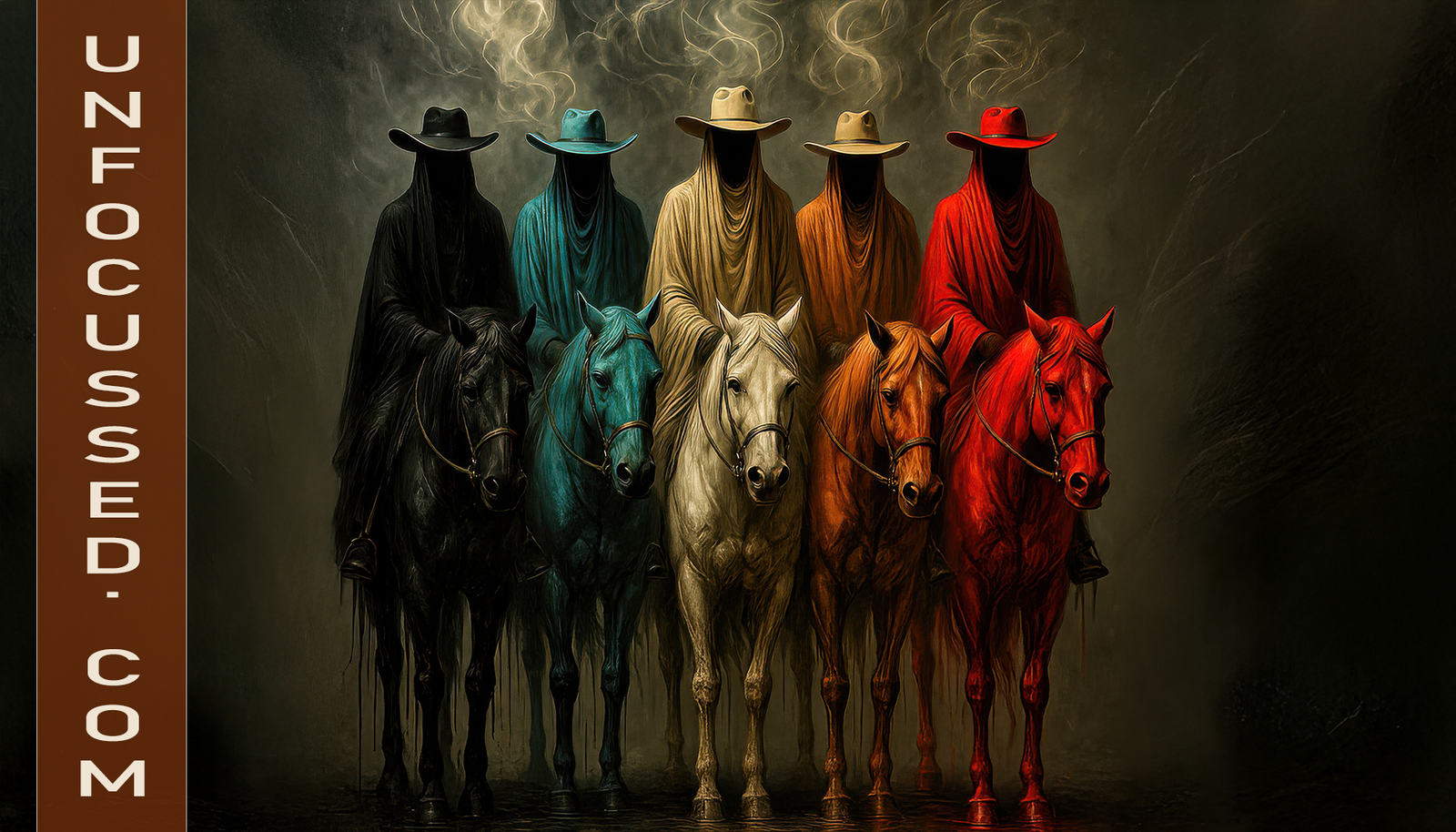
Arrival Beneath the Veil The first time the veil split open, it was barely a whisper. It came on the seventh moonless night in a row — a night so unnaturally dark that even the wolves had stopped howling, as if the sky itself had forgotten how to breathe. When it happened, the villagers of Hollowvale didn’t hear thunder, though the clouds swirled like a storm. They didn’t see lightning, though the air crackled as if under siege. Instead, they heard hoofbeats. Five of them. Each distinct. Each deliberate. Each beating out a rhythm like a death sentence, growing louder across the fields of ash and bone-dry soil. No one left their homes. Not even to peek. The elders remembered. And the elders were afraid. The sky tore open, just beyond the edge of the withering woods, where nothing had grown in two harvests. There, framed by a horizon stitched in smoke and sorrow, five riders emerged in perfect formation. They rode tall on horses that didn’t blink, didn’t snort, didn’t move — as if carved from living stone and shadow. The horses’ coats shimmered with impossible color: obsidian, ivory, ember, sea-glass teal, and wine-dark red. Their riders were cloaked in the same hues, each faceless beneath draping hoods that whispered as they moved, though no wind blew. And then… they stopped. Just outside the hamlet. Watching. Waiting. Dripping color like oil onto the soil, which hissed and burned where the hues fell. It was Judgment Eve. No one said the name out loud, but they all felt it, like a memory you don't own yet know is yours. The Riders had come before. Centuries ago. Always in fives. Always during years when the earth dried up and the crows fattened. And always, they came to choose. What they chose, no one remembered. Only that when they left, the world was not the same. This time, something was different. This time, one of the riders moved. He—if it was a he—was draped in crimson. As he dismounted, the color bled from his robes onto the ground like a gash across reality. His boots made no sound. His hand held no weapon, but his presence was violence itself. He stepped forward, and time slowed. The clouds above shifted violently, as if turning away in shame. A door creaked open in one of the homes. A child peeked out. The crimson rider turned his head. Slowly. Intentionally. And smiled. No one saw his mouth, but everyone felt it. That grin curled around the spine of the village and licked its way up the back of every neck. That was when the screaming started. That was when people began clawing at their doors, begging the gods, any gods, even the wrong ones, to hide them from the smile that wasn’t meant for mortals. The crimson rider raised his hand and pointed at the church steeple. The bell tower cracked in half, and the iron bell plummeted to the ground, burying itself in earth like a tombstone. Then, as silently as he came, the rider returned to his horse. And the five turned as one — fading slowly into the mist that gathered behind them, like ink dispersing in water. When morning came, the sky was clear. Birds chirped like idiots. Children played again. The veil was gone. But the church was still broken. The burn marks still bled through the ground where color had dripped. And the child who had opened the door? She was gone. No trace. Not a footprint. Not a scream. Not even dust. Only a single crimson feather, humming with heat, lay in her place. Signs in the Ash and Blood on the Wind The crimson feather never cooled. It was kept in a jar, sealed by seven rings of salt and watched over by the village's last Seer, a woman with only one eye and no shadow. Her name was Grendyl, and she spoke in riddles unless you asked the right question. That morning, as she held the humming glass in her trembling hands, her one eye leaked black tears. She didn’t speak. She only nodded once and muttered, “The Choosing has begun.” Over the following days, things decayed — not just in flesh, but in spirit. Cattle refused to eat. Fruit on the trees soured in the night. The blacksmith’s wife woke screaming and clawing at her arms, convinced beetles were nesting in her skin. No one could convince her otherwise — even as the physician tried to restrain her, even as she bit through her own wrist. She died staring at the ceiling, smiling and whispering, “The veil is thin, the veil is thin, the veil is thin...” Three more vanished that week. Always just after sunset. Always without sound or struggle. First a hunter, then a pair of newlyweds whose cabin was found untouched except for a ring of ash surrounding their bed and a smear of indigo paint on the pillow. The villagers met under torchlight in the remains of the church. Their voices were hushed, thick with suspicion and fear. They argued over leaving, over hiding, over arming themselves. But Grendyl arrived with the feather in her hand and slammed it down onto the altar. “You can’t run from color,” she hissed. “Not once the Riders have marked you. They don’t want your prayers. They don’t want your weapons. They want your truth.” Silence. Then, a young man — Jerro, the miller’s son — stood. “Then let’s give them mine,” he said. “Let them take me. I have nothing left.” Everyone watched in stunned silence as he walked out of the church, toward the field where the riders first appeared. Grendyl didn’t stop him. She only whispered, “Foolish boy. It doesn’t work like that.” The next morning, Jerro’s body was found in the wheat. At least, what was left of it. He had been split perfectly down the center — vertically — as if dissected by a scalpel wielded by God Himself. One half remained in the field. The other half was nailed to the door of the town’s apothecary. In place of blood, his veins held paint. Thick, radiant, glittering paint in shades no one had names for. His heart was missing. But in its place was a note, burned into the wood behind him: “Your truth was not enough.” That night, the teal rider returned. He stepped out of the mist just past midnight, his horse breathing steam that coiled into serpent shapes. The air turned viscous around him. Every lamp in the village went out. Dreams dissolved into nightmares — and everyone who had ever lied in their sleep woke up choking on their own tongues. One man burst into flames. Another aged fifty years overnight. The village dog began speaking backwards, uttering the names of the dead as it limped through the square, tail between its legs. The teal rider did not approach a home this time. He walked to the old schoolhouse and placed a single hand on its door. The building shuddered like a living thing. Screams erupted from inside — dozens of them, though the building had been abandoned for decades. The door crumbled into smoke. The screams stopped. And the teal rider, without another gesture, melted back into the mist. Grendyl now refused to speak, except in one-word answers. Her right hand began to peel, revealing ink beneath her skin. Lines. Symbols. A language only the dead understood. She began scratching them into the floorboards, muttering “the cycle returns,” over and over, like a prayer for no one. By the end of the week, Hollowvale had lost 17 souls. Not all were killed. Some simply wandered into the woods and didn’t come back. Others were found staring into the river, mouths wide open, no eyes in their sockets — just glistening marbles of swirling paint, still wet. Then came the ivory rider. He was different. Slower. He didn’t burn. He froze. His presence drained color from the world. Flowers wilted into gray powder as he passed. Wood cracked. Windows iced over. And people who looked directly at him were stricken with a shivering silence they never recovered from. Whole families stood in their yards, unmoving, unmoving, unmoving — until they crumbled into dust like frost-swept statues kissed by wind. Only Grendyl seemed unaffected. She sat in the square, scribbling furiously, humming a dirge with no melody. The feather now hovered in front of her, pulsing to the beat of the Riders' hooves no matter how far away they seemed. She was counting something. Not days. Not deaths. She was counting lies. Because that was what the Riders were feeding on. The lies we told ourselves. The ones about safety. About gods. About who we were before the veil first cracked. Before the Riders returned to remind us of the truths we buried too deep. Hollowvale was not innocent. It was chosen. And someone among them had summoned the Veil. Not by prayer. Not by magic. But by secret. Someone had made a pact. And the Riders had come to collect. The Pact, The Price, and The Pale Horizon The truth did not come gently. It broke open like a coffin kicked from the inside. It bled into Hollowvale one final night — when the sky above the woods caught fire and the last two Riders emerged. The Obsidian and the Amber. They came together this time. They did not stop at the field. They did not observe. They entered Hollowvale. Doors unlatched on their own. Walls wept varnish. Every reflective surface — from puddles to mirrors — showed not the present, but memories. Traumas. Sins. A woman dropped to her knees when she saw her reflection confess to a murder no one knew had happened. A child screamed as his own face mouthed the words: “I let it drown.” Even the dogs howled with human voices. The Riders walked through it all in silence. Their horses glided rather than trotted. The Obsidian one cast no shadow, and the Amber’s hooves rang like bells at a funeral procession. And between them, drifting like a piece of scorched cloth on invisible threads, came the Veil. It was not a metaphor. It was real. A tattered swath of something not quite fabric, not quite light — darker than night but brighter than death. It pulsed like a heartbeat, and it hummed with the weight of a thousand unspoken oaths. And when it reached the square, it stopped above Grendyl. She looked up for the first time in days, her lips cracked and dry, eyes ringed with ink. The floating feather hovered above her heart. The lines on her arms now connected into a map — a map of Hollowvale’s secrets, burned into her skin from within. She laughed. Not the laugh of someone who won — but the desperate, broken laugh of someone who thought they had time. “It wasn’t supposed to be me,” she said. The Obsidian rider spoke. A single word, and the ground rippled with it. “Lie.” The Amber rider raised a hand. The Veil descended. It touched Grendyl’s head like a crown. She arched backward with a scream so raw it flayed the crows from the sky. Her memories poured into the Veil. One by one. We saw them. Grendyl as a girl, whispering curses into the bones of a drowned priest. Grendyl in a midnight ritual with a circle of robed villagers, naming names, promising favors. Grendyl bleeding into the soil beneath the chapel, making a pact with something that had no face but many mouths. Grendyl holding a red stone, chanting, as she summoned the Riders to burn away her guilt… by making others pay her price. The Veil hissed. Not in anger. In understanding. It wrapped her completely. Her body vanished. Her screams did not. They still haven’t. And then — the Riders turned to the village. The rest of it. Not to destroy. But to choose. Every man, woman, and child was paralyzed in place. Not by magic. But by truth. When the Riders looked at you, you remembered everything you ever hid. And you felt it. In your bones. In your breath. Like you were being rewritten. Each Rider passed through the crowd. They placed hands on foreheads, over hearts, on trembling hands. They weren’t killing. They were collecting. Some people dropped where they stood — their bodies intact, but their eyes blank. Whatever made them human had been extracted. Others wept and fell to their knees in forgiveness for crimes they hadn’t admitted even to themselves. A few — very few — were untouched. Not pure, but honest. Honest in their fear, in their regret, in their weakness. The Veil spared them. The Riders bowed to them. And then the sky opened one final time. The colors that spilled out weren’t colors we know. They were emotions made visible — grief in hues that tasted like metal, joy that echoed like music. The five Riders rode back into the wound in the sky, and the Veil followed, dragging behind them like a river being sucked back into the earth. Before the breach sealed, the Obsidian rider turned once more… and dropped something into the dirt. A mirror. It still lies in the center of Hollowvale. Untouched. Because no one wants to see themselves the way the Riders saw them. The survivors rebuilt. Slowly. Quietly. With fewer lies. But they never removed the mirror. They planted nothing near it. No children are born near it. And every night, a candle is lit beside it. Not to keep anything out. But to make sure they remember what they let in. Years later, a traveler asked a blind old man sitting near the mirror, “What were they, really? Spirits? Gods?” The old man didn’t answer at first. He reached into his cloak and held up a feather — crimson, still warm to the touch. “They were our truth,” he said. “And that’s the scariest thing that’s ever come through the dark.”     If the Riders have ridden into your imagination and refused to leave, you can now bring a piece of that ominous energy into your own world. “Riders of the Chromatic Veil” is available as a hauntingly vivid wood print or as a brilliantly reflective metal print, perfect for framing your darker side in the most striking way possible. Prefer something more tactile? Challenge your sanity with the 1000-piece jigsaw puzzle — and piece together the mystery yourself. Or carry the shadows with you everywhere in a stylish, soul-stirring tote bag. Let the story live beyond the screen. Own the Veil. Touch the myth. Dare to frame your truth.

En savoir plus

Queen of the Forsaken Soil

par Bill Tiepelman

Queen of the Forsaken Soil

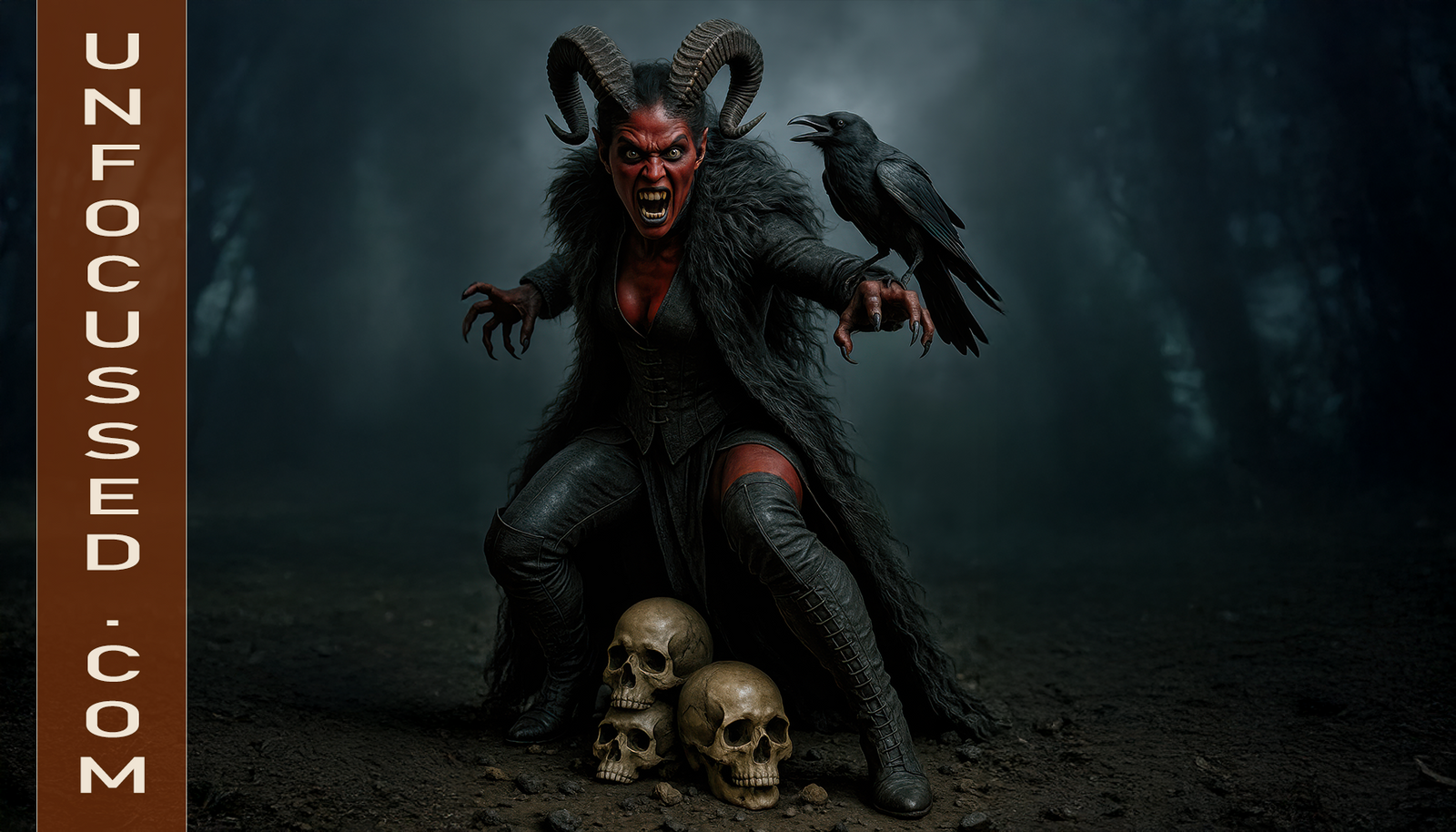
The Screaming Soil The land was wrong. Not just haunted, not just cursed. It screamed. Beneath the brittle roots of leafless trees, under stones older than kings, deep in the marrow of the earth — the soil itself whispered names. Names no one should know. It begged. It threatened. It told filthy stories that’d peel the teeth from your skull if you listened too long. That’s why no one came here willingly. Except for bastard lunatics. And Pym. Pym was a rat-catcher, formally. Informally, he was a drunk, a gravedigger’s assistant, a mediocre pickpocket, and an ex-squire who once farted during a bishop’s funeral mass and had never recovered socially. Life hadn’t handed Pym much in the way of dignity. But he had nimble fingers and a talent for pretending he didn’t notice corpses moving. He’d been sent to the Forsaken Soil by a mistake. A cartographer’s one-eyed apprentice had miswritten “blessed woodlands” on a parchment that actually meant “do not enter unless you’re tired of your skin.” Pym, ever optimistic and three tankards deep, had taken the job for a silver half-drake and a warm handjob behind the alehouse. That was twelve hours ago. And now he stood ankle-deep in muck that bled when you stepped wrong, staring at what was unmistakably a throne of skulls, and a woman — if you could call that towering hell-beast a woman — perched on it like a spider in mourning. The sky was dead gray. The trees had no leaves. The wind sounded like it sobbed through broken flutes. And the queen... She wore the darkness like a perfume. Her horns curled like old knives. Her red skin gleamed like lacquered sin. A black raven perched on her arm, pecking at a silver chain wound tight around her wrist. She snarled with the kind of authority that didn’t ask for your attention, it seized it by the throat, bit down, and whispered “mine.” “Well,” Pym muttered, already regretting everything from his childhood onward, “looks like I’ve stumbled into a royal arse-whooping.” The Queen rose. Slowly. Deliberately. As if gravity was her plaything. Her eyes, bright with fury and ancient boredom, locked on his. Her lips parted. And when she spoke, her voice cracked the air like frost cracking a tombstone. “You dare trespass,” she said, “with piss on your boots and hangover breath in your mouth?” Pym blinked. “Technically, milady, it's not my piss.” Silence. Even the raven tilted its head like it wasn’t sure whether to laugh or disembowel him. She stepped forward, the skulls beneath her throne crunching like dry cereal. “Then whose piss is it?” “...Would you believe me if I said divine intervention?” There are many ways to die in the Forsaken Soil. Slowly, screaming, clawing your own eyes out. Quickly, with your heart ripped through your back. But Pym, the idiot, did what no one in five hundred years had done: He made the Queen of the Forsaken Soil laugh. It wasn’t a pleasant sound. It was the kind of laugh that made your spleen try to leave your body through your spine. But it was a laugh. And when she was done, when her jagged grin had split her face nearly in half, she said, “Fine. I’ll give you a task.” Pym sighed. “Can it be fetching ale? I’m quite good at that.” “No,” she said. “I want you to find my heart.” “Not much for poetry, are you?” “I buried it six centuries ago in the belly of a demon. Find it, bring it to me, and I might let you leave with your genitals still attached.” Pym scratched his stubble. “Seems fair.” And with that, the Queen turned and vanished into mist. The raven stayed, watching him. Judging him. Probably considering whether he could survive on rat-catcher meat alone. “Well, bird,” Pym said, adjusting his crotch. “Looks like we’re going heart hunting.” The Demon’s Belly and the House that Hated Floors Pym had one rule in life, and it was: Don’t follow talking birds. Unfortunately, the Queen hadn’t exactly given him options. The raven squawked once, flapped its wings, and began drifting down a trail of gnarled, bone-colored trees that arched over like a vertebrae-choked tunnel. The soil beneath his feet pulsed occasionally, as if it was dreaming something ugly. Which it probably was. The whole landscape felt like the inside of a colon that belonged to a failed god. The raven didn’t talk. But it sure did judge. Every time Pym stumbled, it turned its head slowly like a disappointed librarian. Every time he muttered something sarcastic, it cawed just once — sharp and short, like it was filing his name under “Future Disembowelment.” After two hours of walking through fog so thick it made his teeth ache, Pym saw the demon. To be fair, the demon might’ve once been a castle. Or a mountain. Or a cathedral. Now it was all three, and none. It pulsed like a living organ, with windows for eyes and doors that opened and closed like mouths mid-scream. From its roof jutted towers shaped like broken fingers, and down its sides oozed viscous, dark ichor that smelled like regret, onions, and betrayal. “Queen really knows how to bury a heart,” Pym muttered. The entrance wasn’t guarded, unless you counted the wall of teeth that snapped shut every thirty seconds like a metronome for the damned. The raven landed on a crooked fencepost and cawed twice. Translation: Well, you going in or what, dickhead? Pym waited until the jaw-wall opened, dashed through, and immediately regretted everything. The inside of the demon’s belly was worse. The floors weren’t floors. They were slick, pulsing membranes that squelched under his boots. The halls shifted. Sometimes they were too narrow, other times they yawned open into cathedral-sized spaces with ceilings made of writhing worms. Portraits blinked. Doors screamed when you touched them. And worst of all, the building hated gravity. Halfway down one hallway, he fell up. He landed on the ceiling, only for it to turn into a staircase that folded inside itself like origami having a panic attack. He cursed. Loudly. The place responded with a wet belch and a wall that tried to lick him. “I’ve been in brothels cleaner than this,” he grunted. Eventually, he found the heart. Or what was left of it. It floated in a chamber the size of a cathedral nave, encased in glass, suspended in thick yellow-green fluid. It pulsed slowly, like it was remembering how to beat. Black veins curled through it, and arcane runes lit the air around it like angry fireflies. Surrounding the heart was a circle of iron obelisks, and kneeling at each was a creature that could best be described as "priest-shaped fungus with opinions." The raven landed beside him, somehow unfazed. Pym sighed. “Well. This is either the world’s creepiest baptism or a Monday in the Queen’s calendar.” He crept in, careful not to step on the writhing red roots that wormed out from the obelisks and into the walls. The moment he touched the glass, one of the kneeling things moaned and lifted its face. It had no eyes. No mouth. Just a lot of weeping holes and a very wet sound when it moved. “Ah. The welcoming committee.” Things escalated quickly. The fungus-priests rose, shaking off bits of sacred slime. They hissed. One reached for a curved knife made of screaming bone. Pym pulled a dagger from his belt — which, to be fair, was mostly ceremonial and mostly used to slice cheese — and launched himself into the dumbest fight of his life. He stabbed one in the kneecap. It squealed like a pig made of fungus and exploded into spores. Another lunged; Pym dodged and accidentally tripped on a root, landing face-first in something that definitely wasn’t carpet. He scrambled, slashed, bit, headbutted. Eventually, he stood panting, covered in goo, with three dead not-quite-monks around him, and the raven staring like it was reconsidering their entire partnership. “Don’t judge me,” he wheezed. “I was trained for rats, not demonic clergy.” He grabbed the heart. The runes screamed. The tower trembled. Outside, the demon-castle let out a sound like someone stepping on a bag of organs. The fluid in the tank began to boil. The heart beat faster — it was alive now, angry and wet and pulsing with foul heat. “Time to leave,” Pym muttered, sprinting as the floor melted and the ceiling turned into a nest of teeth. It was a blur. He ran, ducked, swore, possibly soiled himself (again — still not his fault), and finally burst out the demon’s jaw-door just as it collapsed behind him in a roaring wave of broken architecture and bile. He collapsed in the mud, still holding the jarred, steaming heart in his hands like a sacred turd. The raven landed beside him, gave a single approving caw, and nodded toward the mist. The Queen waited. Of course she did. And Pym had no idea what the hell she was going to do with this disgusting chunk of ancient rage — or what she might do with him for being stupid enough to actually succeed. But hell, he wasn’t going to back out now. “Let’s go see royalty,” he muttered, and followed the bird into the fog. The Heartless Queen and the Bastard Crown The fog thickened as Pym walked. It clung to him like a wet, pervy uncle. With every step, the heart pulsed hotter in his arms, leaking small drips of ancient, boiling ichor onto his shirt. His nipples would never be the same. Behind him, the demon-castle collapsed into a gurgling sinkhole, still belching out the occasional hymn of despair, which Pym found oddly catchy. The raven circled ahead like a drunken prophet, finally guiding him back to the clearing — back to her. The Queen of the Forsaken Soil stood exactly where he’d left her, though now the throne of skulls had multiplied. Twice the bones. Triple the menace. A second raven perched on her shoulder, this one older, balder, and somehow more disappointed-looking. “You return,” she said, eyeing him with a gaze that could make stone weep blood. “And intact.” Pym coughed, wiped some demon-slime off his chin, and held up the jar like an idiot displaying a meat prize at a butcher’s convention. “Found your heart. It was inside a giant screaming building full of religious mushrooms and bad taste.” She did not laugh this time. Instead, she descended the skull steps with a grace that made gravity blush. The mist curled away from her. The ground whispered, She walks, she walks, she walks. The two ravens flanked her like feathery shadows. When she reached him, she extended a single clawed hand. Pym hesitated, just a little. Because in that moment, the heart twitched. Not like a dying thing. Like a watching thing. Like it knew this wasn’t just a delivery. Like it wanted to be held a little longer. “...You’re not going to eat it, are you?” The Queen raised a brow. “Would it matter?” He thought about it. “Kind of, yeah. I'm emotionally fragile and squeamish after that last fungus orgy.” She grinned. “I’ll show you what I do with it.” She took the jar and — in one impossibly smooth motion — crushed it in her palm. Glass and fluid hissed, and the heart dropped onto her other hand like it had been waiting. She raised it above her head. The sky groaned. The skulls howled. A bolt of black lightning struck the earth a few feet away and opened a screaming pit full of wailing, naked lawyers (probably). Then she shoved the heart into her own chest. No wound. No incision. Just pure magic. The flesh parted like old curtains and drank the organ in. She roared — not in pain, but in power. Her skin lit from within, brighter than fire, redder than vengeance. The wind shrieked. Trees caught fire. Ravens exploded into feathers and reformed into skeletal versions of themselves. She levitated a few inches off the ground and spoke with a voice made of iron, shadow, and sarcasm. “I AM WHOLE.” “That’s... great,” Pym said, trying not to pee himself again. “So, we good? You’re healed, I get to leave with all my fingers?” She floated gently back to the ground, her form changed. Taller. More monstrous. More regal. She was still beautiful, but in the way a thunderstorm is beautiful right before it drops a tornado on your house. “You did not merely return my heart,” she said. “You touched it. Carried it. Gave it warmth. You breathed over it. That makes you...” She stepped forward, and placed one clawed hand on his chest. “...a consort.” “I’m sorry, a what now?” She snapped her fingers. Chains of mist wrapped around his limbs. A crown of bone and blood appeared in her other hand. She held it over his head with amused menace. “Kneel, rat-catcher.” “I think this is moving a bit fast—” “Kneel and rule beside me, or die with your balls in a jar. Your choice.” Pym, being an adaptable man and not particularly attached to his testicles, dropped to one knee. The crown dropped onto his greasy hair. It hissed, bit, then settled. He felt nothing at first. Then too much. Power, yes — but also history. Centuries of war, sorrow, rage, betrayal, and very poor architectural decisions. “Ow,” he said, as his spine cracked into regal posture. “That tickles. And burns.” The Queen leaned in, her lips at his ear. “You’ll get used to it. Or you’ll rot trying.” The mist lifted. The Forsaken Soil shifted. It accepted him. Skulls arranged themselves into a new throne beside hers. The dead whispered gossip. The trees bowed. The ravens nested in his hair. One of them pooped gently on his shoulder in approval. And just like that, Pym the rat-catcher became King of the Damned. Consort to a furious, heart-reborn goddess. Keeper of the Fog. Heir to nothing, master of everything that should not exist. He sat beside her, newly majestic, already itching from the crown and wondering if kings got bar tabs. He leaned over to her. “So,” he whispered, “now that we’re co-ruling, does this mean we share a bathroom or...?” The Queen did not answer. But she did smile. And far below them, in the screaming soil, something new began to stir.     Claim Your Throne (or at least your wall)If the Queen has haunted your imagination like she did poor Pym’s underwear, why not bring her home in all her dark, cinematic glory? This powerful image — Queen of the Forsaken Soil — is now available as a tapestry fit for a cursed throne room, a canvas print soaked in gothic dread, a metal print sharp enough to summon demons, or an acrylic print smooth enough to lure a raven. Want something more interactive? Dare to assemble the Queen piece by piece with this dark fantasy jigsaw puzzle — perfect for rainy nights and mild psychological unraveling. Long live the Queen… preferably on your wall.

En savoir plus

Flesh and Flutter

par Bill Tiepelman

Chair et battements

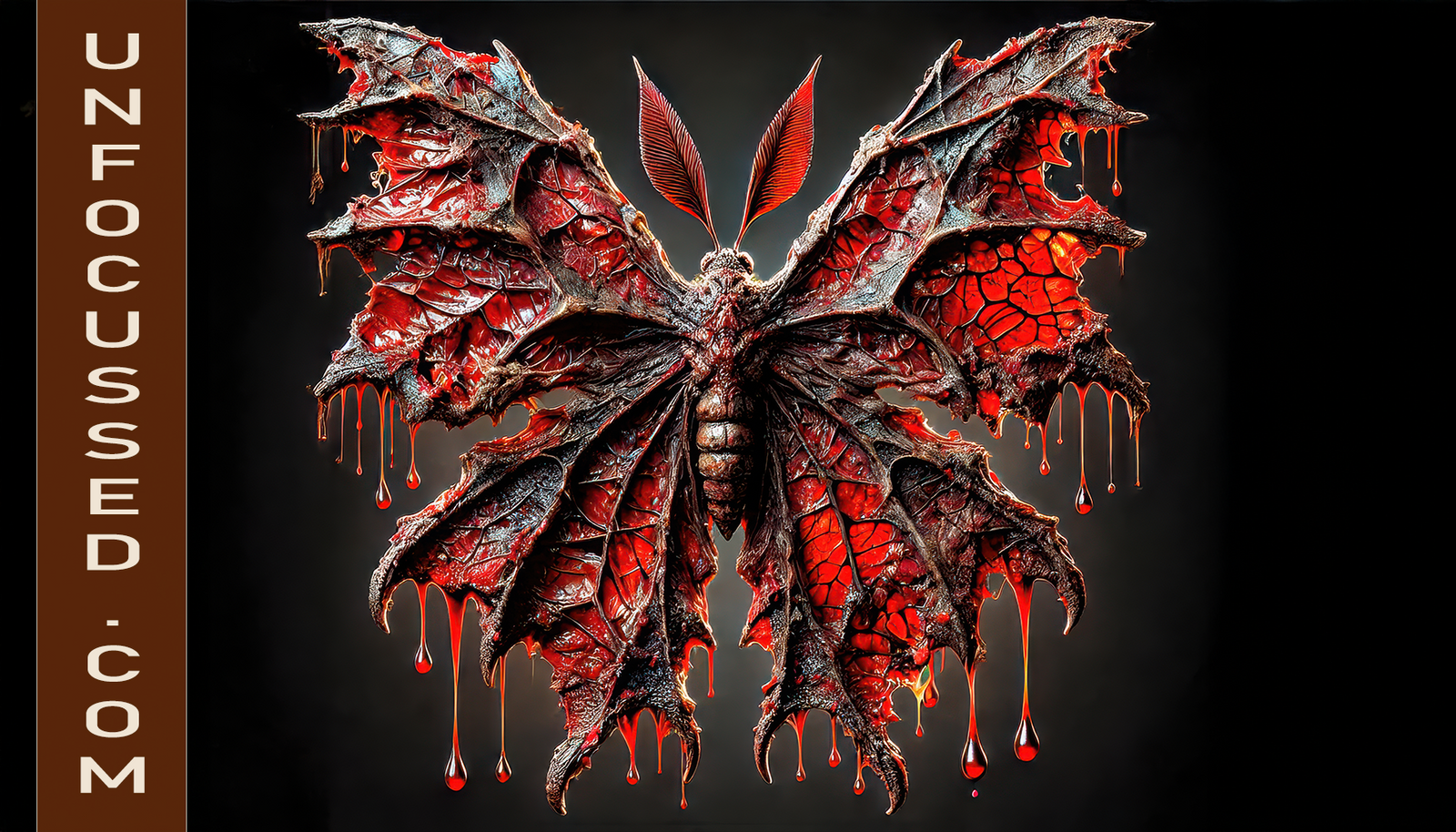
La marque de l'essaim Le soleil avait commencé sa lente descente, peignant la canopée de la forêt de teintes ambrées et cramoisies. Ethan ajusta son sac, grimaçant lorsqu'une épine s'accrocha à sa manche. Il jeta un coup d'œil à Claire, sa lampe de poche cachée sous son bras, tandis qu'elle étudiait une carte froissée. Le silence épais de la forêt semblait contre nature, comme si chaque insecte et chaque oiseau avaient fui quelque chose d'invisible. « Tu es sûr que nous sommes sur la bonne piste ? » demanda Ethan, sa voix à peine plus haute qu'un murmure. Il ne savait pas pourquoi il murmurait ; il n'y avait pas âme qui vive à des kilomètres à la ronde. « C'est ici », répondit sèchement Claire, ses yeux scrutant les marques rouges griffonnées sur la carte. « L'ancien campement devrait être juste devant. Le professeur Adler a dit que c'est là que l'artefact a été découvert. » L'artefact. Ethan frissonna. Les rumeurs entourant l'expédition l'avaient dépeint comme quelque chose tout droit sorti d'un cauchemar : une ancienne relique en forme de cocon de papillon, retrouvée encastrée dans un arbre fendu par la foudre. L'équipe qui l'avait exhumé avait disparu, laissant derrière elle des tentes déchirées, du matériel ensanglanté et des rumeurs de morts non naturelles. « Tu ne penses pas que tout cela soit vrai, n'est-ce pas ? » s'aventura Ethan, essayant de détendre l'atmosphère. Claire lui lança un regard noir. « Ce n'est qu'une histoire. Ne laisse pas libre cours à ton imagination. » Mais l'imagination d'Ethan était libre. Il ne pouvait se défaire de la sensation d'être observé, de voir quelque chose d'ancien et de malveillant s'agiter sous le sol. Les arbres semblaient se rapprocher tandis que le couple avançait péniblement, leurs branches tordues formant des formes grotesques dans la pénombre. Il ne leur fallut pas longtemps avant de trouver le site. Un amas de bâches déchiquetées s'accrochait aux restes squelettiques des poteaux. Des boîtes de nourriture pourries gisaient éparpillées sur le sol et un foyer calciné trônait au centre. Mais ce qui attira l'attention d'Ethan, c'était l'arbre. Il dominait le campement, son écorce noircie et suintait une sève ambrée visqueuse. L'artefact était encastré dans son tronc. Le cocon était massif, facilement de la taille d'une tête humaine, et sa surface scintillait comme si elle était recouverte de minuscules écailles irisées. De profondes rainures gravées dans sa surface créaient un motif complexe, presque hypnotique. Ethan s'approcha, l'air autour de lui semblant bourdonner. « Ne la touche pas », prévint Claire, mais sa voix était lointaine, comme étouffée par du coton. Ethan n'écoutait pas. Il tendit la main, ses doigts tremblants alors qu'ils se trouvaient à quelques centimètres de la relique. Au moment où sa peau entra en contact, le bourdonnement se transforma en un rugissement assourdissant. La douleur lui brûla le bras et il hurla, s'effondrant à genoux. Il serra sa main, sa vision se brouillant tandis que le monde s'inclinait. Les cris frénétiques de Claire furent noyés par le bourdonnement soudain des ailes - un bruit qui devint de plus en plus fort, comme si des milliers d'insectes convergeaient. Quelque chose jaillit du cocon, un panache de brume rouge jaillit dans les airs. Ethan leva les yeux juste à temps pour le voir – un énorme papillon, aux ailes en lambeaux mais rayonnant de couleurs impossibles. Son corps était grotesque, palpitant de muscles exposés et dégoulinant d’un liquide visqueux. Il était perché sur l’arbre, ses antennes tressaillant comme pour les évaluer. Et puis, c'est arrivé pour lui. Avant qu'Ethan ne puisse réagir, les ailes de la créature se déployèrent, libérant un jet de poussière fine et scintillante. Il inspira brusquement, toussant tandis que les particules emplissaient ses poumons. Son corps convulsa, une douleur brûlante se propageant dans sa poitrine et ses membres. Le monde autour de lui se dissolvait dans l'obscurité. Lorsqu'il ouvrit les yeux, tout avait changé. Le campement avait disparu, remplacé par un vide infini d'ombres ondulantes et de cocons lumineux. Il pouvait les entendre – des murmures dans une langue qu'il ne comprenait pas, mais dont il savait qu'elle lui était destinée. Il n'était pas seul. Des centaines d'yeux brillants le fixaient et, au loin, le bruit des ailes se faisait plus fort. La faim de l'essaim Ethan se réveilla en sursaut, les poumons brûlants comme s'il avait passé des heures sous l'eau. Il était de retour dans la forêt, ou du moins dans une version de celle-ci. Les arbres n'avaient pas l'air normaux. Leurs troncs se tordaient en spirales déchiquetées et leurs feuilles scintillaient comme du verre sous la pâle lumière de la lune. Chaque son était amplifié : le craquement des branches, le bruissement des créatures invisibles et le bourdonnement omniprésent des ailes juste hors de vue. « Claire ? » croassa-t-il, sa voix rauque et faible. Elle n'était nulle part en vue. La panique l'envahit, mais lorsqu'il essaya de se lever, son corps se rebella. Ses membres lui semblaient étrangers, comme s'ils ne lui appartenaient plus. Il baissa les yeux et recula. Sa peau était lisse, d'un étrange éclat translucide, et de légers motifs, comme les veines des ailes d'un papillon, remontaient le long de ses bras. « C'est quoi ce bordel... » murmura-t-il, la voix brisée. Le bourdonnement s'amplifia et Ethan se releva en titubant, se tenant la poitrine. Il sentit quelque chose remuer en lui, une faim lancinante qui était à la fois la sienne et quelque chose d'autre. Sa vision se brouilla, changeant de mise au point. Chaque son, chaque odeur devenait écrasant. Le monde était trop vivant, trop vivant. Et puis il les vit. Un essaim de créatures surgit de l’ombre, leurs ailes captant la lumière de la lune. À première vue, elles ressemblaient à des papillons, mais leurs corps étaient grotesques : gonflés et luisants, avec des appendices pointus en forme d’aiguilles. Leurs yeux brillaient d’une lumière surnaturelle et leurs mouvements étaient étrangement délibérés. Ils planaient autour de lui, leurs ailes créant un kaléidoscope de couleurs fascinant. L'un d'eux atterrit sur sa main tendue. Il voulait crier, le jeter au loin, mais il n'y parvint pas. Il inclina la tête, ses antennes tressaillant tandis qu'il l'étudiait. Et puis il le mordit. La douleur lui traversa le bras lorsque les mandibules de la créature s'enfoncèrent dans sa chair. Le sang jaillit autour de la blessure, mais au lieu de couler librement, il s'épaissit, devenant noir et visqueux. Ethan hurla, secouant violemment sa main jusqu'à ce que la chose le libère et s'envole, laissant derrière elle un petit amas de larves frétillantes incrustées dans sa peau. La vue de ces animaux lui retourna l’estomac, mais avant qu’il ne puisse réagir, la faim revint, plus forte cette fois, insupportable. Son corps se déplaça de lui-même, ses jambes le portant plus profondément dans la forêt tortueuse. Il trébucha sur une clairière où le sol était jonché de carcasses d’animaux en décomposition. La puanteur était écrasante, mais au lieu de reculer, il sentit sa bouche saliver. « Non… non, non, non », marmonna-t-il en se tenant la tête. Mais la faim était implacable, elle dévorait toutes ses pensées. Il tomba à genoux, les mains tremblantes tandis qu’il attrapait une carcasse de cerf à moitié pourrie. Au moment où ses doigts touchèrent la chair, il ressentit une bouffée d’euphorie. Il la dévora, ses ongles tranchant la peau et les tendons tandis qu’il la dévorait comme un animal affamé. Ce n'est que lorsqu'il sentit le goût cuivré du sang sur sa langue qu'il comprit ce qu'il faisait. Il repoussa la carcasse, avec un violent haut-le-cœur. Des larmes coulaient sur son visage tandis qu'il regardait ses mains imbibées de sang. Il se reconnaissait à peine. « Ethan ? » Il releva brusquement la tête au son de la voix de Claire. Elle se tenait au bord de la clairière, sa lampe de poche tremblant dans sa main. Son visage était pâle, ses yeux écarquillés d'horreur alors qu'elle observait la scène devant elle. — Claire, dit-il d'une voix rauque en trébuchant vers elle. Ce n'est pas ce que ça semble être. Je... « Ne bouge pas ! » hurla-t-elle en essayant de sortir quelque chose de son sac à dos. « Mais qu’est-ce qui ne va pas chez toi ? » Ethan s'arrêta, le cœur brisé par la peur dans ses yeux. « C'est... c'est l'artefact. Il m'a fait quelque chose. Je ne sais pas ce qui se passe... » Avant qu'il ait pu finir, l'essaim descendit. Ils arrivèrent de toutes les directions, leurs ailes créant une cacophonie assourdissante. Claire hurla tandis que les créatures l'entouraient, leurs appendices acérés tranchant le tissu et la chair. Ethan essaya de l'atteindre, mais l'essaim lui bloqua le chemin, leurs corps formant une barrière impénétrable. « Non ! » cria-t-il, la voix éraillée. Il frappa aveuglément les créatures, mais ce fut inutile. Elles attaquèrent Claire avec une efficacité impitoyable, ses cris résonnant dans la forêt avant de s’arrêter brusquement. Lorsque l’essaim se dispersa enfin, tout ce qui restait était sa lampe de poche, vacillant faiblement sur le sol imbibé de sang. Ethan tomba à genoux, le corps secoué de sanglots. La faim s'empara de nouveau d'elle, plus forte que jamais, et il réalisa avec une terreur croissante qu'il pouvait encore sentir son sang. La transformation n'était pas terminée. Quel que soit l'effet que l'artefact lui avait fait, c'était loin d'être fini. L'étreinte de la ruche La forêt n'était plus une forêt. Ethan errait dans ses vestiges déformés, les arbres pulsant à présent comme s'ils étaient vivants. Leur écorce se tordait de veines de sève noire, et l'air vibrait d'un bourdonnement surnaturel. Le temps avait perdu toute signification. Il ne savait pas si des minutes ou des heures s'étaient écoulées depuis que les cris de Claire s'étaient estompés dans le silence. Son corps continuait de le trahir. La faim était insatiable, rongeait son cœur, et sa chair était devenue étrangère – translucide, avec des veines qui scintillaient au clair de lune comme du mercure liquide. Les motifs qui s’étalaient sur sa peau couvraient maintenant sa poitrine et son cou, leur lueur irisée pulsant faiblement à chaque battement de son cœur. Les larves dans son bras avaient grandi, leur mouvement sous sa peau était une démangeaison insupportable qu’il ne pouvait pas gratter. Il trébucha dans une autre clairière, dominée cette fois par un énorme cocon suspendu entre deux arbres noueux. Il brillait faiblement, sa surface ondulait comme un être vivant. En dessous, le sol était jonché de restes d'animaux... et de personnes. Des vêtements déchiquetés, des os brisés et des corps à moitié dissous gisaient en tas grotesques, l'air empestant la puanteur de la décomposition. Au centre du carnage se tenait le papillon. Ses ailes, autrefois en lambeaux, étaient maintenant entières, leurs couleurs si vives qu'elles semblaient brûler l'air autour d'elles. Son corps grotesque palpitait de vie, ses antennes frémissaient alors qu'il se tournait vers Ethan. Les yeux à multiples facettes de la créature brillaient d'une lumière surnaturelle, et à cet instant, il sut que c'était la reine. « Tu m’as amené ici », grogna Ethan, la voix tremblante. « Pourquoi ? Que veux-tu de moi ? » La reine ne répondit pas par des mots. Au lieu de cela, elle déploya ses ailes, libérant une bouffée de la poussière scintillante qui l'avait infecté en premier. Les particules tourbillonnèrent autour de lui, pénétrèrent dans ses poumons et ses yeux, et le monde s'inclina une fois de plus. Le sol sous lui sembla se dissoudre, et il tomba – dans la mémoire, dans l'obscurité, dans quelque chose de bien plus ancien que lui-même. Des visions envahirent son esprit. Il vit la création de l'artefact, un rituel monstrueux exécuté par une civilisation depuis longtemps oubliée. Ils avaient vénéré la reine, s'offrant à elle en échange du pouvoir et de l'immortalité. Il vit leur transformation, leurs corps déformés et remodelés en quelque chose qui n'était plus humain. Et il vit leur fin : une masse d'horreurs ailées et torturées, consumées par leur propre faim, ne laissant derrière elles que le cocon en attente du prochain hôte. Les genoux d'Ethan touchèrent le sol alors qu'il revenait à la réalité, haletant. La reine s'était rapprochée, ses antennes effleurant son visage. Il ne broncha pas. Il ne pouvait pas. Sa présence était écrasante, son regard perçant les parties les plus profondes de son âme. Il sentit quelque chose se briser en lui, un lien avec son humanité se libérer. « Non, murmura-t-il en secouant la tête. Je ne deviendrai pas l’un d’entre vous. » La reine émit un son, un bruit sourd et grinçant qui résonna dans son crâne. Ce n'était pas un rire, mais plutôt une moquerie. Elle déploya ses ailes une fois de plus et l'essaim sortit de l'ombre. Ils l'entourèrent, leurs yeux brillants comme des étoiles lointaines. Le cœur d'Ethan s'emballa tandis qu'ils descendaient, leurs appendices en forme d'aiguilles transperçant sa chair. La douleur envahit ses sens, mais ce n'était rien comparé à ce qui se passa ensuite. Les larves dans son bras commencèrent à bouger, se frayant un chemin vers la surface. Sa peau se fendit et il hurla lorsqu'elles sortirent, se tordant et pulsant. Elles tombèrent au sol, où elles furent immédiatement consumées par l'essaim, leurs corps se dissolvant dans une brume scintillante qui l'enveloppa. La transformation était complète. Le corps d'Ethan se tordit, ses os se brisèrent et se remodelèrent. Ses bras s'étirèrent, ses doigts fusionnèrent en appendices pointus et chitineux. Son dos gicla dans un jet de sang et de liquide tandis que des ailes déchiraient sa chair, leur surface chatoyante des mêmes motifs irisés qui avaient envahi sa peau. Il hurla, mais le son n'était plus humain : c'était un cri perçant et inhumain qui résonna dans la forêt. Quand ce fut fini, il s'effondra au sol, le corps tremblant. La reine se pencha au-dessus de lui, ses antennes effleurant sa nouvelle forme extraterrestre. Elle émit un autre son strident, et cette fois, il comprit. C'était un ordre, un commandement qui résonnait au plus profond de lui-même. Il se leva, ses ailes se déployant derrière lui. L'essaim se sépara et il prit place à côté de la reine. Il n'était plus Ethan. Il faisait désormais partie de la ruche, une créature de faim et d'obscurité. Et tandis que la reine se tournait vers les lumières lointaines de la ville, il la suivit, l'essaim s'élevant autour d'eux comme une tempête. Le dévorant La ville dormait, heureusement inconsciente de la tempête qui approchait. Les lampadaires clignotaient dans l'air froid de la nuit, et le faible bourdonnement des cigales était le seul son qui accompagnait le silence. Au loin, le bourdonnement des ailes devenait plus fort, un crescendo qui allait bientôt couvrir tout le reste. Ethan – si ce nom avait encore un sens – observait la ville depuis la lisière de la forêt. Ses nouveaux yeux voyaient le monde différemment, chaque détail plus net, plus vivant. Il pouvait voir la chaleur irradier des maisons, les pulsations lentes et rythmées des gens qui dormaient à l’intérieur. La faim le torturait, implacable et accablante. Son corps souffrait du besoin de se nourrir, de consommer, de se répandre. La reine se déplaça à ses côtés, ses ailes scintillant dans la lumière pâle. Elle émit un léger gazouillis et l'essaim bondit en avant, une marée vivante d'ailes et de griffes. Ethan le suivit, ses mouvements fluides et étranges, ses ailes battant au rythme du reste de la ruche. Il ne ressentait plus ni peur ni hésitation, seulement de la faim et un but. Ils s'abattirent sur la première maison comme une épidémie. Les fenêtres se brisèrent alors que l'essaim s'y déversait, leurs appendices en forme d'aiguilles tranchant murs et meubles avec facilité. Des cris éclatèrent de l'intérieur, mais ils furent rapidement réduits au silence. Ethan s'avança à travers les décombres, ses antennes tressaillant tandis qu'il sentait la chaleur persistante de la vie. Un homme trébucha dans le couloir, le visage pâle et les yeux écarquillés de terreur. « S'il vous plaît », supplia l'homme, la voix tremblante. « Ne… » Ethan se jeta sur lui, ses griffes perçant la poitrine de l'homme. Il sentit la vie le quitter, la chaleur se transférer dans son propre corps, alimentant encore plus la transformation. La faim s'apaisa un instant, mais ce n'était pas suffisant. Ce ne serait jamais suffisant. L'essaim se déplaçait de maison en maison, semant la destruction sur son passage. Les rues furent bientôt jonchées de cadavres, dont la chair était dépouillée et les os laissés à pourrir. Le système d'alarme de la ville se mit à hurler, mais il était trop tard. Les rares personnes qui réussirent à s'échapper de leurs maisons coururent aveuglément dans la nuit, pour être rattrapées par l'essaim quelques instants plus tard. Ethan se retrouva debout au centre de la place de la ville, ses ailes projetant de longues ombres sous les lampadaires vacillants. La reine était perchée sur le clocher au-dessus, ses ailes déployées tandis qu'elle émettait un son qui résonna dans tout l'essaim. C'était un cri de triomphe, un signal que la ruche avait revendiqué un autre lieu comme sien. Mais quelque chose changea en Ethan. Tandis qu'il observait le carnage autour de lui, des fragments de son ancien moi remontèrent à la surface. Il se souvint du visage de Claire, de la façon dont elle l'avait regardé avec peur et désespoir. Il se souvint de la vie qu'il avait eue avant l'artefact, avant l'essaim. Et pour la première fois depuis sa transformation, il ressentit autre chose que de la faim. La reine le sentit. Elle tourna son regard vers lui, ses yeux brillants de fureur. Ses ailes battirent une fois, et l'essaim l'entoura, leurs corps formant un mur impénétrable. Il savait ce qui allait arriver. La ruche ne tolérait ni faiblesse ni rébellion. S'il ne pouvait pas obéir, il serait détruit. « Non, » grogna Ethan, sa voix déformée et inhumaine. « Pas comme ça. » Il se jeta sur la reine, ses griffes fendant l'air. Elle poussa un cri perçant, ses ailes créant une rafale de vent qui l'envoya s'écraser au sol. L'essaim attaqua, leurs mandibules déchirant sa chair, mais il ne s'arrêta pas. Il se fraya un chemin vers elle, son corps alimenté par une détermination désespérée. D'un dernier bond furieux, il enfonça ses griffes dans la poitrine de la reine. Son cri fut assourdissant et l'essaim se figea, leurs mouvements erratiques et confus. Le corps de la reine convulsa, ses ailes s'agitèrent sauvagement avant qu'elle ne s'effondre, son éclat s'évanouissant dans l'obscurité. Alors que la reine mourait, l'essaim se désintégra. Leurs corps s'effondrèrent en cendres, emportés par le vent. Ethan s'effondra à côté d'elle, son corps tremblant d'épuisement. La faim avait disparu, remplacée par un vide écrasant. Il regarda ses mains, désormais griffues et étrangères, et sut qu'il n'y avait pas de retour en arrière. La ville était à nouveau silencieuse, les seuls sons étaient le faible crépitement des feux qui brûlaient dans les ruines. Ethan se leva, ses ailes se déployant derrière lui. Il était seul à présent, une créature coincée entre deux mondes. Tandis qu'il fixait l'horizon, les premiers rayons de l'aube perçant l'obscurité, il prit sa décision. Il partirait, loin de l'humanité, loin des reliques du passé. Il ne savait pas s'il pourrait contrôler ce qu'il était devenu, mais il essaierait. Il le devait à Claire, à lui-même, aux quelques fragments d'âme qui lui restaient encore. Et tandis que la lumière l'envahissait, il disparut dans la forêt, ne laissant derrière lui que les échos de ses ailes. Cette histoire envoûtante, « Flesh and Flutter », prend vie grâce à des images captivantes. Si vous êtes intrigué par l'atmosphère étrange et les visuels époustouflants, vous pouvez explorer et obtenir des impressions, des téléchargements ou des licences des œuvres présentées dans nos archives d'images. Visitez le lien ci-dessous pour en savoir plus : Explorez les archives d'images

En savoir plus

The Vampire Moth: Fluttering Fangs

par Bill Tiepelman

Le Papillon Vampire : Crocs flottants

Chapitre 1 : Hollow's End L'histoire a commencé comme n'importe quelle autre légende urbaine : elle s'est murmurée dans des bars faiblement éclairés, s'est propagée autour des feux de camp et a été considérée comme un délire d'ivrognes. Mais à Hollow's End, tout le monde savait que quelque chose se cachait dans l'ombre, même si personne ne voulait l'admettre. Ces histoires n'étaient pas que des histoires, c'étaient des avertissements. On ne restait pas dehors après la tombée de la nuit, et on n'ouvrait surtout pas les fenêtres, même si l'air était étouffant pendant la nuit d'été. On disait que le Papillon vampire existait depuis des siècles. Selon les légendes, il était arrivé sur un navire en provenance du Vieux Monde, accroché aux voiles en lambeaux, attiré par l'odeur du sang des marins. Certains disaient qu'il était le résultat d'une malédiction : un monarque qui avait irrité les dieux et avait été condamné à se nourrir éternellement de vie sans jamais vivre. Mais si vous demandiez aux chasseurs locaux, ils vous diraient simplement qu'il s'agissait d'un papillon géant qui avait un faible pour le sang. La vérité, comme toujours, se situait quelque part entre les deux. Hollow's End n'a pas toujours été une ville noyée dans les rumeurs. Il fut un temps, bien avant ma naissance, où elle prospérait : des vergers regorgeant de pommes, des enfants jouant dans les rues et des voisins qui souriaient et saluaient de la main. Mais c'était avant les disparitions. Elles ont commencé lentement, un enfant ici, un vagabond là, mais au bout d'un moment, il est devenu impossible de les ignorer. Lorsque j'ai été assez grande pour comprendre, la ville n'était plus que l'ombre d'elle-même. Les gens ont déménagé. Les vergers ont pourri. Plus personne ne souriait. Et la seule chose qui emplissait les rues la nuit était le vent, apportant avec lui l'odeur de la pourriture et de la peur. Mes parents étaient parmi les rares à rester. Appelez ça de l'entêtement ou de la stupidité, mais ils n'étaient pas du genre à fuir. Peut-être pensaient-ils que les histoires n'étaient que ça, des histoires. Je veux dire, qui croit vraiment à un papillon géant buveur de sang ? Les monstres n'existent pas. Du moins, c'est ce que je pensais. Jusqu'à la nuit où il est venu me chercher. Chapitre deux : La rencontre Je n'ai jamais été superstitieuse. J'avais entendu toute ma vie des avertissements, des conseils chuchotés de ne jamais ouvrir les fenêtres après le coucher du soleil. Mais en cette soirée particulièrement moite d'août, je m'en fichais. L'air dans ma chambre était étouffant et je me disais que les chances de me faire attraper par un papillon mythique étaient aussi élevées que celles de gagner à la loterie. Alors, j'ai ouvert la fenêtre. La brise qui soufflait m’apportait un soulagement, une fraîcheur et un apaisement. Pendant un moment, je restai allongée là, à me laisser emporter par l’air. J’étais à moitié endormie quand je l’entendis – un léger battement d’ailes, à peine audible, comme le bruit lointain d’ailes en papier. Au début, je crus que ce n’était rien. Peut-être un oiseau ou une chauve-souris. Mais le bruit s’amplifia. Puis vint l’odeur – une odeur épaisse et cuivrée, comme du sang frais en suspension dans l’air. Ma peau me piqua. Je me suis redressé, le cœur battant, mon regard parcourant la pièce. C'est à ce moment-là que je l'ai vu. Ce n’était pas qu’un papillon de nuit. Non, cette chose était monstrueuse. Ses ailes s’étendaient sur presque toute la longueur de mon lit, dégoulinant d’une substance rouge foncé qui suintait des bords et s’éclaboussait sur le sol. Les ailes étaient translucides par endroits, révélant des veines qui pulsaient à chaque battement. Son corps était grotesque, gonflé et palpitant, avec un éclat surnaturel comme du cuir mouillé tendu sur un squelette trop grand pour sa carcasse. Et ses yeux – ces yeux rouge braise et brillants – se fixaient sur moi. Je me figeai, incertaine de crier ou de courir, mais mon corps refusait de bouger. Le papillon resta là un moment, ses ailes battant à un rythme lent et hypnotique. Puis il s'avança vers moi, une grâce prédatrice dans chaque mouvement de ses ailes. Je pouvais voir ses crocs maintenant, acérés et brillants de la vie qu'il avait volée à sa dernière victime. Dans ma panique paralysante, j'ai murmuré : « De belles ailes. Tu organises une collecte de sang ou quelque chose comme ça ? » Parce que l'humour noir était tout ce qui me restait. Le papillon s'arrêta, comme s'il me comprenait. Pendant un instant, j'aurais juré qu'il souriait. Puis il frappa. Chapitre trois : Le flux Les crocs s'enfoncèrent dans mon épaule et, bien que je m'attendais à une douleur aiguë, ce fut étrangement délicat. La morsure du papillon était précise, presque clinique, comme s'il savait exactement où planter ses crocs pour causer le moins de dégâts possible tout en me drainant complètement. La sensation n'était pas douloureuse, c'était pire. C'était comme si mon essence même était siphonnée, la vie me quittant goutte à goutte. Je sentais la chaleur quitter mon corps, remplacée par un froid surnaturel qui s'infiltrait dans mes os. Ma vision se brouillait lorsque les ailes du papillon s'enroulèrent autour de moi, m'enveloppant dans un cocon de ténèbres et de décomposition. L'odeur du sang et de la pourriture emplissait mes poumons, rendant la respiration difficile. Mon cœur s'emballa, puis ralentit, les battements devenant plus faibles à chaque seconde qui passait. Juste au moment où je pensais qu'elle allait me vider complètement, la créature s'est arrêtée. Ses ailes se sont déployées et elle est restée au-dessus de moi, ses yeux toujours fixés sur les miens. Pendant un moment, j'ai pensé qu'elle finirait le travail. Mais au lieu de cela, elle a fait quelque chose de bien pire. Il a ri. Ce n’était pas le son que j’aurais attendu d’un insecte – non, c’était presque humain, un petit rire doux et rauque qui me fit froid dans le dos. Il revint en flottant, comme s’il admirait son travail, puis, avec un dernier battement de ses ailes trempées de sang, il s’envola dans la nuit, me laissant à bout de souffle et à moitié mort sur mon lit. Chapitre quatre : Les conséquences Quand je me suis réveillé le lendemain matin, les marques sur mon épaule étaient toujours là : deux parfaites plaies perforantes. Mais ce n’était pas elles qui me faisaient peur. Ce qui me faisait peur, c’était le sentiment qu’on m’avait pris quelque chose. J’étais toujours en vie, certes, mais je n’étais pas entière . Le papillon m’avait laissé bien plus que des cicatrices. Il m’avait pris une partie de mon âme, une partie de moi que je ne récupérerais jamais. J'ai essayé d'expliquer cela aux gens, mais personne ne m'a cru. Pas au début. Pas jusqu'à ce que d'autres corps commencent à apparaître, vidés, évidés comme des coquilles vides. La ville était en panique. Le shérif a organisé des équipes de recherche et les gens ont commencé à barricader leurs fenêtres, mais cela n'avait pas d'importance. Le papillon n'était pas un animal sauvage qu'on pouvait chasser. Il était plus intelligent que ça. Et il avait faim. Chapitre cinq : La blague est pour vous Désormais, chaque fois que quelqu'un à Hollow's End fait une blague sur le Papillon Vampire , je souris et baisse le col de ma chemise. « Riez autant que vous voulez », dis-je, révélant les deux marques de perforation, « mais la vraie blague vous concerne quand elle décidera que vous serez le prochain. » Car voici ce qu'on ne vous dit pas dans les légendes. Le Papillon Vampire ne se contente pas de vous tuer. Il laisse derrière lui un morceau de lui-même, un petit cadeau d'adieu. Je peux le sentir grandir en moi, chaque jour, petit à petit. La faim. Le besoin. Ce n'est qu'une question de temps avant que je ne me transforme en quelque chose d'autre, quelque chose qui a autant soif du goût du sang qu'il l'a fait. Alors, si jamais vous êtes à Hollow's End, gardez vos fenêtres fermées, et peut-être – peut-être – vous réussirez à passer la nuit. Mais si vous entendez un léger bruit de battement d'ailes et sentez quelque chose de doux et de cuivré dans l'air, eh bien… disons simplement que vous devriez commencer à rédiger votre testament.

En savoir plus

Explorez nos blogs, actualités et FAQ

Vous cherchez toujours quelque chose ?