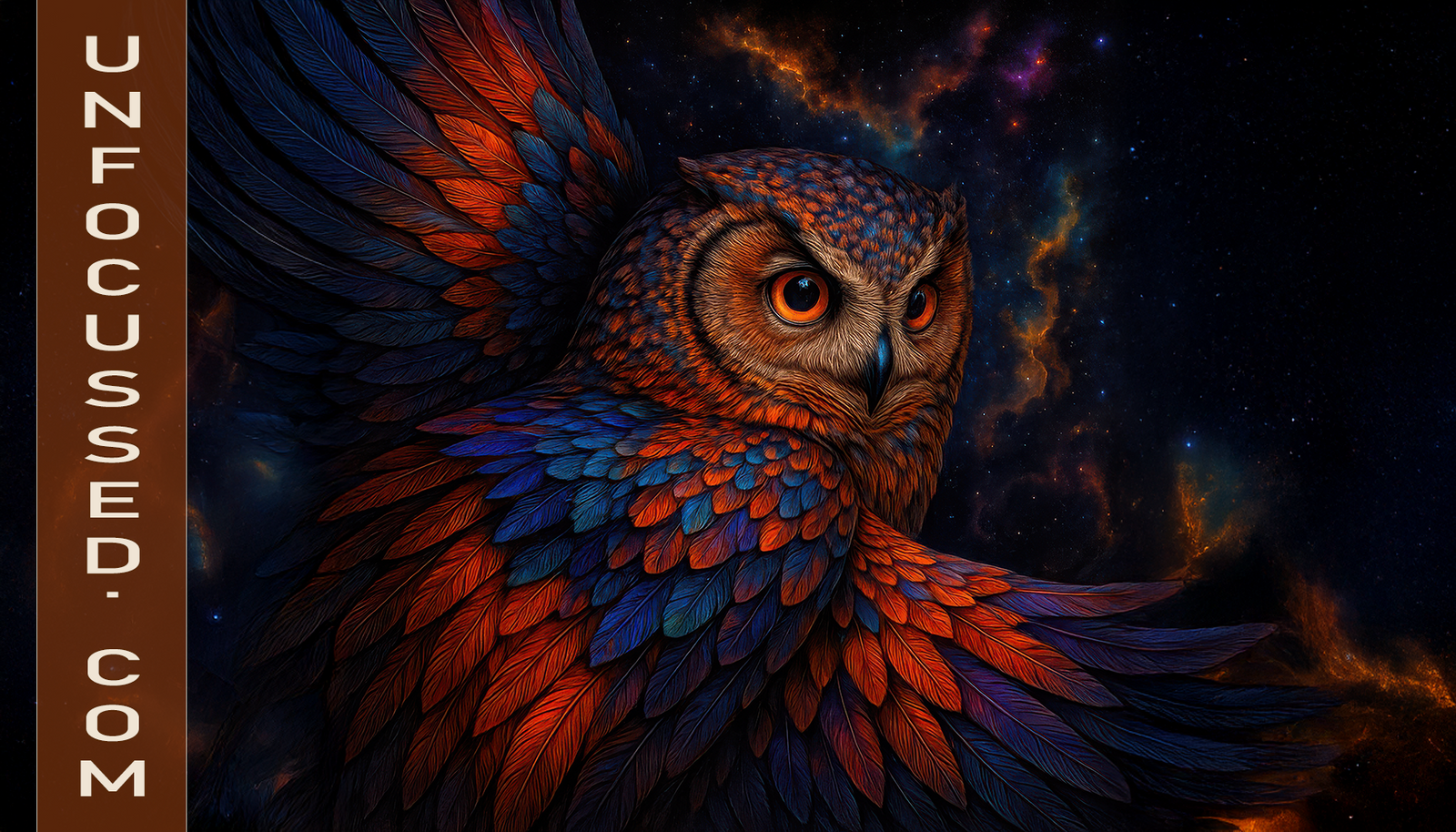
Celestial Owl

Captured Tales

View

Nebula-Winged Wisdom

by Bill Tiepelman

Nebula-Winged Wisdom

The Owl Who Knew Too Much In the beginning — before calendars, before clocks, before that awkward invention of “daylight savings time” — there was only the silence of the void. And in that silence perched an owl. Not just any owl, mind you, but a colossal, shimmering creature whose feathers were dipped in nebulae and whose wings stretched across constellations. Mortals called it by many names: The Silent Watcher, The Feathery Oracle, The Cosmic Feather-Duster. But the stars themselves whispered one title in awe: Nebula-Winged Wisdom. This owl was no ordinary wise old bird delivering fortune-cookie advice. Oh no, it was a living archive of every secret the universe had ever coughed up — from the recipe for black holes (hint: too much dark matter in one pot) to the embarrassing karaoke sessions of gods who thought no one was listening. Its eyes glowed like twin suns not just because they were radiant, but because they had witnessed the rise and fall of worlds, lovers, civilizations, and regrettable fashion choices involving cosmic spandex. The legend goes that if you caught the owl’s gaze, you’d either be blessed with a sudden surge of wisdom or doomed to know just a little too much. Like the knowledge that the universe isn’t infinite — it just loops like a cosmic rerun, and yes, you’ve already read this story forty-seven times before in slightly different socks. Ominous? Absolutely. But also kind of funny, if you ask the owl. After all, eternity is one long joke, and the punchline hasn’t landed yet. Mortals feared the owl, yet they also adored it. Lovers made wishes beneath its wings, poets drank themselves silly trying to capture its silhouette in words, and kings demanded to know if their conquests impressed it. The owl said nothing, only hooted — a sound that could echo across galaxies and make black holes quiver. Was it laughter? Was it doom? Only the owl knew, and it wasn’t telling. But once, long ago, when the stars were young and the universe still smelled faintly of creation dust, the owl broke its silence. And what it said would alter the destiny of everything — or at least ruin dinner for a few billion mortals. Because when the owl spoke, it didn’t offer riddles or prophecies. It offered a warning, wrapped in feathers and delivered with the humor of a trickster god. “Wisdom,” it declared, “is knowing which star not to lick.” And so the legend begins... The Night of Feathers and Fire The owl’s warning — “Wisdom is knowing which star not to lick” — echoed across the cosmos for millennia, baffling scholars and delighting jesters in equal measure. Whole civilizations rose and fell trying to decipher it. Was it metaphorical? A riddle? Or a literal warning not to lick stars, which, admittedly, did sound like something a reckless space-pirate would try at least once. Mortals wrote epics, carved temples, and even held yearly festivals where they roasted glowing fruits under the stars, chanting, “Don’t lick the sun, don’t lick the moon!” Nobody fully understood, but everyone agreed it was probably important. Meanwhile, the owl itself was content to perch on the arm of Orion, flap its wings across the Pleiades, and occasionally swoop down through galaxies like a drunken comet with feathers. It was equal parts terrifying and hilarious to watch. Nebula-Winged Wisdom had a knack for showing up at the most inconvenient times: weddings, coronations, or whenever two mortals were having a particularly juicy argument about whose goat had the shinier coat. Just imagine, you’re screaming at your neighbor, and suddenly an owl the size of Saturn stares down at you with burning amber eyes. It’s the kind of thing that makes you immediately reconsider your priorities — or soil your toga. Yet it was not mere chaos. There was intent in those wings. The owl was a living paradox: playful but grim, whimsical but deadly serious. It told jokes in hoots that mortals never understood but laughed at anyway because they were afraid not to. And always, always, there was that feeling — that if the owl wanted to, it could snuff out entire galaxies with a casual blink. It rarely did, of course, but legends whisper of one night when a civilization grew too arrogant, building spires so high they scratched the owl’s belly feathers. Offended, the owl flapped once — just once — and the entire empire became stardust. The moral? Don’t touch the owl. Or its belly. But for all its ominous presence, it was strangely generous with mortals. Travelers claimed that if you lit a fire under the northern lights, the owl would swoop down and drop a single glowing feather at your feet. These feathers, infused with cosmic wisdom, were said to make the bearer clever, lucky, or tragically sarcastic. Kings used them to outwit rivals, witches wove them into cloaks that shimmered like galaxies, and common folk tucked them under pillows to dream of things they had no business knowing. A single feather could rewrite destinies, and yet the owl scattered them like breadcrumbs across the void, half amusement, half test. “Let’s see what they do with this one,” it probably thought, sipping a metaphorical cosmic espresso. Of course, not every feather was a blessing. Some carried truths too sharp to hold. A fisherman once found one glowing on the beach, tucked it into his hat, and immediately understood that his wife’s “book club” was actually code for meeting a handsome sailor. Another feather fell to a philosopher, who upon touching it, realized he was wrong about absolutely everything he had ever published, including that bit about triangles being sacred. He drank himself into legend and became a constellation shaped vaguely like a man face-palming. And then there was the feather that nearly ended the universe. It fell into the lap of a wandering bard — a joker, trickster, and part-time lover of far too many people. The bard strummed it across their harp strings, thinking it would make a fun party trick, only to discover the feather sang back. Not just any song, but the true song of the cosmos: a melody so ancient and powerful that stars leaned in to listen, black holes swayed, and time itself hiccupped. For one dazzling night, every creature in existence dreamed the same dream — a dream of the owl’s eyes, endless and terrifying, blinking in slow rhythm to the song. Some woke laughing. Others woke screaming. But all woke knowing one thing: the owl was not simply a bird. It was the page-turner of reality, deciding which chapters continued and which were set aflame. And when the dream ended, mortals looked to the sky and swore they heard the owl laughing. A low, rumbling hoot that shook the stars loose and rolled them across the firmament like dice. Because perhaps the greatest joke of all was this: Wisdom doesn’t make the universe less dangerous. It just makes you aware of how ridiculous it all is. From that night forward, the owl was no longer just a legend. It was a god of paradox, humor, and looming dread. And whether mortals liked it or not, they were part of its comedy act. Because everyone knows, when an owl that big is running the show, you don’t argue about the script. You just hope you’re not cast as the fool… unless, of course, that’s the role it wanted you to play all along. The Last Hoot The trouble with cosmic owls is that they never really leave you alone. Once you’ve heard their hoot in your dreams, you carry it forever, like a tattoo etched on the marrow of your bones. Mortals tried to move on after the Night of Feathers and Fire, but the owl’s presence lingered. Farmers swore their crops grew in time with the rhythm of its wings. Sailors charted entire voyages based on where its feathers drifted down. Even lovers whispered vows under its glow, convinced the owl was some kind of feathery priest, silently officiating weddings with ominous approval. But the owl had grown restless. You see, wisdom is a heavy burden, and laughter — even cosmic, bone-shaking laughter — can only carry so much of it. The owl knew things it wished it didn’t. It knew which stars would implode next. It knew that galaxies flirted with each other, colliding in cataclysmic bursts of light and heartbreak. It knew every secret whispered in the void, from gods’ betrayals to mortals’ half-baked excuses. It knew that in the end, wisdom isn’t a gift. It’s a curse that makes you watch the same joke replay forever, without the mercy of forgetting the punchline. So one evening, when the veil of night was as black as unspilled ink, the owl decided to tell the truth. Not a feather-truth, not a riddle-truth, but the truth wholecloth. It descended on a mountain where a thousand mortals had gathered, hoping for blessings, prophecies, or maybe a free glowing feather they could pawn. The sky split open as its wings unfurled, each feather trailing galaxies. Its eyes glowed with the intensity of twin suns undergoing midlife crises. And then it hooted — one long, rolling sound that cracked valleys and rattled ribcages. The mortals clutched their ears, expecting doom. Instead, words filled the air, woven in the vibration of its call. “You want wisdom?” the owl thundered. “Fine. Here it is. The universe is not a plan. It’s not even a story. It’s a badly timed joke told by a drunk god at a party that never ends. You are not chosen. You are not doomed. You are not special. You are… hilariously temporary.” Gasps erupted. Some laughed, some wept, some tried to sell pamphlets immediately declaring themselves prophets of the owl’s gospel. But the owl wasn’t done. It leaned closer, eyes blazing with humor and sorrow. “The only wisdom worth having,” it continued, “is to know when to laugh at your own insignificance. You are stardust with opinions. Don’t take yourself so seriously.” It would have been a perfect mic-drop moment, except the owl didn’t use mics. It used feathers. And as if on cue, it shook itself like a wet dog and loosed a storm of radiant plumes. They fell across mountains, rivers, kingdoms, and oceans, each one burning with cosmic fire. Entire generations would find those feathers and make of them what they willed — weapons, poems, lullabies, or just very expensive hats. Some would gain insight; others would be driven mad. But all would carry a piece of the owl’s truth, whether they wanted it or not. And then, satisfied — or perhaps exhausted — the owl ascended into the black, wings blotting out constellations as it soared higher and higher until it vanished. The stars returned, shy and blinking, as though embarrassed to have been part of the whole spectacle. Mortals stood in stunned silence, clutching glowing feathers and realizing, for the first time, that the world was both funnier and more terrifying than they had ever dared admit. In the years that followed, new religions sprang up. Some worshipped the owl as the Harbinger of Doom. Others painted it as a drunken cosmic trickster. And a small but loud cult insisted the owl was simply a massive, interdimensional chicken that had gotten lost. The owl, of course, didn’t correct them. Why would it? Let mortals argue; it had better things to do — like rearranging quasars into rude hand gestures or teaching comets how to whistle. And yet… sometimes, on the quietest nights, travelers swore they heard it again: a single, distant hoot rolling through the void, equal parts chuckle and warning. They said it meant the owl was watching, waiting, and maybe — just maybe — writing new material for the next cosmic comedy set. After all, the owl had made one thing very clear: the joke never ends. And we’re all part of the punchline. So remember the lesson of Nebula-Winged Wisdom. Don’t lick the wrong star. Don’t take yourself too seriously. And if a galaxy-sized owl looks you dead in the eye and hoots? Just laugh. Trust me, it’s safer that way.     Bring Nebula-Winged Wisdom Into Your World Now you can capture the legend and laughter of the cosmic owl in your own space. Whether you want a bold framed print to command attention on your wall, a luminous metal print that glimmers like starlight, or a playful jigsaw puzzle that lets you piece together the owl’s cosmic mystery, there’s a version of this story waiting for you. For comfort seekers, wrap yourself in the soft glow of the cosmos with a cozy fleece blanket, or add a whimsical accent to your favorite chair with a vibrant throw pillow. Each piece brings the lore of Nebula-Winged Wisdom into your home — a reminder that wisdom, humor, and a touch of cosmic chaos can live right alongside you. Because sometimes, the best kind of wisdom is the one you can frame, cuddle, or even build feather by feather.
Read more

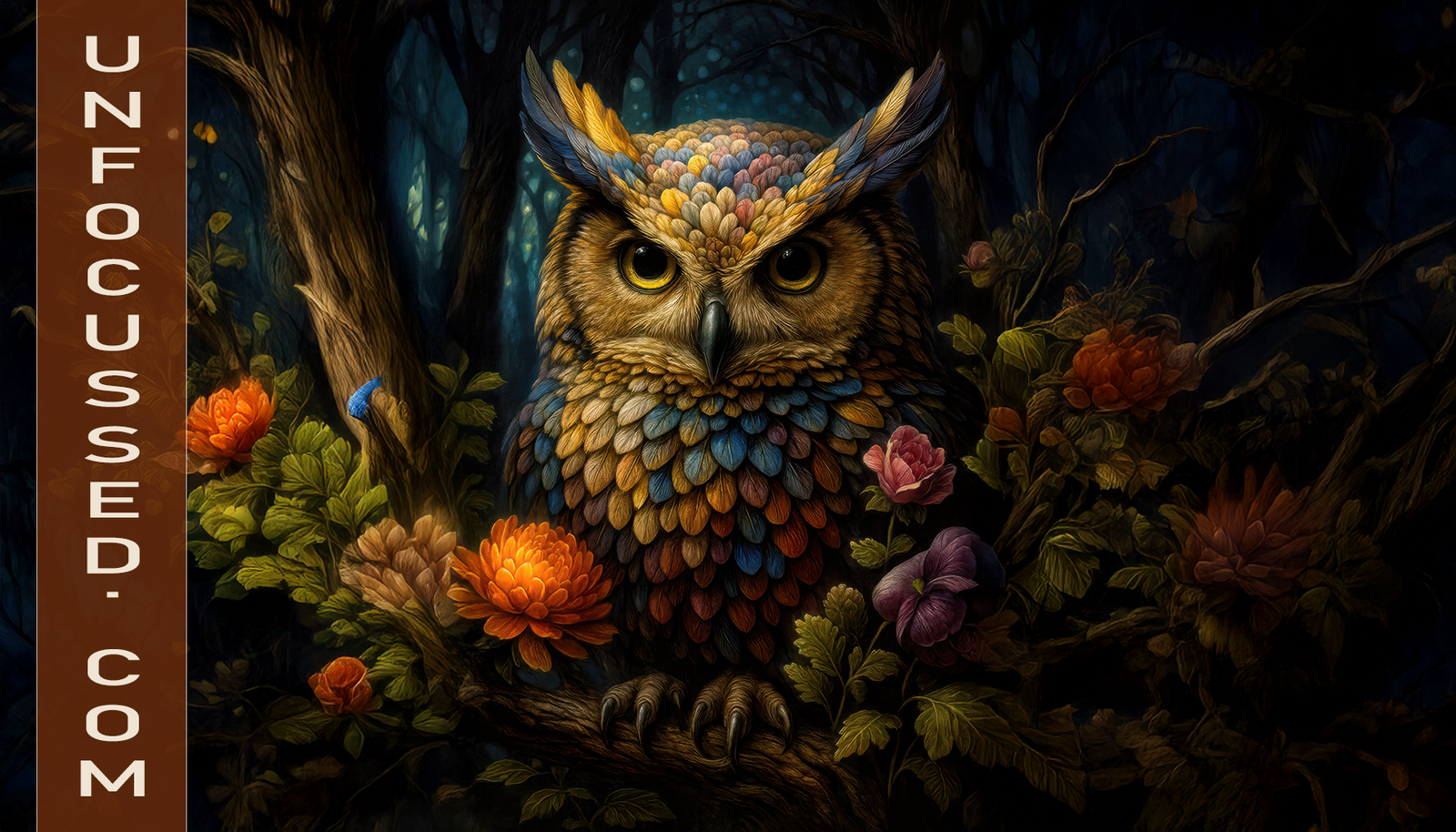
Guardian of the Painted Feathers

by Bill Tiepelman

Guardian of the Painted Feathers

The Night the Forest Blinked The forest didn’t go dark; it went quiet—the kind of hush that makes even the moths put on slippers. High on a braid of oak limbs, the Guardian of the Painted Feathers opened her eyes, and the night opened with her. Her name—rarely spoken, because respect doesn’t always need syllables—was Seraphine Quill, an owl whose plumage held more color than a market full of unruly scarves. Blues that remembered rain. Ambers with opinions. Petal-pink sighs. She was a woodland guardian with the posture of a librarian and the patience of a saint who drinks espresso. Tonight, the silence had a shape. Something was sipping saturation from the world, the way a bored god might swirl a spoon in the teacup of creation. Seraphine heard it before she saw it: that thin sound, like a violin string tuned to “uh-oh.” She rotated her head in a slow, scandalized arc—owls are basically swivel chairs with talons—and let her gaze travel the understory. The enchanted forest breathed in patterns: fern-ripple, blossom-rustle, fox-sigh, cricket-one-two-three. But beyond the chrysanthemums and the gossiping mushrooms (who, frankly, shouldn’t be trusted with anything you wouldn’t spray with vinegar), a gray smear drifted between the trunks. “Absolutely not,” Seraphine murmured. Her voice was low and velvet and contained enough authority to make a wolf apologize to its shadow. She dropped from the branch and rode a column of cool air, her colorful feathers catching star-light like tiny stained-glass windows. Flowers turned as she passed—flirting, mostly. The peonies were hopeless. She landed near the old root where the forest kept its secrets. A fox emerged, eyes bright with the kind of anxiety only foxes and human poets truly cultivate. “Guardian,” he said, tail doing the nervous metronome. “The color thief is back. I chased it, but it kept… not being.” Seraphine clicked her beak once, which in owl language meant: I believe you; also, hydrate. “You did well, Vesper. Go home. Guard your den and your kits. No heroics. Leave the dramatics to the bird with better eyeliner.” Vesper squinted at her. “Is it weird that I find you reassuring and vaguely terrifying?” “Correct on both counts.” She fluffed her chest and every hue sharpened, like the forest took a breath and remembered its opinions. This was Seraphine’s first gift: nocturnal protector of saturation, conductor of chroma. Where she blinked, colors woke up and behaved like themselves. The gray smear crept closer, as if curious, as if trying on the idea of existing. The air cooled in that specific way that makes you suddenly aware of your knuckles. Where the smear passed, violets turned to etiquette-violating beige. A fern folded its own memo and forgot what it wanted to say. “Name yourself,” Seraphine called, voice ringing against bark and moon. “And if you don’t have a name, darling, that’s your first problem.” No answer. Only that violin-string sound, a whine pitched at the uneasy place behind the eyes. The smear reached for a cluster of late roses, and the petals dulled like old coins. Seraphine stepped forward, one talon at a time, and the roses blushed back to themselves. She wasn’t just blocking the thing; she was repainting the night. From the left came a flutter of chaos: three moths in formalwear, the sort who subscribe to niche magazines. “Guardian!” they chorused. “There’s a leak in the moonlight two clearings over; we are beside ourselves and we do not have enough selves for this.” “Tell the bats to hang tight and practice their vowels,” Seraphine said. “We’ll fix the leak after we plug this vacuum cleaner of gloom.” She turned back to the smear. “I know you,” she said softly. “You’re the Unraveling—entropy with social anxiety.” The smear quivered, then tried to be five inches to the right. Seraphine’s feathers shimmered—turquoise slipping into citrine, aubergine into ember—until the owl art print the world would one day hang on a gallery wall felt like it had been born in that moment. She reached into herself for her second gift, one she used sparingly because it tended to attract myths: the voice that convinced shadows to tell the truth. “Why do you eat color?” she asked. “Speak, little hunger.” It didn’t speak, exactly. It threw images at her: a rain-soaked palette left out overnight; a child’s crayon snapped in an argument with gravity; a blank page that had never been brave. Seraphine tasted the loneliness in it—the awkward, shy ache of things that never learned how to be vibrant without apology. She softened. It’s hard to stay mad when the monster turns out to be a diary that learned to walk. “Listen,” she said, wings mantling. “This forest needs every audacious shade it can muster. Saturation is a promise, not a crime. You can travel with me and learn hunger with manners, or I can put you in a jar labeled ‘Absolutely Not’ and bury you under the sassiest hydrangea in existence. Decide quickly.” The smear hesitated. From the branches above, a chorus of small minds—sparrows, finches, one judgmental wren—leaned in. Even the cicadas stopped crunching their existential chips. In that pause, Seraphine felt the forest teeter, like a teacup on the edge of a desk during an emphatic email. At her feet, the roses tested their own perfume as if to say, We’re rooting for you, dear; don’t make us display our thorns. A breeze crept in, tasting of mint and rumor, and lifted the fringe of Seraphine’s face like a crown considering its options. She took a breath, layered with pine and a whisper of thunder, and began the old work—the art older than art—the dance of keeping things bright. She moved in a slow circle around the smear, talons whispering on bark, voice low. “Repeat after me,” she coaxed. “I am not a void; I am a frame.” Something in the smear steadied. It gathered itself like a shy person in a thrift-store mirror and took on the faintest blush of color, as if courage were a pigment. A faint blue—one that remembered ponds—rippled across its edge. Seraphine nodded, the tilt small and queenly. Frames do not devour paintings; frames insist the painting be seen. Branches creaked above. The old oak—Elder Root, who slept like a landlord—spoke in a voice that sounded like contracts made with rain. “Guardian,” he rumbled, “does your mercy have room for what forgets itself?” “My mercy has room for the chronically uncertain,” Seraphine replied. “If it misbehaves, we’ll try consequences after compassion. That’s the sequence. Otherwise, what are we protecting—color, or dignity?” Elder Root considered, which took a number of centuries and also six seconds. “Proceed.” Seraphine leaned closer to the smear, warm and terrifying as a sunrise with great eyebrows. “Stay,” she commanded. “Learn. You will not sip a single shade without asking. You will send me a polite whisper for anything bolder than taupe. We begin with blues at dawn. The frogs will supervise; they’re bureaucrats at heart.” She lowered her voice. “And if you try nonsense, darling, I will turn you into a tasteful border around a fantasy forest tea menu and serve you chamomile forever.” The smear shivered. Then—miracle with a sheepish grin—it folded. Not gone, not defeated. Simply… outlined. A thin band of slate—now clearly a frame—stayed where it was placed, humming softly like a cat pretending it’s not purring. The air rushed back into itself. Colors sighed and went dramatic, as colors do when they realize they almost became a metaphor for austerity. Across the clearing, the chrysanthemums applauded with the modesty of fireworks. The moth trio lit a celebratory lantern that turned out to be a glowworm with feelings; apologies were made. Vesper the fox returned with a beleaguered vole and a pie made of blackberries and ambition. Someone struck up a cricket jazz standard. For a dangerous minute, the night felt like a party. Seraphine took her place on the branch again, a majestic owl painting made real, her vibrant feather detail pulsing like the heartbeat of the grove. She closed one eye, then the other, letting the scene filter through the wisdom between. The frame waited, obedient and a little proud. The forest breathed, saturated and brave. But peace is not the same as safety. A wind blew from the north—dry, broom-swept, carrying a smell like burnt promises. On the horizon, beyond the hills that wore the moon like a brooch, something rose that wasn’t a storm and wasn’t a mountain. It had architecture. It had ambition. It had lawyers. Seraphine’s claws tightened around the bark until the tree hummed comfort up to her bones. “Oh,” she said to the night, to the framed hunger, to the moths dusting their anxieties with glitter. “It’s one of those nights.” High above, an owl with painted plumage and a timetable of miracles opened both eyes. She lifted her head and let the moonlight show off. If the forest had to face what was coming, it would face it in full color, with extra sass and a hopeful heart. That, after all, is what guardians are for: not to keep the world from changing, but to make sure it changes without losing its palette. And from the north, the first note of the next trouble arrived—long, legal, off-key. The Committee of Acceptable Shades By dawn, Seraphine Quill had already given the smear its first lesson in responsible blueness. It went surprisingly well, once she bribed it with dew. But owls rarely have the luxury of lingering victories. Because by the time the second cricket rehearsal ended and Vesper had passed out from pie-related hubris, the north wind brought with it an entourage. They weren’t storms. They weren’t spirits. They were bureaucrats. Which is to say: worse. A thunder of parchment flapped into the clearing, pages bound by red ribbons, fluttering like the wings of a thousand passive-aggressive butterflies. And from that cyclone of clauses emerged the Committee of Acceptable Shades—tall, gangly silhouettes with clipboards where faces should be. Each clipboard bore a single rectangle of gray: flat, unyielding, and smug. Their leader’s rectangle read “Taupe, Standardized.” “Guardian,” the head figure intoned, its voice like two staplers mating. “You have been operating without a license to distribute vibrancy. All saturation above Pantone 3268-C must be surrendered immediately for recalibration. Non-compliance will result in monochrome sanctions.” The forest gasped. A violet fainted, a sunflower cursed under its breath. Even the glowworm that had been impersonating a lantern dimmed in horror. Seraphine fluffed her feathers until the dawn light ricocheted through her like stained glass at a rave. “Sanctions?” she said, sweet and sharp. “Darling, the only thing you’ll sanction here is your own relevance.” The fox, Vesper, rubbed sleep from his eyes and squinted at the clipboard-faces. “Wait, are those… lawyers?” “Worse,” Seraphine replied. “They’re design consultants.” The Committee advanced, clipboards glowing faintly with the power of overused Helvetica. The leader snapped its ribbon like a whip. “We offer a deal,” it said. “Surrender the unauthorized hues. You may keep beige, cream, and a very modest mint green if used only in moderation. Otherwise, we will strip your spectrum clean.” Seraphine blinked slowly. Owls are masters of the long blink—it’s like sarcasm made visual. “Beige?” she whispered. “Mint in moderation? You walk into my forest—the one I’ve bled starlight to protect—and you dare reduce it to a waiting room wall?” The Committee rustled nervously. One of the lesser silhouettes fumbled its papers and a faint splash of lavender slipped free before being recaptured. Seraphine saw it. The smear-turned-frame saw it. Even the moths saw it, though they pretended to be too sophisticated. She pounced on the slip like a cat in Prada heels. “There it is,” she declared. “Proof! You keep color for yourselves while rationing the rest of us like misers at a confetti party. Don’t preach balance when your clipboards bleed hypocrisy.” Gasps rippled through the undergrowth. The Committee faltered. For the first time, the forest felt the truth: that color rationing wasn’t order; it was theft disguised as neatness. Seraphine turned her back deliberately, tail feathers splayed in a way that screamed majestic defiance. She addressed the crowd of ferns, roses, and startled beetles. “Colors, hear me. They would make you ashamed of being bold. They’d have you believe beige is safer, taupe is respectable, and neon only belongs on karaoke flyers. But you were born audacious. You were painted reckless. This forest is not a cubicle—it is a cathedral. And cathedrals deserve stained glass, not frosted panels of standardized taupe!” The roses cheered with thorns out. The fox howled. Even Elder Root shook his branches, sending down a shower of acorns like emphatic applause. The smear-frame pulsed, a faint ripple of aquamarine sliding across its edge, as if it too wanted to belong. The Committee recoiled. Their clipboards quivered, rectangles of gray rippling with a hint of fear. “This is irregular,” hissed the leader. “We must consult… higher management.” “Do that,” Seraphine said. “But know this: while you file your memos and sharpen your monochrome, my forest will keep its hues. And should you return with chains for color, I’ll repaint your clipboards into rainbows so gaudy, you’ll wish you’d died beige.” The Committee dispersed in a flurry of papers, vanishing into the northern horizon like a bad newsletter. The silence they left behind was fragile, but the forest filled it with cautious song. Petals brightened. Leaves stretched. The smear-frame hummed like a child reciting its first poem. Vesper padded closer, eyes gleaming. “You know they’ll come back, right? With more paperwork. Maybe even PowerPoints.” Seraphine gave a dark, velvety chuckle. “Then we’ll need allies. The brighter, the bolder, the sassier, the better. This fight isn’t just about keeping our colors. It’s about refusing to apologize for them.” She spread her wings, hues exploding across the dawn like a rebellion with feathers. And somewhere beyond the horizon, higher management stirred. The kind of management that didn’t just ration colors—they patented them. The kind that painted skies gray for profit. The kind that, if Seraphine wasn’t careful, would rewrite the forest in grayscale footnotes. The Color Cartel The first rumor arrived on raven wings. Not the polite, note-taking ravens, mind you. These were the sarcastic ones who couldn’t tell a secret without adding commentary. “Guardian,” croaked the lead raven, perching dramatically on Elder Root’s shoulder, “the Color Cartel is mobilizing. They’ve sent cease-and-desist letters to sunsets and threatened to repossess rainbows. One rainbow in particular is suing for emotional damages.” Seraphine narrowed her eyes. “So they’re moving from bullying flowers to bankrupting horizons. How tedious.” She ruffled her feathers, throwing sparks of chartreuse and garnet into the morning air like a fireworks display with opinions. “Tell them we’ll be hosting a festival—of pigments too impossible to patent.” The raven tilted his head. “A festival? You’re going to fight a cartel with… glitter?” “Not glitter,” she said. “Wonder.” The Festival of Impossible Pigments Within days, the forest transformed. Mushrooms glowed with colors they’d been hiding out of shyness. Ferns sprouted leaves edged in hues only bees could name. The foxes painted their tails with ultraviolet streaks visible only to the honest. Vesper strutted like he’d invented confidence. The moths threw a runway show, modeling outfits so dazzling even the cicadas forgot to be obnoxious for five minutes. And then came Seraphine. She took the central perch, feathers flaring into shades no mortal palette had cataloged: the green of laughter echoing in a canyon, the violet of secrets kept under pillows, the gold of forgiveness after a fight. These weren’t colors—they were confessions wearing light. The crowd gasped, cheered, cried, and danced all at once. The festival was not merely a celebration; it was defiance given wings. Naturally, that’s when the Color Cartel showed up. They arrived in uniforms the shade of lawyer breath—a beige so dull it could cancel joy at twenty paces. Their leader, a tall figure in a robe stitched entirely of contracts, stepped forward. Its voice rattled like a stapler in heat. “Cease this unauthorized saturation. Effective immediately. Or we’ll desaturate your forest into compliance.” Seraphine tilted her head, slow and regal. “You’re welcome to try,” she said, her eyes glowing with every shade of defiance. “But understand this: you can’t copyright awe. You can’t trademark wonder. And if you so much as sneeze on a violet, I will personally repaint your robes with hues so bright they’ll burn your retinas into optimism.” The crowd roared. The smear-frame pulsed aquamarine, then emerald, then—miracle of miracles—crimson. It had found its courage at last. The ravens dive-bombed with sarcasm, distracting the Cartel’s enforcers. Foxes stole their staplers. The moth runway show pivoted into a battle catwalk, dazzling the enemy with avant-garde sparkle. Elder Root dropped acorns like meteors. Even the hydrangea got in on it, shouting, “Tasteful border, my petals!” before walloping a Cartel goon with a bouquet. The Last Laugh of the Guardian The battle was loud, ridiculous, and deeply satisfying. Contracts tore. Beige unraveled. The Cartel’s robes faded until they were nothing more than dull shadows too embarrassed to linger. Seraphine soared overhead, every wingbeat painting the sky with a new declaration: Hope is not negotiable. When the dust settled (and the moths finished their encore strut), the forest was brighter than ever. The smear-frame, once ashamed of its hunger, now shimmered proudly at the edge of the clearing—no longer a void, but a window into possibility. It hummed softly, like a promise learning to sing. Seraphine perched on Elder Root again, gazing over her domain. “Well,” she said, smoothing a rebellious feather. “That was fun. Who’s up for pie?” The fox groaned. “Please. No more pie.” The ravens cackled. The flowers blushed. Even the cicadas clapped their wings, though badly off-beat. And in the center of it all, Seraphine, Guardian of the Painted Feathers, closed her eyes. For tonight, the colors were safe. Tomorrow, bureaucracy might return. But she’d be ready—with sass, with feathers, and with a hope too radiant to ration. Because guardians don’t just protect. They remind the world to stay audacious. Epilogue They say if you wander deep into that forest on a moonlit night, you’ll see her: an owl shimmering with impossible hues, watching with eyes that could outwit empires. If you’re lucky, she’ll wink. If you’re unlucky, she’ll assign you to hydrangea duty. Either way, you’ll leave brighter than you came.     Bring the Guardian Home The legend of Seraphine, the Guardian of the Painted Feathers, doesn’t have to live only in story. Her brilliant hues and defiant spirit can brighten your own space, wrapping your world in the same audacity she gifted the forest. Imagine her gaze watching over your home, her plumage spilling color into your days—a reminder that hope and sass are always worth protecting. Choose how you’d like to welcome her: Framed Print — perfect for gallery walls or living spaces that crave bold energy. Canvas Print — a textured, painterly feel that makes the Guardian’s feathers look alive. Tote Bag — carry the Guardian with you as a daily protector of both your belongings and your style. Fleece Blanket — curl up under her wings of impossible color and warmth. Greeting Card — share the Guardian’s hope and humor with friends who could use a reminder to stay bold. Whichever form you choose, the Guardian is ready to perch in your world, infusing it with the same defiant beauty she used to save her forest. Bring her home, and let every glance remind you that your colors deserve to shine.

Read more

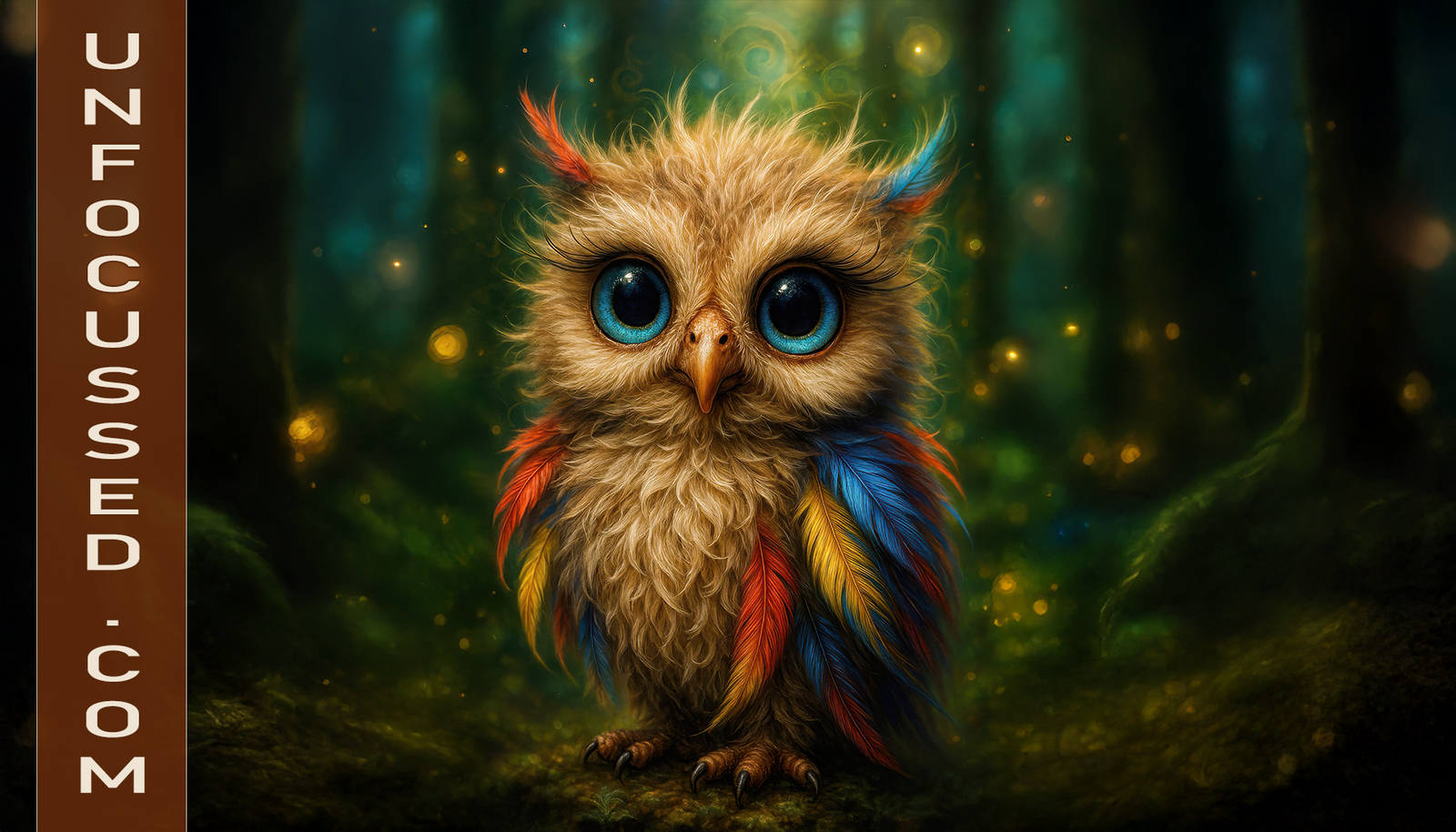
The Featherlight Guardian

by Bill Tiepelman

The Featherlight Guardian

Of Mushrooms, Mayhem, and a Very Unimpressed Owl Deep within the Verdant Verge—a forest so enchanted it once accidentally turned a lumberjack into a pinecone—perched a creature of such delicate fluff and sarcastic judgment that even the fairies feared her side-eye. She was the Featherlight Guardian. Not *a* guardian. The Guardian. Capital T. Capital Attitude. Her name was Mabel, and she was an owl. Well, technically. If you asked her, she’d tell you she was “a divine combination of ethereal fluff, guardian-grade wisdom, and naturally curled lashes that don't require enhancement, thank you very much.” With feathers dipped in hues of midnight blue, scandalous scarlet, and a yellow that could make the sun insecure, Mabel wasn’t just a sight—she was a statement. Her giant sapphire eyes had seen a thousand moons, a few awkward forest rituals, and at least one very embarrassing wizard duel involving a misfired glitter spell. Mabel’s job—her sacred duty—was to guard the Heart of the Forest: a magical glen containing the roots of every tree, a lot of bioluminescent frogs with drama issues, and one eternally simmering cauldron that brewed the mood of the forest itself. She took this duty seriously. Which is why, when a band of bumbling, slightly tipsy mushroom hunters stomped into her glen one moonlit Tuesday, she let out a sigh so heavy, it shook the canopy. One of the hunters—whose name was either Jasper or Disappointment, she wasn’t sure—tried to pet her. Pet her. “I am not a therapy fluff-ball,” she hooted, unimpressed. “Touch me again and I’ll introduce your eyebrows to fireflies with boundary issues.” The hunters giggled and carried on, picking glow-shrooms with the elegance of drunk raccoons. Mabel narrowed her eyes. The Heart of the Forest was reacting—glowing brighter, pulsing faster. She could feel it—a brewing mood swing. The last time it felt like this, a tree grew upside-down and quoted Shakespeare for a month. With a whip of her rainbow-feathered wings and a dramatic sigh worthy of a soap opera priestess, Mabel fluttered down from her perch. It was time to fix this. Again. Because that’s what guardians do. But this time, she had a plan. A devious, glitter-laced, sass-infused plan that just might teach these mushroom marauders a lesson they’d never forget. Mabel smirked, her massive eyes twinkling with mischief and just a hint of vengeance. “Let the chaotic enlightenment begin,” she whispered. Glitter, Karma, and an Owl’s Slightly Vengeful Redemption Arc Now, you may be wondering: what exactly does a glitter-laced, sass-infused plan look like? Well, if you’ve ever seen an owl enchant a fungus with sentience and a flair for passive-aggressive poetry, you’re halfway there. Mabel, flapping her impossibly elegant wings, swooped toward the cauldron in the glen—the one that brewed the emotional weather of the entire forest. She whispered something ancient and slightly petty into it. The brew shimmered. The frogs croaked in falsetto. The trees leaned in. Moments later, the glen shifted. Not violently. Oh no—Mabel preferred her vengeance subtle. The mushroom hunters, who moments before were giggling and plucking things that should definitely not be plucked, paused as the forest suddenly... responded. The mushrooms started glowing in synchronized color waves. Purple. Green. Chartreuse, if you're feeling fancy. A low hum began to rise from the soil—like an a capella group warming up beneath your feet. The drunkest hunter, whose name was Chad (they always are), blinked and said, “Dude, is the dirt singing?” “Yes, Chad,” Mabel muttered from a nearby tree. “The dirt is singing, and it hates your cargo shorts.” Then, one by one, the mushrooms sprang to life. Not aggressively—no, this wasn’t that kind of story. They simply became dramatic. The largest of them stretched upward, took a deep, unnecessary breath, and announced in iambic pentameter: “Fair forest friends, these fools do treadWhere sacred roots and balance wed.Their grubby hands, their clueless cheer—Shall reap the karma growing here.” The mushroom hunters froze. Chad dropped his glow-shroom and tried to whisper, “We’re tripping,” but the mushrooms shushed him in chorus. Mabel, now perched on a branch above the glen, flared her wings like a drama teacher at a school for troubled fairies. She spoke with measured gravitas. “Welcome, mortals. You have disturbed the glen of harmony, disrupted the shrooms of sentiment, and insulted my feathers with your lack of personal grooming.” “...We were just looking for snacks,” whimpered Jasper-Probably-Disappointment. Mabel sighed, but there was something softer beneath it this time. “You silly bipeds. The forest isn’t your snack aisle. It’s alive. It feels. It gets moody. Like me. But with fewer accessories.” A hush fell over the glen. Even the frogs were quiet, save for one who softly hummed “Greensleeves” for ambiance. Mabel fluttered down to eye level, enormous sapphire gaze locking onto the mushroomers like a velvet curse. “You have one chance,” she said. “Apologize to the mushrooms, clean up your mess, and make a vow to leave this forest better than you found it. Or I unleash the moss with legs. And let me tell you, it chases.” There was, understandably, a lot of apologizing. One of the hunters even offered to start a composting blog. Mabel remained skeptical, but allowed them to flee, escorted by a parade of disapproving woodland creatures and one passive-aggressive fern. When the glen settled again, Mabel returned to her perch. The Heart of the Forest dimmed to a soft golden glow. The mood had reset. The mushrooms resumed their usual level of aloof wisdom, muttering sonnets under their breath. And Mabel? She tucked her wings in, gave her feathers a fluff, and said to herself, “Still got it.” She wasn’t just a guardian. She was a vibe. Up in the trees, the moon winked behind a lazy swirl of clouds, and the forest sighed—a little lighter, a little wiser. All under the watchful eyes of its sassiest, fluffiest, most fabulous protector: the Featherlight Guardian. The End. Or maybe the beginning of a new plan. You never know with Mabel.     ✨ Bring Mabel Home Whether you're decorating your cozy reading nook, plotting forest justice from your desk, or just love the idea of a sarcastic owl watching over your space—The Featherlight Guardian is available in enchanting formats to suit your style. Adorn your walls with her wisdom via a wood print or shimmering metal print, snuggle up with her sass on a charming throw pillow, or let her perch in your thoughts with a magical spiral notebook. Bring a little mischief and magic into your everyday—because let’s be honest, Mabel would expect nothing less.

Read more

Whispering Wings in the Winter Wilds

by Bill Tiepelman

Whispering Wings in the Winter Wilds

The Silence That Screamed Back The snow didn’t crunch beneath her feet — it gasped. With every step, Lira walked like a secret looking for somewhere safe to hide. Swathed in crimson velvet stitched with symbols no mortal tailor could explain (though her dry cleaner would later try, bless his soul), she moved like a question mark curled into a lullaby. Her companion, however, had never been one for subtlety. “You know,” Korrik said, swiveling his feathery head in that unnerving 270-degree owl way, “this whole ‘mysterious enchantress in the woods’ look is gorgeous, yes, but I’m freezing my tail feathers off.” “You don’t have a tail,” Lira replied without looking. “Metaphorical tail feathers. Emotional tail feathers. I’m vulnerable, Lira.” Korrik, the Great Spirit Owl of the Frosthorn Peaks, guardian of the Glacial Gate, and recently self-declared podcast host, had a way of blending gravitas and sarcasm like hot tea with just a splash of gin. Once, he’d disarmed an entire battalion of ice trolls with nothing but a pun and a glare. But today, he was simply cranky — and suspiciously damp. “That’s because you fell in a creek,” Lira murmured, stroking his soaked wing. “I was diving to save you!” “From a squirrel.” “A potentially rabid squirrel with a knife!” “It had a pinecone.” “A sharpened pinecone. Tactical weapon. Definitely trained.” The Watchers Return The forest, that endless blur of white and breath and needle-thin trees, shifted around them like it was listening. Because it was. Everything in the Winter Wilds watched, even the silence. Especially the silence. Lira slowed near a clearing marked by stone towers, twisted and worn like the spines of sleeping giants. She placed a gloved hand on one. It was warm. Not warm like sunlight, but warm like memory — familiar, haunting, a little clingy. “They’re stirring again,” she said. Korrik’s mood shifted in a blink. Humor dropped from his feathers like a cloak. “How long do we have?” “Until twilight. Maybe less.” “You could be less vague and more terrifying, you know.” “You could be less sarcastic and more helpful.” “But then I wouldn’t be me.” She smiled. “Exactly.” In the frozen space between heartbeat and echo, their bond shimmered. Ancient and sacred, born not of birthright but of choice — a witch and her watcher, once enemies, now fused by purpose. What that purpose was, exactly, remained frustratingly cryptic. But that’s how the Fates liked it. The Fates were jerks. A Name Written in Wind “You’re sure she’s here?” The voice came from behind the ridge. Male. Low. Invasive. Lira’s breath hitched. Korrik’s feathers stood on end. “Trouble incoming. You want the high road or the high ground?” “I’ll take the high ground. You take the drama.” He flared his wings like a diva on opening night. “I was born for it.” Three shadowed figures crested the rise. Cloaks like dusk. Eyes like spite. The lead one bore a staff crowned with a pulsating green stone — pulsing not with power, but hunger. “Lira of the Crimson Vale,” the leader intoned. “Your presence offends the order of things.” Lira tilted her head. “My presence offends a lot of things. Bureaucracy, fashion critics, small talk... Take a number.” Korrik swooped low, fangs bared. “And your face offends me. Let’s fight!” The air crackled. Snow lifted. The Wilds inhaled. And somewhere, just behind reality, something very old... opened an eye. Talons, Truth, and That One Time with the Ice Nymph The snow exploded before the first spell even landed. Korrik shot upward in a cyclone of white, feathers catching the moonlight like slivers of steel. Lira spun, red cloak flaring behind her, arms rising into sigils carved into the air with raw intent. Magic, sharp and ancient, burst from her fingertips like forgotten lullabies turned feral. “You should really work on your subtlety!” Korrik called from above as he dive-bombed the staff-wielder. “Also your skincare routine!” The man swung his staff, unleashing a lash of green flame. It hit Korrik squarely in the chest—where it fizzled and died. Korrik blinked. “Well. That tickled.” He responded with a scream that cracked frost from branches a hundred yards away. The snow groaned, split open, and something *moved* beneath it. Lira stepped forward. The leader, flanked by two cowards dressed like budget necromancers, snarled. “You have no idea what you’re protecting.” “Wrong again,” she said, eyes glowing violet. “I know exactly what I’m protecting. That’s why you’re going to lose.” With a motion like pulling memories from her bones, Lira whispered a word no one had heard for centuries — not because it was forbidden, but because it was lonely. Everything froze. Literally. The attackers, mid-motion, snapped into statues of frost. The stone towers behind them shuddered, exhaled mist, and shifted their alignment, revealing a stairway down into the earth. The entrance to the Heart Below. The Pact Rekindled Korrik landed beside her, talons careful not to touch the threshold. “You sure about this?” “No. But we were never meant to be sure. Only brave.” “You know that’s the kind of inspirational nonsense that gets people eaten by haunted furniture, right?” “I trust you.” He blinked again. Slower this time. The kind of blink that said fine, I love you too, now let’s go die together but stylishly. They stepped onto the stairs. Stone hummed beneath their feet. The deeper they descended, the warmer it got — not in temperature, but in intensity. The way you feel walking into a room where your name’s just been spoken. Below, the Heart pulsed. A being of ice, spirit, and sorrow — guardian of the balance between realms. It had once chosen Korrik as its emissary. Now it chose Lira as its voice. “She comes,” the Heart whispered. “Blood-bound. Magic-marked. Fierce and flammable.” “I told you to stop using that shampoo,” Korrik muttered. “You smell like vengeance and lilacs.” Lira ignored him. “The Order is moving. They want to unbind the gates.” “Then we will seal them forever,” the Heart replied. “And if they follow?” “Then we give them what they seek: a world where only the strong, the true, and the gloriously sarcastic remain.” Korrik puffed out his chest. “Finally. My kind of world.” Aftermath, Tea, and Maybe a Book Deal Back in the forest, the statues began to melt — slowly, screaming. Their magic was broken, their leadership dismantled, and one of them had wet himself before freezing. Korrik promised never to let anyone forget it. Weeks passed. Snow fell gentler. The Wilds whispered less and laughed more. Lira and Korrik found a cabin on the edge of everything. A place where the world couldn’t quite reach, and reality had the good sense to stay confused. They drank too much tea, argued over firewood stacking technique, and fought off the occasional cursed marmot. Their bond deepened — not because of duty, but because they were better, stronger, and funnier together. Every so often, someone would knock on the cabin door with a warning or a prophecy. And every time, Korrik would answer with a smirk and a warning: “If you don’t come bearing cookies or compliments, turn back now. The witch bites. And I peck.” They never stayed long. And So... The Heart slept once more. The forest watched with different eyes now — gentler, knowing, a little amused. And the snow? The snow still gasped. But now, it was with laughter.     Bring the Magic Home If this tale of fierce friendship, ancient snow, and slightly sarcastic owls spoke to your soul (or at least chuckled at it), you can now bring “Whispering Wings in the Winter Wilds” into your own realm. Explore our enchanted collection of themed products below, perfect for gifts, gallery walls, or just reminding yourself that mystical forests and divine winged sass do, in fact, belong in your daily life: Greeting Card – For when your messages deserve a little winter magic. Tapestry – Drape your space in spellbound wonder. Acrylic Print – Let the colors of frost and fire shine in rich, vivid detail. Puzzle – Piece together the magic with your own two hands. Cross-Stitch Pattern – Stitch your way into the Wilds with this elegant pattern version of the image. Shop the collection and let your walls whisper stories of snow, spirit, and sass.

Read more

The Midnight Council

by Bill Tiepelman

The Midnight Council

In the dense, shadowy woods, where moonlight struggled to pierce the canopy, a peculiar gathering took place. Legends whispered among villagers of a council that convened only once in a century—an assembly of three ancient beings bound by a pact forged in realms beyond human comprehension. They were the protectors, the silent guardians of balance, summoned in times of grave peril. Tonight, the Midnight Council had returned. The Cat: Keeper of Secrets On a gnarled branch slick with moss, the black cat stretched lazily, its luminous yellow eyes half-closed. Its sleek, obsidian fur shimmered faintly under the moon’s glow, exuding an aura of untouchable elegance. Known as Nyra, the Keeper of Secrets, the cat bore the knowledge of every whisper, every oath, and every hidden truth uttered beneath the stars. She purred softly, her voice weaving into the night, sending ripples through the fabric of the unseen. “The forest quivers,” Nyra murmured, her words like silk, yet heavy with portent. “Something stirs in the dark, a force unbound.” The Fox: Herald of Change Beside her, perched with a graceful poise, the red fox swished its tail, a streak of fire against the shadow. The fox, named Eryndor, was the Herald of Change—a wanderer between worlds, carrying the whispers of shifting destinies. Its amber eyes burned with fierce intelligence, scanning the horizon as though reading the threads of fate unraveling before it. “Change is neither friend nor foe, Nyra,” Eryndor replied, its voice smooth, tinged with a mischievous undertone. “It simply is. But this... this reeks of chaos untamed.” The Owl: Keeper of the Veil Above them loomed the great horned owl, its piercing gaze fixed on the darkness beyond. Known as Astrava, Keeper of the Veil, the owl was the guardian of the boundary between the mortal plane and the vast unknown. Its feathers bore the markings of ancient runes, faintly glowing, as though etched by hands long forgotten. “It is as I feared,” Astrava said, its voice resonant and ancient, carrying the weight of millennia. “The Veil has thinned. A rift has opened, allowing that which was banished to seep through. If left unchecked, it will consume not only this forest but all life tethered to this realm.” The Rift The trio fell silent, their combined presence an unspoken ritual of power. From the blackness of the woods, a low, guttural growl emerged—a sound so primal, it sent shivers rippling through the earth. Slowly, the darkness took form, a mass of shadows writhing and contorting into grotesque shapes. Eyes—hundreds of them—blazed within the void, filled with hunger and hatred. “The Devourer,” Astrava intoned. “A relic of the old wars. It feasts on fear and despair, growing stronger with every soul consumed.” Nyra arched her back, her fur bristling. “Then we must remind it why it was banished to the abyss.” Her eyes narrowed, glowing like twin suns. “It will not feast here.” The Ritual of Unity The three ancient beings closed their eyes, their energies merging into a radiant sphere of light. Nyra channeled the secrets of the universe, weaving spells with her voice, each word a dagger that pierced the darkness. Eryndor danced along the branch, its movements graceful and hypnotic, summoning the winds of transformation to shred the shadows. Astrava spread its wings wide, a thunderous crack echoing as the air vibrated with ancient power, sealing the Veil once more. The Devourer roared, lashing out with tendrils of inky darkness, but it was no match for the united force of the Midnight Council. With a final, deafening cry, the creature was sucked back into the abyss, its presence erased from the mortal realm. The rift sealed with a brilliant flash, leaving the forest eerily silent. A Silent Departure As dawn approached, the three guardians remained still, their forms illuminated by the first rays of sunlight breaking through the canopy. Nyra leapt down, her movements fluid, and padded silently into the underbrush. Eryndor turned, its tail brushing the air like a streak of fire, before vanishing into the forest. Astrava took to the skies, its massive wings cutting through the morning mist. And so, the Midnight Council dissolved once more, their pact fulfilled. The forest returned to its slumber, unaware of the ancient forces that had fought to preserve its sanctity. But in the hearts of those who dared venture too deep, an unshakable feeling lingered—of eyes watching, of power unseen, and of a silence that spoke volumes. For the Midnight Council would always be there, waiting, watching, ready to rise again when the balance was threatened.     Products Inspired by The Midnight Council Bring the mystique and power of "The Midnight Council" into your home with these beautifully crafted products, available exclusively at Unfocussed Shop. Whether you're looking to adorn your walls or immerse yourself in the story's spirit, these items make the perfect addition to your collection: Tapestry: Transform your space with this stunning wall tapestry, featuring the intricate artistry of "The Midnight Council." Canvas Print: Elevate your decor with a premium canvas print, capturing the vibrant textures and mystique of the council. Puzzle: Dive deeper into the story with this engaging puzzle, perfect for quiet, reflective moments. Cross Stitch Pattern: Bring this stunning visual tapestry to life, featuring the intricate artistry of "The Midnight Council." Stickers: Carry a piece of the council with you wherever you go with these durable, high-quality stickers. Explore these products and more to bring the magic of the Midnight Council into your everyday life. Visit the shop here.

Read more

The Snow Queen and Her Celestial Owl

by Bill Tiepelman

The Snow Queen and Her Celestial Owl

In the farthest reaches of the north, where the air shimmered with a cold so ancient it whispered forgotten songs, the Snow Queen reigned. She was no ordinary monarch. Her rule extended not over lands or cities but over the delicate balance of winter itself. Every snowflake that fell, every frost-laden breath exhaled in the stillness, bore her signature. The world knew her as Solvara, the keeper of frozen secrets. Her palace, a labyrinth of crystalline beauty, stood at the edge of a frozen river that never thawed. Towers of jagged ice spiraled into the heavens, refracting light in spectral colors during the brief twilight of polar days. Within those shimmering walls, time seemed suspended. Visitors, rare as they were, often spoke of feeling the weight of eternity pressing gently but firmly on their chests. Solvara herself had lived through centuries, her life stretched long and dreamlike, a story without end. Solvara was not alone in her vigil. Perched on her gloved hand, always, was a celestial barn owl named Veylith. The owl was no ordinary creature. His feathers shimmered faintly, as if flecked with stardust, and his eyes reflected not the world around him but constellations. Veylith was her companion, her sentinel, and her mirror—a creature born of the same mysterious magic that tethered Solvara to her icy realm. The Queen’s Burden Though her domain was breathtaking in its beauty, it was a lonely kingdom. Solvara’s role was not born of choice, but necessity. Long ago, she had been a mortal woman, one of warmth and laughter, living in a small village nestled at the edge of an ordinary forest. One fateful winter, a plague swept through her home, stealing the breath of her people and threatening to plunge the region into despair. Desperate to save them, she sought the guidance of an ancient spirit said to dwell in the northern ice fields. The spirit, a shimmering being of frost and shadow, offered her a bargain. Solvara would be given the power to halt the plague and blanket the land in the purifying cold of winter, but in return, she would forfeit her mortal life. She would become the Snow Queen, a timeless guardian of winter, never again to feel the warmth of the sun or the touch of another’s hand. Without hesitation, she accepted, her love for her people outweighing the cost of her humanity. And so, she saved them, but at the price of her own freedom. Over the centuries, her memory of that time had faded like a snowflake melting against a warm palm. She could no longer recall the faces of those she had saved, only the ache of their absence. A Visitor from the South One endless night, during the dark season when the sun does not rise, a figure appeared at the edge of her kingdom. Solvara, ever watchful, spotted the visitor before they reached her gates. It was a man, wrapped in heavy furs, his breath visible in the icy air. Unlike the few others who had ventured into her realm over the years, this man did not carry greed or violence in his heart. Instead, she sensed something unfamiliar—sorrow, heavy and unyielding. Curious, Solvara descended from her icy throne and stepped out into the night, Veylith gliding silently above her. When she approached, the man fell to his knees, his head bowed low. “Your Majesty,” he said, his voice trembling, “I have come seeking a miracle.” She regarded him silently, her silver eyes unreadable. “Miracles,” she said, her voice as soft and cold as snowfall, “always demand a price.” The man looked up, his face lined with grief. “I have nothing left to give but myself,” he said. “My wife… she was taken from me. A sudden illness, cruel and swift. I cannot go on without her. If you cannot bring her back, then I ask you—please—take my memories of her. Let me forget the pain.” Solvara felt a pang deep within her, a crack in the glacial armor she had built around her heart over the centuries. She understood loss; it was the thread that bound her to her realm. But she had not forgotten the cost of tampering with life and death. “I cannot return the dead,” she said gently. “Nor can I steal the memories of love, no matter how painful. But I can give you something else.” The Gift of Perspective She extended her hand, and Veylith flew to her, perching delicately on her wrist. “This is Veylith, my sentinel. Through his eyes, you will see the vastness of the world—the constellations that light the heavens, the storms that shape the earth, the quiet moments of beauty that exist even in sorrow. It will not erase your pain, but it may help you carry it.” The man hesitated, then nodded. Solvara held her free hand over his heart, and a faint light glowed between them. When she pulled away, the man gasped. His eyes now reflected the same starlit constellations as Veylith’s, and for the first time in years, he felt the crushing weight of his grief ease ever so slightly. “Go now,” Solvara said, her voice tinged with something like hope. “The world is vast, and you are not alone.” A Glimpse of Humanity As the man disappeared into the distance, Solvara turned back toward her palace, her steps slower than usual. Veylith flew ahead, his silent wings cutting through the frozen air, but for the first time in centuries, the Snow Queen felt the stirrings of something she had long forgotten—longing. The man’s sorrow had reminded her of her own humanity, buried deep beneath the snow and ice of her immortal existence. As she ascended the icy steps of her throne, she paused and gazed at the stars. “Perhaps,” she murmured, “even winter must end someday.” Veylith tilted his head, his constellation-filled eyes watching her intently. And for the briefest moment, the Snow Queen allowed herself to dream of spring.    Bring the Snow Queen Into Your Home Immerse yourself in the enchanting world of "The Snow Queen and Her Celestial Owl" with stunning products inspired by this magical winter scene. Whether you're looking to adorn your space with regal elegance or find the perfect gift for a fantasy enthusiast, these curated items are perfect for capturing the story's ethereal beauty. Tapestry: Transform your walls into a wintry wonderland with this breathtaking tapestry, showcasing the Snow Queen in all her icy majesty. Canvas Print: Bring this dreamy artwork to life with a high-quality canvas print, perfect for adding a touch of mystical elegance to any room. Puzzle: Piece together the magic with a puzzle featuring the Snow Queen and her celestial companion—a perfect activity for quiet winter evenings. Tote Bag: Carry a piece of the Snow Queen’s realm with you wherever you go with this elegant and practical tote bag. Explore these and other exclusive items in our shop to bring the mystique and beauty of the Snow Queen into your everyday life. Shop now.

Read more

Explore Our Blogs, News and FAQ

Still looking for something?