cheeky dragon

Captured Tales

View

Hammer of the High Skies

by Bill Tiepelman

Hammer of the High Skies

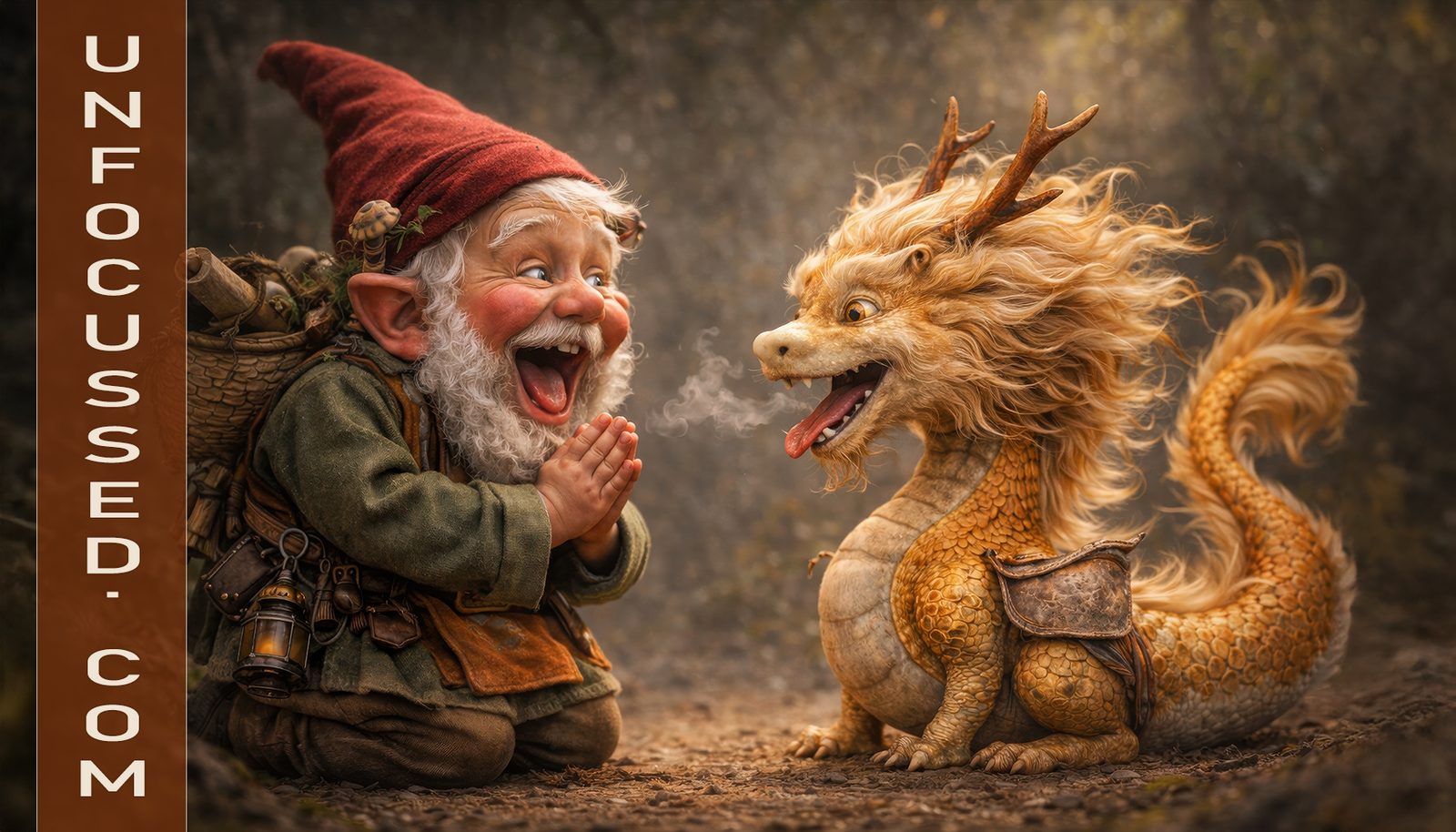
There are rules for gnomes. You don’t speak loudly in public unless you’re selling onions. You don’t drink before noon unless it’s mead (in which case it doesn’t count). And above all else, you don’t—under any circumstances—go around taming dragons. Dragons are for elves with cheekbones sharp enough to slice bread, or for dwarves who can drink molten iron and still belch politely afterward. Gnomes? Gnomes are supposed to tend gardens, paint doorframes cheerful colors, and keep their heads down when giants argue about who owns which mountain. Roderick Bramblehelm had never kept his head down in his life. At forty-three, he had the beard of a prophet, the patience of a mosquito, and the temper of a blacksmith whose anvil had just insulted his mother. He also had a hammer—a proper hammer, not one of those dainty mallets you use to hang shelves. This was forged steel with a handle of oak charred in dragonfire, the kind of hammer that made grown men step out of the way and priests start revising their wills. Roderick didn’t build with it. He didn’t fix with it. He raised it high as a promise to the world: if destiny won’t come knocking, I’ll bash the bloody door down myself. That philosophy is what led him into the Blacktooth Caverns on a storm-sick evening when most gnomes were at home, quietly admiring cabbages. The cavern was rumored to house something ancient and terrible. Villagers swore that every third Tuesday the mountains shuddered from within, as though the stones themselves had indigestion. Chickens went missing. Smoke rose where no fire had been lit. No one dared go inside—no one except Roderick, who had grown tired of hearing the elders whisper, “That one’s trouble,” whenever he entered the tavern. Trouble? He’d show them trouble. He’d show them wings slicing through thunder, jaws dripping with lightning, the kind of spectacle that made people drop tankards and soil breeches simultaneously. He found the beast curled among bones and broken wagons, snoring with the guttural rumble of earthquakes making love. The dragon was smaller than the legends promised, though “smaller” in this case meant only slightly less enormous than a cathedral. Its scales shimmered like wet stone, its horns were twisted corkscrews of ivory, and its teeth gleamed with the confidence of someone who had eaten several knights and found them bland. But the strangest thing of all was its grin—wide, feral, and utterly inappropriate for a creature that could end civilizations. The dragon’s name was Pickles. Roderick didn’t ask why; he suspected the answer would make his brain sprout mushrooms. “Oi, you scaly thunderchicken!” Roderick shouted, raising his hammer until it scraped the cavern roof. “Wake up, your nap’s over. The sky won’t conquer itself.” Pickles opened one saucer-sized eye, blinked once, and then let out a laugh so unholy that several bats dropped dead on the spot. It wasn’t a growl. It wasn’t a roar. It was the sound of madness having a tea party with chaos, and it rattled Roderick’s bones in the most satisfying way. “Finally,” the dragon croaked, its voice thick as burning tar. “A gnome with ambition. Do you know how long I’ve waited for one of you garden-tinkerers to grow a spine?” From that moment, their fates welded together like iron in a forge. Roderick climbed onto the beast’s back as if mounting a stubborn mule, and Pickles—after a ceremonial belch that scorched several stalactites—unfurled wings vast enough to slap the storm outside into submission. Together, they launched into the sky, shredding the night with fire and fury. The villagers of Cinderwhip, still sipping their weak ale and gossiping about the mayor’s suspicious mole, nearly dropped dead when they saw it: a gnome, of all things, astride a dragon the size of their bakery, laughing like a lunatic while waving a hammer that seemed far too big for his tiny arms. Their screams were immediate. Mothers dragged children indoors. Farmers dropped pitchforks. A priest fainted into his own soup. Yet there was no denying the magnificence of the spectacle. Pickles twisted through thunderheads, his wings scattering lightning like spilled jewels, while Roderick howled insults at the very clouds. “Is that all you’ve got?” he shouted into the storm, voice echoing across valleys. “I’ve seen scarier drizzle from a drunk donkey!” He slammed his hammer against his belt for emphasis, each clang like a war drum beating out the end of the old order. No one watching that night would forget it, no matter how hard they prayed. By dawn, the legend of Roderick Bramblehelm and Pickles the Dragon had been born. And legends, as everyone knows, are dangerous things. They don’t just change how others see you. They change what you are, and what you will have to face next. For the skies are never given freely—they are only won, and always at a price. The first night of flight was not graceful. Roderick Bramblehelm clung to Pickles’ scaly back like a barnacle strapped to a cannonball, his hammer raised high mostly because letting go meant falling to a very poetic death. The dragon’s wings pummeled the air with a sound like thunder being beaten into submission, and every dive threatened to eject the gnome into the clouds. But Roderick wasn’t afraid—not exactly. Fear, he’d decided long ago, was just excitement with poor posture. Besides, the view was intoxicating: lightning dancing through clouds, mountains carved in silver by the moon, and entire villages below, blissfully unaware that their future nightmares now came with a beard and a war hammer. Pickles was enjoying himself far too much. “Left, right, barrel roll!” he cackled, throwing his weight into aerial acrobatics that made falcons puke midflight. Roderick’s stomach lurched somewhere behind him, probably in a field. Yet he grinned, teeth bared against the wind, shouting back, “Is this all you’ve got, you overgrown newt? My aunt’s washing line gave me a rougher ride than this!” The insult delighted Pickles. He let out a wheezing, guttural laugh that sent sparks fizzing from his nostrils and set a cloud partially aflame. The cloud did not appreciate this and drifted off sulking, its edges smoldering like a badly rolled cigar. Their aerial chaos could not go unnoticed. By the second dawn, the news of a gnome atop a dragon spread faster than gossip about who’d been caught snogging behind the millhouse. Bards exaggerated, priests panicked, and kings muttered to their advisors, “Surely this is a joke, yes? A gnome? On a dragon?” Entire councils debated whether to laugh, declare war, or drink heavily until the memory passed. But memory does not pass when a dragon and rider scorch their names across the sky. And scorch they did. Their first target, entirely by accident, was a bandit camp nestled in the crook of the River Grell. Roderick had spotted their fire and, assuming it was a tavern, demanded a closer look. Pickles, never one to resist mischief, dove like a plummeting anvil. What followed was less a battle and more an extremely one-sided barbecue. Tents went up like parchment. Bandits screamed, scattering like cockroaches under divine judgment, while Roderick bellowed, “That’ll teach you to overcharge for ale!” He swung his hammer, obliterating a crate of stolen coins, sending silver raining into the dirt like divine confetti. The survivors later swore they had been attacked by the god of drunk lunatics and his pet apocalypse. From there, things escalated. Villages trembled when shadows darkened their skies. Noblemen soiled velvet trousers when Pickles swooped overhead, his grin a banner of impending chaos. Roderick found the whole affair intoxicating. He began inventing speeches to accompany their raids—grand, booming declarations that nobody could actually hear over the roaring wind but which made him feel dramatically important. “Citizens below!” he would shout into the gale, hammer aloft, “Your boring days are at an end! Behold your liberation in flame and glory!” To which Pickles would usually reply with a fart that set passing crows ablaze. Truly, they were poetry incarnate. But legends do not grow without enemies. Soon, the High Council of Stormwright Keep convened in their granite fortress. These were not sentimental people—they were the kind who measured morality in taxes and peace in tidy borders. A gnome with a dragon, unpredictable and ungovernable, was the sort of thing that sent their bowels into parliamentary panic. “This cannot stand,” decreed Archlord Velthram, a man whose face had all the warmth of a salted cod. “Summon the Knights of the Skyward Order. If a gnome believes he can own the clouds, then we shall remind him they are already under lease.” His advisors nodded gravely, though one or two scribbled furiously about whether they should trademark the phrase ‘lease of the skies’ for propaganda posters. Meanwhile, Roderick was utterly unaware that his name had become both battle cry and curse. He was too busy learning the mechanics of dragon flight. “Lean with me, you winged lunatic!” he barked during a sharp dive. “If I’m going to conquer the skies, I’ll not do it looking like a sack of potatoes flopping on your back.” Pickles snorted, amused, and adjusted his trajectory. Slowly, painfully, something resembling teamwork began to emerge from the chaos. Within a fortnight, they could slice through valleys like arrows, loop around storm spires with balletic grace, and terrify migrating geese for sport. Roderick even managed to stay in his saddle without swearing every third word. Progress. Their bond deepened not just through combat but through conversation. Around campfires of stolen logs, Roderick would drink bitter ale while Pickles roasted wild boars whole. “You know,” Roderick mused one night, “they’ll all come for us eventually. Kings, priests, heroes. They can’t stand the thought of a gnome rewriting their stories.” Pickles licked pork grease from his fangs and grinned. “Good. Let them come. I’ve been bored for centuries. Nothing tastes better than righteous indignation served on a silver spear.” And so the legend of Hammer and Dragon grew teeth. Songs carried their deeds across taverns. Children carved crude figures of a gnome with a hammer, standing triumphant atop a smiling beast. Merchants began selling counterfeit ‘dragon-scale charms’ and ‘authentic Bramblehelm beards’ at markets. For every cheer, though, there came a curse. Armies began to march. War horns blew across the realm. In storm clouds above, the first shadows of rival riders began to stir, knights with spears tipped in lightning, sworn to drag Roderick Bramblehelm screaming from the skies. But Roderick only laughed. He welcomed the challenge, hammer flashing in firelight. “Let them come,” he told Pickles, his eyes burning brighter than any dawn. “The skies were never meant for cowards. They were meant for us.” The first war horns sounded at dawn. Not the kind of dawn filled with rosy optimism and cheerful roosters, but the kind of dawn where the sun itself looked nervous about showing up. Across the valleys, banners unfurled—banners of lords, mercenaries, zealots, and anyone who thought killing a gnome on a dragon might look good on a résumé. The skies filled with armored gryphons, hawks so massive they could carry a cow in one talon, and the dreaded Knights of the Skyward Order: riders clad in polished steel, their spears tipped with bottled lightning. Their formation cut across the heavens like a razor. This was not a raid. This was an extermination. Pickles hovered at the edge of a storm, wings half-furled, grinning like a lunatic as always. His laughter boomed, rolling over the land like artillery. “Finally!” he crowed, sparks bursting from his teeth. “A proper audience!” His tail lashed through clouds, thunder growling like a hungry wolf. On his back, Roderick Bramblehelm tightened the straps of his saddle, the hammer across his shoulders heavy with promise. His beard whipped in the wind, his eyes gleamed with manic determination, and his grin matched his dragon’s. “That’s quite the reception,” he muttered. “I almost feel important.” “Almost?” Pickles snorted, then belched out a plume of fire so wide it startled a flock of starlings into immediate retirement. “You’re the most dangerous joke they’ve ever faced, hammer-boy. And jokes, when sharp enough, cut deeper than swords.” The enemy approached in waves. Trumpets shrieked. War drums thundered. Priests hurled curses into the gale, summoning holy fire and divine chains. But Roderick rose in his saddle, raised his hammer high, and bellowed a single word into the storm: “COME!” It wasn’t a plea. It was a command, and even the clouds flinched. The battle exploded like chaos uncaged. Gryphon riders dove, their beasts screaming, claws flashing in the stormlight. Pickles rolled, twisted, snapped one from the sky in his jaws, and spat the armored corpse into a village well three miles below. Roderick swung his hammer with glee, caving helmets, shattering shields, and occasionally smacking an unfortunate gryphon in the backside so hard it changed religions midflight. “Is that all?” he roared, laughter tearing from his throat. “My grandmother wrestled angrier chickens!” The Knights of the Skyward Order were no ordinary soldiers. They flew in flawless formations, their lightning-spears humming with captured storms. One spear struck Pickles square across the chest, sending sparks arcing over his scales. The dragon snarled, more annoyed than hurt, and let out a roar that cracked stone bridges below. Roderick nearly lost his grip, but instead of fear, his heart flooded with exhilaration. This was it—the storm he was born for. “Pickles!” he yelled, hammer aloft, “Let’s show these tin-plated pigeons how a gnome rewrites the sky!” What followed was not a battle. It was an opera of annihilation. Pickles spun through clouds, wings slicing wind into deadly vortices. His laugh—half shriek, half thunder—rolled over the field like doom itself. Roderick moved with lunatic precision, his hammer striking like punctuation in a poem written in blood and fire. He shattered the spear of one knight, dragged the rider from his saddle, and hurled him screaming into a thunderhead. Another knight lunged, only to find himself clotheslined by a gnome’s steel hammer in midair, which by all accounts should have been physically impossible. But legends care little for physics. Below, villagers stared upward, their lives frozen mid-task. Some prayed, some wept, some cheered. Children laughed at the absurdity of it—a tiny gnome slaying sky-knights while a dragon with a grin wider than the horizon shrieked in joy. Farmers swore they saw the gnome raise his hammer and strike lightning itself, splitting it into fragments that rained like molten silver. Entire churches would later form around the event, declaring Roderick Bramblehelm a prophet of chaos. Not that he’d ever attend a service. He thought sermons were dull unless someone caught fire halfway through. But legends always demand a price. The Archlord himself entered the fray atop a beast bred from nightmares—an obsidian wyvern, armored in spiked steel, eyes like black suns. Velthram was no fool. He carried no ordinary spear but the Spear of Dawnsbane, forged in storms older than empires, designed for a single purpose: killing dragons. His arrival hushed the battle for a breathless instant. Even Pickles’ grin faltered. “Ah,” the dragon hissed. “Finally, someone worth burping on.” The clash was cataclysmic. The wyvern slammed into Pickles midflight, talons tearing scales, tail smashing like a spiked whip. Roderick nearly flew from the saddle, clinging by one strap as the world spun into fire and shrieking metal. Velthram thrust the Dawnsbane, the spear’s lightning kissing Pickles’ ribs, carving a searing wound. The dragon roared in pain, fire exploding from his lungs, engulfing three unfortunate knights who had wandered too close. Roderick, dangling by one arm, swung his hammer with all the fury in his tiny body, smashing against Velthram’s armored face. The Archlord snarled, blood spraying, but did not fall. The battle raged across miles of sky. Villages below quaked as dragon and wyvern crashed through storm fronts, their roars louder than earthquakes. Roderick screamed insults with each swing—“Your wyvern smells like boiled cabbage!”—while Velthram countered with the cold silence of a man who hadn’t laughed since birth. Sparks rained, wings clashed, the very clouds tore apart beneath their fury. Finally, in a moment carved from madness, Roderick stood on Pickles’ neck, hammer raised, as the wyvern lunged in for the kill. Time slowed. The world held its breath. With a howl that shook heaven itself, Roderick leapt. He soared through the air—gnome beard streaming, hammer ablaze with stormlight—and brought it down upon Velthram’s spear. The impact cracked the Dawnsbane in two, thunder exploding outward in a wave that sent gryphons spiraling, shattered church bells across the realm, and split the storm into shreds of brilliant fire. Velthram, stunned, toppled from his saddle, his wyvern shrieking in panic as it dove to catch him. The sky was theirs. Pickles bellowed triumph, a laugh so wild it made the storm itself shudder into retreat. Roderick landed hard on his dragon’s back, barely clinging, lungs burning, body battered, but alive. Alive, and victorious. His hammer, cracked but unbroken, pulsed in his hands like a heartbeat. “That,” he rasped, spitting blood into the wind, “is how a gnome writes history.” The armies broke. The knights fled. The Council’s banners burned. Songs would be sung for centuries about the day a gnome and his dragon claimed the heavens. Some would call it madness. Others would call it legend. But for those who saw it with their own eyes, it was something greater: proof that the skies belonged not to kings, nor gods, nor armies, but to those mad enough to seize them. And so Roderick Bramblehelm and Pickles the Dragon carved their names into eternity, not as tyrants or saviors, but as chaos given wings. The hammer had fallen, the skies had been conquered, and the world—forever after—looked up in both terror and awe, waiting for the next roar of laughter to roll across the clouds.     Bring the Legend Home The tale of Roderick Bramblehelm and Pickles the Dragon doesn’t have to stay in the clouds. You can capture their chaos, triumph, and laughter in your own space. Hang their storm-scorched glory on your wall with a framed print or let the legend breathe boldly across a canvas that commands the room. Carry their madness wherever you go with a spiral notebook for your own daring plans, or slap their fearless grin onto your favorite surface with a battle-ready sticker. The skies may belong to legends, but the art can belong to you.

Read more

Snuggle Scales

by Bill Tiepelman

Snuggle Scales

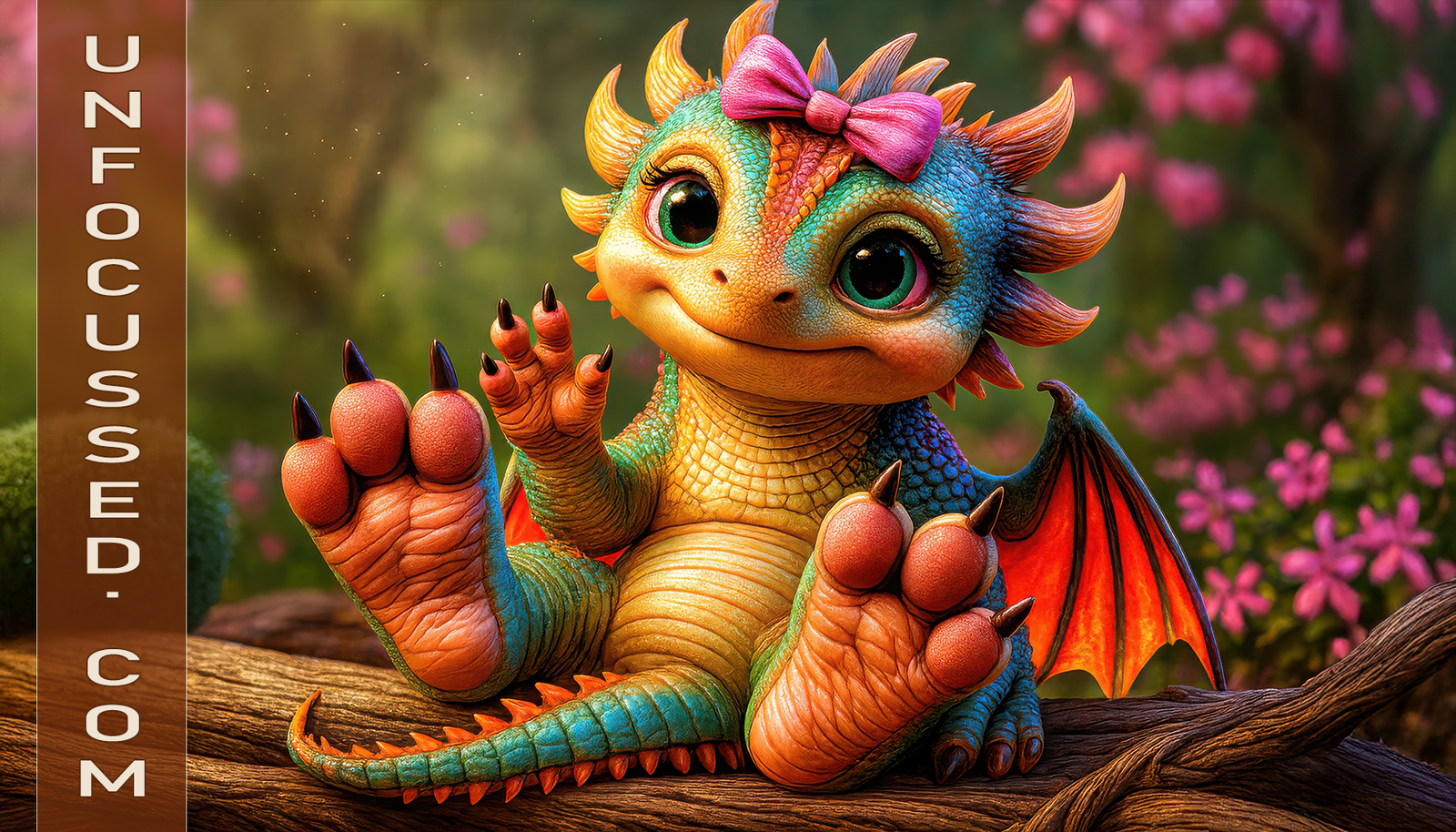
Of Blossoms, Boredom, and Blunt Claws Snuggle Scales was not her given name. No self-respecting dragon would hatch with a name that sounded like it belonged to a toddler’s bedtime plushie. No, she was born as Flareth Sparkfang the Third, a name that demanded respect, fear, and at the very least, a mildly dramatic soundtrack. But that all changed when she tumbled—quite literally—out of her cozy cave and landed butt-first in a bed of cherry blossoms, wings tangled and claws pointed skyward, like a fallen croissant with an attitude. That’s when the forest gnomes found her. All seventy-three of them. “OH MY GOODNESS, IT’S GOT TOES!” one of them shrieked with the volume of a kazoo in heat. “AND LOOK AT HER LITTLE BELLY FLUFF!” another gushed, already crocheting a pink bow mid-hyperventilation. The vote to rename her "Snuggle Scales" was unanimous. Flarespark-whatever was never mentioned again—except by her therapist (a deeply overworked toad named Dr. Gloomp). Now, Snuggle Scales lived in the *Whifflewood Glade*, an aggressively cheerful corner of the Enchanted Lands that always smelled faintly of cinnamon and gossip. It was springtime, which meant the petals were falling like pink confetti, the birds were practicing passive-aggressive harmonies, and Snuggle Scales had reached peak boredom. She'd already rearranged her claw polish collection (sixteen shades of 'Molten Mischief'), ironed her tail ribbons, and sorted her wing glitter by sass level. So, she decided to do something no baby dragon had dared before. She would leave the glade. She would enter The Human Realm. Why? Because dragons were meant to soar, not pose for gnome-sponsored tea parties with daffodil cupcakes and emotional support hedgehogs named Crispin. And if one more elf tried to paint her scales for “pastel realism” art class, she was going to burn their easel into bite-sized regret. So, with her wings fluffed, talons sharpened, and bow freshly fluffed, Snuggle Scales grabbed her emotional support mushroom (don’t judge), did a dramatic stretch for the imaginary audience, and waddled confidently toward the portal tree. Which, of course, had a “Wet Bark” sign hanging from it. “You have GOT to be kidding me,” she muttered, tapping the wood like a suspicious landlord. “I swear, if I get moss on my tail again, I’m suing the forest.” And with one last eye-roll at the overly fragrant breeze, Snuggle Scales stepped through the tree, into a world of chaos, caffeine, and, as she would soon discover, feral toddlers at birthday parties. Caffeine, Cupcakes, and Catastrophic Bounce Houses The Human Realm was not what Snuggle Scales expected. She had envisioned grand towers, mysterious music, and possibly a ritualistic offering of snacks. Instead, she crash-landed in the middle of a suburban park — face-first into a pink plastic picnic table covered in unicorn napkins and half-eaten cupcakes. A small human screamed. Then another. Then several. Within seconds, she was surrounded by a battalion of sticky-fingered, frosting-smeared toddlers — the terrifying kind that ask “Why?” five hundred times and think personal space is a myth. “LOOK! A LIZARD!” one of them shrieked, pointing at her with a sparkly wand that smelled like raspberry sanitizer and poor decisions. “She’s a DINOSAUR!” said another, already attempting to mount her tail like a pony ride. Snuggle Scales was two seconds away from turning this party into a fiery lesson in boundaries, but just then — she locked eyes with the ringleader. A tiny human queen in a glitter crown and a tutu the size of a small planet. “You’re invited,” the girl said solemnly, offering her a cupcake with the confidence of someone who had never been denied anything in her life. “You’re my special guest now.” Snuggle Scales blinked. The cupcake was vanilla. It had edible glitter. And more importantly, it was presented without any adult supervision. With great dignity (and minor frosting inhalation), she accepted. Two hours later, Snuggle Scales was inexplicably wearing a Hello Kitty sticker on her snout, had adopted the name “Miss Wiggles,” and had somehow agreed to be the grand finale in a game called *Pin the Sparkle on the Reptile.* “This is a new low,” she muttered, glancing sideways at a balloon animal that looked like a depressed goat. “I used to be feared. I used to be majestic.” “You used to be lonely,” said a tiny voice from under the cupcake table. It was the birthday girl, now minus the crown and frosting but plus a surprisingly sharp sense of emotional timing. Snuggle Scales looked at her — really looked at her. She had that messy, defiant, beautiful chaos that reminded the dragon of spring mornings in the glade. Of imperfect gnome poetry. Of soft petals on scales and snorting laughter during daffodil charades. And for the first time since she'd crossed into this sugar-coated world, something inside her softened. “Do you... want to pet my toe beans?” she offered, lifting a foot. The child gasped in reverent delight. “YES.” And just like that, an unspoken contract was sealed: the girl would never tell anyone that Miss Wiggles had accidentally belched glitter mid-yawn, and Snuggle Scales would never admit that she now owned a friendship bracelet made of licorice string and rainbow beads. “You’re magic,” the girl whispered, curling up beside her under the shade of the party tent. “Can you stay forever?” Snuggle Scales hesitated. Forever was a long time. Long enough for more birthdays. More cupcakes. More of this squishy, imperfect chaos that somehow made her scales feel warmer. And maybe… just maybe… long enough to teach these tiny humans how to properly use wing glitter. She looked up at the sky, half-expecting a portal to yank her back. But nothing came. Just a breeze carrying the scent of sugar, grass, and potential. “We’ll see,” she said, smirking. “But only if I get my own bounce house next time.” “Deal,” the girl said. “And a tiara.” Snuggle Scales snorted. “Obviously.” And so, the rest of the party unfolded in a blur of squeals, sprinkles, and unlicensed dragon rides. Somewhere between her second slice of confetti cake and a dance-off with a toddler DJ, Snuggle Scales forgot entirely why she ever thought she was too big, too bold, or too weird for a little human joy. Turns out, she wasn’t the only creature who’d needed rescuing that day. Of Glittering Goodbyes and Slightly Illegal Tiara Smuggling Monday morning hit the human realm like a caffeinated squirrel. The park was empty. The balloons had deflated into sad rubber pancakes, the frosting had turned crusty in the sun, and someone had stolen the bounce house (probably Gary from next door — he looked shady). Snuggle Scales sat in the middle of the battlefield — I mean, playground — still wearing her licorice friendship bracelet and a flower crown made of dandelions, which she had not agreed to but now kind of loved. She’d stayed the night curled up under a picnic table, half-watching the stars, half-listening to the little girl breathe in her sleep beside her. She hadn’t slept. Dragons didn’t sleep during soul shifts. Because something was shifting. Back in Whifflewood, the seasons were changing. The trees would be gossiping. The gnomes would be filing a formal “Where Is Our Dramatic Baby?” complaint. And Dr. Gloomp was probably sending passive-aggressive mushrooms through the portal. The forest wanted her back. But… did she want back? “You’re still here,” said a sleepy voice beside her. The girl sat up, hair wild, tutu wrinkled, eyes soft. “I thought maybe you were a dream.” Snuggle Scales sighed, releasing a small puff of glitter-smoke. “I mean, I’m adorable enough to be. But no. Real dragon. Still technically fierce. Now 37% cupcake.” The girl giggled, then got serious in that intense child way that feels like an emotional ambush. “You don’t look like you want to go home.” “Home is... complicated,” Snuggle said. “It’s full of expectations. Rituals. Very clingy gnomes. I’m supposed to be majestic. Breathe fire on command. Pretend I’m not obsessed with sparkles.” “But you can breathe sparkles now,” the girl pointed out. “And you’re so majestic when you do a dance spin before sneezing.” Snuggle blinked. “You mean... my patented Glitter Twirl Sneeze™?” “That one,” the girl whispered reverently. “It changed me.” They sat in silence, the kind that only exists when two odd souls have found an unexpected alignment. Then — the wind shifted. “Uh oh,” said Snuggle Scales. The portal tree was humming behind them, its bark glowing with that “ancient magic plus low battery warning” vibe. If she didn’t return soon, it might close. Permanently. “If I go now,” she said slowly, “I’ll be stuck there until next spring. And honestly, gnome karaoke season starts soon. It’s a nightmare.” The girl stood up, walked to the tree, and did something astonishing. She *hugged it.* “You can come visit her,” she said to the tree like it was an ex-boyfriend who still had good books. “But you don’t get to trap her.” The portal shimmered. Flickered. Then… waited. Snuggle Scales blinked. That had never happened before. Trees didn’t negotiate. But maybe — just maybe — it wasn’t the tree deciding anymore. “You’re magic,” she whispered to the girl, her voice caught between a sob and a snort. “I know,” the girl replied. “But don’t tell anyone. They’ll make me run the PTA.” They hugged, long and fierce. Dragon claws against glitter-stained hands. Old magic meeting new. Snuggle Scales stepped into the portal. Just one foot. Just enough to keep the door open. And then, before anyone could stop her, she turned around and tossed the flower crown to the girl. “If you ever need me,” she said, “just light a vanilla cupcake and whisper, ‘Slay, Miss Wiggles.’ I’ll come running.” The portal closed with a pop. And far away, back in the glade, the gnomes gasped in horror — because their baby dragon had returned wearing a homemade tiara, toe polish in four different colors, and an attitude that would not be contained. Spring had come. And Snuggle Scales? She had bloomed. And heaven help the next elf who tried to paint her scales without permission.     Love Snuggle Scales as much as she loves toe polish and rebellion? Bring home the magic — and a little cheeky dragon charm — with these delightful products inspired by our sassiest hatchling yet: Framed Print — Perfect for nurseries, nooks, or any wall that needs a little sparkle and sass. Acrylic Print — A bold, vivid statement piece with magical gloss and mythical attitude. Jigsaw Puzzle — Because nothing says “cozy chaos” like piecing together a dragon’s glitter sneeze in 500 bits. Greeting Card — Send someone a snuggly fire-breath of joy (and maybe a tiara). Whether you hang her on your wall, piece her together on a cozy afternoon, or send her to a friend who needs a giggle — Snuggle Scales is ready to bring whimsy, warmth, and just the right amount of dragon drama to your world.

Read more

The Juicy Guardian

by Bill Tiepelman

The Juicy Guardian

A Dragonling with Too Much Juice Long before kingdoms rose and fell, and even before humanity figured out how to weaponize wine into bad karaoke, there existed a lush orchard where fruits reigned supreme. Mangos glistened in the early sun like golden gems, pineapples stood tall like spiky fortresses, and watermelons lay across the grass as if they had been plucked straight from a fruit god’s imagination. In the middle of this overripe paradise lived a creature no one expected, a dragonling so cheeky and unruly that even the bananas tried to peel themselves just to get away from his speeches. He was known, in a title he gave himself after exactly zero votes, as The Juicy Guardian. This dragonling was small by dragon standards—hardly bigger than a beach ball—but he compensated with attitude. His scales shimmered in shifting tones of citrus orange and leafy green, and his stubby wings flapped like a drunken butterfly when he was excited. His horns were tiny, more like decorative ice cream cones than menacing spikes, but don’t tell him that unless you’re ready to be pelted with lime wedges at alarming velocity. Worst of all—or best, depending on how much chaos you enjoy—was his tongue. Long, wiggly, and constantly flopping out of his mouth, it was the sort of tongue that made you wonder if evolution had overcorrected somewhere around the amphibian era. “Hear me, peasants of the orchard!” the dragonling declared one morning, climbing atop a pineapple with the solemn dignity of a child trying to wear their dad’s oversized shoes. His stubby claws gripped the spiky surface like it was a throne built just for him. “From this day forth, no kiwi shall be stolen, no mango bruised, and no watermelon sliced without my express permission. I am the sacred defender of juice, pulp, and fruity honor!” The audience of fruits was, naturally, silent. But the villagers who worked the orchard had gathered at a distance, pretending to be busy with baskets, all while trying not to choke on their own laughter. The Juicy Guardian, undeterred, believed they were basking in awe. He puffed out his tiny chest until his scales squeaked and stuck his tongue out in what he believed was an intimidating display. It was not. It was adorable in a way that made grown men giggle and women mutter, “Oh my gods, I want ten of him in my kitchen.” Now, here’s the thing about The Juicy Guardian: he wasn’t exactly a fire-breather. In fact, he had tried once, and the result had been a mild burp that caramelized half an orange and singed his own eyebrows. From that day on, he embraced his true talent—what he called “fruit-based combat.” If you threatened the orchard, he’d sneeze pulp into your eyes with sniper-like precision. If you dared to insult pineapples (his favorite fruit, obviously, since he used them as makeshift thrones), he would waggle his sticky tongue until you were so grossed out you left voluntarily. And if you really pushed your luck, well, let’s just say the last raccoon who underestimated him was still finding tangerine seeds in uncomfortable places. “Oi, dragonling!” shouted one villager from behind a basket of mangos. “Why should we let you guard the fruit? All you do is slobber on it!” The Guardian didn’t even flinch. He tilted his head, narrowed one massive eye, and replied with the bravado only a creature under a foot tall could muster: “Because no one else can guard fruit with this level of flair.” He struck a pose, wings flared, tongue dangling proudly, drooling nectar onto the pineapple he was standing on. The villagers groaned in unison. He took it as applause. Obviously. The truth was, most of the villagers tolerated him. Some even liked him. The kids adored his antics, cheering whenever he declared yet another “sacred fruit law” like: All grapes must be eaten in even numbers, lest the gods get indigestion, or Banana bread is holy, and hoarding it is punishable by public tickling. Others found him insufferable, swearing under their breath that if they had to hear one more proclamation about “the divine juiciness of melons,” they’d pickle him alive and serve him with onions. But the dragonling, blissfully oblivious, strutted around as if he were the king of tropical chaos, which—let’s be honest—he kind of was. It was during one particularly loud morning announcement that things took a turn. The Juicy Guardian was mid-speech—something about enforcing a fruit tax payable in smoothies—when the orchard fell strangely quiet. Even the cicadas stopped buzzing. A massive shadow rolled over the grove, blotting out the warm sunlight. The fruits themselves seemed to shiver, and the villagers froze mid-basket, staring upward. The Guardian, tongue wagging dramatically, froze in place. His pineapple crown tilted sideways like a drunk sailor’s hat. “Oh, great,” he muttered under his breath, his smugness cracking into genuine irritation. “If that’s another oversized banana slug trying to eat my melons, I swear I’m moving to the desert.” His wings twitched nervously, his tiny claws digging into the pineapple throne. The villagers gasped as the shadow grew larger and darker, spilling across the watermelon patch and swallowing the rows of citrus. Something huge was coming, something that didn’t care about fruit laws, smoothie taxes, or sticky tongues. The Juicy Guardian narrowed his one open eye, gave the shadow a wobbly salute with his tongue, and whispered, “Alright then… come and get juicy.” The Shadow Over the Orchard The shadow slithered across the grove like a spilled smoothie, blotting out the juicy glow of the morning sun. Villagers scattered, clutching baskets of fruit to their chests like they were rescuing sacred relics. A few less committed villagers shrugged, dropped their harvest, and ran—better to lose a few lemons than their heads. Only one tiny figure did not flinch: The Juicy Guardian. Perched atop his pineapple, he tilted his oversized head, narrowed his cartoonishly large eye, and let his tongue dangle defiantly like a warrior waving a very pink, very gooey flag of battle. “Alright, you oversized mood-killer,” he called out, his little voice carrying farther than anyone expected, “who dares trespass on my orchard? State your business! If it involves melons, I want a cut. Literally. I’ll take the middle slice.” The villagers gasped. A few of them muttered that the dragonling had finally lost the last marble he never had to begin with. But then the source of the shadow revealed itself: a massive airship, creaking like a wooden whale, descending with ropes and sails flapping. Painted along its hull were crude depictions of swords, grapes, and—for reasons no one could explain—a suggestive-looking carrot. The flag snapping above it read, in bold letters: “The Order of the Fruit Bandits.” “Oh, come on,” groaned The Juicy Guardian, dragging his claws down his snout. “Fruit bandits? Really? Is this my life? I wanted epic battles with knights and treasure hoards, not… organic theft on a flying salad bowl.” The airship docked itself awkwardly on the edge of the orchard, crushing three lemon trees and half a papaya grove. Out tumbled a ragtag crew of bandits, each dressed in patchwork armor and fruit-themed bandanas. One had a banana painted across his chest, another had kiwi seeds tattooed across his forehead, and the apparent leader—tall, muscular, with a jaw that could crack coconuts—strode forward carrying a watermelon-shaped mace. “I am Captain Citrullus,” he bellowed, flexing as if auditioning for a very sweaty poster. “We are here to claim this orchard in the name of the Fruit Bandits! Hand over the harvest, or face the consequences!” The Juicy Guardian tilted his pineapple throne back slightly, waggled his tongue, and muttered loud enough for the villagers to hear: “Captain Citrullus? Really? That’s Latin for watermelon. Congratulations, pal, you just named yourself Captain Melon. How threatening. I feel so intimidated. Somebody call the salad bar police.” The villagers tried not to laugh. The bandits scowled. The Captain stomped forward, pointing his mace at the dragonling. “And who are you, little lizard? A mascot? Do the villagers dress you up and parade you around like a pet?” “Excuse me,” the Guardian snapped, hopping down from his pineapple to strut across the grass with the exaggerated swagger of someone six times his size. “I am not a mascot. I am not a pet. I am the divinely appointed, absolutely fabulous, disgustingly powerful Juicy Guardian! Protector of fruit, ruler of pulp, and wielder of the most dangerous tongue this side of the tropics!” He flicked his tongue dramatically, slapping one bandit across the cheek with a wet slorp. The man yelped and stumbled backward, smelling faintly of citrus for the rest of his life. The villagers erupted into laughter. The bandits, however, were not amused. “Get him!” Captain Citrullus roared, charging forward with his fruit-mace raised high. The bandits surged after him, swords glinting, nets waving, baskets ready to scoop up melons. The Guardian’s wings buzzed nervously, but he didn’t flee. No—he grinned. A bratty, self-satisfied grin. Because if there was one thing this dragonling loved, it was attention. Preferably the dangerous, dramatic kind. “Alright, boys and girls,” he said to himself, rolling his shoulders like a boxer about to step into the ring, “time to make a mess.” The first bandit lunged, swinging a net. The Guardian ducked, darted under his legs, and whipped his tongue around like a whip, snagging an orange from a nearby branch. With a flick, he launched it straight into the bandit’s face. Splurt! Juice and pulp exploded everywhere. The man staggered, blinded, shrieking, “It burns! IT BURNS!” “That’s vitamin C, sweetheart,” the Guardian called after him, “the ‘C’ stands for cry harder.” Another bandit swung a sword down at him. The blade hit the ground, sending sparks into the grass. The Guardian leapt onto the flat of the sword like it was a seesaw, bounced high into the air, and belly-flopped directly onto the attacker’s helmet. With his claws gripping the man’s face and his tongue slapping against his visor, the dragonling cackled, “Surprise smooch, helmet-boy!” before hopping off, leaving the bandit dizzy and smelling faintly of pineapple. The villagers were screaming, cheering, and throwing fruit of their own at the invaders. It wasn’t every day you saw a tiny dragon wage war with produce, and they weren’t going to waste the chance to hurl a few grapefruits. One old woman in particular launched a mango so hard it knocked out a bandit’s front tooth. “I’ve still got it!” she cackled, high-fiving the Guardian as he zipped past. But the tide began to shift. Captain Citrullus waded through the chaos, his melon-mace smashing aside fruit like it was made of air. He stomped toward the Guardian, his face red with rage. “Enough games, lizard. Your fruit is mine. Your orchard is mine. And your tongue—” he pointed the mace straight at him—“is going to be my trophy.” The Juicy Guardian licked his own eyeball slowly, just to make a point, and muttered, “Buddy, if you want this tongue, you better be ready for the stickiest fight of your life.” The villagers fell silent. Even the fruit seemed to hold its breath. The bratty little dragon, dripping pulp and sass, squared off against the massive bandit captain. One small, one huge. One wielding a tongue, the other a melon-mace. And in that moment, everyone knew: this was going to get very, very messy. Pulpocalypse Now The orchard stood still, every mango, lime, and papaya trembling as the two champions squared off. On one side, Captain Citrullus, a towering slab of muscle and melon obsession, hefting his watermelon-shaped mace like it was forged from pure intimidation. On the other, The Juicy Guardian: a stubby, bratty little dragonling with wings too small for dignity, a pineapple crown slipping over one eye, and a tongue dripping nectar like a faucet in desperate need of repair. The villagers formed a loose circle, wide-eyed, clutching fruit baskets like improvised shields. Everyone knew something legendary was about to happen. “Final chance, lizard,” Captain Citrullus growled, stomping forward so hard the ground shook, dislodging a peach. “Hand over the orchard, or I pulp you myself.” The Guardian tilted his head, tongue dangling, then let out the most obnoxious laugh anyone had ever heard—a high-pitched, nasal cackle that made even the parrots flee the trees. “Oh, honey,” he wheezed between gasps of laughter, “you think you can pulp me? Sweetie, I am the pulp. I’m the juice in your veins. I’m the sticky spot on your kitchen counter that you can never, ever scrub clean.” The villagers gasped. One man dropped an entire basket of figs. Captain Citrullus turned purple with rage—part fury, part embarrassment at being out-sassed by what was essentially a lizard toddler. With a roar, he swung his mace down in a crushing arc. The Guardian darted sideways just in time, the melon weapon smashing into the ground and exploding in a shower of watermelon chunks. Seeds sprayed everywhere, pelting villagers like fruity shrapnel. One farmer caught a seed in the nostril and sneezed for the next five minutes straight. “Missed me!” the Guardian taunted, sticking his tongue out so far it smacked Citrullus across the shin. “And ew, you taste like overripe cantaloupe. Gross. Get some better lotion.” What followed could only be described as fruit warfare on steroids. The Guardian zipped around the battlefield like a sticky orange bullet, launching citrus grenades, slapping people with his tongue, and sneezing mango pulp directly into the eyes of anyone foolish enough to get close. Bandits flailed and slipped on fruit guts, falling over one another like bowling pins coated in guava jelly. Villagers joined in with gusto, weaponizing every edible thing they could grab. Papayas flew like cannonballs. Limes were hurled like grenades. Someone even unleashed a barrage of grapes via slingshot, which was less effective as a weapon and more as an impromptu snack for the Guardian mid-battle. “For the orchard!” bellowed one elderly woman, dual-wielding pineapples as clubs. She bludgeoned a bandit so hard he dropped his sword, then stole his bandana and wore it as a victory sash. The villagers cheered wildly, as if centuries of repressed fruit-related rage had finally found release. But Captain Citrullus would not be undone so easily. He charged at the Guardian again, swinging his melon-mace in wide arcs, knocking aside bananas and terrified villagers alike. “You’re nothing but a snack, dragon!” he roared. “When I’m done with you, I’ll pickle your tongue and drink it with gin!” The Guardian froze for half a second. Then his face contorted into pure bratty offense. “Excuse me? You’re gonna what? Oh, honey, NO ONE pickles this tongue. This tongue is a national treasure. UNESCO should protect it.” He puffed his tiny chest and added with a glare, “Also, gin? Really? At least use rum. What are you, a monster?” And with that, the fight escalated from silly to mythic chaos. The Guardian launched himself into the air, stubby wings flapping furiously, and wrapped his tongue around Citrullus’s mace mid-swing. The sticky appendage clung like sap, yanking the weapon out of the captain’s hands. “Mine now!” the Guardian squealed, spinning in midair with the mace dangling from his tongue. “Look, Mom, I’m jousting!” He swung the mace clumsily, knocking three bandits flat and accidentally smashing a melon cart into oblivion. Villagers roared in laughter, chanting, “Juicy! Juicy! Juicy!” as their ridiculous protector rode the chaos like a carnival act gone horribly right. Citrullus lunged after him, fists clenched, but the Guardian wasn’t done. He dropped the mace, spun in the air, and unleashed his most secret, most dreaded weapon: The Citrus Cyclone. It began as a sniffle. Then a cough. Then the dragonling sneezed with such violent force that a hurricane of pulp, juice, and shredded citrus peels erupted from his snout. Oranges whirled like comets, limes spun like buzzsaws, and a lemon wedge smacked a bandit so hard he re-evaluated all his life choices. The orchard became a storm of sticky, acidic chaos. Villagers ducked, bandits screamed, and even Captain Citrullus staggered under the onslaught of pure vitamin C. “Taste the rainbow, you salad-flavored meatloaf!” the Guardian shrieked through the storm, eyes wild, tongue flapping like a battle flag. When the cyclone finally subsided, the orchard looked like a battlefield after a smoothie blender explosion. Fruits lay smashed, juice ran in sticky rivers, and the villagers were covered head to toe in pulp. The bandits lay groaning on the ground, their weapons lost, their dignity even more so. Captain Citrullus stumbled, dripping with mango mush, his once-proud melon-mace now just a soggy rind. The Guardian swaggered forward, tongue dragging in the juice-soaked grass. He hopped onto Citrullus’s chest, puffed out his tiny chest, and bellowed, “Let this be a lesson, melon-boy! No one messes with The Juicy Guardian. Not you, not banana slugs, not even the smoothie bar at that overpriced yoga retreat. This orchard is under MY protection. The fruit is safe, the villagers are safe, and most importantly—my tongue remains unpickled.” The villagers erupted into cheers, hurling pineapples into the air like fireworks. The bandits, defeated and embarrassed, scrambled back to their airship, slipping on orange rinds and tripping over mangos. Captain Citrullus, humiliated and sticky, swore revenge but was too busy trying to get papaya seeds out of his hair to sound convincing. Within minutes, the ship lifted off, wobbling into the sky like a drunken balloon, leaving behind only pulp, shame, and a faint smell of overripe cantaloupe. The Juicy Guardian stood tall atop his pineapple throne, juice dripping from his scales, tongue wagging proudly. “Another day, another fruit saved,” he announced with dramatic flair. “You’re welcome, peasants. Long live juice!” The villagers groaned at his arrogance, but they also clapped, laughed, and toasted him with fresh coconuts. Because deep down, they all knew: as bratty, goofy, and insufferable as he was, this tiny dragonling had defended them with sticky, ridiculous glory. He wasn’t just their guardian. He was their legend. And somewhere in the distance, parrots repeated his chant in perfect unison: “Juicy! Juicy! Juicy!” echoing across the tropics like the world’s silliest war cry.     The Juicy Guardian Lives On The villagers may have wiped pulp out of their hair for weeks, but the legend of The Juicy Guardian grew juicier with every retelling. His tongue became myth, his pineapple throne a symbol of sass and stickiness, and his battle cry echoed through markets, taverns, and the occasional smoothie stand. And as with all legends worth savoring, people wanted more than just the story—they wanted to bring a little piece of the fruity chaos home. For those bold enough to let a bratty dragonling guard their own space, you can capture his juicy glory in stunning metal prints and sleek acrylic prints—perfect for giving any wall a splash of tropical whimsy. For a softer touch, the Guardian is equally happy lounging across a colorful throw pillow, ready to sass up your couch. If your home craves a statement as bold as his fruit-fueled battles, nothing says “long live juice” quite like a full-sized shower curtain. And for those who simply want to spread his sticky legend everywhere, a cheeky sticker makes the perfect sidekick for laptops, bottles, or anywhere that could use a splash of dragonling attitude. The Juicy Guardian may have been born of pulp and sass, but his story is far from over—because now, he can live wherever you dare to let him. 🍍🐉✨

Read more

The Hatchling Companions

by Bill Tiepelman

The Hatchling Companions

The Day the Twins Discovered Trouble (and Each Other) On the morning the mountain sneezed, two baby dragons blinked awake beneath a quilt of warm moss and questionable decisions. The orange one—Ember—had a belly the color of toasted apricot jam and the perpetual expression of someone about to press a clearly labeled “Do Not Touch” button. The teal-and-violet one—Mistral—looked like moonlight caught in sea glass and wore mischief like eyeliner. They were not identical, but stares tended to rhyme around them: big glossy eyes, soft fangs, and tiny wings that whirred like gossip. They had hatched in the same minute—Ember three breaths early, Mistral three plans ahead. From the start they were a duet of bad ideas harmonized: Ember supplied sparkle and heat; Mistral supplied strategy and plausible deniability. Their nursery—an alcove of drippy crystals and dragonfruit peels—was quiet enough, but quiet is just potential energy in the hands of clever hatchlings. “We should practice our roars,” Ember announced, rolling his shoulders until scales flashed like copper coins. “For safety.” “Safety,” Mistral agreed, because she had already decided their roars would be more useful for negotiations with pastry vendors. She shrugged her little wings and the air picked up—just a flirty breeze, but it carried the smell of cinnamon from the village below. She liked cinnamon, and she liked the word below even more. They marched to the ledge like backpackers heading to a brunch reservation. Rows of stone terraces stretched down the mountain, dotted with market tents, steaming cauldrons, and the occasional goat scrawling rude messages in hoofprints. The twins practiced their roars once—twice—thrice. The echoes came back sounding taller than they were, which they both took personally. “We need… ambiance,” Mistral said, because ambiance is French for make it extra. She inhaled, tail curling, and exhaled a ribbon of breeze that teased Ember’s throat flame into a brighter note. The combined sound was part thunder, part rumor. Birds startled. A tent peg sighed. Somewhere, a pastry flake took flight. “We’re amazing,” Ember decided, which is a perfectly healthy conclusion after startling infrastructure. They launched—well, hopped and tumbled—in a spiral that would have been majestic if gravity had been more forgiving. They landed behind a spice stall where glass jars glittered like low-hanging stars. The vendor, a grandmother with braids thick as ship ropes, took one look at the twins and said the ancient market blessing: “Don’t you two even think about it.” They thought about it. Hard. Ember’s tummy rumbled a chord of longing. Mistral batted her lashes, which should be registered as a controlled substance. “We’re on a culinary pilgrimage,” she explained. “It’s for… culture.” “Culture takes coins,” the grandmother replied, not unkindly, “and a promise not to flambé the oregano.” “We can offer endorsements,” Mistral countered, pointing at her own enormous eyes. “We are very influential. Dragonlings. Cute ones. Baby dragons, even.” She paused for effect, then whispered, “Viral.” The grandmother’s mouth did a dance between no and aw. Ember took advantage of the hesitation to sneeze a spark that crisped a stray clove into something that smelled suspiciously like holiday morning. “See?” he said brightly. “Limited-edition aromas.” That was how the twins earned their first job: official breeze-and-heat for the drying racks. Mistral supplied a steady airflow that made the herbs sway like they were at a very polite concert, while Ember delivered micro-bursts of warmth so precise that peppercorns blushed. The grandmother paid them in a coil of cinnamon, three candied ginger bits, and a warning not to weaponize nutmeg. It was, by all accounts, a great gig. It lasted eleven minutes. Because at minute twelve, they overheard two apprentices gossiping about the For-Grown-Dragons-Only wing of the mountain library—a place where the maps were too dangerous and the recipes were too ambitious. A place with a rumor attached: a forbidden page that described the technique for turning any breeze into a storm of flavor, and any spark into a memory. The apprentices called it The Palate Codex. The twins looked at each other, and a decision hatched between them like a baby comet. “We’re going,” Ember said. “Obviously,” Mistral agreed. “For educational purposes. And snacks.” On the way, they collected allies the way trouble collects witnesses. A goat with a jailbroken bell. A moth with opinions about typography. A jar of honey that claimed it could do taxes. Each swore fealty to the twins’ cause, which is to say, they buzzed along for the drama. The library lived inside the mountain’s oldest rib—a vaulted cavern of stone shelves and counterfeit quiet. A librarian dragon, scaled in bureaucratic gray with spectacles large enough to serve tea on, dozed behind a desk. The sign in front of her read: ABSOLUTELY NO SMOLDERING. Ember exhaled through his nose with the solemnity of a monk and still managed to smolder by accident. Mistral tucked his tail under her paw like a babysitter who had given up on subtlety. They slinked past studying wyverns and bored salamanders, toward the wing with the velvet rope and the sign that said Don’t. The rope, alas, was only an invitation written in string. Mistral lifted it, Ember ducked, and they entered a room so still that dust motes discussed philosophy. The shelves here were taller, the leather darker, and the air tasted faintly of cardamom and conspiracy. In the center sat a pedestal with a glass bell jar, and under the jar lay a single sheet, edges singed, letters inked in something that wasn’t quite ink. “The Palate Codex,” Mistral breathed. Her voice sounded like velvet learning to purr. “I don’t know what that means,” Ember confessed, “but it feels delicious.” Mistral’s breeze tickled the bell jar’s seal until it lifted with a kiss of suction. Ember’s spark flickered, tender as a candle at a birthday. The page fluttered free as if it had been bored for centuries and was finally offered the chance to be interesting. Words shimmered. Lines rearranged. A recipe assembled itself with scandalous clarity: Recipe 0: Memory Meringue — Whip one honest breath of wind into a soft peak. Fold in a single warm spark until glossy. Serve at dusk. Warning: may recall the flavor of the moment you most needed, and survived. “That’s… beautiful,” Ember whispered, unexpectedly reverent. “It’s also dangerous,” Mistral said, which to her meant “irresistible.” She glanced at Ember, and in that glance was the entire thesis of their twinhood: I see you. Let’s be extra. They followed the instructions, because instructions are just dares printed neatly. Mistral inhaled a long, careful breath and released it into a bowl made of her cupped claws. The air swirled, then stiffened into pale peaks that quivered like nervous opera. Ember leaned in, offered the gentlest ember of a spark, and the mixture shone. The room changed. The floor became the stony ledge of their nursery; the air smelled of moss, ginger, and shy sunlight. A flicker of sound—another roar, small and stubborn—echoed off the memory of the cave. It was them, newborn and ridiculous, huddled together for warmth and audacity. The meringue tasted like the first time they realized that together they were braver than their own shadows. “We made a feeling you can eat,” Ember said, awe-struck. “We made a brand,” Mistral corrected, because even hatchlings understand merchandising. “Imagine the fantasy wall art posters, the dragon lovers’ gifts, the enchanted home decor. Memory Meringue™. Has a ring.” A hiss interrupted their brainstorming. The librarian—spectacles shining with the light of impending disappointment—stood in the doorway, velvet rope looped over one arm like a lasso of consequences. The gray scales along her jaw clicked in sentence structure. “Children,” she said, in the tone of someone about to file paperwork, “what precisely do you think you are doing in the Restricted Wing with a culinary spell and an unlicensed goat?” Mistral nudged Ember. Ember nudged courage. Together they lifted their chins. “Research,” they said in stereo. “For the community.” The librarian’s eyebrow ridge rose slowly, the way a continent might. “Community, is it? Then you won’t mind a small demonstration for the Board of Draconic Oversight.” She pointed a claw toward a corridor they had not noticed, its walls hung with stern portraits of dragons who had never giggled. “Bring your… confection.” Ember swallowed. The Memory Meringue jiggled with the confidence of a dessert that had read too many self-help scrolls. Mistral squared her tiny shoulders, winked at the goat for moral support, and whispered, “This is fine. Worst case, we charm them. Best case, we get a scholarship.” They padded forward, clutching their bowl of edible feelings like a passport. The portraits stared down, unimpressed. A door ahead creaked open on its own, breathing out a gust of cold, official air. Inside, a semicircle of elder dragons waited—scales austere, pearls of authority strung along their neck ridges, eyes that had seen the world and were not easily sold cinnamon. The librarian took her place at a podium. “Presenting Exhibit A: Twins who cannot read signs.” Mistral cleared her throat. Ember tried to look taller by standing on his dignity, which wobbled. Together they stepped into the room that would either make them legends—or a very funny cautionary tale recited at family dinners for decades. “Good afternoon,” Mistral said, voice steady as a drumline. “We’d like to begin with a taste.” Ember lifted the spoon. The nearest elder leaned in, skeptical. The spoon glowed. Somewhere deep in the mountain, something hummed like a chord being tuned. The twins felt it shiver through their little bones: the sense that the next moment would decide whether they were adored innovators… or grounded until the next geological era. And then the lights went out. The Scholarship (or the Scandal) The lights didn’t simply go out; they sulked. The cavern glowed faintly in that awkward way you see your reflection in a dirty spoon—half suggestion, half insult. The bowl of Memory Meringue pulsed like a heart that had ideas above its pay grade. Ember tried to keep the spoon steady, but the dessert had developed ambitions, shivering with the smug aura of a soufflé that knows it rose higher than expected. “Well,” Mistral said, breaking the silence with a grin sharp enough to dice onions, “this is dramatic.” She loved dramatic. Drama was basically her cardio. Ember, however, was trying not to panic-burp fire. The last time that happened, their moss blanket never forgave him. From the darkness, a dozen pairs of elder-dragon eyes lit up like lanterns—sour, judgmental lanterns. The Board of Draconic Oversight had survived centuries of crises: volcanic eruptions, knight infestations, the Invention of Bagpipes. They were not in the habit of being impressed by toddlers with tableware. But the smell of the Memory Meringue reached them—warm, soft, tinged with the spice of first courage—and even stone-souled dragons felt a tickle in their throats. “Present your… concoction,” one elder grumbled, his scales the color of unpaid taxes. He leaned forward as if sniffing for contraband. “Quickly, before it starts a union.” Ember stumbled closer. The spoon trembled. Mistral, never one to miss a marketing opportunity, bowed with the panache of a circus ringmaster. “Esteemed dragons, we humbly introduce Memory Meringue: the first dessert to make you feel as good as you remember feeling before you had responsibilities. Free samples available for feedback. Five stars appreciated.” The first elder accepted a spoonful. His jaws clamped shut. His eyes went very far away, like someone suddenly remembering their first awkward courtship dance at the Solstice Ball. When he swallowed, a tear rolled down his snout, steaming slightly. “It… tastes like my grandmother’s cave,” he whispered, horrified by his own vulnerability. “Like the day I was finally allowed to guard the fire alone.” The other elders leaned in, etiquette abandoned faster than laundry on a hot day. One by one, they took bites. The room filled with the clinks of spoons and the sound of nostalgia breaking through dragon-scale egos. A scarred matriarch hiccuped softly, muttering about her first stolen sheep. Another groaned that the flavor reminded him of his youthful wingspan before arthritis set in. Ember blinked. “They… like it?” “Correction,” Mistral whispered smugly, “they need it. We’ve basically invented emotional addiction.” One elder coughed into his claw, composing himself with the dignity of a wardrobe falling over. “Younglings, your behavior was reckless, unauthorized, and potentially catastrophic.” He paused, spoon halfway back to his mouth. “Nevertheless, the product shows… promise.” Another leaned forward, scales gleaming with greed. “We could franchise. Memory Meringue Mondays. Pop-up shops in every cavern. Branding potential is… limitless.” Ember blushed so hot the spoon glowed cherry-red. “We just wanted snacks,” he admitted. Mistral elbowed him, whispering, “Shh. This is how empires start.” She turned back to the elders with a smile so sugary it could rot enamel. “We graciously accept your patronage, your mentorship, and, of course, your funding. Please make checks payable to ‘Hatchling Ventures, LLC.’” The librarian dragon finally spoke, her gray spectacles fogging from the emotional whiplash. “I move that they be placed under strict probationary scholarship—supervised, monitored, and restricted from producing anything stronger than whipped cream until further notice.” The elders muttered. Some wanted stricter punishment, others wanted more dessert. In the end, democracy worked the way it always does: everyone compromised and nobody was truly happy. The decision was unanimous: the twins would be enrolled in the Experimental Culinary Arts Program, effective immediately, under the watchful eye of their very displeased librarian chaperone. “See?” Mistral whispered as the librarian slapped probation bracelets on their tails. “Scholarship. Told you.” Ember tugged at the bracelet, which hummed like a chastity belt for magic. “This feels less like a scholarship and more like parole.” “Semantics,” Mistral chirped. “We’re in. We’re funded. We’re legendary.” She paused. “Also, we’re definitely going to break these rules. Together.” The librarian sighed, already planning her future ulcer. “You two are to report to the practice kitchens tomorrow. And may the Great Wyrm preserve us all.” That night, back in their mossy nook, Ember and Mistral sprawled on their bellies, tails tangled like conspiracies. They stared at the ceiling and planned their future—half business scheme, half prank list. They whispered about meringues that could replay embarrassing moments, soufflés that could predict the weather, éclairs that could cause crushes. Their laughter was sticky, reckless, bratty. Bad influence met bad influence, and the sum was pure trouble. And somewhere, in a jar on the shelf, the last dollop of Memory Meringue twitched, sprouting a sugar grin. It had heard everything. It had opinions. And it had plans. The Dessert That Wanted to Rule the World The final dollop of Memory Meringue had not been idle. While Ember and Mistral dreamed bratty, sugar-fueled dreams of culinary domination, the meringue whispered to itself in whipped peaks and glossy swirls. It remembered the taste of courage, the sound of applause, and the salt of ancient dragon tears. Worst of all, it remembered ambition. And that was how, by the next dawn, it had grown from dollop to dollop-with-opinions to full-blown sentient pudding with an attitude. When the librarian dragged the twins into the probationary practice kitchen, the meringue came along in a little jar tucked under Ember’s wing. He had sworn it was for “quality control.” Mistral had winked because “quality control” is French for “evidence tampering.” The jar hummed softly, a sugar high with legs it hadn’t sprouted yet. The practice kitchen itself was an arena of chaos disguised as education. Countertops carved from obsidian. Cauldrons simmering with broths that occasionally insulted each other. Shelves lined with spices so potent they required non-disclosure agreements. Other students—a mix of salamanders, wyverns, and one very confused griffin—were already at work, whipping up recipes that crackled, popped, and in one case, filed small claims lawsuits. “Today,” the librarian announced wearily, “you will each attempt a basic, supervised recipe. No improvisation. No unlicensed flair. No emotions in the food.” Her eyes skewered Ember and Mistral directly. “Do I make myself clear?” “Absolutely,” Mistral said with the confidence of a dragon who fully intended to break every rule before lunch. Ember nodded too, though his blush suggested he was already guilty of something. The jar on his hip wobbled knowingly. They were assigned Simple Roasted Root Vegetables. Not glamorous. Not magical. Certainly not destined to make anyone cry about their grandmother’s cave. Ember set about carefully sparking the oven with controlled bursts of flame while Mistral fanned the coals with breezes calibrated to perfection. Boring, predictable… respectable. And then the jar lid popped off. The Memory Meringue rose like a balloon fueled by stolen secrets. It pulsed, it shimmered, it giggled in a way that made spoons tremble. “Children,” it crooned in a voice made of sugar and sass, “you dream too small. Why roast roots when you can roast destinies?” Every student turned. Even the griffin dropped his whisk. The librarian’s spectacles fogged so fast they nearly whistled. “What is that?” she demanded. “Quality control,” Ember said weakly. “Brand expansion,” Mistral corrected. “Meet our… assistant.” The meringue, unbothered by the scandal, pirouetted midair, scattering sprinkles like confetti. “I have plans,” it declared. “Memory Meringue was merely the appetizer. Next, I shall bake Regret Soufflé, Vindictive Tiramisu, and Apocalypse Flan! Together, we will season the world!” The librarian shrieked in a register reserved for academic emergencies. “Contain it!” she barked, slamming down the emergency whisk. The students panicked. The wyverns ducked under tables, the salamanders attempted to sue the situation, and the griffin fainted dramatically. Ember and Mistral, however, exchanged a look. It was the look of twins who had always been each other’s worst influence—and best weapon. Without words, they hatched a plan. “I’ll distract it,” Ember hissed. “You trap it.” “Wrong,” Mistral countered. “We partner with it. It’s clearly brilliant.” “It’s also trying to overthrow civilization.” “Semantics.” But before their bickering could escalate into sibling flame wars, the meringue surged higher, splitting into dollops that rained down like sugary meteors. Each splat transformed: one became a cupcake army with frosted helmets, another a parade of marshmallow minions armed with toothpicks. The kitchen was now Dessertageddon. “Fine,” Mistral sighed. “We contain. But I call naming rights.” She inhaled, wings snapping open, and summoned a gale so precise it herded the meringue fragments into a swirling vortex. Ember added flame, not destructive but warm and caramelizing. The air filled with the smell of toasted sugar and ozone. The meringue shrieked dramatically—half villain, half diva auditioning for a role it already had. “You cannot whisk me away!” it cried. “I am the flavor of memory itself!” “Exactly,” Ember growled, focusing harder than he ever had. “And some memories are better savored… than obeyed.” With a final synchronized effort, they fused the meringue into a single crystallized shard—glittering, humming, safe-ish. Mistral clapped it into a jar and slapped a sticky note on the lid: Do Not Open Until Dessert Course. The kitchen groaned, sticky with collateral frosting. Students peeked out from hiding. The librarian staggered, whisk bent, spectacles cracked. She stared at the twins, aghast. “You two are a menace.” Mistral grinned. “Or pioneers.” Ember shrugged, sheepish. “Both?” The Board of Draconic Oversight convened that evening, naturally furious. But once again, the twins’ creation whispered temptation from the jar. Elders debated for hours, torn between outrage and craving. In the end, bureaucracy did what it always does: it compromised. The twins were punished and rewarded. Their probation extended. Their scholarship doubled. Their culinary license granted on the condition that they never, ever attempt Apocalypse Flan again. That night, Ember and Mistral lay side by side, tails curled like quotation marks, staring at the ceiling. They whispered plans—bad ones, bratty ones, brilliant ones. Their laughter echoed down the mountain, mixing with the hum of the crystallized meringue in its jar. They were twins. They were trouble. They were each other’s favorite bad influence. And the world had no idea what it had just invited to dinner. The End (or just the appetizer).     Bring the Hatchlings Home Ember and Mistral may be tiny troublemakers on the page, but they deserve a place in your world too. Their bratty charm and whimsical energy have now been captured in stunning detail across a range of unique collectibles and home décor. Whether you want a bold centerpiece for your wall, a puzzle that makes you laugh while you piece together their antics, or a tote bag that carries just as much sass as these dragonlings do — we’ve got you covered. Perfect gifts for fantasy lovers, dragon enthusiasts, or anyone who believes desserts should occasionally try to overthrow civilization. Explore the collection: Metal Print — Vibrant detail, bold colors, and built to last like dragon mischief itself. Framed Print — A refined display of whimsical chaos, ready for your favorite wall. Puzzle — Recreate Ember and Mistral piece by piece, perfect for rainy days and cinnamon tea. Greeting Card — Share their cheeky charm with friends and family. Tote Bag — Carry their bratty energy with you wherever you go. Because sometimes the best kind of trouble… is the kind you can hang on your wall or sling over your shoulder.

Read more

Hatchling of the Storm

by Bill Tiepelman

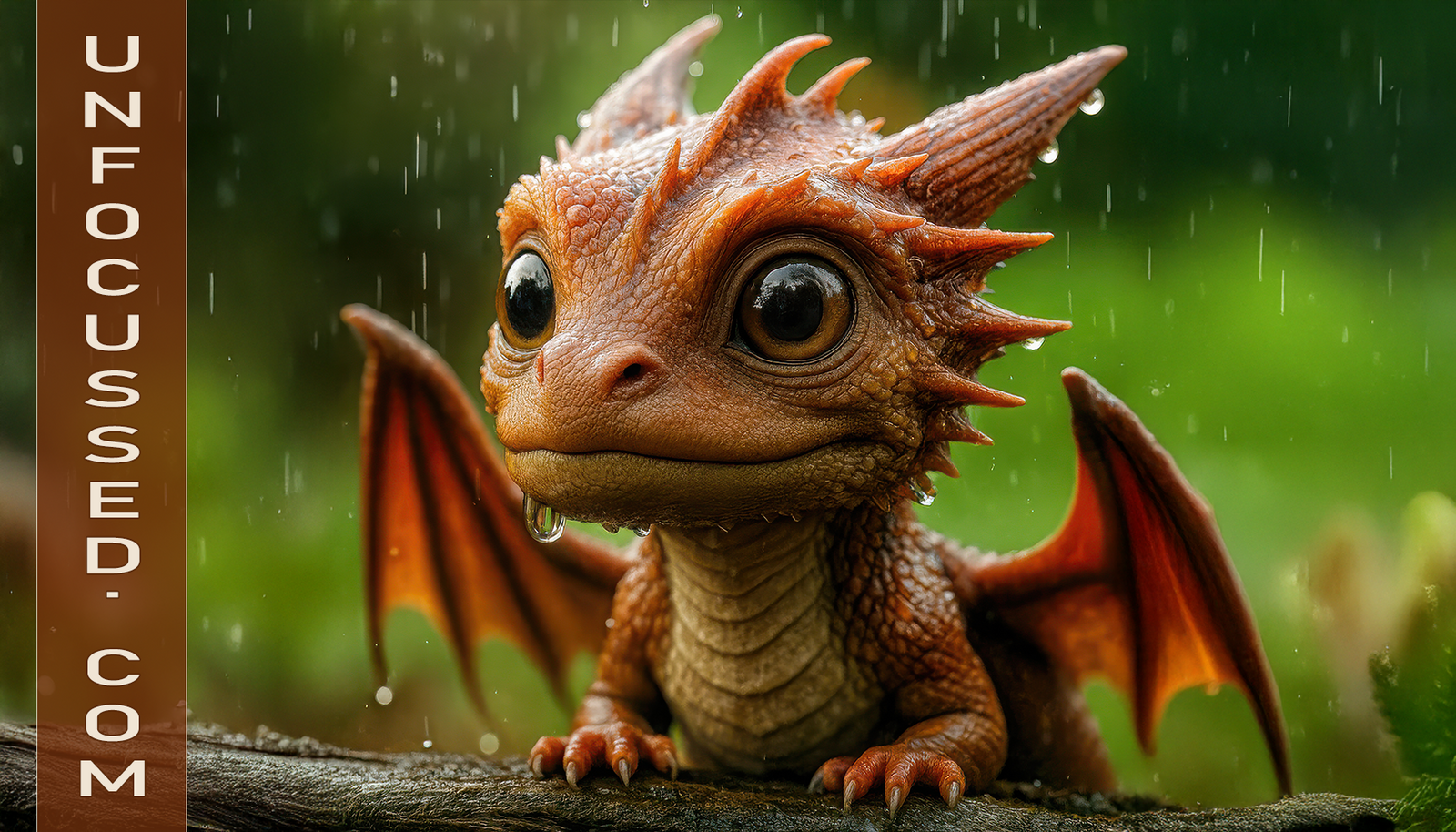
Hatchling of the Storm

A Hatchling’s Complaint The rain had been falling for hours, and if you asked the little dragon about it (which no one did, since no one else was brave—or foolish—enough to talk to a dragon hatchling in the first place), he’d tell you it was the rudest weather he’d ever experienced. His name was Ember, which he felt was both an appropriate and extremely misleading name. Sure, it suggested warmth, fire, and menace. But at this soggy moment, it mostly meant that the universe found it hilarious to drench him whenever he tried to look impressive. His scales were supposed to sparkle like gemstones in firelight, not drip like a wet kitchen sponge. “Storms are disrespectful,” Ember announced to a passing beetle, who wisely skittered away. “No warning, no courtesy, no consideration for my delicate wings. Do you know how long it takes to dry wings properly? You don’t, because you’re a beetle. But I assure you, it takes ages!” The truth was, Ember had been hatched only a few days ago, and while he had already mastered the art of glaring at clouds with theatrical disdain, he had not yet managed actual flight. His wings flapped, yes, but more in the manner of an enthusiastic fan at a medieval rock concert rather than a creature of power and grace. Still, he considered himself a future menace. A fiery terror of the skies. A legend. And legends did not get rained on without complaining very loudly about it. “When I am older,” Ember continued, mostly to himself (though he hoped the beetle was still listening from somewhere safe), “the world will fear me. They will write ballads about my flames and tales of my claws. I shall scorch villages, steal goats, and—oh look, another droplet in my eye. Rude! Rude!” His bratty tirade was interrupted by a particularly fat raindrop that plopped right onto the tip of his nose, hanging there like a crystal bead. Ember crossed his eyes to stare at it, huffed indignantly, and then sneezed. A puff of smoke rose from his tiny nostrils, carrying the faint smell of cinnamon and burnt toast. It wasn’t exactly terrifying, but it was the sort of sneeze that might make a baker question his oven temperature. Ember liked to believe it was progress. Somewhere beyond the trees, thunder grumbled. Ember narrowed his eyes. “Don’t you start with me,” he warned the sky. “I may be small, but I have potential.” And so, perched on his mossy log, dripping like a disgruntled sponge with wings, Ember sulked. He sulked with conviction, with style, and with a kind of bratty grace only a dragon hatchling could manage. If dragons could roll their eyes at the universe, Ember was already a master of the art. The Brat Meets the World The storm dragged on into the late afternoon, and Ember’s sulking reached new levels of dramatic artistry. At one point he attempted to flop belly-first onto his mossy perch like some great martyr of weather injustice. The result was a damp squelch and a very un-dignified squeak. He scowled at the log, as though it had deliberately betrayed him, and then composed himself with a haughty sniff. If anyone were watching, they would understand he was not merely wet—he was the victim of cosmic sabotage. And he would not forget it. But fate, as fate often does, decided to toss Ember a distraction. From the underbrush came a rustle, a clatter, and then the sight of… a rabbit. A perfectly ordinary rabbit, except for the fact that it was nearly twice Ember’s size. It had sleek brown fur, twitchy ears, and an expression of mild curiosity. Ember, of course, saw this as a challenge. He puffed his tiny chest, spread his rain-heavy wings, and tried his most terrifying snarl. Unfortunately, what came out sounded suspiciously like the hiccup of an asthmatic kitten. The rabbit blinked. Then it bent down and began to chew on some nearby clover, utterly unimpressed. Ember’s jaw dropped. “Excuse me!” he barked. “I am threatening you. You are supposed to cower, maybe tremble a little. A squeal of fear wouldn’t hurt. Honestly, this is the least cooperative prey I’ve ever seen.” “You’re not scary,” the rabbit said matter-of-factly between bites, in the casual tone of someone who had seen many strange things in the woods and filed this one under “not worth panicking over.” “Not scary?” Ember’s wings flapped indignantly, spraying droplets everywhere. “Do you not see the smoke? The scales? The eyes brimming with untold chaos?” “I see a wet lizard with delusions of grandeur,” said the rabbit. It chewed another clover, staring pointedly at him. “And maybe a sinus problem.” Ember gasped, affronted. “LIZARD?!” He stomped one tiny claw on the log, which made a dull squish rather than the thunderous boom he had intended. “I am a DRAGON. The future scourge of kingdoms. The nightmare of knights. The—” “The soggiest creature in this clearing?” the rabbit offered. Ember sputtered smoke. He would have roasted the rabbit on the spot, except his fire gland seemed to still be warming up. What emerged was a pathetic puff of smoke and one lonely spark that fizzled in the rain like a birthday candle being spat on. The rabbit tilted its head, unimpressed. “Ferocious. Truly. Should I faint now or after my snack?” Ember flung himself into an even grander tantrum, wings flapping, claws waving, smoke puffing in erratic bursts. He imagined he looked like a terrifying tempest of doom. In reality, he looked like a wet toddler trying to swat away a persistent housefly. The rabbit yawned. Ember paused mid-flap, seething. “Fine,” he snapped. “Clearly, the storm has conspired against me, dampening my flames and sabotaging my menace. But I assure you, when I grow—when these wings dry and these claws sharpen—you’ll rue this day, Rabbit. You’ll rue it with all your fluffy being.” “Mmhmm,” said the rabbit. “I’ll put it on my calendar.” And with that, it hopped lazily into the bushes, vanishing like a magician who couldn’t be bothered with applause. Ember stared after it, his mouth open, chest heaving with outrage. Then, very softly, he muttered, “Stupid rabbit.” Left alone again, Ember slumped onto his log, tail drooping. For a moment, he felt terribly small. Not just in size, but in destiny. Was this what the world thought of dragons? Just damp lizards? A future chicken nugget with wings? He hated the thought. He hated the rain, the moss, the rabbit. Most of all, he hated the sinking suspicion that he wasn’t nearly as scary as he’d imagined. His amber eyes glistened—not with tears, of course, because dragons do not cry, but with raindrops. Or at least that’s what Ember would tell anyone who dared ask. But then, something happened. Somewhere in his tiny, sulky heart, a warmth flickered. Not the damp spark of frustration, but a real warmth, coiling from his belly and up through his chest. Ember blinked, startled. He hiccuped again, but this time the smoke came with a soft whoosh of flame—just enough to curl a leaf into ash. Ember’s eyes widened. His sulk was forgotten in an instant. “Oh,” he whispered. “Oh, yes.” For the first time since the rain began, Ember smiled. It was a bratty little grin, the kind of smirk that promised trouble. Trouble for rabbits, trouble for storms, and definitely trouble for anyone who thought a dragon hatchling was just a lizard with bad sinuses. His wings shivered, his tail flicked, and his eyes gleamed with the sheer audacity of possibility. The storm might not have ended yet, but Ember was no longer sulking. He was plotting. And somewhere, deep in the thunderclouds, the storm seemed to chuckle back. Sparks Against the Storm By the time the storm rolled into evening, Ember’s brat-meter had reached record-breaking levels. He was damp, muddy, and insulted beyond reason. A rabbit had mocked him. The sky had sneezed on him. Even the moss under his claws squished like it was laughing at him. Ember decided the universe itself had joined a conspiracy to ruin his debut as “Most Terrifying Hatchling Ever.” And for a baby dragon, whose entire self-image relied on dramatic overcompensation, this was unacceptable. “Enough,” he muttered, pacing on his log like a tiny general planning the downfall of clouds. “The storm thinks it’s fierce? I’ll show fierce. I will fry the thunder. I will roast the lightning. I will—” He paused, mostly because he wasn’t entirely sure how one roasted lightning. But the sentiment stood. He puffed his chest, and the warmth from his belly coiled upward again, stronger this time. It tickled his throat, daring him to unleash it. Ember grinned, wings twitching. “Watch and learn, world,” he declared, “for I am Ember, Hatchling of the Storm!” What followed was… well, let’s call it “a work in progress.” Ember inhaled deeply, summoned every ounce of his inner fire, and belched forth a heroic gout of flame—except it came out as more of a sputtering flamethrower with hiccups. The flame burst, faltered, popped, and singed a fern so thoroughly that it now smelled like overcooked spinach. Ember blinked. Then he cackled. “Yes! Yes, that’s it!” He leapt up and down on the log, claws skittering, wings smacking droplets everywhere. “Did you see that, Storm? I AM YOUR MATCH!” As if in reply, the sky growled with thunder so deep it shook the branches. Ember froze, his tiny body vibrating from the rumble. He swallowed hard. “…Okay, impressive,” he admitted. “But I can be loud too.” He tried roaring. What came out was not so much a roar as it was a glorified squeak followed by a cough. Still, Ember refused to admit defeat. He tried again, louder this time, until his voice cracked like a teenager’s. The thunder rolled again, mocking him. Ember’s eyes narrowed. “Oh, so you think you’re funny? You think you can drown me, rattle me, soak me until I shrivel like a prune? Well guess what, Storm: I am DRAGON. And dragons are brats with persistence.” He flapped his wings furiously, wobbling but determined, and hurled himself off the log. He landed face-first in a mud puddle. There was a long pause, broken only by the plop of water sliding off his horns. Ember sat up, mud dripping from every scale, and glared at nothing in particular. “This,” he growled, “is fine.” Then, something miraculous happened. The storm shifted. The rain slowed to a drizzle, the clouds thinned, and streaks of gold began to break across the sky. Ember blinked up at the light, eyes wide. The sunset painted the forest in orange fire, glowing off his scales until he looked less like a soggy brat and more like a jewel burning in the twilight. For once, Ember stopped sulking. For once, he was quiet. In that hush, he felt it—power, potential, destiny. Maybe the rabbit was right. Maybe right now he was just a soggy lizard with a sinus issue. But someday—someday—he’d be more. He could see it in the shimmer of his scales, hear it in the low purr of fire coiling inside him. He wasn’t just a hatchling. He was a promise. A tiny ember waiting to ignite. Of course, this heartwarming self-realization lasted exactly three seconds before Ember tripped over his own tail and tumbled back into the mud. He came up sputtering, covered nose to wingtip in filth, and shouted, “UNIVERSE, YOU ARE A TROLL!” He shook himself furiously, splattering mud in every direction, then stomped in a circle with all the dignity of a toddler denied dessert. Finally, he plopped back on his log, huffed dramatically, and declared, “Fine. Tomorrow. Tomorrow I conquer everything. Tonight, I sulk. But tomorrow… beware.” The forest didn’t answer. The storm was fading, the sky glowing with stars. Ember yawned, wings sagging. He curled himself into a little ball, tail wrapping tight, raindrops still clinging like beads. His bratty glare softened into something small, tired, and almost sweet. For all his theatrics, he was still just a hatchling—tiny, messy, and utterly precious in his ridiculousness. As sleep tugged at him, he whispered one last threat to the world: “When I’m big, you’ll all regret this mud.” Then his eyes slipped closed, smoke curling lazily from his nostrils, and the storm’s lullaby carried him into dreams where he was already enormous, terrifying, and very, very dry. And somewhere in the darkness, the universe chuckled fondly. Because even the brattiest little dragons deserve their legend.     Bring Ember Home Ember may be small, bratty, and perpetually soggy, but he’s also impossible not to love. If his stormy sulks and tiny sparks made you smile, you can invite this little troublemaker into your own world. Our Hatchling of the Storm collection captures every raindrop, every pout, and every spark in vivid detail—perfect for anyone who believes even the smallest dragons can leave the biggest impressions. Adorn your walls with Ember’s charm in a Framed Print or shimmering Metal Print, carry his mischief wherever you go with a sturdy Tote Bag, or keep him close with a playful Sticker that’s just as bratty as he is. Whether on your wall, in your hand, or stuck proudly on your favorite surface, Ember is ready to storm into your life—and this time, you’ll be glad he did.

Read more

How to Tame Your Dragon’s Dental Hygiene

by Bill Tiepelman

How to Tame Your Dragon’s Dental Hygiene

The Gums of War In the majestic realm of Gingivaria—a place tragically overlooked by most fantasy cartographers—dragons weren’t known for their hoards or fiery wrath. No, they were known for their halitosis. The kind that could melt faces faster than their actual flame breath. The kind that left a streak of singed eyebrows in its wake. The kind that made even trolls retch and cry, “Dear gods, is that anchovy?” Enter Fizzwhistle Junebug, a winged dental hygienist with a vengeance. She was petite, sparkly, and meaner than a tax audit. Her wings shimmered in irritated gold whenever someone said, “Fairy dust solves everything.” Her toothbrush? An industrial-grade wand forged in the Molars of Mount Munch. Her mission? To tame the worst dental case in all seven realms: Greg. Greg the dragon had many titles: Scourge of Skincare, Flamey the Flatulent, Baron of the Bicuspid Apocalypse. But most knew him simply as The Breath of Doom. Villagers no longer brought sacrifices—they brought mints. Bards refused to sing of his deeds until they invented rhymes for “decay” and “oral swamp.” Greg didn’t mind. He was perfectly content gnawing on boulders and basking in the solitude of people running in the opposite direction. Until Fizzwhistle flew into his cave one dewy Tuesday morning with a clipboard and a peppermint aura. “Gregory?” she chirped, somehow sounding both chipper and ready to commit murder. “I’m with the Enchanted Oral Order. You’ve been reported… seven hundred and sixty-two times for olfactory assault. It’s time.” Greg blinked. One eye. Then the other. He was halfway through a mouthful of charcoal briquettes. “Time for what?” he rumbled, a cloud of greenish horror seeping from his mouth like a fog of forgotten sins. Fizzwhistle donned aviator goggles, clicked a button on her wand, and extended it into a dual-action, enchanted toothbrush-flossing lance. “Time,” she said, “for your first cleaning.” The scream that followed echoed through five valleys, startled a herd of centaurs into a synchronized can-can, and permanently curled the leaves of the Whimpering Woods. The Plaqueening Greg did not come quietly. He howled. He thrashed. He gnawed the air like a feral toddler teething on thunder. And yet, despite all this prehistoric drama, Fizzwhistle Junebug hovered with the dead-eyed calm of someone who’s flossed the teeth of mountain trolls while they snored. She waited, mid-air, wings buzzing faintly, wand-brush at the ready, sipping from a travel-sized espresso chalice that read: “Don’t Make Me Use The Mint.” “Done?” she asked after the third cave stalactite crumbled from Greg’s banshee roar. “No.” Greg grunted, curling his massive tail protectively around his snout. “You can’t make me. I have rights. I’m a majestic, ancient being. I’m on several tapestries.” “You’re also a public health crisis,” she replied. “Open wide, Sir Fumebreath.” “Why does it smell like burning cucumbers when I burp?” “That’s your tonsils waving a white flag.” Greg sighed, smoke curling out of his nostrils. Somewhere in the back of his prehistoric brain, the tiniest speck of shame flickered. Not that he’d ever admit it. Dragons don’t do shame. They do rage, naps, and existential ennui. But as Fizzwhistle cracked her knuckles and activated the sonic floss attachment, Greg realized that maybe—just maybe—he was not okay. “Okay, ground rules,” he growled. “No touching the uvula. That thing’s sensitive.” Fizzwhistle rolled her eyes. “Please. I’ve flossed krakens. Your uvula’s a powder puff.” And so it began. The Great Cleaning. First came the rinse: a cauldron of enchanted water infused with mint, moonlight, and a hint of cinnamon broom. Greg sputtered and foamed like a broken cappuccino machine. He belched a bubble that floated away, popped midair, and turned a squirrel into a barista. Then came the scaling. Fizzwhistle zipped between his teeth, lance vibrating, scraping decades of fossilized meat goo from his molars. Out came a knight’s helmet, two ox bones, a whole wheel of ghost cheese (still screaming), and what appeared to be the skeletal remains of a bard holding a tiny lute. Greg blinked. “So that’s where Harold went.” Fizzwhistle didn’t stop. She whirred. She buffed. She flossed with the fury of someone who had been left on read one too many times. And all the while, Greg sat there, his tongue dangling out like a defeated dog’s, whimpering. “Do you enjoy this?” he mumbled, half-choking on a minty glob of magical foam. “Immensely,” she grinned, wiping sweat from her brow with a disinfected lavender towel. Midway through quadrant three (left bicuspid zone), Greg coughed up a toothpick the size of a javelin and murmured, “This feels… oddly intimate.” Fizzwhistle paused. Hovered. Cocked her head sideways. “You ever had anyone care enough to scrape out your tartar, Greg?” “…no.” “Well, congrats. This is either love or professional stubbornness. Possibly both.” He blinked slowly. “Do you do tail scales too?” “That’s extra,” she deadpanned. Time slipped sideways. Light filtered in from the edge of the cave mouth in a hazy, post-cleanse glow. Greg’s teeth sparkled like cursed sapphires. His gums—formerly a toxic swamp of regret and regret sandwiches—now shone with the healthy blush of a creature who had finally seen a toothbrush. Fizzwhistle dropped into a seated hover, wand cooling in its holster. “Well. That’s done.” “I feel… light,” Greg said, opening his mouth and exhaling. A flock of nearby birds did not fall dead from the sky. Flowers did not immediately wither. A nearby tree actually perked up. “I feel like I could go to a brunch.” “Don’t push it,” she muttered. Greg sat in stunned silence, sniffing at his own breath like a dog discovering peanut butter. “I’m minty.” “You’re welcome.” Fizzwhistle tucked her gear back into her satchel, now clinking with extracted plaque crystals and some extra treasure she “accidentally” picked up from the hoard. Greg didn’t notice. He was too busy smiling—an act that, for the first time, did not cause a thunderclap or spontaneous nosebleeds in nearby villagers. “Hey, Fizz?” he said, his voice awkward and rumbly. “Would you maybe… come back? Like next week? Just to, you know, check the molars?” Fizzwhistle smirked. “We’ll see. Depends if you floss.” Greg's face fell. “What’s floss?” A Mint Condition Relationship The following week, Greg flossed using a pine tree and a suspiciously bendy wizard. It wasn’t effective, but the effort was there. Fizzwhistle returned, reluctantly impressed. She arrived with a toolbox of enchanted dental gear and the wary eyes of a woman who wasn’t sure whether this was a follow-up cleaning or an accidental date. “I even rinsed,” Greg offered proudly, mistaking a bucket of rainwater for mouthwash. He’d added crushed snowberries for flavor. He gagged. But he did it. Fizzwhistle raised an eyebrow. “You used the berries that scream when picked?” “It seemed festive.” “They’re also mildly hallucinogenic. Don’t eat your own tail for the next hour.” Despite the chaos, something had shifted. Greg didn’t flinch when she hovered near his canines. He even smiled—without weaponizing it. Birds didn’t scatter. Trees didn’t ignite. The world stayed mostly intact, which in Greg’s case was emotional growth. After his third appointment (he was now on a plan), Greg did something unthinkable. He made tea. He boiled water with his breath, steeped herbs from the Whispering Glade, and served it in a tea set he accidentally stole from a gnome wedding two centuries ago. Fizzwhistle, suspicious but curious, accepted. She even sipped. It wasn’t terrible. “I’ve never hosted tea before,” Greg admitted, fidgeting with his tail. “Usually I just incinerate guests.” “This is slightly more charming,” she said. “Also less murdery.” They sipped. They chatted. Topics ranged from dental horror stories to Greg’s brief but dramatic stint as a backup dancer in the Goblin Opera. She laughed. He blushed. Somewhere, a unicorn sneezed glitter and nobody knew why. The visits became routine. Weekly cleanings turned into bi-weekly brunches. Greg started brushing daily with a house-sized bristle brush mounted to a siege tower. Fizzwhistle installed a flossing polearm near the stalactites. She even left behind a magically singing toothbrush named Cheryl who kept yelling, “SCRUB THOSE MOLARS, YOU FILTHY KING!” every morning at sunrise. It was oddly romantic. Not in a “let’s hold hands under moonlight” kind of way, but in the “I scrape barnacles off your gums because I respect you” kind of way. Which, in Gingivaria, was basically a proposal. One day, as they flew together over the Sparkling Ridge (Fizzwhistle clinging to Greg’s neck spike with a picnic basket strapped to her back), he asked, “Do you think it’s weird?” “What? The fact that I clean your teeth with a glowing spear and also bring you croissants?” “That… and maybe the feelings part.” Fizzwhistle looked ahead, past the shimmering clouds and the distant spires of Gingivaria’s Capital of Canker, and said, “Greg, I’ve cleaned between your molars. There is no going back from that level of emotional intimacy.” Greg rumbled a soft laugh that only incinerated a small shrub. Progress. They landed on a cliff edge, laid out their brunch, and watched a pair of thunderbirds dance across the horizon. Greg delicately munched on a charcoal scone (recipe courtesy of Cheryl the toothbrush). Fizzwhistle nibbled a cloudberry tart and sipped a flask of wine that sang Gregorian chants in the key of gingivitis. “So…” Greg said, tail twitching nervously. “I was thinking of adding a second toothbrush tower. For guests. You know. If you ever wanted to… stay?” Fizzwhistle choked slightly on her tart. “Are you asking me to move in?” “Well. Only if you want to. And maybe if we survive your mom’s reaction. And if Cheryl doesn’t object. She’s gotten… territorial.” Fizzwhistle stared at him. This ancient, terrifying, plaque-producing beast with a now-brilliant smile and a secret weakness for honey tea. She wiped tart crumbs from her lip, adjusted her wing cuff, and said: “I’d be delighted, Greg. On one condition.” “Anything.” “You floss. With actual floss. Not wizards.” Greg grumbled but nodded. “Deal. Can we still use gnomes as mouthwash?” “Only if they volunteer.” And so they lived—mintily, sassily, and ever after—in a dragon’s lair turned open-plan dental spa. Word spread. Creatures from all corners of the land flocked to Gingivaria not to battle a beast, but to book an appointment. Fizzwhistle opened a boutique. Greg became the poster child for reformed dragon breath. Their love was weird. Their brunches legendary. Their plaque? Nonexistent. Because in the end, even the most fearsome monsters deserve someone who cares enough to clean their teeth, love their bad habits, and gently whisper, “You missed a spot, babe.”     Want to bring a little mythical mischief into your home? This magical moment between Greg and Fizzwhistle is available as a print, puzzle, tumbler, and more. Explore "How to Tame Your Dragon’s Dental Hygiene" in glorious detail through high-quality merchandise and fine art prints at Unfocussed Archive. Add a touch of enchanted chaos to your walls—or your morning coffee routine.

Read more

Sassy Shroom Shenanigans

by Bill Tiepelman

Sassy Shroom Shenanigans

Tongue Wars and the Forest Code of Sass In the deepest thicket of the Glibbergrove, where mushrooms grew big enough to get parking tickets and squirrels wore monocles unironically, there perched a gnome with absolutely no chill. His name? Grimbold Butterbuttons. His vibe? Absolute chaos in wool socks. Grimbold wasn't your average gnome. While the others busied themselves polishing snail shells or whittling toothbrushes from elder twigs, Grimbold had an entire *reputation* for being the forest’s number one instigator. He made faces at butterflies. He photobombed the Council of Owls. Once, he’d even replaced the Queen Badger’s royal tea with flat root beer just to watch her snort. So naturally, it made perfect sense that Grimbold had a pet dragon. A tiny pet dragon. One that barely came up to his belt buckle but acted like she ruled the canopy. Her name was Zilch, short for Zilcharia Flameyfangs the Third, but no one called her that unless they wanted to get singed eyebrows. That morning, the two of them were doing what they did best—being complete little shits. "Bet you can't hold that face for longer than me," Grimbold snorted, sticking out his tongue like a drunken goose and widening his eyes so far they looked like boiled turnips. Zilch, wings flaring, narrowed her gold-slitted eyes. "I INVENTED this face," she rasped, then mimicked him with such perfect deranged accuracy that even the birds stopped mid-tweet. The two locked in a battle of absurdity atop a giant red-capped mushroom—their usual morning perch-slash-stage. Tongues out. Eyes bugged. Nostrils flaring like melodramatic llamas. It was a face-off of epic immaturity, and they were both thriving. "You’re creasing your eyebrows wrong!" Zilch barked. "You’re blinking too much, cheater!" Grimbold fired back. A fat beetle waddled by with a judgmental glance, muttering, "Honestly, I preferred the mime duel last week." But they didn’t care. These two lived for this kind of nonsense. Where others saw an ancient, mysterious forest full of magic and mystery, they saw a playground. A sass-ground, if you will. And so began their day of shenanigans, with their sacred forest motto etched in mushroom spores and glitter glue: “Mock first. Ask questions never.” Only they didn’t realize that today’s game of tongue wars would unlock an accidental spell, open an interdimensional portal, and quite possibly awaken a mushroom warlord who’d once been banned for excessive pettiness. But hey—that’s a problem for later. The Portal of Pfft and the Rise of Lord Sporesnort Grimbold Butterbuttons’ tongue was still proudly extended when it happened. A *wet* sound split the air, somewhere between a cosmic zipper and a squirrel flatulating through a didgeridoo. Zilch’s pupils dilated to the size of acorns. “Grim,” she croaked, “did you just... open a thing?” The gnome didn’t answer. Mostly because his face was frozen mid-snarl, one eye twitching and tongue still glued to his chin like a sweaty stamp. Behind them, the mushroom shivered. Not metaphorically. Like, the actual mushroom. It quivered with a noise that sounded like giggling algae. And from its spore-speckled surface, a jagged tear opened in the air, like reality had been cut with blunt safety scissors. From within, a purple light pulsed like an angry disco ball. "...Oh," said Grimbold finally, blinking. "Oopsie-tootsie." Zilch smacked her forehead with a tiny claw. "You broke space again! That’s the third time this week! Do you even read the warnings in the moss tomes?" "No one reads the moss tomes," Grimbold said, shrugging. "They smell like foot soup." With a moist belch of spores and questionable glitter, something began to emerge from the portal. First came a cloud of lavender steam, then a large floppy hat. Then—very slowly—a pair of glowing green eyes, slitted like a grumpy cat that hadn’t had its brunch pâté. “I AM THE MIGHTY LORD SPORESNORT,” boomed a voice that somehow smelled like truffle oil and unwashed gym socks. “HE WHO WAS BANISHED FOR EXCESSIVE PETTINESS. HE WHO ONCE CURSED AN ENTIRE KINGDOM WITH ITCHY NIPPLES OVER A GRAMMAR MISTAKE.” Zilch gave Grimbold the longest side-eye in the history of side-eyes. "Did you just summon the ancient fungal sass-demon of legend?" "To be fair," Grimbold muttered, "I was aiming for a fart with echo." Out stepped Lord Sporesnort in full regalia—moss robes, mycelium boots, and a walking staff shaped like a passive-aggressive spatula. His beard was made entirely of mold. And not the cool, forest-sorcerer kind. The fuzzy fridge kind. He radiated judgment and lingering disappointment. "BEHOLD MY REVENGE!" Sporesnort roared. "I SHALL COVER THIS FOREST IN SPORE-MODED MISCHIEF. ALL SHALL BE IRRITATED BY THE SLIGHTEST INCONVENIENCES!" With a dramatic swirl, he cast his first spell: “Itchicus Everlasting!” Suddenly, a thousand woodland creatures began scratching themselves uncontrollably. Squirrels tumbled from branches in mid-itch. A badger ran by shrieking about chafing. Even the bees looked uncomfortable. "Okay, no. This won’t do," said Zilch, cracking her knuckles with tiny thunderclaps. "This is our forest. We annoy the locals. You don’t get to roll in with your ancient mushroom face and out-sass us." "Hear hear!" shouted Grimbold, standing proudly with one foot on a suspicious mushroom that squelched like an angry pudding. "We may be chaotic, bratty, and tragically underqualified for any real leadership, but this is our turf, you decomposing jockstrap." Lord Sporesnort laughed—an echoing wheeze that smelled of old salad. “Very well, tiny fools. Then I challenge you... to the TRIAL OF THE TRIPLE-TIERED TONGUE!” A hush fell across the glade. Somewhere, a duck dropped its sandwich. "Uh, is that a real thing?" Zilch whispered. "It is now," Sporesnort grinned, raising three slimy mushroom caps into the air. "You must perform the ultimate display of synchronized facial sass—a three-round tongue duel. Lose, and I take over Glibbergrove. Win, and I shall return to the Sporeshade Realms to wallow in my own tragic flamboyance." "You're on," said Grimbold, his face twitching with a growing smirk. "But if we win, you also have to admit that your cloak makes your butt look wide." "I—FINE," Sporesnort spat, turning slightly to cover his rear fungus flare. And thus the stage was set. Creatures gathered. Leaves rustled with gossip. A beetle vendor set up a stand selling roasted aphids on sticks and “I ♥ Sporesnort” foam fingers. Even the wind paused to see what the hell was about to happen. Grimbold and Zilch, side by side on their mushroom stage, cracked their necks, stretched their cheeks, and waggled their tongues. A hush fell. Sporesnort’s fungal beard trembled in anticipation. "Let the tongue games begin!" shouted a squirrel with a referee whistle. The Final Tongue-Off and the Scandal of the Sassy Underwear The crowd leaned in. A snail fell off its mushroom seat in suspense. Somewhere in the distance, a fungus chime rang out one somber, reverberating note. The *Trial of the Triple-Tiered Tongue* had officially begun. Round One was a classic: The Eyeball Stretch & Tongue Combo. Lord Sporesnort made the first move, his eyes bugging out like a pair of grapefruit on springs as he whipped out his tongue with such velocity it created a mild sonic pop. The crowd gasped. A field mouse fainted. “BEHOLD!” he roared, his voice echoing through the mushroom caps. “THIS IS THE ANCIENT FORM KNOWN AS ‘GORGON’S SURPRISE’!” Zilch narrowed her eyes. “That’s just ‘Monday Morning Face’ in dragon preschool.” She casually blew a tiny flame to toast a passing marshmallow on a stick, then locked eyes with Grimbold. They nodded. The duo launched into their countermove: synchronized bug-eyes, nostril flares, and tongues waggling side to side like possessed metronomes. It was elegant. It was chaotic. A raccoon dropped its pipe and screamed, “SWEET GRUBS, I’VE SEEN THE TRUTH!” “ROUND ONE: TIED,” announced the squirrel referee, his whistle now glowing from sheer stress.     Round Two: The Sass Spiral For this, the goal was to layer expressions with insult-level flair. Bonus points for eyebrow choreography. Lord Sporesnort twisted his fungal lips into a smug, upturned frown and performed what could only be described as a sassy interpretive dance using only his eyebrows. He finished by flipping his cloak, revealing fungus-embroidered briefs with the words “BITTER BUT CUTE” stitched across the rear in glowing mycelium thread. The crowd lost their collective minds. The beetle vendor passed out. A hedgehog screamed and launched into a bush. “I call that,” Sporesnort said smugly, “the Sporeshake 9000.” Grimbold stepped forward slowly. Too slowly. Suspense dripped off him like condensation off a cold goblet of forest grog. Then he struck. He wiggled his ears. He furrowed one brow. His tongue spiraled into a perfect helix, and he puffed out his cheeks until he looked like an emotionally unstable turnip. Then, with a slow, dramatic flourish, he turned around and revealed a patch sewn into the seat of his corduroy trousers. It read, in shimmering gold thread: “YOU JUST GOT GNOMED.” The forest exploded. Not literally, but close enough. Owls fainted. Mushrooms combusted from joy. A badger couple started a slow chant. “Gnome’d! Gnome’d! Gnome’d!” Zilch, not to be outdone, reared back and made the universal hand-and-claw gesture for *“Your fungus ain’t funky, babe.”* Her tail flicked with weaponized sass. The moment was perfect. "ROUND TWO: ADVANTAGE — GNOME & DRAGON!" the referee squeaked, tears running down his cheeks as he blew the whistle like it was possessed.     Final Round: Wildcard Mayhem Sporesnort snarled, spores puffing from his ears. “Fine. No more cute. No more coy. I invoke... the SACRED MUSHUNDERWEAR TECHNIQUE!” He ripped open his robes to reveal undergarments enchanted with wriggling fungal runes and vines that wove his sass into the very fabric of the universe. “This,” he bellowed, “is FUNGIFLEX™ — powered by enchanted stretch and interdimensional attitude.” The forest fell into a hush of pure, horrified admiration. Grimbold simply looked at Zilch and smirked. “We break reality now?” “Break it so hard it apologizes,” she growled. The gnome clambered atop the dragon’s back. Zilch flared her wings, eyes burning gold. Together they launched into the air with a mighty WHEEEEEEE and a burst of glitter confetti summoned from a leftover prank spell. As they twirled through the sky, they performed their final move: a dual loop-de-loop followed by simultaneous tongue-wagging, face-contorting, and butt-shaking. From Grimbold’s trousers, a secret pocket opened, revealing a banner that read, in flashing enchanted letters: “GNOME SWEAT DON’T QUIT.” They landed with a thump, Zilch belching sparkles. The crowd was in chaos. Tears. Screaming. An impromptu interpretive dance broke out. The forest was on the brink of a vibe collapse. “FINE!” Sporesnort yelled, voice cracking. “YOU WIN! I’LL GO! BUT YOU... YOU SHALL RUE THIS DAY. I’LL BE BACK. WITH MORE UNDERWEAR.” He swirled into his own portal of shame and unresolved mushroom trauma, leaving behind only the faint scent of garlic and regret. Zilch and Grimbold collapsed atop their favorite mushroom. The glade shimmered under the setting sun. Birds chirped again. The badger couple kissed. Someone started roasting victory marshmallows. "Well," said Grimbold, licking his thumb and smearing moss off his cheek. "That was... probably the third weirdest Tuesday we’ve had." "Easily," Zilch agreed, biting into a celebratory beetle snack. "Next time we prank a warlord, can we avoid the fungal lingerie?" "No promises." And so, with tongues dry and reputations elevated to mythical status, the gnome and the dragon resumed their sacred morning ritual: laughing at absolutely everything and being gloriously, unapologetically weird together. The end. Probably.     Want to bring the sass home? Whether you're a certified mischief-maker or just deeply appreciate the sacred art of tongue-based warfare, you can now take a piece of Grimbold and Zilch’s legendary moment into your own lair. Frame the chaos with a gallery-quality print, wrap yourself in their ridiculousness with this fleece blanket, or go full forest-chic with a wood print that'll make even Lord Sporesnort jealous. Send cheeky greetings with a whimsical card, or slap some mushroom-powered attitude onto your stuff with this top-tier Sassy Shroom Shenanigans sticker. Because let’s be honest—your life could use more dragons and fewer boring walls.

Read more

Explore Our Blogs, News and FAQ

Still looking for something?