colorful dragon

Captured Tales

View

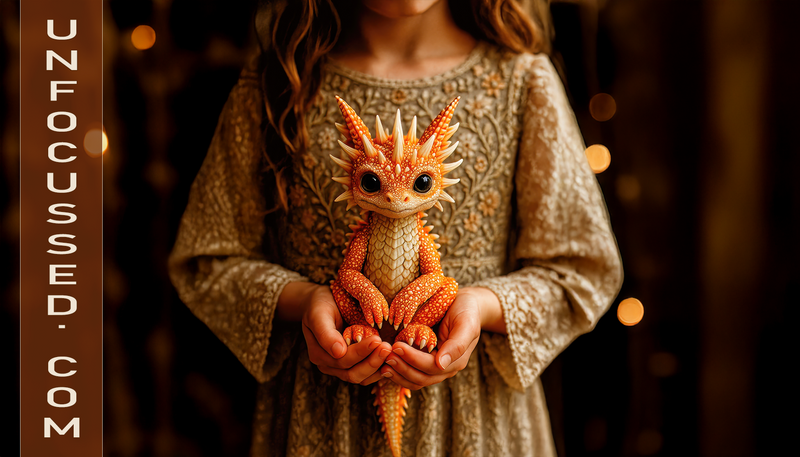
Blossomfire Hatchling

by Bill Tiepelman

Blossomfire Hatchling

The Hatchling in the Meadow In the world’s forgotten folds—where maps grew skittish and cartographers quietly pretended certain regions didn’t exist—there lived a creature that would one day become legend. For now, however, she was a wobbling, squeaking, sass-laden baby dragon who had the audacity to hatch beneath a tree that never stopped blooming. Her scales glimmered like warm embers wrapped in rose petals, a curious mix of fragility and fire, and so the villagers who whispered about her called her the Blossomfire Hatchling. Now, if you think hatchlings are supposed to be delicate, reserved little things—content to blink wide-eyed at the world and coo gently—you clearly haven’t met this one. From the very moment her eggshell cracked, she was already a critic. The air was too cold. The petals falling on her head were too pushy. The sunlight hit her left wing at a suspicious angle. And don’t get her started on the clumsy butterflies who thought her nose was a landing strip. She gave each of them the kind of side-eye that could curdle milk. Still, the meadow was hers. Or at least, she decided it was hers. Hatchlings rarely ask permission. She planted her chubby behind on a moss-covered log, puffed out her tiny chest, and declared herself queen by way of a wobbly wave. The bees, naturally, didn’t approve of this appointment—they were unionized, after all—but they were forced to accept her sovereignty after she accidentally sneezed and set an entire patch of nettles aflame. The bees voted 12-3 to just let her have the meadow. Democracy in action. She was no ordinary sight. Her wings, though currently as useless as lace curtains on a potato, shimmered faintly with rainbow hues whenever the sun dared kiss them. The hatchling herself was a bundle of contradictions: fierce yet adorable, loud yet somehow enchanting, destructive yet oddly good for business. A farmer swore that after she winked at him from across the field, his potatoes grew the size of small boulders. Another villager insisted that after she burped during a thunderstorm, his pond frogs suddenly developed the ability to croak in baritone harmonies. Whether these stories were true or just beer-inspired exaggerations was irrelevant—they spread like wildfire, much like the unfortunate haystack incident she would never live down. The hatchling, of course, was blissfully unaware of all this. She had no concept of legend, of worship, of fearful whispers that spoke of “what will she be like once she grows.” Her world was simple: blossoms, bugs, sunbeams, and the occasional stubborn squirrel who refused to bow to her rule. She was certain the meadow belonged entirely to her, and if you dared disagree, she would stomp her tiny foot and squeak with such authority that even grown men reconsidered their life choices. But for all her sass and fire, there was sweetness too. At sunset, when the sky flushed pink and gold, she would stretch her stubby wings and gaze toward the horizon. She imagined soaring, though she had no real clue what flying felt like. Sometimes, when the wind swirled, she thought she could almost lift off, only to land flat on her rear with an indignant snort. And yet she kept trying, because even in her potato-with-curtains stage, hope burned as brightly as the spark in her scales. Travelers who stumbled into her meadow often spoke of a strange warmth. Not the kind from the sun, but the kind that curled inside the chest and made the world feel a little softer, a little kinder. Some left with baskets of flowers that bloomed twice as bright. Others swore their luck improved after glimpsing her little wave. She was a living rumor, a myth in training, a hatchling destined for something neither she nor anyone else could yet define. Of course, destiny wasn’t on her mind. At this stage in her life, she was far more concerned with whether daisies or dandelions made a better afternoon snack (spoiler: they both tasted like disappointment, though she chewed them anyway with great ceremony). She spent her days tumbling through blossoms, chasing shadows, and perfecting her royal wave. In her eyes, she was already the reigning monarch of whimsy and sass, and no one could convince her otherwise. Perhaps, in her own way, she was right. After all, when you’re a dragon—even a baby one—the world tends to bend just a little in your favor. A Whiff of Trouble By the time the Blossomfire Hatchling had survived her first season in the meadow, she had gained a reputation among the locals as both a blessing and a menace. Blessing because gardens bloomed twice as lush when she pranced near them, menace because laundry lines had an unfortunate habit of spontaneously catching fire if she sneezed. One might think the villagers would avoid the meadow entirely, but humans are a strange breed. Some brought offerings—baskets of honey, fresh fruit, shiny trinkets—hoping to win her favor. Others crept in at night, muttering that the “beast” should be driven out before she grew larger. The hatchling, of course, remained gloriously oblivious. She thought the baskets of fruit simply rained from the sky. She believed the whispers in the night were owls who had nothing better to do. And she assumed that shiny trinkets simply sprouted like mushrooms. In her mind, she was not only the monarch of the meadow but also clearly the universe’s favorite child. If anyone disagreed, well… she had ways of making her opinions known. It was during one particularly warm afternoon that her destiny—or at least her first great adventure—came sniffing through the tall grass. Literally sniffing. A fox, lean and red-furred, with eyes the color of old copper coins, slunk into her kingdom. He had the swagger of someone who’d stolen too many chickens and gotten away with it. The hatchling watched him with wide, curious eyes from atop her mossy log throne. The fox, equally curious, tilted his head as if to say, “What in the fiery underworld are you supposed to be?” She answered with a squeaky roar. Not exactly intimidating, but effective enough. The fox flinched, then smirked—if foxes can smirk, and this one most certainly could. “Little ember,” he said in a voice that purred like smoke, “you sit like a queen but smell like a campfire. Who are you to claim this meadow?” The hatchling flapped her stubby wings with indignation. Who was she? She was the Blossomfire Hatchling. She was blossom and flame, sass and sparkle, ruler of bees, terror of squirrels, and breaker of laundry lines! She squeaked again, longer this time, and added a defiant stomp. The meadow itself seemed to tremble, though that was probably just the fox’s imagination. “Well,” the fox chuckled, circling her throne-log. “You’ve got guts, potato-with-wings. But guts aren’t enough. This meadow is prime real estate for foxes. Rabbits taste better here, and the beetles crunch like candy. If you think you can keep it, you’ll need to prove yourself.” The hatchling puffed up like a dandelion in full seed. Prove herself? Challenge accepted. She sneezed once, singeing the grass dangerously close to his tail. The fox yelped, leapt three feet in the air, and landed with his fur smoking. She giggled—a wheezy, flame-flecked giggle—and stomped again for good measure. The fox’s smirk faltered. Maybe, just maybe, this potato was trouble. But before he could retreat, the ground shuddered with an altogether different presence. Out from the tree line lumbered a bear. Not just any bear—a massive old creature with a patchy coat, scarred snout, and a crown of burrs tangled in his fur. He was grumpy. He was hungry. And he had a nose for honey, which was precisely what the villagers had left at the edge of the meadow that morning. The hatchling froze, her tiny wings quivering. The fox swore under his breath and crouched low. The bear sniffed once, twice, then turned his great head toward the mossy log. Toward her. Toward the little ember that had no business being so bright. For a moment, the meadow held its breath. Even the bees stopped mid-buzz, as if deciding whether it was wiser to abandon ship. The hatchling, however, remembered she was queen. Queens did not cower. Queens commanded. And so she stood, wobbling but defiant, and gave her best squeaky roar yet—so loud it startled herself. To her surprise, the bear paused. He blinked at her. Then he did something wholly unexpected: he snorted, rolled onto his back, and began scratching his back in the dirt as though she had just given him permission to lounge. The fox blinked, utterly flummoxed. “What in all nine trickster tales… did you just tame that bear?” The hatchling, seizing the opportunity, puffed out her chest and waved a tiny paw as if to say, “Yes, obviously. This is how royalty handles things.” Inside, her little heart hammered like a drum. She hadn’t tamed anything—she had just gotten incredibly lucky. But luck, she decided, was as good a crown as any. News of the bear incident spread quickly. By dusk, whispers carried from village to village: the Blossomfire Hatchling had allies. First bees, now bears. What would be next—wolves, owls, the river itself? She was no longer just a rumor. She was a force. And forces, as history likes to remind us, rarely stay small. But destiny wasn’t done toying with her yet. The very next morning, she woke to find not just fox eyes watching her, but the glint of something colder, sharper, human. Someone had finally come to take her away. Fire, Folly, and a Flicker of Destiny The dawn broke golden over the meadow, each petal dew-dappled and sparkling as if the world itself had dressed in diamonds for the day. The Blossomfire Hatchling stretched on her mossy throne, wings twitching, tail curling lazily. She was queen, and the kingdom was peaceful—or so she thought. She hadn’t noticed the rustle of leather boots in the underbrush, the faint glimmer of steel catching morning light, the human breath held just beyond the tree line. Three figures emerged from the shadows like badly timed thunderclouds: a wiry man in a patchwork cloak, a woman with a crossbow too large for her body, and a grizzled knight who looked as though retirement had been forced upon him far too late. They were not villagers bearing offerings. They were hunters—and they had come for her. The fox, sly observer that he was, slunk into the tall grass with a muttered, “Good luck, potato-with-wings. I don’t do humans.” The bear, already half-asleep, rolled over and snored. The hatchling was on her own. “By order of the High Council!” the knight bellowed, though it came out more wheezy than regal. “The creature known as the Blossomfire Hatchling is to be captured and contained! For the safety of the people!” The hatchling tilted her head. Contained? As if she were some sort of butter churn? Absolutely not. She squeaked furiously, flapped her stubby wings, and stomped so hard a mushroom nearby burst into spores. The humans, unimpressed, advanced. The crossbow bolt came first—zipping through the air toward her little chest. It might have struck true if she hadn’t sneezed at that exact moment. The sneeze, fiery and unladylike, turned the bolt into molten goo that dribbled harmlessly onto the ground. The wiry man swore. The knight groaned. The hatchling burped smoke and blinked, surprised at herself. Then chaos unfurled like a badly rolled rug. The hunters lunged. The hatchling ran. Her tiny legs pumped furiously, wings flapping in useless panic. Through blossoms, under logs, across streams she darted, squealing indignantly the whole way. Arrows thunked into tree trunks behind her. Nets swooshed over her head. At one point, the wiry man tripped and cursed, tangling himself in his own rope, which the fox found hilarious. But luck, fickle as ever, didn’t hold forever. At the meadow’s edge, she skidded to a stop. A wall of iron cages loomed, dragged there by horses she hadn’t noticed before. The smell of cold metal and fear seeped into her nose. For the first time, the Blossomfire Hatchling felt her flame flicker low. She was small. They were many. And queens, as it turned out, could indeed be cornered. The knight raised his sword. The woman reloaded her crossbow. The wiry man, finally untangled, grinned with the triumph of someone about to become wealthy at another’s expense. “Bag her,” he hissed. “She’ll fetch a king’s ransom.” But destiny, cheeky rascal that it is, had other plans. The earth trembled—not with the clumsy charge of men, but with the rolling, unmistakable snore of the bear. He had woken cranky, and nothing is crankier than a bear whose nap is disturbed by humans waving pointy sticks. With a roar that rattled the marrow of every living creature, the bear barreled into the clearing, swatting weapons aside like toys. The hunters scattered, shrieking. One dove headfirst into his own cage and promptly locked himself in. The crossbow clattered uselessly to the ground. Even the knight, weary and world-worn, muttered something about “not being paid enough for this” and bolted. The hatchling blinked at the chaos, her little jaw hanging open. She hadn’t roared. She hadn’t fought. She had just… stood there. And yet, the meadow had risen for her. The fox slunk back into view, licking a paw with smug amusement. “Not bad, potato. Not bad at all. You’ve got bears on payroll now. I’d say you’re doing alright.” But as the dust settled, something curious happened. The hatchling felt warmth not just in her scales but deep in her chest. A glow. A pull. She waddled forward, past the broken nets and bent swords, and pressed her tiny paw to the iron cages. To her astonishment, the metal softened beneath her touch, blooming into vines covered in flowers. She squeaked in delight. The cages melted away, becoming harmless trellises. The humans stared, dumbstruck. The knight, kneeling now, whispered, “By the gods… she is no monster.” His voice cracked with awe. “She is a guardian.” The hatchling, who still considered herself primarily a professional stomper and dandelion-chewer, had no idea what any of this meant. But she waved anyway, as if to say, Yes, yes, bow to the potato queen. The villagers would tell the story for generations: how a baby dragon turned weapons into blossoms, how a fox and a bear became her unlikely companions, and how destiny itself bent like iron before her. Some would swear she grew into a mighty dragon, defender of the valley. Others insisted she remained small forever, a perpetual hatchling who ruled through charm rather than flame. But those who had seen her, truly seen her, knew the truth. She was more than blossom. She was more than fire. She was hope wrapped in scales, a sassy miracle with a sneeze that could change the world. And the best part? Her story was only just beginning.     Bring the Blossomfire Hatchling Home The tale of the Blossomfire Hatchling doesn’t have to stay within these words—it can brighten your own world, too. Whether you want her sass and sparkle glowing from your wall, your coffee table, or even your cozy reading nook, she’s ready to bring her whimsical fire into your daily life. Adorn your walls with her magic through a framed fine art print or a bold canvas print. If you crave a bit of play, challenge yourself with a puzzle that brings her meadow kingdom to life piece by piece. For something heartfelt and shareable, send her charm to loved ones with a greeting card. Or, if cozy comfort is more your style, wrap yourself in her warmth with a soft fleece blanket. Wherever she lands, the Blossomfire Hatchling brings with her a spark of whimsy, hope, and just enough sass to keep your days interesting. Let her story live not just in imagination, but in your home.

Read more

The Leviathan of Crimson Fins

by Bill Tiepelman

The Leviathan of Crimson Fins

The Contract, the Boat, and the Bad Idea I signed the contract the way every bad adventure begins: with a cheap pen, a good whiskey, and a promise I absolutely should not have believed. The client wanted “one clean, frame-worthy, trophy-shot of a sea dragon breaching at golden hour—preferably with the fins backlit so the crimson pops.” In other words, they wanted the impossible. Also in other words, they wanted what I live for. Our boat—if you could call a grudging pile of bolted-together aluminum a boat—was The Indecision, and she creaked like a pirate’s knees. The crew was a handpicked circus. There was Mae, a marine biologist who moonlights as a sarcastic influencer (“Like and subscribe if you survive,” she said, deadpan, every time the deck tilted). There was Gus, a retired lighthouse keeper who’d seen enough storms to tsk at thunder and call it “atmosphere.” There was Scupper, a cat who never paid rent and absolutely ran the place. And there was me—the photographer who chases the kind of leviathan artwork that makes people mortgage walls to hang it on. We idled over a trench known on maps as the Cerulean Drop and in sailor gossip as Don’t. It was a bruise in the ocean, a perfect throat where currents swallowed ships, rumors, and occasionally an overeager documentary crew. My drones skimmed the waves like patient gulls, lenses hungry. The sky was bleached linen; the water was that heavy, iron-blue that means something ancient is thinking beneath it. “What are we even calling this thing?” Mae asked, fussing with a sensor array that looked suspiciously like a cookie tin strapped to a car battery. “Dragon? Serpent? Very large ‘nope’?” “The Leviathan of Crimson Fins,” I said, because you name the monster or it names you. “Ocean monster, apex myth, patron saint of bad decisions. And if we do this right, we turn it into fantasy wall art people whisper about from across the room.” Gus spat neatly into the scuppers. “You want whispering? Put a price on it.” Scupper meowed, which in cat means, you’re all idiots but I’m morally obligated to supervise. We set our trap, which was really more of an invitation. A crate of brined mackerel hung off the stern on a cable, swaying like a greasy chandelier. Mae swore by the scent profile. “Not bait,” she said, “just… an alert.” Sure. And my camera was “just” a high-speed confession booth where reality blurts out details in 1/8000th of a second. The trench breathed. The first signal was the light—gone flat, like a stage waiting for an actor. The second was heat: a soft exhale pushing up from thirty fathoms, frosting our lenses with humidity. The third was the sound: a distant churning, like cathedral doors grinding open under the sea. “Heads up,” Mae said, voice suddenly clean and professional. “Pressure shift.” Gus strapped in. “If it asks for our Wi-Fi, say no.” I checked the rig: twin stabilized gimbals; two primary cameras with glass fast enough to steal light from the gods; one custom housing that laughed at salt spray; and a backup sensor because I am unlucky, not stupid. I locked the focus plane where water becomes miracle—right at the skin of the sea, where everything important happens fast. On the monitor, my forward drone caught something like weather made of scales. Not a shape yet—more a rumor of geometry, patterns tiling and untangling, teal deepening to indigo, then flashing to ember as if a forge had opened underwater. “We’ve got movement,” I said. My voice did not shake. It quivered tastefully. The cable rattled. The mackerel crate jittered as if nervous about its life choices. The ocean lifted—not in a wave, but in a shrug—as if something vast were moving its shoulders beneath the surface. Mae inhaled. “Oh… wow.” I’ve seen whales breach like towns rising into the sky. I’ve watched a waterspout turn a horizon into a zipper. I’ve never seen intent like this. The sea dragon didn’t so much emerge as arrive—with the unbothered confidence of a storm or a billionaire. A horned brow cut the surface. Then an eye: gold, patient, and very much not impressed with us. The head that followed was architected in brutality, scaled in mosaics of copper-green and slate, every contour slick with the wet clarity that makes studio lights jealous. “Record. Record. Record.” I heard my own voice go stupid with awe. Shutter clatter became music. The hyper-realistic dragon in my viewfinder looked less like a legend and more like the ocean had decided to grow teeth and unionize. The dorsal fins surfaced next—those famous crimson fins—not simply red, but layered: ember at the roots, blood-orange in the membranes, and sunset right at the edges, where backlight turned them electric. The water loved those fins. It banded to them. It worshipped them in halos of spray. The droplets hung midair long enough to pose. Gus muttered, “That’s a church right there.” Mae was already taking readings with the kind of grin that makes tenure committees nervous. “Thermal spikes. Electromagnetic flutter. And… pheromone traces? Oh, that’s not great.” “Not great how?” I asked, eyes welded to the viewfinder, fingers dancing the exposure like a safecracker. “As in, we may have rung the dinner bell for two of them.” Scupper chose that moment to hiss at something no one could see. Cats always get the trailer before the movie. The dragon turned—slowly, with the bored drama of a queen acknowledging peasants—and noticed our crate. It extended a whiskered tongue, black as ship rope, and tasted the air with a sound like a violin string being plucked by thunder. Then it laughed. I swear to all six gods of the Gulf, it laughed—just a rasp, a chuckle made of old anchors and older appetites—but laughter, all the same. My camera caught that look: the cruel amusement, the lazy competence. The ocean guardian had decided we were entertainment. “Okay,” I said, “new plan: we don’t die, and we get a cover shot that sells out a thousand limited editions.” “Your plan is just adjectives,” Gus said. “Adjectives pay the fuel bill.” The dragon flowed closer, scales ticking like coins in a jar. Up this near, the details became a problem. There were too many: micro-ridges, healed scars, salt crystals clinging to the armored plates, tiny lichens (or were those symbiotic glow-worms?) threading faint bioluminescent veins through the membranes of those red sails. My lens, brave soldier, held the line. Then the ocean dropped three feet as something else displaced it. Mae’s monitors screamed. The surface behind the first dragon bulged, then fractured, as if the trench were spitting out a second opinion. “Told you,” Mae whispered. “Pheromones. Either a rival or a—” “Mate?” I finished, trying very hard not to picture how dragons date. “I am not licensed for that documentary.” Gus pointed with a hand that had steadied a lighthouse through hurricanes. “You two can argue taxonomy later. That one’s looking at our engine. That one’s looking at our camera. And neither of them blinks like something that respects warranties.” I toggled the burst rate to indecent and framed the shot of my life: the first dragon rising, jaws open in a roar that showed a cathedral of teeth; the second a darker ghost pushing the sea aside in a crown of foam; the horizon tilting like a stage set; a sky abruptly crowded with gulls who’d read the script and decided to improvise exits. Somewhere inside the panic, a part of me—the greedy, artistic, unfathomably stubborn part—did the math. If I waited one more beat, right as the primary broke full breach, the crimson would hit the sun at the perfect angle and the water would pearl along the fin like diamonds. That was the difference between a good shot and a print that makes rooms go quiet. “Hold…” I breathed, to the boat, the crew, the camera, the universe. “Hold for glory.” The ocean obeyed. It coiled, tensed, and exploded. The Leviathan came up like a missile wrapped in biology, every line razor, every scale readable, every drop a gemstone. The roar hit us a fraction later, a freight train made of choir. The fin flared—a curtain of crimson fire—and the sun, bless her dramatic heart, lit it like stained glass. I took the shot. And that’s when the second dragon surfaced directly off our stern, close enough to fog the lens with its breath, and gently—almost politely—bit the mackerel crate in half. The Shot That Cost a Hull The sound of the crate snapping was less “crunch” and more “financial catastrophe.” Half the bait disappeared into a jaw lined with teeth that could rent apartments in San Francisco. The other half bobbed sadly against the stern as if to say, you tried. Scupper leapt onto the cabin roof with the agility of someone who hadn’t co-signed a death wish and announced in cat-language, your deductible does not cover this. Mae’s instruments lit up like Vegas. “EM surge! Hull pressure spike! Oh, wow. That’s not physics anymore, that’s improv.” “Less readings, more surviving!” Gus barked, unspooling a line and clipping into the mast like he was back in a storm. “She’s gonna roll us if she sneezes.” The first dragon rose higher, body arcing with impossible grace, like a skyscraper pretending to be a fish. My lens was still glued to it. Water peeled off in sheets, catching the sun and painting rainbows across the fins. Every photo I snapped was pure fantasy dragon poster gold—images that galleries would bid for like hungry pirates. Every photo was also another nail in the coffin of our poor little boat. The second dragon wasn’t so much jealous as… practical. It inspected us with an eye the color of molten bronze. Then it tested our engine with a flick of its tongue. The engine, being mortal and carbureted, sputtered like a kid caught smoking. We weren’t moving unless the dragons approved. We had become their Netflix. Mae clutched her sensor tin. “They’re… they’re talking.” “Talking?” I said, too busy chimping my shots like an idiot to be alarmed. “Do we want subtitles?” “Not words. Pulses. They’re pinging each other with bioelectric bursts. One is dominant. The other’s… negotiating?” She paused, frowned, then added with dry menace: “Or foreplay. Hard to tell.” Gus muttered, “I didn’t sign up for National Geographic After Dark.” The boat lurched sideways as the second dragon nuzzled the stern with its snout. I know people romanticize sea monsters. They imagine scales like armor and faces like statues. Up close, though? It smelled like old kelp and ozone, and the hide wasn’t smooth at all—it was ridged, barnacled, scarred. History written in tissue. A camera lens makes it gorgeous. A human nose makes it survival horror. “Back it off!” Gus yelled, thumping the hull with a gaff hook like he was shooing a drunk walrus. “This tub ain’t rated for dragon cuddles!” I fired my shutter again and again, ignoring the sting of salt spray in my eyes. These were the epic sea creature shots that would hang over fireplaces, that would anchor collectors’ living rooms, that would make curators whisper who the hell got this close? I was already imagining the fine art catalogues: ‘The Leviathan of Crimson Fins,’ limited edition of 50, signed and numbered, comes with a notarized affidavit that the photographer was an idiot with good reflexes. Mae’s monitors screamed. “Guys! Electromagnetic discharge building in the dorsal fins. If this thing sneezes lightning, our cameras are toast.” “Or,” I said, framing the perfect shot of backlit crimson membranes swelling with static, “our cameras are legendary.” “You’re deranged.” “Visionary,” I corrected. The first dragon bellowed. The sound slapped the air itself into submission. Birds detonated from the sky in every direction. The horizon staggered. My stern drone caught the shot: two dragons in the same frame, one rearing with fins blazing like stained glass, the other circling close to our fragile deck, water hissing around its massive shoulders. A composition you could only get if you were suicidal or extremely lucky. I was both. Then the hull cracked. It wasn’t dramatic at first. Just a sound like ice fracturing on a winter lake. But every sailor knows that noise. It’s the universe whispering: you gambled too hard, kid. “We’re taking water!” Gus barked, already knee-deep in foam. He kicked the bilge pump awake, but it coughed like a smoker. “Ain’t gonna keep up if they keep hugging.” Mae looked up from her tin. “If they’re courting, this is the part where they display dominance.” “Define dominance,” I said, even though I knew. Oh, I knew. “Breaching duel,” she said flatly. “They’ll take turns leaping until one backs down. Guess what’s directly in their splash zone?” Scupper yowled, then retreated below deck, proving he was the smartest of us. The sea bulged again. One dragon plunged deep, dragging a wake that spun us sideways. The other rose, fins outspread like cathedral windows, then slammed down into the trench with a force that kicked our boat skyward. For one weightless moment I hung in the air, camera still clicking like an addict’s lighter, framing the impossible. Spray turned into shattered glass all around us. The horizon somersaulted. And then—inevitably—gravity collected its debt. We crashed back onto the sea with enough force to throw Gus across the deck. Mae screamed, not in fear, but in sheer scientific ecstasy. “Yes! YES! Data points! I’m going to publish so hard!” Water poured over the gunwales. My gear clanged. My cameras survived—miracle of miracles—but the boat was coughing its last prayers. The second dragon surfaced again, close enough to fog my lens with its steaming breath, and nudged us like a curious cat toy. Its eye locked on mine. Ancient. Playful. Predatory. And I realized in one sickening, thrilling instant: We weren’t observers anymore. We were part of the ritual. And the ritual wasn’t close to finished. The Baptism of Fools The boat was no longer a boat. It was a prop in somebody else’s opera. We bobbed in the froth between two dragons staging a thunderous love-hate courtship ritual, and every splash came with a side order of “there goes your insurance premium.” The first dragon, the one I’d already christened The Leviathan of Crimson Fins, launched into another breach that would’ve made Poseidon clap politely. It soared like a skyscraper in rebellion, fins ablaze with sunlight. I caught the exact frame: water exploding, teeth gleaming, scales refracting every color a paint store could dream up. A shot worth careers. A shot worth drowning for. Which was convenient, because drowning seemed imminent. The second dragon, not to be outdone, coiled under our stern and erupted sideways. The wave it threw wasn’t a wave at all—it was a wet apocalypse. The Indecision lifted, twisted, and for a few glorious seconds we were flying, boat and all. Gus roared curses so colorful they probably offended Poseidon personally. Mae clutched her tin and screamed, “YES! MORE DATA!” like she was mainlining chaos. Scupper yowled from the cabin in tones that translated roughly to, I did not vote for this cruise line. My cameras clattered around me as I straddled the deck, clicking wildly, chasing glory while the ocean demanded sacrifice. I knew these frames would be legendary dragon artwork, but in the back of my head another thought sharpened: don’t let the SD cards die with you. The dragons circled each other, slamming the sea like dueling gods. Every pass painted the water with streaks of foam, every roar carved the air into panic. Their massive bodies locked in spirals that dragged whirlpools open beneath them. The trench below seethed. The pressure shifted so hard my ears rang. The ocean wasn’t water anymore—it was stage lighting for monsters. And then they both went still. Not calm. Still. Hanging in the water, fins flared, eyes glowing with the judgment of creatures who’ve seen continents drown and continents rise again. The silence was worse than the noise. Even the gulls had stopped fleeing. For a heartbeat, the world forgot how to breathe. Then, as if choreographed, both dragons exhaled jets of steam so hot they scorched the salt from the air. Mae’s instruments fried in her hands with a sad little pop. Gus crossed himself with one hand while jamming a bilge pump lever with the other. Scupper padded up, sat in the middle of the chaos, and calmly licked his paw. Cats are contractually immune to existential dread. The dragons’ heads dipped toward us—closer, closer—until two golden eyes the size of portholes stared directly into mine. I swear they could see every stupid decision I’d ever made, every bill I’d ducked, every ex I’d ghosted. They knew I was here for the picture, not the wisdom. And then—just as my bladder politely suggested we evacuate—they blinked, as if to say: Fine. You’re amusing. You may leave. Both leviathans dived at once, slipping back into the abyss with a grace that mocked gravity itself. The sea rolled over their passing, flattening into a bruised calm. No trace left. No evidence. Just me, three lunatics, one damp cat, and a hull screaming for retirement. Mae finally broke the silence. “So, uh… round two tomorrow?” Gus threw his cap at her. “Round two my ass. This boat’s held together with duct tape and spite!” Scupper sneezed, unimpressed. I sat back, waterlogged, shaking, delirious with the high of it all. My cameras had survived. The cards were full. And when I flicked through the previews, my breath caught. The shots were everything I’d dreamed of: crimson fins lit like stained glass, teeth framed against the horizon, sprays of diamonds frozen midair. Proof that ocean mythology isn’t dead—it’s just very picky about photographers. I grinned through salt-stung lips. “Ladies and gentlemen, we just baptized ourselves in legend.” “And almost died doing it,” Mae muttered. “Details,” I said. “Adjectives pay the fuel bill.” Behind us, the horizon brooded, as if waiting for the next round. I didn’t care. For now, I had the crown jewel: The Leviathan of Crimson Fins, captured in all its feral majesty. People would whisper about these prints, hang them like relics, buy them as if owning one meant you’d faced the ocean’s oldest trick and lived. Which, against every odd, we had. Of course, the boat was sinking, but that’s another invoice.     Bring the Legend Home “The Leviathan of Crimson Fins” wasn’t just an adventure—it became an image worthy of immortality. Now you can bring that same feral majesty into your own space. Whether you want a bold centerpiece or a subtle reminder of oceanic legend, the Leviathan translates beautifully into curated art products designed to inspire awe every time you see them. For collectors and décor lovers, the framed print or acrylic print offer museum-quality presentation, capturing every crisp detail of the dragon’s scales and fins. For those who like to puzzle over mysteries (literally), the jigsaw puzzle lets you relive the chaos of the breach one piece at a time. On the go? Carry a touch of myth with you using the tote bag, perfect for daily adventures, or keep your essentials in a sleek zippered pouch that turns practicality into legend. Each product is more than just merchandise—it’s a piece of the story, a way to hold onto the wild thrill of witnessing a sea dragon rise from the deep. Own your part of the adventure today.

Read more

The Hatchling Companions

by Bill Tiepelman

The Hatchling Companions

The Day the Twins Discovered Trouble (and Each Other) On the morning the mountain sneezed, two baby dragons blinked awake beneath a quilt of warm moss and questionable decisions. The orange one—Ember—had a belly the color of toasted apricot jam and the perpetual expression of someone about to press a clearly labeled “Do Not Touch” button. The teal-and-violet one—Mistral—looked like moonlight caught in sea glass and wore mischief like eyeliner. They were not identical, but stares tended to rhyme around them: big glossy eyes, soft fangs, and tiny wings that whirred like gossip. They had hatched in the same minute—Ember three breaths early, Mistral three plans ahead. From the start they were a duet of bad ideas harmonized: Ember supplied sparkle and heat; Mistral supplied strategy and plausible deniability. Their nursery—an alcove of drippy crystals and dragonfruit peels—was quiet enough, but quiet is just potential energy in the hands of clever hatchlings. “We should practice our roars,” Ember announced, rolling his shoulders until scales flashed like copper coins. “For safety.” “Safety,” Mistral agreed, because she had already decided their roars would be more useful for negotiations with pastry vendors. She shrugged her little wings and the air picked up—just a flirty breeze, but it carried the smell of cinnamon from the village below. She liked cinnamon, and she liked the word below even more. They marched to the ledge like backpackers heading to a brunch reservation. Rows of stone terraces stretched down the mountain, dotted with market tents, steaming cauldrons, and the occasional goat scrawling rude messages in hoofprints. The twins practiced their roars once—twice—thrice. The echoes came back sounding taller than they were, which they both took personally. “We need… ambiance,” Mistral said, because ambiance is French for make it extra. She inhaled, tail curling, and exhaled a ribbon of breeze that teased Ember’s throat flame into a brighter note. The combined sound was part thunder, part rumor. Birds startled. A tent peg sighed. Somewhere, a pastry flake took flight. “We’re amazing,” Ember decided, which is a perfectly healthy conclusion after startling infrastructure. They launched—well, hopped and tumbled—in a spiral that would have been majestic if gravity had been more forgiving. They landed behind a spice stall where glass jars glittered like low-hanging stars. The vendor, a grandmother with braids thick as ship ropes, took one look at the twins and said the ancient market blessing: “Don’t you two even think about it.” They thought about it. Hard. Ember’s tummy rumbled a chord of longing. Mistral batted her lashes, which should be registered as a controlled substance. “We’re on a culinary pilgrimage,” she explained. “It’s for… culture.” “Culture takes coins,” the grandmother replied, not unkindly, “and a promise not to flambé the oregano.” “We can offer endorsements,” Mistral countered, pointing at her own enormous eyes. “We are very influential. Dragonlings. Cute ones. Baby dragons, even.” She paused for effect, then whispered, “Viral.” The grandmother’s mouth did a dance between no and aw. Ember took advantage of the hesitation to sneeze a spark that crisped a stray clove into something that smelled suspiciously like holiday morning. “See?” he said brightly. “Limited-edition aromas.” That was how the twins earned their first job: official breeze-and-heat for the drying racks. Mistral supplied a steady airflow that made the herbs sway like they were at a very polite concert, while Ember delivered micro-bursts of warmth so precise that peppercorns blushed. The grandmother paid them in a coil of cinnamon, three candied ginger bits, and a warning not to weaponize nutmeg. It was, by all accounts, a great gig. It lasted eleven minutes. Because at minute twelve, they overheard two apprentices gossiping about the For-Grown-Dragons-Only wing of the mountain library—a place where the maps were too dangerous and the recipes were too ambitious. A place with a rumor attached: a forbidden page that described the technique for turning any breeze into a storm of flavor, and any spark into a memory. The apprentices called it The Palate Codex. The twins looked at each other, and a decision hatched between them like a baby comet. “We’re going,” Ember said. “Obviously,” Mistral agreed. “For educational purposes. And snacks.” On the way, they collected allies the way trouble collects witnesses. A goat with a jailbroken bell. A moth with opinions about typography. A jar of honey that claimed it could do taxes. Each swore fealty to the twins’ cause, which is to say, they buzzed along for the drama. The library lived inside the mountain’s oldest rib—a vaulted cavern of stone shelves and counterfeit quiet. A librarian dragon, scaled in bureaucratic gray with spectacles large enough to serve tea on, dozed behind a desk. The sign in front of her read: ABSOLUTELY NO SMOLDERING. Ember exhaled through his nose with the solemnity of a monk and still managed to smolder by accident. Mistral tucked his tail under her paw like a babysitter who had given up on subtlety. They slinked past studying wyverns and bored salamanders, toward the wing with the velvet rope and the sign that said Don’t. The rope, alas, was only an invitation written in string. Mistral lifted it, Ember ducked, and they entered a room so still that dust motes discussed philosophy. The shelves here were taller, the leather darker, and the air tasted faintly of cardamom and conspiracy. In the center sat a pedestal with a glass bell jar, and under the jar lay a single sheet, edges singed, letters inked in something that wasn’t quite ink. “The Palate Codex,” Mistral breathed. Her voice sounded like velvet learning to purr. “I don’t know what that means,” Ember confessed, “but it feels delicious.” Mistral’s breeze tickled the bell jar’s seal until it lifted with a kiss of suction. Ember’s spark flickered, tender as a candle at a birthday. The page fluttered free as if it had been bored for centuries and was finally offered the chance to be interesting. Words shimmered. Lines rearranged. A recipe assembled itself with scandalous clarity: Recipe 0: Memory Meringue — Whip one honest breath of wind into a soft peak. Fold in a single warm spark until glossy. Serve at dusk. Warning: may recall the flavor of the moment you most needed, and survived. “That’s… beautiful,” Ember whispered, unexpectedly reverent. “It’s also dangerous,” Mistral said, which to her meant “irresistible.” She glanced at Ember, and in that glance was the entire thesis of their twinhood: I see you. Let’s be extra. They followed the instructions, because instructions are just dares printed neatly. Mistral inhaled a long, careful breath and released it into a bowl made of her cupped claws. The air swirled, then stiffened into pale peaks that quivered like nervous opera. Ember leaned in, offered the gentlest ember of a spark, and the mixture shone. The room changed. The floor became the stony ledge of their nursery; the air smelled of moss, ginger, and shy sunlight. A flicker of sound—another roar, small and stubborn—echoed off the memory of the cave. It was them, newborn and ridiculous, huddled together for warmth and audacity. The meringue tasted like the first time they realized that together they were braver than their own shadows. “We made a feeling you can eat,” Ember said, awe-struck. “We made a brand,” Mistral corrected, because even hatchlings understand merchandising. “Imagine the fantasy wall art posters, the dragon lovers’ gifts, the enchanted home decor. Memory Meringue™. Has a ring.” A hiss interrupted their brainstorming. The librarian—spectacles shining with the light of impending disappointment—stood in the doorway, velvet rope looped over one arm like a lasso of consequences. The gray scales along her jaw clicked in sentence structure. “Children,” she said, in the tone of someone about to file paperwork, “what precisely do you think you are doing in the Restricted Wing with a culinary spell and an unlicensed goat?” Mistral nudged Ember. Ember nudged courage. Together they lifted their chins. “Research,” they said in stereo. “For the community.” The librarian’s eyebrow ridge rose slowly, the way a continent might. “Community, is it? Then you won’t mind a small demonstration for the Board of Draconic Oversight.” She pointed a claw toward a corridor they had not noticed, its walls hung with stern portraits of dragons who had never giggled. “Bring your… confection.” Ember swallowed. The Memory Meringue jiggled with the confidence of a dessert that had read too many self-help scrolls. Mistral squared her tiny shoulders, winked at the goat for moral support, and whispered, “This is fine. Worst case, we charm them. Best case, we get a scholarship.” They padded forward, clutching their bowl of edible feelings like a passport. The portraits stared down, unimpressed. A door ahead creaked open on its own, breathing out a gust of cold, official air. Inside, a semicircle of elder dragons waited—scales austere, pearls of authority strung along their neck ridges, eyes that had seen the world and were not easily sold cinnamon. The librarian took her place at a podium. “Presenting Exhibit A: Twins who cannot read signs.” Mistral cleared her throat. Ember tried to look taller by standing on his dignity, which wobbled. Together they stepped into the room that would either make them legends—or a very funny cautionary tale recited at family dinners for decades. “Good afternoon,” Mistral said, voice steady as a drumline. “We’d like to begin with a taste.” Ember lifted the spoon. The nearest elder leaned in, skeptical. The spoon glowed. Somewhere deep in the mountain, something hummed like a chord being tuned. The twins felt it shiver through their little bones: the sense that the next moment would decide whether they were adored innovators… or grounded until the next geological era. And then the lights went out. The Scholarship (or the Scandal) The lights didn’t simply go out; they sulked. The cavern glowed faintly in that awkward way you see your reflection in a dirty spoon—half suggestion, half insult. The bowl of Memory Meringue pulsed like a heart that had ideas above its pay grade. Ember tried to keep the spoon steady, but the dessert had developed ambitions, shivering with the smug aura of a soufflé that knows it rose higher than expected. “Well,” Mistral said, breaking the silence with a grin sharp enough to dice onions, “this is dramatic.” She loved dramatic. Drama was basically her cardio. Ember, however, was trying not to panic-burp fire. The last time that happened, their moss blanket never forgave him. From the darkness, a dozen pairs of elder-dragon eyes lit up like lanterns—sour, judgmental lanterns. The Board of Draconic Oversight had survived centuries of crises: volcanic eruptions, knight infestations, the Invention of Bagpipes. They were not in the habit of being impressed by toddlers with tableware. But the smell of the Memory Meringue reached them—warm, soft, tinged with the spice of first courage—and even stone-souled dragons felt a tickle in their throats. “Present your… concoction,” one elder grumbled, his scales the color of unpaid taxes. He leaned forward as if sniffing for contraband. “Quickly, before it starts a union.” Ember stumbled closer. The spoon trembled. Mistral, never one to miss a marketing opportunity, bowed with the panache of a circus ringmaster. “Esteemed dragons, we humbly introduce Memory Meringue: the first dessert to make you feel as good as you remember feeling before you had responsibilities. Free samples available for feedback. Five stars appreciated.” The first elder accepted a spoonful. His jaws clamped shut. His eyes went very far away, like someone suddenly remembering their first awkward courtship dance at the Solstice Ball. When he swallowed, a tear rolled down his snout, steaming slightly. “It… tastes like my grandmother’s cave,” he whispered, horrified by his own vulnerability. “Like the day I was finally allowed to guard the fire alone.” The other elders leaned in, etiquette abandoned faster than laundry on a hot day. One by one, they took bites. The room filled with the clinks of spoons and the sound of nostalgia breaking through dragon-scale egos. A scarred matriarch hiccuped softly, muttering about her first stolen sheep. Another groaned that the flavor reminded him of his youthful wingspan before arthritis set in. Ember blinked. “They… like it?” “Correction,” Mistral whispered smugly, “they need it. We’ve basically invented emotional addiction.” One elder coughed into his claw, composing himself with the dignity of a wardrobe falling over. “Younglings, your behavior was reckless, unauthorized, and potentially catastrophic.” He paused, spoon halfway back to his mouth. “Nevertheless, the product shows… promise.” Another leaned forward, scales gleaming with greed. “We could franchise. Memory Meringue Mondays. Pop-up shops in every cavern. Branding potential is… limitless.” Ember blushed so hot the spoon glowed cherry-red. “We just wanted snacks,” he admitted. Mistral elbowed him, whispering, “Shh. This is how empires start.” She turned back to the elders with a smile so sugary it could rot enamel. “We graciously accept your patronage, your mentorship, and, of course, your funding. Please make checks payable to ‘Hatchling Ventures, LLC.’” The librarian dragon finally spoke, her gray spectacles fogging from the emotional whiplash. “I move that they be placed under strict probationary scholarship—supervised, monitored, and restricted from producing anything stronger than whipped cream until further notice.” The elders muttered. Some wanted stricter punishment, others wanted more dessert. In the end, democracy worked the way it always does: everyone compromised and nobody was truly happy. The decision was unanimous: the twins would be enrolled in the Experimental Culinary Arts Program, effective immediately, under the watchful eye of their very displeased librarian chaperone. “See?” Mistral whispered as the librarian slapped probation bracelets on their tails. “Scholarship. Told you.” Ember tugged at the bracelet, which hummed like a chastity belt for magic. “This feels less like a scholarship and more like parole.” “Semantics,” Mistral chirped. “We’re in. We’re funded. We’re legendary.” She paused. “Also, we’re definitely going to break these rules. Together.” The librarian sighed, already planning her future ulcer. “You two are to report to the practice kitchens tomorrow. And may the Great Wyrm preserve us all.” That night, back in their mossy nook, Ember and Mistral sprawled on their bellies, tails tangled like conspiracies. They stared at the ceiling and planned their future—half business scheme, half prank list. They whispered about meringues that could replay embarrassing moments, soufflés that could predict the weather, éclairs that could cause crushes. Their laughter was sticky, reckless, bratty. Bad influence met bad influence, and the sum was pure trouble. And somewhere, in a jar on the shelf, the last dollop of Memory Meringue twitched, sprouting a sugar grin. It had heard everything. It had opinions. And it had plans. The Dessert That Wanted to Rule the World The final dollop of Memory Meringue had not been idle. While Ember and Mistral dreamed bratty, sugar-fueled dreams of culinary domination, the meringue whispered to itself in whipped peaks and glossy swirls. It remembered the taste of courage, the sound of applause, and the salt of ancient dragon tears. Worst of all, it remembered ambition. And that was how, by the next dawn, it had grown from dollop to dollop-with-opinions to full-blown sentient pudding with an attitude. When the librarian dragged the twins into the probationary practice kitchen, the meringue came along in a little jar tucked under Ember’s wing. He had sworn it was for “quality control.” Mistral had winked because “quality control” is French for “evidence tampering.” The jar hummed softly, a sugar high with legs it hadn’t sprouted yet. The practice kitchen itself was an arena of chaos disguised as education. Countertops carved from obsidian. Cauldrons simmering with broths that occasionally insulted each other. Shelves lined with spices so potent they required non-disclosure agreements. Other students—a mix of salamanders, wyverns, and one very confused griffin—were already at work, whipping up recipes that crackled, popped, and in one case, filed small claims lawsuits. “Today,” the librarian announced wearily, “you will each attempt a basic, supervised recipe. No improvisation. No unlicensed flair. No emotions in the food.” Her eyes skewered Ember and Mistral directly. “Do I make myself clear?” “Absolutely,” Mistral said with the confidence of a dragon who fully intended to break every rule before lunch. Ember nodded too, though his blush suggested he was already guilty of something. The jar on his hip wobbled knowingly. They were assigned Simple Roasted Root Vegetables. Not glamorous. Not magical. Certainly not destined to make anyone cry about their grandmother’s cave. Ember set about carefully sparking the oven with controlled bursts of flame while Mistral fanned the coals with breezes calibrated to perfection. Boring, predictable… respectable. And then the jar lid popped off. The Memory Meringue rose like a balloon fueled by stolen secrets. It pulsed, it shimmered, it giggled in a way that made spoons tremble. “Children,” it crooned in a voice made of sugar and sass, “you dream too small. Why roast roots when you can roast destinies?” Every student turned. Even the griffin dropped his whisk. The librarian’s spectacles fogged so fast they nearly whistled. “What is that?” she demanded. “Quality control,” Ember said weakly. “Brand expansion,” Mistral corrected. “Meet our… assistant.” The meringue, unbothered by the scandal, pirouetted midair, scattering sprinkles like confetti. “I have plans,” it declared. “Memory Meringue was merely the appetizer. Next, I shall bake Regret Soufflé, Vindictive Tiramisu, and Apocalypse Flan! Together, we will season the world!” The librarian shrieked in a register reserved for academic emergencies. “Contain it!” she barked, slamming down the emergency whisk. The students panicked. The wyverns ducked under tables, the salamanders attempted to sue the situation, and the griffin fainted dramatically. Ember and Mistral, however, exchanged a look. It was the look of twins who had always been each other’s worst influence—and best weapon. Without words, they hatched a plan. “I’ll distract it,” Ember hissed. “You trap it.” “Wrong,” Mistral countered. “We partner with it. It’s clearly brilliant.” “It’s also trying to overthrow civilization.” “Semantics.” But before their bickering could escalate into sibling flame wars, the meringue surged higher, splitting into dollops that rained down like sugary meteors. Each splat transformed: one became a cupcake army with frosted helmets, another a parade of marshmallow minions armed with toothpicks. The kitchen was now Dessertageddon. “Fine,” Mistral sighed. “We contain. But I call naming rights.” She inhaled, wings snapping open, and summoned a gale so precise it herded the meringue fragments into a swirling vortex. Ember added flame, not destructive but warm and caramelizing. The air filled with the smell of toasted sugar and ozone. The meringue shrieked dramatically—half villain, half diva auditioning for a role it already had. “You cannot whisk me away!” it cried. “I am the flavor of memory itself!” “Exactly,” Ember growled, focusing harder than he ever had. “And some memories are better savored… than obeyed.” With a final synchronized effort, they fused the meringue into a single crystallized shard—glittering, humming, safe-ish. Mistral clapped it into a jar and slapped a sticky note on the lid: Do Not Open Until Dessert Course. The kitchen groaned, sticky with collateral frosting. Students peeked out from hiding. The librarian staggered, whisk bent, spectacles cracked. She stared at the twins, aghast. “You two are a menace.” Mistral grinned. “Or pioneers.” Ember shrugged, sheepish. “Both?” The Board of Draconic Oversight convened that evening, naturally furious. But once again, the twins’ creation whispered temptation from the jar. Elders debated for hours, torn between outrage and craving. In the end, bureaucracy did what it always does: it compromised. The twins were punished and rewarded. Their probation extended. Their scholarship doubled. Their culinary license granted on the condition that they never, ever attempt Apocalypse Flan again. That night, Ember and Mistral lay side by side, tails curled like quotation marks, staring at the ceiling. They whispered plans—bad ones, bratty ones, brilliant ones. Their laughter echoed down the mountain, mixing with the hum of the crystallized meringue in its jar. They were twins. They were trouble. They were each other’s favorite bad influence. And the world had no idea what it had just invited to dinner. The End (or just the appetizer).     Bring the Hatchlings Home Ember and Mistral may be tiny troublemakers on the page, but they deserve a place in your world too. Their bratty charm and whimsical energy have now been captured in stunning detail across a range of unique collectibles and home décor. Whether you want a bold centerpiece for your wall, a puzzle that makes you laugh while you piece together their antics, or a tote bag that carries just as much sass as these dragonlings do — we’ve got you covered. Perfect gifts for fantasy lovers, dragon enthusiasts, or anyone who believes desserts should occasionally try to overthrow civilization. Explore the collection: Metal Print — Vibrant detail, bold colors, and built to last like dragon mischief itself. Framed Print — A refined display of whimsical chaos, ready for your favorite wall. Puzzle — Recreate Ember and Mistral piece by piece, perfect for rainy days and cinnamon tea. Greeting Card — Share their cheeky charm with friends and family. Tote Bag — Carry their bratty energy with you wherever you go. Because sometimes the best kind of trouble… is the kind you can hang on your wall or sling over your shoulder.

Read more

Dragonling in Gentle Hands

by Bill Tiepelman

Dragonling in Gentle Hands

The Morning I Accidentally Adopted a Myth I woke to the sound of something humming on my windowsill, a note so small and bright it could have been a sliver of sunshine practicing scales. It wasn’t the kettle, and it wasn’t the neighbor’s feral wind chimes announcing another victory over the concept of melody. It was, as it turned out, a dragonling—a baby dragon the color of sunrise marmalade—clicking its pebble-like scales together the way contented cats purr. I was wearing an intricate dress I’d fallen asleep hemming—lace like frostwork, embroidery like ivy—and I remember thinking, very calmly: ah, yes, fantasy has finally come for me before coffee. The creature blinked. Two onyx eyes reflected my kitchen in perfect miniature: copper kettle, ceramic mugs, a calendar still turned to last month because deadlines are a myth we whisper to make ourselves feel organized. When I offered my hands, the dragonling tilted its head and scooted forward, claws whispering across the sill. The instant its weight settled in my palm, a warmth bloomed up my wrists, not hot exactly—more like the heat in fresh bread, the kind you break open and steam hugs your face. It smelled faintly of citrus and campfire. If “cozy” had a mascot, it had just climbed into my hands. “Hello,” I said, because when a mythical creature chooses you, manners matter. “Are you lost? Misdelivered? Out of warranty?” The dragonling blinked again, then chirruped. I swear the sound spelled my name. Elara. The syllables trembled in the air, tinged with spark. Tiny horns framed its head like a crown for a very small monarch who could, if pressed, flambé a marshmallow from three paces. It rested its chin where my thumbs met, as if I were a throne it had ordered from an artisan marketplace labeled hands for dragons. Somewhere between the second blink and the third chirrup, my sensible brain returned from its coffee break and filed an objection. We don’t know how to care for a dragon. The objection was overruled by the part of me that collects teacups and stray stories: we learn by doing—and by reading the manual, which surely exists somewhere between fairy-tale and homeowner’s insurance. I set the dragonling gently on a folded tea towel—neutral tones; we respect aesthetics—and inspected it the way you’d examine a priceless antique or a newborn idea. Each scale was a tiny mosaic tile, orange fading to ivory along the belly like a sunrise sliding down a snowy ridge. The texture whispered photorealistic, the way a really good fantasy art print dares your fingers to touch it. The horns looked sharp but not unkind. In the right angle of light, glitter—actual glitter—winked in the creases like stardust too lazy to leave after the party. “Okay,” I said, businesslike now. “Rules. One: no lighting anything on fire without supervision. Two: if you’re going to roast anything, it’s brussels sprouts. Three: we are a shoes-off household.” The dragonling lifted one foot—paw? claw?—and set it back down with grave dignity. Understood. I texted my group chat, Thread of Chaos (three artists, one baker, one librarian with the tactical calm of a medic), and typed: I have acquired a small dragon. Advice? The baker sent a string of heart emojis and suggested I name it Crème Brûlée. The librarian recommended immediate research and possibly a permit: Is there a Dragon Registry? You can’t just have combustible pets unlicensed. The painter wanted pictures. I snapped one—dragonling in my hands, lace sleeves soft as cloud—and the replies exploded: That looks REAL. How did you render the scales like that? Is this for your shop—posters, puzzles, stickers? I stared at the screen and typed the truest thing: It breathed on my palm and warmed my rings. The kettle finally finished its marathon to a boil. Steam curled toward the ceiling as if auditioning for the dragon’s job. When I lifted my mug, the dragonling leaned in, intrigued by the shallow sea of tea. “No,” I said gently, easing the cup away. “Caffeine is for humans and writers on a deadline.” It sneezed a microscopic spark and looked offended. To make amends, I offered a saucer of water. It lapped delicately, each sip producing a sound like a match being struck in the next room. A name arrived the way names sometimes do—inside a pause, as if it had been waiting for me to catch up. “Ember,” I said. “Or Emberly, if we’re formal.” The dragonling straightened, clearly pleased. Then it did something that rearranged the furniture of my heart: it pressed its forehead to my thumb, a tiny, trusting weight, as if stamping a treaty. Mine, it said without words. Yours. I hadn’t planned for a mythical roommate. My apartment was optimized for flat lay photography, fantasy decor, and a rotating collection of thrift-store chairs that squeaked like characters with opinions. And yet, as Ember explored the countertop—tail going flick-flick like punctuation—I could already see where the dragon would belong. The arm of the velvet sofa (sun-warm in the afternoons). The bookshelf ledge between poetry and cookbooks (where, admittedly, the cookbooks serve mostly as platonic aspirations). The ceramic planter that once held a succulent and now holds an enduring lesson about hubris. When Ember discovered my sewing basket, she made a sound so ecstatic it nearly hit whistle register. I intercepted her before she could inventory the pins with her mouth. “Absolutely not,” I said, sweeping the basket shut. “You’re a mythical creature, not a hedgehog with impulse control issues.” She pretended not to hear me, all innocence, the way toddlers pretend not to understand the word bedtime. For science, I laid out a rectangle of foil. Ember approached with ceremonial care, tapped it, and then scampered onto it like someone stepping onto a frozen pond for the first time. The foil crinkled. The sound—oh, that sound—made her eyes go moon-wide. She strutted in a circle, then performed a triumphant hop. If there is an internationally recognized dance of victory, Ember invented it on my counter with the stagecraft of a pop star and the dignity of a sparrow discovering breakdancing. I applauded. She bowed, entirely certain applause had been the plan all along. We negotiated breakfast. I offered scrambled eggs; Ember accepted a single bite and then, with the gravitas of a food critic, declined further participation. She preferred the water, the warmth of my hands, and the sunlight pooling across the table like liquid gold. Now and then, she exhaled a whisper of heat that polished my rings and made the spoon warm enough to smell like metal waking up. By nine, Ember had inventoried the apartment, terrified the vacuum from the safety of my shoulder, and discovered the mirror. She placed one hand—claw—against the glass, then another, then booped her own nose with profound reverence. The dragon in the mirror booped back. She made a sound like a smol kettle agreeing with itself. I realized, with sudden certainty, that I was not going to make it to my nine-thirty Zoom call. I also realized—and here I felt every synapse click into a better alignment—that my life had been a neatly labeled shelf, and Ember was the book that refused to stand upright. I texted my boss (a patient patron saint of freelancers) that my morning had turned “unexpectedly mythological,” and she replied, “Take pictures. We’ll call it research.” I took a dozen. In each photo, Ember looked like a sculpture of wonder someone had polished with awe. Dragon in hands. Baby dragon. Fantasy realism. Whimsical creature. Mythical bond. The keywords slid through my brain like fish through a stream, not as marketing this time, but as praise. After the photos, we napped on the couch in a puddle of light. Ember fit in the curve of my palm as if my hand had been designed for exactly this purpose—a cradle of scales and dreams. I woke to the sound of the mail slot shivering and found a narrow envelope on the mat, addressed to me in an elegant, old-fashioned hand: Elara,Congratulations on your successful hatching.Do not be alarmed by the hearth-syndrome; it passes.A representative will arrive before dusk to conduct the customary orientation.Warm regards,The Registry of Gentle Monsters I read the letter three times, then reread the part where the universe had apparently been waiting to send me stationery from the Registry of Gentle Monsters. Ember peeked over the paper’s edge and sneezed a spark that punctuated the signature with a dot of singe. Orientation. Before dusk. A representative. I thought of my unwashed hair, my less-than-stellar habits, my collection of mugs with literary quotes that made me sound much more well-read than I actually am. I thought of how quickly you can fall in love with something that fits inside your hands. “Right,” I told Ember, smoothing the letter as if it were a patient animal. “We will be excellent. We will be prepared. We will conceal the fact that I once set toast on fire in a toaster labeled ‘foolproof’.” Ember nodded with a seriousness that could have chaired a board meeting. She tucked her tail around my wrist—the living definition of friendship: a small, warm loop closing, promising mischief with consent. We tidied. I vacuumed; Ember judged. I swept; Ember rode the broom like a parade marshal. I lit a candle and then, reconsidering the optics of open flame near a creature that was technically a tiny furnace with opinions, blew it out. The day smoothed itself into quiet, the kind you can set a tea cup on and it won’t rattle. And then, with the deliberation of a curtain rising, someone knocked on my door. Ember and I looked at each other. She climbed my sleeve, settled at the crook of my elbow, and lifted her chin. Ready. I squared my shoulders, smoothed my embroidered dress—lace catching the light like frost—and opened the door to a woman in a long coat the color of thunderclouds. She carried a briefcase that hummed faintly and had the serene face of someone who never loses a pen. “Good morning, Elara,” she said, as if she’d known me all my life. “And good morning, Emberly.” The dragonling chirped, pleased. “I’m Maris, with the Registry. Shall we begin?” Behind her, the hallway rippled, just slightly, as if reality had taken a deep breath and decided to hold it. The smell of rain pressed against the threshold, bright and metallic. Maris’s eyes sparked with a kindness I wanted to trust. Ember’s tail tapped my forearm: Let’s. I stepped aside, heart beating a tidy allegro. A representative. An orientation. A whole registry of gentle monsters. Somewhere in the air between us, the future crackled like kindling. The Orientation, or: How to Fail Gracefully at Myth Management Maris swept into the apartment like she owned the air itself. Her thundercloud coat whispered secrets every time it shifted, and her briefcase hummed with a noise suspiciously like an electric kettle deciding whether to gossip. She sat at my wobbly dining table (bless the thrift shop), opened the briefcase with a click that sounded final, and produced a stack of forms bound in silver thread. Each page smelled faintly of lavender, old libraries, and the way parchment feels in dreams. Ember leaned forward, sniffing them with reverence, then sneezed another spark that singed a tidy hole through section C, question 12. “Don’t worry,” Maris said smoothly, producing a fountain pen the size of a wand. “That happens often. We encourage young hatchlings to mark their own paperwork. It establishes co-ownership.” She slid the form toward me. At the top, in neat, calligraphic letters, it read: Registry of Gentle Monsters — Orientation & Bonding Contract. Beneath that, in bold: Section 1: Acknowledgement of Fire Hazards and Snuggles. I read aloud. “I, the undersigned, agree to provide shelter, affection, and regular enrichment to the dragonling, hereafter referred to as Emberly, while acknowledging that accidental flambéing of curtains, documents, and eyebrows is statistically probable?” Ember gave a self-satisfied trill and licked her tiny lips. I signed. Ember patted the page, leaving a small scorch in place of a signature. Bureaucracy has never looked so whimsical. Next came dietary guidelines: “Feed Emberly two tablespoons of hearth fuel daily.” I asked, “What exactly is hearth fuel?” Maris produced a velvet pouch, opened it, and spilled out a handful of what looked like glittering coal mixed with cinnamon sugar. Ember practically levitated, eyes huge, and scarfed one pebble with the enthusiasm of a child meeting cotton candy for the first time. The afterburp was a delicate puff of smoke shaped suspiciously like a heart. “Note,” Maris added, scribbling on her clipboard, “Emberly may also attempt to eat tinfoil, shiny buttons, or the concept of jealousy. Please discourage the last one—it causes indigestion.” She looked at me over her spectacles, and I nodded gravely, as though jealousy snacking was something I dealt with regularly. The orientation continued with a section titled Socialization. Apparently, Ember must attend weekly “Play & Spark” sessions with other hatchlings to prevent what the manual called antisocial hoarding behavior. I pictured a support group of tiny dragons fighting over glitter and squeaky toys. Ember, still crunching on hearth fuel, wagged her tail like a dog at the word “play.” She was in. Then came the Friendship Clause. Maris tapped the page meaningfully. “This is the most important part,” she said. “It ensures your relationship remains reciprocal. Emberly will not simply be a pet. She will be your equal, your companion, and, in many ways, your very small yet very opinionated roommate.” Ember chirped as if to underline roommate. I imagined her leaving passive-aggressive notes on the fridge: Dear Elara, stop hogging the good sunlight spot. Love, Ember. “You will,” Maris continued, “share secrets, share burdens, and share laughter. It is the Registry’s belief that the bond between a human and their gentle monster is not a leash but a handshake.” I looked at Ember, who had curled into my elbow like a molten bracelet, her scales glittering against the lace embroidery of my sleeve. She blinked up at me, slow and trusting. A handshake, indeed. Paperwork finished, Maris reached into her briefcase once more and produced a small, polished object: a key shaped like a dragon’s claw holding a pearl. “This,” she said, “opens Emberly’s hearth box. You’ll receive it in the post within the week. Inside, you’ll find her lineage papers, a map to your nearest safe flying field, and a complimentary starter toy.” She paused, then leaned closer. “Between us, the toy will look ridiculous—rubber squeaker, flame-proof. Do not laugh. Dragons are sensitive about enrichment.” I made the mistake of asking how many other humans were bonded with dragonlings in the city. Maris smiled, the kind of smile that could power a lighthouse. “Enough to fill a pub,” she said. “Not enough to win a rugby match. You’ll know them when you meet them. You’ll smell the faintest trace of campfire, or notice the pockets with suspicious scorch marks. There’s a community.” She looked at Ember. “And now you’re part of it.” The idea thrilled me—a secret society of gentle monsters and their oddball humans, like a support group where the snacks occasionally catch fire. Ember yawned, showing teeth so tiny and sharp they looked like a row of pearls with a vendetta, and then promptly curled against my wrist, asleep mid-orientation. The warmth of her breath seeped through my skin until I felt branded with comfort. “Any questions?” Maris asked, already stacking papers into her humming briefcase. “Yes,” I said, unable to stop myself. “What happens if I mess this up?” Maris’s thundercloud eyes softened. “Oh, Elara. You will mess this up. Everyone does. Curtains will burn, biscuits will vanish, neighbors will file noise complaints about mysterious chirrups at dawn. But if you love her, and if you let her love you back, it won’t matter. Friendship is not about being flawless. It’s about being singed, occasionally, and laughing anyway.” She stood, coat shifting like weather. “You’re doing fine already.” And then she was gone, leaving only the faint smell of ozone and a half-empty pouch of hearth fuel. The latch on the door clicked, reality exhaled, and Ember blinked awake in my arms as if to say: Did I miss anything? I kissed the top of her tiny horned head. “Only the part where we became officially inseparable.” Ember sneezed, this time producing a smoke ring that drifted toward the ceiling before popping into glitter. I laughed until I nearly fell out of the chair. Bureaucracy had never looked so charming. The Friendship Clause in Action The next morning, Ember decided she was ready to explore the outside world. She demonstrated this by staging a protest in the living room: tiny claws on hips, tail whipping back and forth like a metronome set to defiance. When I tried to distract her with a rubber squeaker toy Maris had couriered overnight (shaped like a flame-retardant duck, heaven help us), Ember gave it one sniff, sneezed a spark that made it squeal involuntarily, and then turned her entire back on it. Message received. We were going out. I dressed with care: my prettiest embroidered dress, boots sturdy enough to survive both puddles and potential dragon-related detours, and a shawl to shield Ember from nosy neighbors. Ember clambered onto my shoulder, her scales glittering like sequins that had decided to unionize. She puffed a determined plume of smoke that smelled faintly of toasted marshmallow. “Alright,” I whispered, tucking her close. “Let’s show the world how whimsical bureaucracy looks in action.” The streets were ordinary that morning—coffee shops buzzing, pigeons plotting their usual bread crimes, joggers pretending running is fun—but Ember transformed them. She gasped at everything: lampposts, puddles, the smell of bagels. She tried to chase a leaf, then remembered she couldn’t fly yet and sulked until I let her ride in the crook of my arm like royalty in exile. Every time someone passed too close, she puffed a polite warning smoke ring. Most people ignored it, because apparently the universe is kind enough to let dragons pass as “quirky pets” in broad daylight. Bless urban denial. At the park, Ember discovered grass. I didn’t know it was possible for a dragonling to experience rapture, but there it was—rolling, chirruping, tail-thrashing joy. She tried to collect blades in her mouth like confetti and then spat them out dramatically, offended that they didn’t taste like hearth fuel. A small child pointed and shouted, “Look, Mommy, a lizard princess!” Ember froze, then puffed herself up to twice her size and performed a very undignified ta-da. The child applauded. Ember preened, basking in the world’s first recognition of her stage career. That’s when another dragonling arrived—sleek and blue as twilight, perched on the shoulder of a woman juggling two coffee cups and a tote bag that said World’s Okayest Witch. The blue dragonling chirped. Ember chirped louder. Suddenly I was in the middle of what can only be described as a competitive friendship-off, complete with synchronized tail-whipping and elaborate smoke rings. The other woman and I exchanged weary-but-amused smiles. “Registry?” I asked. She nodded. “Orientation yesterday?” She held up her singed sleeve like a badge of honor. Instant kinship. The dragonlings tumbled together on the grass, rolling like overcaffeinated puppies with wings. Ember paused long enough to look at me, her onyx eyes sparkling with unmistakable joy. I felt it then, deep in the lace-trimmed bones of my life: this wasn’t just whimsy, or chaos, or an elaborate form of spontaneous combustion disguised as pet ownership. This was friendship—messy, charming, ridiculous friendship. The kind that singes your sleeves but warms your soul. When we finally returned home, Ember curled into her hearth box (which had indeed arrived in the post, complete with a squeaky rubber phoenix that I pretended to take seriously). She hummed herself to sleep, scales glinting like pocket-sized constellations. I sat beside her, sipping tea, feeling the house glow with more life than it had ever held before. There would be mishaps. Curtains would burn. Neighbors would gossip. Someday, Ember would grow larger than my sofa and we’d have to renegotiate space and snacks. But none of that mattered. Because I had signed the Friendship Clause, not with ink, but with laughter and care—and Ember had countersigned with sparks, warmth, and the occasional unsolicited flambé. I leaned closer, whispering into her dreams: “Dragonling in gentle hands, forever.” Ember stirred, exhaled a tiny smoke heart, and settled again. And just like that, I knew: this was the beginning of every good story worth telling.     If Ember’s charm has warmed your heart as much as it singed my curtains, you can carry a piece of her whimsical spirit home. Our “Dragonling in Gentle Hands” artwork is now available as enchanting keepsakes and décor—perfect for anyone who believes friendship should always come with a spark. Framed Print — A timeless presentation, capturing every shimmering scale and delicate detail of Ember in a gallery-ready frame. Canvas Print — Bring the warmth of Ember’s gaze into your home with a bold, textured wall display. Tote Bag — Carry Ember with you everywhere, a perfect blend of art and everyday utility. Spiral Notebook — Let Ember guard your ideas, doodles, or secret plans with a notebook that feels part journal, part spellbook. Sticker — Add a touch of magic to your laptop, water bottle, or journal with Ember’s miniature likeness. From framed art for your walls to whimsical accessories for your daily adventures, every product carries the laughter, mischief, and friendship Ember represents. Bring home a spark of magic today.

Read more

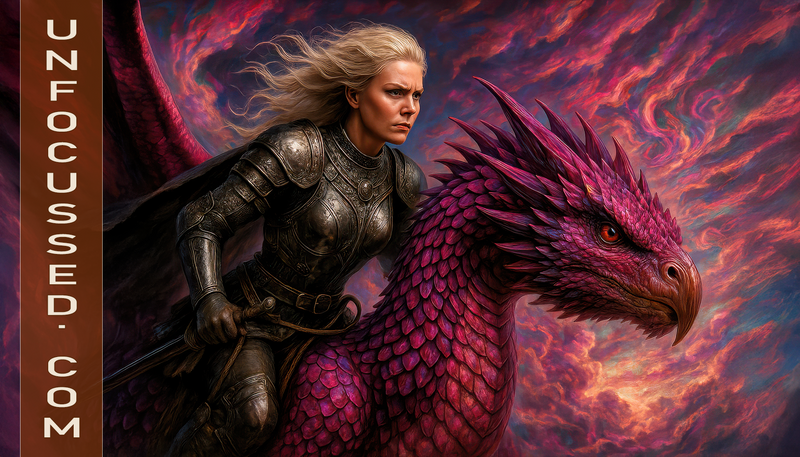
The Rosewing Vanguard

by Bill Tiepelman

The Rosewing Vanguard

The Fall and the Flame They called her Hessa the Silent, not because she didn’t speak—gods no, she swore like a sky-sailor drunk on phoenix blood—but because when she struck, there was no warning. No clink of armor. No battle cry. No dumb heroic monologue. Just a cold wind, a flick of silver hair, and then someone’s spleen went flying into a lake somewhere. The Vanguard weren’t meant to survive the Purge. The Empire made sure of it. One by one, the dragonriders were hunted down, their mounts burned alive mid-air, their bones fed to wolves, and their legacies erased from every map and bard's ballad. That was a decade ago. And yet, here she was—grizzled, scowling, riding a goddamn rose-colored dragon like a war goddess dipped in glitter and fire. They tried to break her. They bound her wrists in shadowsteel and dumped her body in the Screaming Trenches for the worms to clean. But Hessa doesn’t stay buried. Not when there’s vengeance to serve on a flaming platter. Not when she’s the last rider of Rosewing, the only living dragon born from dusk itself, whose wings turned skies pink and whose breath scorched lies out of men like confession candles. She found the beast again on the 10th night of the Blood Gale, half-starved and chained beneath the ruins of an old observatory. His eyes were dull. His wings clipped. His pride had been flayed from him like bark from a cursed tree. Hessa didn’t speak. She just held up the old saddle—torn, scorched, and still slick with the blood of her sisters—and whispered, “You up for another round?” Rosewing blinked. Then he roared. Now, they fly over the smoking wreck of Fort Cravane, painting the sky in streaks of rage and redemption. The soldiers on the ground barely know where to look—at the impossible dragon with flaming fuchsia wings, or the leather-clad hellcat astride him, sword in one hand, middle finger in the other. She wasn’t here for mercy. She was here to remind the Empire that some fires don’t go out. They just wait for a gale strong enough to spread the damn blaze. And Hessa? She was the gale, the match, and the whole bloody firestorm wrapped in a corset of spikes and broken promises. “Run,” she growled to the battalion commander as Rosewing hovered over the smoking keep. “Tell your emperor I’m bringing every scream back. With interest.” And then? She dropped. Like a meteor. Like judgment with boobs and a blade. And the world caught fire. Again. Ashes and Ascension The crater left by her landing would be visible from orbit, if the empire had gotten their magic spy mirrors working before she fed the engineers to the wolves. The impact wasn’t just physical—it was mythic. Fort Cravane wasn’t some wooden outpost run by bored teenagers. It was a stone beast, a juggernaut carved into the bones of the mountain itself. It had stood unbreached for a hundred years. Emperors were crowned there. War councils forged genocides there. Bastards were legitimized in its brothel-halls by drunk nobles and even drunker scribes. And now? It was rubble. Smoking, blood-soaked rubble with a single pink-scaled dragon coiled atop it like a crown forged in madness and sass. Hessa didn’t just burn the fort. She erased it. Every banner torn, every relic shattered, every smug face either melted or begging for death like it was a warm blanket. She didn’t even get off Rosewing’s back for the first half hour—just strafed the courtyard like a pissed-off comet, cackling and spitting insults while her dragon turned war machines into molten modern art. Then came the real fun. See, Hessa had a list. A long one. Names she carved into the inside of her left gauntlet with a bone stylus dipped in witchblood. Each one was a reason she hadn’t slit her own throat during those ten years in exile. Each one had laughed while her kin burned, each one had signed the warrant, cast the spell, sealed the fate. And each one, like delicious, screaming destiny, had been summoned to Cravane for a war meeting. The gods must have known. Or maybe they just had a sick sense of humor. Because Hessa was coming for every name, and she was coming with style. She dismounted in the courtyard—Rosewing spinning lazily in the air above her like a bored death angel—and stalked across the shattered marble, her boots crunching on bones and brass. Her armor wasn’t polished. It was jagged, blackened, and smeared with enough blood to make the floor slippery. Her left pauldron still had a jawbone stuck to it. She left it there. Statement piece. General Vaeldor was the first. Big man. Voice like thunder. Beard like a brick wall that grew its own testosterone. He raised his axe and gave the dumbest speech of his dumb life: “I do not fear a broken woman on a stolen beast.” “And I don’t fear a sausage with arms,” she replied, kicking him in the groin so hard his ancestors felt it. Then she stabbed him through the mouth while he was still vomiting up vowels. Two minutes later, she’d impaled three more officers on a flagpole and shoved their corpses into a ceremonial brazier to keep her sword warm. Flames danced, blood steamed. It smelled like justice and burnt chicken. Rosewing dropped from the sky to snatch an archer off a tower like a child grabbing a snack. Bones crunched. Screams followed. Then silence. Hessa liked the silence. It gave her time to monologue. Which she did, frequently, and with profanity that could etch glass. “I’m not here to win,” she shouted, addressing the survivors hiding behind what used to be a tower wall. “I’m here to balance the books. You arrogant little piss-stains thought you could kill the Vanguard and stuff the story in a vault? Nah. You made it juicy. You made it a revenge song. And now I’m here to play the chorus—LOUD.” Someone tried to cast a banishment rune. She threw a throwing knife through his eye mid-sentence and didn’t break stride. Another tried to run. Rosewing spat a burst of flame shaped like a screaming banshee and turned the deserter into ash-flavored dust. The sky darkened. Stormclouds rolled in like they were trying to get a better view. By sundown, the fort was gone. Literally. There was nothing left but a field of smoking debris, a few blood-slick stones, and a single saddle sitting upright on a hilltop. Rosewing perched behind her like a goddamn monument, wings half-unfurled, tail wrapped in a spiral that glowed faintly from the still-burning embers in his veins. Hessa stood before the last survivor—a boy, maybe fifteen, holding a broken pike and a face full of piss and tears. She crouched before him, eye to eye. “Go home,” she whispered. “Tell them what you saw. Tell them the Vanguard flies again. And if they ever dare raise another army…” She leaned in, smile razor-sharp. “Tell them pink will be the last color they ever see.” The boy ran. Good. She wanted fear to spread faster than fire. Later, as she and Rosewing flew east toward the mountain strongholds, the wind carving new stories into the air around them, Hessa leaned back in the saddle, breathing deep. Her muscles ached. Her armor reeked. Her soul thrummed like a lute string strung too tight. But it was done. The first name crossed off. Forty-two to go. “That’s right, sweetheart,” she muttered to the stars. “We’re just getting started.” The Screaming Skies They called it The Rift—the tear in the earth that bled skyfire and swallowed armies. Stretching fifty miles across the Wastes like the gods had clawed the planet in half during a drunken brawl, it was said to be impassable. Suicidal. A graveyard of heroes and the last hope of fools. Which, of course, made it perfect for Hessa. She didn’t slow. Didn’t plan. Just gritted her teeth and kicked Rosewing into a dive so steep her eyelashes caught fire. The dragon responded like he’d been waiting for this all his life—wings slicing air, jaws open in a grin made of flame and defiance. Below, the Rift cracked wider, as if the land itself was screaming “OH NO SHE DIDN’T.” Oh, but she did. She’d crossed the Wastes to end this. To burn the root, not the branches. Her goal? The floating citadel of High Thorne—home of the Arken Lords, final architects of the Purge, and smug bastards with magic glass floors and an unearned superiority complex. You couldn’t reach them by land. You couldn’t breach the shield walls. Unless, of course, you were riding a rose-scaled dragon made of ancient war magic and spite with wings strong enough to tear holes in reality. Rosewing pierced the cloud barrier like a needle dipped in vengeance. Thunder rolled behind them. Magic sigils cracked as they passed. Dozens of skyward ballistae fired, but she danced between the bolts like the wind owed her money. One caught her pauldron. She didn’t flinch. Just bit the shaft off with her teeth and spit it at the tower. Then came the Sky Guard—aerial knights on winged drakes, thirty strong, gleaming with enchantments and entitlement. They fanned out like birds of prey, blades glowing, spells primed. One shouted, “By order of the High Council—” “Eat my order,” Hessa barked, slamming Rosewing into a barrel roll that sent three of them tumbling into each other like enchanted bowling pins. She stood in the saddle, sword in one hand, firebomb in the other, screaming a war chant so raw it probably made three ancestors resurrect just to clutch their pearls. “Let’s fucking dance, sky boys!” They fought through the air like demons on holiday. Rosewing twisted, snapped, spun into dives so sudden the horizon screamed. Hessa disarmed a mage mid-incantation, then headbutted him so hard he exploded into feathers. She caught a flaming spear with her bare hand, screamed “THANKS!” and hurled it into the citadel gates like she was mailing back someone’s bad decisions. Drakes shrieked. Blood fell like crimson rain. Magic collided with dragonflame and lit the clouds on fire. You could see it from every village within a hundred miles—an inferno in the sky, with a silhouette of a woman standing atop a god, unkillable and pissed off. The gates of High Thorne cracked. Then split. Then detonated. Hessa stepped into the throne room like she owned the floor. Because now, she did. Ash coated her hair like a crown. Her armor was half-melted. One eyebrow was gone. Her sword hummed with the deaths of men who hadn’t shut up when they should’ve. At the far end sat the three Lords—robed in silks, gaudy with enchanted rings, surrounded by trembling bodyguards and illusions that flickered like bad lies. “We can negotiate,” one started, face twitching. “Negotiate these,” she said, and hurled a blade into his chest so hard it pinned him to the back wall. The others went for spells. Rosewing crashed through the stained-glass ceiling like a pink war deity from someone’s trauma nightmare and screamed fire into the room, melting every protection circle in a heartbeat. Hessa walked through the blaze like a bad memory given form, killing everything that moved and most things that didn’t. When she reached the second Lord, she whispered something so foul into his ear that his soul left his body before the knife did. The last one she saved for last—Lord Vaedric, High Chancellor of the Purge, too cowardly to even stand. “You remember my sister?” she asked, sliding onto the throne. “Red hair, big heart, tried to talk peace while you gut-punched her with shadowsteel?” He nodded. Cried. Snot. Begged. Hessa rolled her eyes. “You know what her final words were?” He shook his head. “They were ‘Tell that bastard I’ll see him in hell.’ So.” She leaned forward. “Get going.” One twist of her wrist. One gurgle. Done. And just like that, the Purge was over. Later, after the fires died and the dust settled, Hessa and Rosewing sat atop the highest spire, watching dawn break over a quieter world. She wasn’t a hero. Heroes get statues. She preferred nightmares. She preferred stories. “You think it sticks?” she asked her dragon. Rosewing growled something deep and thoughtful, then sneezed a puff of glittery embers into the air. She laughed. “Yeah. Me too.” And then they flew. Into legend. Into infamy. Into every campfire tale and drunk bard song from here to the dead coast. Because the Rosewing Vanguard wasn’t a dream. She was the end of one empire—and the birth of something so much louder. The sky still hasn't healed.     Epilogue: Embers Never Sleep In a tavern carved from the ribs of a long-dead titan, a bard plucks strings too old to remember their own tuning. The room hushes. Drinks still. A fire pops. “They say she vanished,” the bard begins, voice raspy with ash and rumors. “Rider and beast. One moment setting skies on fire, the next—gone. Like they’d burned so bright, the world couldn’t hold them anymore.” A drunk near the hearth snorts. “Bullshit. No one survives the Rift.” The bard just smiles. “Then explain the pink scales they found last month in a crater outside Blackwind. Still warm. Still humming.” At a distant table, a woman with platinum hair and a half-melted pauldron sips quietly from a chipped mug. She says nothing. Just watches the flames. Her dragon sleeps in the valley beyond, curled like a storm waiting to remember itself. She doesn’t need the songs. She doesn’t need the statues. She needs only this: wind, silence, and the promise of one last flight, should the world dare ask her again. Because embers? They don’t die. They wait.     Bring the Legend Home If the tale of The Rosewing Vanguard lit something fierce inside you—don’t let it fade. Capture the fire, the fury, and the flight with exclusive merchandise inspired by the story. Let our metal print turn your wall into a battleground of light and legend, or test your wits and your patience with this epic jigsaw puzzle forged from the heat of fantasy skies. Want to send some fire by mail? Our greeting cards carry the saga one envelope at a time, and stickers slap the legend onto any surface that dares. And when the cold creeps in? Wrap yourself in dragon-warmed dreams with a luxuriously soft fleece blanket that feels like Rosewing’s wings wrapped around your soul. Because some stories belong in your hands—not just your head.

Read more

My Dragon Bestie

by Bill Tiepelman

My Dragon Bestie

How to Accidentally Befriend a Fire Hazard Everyone knows toddlers have a knack for chaos. Sticky fingers, permanent marker tattoos on the dog, mysterious stains that science has yet to classify — it’s all part of their magic. But no one warned Ellie and Mark that their son Max, age two and a half and already proficient in diplomacy by fruit snack barter, would bring home a dragon. “It’s probably a lizard,” Mark had muttered when Max toddled in from the backyard cradling something green and suspiciously scaly. “A big, weird-eyed lizard. Like, emotionally unstable gecko weird.” But lizards, as a rule, do not belch smoke rings the size of frisbees when they burp. Nor do they respond to the name “Snuggleflame,” which Max insisted upon with the determined fury of a child who’s missed his nap. And certainly no lizard has ever attempted to toast a grilled cheese with its nostrils. The dragon — because that’s what it undeniably was — stood about knee-high with chunky feet, chubby cheeks, and the sort of wings that looked decorative until they weren’t. Its expression was equal parts devilish and delighted, like it knew a thousand secrets and none of them involved nap time. Max and Snuggleflame became inseparable within hours. They shared snacks (Max’s), secrets (mostly babbled gibberish), and bath time (a questionable decision). At night, the dragon curled around Max’s toddler bed like a living plush toy, radiating warmth and purring like a chainsaw on Xanax. Of course, Ellie and Mark tried to be rational about it. “It’s probably a metaphor,” Ellie suggested, sipping wine and watching their child cuddle a creature capable of combustion. “Like an emotional support hallucination. Freud would have loved this.” “Freud didn’t live in a ranch house with flammable drapes,” Mark replied, ducking as Snuggleflame sneezed a puff of glittery soot toward the ceiling fan. They called Animal Control. Animal Control politely suggested Animal Exorcism. They called the pediatrician. The pediatrician offered a therapist. The therapist asked if the dragon was billing under Max’s name or as a dependent. So they gave up. Because the dragon wasn’t going anywhere. And to be honest, after Snuggleflame roasted the neighbor’s leaf pile into the most efficient compost bin the HOA had ever seen, things got easier. Even the dog had stopped hiding in the washing machine. Mostly. But then, just as life started to feel bizarrely normal — Max drawing crayon murals of "Dragonopolis", Ellie fireproofing the furniture, Mark learning to say “Don't flame that” like it was a regular household rule — something changed. Snuggleflame’s eyes got wider. His wings got stretchier. And one morning, with a sound somewhere between a kazoo and a wind tunnel, he looked at Max, belched out a compass, and said — in perfect toddler-accented English — “We has to go home now.” Max blinked. “You mean my room?” The dragon grinned, fanged and wild. “Nope. Dragonland.” Ellie dropped her coffee mug. Mark cursed so hard the baby monitor censored him. Max? He simply smiled, eyes shining with the unshakable faith of a child whose best friend just turned into a mythical Uber. And that, dear reader, is how a suburban family accidentally agreed to a magical relocation clause… led by a dragon and a preschooler in Velcro shoes. To be continued in Part Two: “The TSA Does Not Approve of Dragons” The TSA Does Not Approve of Dragons Ellie hadn’t flown since Max was born. She remembered airports as stressful, overpriced food courts with occasional opportunities to be strip-searched by someone named Doug. But nothing — and I mean nothing — prepares you for trying to check a fire-breathing emotional support lizard through security. “Is that… an animal?” the TSA agent asked, in the same tone one might use for discovering a ferret operating a forklift. Her badge read “Karen B.” and her emotional aura screamed “no nonsense, no dragons, not today.” “He’s more of a plus-one,” Ellie said. “He breathes fire, but he doesn’t vape, if that helps.” Snuggleflame, for his part, was wearing Max’s old hoodie and a pair of aviator sunglasses. It did not help. He also carried a satchel with snacks, three crayons, a plastic tiara, and a glowing orb that had started whispering in Latin sometime around the baggage check. “He’s house-trained,” Max chimed in, proudly. “He only toasts things on purpose now.” Mark, who had been silently calculating how many times they could be banned from federal airspace before it counted as a felony, handed over the dragon’s ‘passport.’ It was a laminated construction paper booklet titled OFFISHUL DRAGON ID with a crayon drawing of Snuggleflame smiling next to a stick figure family and the helpful note: I AINT MEAN. Somehow, whether by charm, chaos, or sheer clerical burnout, they got through. There were compromises. Snuggleflame had to ride in cargo. The orb was confiscated by a guy who swore it tried to "reveal his destiny." Max cried for ten minutes until Snuggleflame sent smoke signals through the air vents spelling “I OK.” They landed in Iceland. “Why Iceland?” Mark asked for the fifth time, rubbing his temples with the slow desperation of a man whose toddler had commandeered an ancient being and a boarding gate. “Because it’s the place where the veil between worlds is thinnest,” Ellie replied, reading from a brochure she found in the airport titled Dragons, Gnomes, and You: A Practical Guide to Fae-Proofing Your Backyard. “Also,” Max piped up, “Snuggleflame said the portal smells like marshmallows here.” That, apparently, was that. They checked into a small hostel in a village so picturesque it made Hallmark movies feel insecure. The townspeople were polite in the way that implied they’d seen weirder. No one even blinked when Snuggleflame roasted a whole salmon with a hiccup or when Max used a stick to draw magical glyphs in the frost. The dragon led them into the wilderness at dawn. The terrain was a rugged postcard of mossy hills, icy streams, and a sky that looked like a Nordic mood ring. They hiked for hours — Max carried by turns on Mark’s shoulders or floating slightly above ground courtesy of Snuggleflame’s "hover hugs." Finally, they reached it: a clearing with a stone arch carved with symbols that pulsed faintly. A ring of mushrooms marked the threshold. The air buzzed with a scent that was part cinnamon toast, part ozone, and part “you’re about to make a decision that rewires your life forever.” Snuggleflame turned solemn. “Once we go through… you might never come back. Not the same way. You sure, little buddy?” Max, without hesitation, said, “Only if Mommy and Daddy come too.” Ellie and Mark looked at each other. She shrugged. “You know what? Normal was overrated.” “My office just assigned me to a committee about optimizing spreadsheet color-coding. Let’s roll,” Mark said. With a deep, echoing whoosh, Snuggleflame reared up and breathed a ribbon of blue fire into the arch. The stones glowed. The mushrooms danced. The veil between worlds sighed like an overworked barista and opened. The family stepped through together, hand in claw in hand. They landed in Dragonland. Not a metaphor. Not a theme park. A place where the skies shimmered like soap bubbles on steroids and the trees had opinions. Everything sparkled — aggressively so. It was like Lisa Frank had binge-watched Game of Thrones while microdosing peyote and then built a kingdom. The inhabitants greeted Max as though he were royalty. Turns out, he kind of was. Through a series of absolutely legitimate dream-based contracts, prophecy pancakes, and interpretive dance rituals, Max had been appointed "The Snuggle-Chosen." A hero foretold to bring emotional maturity and sticker-based communication to an otherwise flame-obsessed society. Snuggleflame became a full-sized dragon within days. He was magnificent — sleek, winged, capable of lifting minivans, and still perfectly willing to let Max ride on his back wearing nothing but dinosaur pajamas and a bike helmet. Ellie opened a fireproof preschool. Mark started a podcast called "Corporate Survival for the Newly Magical." They built a cottage next to a talking creek that offered life advice in the form of passive-aggressive haikus. Things were weird. They were also perfect. And no one — not a single soul — ever said, “You’re being childish,” because in Dragonland, the childish ran the place. To be continued in Part Three: “Civic Responsibility and the Ethical Use of Dragon Farts” Civic Responsibility and the Ethical Use of Dragon Farts Life in Dragonland was never boring. In fact, it was never even quiet. Between Snuggleflame’s daily aerial dance routines (featuring synchronized spark sneezes) and the enchanted jellybean geyser behind the house, “peaceful” was something they left behind at the airport. Still, the family had settled into something resembling a routine. Max, now the de facto ambassador of Human-Toddler Relations, spent his mornings finger-painting treaties and leading compassion exercises for the dragon hatchlings. His leadership style could best be described as “chaotic benevolence with juice breaks.” Ellie ran a successful daycare for magical creatures with behavioral issues. The tagline: “We Hug First, Ask Questions Later.” She had mastered the art of calming down a tantruming gnome with a glow stick and learned exactly how many glitter-bombs it took to distract a tantrum-prone unicorn with boundary issues (three and a half). Mark, meanwhile, had been elected to the Dragonland Council under the “reluctantly competent human” clause. His campaign platform included phrases like “Let’s stop setting fire to the mail” and “Fiscal responsibility: it’s not just for wizards.” Against all odds, it worked. He now chaired the Committee on Ethical Flame Use, where he spent most of his time writing policy to prevent dragons from using their farts as tactical weather devices. “We had a drought last month,” Mark muttered at the kitchen table one morning, scribbling on a parchment. “And instead of summoning rain, Glork farted a cloud the size of Cleveland into existence. It snowed pickles, Ellie. For twelve hours.” “They were delicious, though,” Max chirped, chewing one casually like it was a normal Tuesday. Then came The Incident. One sunny morning, Max and Snuggleflame were doing their usual stunt flights over the Glitter Dunes when Max accidentally dropped his lunch — a peanut butter sandwich enchanted with a happiness charm. The sandwich fell directly onto the ceremonial altar of the Grumblebeards, a cranky race of lava goblins with sensitive noses and no sense of humor. They declared war. On whom, exactly, was unclear — the child, the sandwich, the very concept of joy — but war was declared nonetheless. The Dragonland Council convened an emergency summit. Mark put on his “serious” robe (which featured fewer bedazzled stars than the casual one), Ellie brought her crisis glitter, and Max… brought Snuggleflame. “We’ll negotiate,” said Mark. “We’ll dazzle them,” said Ellie. “We’ll weaponize cuteness,” said Max, his eyes practically sparkling with tactical whimsy. And so they did. After three hours of increasingly confusing diplomacy, several emotional monologues about peanut allergies, and a full toddler-led puppet show reenacting “How Sandwiches Are Made With Love,” the Grumblebeards agreed to a ceasefire… if Snuggleflame could fart a cloud shaped like their ancestral totem: a slightly melting lava cat named Shlorp. Snuggleflame, after three helpings of spicy moonberries and a dramatic tail stretch, delivered. The resulting cloud was magnificent. It purred. It glowed. It made fart sounds in four-part harmony. The Grumblebeards wept openly and handed over a peace contract written in crayon. Dragonland was saved. Max was promoted to Supreme Hugmaster of the Inter-Mythical Council. Ellie received the Glitterheart Medal for Emotional Conflict Resolution. Mark was finally allowed to install smoke detectors without being called a “buzzkill.” Years passed. Max grew. So did Snuggleflame — who now sported a monocle, a saddle, and an unshakeable fondness for dad jokes. They became living legends, flying between dimensions, solving magical disputes, spreading laughter, and occasionally dropping enchanted sandwiches onto unsuspecting picnic-goers. But every year, on the anniversary of The Incident, they returned home to that very same stone arch in Iceland. They’d share stories, toast marshmallows on Snuggleflame’s backdraft, and watch the skies together, wondering who else might need a little more magic… or a cuddle-powered ceasefire. And for anyone who asks if it really happened — the dragons, the portals, the diplomacy powered by hugs — Max has just one answer: “You ever seen a toddler lie about a dragon bestie with that much confidence? Didn’t think so.” The End. (Or maybe just the beginning.)     Take a Piece of Dragonland Home 🐉 If “My Dragon Bestie” made your inner child do a little happy dance (or snort-laugh into your coffee), you can bring that magical mischief into your real world! Whether you want to cozy up with a fleece blanket that’s as warm as Snuggleflame’s belly, or add some whimsical fire-breathing flair to your space with a metal print or framed wall art, we’ve got you covered. Send a smile (and maybe a giggle-snort) with a greeting card, or go big and bold with a storytelling centerpiece like our vibrant tapestry. Every item features the high-detail, whimsical world of “My Dragon Bestie” — a perfect way to bring fantasy, fun, and fireproof friendship into your home or to share with the dragon-lover in your life.

Read more

The Petal's Little Protector

by Bill Tiepelman

The Petal's Little Protector

It was a night so muggy you could drink the air. Somewhere between midnight and whatever hour is reserved for bad decisions, the garden vibrated with the kind of life that most respectable creatures avoided. Crickets shouted unsolicited opinions. Moths made questionable life choices involving open flames. A possum waddled by with the kind of unbothered confidence that only comes from making peace with one’s own trashy destiny. And there, amid the chaos, reigning supreme on a lotus bud not even fully awake yet, was Pip. Pip: a creature of approximately eight ounces, three ounces of which were ego. A micro-dragon, a salamander dream gone technicolor — turquoise and gold and candy-apple red, shimmering like a toddler’s glitter accident. His frills fluttered dramatically in the nonexistent breeze. His tail, striped and twitchy, thumped the bud with the rhythmic impatience of a CEO stuck on hold. “Listen up, you soggy peasants,” Pip squeaked to absolutely no one. His voice carried the world-weary scorn of someone who had once been forced to attend a meeting that could’ve been an email. “This bloom is sacred. Saaaacred. I will destroy anyone who so much as breathes on her wrong.” He turned his head, slowly, menacingly, to glare at a confused beetle trundling by. The beetle paused, sensing the general vibe, and awkwardly reverse-walked into the nearest thicket. The lotus bud said nothing. If it had a face, it would have been wearing the strained smile of someone stuck next to a very drunk relative at a wedding reception. Pip didn’t care. He pressed his scaly cheek against her soft petals and sighed with the kind of tragic romance usually reserved for operatic heroines on their fourth glass of wine. “You’re perfect,” he whispered fiercely. “And this world is full of sweaty-fingered monsters who want to touch you. I won’t let them. Not even a little. Not even ironically.” Overhead, a disillusioned owl, bearing witness to this performance for the third night in a row, considered seeking therapy. Still, Pip remained vigilant. He flared his head fins every time a wayward breeze threatened to flutter the petals. He growled (adorably) at a toad who looked at the lotus with mild interest. When a moth had the audacity to land within a six-inch radius, Pip executed a flying tackle so dramatic it ended with him sprawled belly-up in the damp grass, legs kicking indignantly at the stars. He was back on the bud within seconds, polishing the flower with the inside of his elbow and muttering, “No one saw that. No one saw that.” Truth was, Pip had no official title. No magic spells. No real strength. But what he lacked in credentials, he made up for with boundless, unrelenting devotion. The kind that could only be born from believing, deep down, that even the most ridiculous, most mismatched protectors were still the right ones for the things they loved. And the lotus — she stayed silent and serene, trusting him completely, maybe even loving him back in her own slow, green way. Because sometimes, the universe didn’t choose champions based on size or power or grandeur. Sometimes, it chose the loudest, smallest brat with the biggest heart. The night dragged onward, a wet symphony of croaks, chirps, and far-off shrieks that no respectable citizen should ever investigate. Pip stayed rooted on the lotus, a hyper-vigilant blot of color in an otherwise sleepy world. His tiny heart thudded like a war drum against his ribs. His frills sagged slightly, damp with dew and exhaustion. And yet — he remained. Because evil never sleeps. And neither, apparently, did Pip. Just when he dared to blink, just when he permitted himself a victorious thought (“No one would dare challenge me now”), it happened — the catastrophe he’d been dreading. From the gloom emerged a hulking threat: a bullfrog. Fat. Warty. Oozing malevolence, or at least gas. It fixed its milky gaze on the lotus with the lazy hunger of a man contemplating a third slice of pie. Pip’s pupils narrowed to slits. This was it. The Boss Battle. He drew himself up to his full, mighty three inches of height. He arched his back, flared every fin he possessed (and one he may have invented out of sheer spite), and let loose the fiercest battle cry his little lungs could manage: “YOU SHALL NOT PASS!” The frog blinked slowly, unimpressed. Pip threw himself bodily off the bud, all claws and noise, landing squarely between the lotus and the amphibious threat. He puffed, he hissed, he slapped the ground with his tail in a display so wildly unnecessary that the frog actually reconsidered its life choices. After a long, tense moment, the frog croaked once — a low, begrudging sound — and turned away. Pip remained frozen until the sounds of its retreat faded into the misty dark. Then, and only then, did Pip allow himself to collapse theatrically against the stem of the flower, panting like a marathoner who hadn’t trained. “You’re welcome, world,” he muttered, slapping one tiny hand dramatically against his forehead. The lotus said nothing, of course. Flowers are not known for effusive gratitude. But Pip could feel her appreciation, warm and slow and deep, wrapping around him like a hug no one else could see. He dragged himself back up onto the bud with great ceremony. He needed the world to know he was battered, bruised, and therefore desperately heroic. Once settled, he wrapped his limbs tight around the petals and buried his snout against her soft surface. In the distance, the owl — now lying prone on a branch from sheer secondhand exhaustion — offered a slow, sarcastic clap with one wing against the other. And the garden? It kept on living its messy, ridiculous life. Crickets hollered. Beetles clattered. Somewhere, something squelched ominously. But none of it could touch the lotus. Not while Pip stood (well, laid) guard. Because no matter how small, no matter how silly, the bond between protector and protected was unbreakable. No monster, no weather, no cruel accident of fate could tear apart what Pip had vowed to defend — not with teeth, or tail, or most importantly, obnoxious determination. Under the dappled moonlight, the Petal’s Little Protector snored softly, frills twitching in some dream of endless battles won and blooms forever safe. And the lotus — safe, whole, and untouched — cradled him gently until morning.     Epilogue: The Legend of Pip They say if you wander far enough into the garden — past the muttering lilies, beyond the judgmental daisies, through the part where even the weeds seem suspicious — you might just find a lotus blooming alone under the open sky. If you’re lucky (or unlucky, depending on how you feel about being yelled at by something the size of your thumb), you’ll catch a glimpse of him: a shimmer of impossible colors, a flash of fin and frill, a guardian curled protectively around a single sacred flower. Approach too quickly, and he’ll scold you with the full, furious force of someone who once fought off a frog three times his size. Approach too carefully, and he might just approve of you. Maybe. If you’re very lucky, and your vibe is sufficiently non-threatening, Pip might even allow you to sit nearby — under the strict understanding that you are absolutely, categorically, not to touch the flower. Or him. Or breathe too loudly. Or exist too flamboyantly in his general direction. And if you sit there long enough, if you let the night fall around you and the stars stitch themselves into the black velvet above, you might start to feel it too — that fierce, funny, aching kind of love that demands nothing but promises everything. That stubborn, ridiculous, beautiful kind of protection only the bravest little hearts know how to give. And maybe, just maybe, you’ll realize that the world is still full of tiny, glittering miracles — guarding the best parts of it with tooth, tail, and absolute, glorious defiance.     Take Pip Home (Carefully!) If your heart’s been thoroughly stolen by Pip (don’t worry, he does that a lot), you can invite a little bit of his fiercely protective magic into your own world. Choose your favorite way to keep the legend alive: Wrap yourself in wonder with a stunning tapestry featuring Pip in all his colorful, chaotic glory. Bring his fierce little spirit into your space with a sleek, vibrant metal print. Tote his sass and loyalty everywhere you go with a whimsical, sturdy tote bag. Start your mornings with a grumpy guardian by your side — Pip looks particularly judgmental on a coffee mug (in the best way). Whichever you choose, just remember Pip’s golden rule: Look, but don’t touch the flower. Ever.

Read more

Explore Our Blogs, News and FAQ

Still looking for something?