
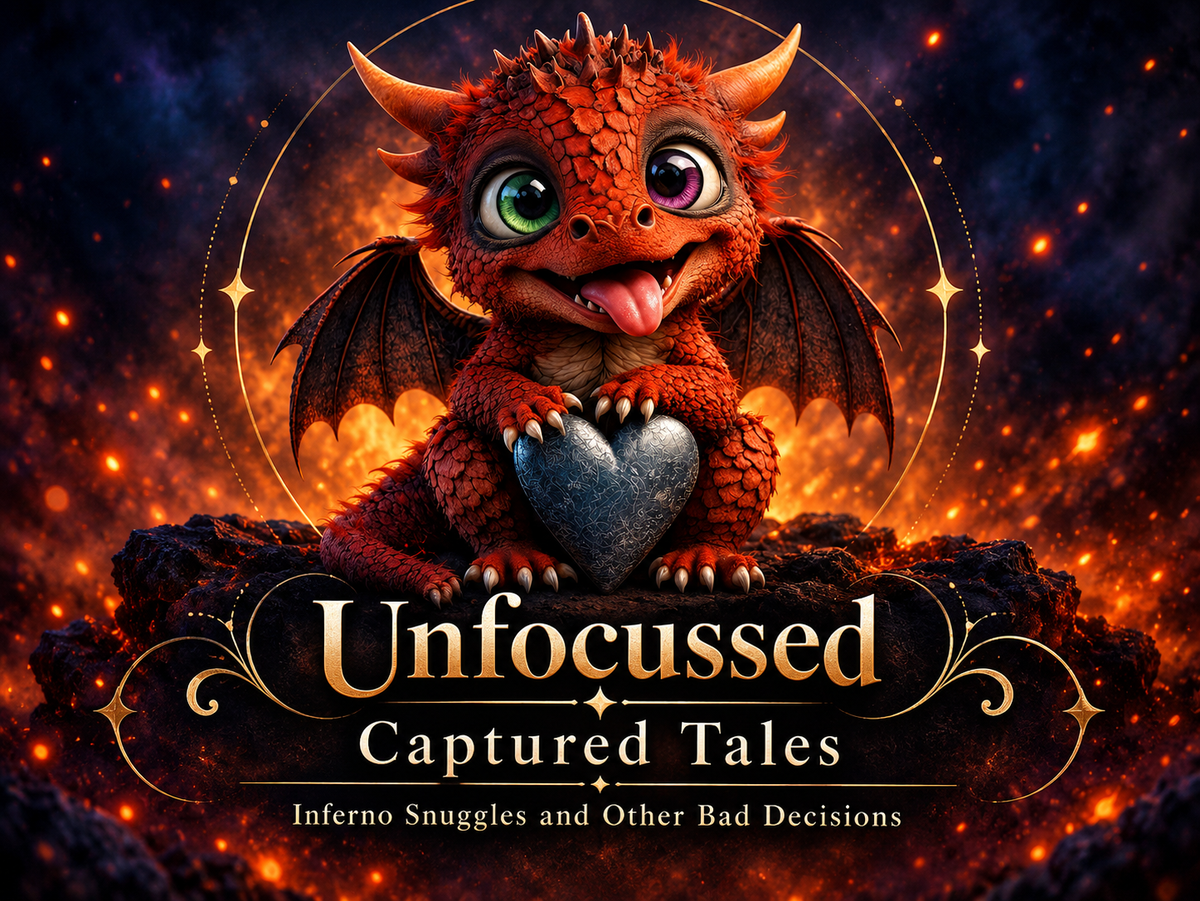
Un regalo con implicaciones terribles
En Brimstone Vale existían muchas reglas antiguas e importantes. No silbar hacia un sumidero después de medianoche. No burlarse de una viuda hecha de humo. No aceptar sopa de nadie con dientes brillantes. La tía Vespera sostenía que la última regla era innecesariamente restrictiva, pero ella también se había comido una puerta porque alguien había llamado a ella demasiado temprano.
Cinder conocía las reglas. Saber cosas era una de sus mejores cualidades. Recordarlas en el momento oportuno era un departamento diferente, actualmente falto de personal.
Se sentó sobre una piedra de basalto caliente al borde de Blackglass Hollow, una cría del tamaño de un gato doméstico bien alimentado, examinando una cuchara de plata. Sus escamas carmesí parecían pequeñas placas de lava enfriándose. Un ojo era verde, el otro violeta; ambos podían lograr una inocencia extraordinaria cuando algo caro se rompía cerca. Sus pequeñas alas oscuras eran demasiado pequeñas para sus ambiciones, y su lengua sobresalía por el costado de su boca cada vez que pensaba mucho. En ese momento, colgaba tanto que un escarabajo que pasaba hizo un desvío sensato.
La cuchara era para Maribel Thorne. Era una cuchara excelente. También era la cuchara del alcalde, aunque Cinder esperaba que el alcalde pudiera considerar esto un detalle administrativo temporal.
Maribel vivía en Thistlefoot, un pueblo con vallas a juego, cajas de flores ordenadas y la costumbre profundamente inquietante de disculparse con la gente antes de pedirles que se muevan. Cinder lo miraba con sospecha. Nada que oliera tan constantemente a canela podía ser totalmente honesto. Sin embargo, lo visitaba casi todos los días.
Tres semanas antes, ella lo había encontrado en una trampa para zorros oxidada detrás de la capilla del camino viejo.
Él había estado inspeccionando un montón de chatarra de un hojalatero. Inspeccionar era una actividad académica importante en la que uno ponía cosas interesantes en su boca para determinar si pertenecían allí. La trampa se había cerrado sobre su pata delantera, terminando su investigación con un ruido que todavía podía oír cuando el viento golpeaba una contraventana suelta.
Él había gritado. Había quemado las ortigas. Había partido un radio de rueda por la mitad, lo que había sido satisfactorio pero inútil. Luego llegó el atardecer, y todo su ruido furioso se redujo a pequeños alientos aterrorizados.
Maribel había llegado cargando una cesta y con la expresión de una mujer que ya había lidiado con suficientes tonterías por un día. Aun así, dejó la cesta en el suelo.
—Bueno —dijo, poniéndose en cuclillas fuera del alcance de sus dientes—. O eres un dragón muy pequeño o un lagarto profundamente molesto.
Cinder intentó gruñir. Le dolía demasiado la pata.
—Dragón, entonces. Voy a abrir esto. Por favor, no me prendas fuego a las cejas.
Ella explicó lo que estaba haciendo antes de tocarlo. Separó las mandíbulas con un trozo de madera, envolvió su pata con una tira limpia de su cesta y esperó mientras él decidía si estar de pie era todavía algo en lo que creía. Cuando él le ofreció un topo muerto en un aturdido estallido de gratitud, ella lo miró, lo miró a él y dijo: —Eso es repugnante. Pero agradezco el gesto.
Luego lo llevó a las cálidas ruinas de la tía Vespera sobre Blackglass Hollow. Cinder esperaba un sermón sobre los montones de chatarra. Recibió uno, pero solo después de que Vespera hubiera revisado su pata, lo hubiera metido debajo de un ala y hubiera dejado de temblar tan visiblemente.
Maribel volvió a la tarde siguiente con vendas frescas.
Y a la siguiente.
Para la cuarta visita, Cinder conocía el sonido de sus botas en los escalones exteriores. Para la sexta, había comenzado a esperar antes del almuerzo. Para la novena, la herida se había cerrado y podía caminar sin cojear.
—Listo —dijo Maribel—. Ya no necesitarás que me preocupe por ti todas las tardes.
Ella quería decir que se estaba curando. Cinder oyó que la amabilidad tenía fecha de caducidad.
Él no preguntó qué quería decir. Preguntar habría requerido admitir que la idea lo asustaba, y él era un dragón. Los dragones tenían opiniones, dientes magníficos y, según varias canciones extremadamente poco fiables, ningún sentimiento que no pudiera resolverse quemando una ladera.
Así que decidió volverse indispensable.
La cuchara fue su argumento inicial.
La dejó en su puerta al amanecer y se escondió entre las hortensias. Maribel la recogió, le dio la vuelta y leyó las iniciales del alcalde.
—Cinder.
Una hoja se movió.
—Puedo ver tu cola.
Él metió la cola más adentro en el arbusto, dejando sus cuernos expuestos.
—Esto vuelve a su lugar.
—Es muy brillante.
—Su brillo no es la dificultad.
La devolvieron juntos. El alcalde dio un largo discurso sobre la propiedad cívica. Cinder escuchó con un ojo puesto en un pisapapeles de bronce hasta que Maribel lo movió discretamente fuera de su alcance.
A la mañana siguiente trajo un collar hecho de huesos de cuervo pulidos, hilo rojo y un excelente botón. Maribel lo estudió durante un tiempo.
—¿Algo vivo se opuso a convertirse en esto?
—No.
—¿Alguien era dueño del botón?
Una pausa.
—Vespera dijo que podía quedármelo.
—Entonces gracias.
Colgó el collar junto a la puerta trasera, donde no alarmaría a los visitantes tan inmediatamente. Cinder regresó a casa en un estado de triunfo tan intenso que chocó contra una regadera.
Luego vino una tetera chamuscada, un cráneo de zorro, tres piedras que esperaba que fueran rubíes y una trucha parcialmente cocinada por accidente. Maribel aceptó las piedras después de que él explicara dónde las había encontrado. La tetera pertenecía a Pella. La trucha fue al compost. El cráneo recibió una negativa firme y cortés.
—No tienes que traer algo cada vez —le dijo ella.
Cinder miró fijamente el cráneo rechazado. Tal vez quería decir que tenía que traer algo mejor.
Sus visitas se habían convertido en un examen privado para el cual nadie explicaría el sistema de calificación. Una sonrisa significaba que lo estaba haciendo bien. Una puerta cerrada significaba un desastre, incluso cuando Maribel simplemente había salido a comprar harina. Si ella estaba cansada, él se preocupaba. Si estaba ocupada, él presentaba un objeto. Si decía que lo vería mañana, él empezaba a planear cómo ganarse el mañana.
Una tarde escuchó a Elsie, la hija del panadero, burlándose de Maribel fuera de la tienda.
—¿Otro tributo? —preguntó Elsie, señalando el collar de huesos visible a través de la ventana abierta de la cocina de Maribel.
—Está intentando dar las gracias.
—Muy concienzudamente.
—Preferiría que se trajera a sí mismo y me dijera honestamente lo que necesita —Maribel cargó un saco de harina sobre su hombro—. Algo con corazón bastaría. No más plata robada.
Cinder, escuchando debajo del carro, dejó de respirar.
Algo con corazón.
Por fin. Instrucciones.
Una criatura más sabia podría haber notado la primera mitad de la frase. Cinder se apoderó de la segunda mitad y salió corriendo con ella antes de que la sabiduría pudiera organizar una intercepción.
Consultó a Vespera esa noche mientras ella calentaba una tetera entre sus patas delanteras.
—¿Qué es un regalo con corazón?
—Uno que sientes de verdad —dijo ella.
—¿Y si lo sientes mucho?
—Entonces generalmente no necesitas gritar.
—¿Y si debe hacer que alguien se quede?
Ella levantó la cabeza. —¿Por qué debe alguien quedarse?
—Por razones teóricas.
Vespera dejó la tetera. —Ven aquí, razones teóricas.
Pero Cinder ya había retrocedido hacia los escalones, avergonzado por la repentina suavidad en su voz. Anunció que necesitaba inspeccionar una piedra y se fue antes de que ella pudiera preguntar cuál. Había muchas piedras. Era una excelente excusa.
Su segunda consulta fue con el Viejo Hollín, una salamandra que vivía cerca de las piscinas de azufre y afirmaba haber aconsejado a reinas. Cinder sospechaba que mayormente gritaba predicciones a los murciélagos y dejaba que los rumores hicieran el resto.
—Necesito un corazón —dijo Cinder.
—Siete escarabajos —dijo el Viejo Hollín.
Cinder trajo nueve. Esto era importante.
La salamandra tragó, consideró a su cliente y dijo: —Bóveda del Corazón. Dentro de la montaña. Hacen cosas que mantienen promesas.
—¿Qué clase de cosas?
—Cosas pesadas.
—¿Funcionará?
—Todo funciona. Si te gusta lo que hace es una pregunta diferente.
El Viejo Hollín cerró entonces los ojos, lo cual Cinder interpretó como una concentración profunda. Era, de hecho, el comienzo de una siesta.
Había muchas historias sobre la Bóveda del Corazón. Un herrero que martilleaba sentimientos en hierro. Una forja construida sobre un dios moribundo. Una máquina que podía hacer una promesa demasiado pesada para romper. Ninguno de los narradores estaba de acuerdo, aunque todos hablaban con la confianza de personas a las que nunca se les pediría bajar a comprobarlo.
Cinder conocía una fisura detrás del huerto de la viuda Ash. Le habían dicho que no entrara. En esta ocasión recordó la instrucción perfectamente, lo que hacía que ignorarla fuera considerablemente menos defendible.
Al salir la luna, le dejó a Vespera una nota: Consiguiendo un agradecimiento adecuado. Vuelvo pronto.
Dibujó una llama tranquilizadora debajo.
Luego se deslizó dentro de la montaña, llevando consigo el equivalente a nueve escarabajos en consejos y una idea que se había vuelto mucho más pesada que él.
La montaña que lo tomó literalmente
Los túneles olían a minerales calientes, hollín húmedo y el tipo de humedad que no debería existir tan cerca de la lava. Cinder siguió un estante estrecho sobre un canal seco, colocando su pata delantera en recuperación con cuidado. Cada pocos metros arañaba una marca en el polvo. Tenía suficiente sentido común para planear cómo salir, solo que no el suficiente para cuestionar el entrar.
Detrás de él, la franja de luz de luna del huerto se redujo a un hilo pálido y desapareció.
Empezó a hablar consigo mismo.
—Un regalo adecuado. No plata. No un cráneo. Requisitos muy claros.
El túnel devolvió cráneo con entusiasmo innecesario.
—Nadie te preguntó.
Los cristales se agrupaban en las paredes. Debajo de ellos yacían cosas que viajeros anteriores habían dejado caer: una linterna abollada, una hebilla, un par de pinzas casi consumidas por el óxido. Cinder pasó junto a una fila de pequeñas hornacinas que contenían formas de hierro en estantes de piedra. Anillos. Nudos. Un par de manos entrelazadas. Algunas estaban frías y negras. Otras brillaban con una línea roja hosca.
Sobre cada hornacina había el mismo patrón: un objeto llevado hacia un yunque; una mano abierta debajo; el objeto descansando de nuevo sobre el yunque. Debajo de las imágenes, se habían tallado letras en la roca. Solo reconoció unas pocas. La antigua escritura no estaba entre las cosas que había aprendido inspeccionando montones de chatarra.
Un viajero más inteligente habría copiado los símbolos y se habría ido a casa a preguntar. Cinder pensó que eran direcciones al mostrador de regalos.
Llegó a la forja una hora después.
La Bóveda del Corazón era una caverna alrededor de una plataforma de yunque, bordeada por lentos canales rojos de magma. Cadenas colgaban del techo. Sus pilares llevaban las mismas tres imágenes por las que había pasado en el túnel, repetidas aquí más grandes, con una inscripción desgastada debajo de la mano abierta.
Un vasto corazón de hierro flotaba sobre el yunque. Latió una vez, y el polvo se desprendió del techo.
La lengua de Cinder se retiró a su boca.
—Eso —susurró—, puede ser un poco demasiado grande para su puerta.
El corazón se giró.
¿QUIÉN BUSCA UNA VINCULACIÓN?
Cinder saltó, chamuscó su propia huella e intentó ponerse en una posición más impresionante.
—Un agradecimiento. Idealmente uno que dure.
¿QUÉ PIDES QUE SOSTENGA?
—Un lugar.
NOMBRA EL LUGAR.
Vaciló. Blackglass Hollow era su hogar. Vespera estaba allí, con piedras calientes y suficiente comida y un ala que siempre se levantaba cuando él se acercaba. Pero la cocina de Maribel se había convertido en otro tipo de lugar seguro. No quería perderlo simplemente porque su pata ya no dolía.
—En algún lugar al lado de alguien —dijo.
Las cadenas se movieron con un chasquido suave y deliberado.
NINGUNA VOLUNTAD PUEDE SER VINCULADA QUE NO SEA OFRECIDA AQUÍ.
—No estoy tratando de hacer que ella haga nada.
Eso era casi cierto. Quería un regalo tan magnífico que ella nunca pudiera cerrarle la puerta. No había considerado cuán de cerca se parecía eso a tomar una decisión por ella.
La forja esperó.
—Solo quiero que sepa que valgo la pena.
¿QUÉ OFRECERÁS?
Cinder abrió la pequeña bolsa que había traído. Tres piedras brillantes rodaron sobre el yunque. Añadió el escarabajo restante, que había sobrevivido al Viejo Hollín escondiéndose en una costura y ahora hacía una apuesta determinada por la libertad.
COSAS NO TOMADAS. ALGO TUYO.
Su pecho se tensó. No tenía dinero, ni una gran historia, ni habilidad útil que no prendiera fuego a algo de vez en cuando. Era pequeño. Sus alas no eran fiables. A veces todavía despertaba con el sonido de la trampa en su cabeza y necesitaba que Vespera le dijera dónde estaba.
Estaba cansado de necesitar.
—Mi fuego —dijo.
La caverna se iluminó.
TU FUEGO DESCANSARÁ EN EL TOKEN MIENTRAS MANTENGAS SU RECLAMO.
—Descansar suena bien.
SENTIRÁS SU AUSENCIA.
—¿Temporalmente?
El gran corazón se giró lo suficiente para revelar el símbolo de la mano abierta en el yunque detrás de él.
HASTA QUE EL RECLAMO SEA DEVUELTO, TESTIFICADO Y LIBERADO.
Cinder miró el símbolo, luego el corazón. Escuchó la palabra devuelto y asumió que había una política de reembolso. Estaba demasiado avergonzado para preguntar qué era un reclamo.
—¿Y le mostrará que hablo en serio?
MOSTRARÁ LO QUE HAS DADO. NO PUEDE ELEGIR LO QUE OTRO SIENTE.
Más tarde, recordaría esa frase muy claramente. En ese momento estaba pensando en lo maravillosamente que reluciría el hierro en la mesa de Maribel.
Pisó la marca central.
La luz recorrió las ranuras debajo de sus garras. El gran corazón se abrió en pétalos de hierro negro, y un corazón más pequeño descendió entre ellos. Era lo suficientemente ancho como para abrazarlo, martillado con pequeñas líneas rizadas y oscuro como cenizas enfriadas. Extendió la mano hacia él.
La vinculación lo atrapó debajo del esternón.
No hubo ningún estallido glorioso de coraje. Hubo un grito de miedo y un frío repentino y terrible. Su fuego surgió instintivamente, luego fluyó lejos de él en un hilo rojo, enrollándose a través del hierro.
Intentó retirarse. El hilo se mantuvo por un último aliento y se rompió dentro del corazón.
Cinder se sentó pesadamente en el yunque.
—No me gusta eso.
La voz no lo felicitó. Las cadenas no aplaudieron. Un viejo mecanismo había hecho exactamente lo que él le había pedido que hiciera, y el hecho de que estuviera asustado no lo hacía más sabio.
El corazón se acomodó en sus patas delanteras. Su peso casi lo hace volcar. Cuando lo empujó, el frío se tensó alrededor de sus costillas. Cuando lo agarró, el dolor disminuyó, pero solo un poco.
LO VINCULADO DEBE REGRESAR POR EL MISMO CAMINO.
—¿Puedo hacer eso ahora?
CON UN TESTIGO. CON UNA MANO ABIERTA.
Miró sus garras envueltas alrededor del hierro. —Tengo manos.
No llegó ninguna respuesta.
La forja había quedado en silencio. Cinder estaba solo bajo la luz tenue, sosteniendo la cosa que parecía segura para resolver su problema. Intentó una pequeña bocanada de llama. No pasó nada. Lo intentó de nuevo, más fuerte, y empezó a temblar.
Por unos momentos simplemente quiso a su tía.
Luego llegó la vergüenza, ofreciendo sus habituales malos consejos. Había llegado hasta aquí. El regalo era hermoso. Tal vez si a Maribel le gustaba, el frío significaría algo. Tal vez una vez que alguien estuviera complacido, dejaría de sentir como si hubiera cometido un error terrible.
Arrastró el corazón hasta el túnel, luego descubrió cómo llevarlo en tramos cortos e incómodos. El hierro no cabía en su bolsa. Le raspaba las rodillas. Dos veces tuvo que detenerse y descansar junto a las marcas que había arañado en el polvo.
El escarabajo lo pasó a la salida.
—No lo hagas —le dijo.
No había dicho nada, pero él reconocía una opinión cuando la veía.
Para cuando llegó al huerto de la viuda Ash, el cielo había comenzado a palidecer. Una fina corteza de escarcha yacía entre las raíces. Normalmente habría disfrutado del siseo de esta bajo sus pies. Esta mañana sentía cada parche frío a través de sus escamas.
Podía ir al norte hacia Vespera. El camino era familiar. Imaginó mostrarle el corazón y tener que explicar que había tenido miedo de decirle que tenía miedo.
En cambio, giró hacia Thistlefoot.
Maribel lo encontró en su puerta con la barbilla apoyada en el hierro, tratando de organizar su rostro en algo triunfante. Un ala estaba caída. Su lengua estaba escondida. Su ojo verde lloraba por el frío de la mañana.
Ella dejó su cesta tan rápido que las manzanas rodaron por el suelo.
—¿Qué pasó?
—Traje un agradecimiento adecuado.
Ella se arrodilló, manteniendo sus manos donde él pudiera verlas. —Cinder. ¿Estás herido?
Él abrió la boca para explicar la artesanía. No llegaron palabras.
—No puedo hacer fuego —susurró.
Maribel llamó a Elsie a través de la ventana abierta. Pidió a Vespera, inmediatamente, y una manta calentada por la estufa de la panadería. Luego se sentó en la puerta junto a él, lo suficientemente cerca para que él no tuviera que preguntarse si ella se había ido.
—¿Es bueno? —preguntó.
Ella miró el corazón de hierro. Luego a sus patas temblorosas.
—Es pesado.
—Me refería al regalo.
—Yo también.
Fue entonces cuando Cinder finalmente comenzó a llorar.
Las cosas que nadie le había pedido que ganara
Vespera llegó a Thistlefoot antes de que el primer lote de la panadería se hubiera enfriado. Aterrizó mal en la plaza, derribó una caja vacía y la dejó donde cayó. Esto por sí solo le dijo a Maribel lo asustada que estaba. Normalmente, Vespera habría encontrado tiempo para culpar a la caja.
Cinder yacía junto a la estufa de la cocina, envuelto en una manta con el corazón de hierro contra su pecho. Maribel había intentado moverlo a un cojín a su alcance. En el momento en que sus patas lo soltaron, él empezó a temblar más violentamente, así que lo volvió a poner sin probar nada más.
Vespera bajó la cabeza hasta que él pudo sentir su aliento.
—Aquí estás.
Él esperó el sermón.
—Encontré tu nota —dijo ella—. Luego encontré al Viejo Hollín. Está teniendo una mañana menos placentera de la que anticipaba.
—¿Te lo comiste?
—No.
—¿Querías hacerlo?
—Mucho. Pero necesitaba indicaciones.
Soltó una risita breve y acuosa. Ella le envolvió con una de sus alas, teniendo cuidado con el hierro, y escuchó mientras él se lo contaba todo. Los escarabajos. El túnel. La voz. El frío. Intentó que no sonara tan insensato. Vespera esperó a través de los adornos hasta que empezó a contarlo con claridad.
Cuando llegó a la parte sobre entregar su fuego, ella cerró los ojos. Maribel apoyó una mano sobre la mesa. Ninguno de los dos lo llamó valiente.
—Pensé —dijo él—, si costaba lo suficiente, lo sabrías.
—¿Saber qué? —preguntó Maribel.
—Que no era solo un problema que habías arreglado.
La cocina quedó muy silenciosa.
—Oh, Cinder.
Él se quedó mirando el hierro. —Mi pierna mejoró. Dijiste que no me necesitarías. Pensé que eso significaba que no vendrías.
Maribel se sentó en el suelo frente a él.
—Dije que no necesitarías vendajes todos los días. Debería haberlo dicho con más claridad. Me gusta verte. Eso era cierto antes de que me trajeras nada.
—¿Incluso la cuchara?
—A pesar de la cuchara.
—¿Y qué hay de la calavera?
—Tenemos ideas muy diferentes sobre la decoración de la cocina.
—Pero...
—Puedes pedir venir de visita. Puede que esté ocupada. A veces diré que otro día. Nada de eso es una factura que pagas haciéndote daño.
Él levantó la vista, un ojo verde y otro violeta, buscando en el rostro de ella la letra pequeña.
—¿Y si no quieres el corazón?
—Entonces no quiero el corazón. Eso no significa que no te quiera en mi vida.
Vespera acercó más su ala.
—Ya tienes un hogar —dijo ella—. Uno especialmente bien calefactado. También puedes tener amigos. No tienes que comprar ninguno de los dos acuerdos.
Cinder tragó saliva. Debería haber sido un alivio. En cambio, le dolió, porque si hubiera hecho una pregunta sencilla hace tres noches, aún podría tener su fuego.
—¿Podemos recuperarlo?
—Vamos a averiguarlo —dijo Vespera—. Y no vamos a fingir que necesitar ayuda sea otro fracaso.
Ella conocía algo de la antigua escritura de la forja. No porque hubiera estado esperando secretamente este desastre exacto, sino porque su hogar en ruinas albergaba antaño una herrería y había pasado varios inviernos descifrando las advertencias sobre sus puertas. Le pidió a Cinder que dibujara las imágenes que recordaba.
Él esbozó el corazón, el yunque y la mano abierta. Maribel escribió las palabras de la voz exactamente como él las recordaba. Donde no estaba seguro, dejaba un espacio. Nadie llenó los huecos con algo tranquilizador.
—Un vínculo contenido en un objeto —dijo Vespera por fin—. No ha destruido tu fuego. Lo mantiene en un lugar donde no puedes usarlo.
—¿Puedes romperlo?
Ella examinó el metal sin quitárselo. —No de forma segura. Si la forja hizo el nudo, llevaremos el nudo de vuelta a la forja.
Cinder presionó su rostro contra la manta.
—No quiero volver allí.
—Lo sé —dijo ella—. No irás solo.
Esperaron hasta que hubo comido y dejado de temblar tanto. Vespera lo llevó en un cabestrillo contra su pecho, donde su calor constante llegaba a sus escamas. Maribel trajo una linterna, agua, tiza y una cuerda. En el huerto, la viuda Ash les mostró una entrada de servicio antigua más ancha más allá de la fisura. La había bloqueado años atrás después de que cayeran piedras cerca de la boca; Vespera movió los escombros sueltos y revisó el pasaje antes de dejar pasar a los demás.
Maribel ató un paño brillante a la rama exterior. Esto era un rescate, no una oportunidad para convertirse en un segundo grupo desaparecido.
El viaje de descenso duró el doble de lo que Cinder recordaba. Se detuvieron en cada cruce. Vespera leía las inscripciones. Maribel marcaba su ruta. Cinder señalaba sus arañazos en el polvo, y ambos adultos le agradecieron por haberlos hecho. Había hecho una cosa útil. Se le permitió seguir siendo útil incluso en medio de todo lo demás.
En las alcobas, se detuvieron.
Vespera quitó el hollín de la escritura bajo la mano abierta.
—El símbolo regresa al yunque —tradujo lentamente—. El que da retira la reclamación. Un testigo confirma que no se exige nada a cambio. Sin ofrenda de reemplazo.
Maribel repitió la última frase.
—Sin ofrenda de reemplazo.
Cinder miró hacia la forja. —¿Así que no tienes que darle algo a cambio?
—Correcto.
—¿No tu fuego?
—Ciertamente no.
—Eso parece... —Buscó una palabra.
—¿Menos dramático? —ofreció Vespera.
Él asintió.
—Probemos con menos dramático. Sería un cambio refrescante.
El gran corazón de hierro giró cuando entraron. El calor se movió sobre la plataforma, agitando el borde del abrigo de Maribel.
EL SÍMBOLO REGRESA.
—Junto con dos quejas —dijo Vespera.
Maribel tocó su pata delantera. Habían venido por Cinder, no para ganar una discusión con un yunque.
Siguieron el camino tallado. En su centro, Vespera bajó a Cinder sobre un banco de piedra cálido junto al yunque. Él se aferró al pequeño corazón. Sus líneas grabadas brillaban en rojo entre sus garras.
¿CUÁL ES TU RECLAMACIÓN?
Intentó decir que solo había querido ser amable. Era parte de la verdad, pero el resto estaba detrás, esperando.
—Quería que ella guardara un lugar para mí porque había entregado algo importante.
Las cadenas se movieron.
—No sabía cómo pedirlo.
¿RETIRAS LA RECLAMACIÓN?
Él miró a Maribel. —¿Incluso si ella dice que no a veces?
—Incluso entonces —dijo ella—. Un sí significa algo porque se puede elegir.
Sus patas se tensaron. El corazón se había convertido tanto en la prueba de su error como en la cosa que mantenía el frío bajo control. Dejarlo ir le asustaba más que haberlo tomado.
Vespera se acomodó detrás de él, lo suficientemente cerca para que él se apoyara.
—Puedes estar asustado —murmuró ella—. Seguimos aquí.
Cinder empujó el hierro sobre el yunque. Sus garras lo siguieron hasta el borde, luego se abrieron.
—La retiro.
Maribel se puso a su lado.
—No pido nada de él. No le pedí que renunciara a su fuego. No me debe ninguna parte de sí mismo por ayudarle.
El corazón se abrió a lo largo de una costura estrecha. Un hilo rojo surgió de él, oscilando como una mecha en una corriente de aire.
Cinder se estremeció.
—Despacio —dijo Vespera, a la forja, a él, quizás a toda la montaña mal gestionada.
El calor regresó en pequeñas oleadas. Dolía, pero de forma diferente ahora: un dolor contraído y descongelante en lugar del frío repentino y vacío. Respiró contra el pecho de Vespera mientras Maribel contaba suavemente con él. Nadie le pidió que diera un discurso. Nadie llamó al dolor el precio del amor.
Por fin, la luz se apagó del hierro.
Cinder tosió una fina voluta gris.
Se echó a llorar de nuevo, esta vez con tal fuerza que Vespera tuvo que poner su barbilla sobre la cabeza de él para evitar que golpeara sus cuernos contra el banco.
El corazón en el yunque se había convertido en un trozo de metal ordinario. Maribel lo dejó allí. Llevárselo a casa como recuerdo habría perdido gran parte del sentido de la tarde.
Emergieron al huerto después del anochecer.
A la mañana siguiente, Cinder aún no podía hacer una llama. Ni tampoco a la mañana siguiente. El vínculo había desaparecido, pero su cuerpo había pasado por algo aterrador y agotador. Vespera lo mantuvo caliente. Maribel lo visitaba cuando podía y le decía cuándo no podía. Elsie envió panecillos con forma de dragones, todos ellos anatómicamente insultantes.
No se le permitió volver solo a las pozas de azufre. El viejo Hollín devolvió siete escarabajos, reclamó que los otros dos constituían una tarifa de consulta y fue informado por Vespera de que no habría más consultas con crías. Las entradas del huerto recibieron nuevas barreras y advertencias en letras de aldea claras. La Bóveda del Corazón seguía siendo peligrosa. Un rescate exitoso no lo convertía en un lugar adecuado para probar un punto.
En la octava mañana, Cinder estornudó una pequeña chispa dentro de su papilla.
Él se quedó mirándola.
Vespera se quedó mirándole a él.
—Eso —dijo finalmente—, fue un uso atroz del desayuno.
Entonces lo envolvió bajo su ala tan cuidadosamente que él supo cuánto había deseado hacerlo.
Su fuego regresó gradualmente. Practicaban junto a piedra desnuda, con agua cerca, y se detenían cuando él se cansaba. Algunas noches regresaba el viejo miedo. Aprendió a despertar a Vespera. Algunas tardes la puerta de Maribel estaba cerrada. Aprendió a leer la pequeña nota que decía cuándo estaría en casa, en lugar de llenar el silencio con sus peores suposiciones.
Varias semanas después, le hizo un regalo diferente.
Era un pequeño corazón de arcilla, torcido y marcado por el pulgar, cocido bajo la supervisión de Vespera. Un lado tenía un punto verde, el otro uno violeta. En el medio había rayado dos palabras.
Gracias.
Maribel lo giró entre sus manos.
—¿Robaste algo?
—No.
—¿Ataste algo?
—Solo una cinta. Vespera lo comprobó.
—¿Y si lo pongo en la estantería?
—Eso sería agradable.
—¿Y si vienes mañana y no estoy?
La lengua de Cinder apareció en la comisura de su boca. Consideró la pregunta cuidadosamente.
—Podría venir al día siguiente. Si quieres.
—Quiero.
Ella puso el corazón junto al collar de huesos. No era ni magnífico ni caro. Ninguna montaña había notado su creación. Nadie se había enfriado para que pudiera estar caliente.
Cinder se sentó en la alfombra del hogar, a una distancia segura de la leña, y preguntó si podría apoyarse contra su bota.
—Sí —dijo Maribel.
Así lo hizo.
Aún le quedaban muchas malas decisiones por delante. Era un joven dragón con excelentes dientes y una relación profundamente poco fiable con las galletas descuidadas. Pero durante esa tarde, en una cocina que olía a pan y a vida cotidiana, no tenía nada que ofrecer y ningún otro lugar donde necesitara estar.
Resultó ser suficiente.
Un pequeño corazón, sin el vínculo
El rostro de Cinder contiene al menos tres malas ideas y la creencia sincera de que la próxima funcionará. Sus ojos desiguales, verde y violeta, sus ásperas escamas carmesí y su corazón de hierro cuidadosamente aferrado dan a Inferno Snuggles and Other Bad Decisions su calidez peculiar: una criatura diminuta que se esfuerza demasiado, representada en un rico color volcánico y detalles táctiles. Explora las opciones de arte mural para un rincón de lectura que da la bienvenida tanto a un poco de travesura como a un final más dulce.
La tienda asociada también ofrece decoración para el hogar, rompecabezas y papelería, para que ese pequeño rostro expresivo pueda acompañar una velada en casa o una nota para alguien a quien aprecias. Echa un vistazo a las láminas y regalos de esta obra de arte para elegir un formato que encaje. Maribel probablemente aprobaría un agradecimiento que llega sin requerir que nadie entre en una montaña.

 Sir Grumblethorn and the Mushroom That Disagreed
 The Wink That Got Away With Everything
 The Dewdrop He Swore He Could Handle