

The Orchard Beneath the Ashes
There are places the world forgets on purpose. Not because they’re small, or remote, or inconvenient for cell service—though, sure, they’ll also ruin your GPS and make your phone behave like it’s possessed by a Victorian child. No, the world forgets them because remembering would mean admitting something uncomfortable: Some things don’t die. The orchard was one of those things.
It wasn’t on any map anymore. It wasn’t on any hiking blog, any “hidden gems” list, any influencer’s desperate feed of beige outfits and fake laughter. It lived behind a seam in the landscape where the forest didn’t quite match itself—trees that leaned the wrong way, shadows that pooled in places light should reach, birds that landed and then immediately decided they had better plans. To find it, you didn’t follow directions. You followed the feeling that you were being watched by something patient and old and, frankly, a little judgmental.
Marrow Vale was the nearest town, and even that was a lie told by a highway sign that looked like it had been shot at for sport. The town had one bar, one general store, one church that was only open when somebody died, and one rule nobody ever said out loud: Don’t go into the ginkgo grove. They said it different ways, of course. People are cowards with style. “The old orchard is unstable.” “Sinkholes.” “You’ll get lost.” “Ticks.” Ticks. Sure. Because an ancient cursed place that eats history is best defeated with bug spray and a strong can-do attitude.
Maris Rowe arrived in Marrow Vale the way most people arrive in towns like Marrow Vale: by running out of better options. She didn’t look like a runaway, though. She looked like the kind of woman who could walk into a room and make it feel slightly more expensive just by existing in it. Dark hair, severe lines, a voice that didn’t ask permission. She wore her exhaustion like jewelry—thin and sharp and deliberate. She’d come for a property appraisal. Officially. Unofficially, she’d come because the letter that called her here had used her full name.
Maris Elowen Rowe. Nobody used her middle name. Nobody even knew it anymore. She hadn’t heard it spoken aloud in years. Not since she was a child and her mother still bothered to pretend they had roots instead of escape plans. The letter had no return address. The paper smelled faintly of smoke and crushed leaves, like it had been stored in a drawer that didn’t exist in this century. It said only: Come to the orchard. The trees remember what you are. Maris had done the rational thing: she ignored it for three days, tried to work, tried to sleep, tried to convince herself she wasn’t the kind of person who followed haunted invitations. Then she did the other rational thing:
She drove six hours into nowhere, checked into a motel that smelled like old carpet and resignation, and asked the front desk clerk if there was an orchard nearby. The clerk—an older woman with hair the color of worn silver and eyes that had seen every dumb decision a traveler could make—stared at Maris like she’d asked where the town kept its cemetery snacks. “You shouldn’t,” the woman said. Maris smiled politely. “That seems to be everyone’s favorite hobby.” The clerk’s gaze sharpened. “You don’t understand. It isn’t… just trees.”
“It never is,” Maris said, and something in her tone made the clerk’s expression shift. A recognition. A reluctant respect. Like she’d just heard a particular accent she hadn’t heard in decades. “What’s your name?” the clerk asked. “Maris.” The clerk paused. “Your last name?” “Rowe.” Silence. Thick, heavy silence that tasted like ash. The clerk’s mouth tightened into something that wasn’t quite fear and wasn’t quite relief. “Well,” she said softly, “that explains it.” Maris kept her smile, because smiles were armor and she’d been wearing them a long time. “Explains what?”
The clerk leaned forward. “You ever hear of the Ginkgo Court?” Maris blinked. “That sounds like a boutique law firm.” “It was a kingdom,” the clerk said, low and careful, like speaking too loudly might wake something. “Not the kind that shows up in textbooks. Not the kind that wanted to be found. They say it lived in the orchard. They say the trees were its walls and its witnesses.” Maris felt a cold ripple move through her skin. Not fear exactly. More like… recognition. “And they say,” the clerk continued, “when it fell, it didn’t fall clean. It burned. And the ashes… took root.”
“You’re telling me a fairy tale,” Maris said, but her voice lacked conviction. The clerk’s eyes held hers. “I’m telling you what people whisper when they’ve had too much to drink and too little hope.” “And what does any of this have to do with me?” The clerk exhaled, like she’d been holding that breath since the last time someone asked the wrong question. “Because they say the Court had a crown. Not gold like coins. Gold like sunlight caught and forced to behave. A crown made from ginkgo leaves—bright, sharp, alive.”
Maris swallowed. Her throat felt suddenly dry. “And they say,” the clerk added, “the crown doesn’t belong to a bloodline. It belongs to a promise. It waits for the one who was marked… and it calls them back.” Maris’s fingers tightened around the motel keycard until the plastic bent slightly. “Marked how?” The clerk’s gaze flicked to Maris’s neck. To the hollow at her throat. Maris’s hand rose instinctively to the spot. She’d had a birthmark there all her life—small, delicate, shaped like a teardrop. She’d always hated it. It felt too sentimental. Too visible. Like a soft target on her skin.
“Like that,” the clerk whispered. Maris’s pulse thudded once, hard. “So,” the clerk said, straightening, reclaiming her practiced indifference, “you can go if you want. But don’t mistake the orchard for a tourist attraction. It isn’t there to entertain you.” “Then what is it there for?” Maris asked. The clerk’s expression went distant. “To wait.” That night, Maris lay in the motel bed staring at the ceiling tiles, listening to the ancient wall unit wheeze like an asthmatic dragon. She told herself she was being ridiculous. She told herself she was exhausted. She told herself she was not, under any circumstances, going to let some backwoods myth jerk her around like a cheap puppet.
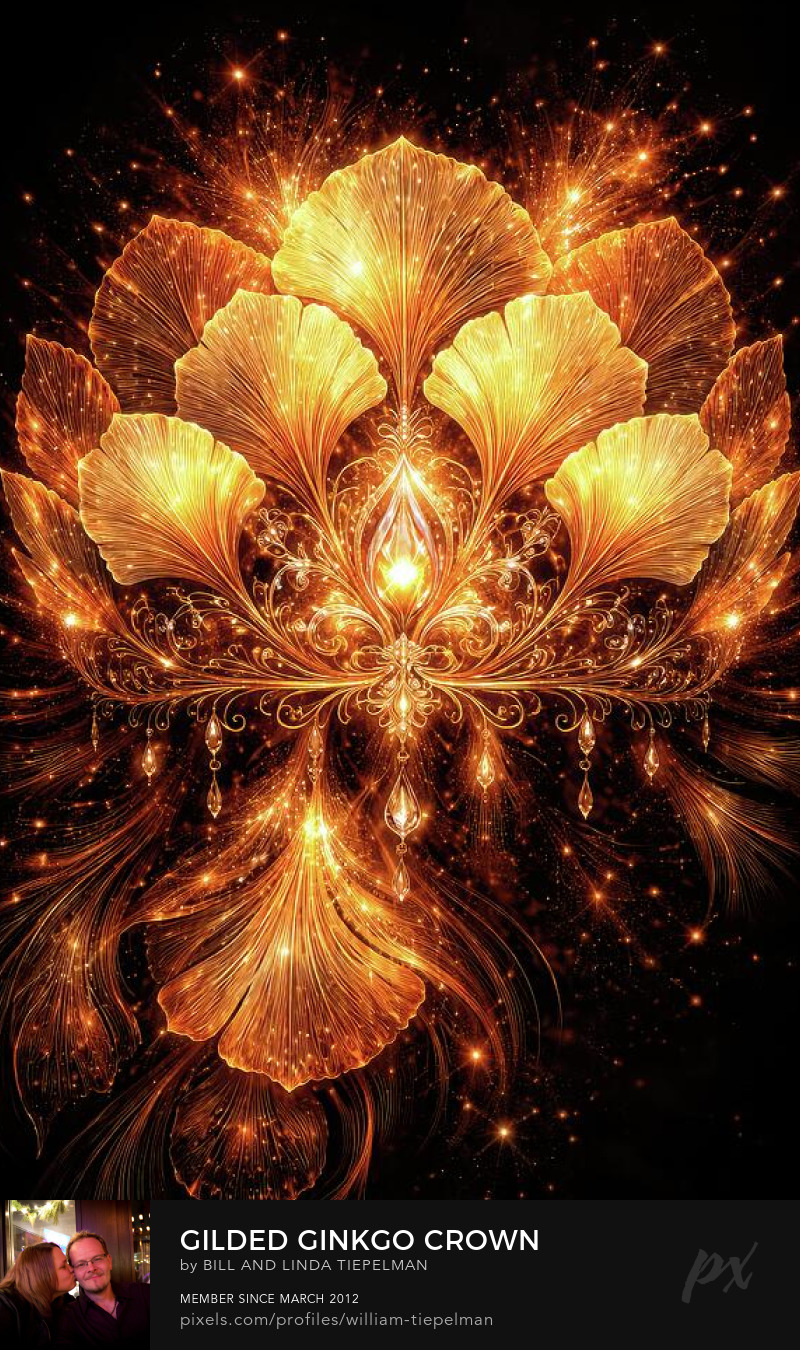
And then she dreamed of gold. Not the bright, happy kind. The dangerous kind. The kind that glows in the dark like it knows it shouldn’t. In her dream, she stood in a forest where the leaves fell upward. They rose from the soil in slow spirals, whispering as they climbed, and each one carried a tiny spark like a trapped star. The air smelled of smoke and honey. Something moved between the trunks—something tall, draped in shadow, watching her without blinking. Then she saw it: a crown, suspended in the dark, made of ginkgo fans like molten lace. At its center, a teardrop jewel burned with a bright, hungry light.
It pulsed once. And a voice—soft, intimate, and absolutely not human—said her name like it had been waiting centuries to taste it again. Maris Elowen Rowe. She woke with her hand pressed to her throat. The mark was hot. Outside, the night was thick and moonless. The town was quiet in the way a place gets quiet when it’s trying not to draw attention. Maris sat up, hair tangled, heart too steady for someone who’d just heard a voice in her sleep. She didn’t feel frightened. She felt… called.
And that was worse. Because fear is a warning. But desire? Desire is a door. At dawn, she drove past the edge of Marrow Vale, past the last polite little mailbox, past the final “PRIVATE PROPERTY” sign that had clearly been nailed up as an afterthought. The road narrowed into a dirt track, then into something that barely deserved the name. The trees thickened. The air cooled. Her radio lost its signal, replaced by a faint crackle like distant fire. She turned it off. The silence that followed felt… attentive.
After a mile, she saw the grove. Ginkgo trees—tall and elegant, their branches spread like open hands. Even in winter’s pall, their leaves clung in places, a ghostly gold against the dark. The ground beneath them was littered with fan-shaped leaves that looked too perfect, too deliberate, as if they had arranged themselves to form a path. Maris parked. Stepped out. The air smelled like old smoke and warm metal. She followed the leaf-path without thinking. Each step felt like walking deeper into a memory she hadn’t lived but somehow recognized.
The grove opened into a clearing. And in the center of that clearing stood a stone arch half-buried in earth and ivy, blackened as if it had survived a fire that tried very hard to erase it. Carved into the stone were patterns—filigree lines that curled and looped like vines, like script, like something trying to be both beautiful and threatening at the same time. At the base of the arch, nestled among roots and ash-dark soil, something glinted. Maris crouched. Her breath caught. A piece of gold—no, not gold. Something that looked like gold but felt like light made solid. A single ginkgo leaf, delicate and sharp, its veins glowing faintly as if it had a pulse.
When she touched it, the world shivered. The leaf warmed under her fingers like it was recognizing her skin. And from somewhere deep in the grove, a sound rose—a low rustle that wasn’t wind, wasn’t animals, wasn’t anything natural. It was the sound of thousands of leaves whispering at once. And then the orchard spoke. Not in words. In sensation. In the sudden certainty that she was not alone, and she never had been. Maris stood slowly, the glowing leaf in her hand. The shadows between the trunks deepened, gathering, stretching, shaping themselves into something that watched her like a lover watches the moment before a kiss.
Somewhere beyond the arch, something shifted. Something old. Something patient. Something that had been waiting under ashes for a very, very long time. Maris lifted her chin, because if you’re going to walk into a cursed orchard that remembers your name, you might as well do it with good posture. “Alright,” she said to the darkness, voice steady. “I’m here.” The leaf in her hand flared brighter. And the arch began to glow.
The Court That Refused to Die
The arch did not open. It remembered. Light seeped through the carved filigree like molten veins igniting beneath stone skin. The patterns along its surface pulsed in slow, deliberate rhythm—too steady to be random, too aware to be accidental. The leaf in Maris’s hand burned brighter, its golden glow reflecting in her eyes until they looked less brown and more… sunlit. The ground shifted. Not violently. Not with the drama of earthquakes and cinematic chaos. It softened. The ash-dark soil beneath her boots gave way like breath being released after centuries of holding it in. Ginkgo leaves rose from the earth, lifting themselves in spirals around her body, brushing her wrists, her shoulders, her throat.
They did not cut. They caressed. The shadows between the trees deepened further, and then—slowly, beautifully—they began to take shape. Figures. Tall. Draped in trailing lines of ember-lit gold. Their forms flickered like smoke caught in candlelight. Faces blurred. Features shifting. But their crowns— They all wore fragments. Broken arcs of ginkgo leaves. Shards of luminous filigree. Remnants of something once whole. Maris didn’t step back. That surprised her. She should have stepped back. Any sensible person confronted with a ghostly aristocracy assembling itself from tree shadows would have chosen retreat. Or at least aggressive denial.
But the fear that should have bloomed in her chest never quite arrived. Instead, something else stirred. A recognition that settled into her bones like a familiar ache. The nearest figure stepped forward. Its outline shimmered, solidifying enough that she could see the curve of cheekbones, the line of shoulders, the suggestion of a mouth. When it spoke, the sound came not from lips but from the air itself. “Daughter of ash.” The words moved through her body like a low note from a cathedral organ—resonant, intimate. “I don’t have children,” Maris replied evenly. “And I’m fairly certain I wasn’t born in a fireplace.”
A ripple of something like amusement passed through the gathered figures. Leaves trembled. The voice returned, softer now. “You carry the ember. You were marked when the Court fell.” “Marked by whom?” The arch behind her flared brighter. Images flickered across its surface—fleeting, half-formed. A city woven from living trees. Towers of interlaced branches dripping with molten light. Walkways grown from bark and braided roots. And in the center— A throne. Not stone. Not metal. It was grown from intertwined ginkgo trunks, their leaves blazing like a perpetual autumn caught mid-fall.
And upon that throne sat a woman. Her silhouette was unmistakable. Sharp posture. Dark hair. A teardrop mark at her throat glowing like a captured star. Maris inhaled slowly. “That’s not me,” she said. “Not yet.” The figures parted. The earth between them cracked—not breaking, but peeling back like skin shedding. Beneath the soil was not dirt. It was light. A buried lattice of gold veins ran beneath the orchard floor, converging toward the arch and extending beyond it into something vast and unseen. “You’re dead,” Maris said quietly. “All of you.”
“We are waiting.” “For what?” The figure stepped closer. Close enough that she could feel the temperature shift—the warmth of embers banked but not extinguished. “For the one who did not burn.” Her pulse faltered once. Her childhood came back in flashes—her mother’s hurried packing, the way they moved from place to place without explanation. The nights her mother would stand at windows long after Maris was asleep. The whispered arguments with people who never seemed to arrive through the front door. “My mother—” “Fled.” “From you?” “From what she could not control.”
The leaf in Maris’s hand pulsed in response, as if offended on her behalf. “You’re saying this is hereditary?” she asked dryly. “Because I did not sign up for ancestral responsibilities.” A faint shimmer of amusement again. “The Court was not blood.” The orchard brightened, leaves igniting in a wave that spread outward like a sunrise trapped beneath branches. “It was promise. It was devotion. It was power rooted in choice.” “And that worked out so well for you.” The air tightened. The ground’s golden lattice flickered. For the first time, she felt it—the wound beneath the beauty. The fracture under the elegance.
Something had not merely attacked the Court. Something had betrayed it. “You were overthrown,” she said softly. “We were consumed.” The word echoed like a blade sliding into silk. “By what?” The shadows recoiled. The temperature dropped. From beyond the arch—deeper in the grove, beyond the visible trees—came a slow, dragging sound. Not leaves. Not wind. Something heavier. Something that moved like it had weight and hunger and no particular concern for aesthetics. “Ash does not form alone,” the figure whispered. “It requires flame… and something to burn.”
The arch split open. Not into another forest. Into memory. Maris saw it unfold in violent clarity—the night the orchard burned. The sky blackened by smoke. Ginkgo leaves igniting in cascades of molten gold. The Court standing defiant as shadows poured through the grove like ink spilled across parchment. And at the heart of it— A crown. Whole. Brilliant. Its teardrop jewel blazing brighter than the fire itself. She watched the woman on the throne rise. Watched her lift the crown from her head. Watched her press the jewel to her own throat.
And then— Light exploded outward. Not destructive. Defiant. The fire consumed the invaders—but not before the grove collapsed, the Court fracturing into shadow and ember. The crown shattered. Fragments scattered like seeds. The final image before the vision collapsed was a single glowing shard falling into the arms of a fleeing woman clutching a child. Maris staggered as the arch sealed shut. The orchard went quiet. Not empty. Expectant. Her hand rose to her throat again. The birthmark burned. “You put it in me,” she whispered. “We placed the ember where it would not be hunted.”
“And now?” The figures bowed. Not submissively. In recognition. “Now it calls you back.” The dragging sound beyond the grove grew louder. Closer. The air thickened with the scent of char and something acrid beneath it—something old and resentful. “That’s what consumed you,” Maris said. “It did not finish.” The orchard’s light dimmed slightly, as though bracing. “And you think I can?” The leaf in her hand dissolved. Not into ash. Into liquid gold that crawled up her fingers and across her wrist, forming delicate lines of filigree against her skin.
Her breath hitched. Heat spread up her arm, across her shoulders, down her spine. From the earth, fragments rose—shards of glowing ginkgo leaves, curved and sharpened like crescent moons. They hovered around her head. Slowly aligning. “You want me to wear it,” she said. “We want you to choose.” The dragging sound broke into the clearing. Between the trees, the darkness thickened into form—tall, contorted, crowned not in gold but in jagged blackened branches. Its body looked like charred bark stitched together with smoke. Its eyes were hollows filled with embers.
And when it saw her— It smiled. Not kindly. Hungrily. The fragments above her head trembled. The orchard held its breath. The thing in the clearing spoke in a voice like collapsing timber. “The ember returns.” Maris straightened. Her pulse no longer faltered. “You burned them,” she said evenly. The creature tilted its head. “They burned themselves.” “Funny how that works.” The fragments began to descend. Hovering inches above her hair. Heat coiled around her skull like a lover’s breath. The orchard waited. The Court waited. The devourer stepped closer.
“Make your choice,” it rasped. Maris’s lips curved. Not kindly. Hungrily.
She Who Wears the Orchard
“You want my choice?” Maris said softly. The fragments hovered just above her scalp, rotating in slow orbit. Each golden leaf glowed brighter than before, veins pulsing like living circuitry. The air thickened with heat, with memory, with anticipation so sharp it felt almost indecent. The devourer stepped forward. Its body cracked as it moved, charred bark splitting to reveal veins of smoldering red beneath. Smoke bled from its shoulders in languid coils. It did not rush. It did not need to. “You cannot hold what destroyed them,” it rasped.
Maris tilted her head slightly. “You seem very invested in my self-esteem.” The creature’s ember-hollows narrowed. The orchard dimmed. The Court’s shadowed figures wavered, as though their existence depended on a breath Maris had not yet taken. Heat spread through her throat—through the mark that had always felt like an inconvenience, a blemish, a soft little punctuation mark on her otherwise controlled exterior. It was no blemish. It was a fuse. “You didn’t consume them,” she said, voice steady now, low and sure. “You fed on their fracture. On doubt. On betrayal.”
The creature’s smile thinned. “And you think you are immune?” Maris’s lips curved slowly. “No,” she said. “I think I’m worse.” The fragments dropped. They did not crash onto her head. They settled. Each golden ginkgo leaf fused into place with a soft, resonant chime—like crystal struck in a cathedral. Filigree arced across her brow, delicate and lethal. The teardrop jewel descended last, hovering just above the mark at her throat. The moment stretched. Choice balanced like a blade. She could walk away. She could let the orchard rot quietly into legend.
She could choose safety. Instead, she lifted her chin and pressed her fingers to the jewel. “I don’t inherit ruins,” she whispered. “I rebuild empires.” She pressed the jewel to her throat. The world split. Light did not explode outward. It imploded. It rushed inward, pouring into her like molten sunlight poured into a mold. The golden lattice beneath the orchard ignited, veins blazing beneath soil and root. The ginkgo trees arched inward, their branches bending as if in reverence. The crown sealed. Not resting on her. Rooting into her.
Filigree traced down her temples, across her cheekbones, along her collarbones in fine glowing lines. The birthmark dissolved into a brilliant teardrop flame embedded in her skin. Her eyes opened. They burned gold. The devourer staggered back. For the first time, something like uncertainty flickered across its fractured form. “You misunderstand,” it growled. “No,” Maris said calmly. “You do.” She stepped forward. With each step, the orchard transformed. Ash lifted from the ground, rising in spirals that reformed into glowing leaves. Blackened bark smoothed into living wood. The arch behind her cracked—not breaking—but unfurling into towering gates woven of radiant branches.
The Court’s figures solidified. Not shadows now. Forms of molten elegance, crowned in restored arcs of ginkgo gold. The devourer roared, lunging forward in a storm of smoke and splintered char. Maris did not flinch. She lifted one hand. The golden lattice surged upward through her palm, erupting in a wave of searing brilliance that wrapped around the creature mid-strike. It screamed. Not in pain alone. In recognition. “You are not flame,” she said, voice resonant now with a harmony not entirely her own. “You are hunger.” The lattice tightened, ginkgo leaves slicing through smoke and binding bark.
“And hunger,” she continued softly, stepping closer until her shadow fell over its ember-hollows, “is only powerful when something is afraid to be consumed.” The creature writhed, branches snapping, smoke thickening around them both. “They feared loss,” it spat. “They loved too gently,” she corrected. She reached forward and pressed her glowing palm against its chest. The orchard inhaled. And this time, it burned correctly. Not in wild destruction. In purification. Golden fire spread through the devourer’s form—not devouring it, but unraveling it. Smoke thinned. Bark softened. The jagged black crown atop its head dissolved into drifting ash that reformed as falling ginkgo leaves.
The embers in its eyes flickered. Then extinguished. The creature collapsed—not into ash—but into soil. Into root. Into something harmless. The orchard stood still. Then it bloomed. Not seasonally. Not cautiously. In a riot of molten gold. Leaves burst from every branch, cascading in radiant waves. The Court knelt—not in desperation—but in allegiance. Maris stood at the center of it all. Not a relic. Not a vessel. A sovereign. The crown no longer felt heavy. It felt… inevitable. The gates behind her opened fully, revealing the restored city woven of living trees and light. Walkways shimmered. Towers rose in braided splendor. The throne awaited—not as a burden, but as a seat earned.
She turned once, looking back toward the outer world—the small town, the highways, the version of herself that had lived sharp and guarded and slightly unfinished. A faint smile touched her mouth. “They’ll feel it,” she murmured. Beyond the grove, far beyond Marrow Vale, something subtle shifted in the wider world. Ambition brightened. Doubt thinned. Old systems trembled. The orchard did not hide anymore. It thrived. Maris stepped through the gates. The Gilded Ginkgo Crown flared once—brilliant, seductive, unashamed. And the Court of Ash became the Court of Radiance.
This time, it would not burn quietly.
If Gilded Ginkgo Crown awakened something sovereign in you, you can bring that radiance into your own realm. Let the ember-lit filigree command your walls with a museum-quality framed print, or let it blaze in modern brilliance on a luminous metal print. Want something immersive? Drape the golden orchard across your space with a dramatic tapestry, or soften your throne room with a regal throw pillow and luxurious fleece blanket. Even your everyday rituals can carry a touch of molten elegance with a bold tote bag that whispers: power is not borrowed — it is worn.
 Sir Grumblethorn and the Mushroom That Disagreed
 The Wink That Got Away With Everything
 The Dewdrop He Swore He Could Handle