sass and magic

Captured Tales

View

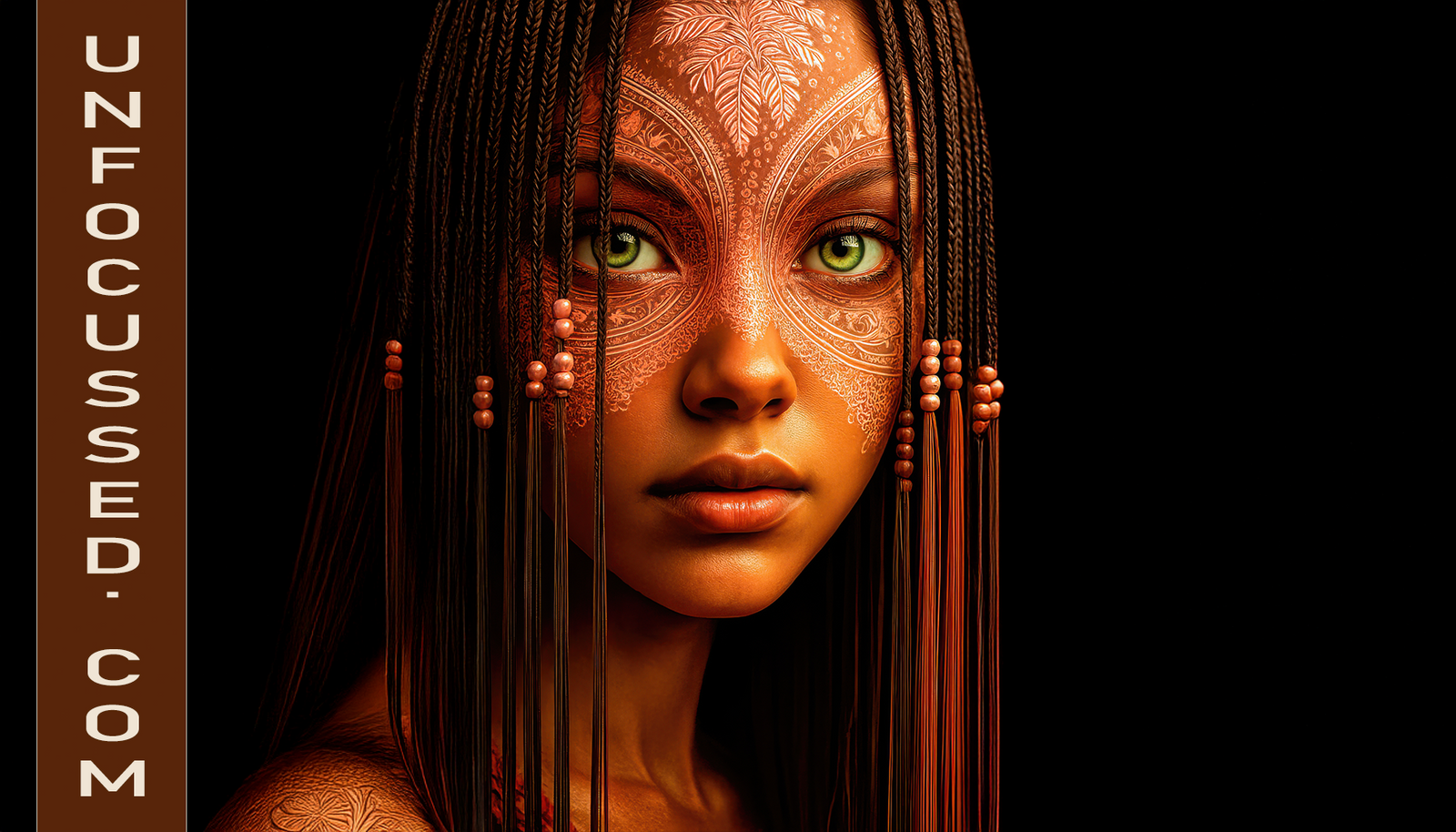
Daughter of the Flameveil

by Bill Tiepelman

Daughter of the Flameveil

The Emberling Who Wouldn't Behave In a desert so old it forgot its own name, where the sun whispered secrets to the dunes and the wind told only dirty jokes, a girl was born beneath a veil of flame. Not literally on fire, mind you—though her Aunt Keela would forever claim there was “a glimmer of combustion behind those eyes.” No, little Maelyra came into the world wrapped in smoke-colored swaddles and prophecy. And colic. Lots of colic. She was the third daughter of the House of Emberveil, a bloodline known for birthing women who could summon storms with a wink and read the truth off a man's tongue like a menu. Each girl was meant to grow into a Seer, a Whisperer, a Queen of the Inner Flame. But not Maelyra. Maelyra liked to braid scorpions into her hair (non-venomous, usually), blow bubbles during sacred meditations, and sneak fire-milk liquor into the ceremonial tea of the High Sisters. By thirteen, she’d rewritten the temple’s hymnal to include fart jokes and rewritten her fate by setting the Oracle Tent on fire with nothing but a glare, a sarcastic prayer, and a stolen jar of moon oil. “She is... spirited,” whispered the High Priestess, stroking her singed brows. “She’s a menace,” sighed Maelyra’s mother, Queen Ashava, as her daughter skipped past naked except for henna, a sash, and a goat wearing her tiara. And the Flameveil? That ancient mask of swirling patterns that revealed a Seer’s calling, the one that kissed each chosen face in sleep with divine approval? It refused to appear on Maelyra’s face, no matter how many rites they tried. “Flame-shamed,” they called her behind jeweled fans and closed tent flaps. But Maelyra wasn’t flame-shamed. She was flame-pissed. “You want fire?” she declared one star-bloated night, staring into the embers of her campfire. “Fine. Let’s start with your rules.” And she did. Starting with the “don’t commune with spirits while tipsy” rule. That was the night she met him. “You rang?” said the spirit, climbing out of the smoke like a cinnamon-dusted flirt. He had a jaw that could cut glass, eyes full of bad decisions, and the laugh of a forgotten god who’d just found tequila. He wasn’t exactly part of the temple’s approved pantheon, but Maelyra didn’t care. His name was Thalun, and he was the discarded guardian of failed seers—what he called “freelance spiritual misfits.” “You're like a cosmic guidance counselor,” she smirked. “But hot.” “And you,” he purred, flicking a spark off her nose, “are a walking violation of sacred protocol. I like you already.” Their partnership began with sass and firelight and a mutually understood agreement to not follow any cosmic instruction manuals. Together, they crashed a moon festival, released a captured desert wind, and convinced a bored sand wyrm to become the temple’s new therapy pet. But something strange was happening to Maelyra’s skin. The first mark appeared while she was eating pickled cactus at sunrise—a soft, gold spiral etched on her cheek. By the next day, two more blossomed across her brow and jawline, delicate as henna, radiant as sunrise, and suspiciously familiar. “Is that the—” Thalun started. “Nope,” Maelyra said, licking pickle brine off her fingers. “Must be a rash.” But it wasn’t. The Flameveil was waking up... and it had opinions. The Veil Talks Back The day Maelyra’s third Flameveil marking appeared, the temple’s bird-messenger dropped dead mid-air. “Dramatic,” she muttered, stepping over the feathered omen like it was a laundry basket. “Could’ve just sent a passive-aggressive dream like everyone else.” But the Elders were already twitching in their robes. Her mother, Queen Ashava, summoned a private conclave where everyone spoke in low, sacred tones and sipped tea like it was truth serum. The High Priestess clutched her prayer beads so hard one of them exploded, and the Spirit of Communal Modesty hiccuped loudly through the incense smoke. They were worried. About Maelyra. About the Flameveil. About what it meant when an irreverent girl who once taught the temple goats to twerk began growing divine tattoos she clearly hadn't earned. “It’s not supposed to grow on her,” an Elder hissed, mouth full of blessed pastry. “Maybe it's a punishment,” offered another, adjusting his belt of holy enlightenment (which Maelyra always thought looked suspiciously like a cheap curtain tie). “A slow divine branding.” Maelyra, eavesdropping in the rafters while hand-feeding raisins to a spiritual crow named Kevin, rolled her eyes so hard she saw the beginning of time. “If they’re going to gossip,” she told Kevin, “they could at least offer snacks.” That night, the Flameveil spoke to her for the first time. Not in riddles or fiery scrolls, but with the bluntness of a battle-worn auntie and the subtlety of a camel in tap shoes. “Get up. We need to talk.” Maelyra bolted upright in her tent, halfway tangled in her sleeping rug and clutching a pillow shaped like a desert potato. “What in the seven rings—” “No time. Listen. I’ve been watching. You’re a mess.” The voice came from inside her own skin, as if the golden marks had grown vocal cords and no filter. “You’re stubborn, chaotic, easily distracted by shiny men and forbidden beverages, and utterly unequipped for spiritual leadership.” Maelyra blinked. “Okay, ouch.” “But... you’re also curious, hilarious, absurdly brave, and... well, let’s just say the other candidates were like wet scrolls compared to you. The Flame chose. Reluctantly. I am your Veil now. Deal with it.” She stared into the polished bowl of water beside her bed, where her reflection now shimmered with faint, pulsing lines of divine filigree. Each new mark curved and danced like a flame drawn in lace. And—most unsettling of all—they wiggled when she made snarky comments. “You’re alive, aren’t you?” she whispered to the mask. “Of course I am. I’ve outlived empires, judged queens, slapped prophets, and once cursed a llama into enlightenment. I’m not just some cosmetic destiny doodle.” That was how she learned the Flameveil wasn’t just a symbol. It was a sentient legacy, bound to the soul of its bearer like cosmic spanx—tight, occasionally sassy, and constantly holding things together whether you wanted it or not. The next few weeks were a montage of magical mishaps. The veil wouldn’t stop giving commentary during rituals. (“Wrong hand, darling.” “That’s not a sacred bowl, that’s soup.” “Stop winking at the acolyte, Maelyra.”) Thalun, her spirit guide turned semi-boyfriend turned full-time mischief coach, watched with increasing amusement. “You’re literally arguing with your own destiny,” he said, lounging in midair and eating starfruit like a smug lantern. “Destiny shouldn’t have opinions on underwear,” she snapped, tugging at the ceremonial garb the Veil insisted was “traditionally flattering.” But things were shifting. The sand no longer burned her feet when she walked barefoot. The temple’s cats followed her in perfect spiral formations. A forgotten prophecy—a very dramatic, rhyming one involving “laughter unburnt and a womb of chaos”—started circulating like gossip at a camel race. And then the visions began. Not the polite, misty dream-visions of old. These were vivid, loud, and surprisingly musical. One minute she was meditating with Thalun, the next she was in a glowing hallway of ancestral seers, being serenaded by a chorus of grandmothers with tambourines. “Oh no,” Thalun said, as her eyes glazed over in yet another vision fit. “She’s in Grandma-Mode again.” Maelyra returned from each trance sweaty, confused, and often humming tunes she’d never heard before. The Flameveil would then glow brighter, as if pleased, while her mother grew increasingly pale at the sight of her daughter levitating during breakfast. Eventually, the temple had to act. They declared a Pilgrimage of Proving—a sacred, absurdly long journey through fire, storms, awkward mountain villages, and at least one judgmental cactus—to determine whether Maelyra truly deserved the mask that was now clearly clinging to her like a divine barnacle. “You will leave at dawn,” the High Priestess announced dramatically. “You may take one companion and one spiritual artifact.” Maelyra grinned. “I’ll take Thalun. And Kevin the crow.” “That’s two companions.” “Kevin’s technically an artifact. He once swallowed a blessed spoon.” The council groaned. And so, with sass in her sandals, visions in her veins, and a sassy ancient tattoo-mask fused to her face, Maelyra stepped beyond the temple gates. The Flameveil pulsed. Thalun floated beside her like a scandalous idea. Kevin pooped dramatically on a sacred rock. The journey had begun. The Prophecy of Inappropriate Timing It rained frogs on the fifth day of Maelyra’s pilgrimage. “This is a test,” Thalun muttered, shielding his spectral head with a half-eaten scroll. “It’s gotta be. Divine plumbing gone rogue.” “No, this is definitely Grandma Anareth’s doing,” Maelyra muttered, swatting a toad out of her sandal. “She always said my journey would be ‘ribbiting.’” They had crossed five deserts, four sacred sinkholes, and a field of whispering sandstones that only insulted travelers in haiku form. Kevin the crow had developed a gambling problem with desert beetles. Thalun had been propositioned by a sentient cactus. And Maelyra? She was now glowing. Literally. Her Flameveil shimmered like dusk caught in silk, the golden designs on her skin now spreading down her arms and spine like creeping ivy lit from within. “I think I’m mutating,” she said one night, watching her reflection shimmer in a puddle of starlight. “You’re ascending,” the Veil corrected, always the know-it-all. “Though yes, it’s very glowy. Try not to blind yourself.” By now, the bond between Maelyra and the Flameveil was... complicated. Like co-parenting a magical toddler with a spicy ex. The Veil nagged, snarked, and guided her with the same energy as a stubborn dance instructor who refused to let the student sit down until the twirl was perfect. But there was affection, too. She felt it during the quiet hours when the stars listened and the mask hummed lullabies through her bones. And then they reached the Canyon of Echoes, where every flameborn Seer for the past thousand years had gone to receive their final rite. Maelyra expected music. Fireworks. A laser-projected flaming goat, maybe. Instead, she got a single stone slab, a pile of spiritual paperwork, and a bored-looking celestial clerk named Meryl. “Sign here. Blood or ink. No refunds.” “That’s it?” Maelyra asked, side-eyeing Thalun. “That’s bureaucracy, love,” Thalun sighed. “Even for the divine.” But the moment her palm touched the stone, the air changed. Her body lifted off the ground, the Flameveil igniting in a blinding burst of gold and rose-pink light. She hovered mid-air, arms out, hair wild, voice trembling with something far older than herself. “I am Maelyra of the Flameveil,” she declared, her voice no longer just hers, but woven with ancestral tones and slightly inappropriate jazz harmonies. “I carry the laughter of the unruly, the wisdom of the half-drunk, and the sacred nonsense of chaos made holy. I claim the right to burn with joy, to see through shadows, and to kiss fate on the mouth if I feel like it!” Then she burst into flames. Beautiful, harmless, sassy flames. The kind that danced and curled and left sparkles in the air like confetti. When she landed, the canyon had changed. A temple stood where there had been stone. A gathering of spirits waited with tambourines and smirks. Kevin wore a tiny crown. “You’re late,” said a familiar voice. The ancestors. Dozens of them. Some regal, some weird, one clearly holding a margarita. “You mean I made it?” “You redefined it,” said the Veil. “You took the sacred and made it sweaty, funny, and ridiculous. That’s power. That’s the point.” Thalun floated closer. “So... are you a full Seer now?” She turned to him, her eyes full of fire and mischief. “No, I’m something worse. I’m the first Wyrd Seer. The one who laughs at fate, flirts with destiny, and makes the gods uncomfortable in their sandals.” She leaned in and kissed him, fiery and slow, as celestial spirits pretended not to watch but totally did. From that day on, Maelyra traveled the realms as a wild oracle of sass and wonder. She gave visions to anyone who asked, as long as they were willing to dance, drink, or listen to dirty jokes. She rewrote the rules of prophecy, starting with: “Stop taking yourself so seriously, you holy biscuit.” The Flameveil glowed brighter every year. Not because it was ancient, but because it was finally having fun. And in the great cosmic ledger, where the deeds of every Seer were inscribed, Maelyra’s entry simply read: “She made us laugh. She made us feel. She stole a god’s pants once. We approve.” Story image reference and inspiration from Rania Renderings       Want to carry a spark of Maelyra’s wild prophecy into your world? Whether you’re dressing up your walls or wrapping yourself in sass-soaked mysticism, framed art prints and acrylic panels bring her gaze into your sacred space with full fire and finesse. Let her travel with you on an enchanted tote bag, lounge beside you on a boldly woven beach towel, or stretch across your realm as a vibrant tapestry worth prophesying over. Wherever she goes, so does the laughter, the mystery, and the unapologetic magic of the Flameveil.
Read more

The Laughing Muse

by Bill Tiepelman

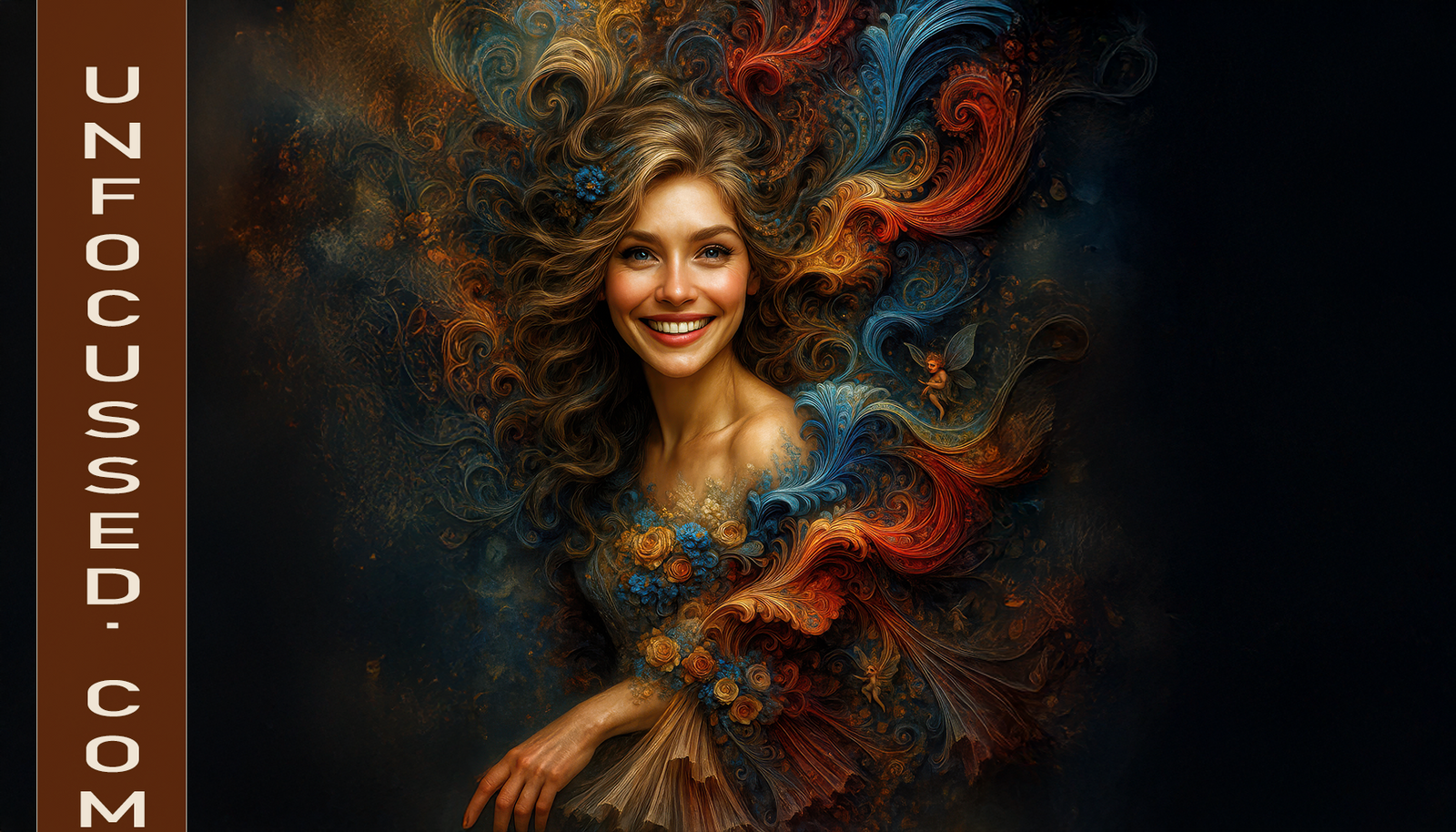
The Laughing Muse

The Scandalous Rebirth of Seraphina Muse Long before she became a muse, Seraphina was a minor chaos deity assigned to the Bureau of Spontaneous Laughter. Her job involved distributing ill-timed giggles during funeral services, awkward wedding toasts, and tense elevator rides. She did her best, really — but she had a knack for going just a smidge overboard. One time, she made a monk snort so hard during a vow of silence that he ruptured a sacred scroll. That earned her a demotion... and, to be fair, a cult following in the underworld’s meme forums. Eventually, the Department of Divine Vibes had no choice but to put her on “Creative Probation.” She had one last shot at redemption: to live a mortal life as an artist’s muse and inspire something truly beautiful—without triggering any mass nudity incidents or disco plague outbreaks. No pressure. Seraphina was flung into the mortal plane with nothing but her laugh (which sparkled like champagne and slightly echoed with goat noises) and a kaleidoscopic wrap dress made of cosmic threads. She arrived mid-spin in a sunflower field during golden hour, startling a painter named Emil who was trying to sketch a very serious still life of a dead pineapple. “Oh sweet cosmos,” Emil gasped, dropping his sketchbook and sanity simultaneously. “Are you... real?” Seraphina winked. “Define ‘real,’ darling.” And thus began the Great Artistic Reawakening of Emil Brandt, formerly known as the most tragically constipated artist in his district. His oils had dried, his palette knives had dulled, and his soul had the texture of plain toast. But with Seraphina’s arrival? Suddenly he was painting like a caffeinated octopus on a sugar high. Portraits, abstracts, living walls of swirling emotion—and one entire mural of her left eyebrow, because, as he put it, “the arch contains multitudes.” But while Emil painted, Seraphina... watched. Observed. Laughed. Flirted with moonbeams. Made his cat speak French. And deep within, something strange began to blossom. For the first time in her chaotic existence, Seraphina felt something that wasn’t just amusement or the mischievous urge to switch everyone’s underpants inside out telepathically. She felt... invested. Because as it turned out, being a muse wasn’t about being admired—it was about awakening. Stirring something bold and brave and impossibly beautiful in someone else. And maybe—just maybe—that was the kind of magic worth sticking around for. ...Or maybe it was just the coffee. Mortals had truly perfected that drug. The Gallery of Mostly Accidental Genius The next few months were a kaleidoscopic montage of late-night paint flinging, whispered provocations, and ill-advised energy drinks brewed with starlight and a hint of peppermint chaos. Emil’s flat—once the epitome of existential beige—was now a jungle of canvases, spilled pigment, laughing plants, and at least two sentient paintbrushes who insisted on unionizing. And Seraphina? She was thriving. More mortal by the day, in the best of ways—she had learned how to make pancakes (badly), flirt with delivery drones (successfully), and binge-watch supernatural soap operas (obsessively). But most importantly, she'd learned how to fall in love—not just with Emil, though that was happening at a pace that would make even Aphrodite raise a perfectly plucked brow—but with inspiration itself. Not the grand, thundering muse-y kind either, but the gentle, awkward, totally unphotogenic moments like watching Emil try to paint while sneezing, or the way he swore at his canvas like it owed him money. It all crescendoed into the event neither of them saw coming: The Annual Neo-Romantic Art Gala. The invitation came in an envelope made of recycled rumors and sealed with glitter-glue vengeance. Emil was to be the featured artist—an anonymous patron had submitted his work and paid the entrance fee in gold teeth and espresso loyalty cards. At first, Emil protested, because he was Emil and full of artistic angst and unresolved drama with a loaf of sourdough in his fridge. But Seraphina put her cosmic foot down. “You're going. I'm going. And you're going to wear the good boots. No, not those. The ones that say ‘I paint heartbreak and can salsa.’” When they arrived at the gala, the room went still. Or rather, it tried to. One woman fainted into a vat of guava wine. Someone dropped their monocle into a shrimp cocktail. The staff dog, Gregory, sat up straighter and gave Seraphina a gentlemanly nod. Because Seraphina, in her element, wearing a gown made entirely of stitched moonlight and dangerously high expectations, was not simply a muse—she was a movement. Her dress shimmered with her every mood—flaring rose-gold with flirtation, stormy violet when bored, and once, dramatically, deep chartreuse when she spotted her ex-colleague and long-time nemesis: Thalia of the Whispering Moods. Thalia. Oh, Thalia. Muse of Serious Poetry, Dramatic Sighs, and the occasional overpriced candle line. She swept through the crowd in a gown made of broken promises and seasonal depression, clutching a wine glass that somehow always stayed full and only drank tears of misunderstood poets. “Seraphina,” Thalia purred. “How... quaint. You’ve chosen to dabble in human creativity. Again.” “Thalia,” Seraphina replied with the poise of someone who once seduced a time vortex into running late. “Still collecting sad boys like Pokémon cards, I see.” The tension could have sliced a croissant. But there was no time for muse-on-muse drama, because Emil’s collection had just been unveiled—and it was spectacular. Giant canvases pulsed with color and motion. Portraits that breathed, abstracts that whispered, and one disturbingly seductive painting of a croissant mid-fall that earned three offers and a marriage proposal. The centerpiece? A breathtaking portrait of Seraphina, caught mid-laughter, wrapped in swirls of color and light like she’d been caught dancing with the northern lights. The room fell to hush. Thalia, looking suddenly less smug, narrowed her eyes. “That’s not mortal talent,” she hissed. “You’ve cheated.” “He found his own inspiration,” Seraphina replied, letting her dress shift into a blaze of sunbeam yellow and pride. “All I did was stop laughing long enough to watch him find it.” Thalia tried to protest, but at that moment, the painting of Seraphina laughed. Not metaphorically. Literally. It laughed—out loud. A rich, rolling laugh that echoed through the gallery and triggered spontaneous interpretive dance in at least seven attendees. The spell was broken. Or made. It didn’t matter. The magic had worked. Emil was swarmed with press, collectors, and at least one cult recruiter. But he only had eyes for her. Later, under a quiet archway far from the clamor and champagne-fueled art critics, he asked her the question that had been quietly blooming between brushstrokes and shared pancakes for weeks. “What happens now, Seraphina?” She smiled, and her dress turned the soft pink of post-laughter intimacy. “Now?” she said, her voice a curl of perfume and mischief. “Now we make something even more dangerous than art...” “What’s that?” he whispered, a little dazed. “A life.” And for the first time in her long, bizarre, glitterbomb existence, Seraphina Muse didn’t just feel inspired. She felt home. The Echoes That Linger After the Laugh It should’ve ended in bliss. In brunches and paint-streaked kisses. In happily ever afters and montages scored with whimsical cello. But this is a story about a Muse—and muses don’t retire to suburbia with a Pinterest board and a joint savings account. One morning, while Emil slept tangled in a blanket that Seraphina swore had developed a mild crush on him, the sky above their little art-filled flat cracked like a dropped wine glass. A rift opened in the clouds, raining shimmering letters onto the rooftop garden. Each letter landed with a dramatic flair that screamed “divine bureaucracy”. It was a summons. Seraphina Muse. Return Immediately. Probation Ended. Evaluation Pending. Dress Code: Formal. No Glitter. “No glitter?!” she cried, clutching the paper like it had personally insulted her aura. She tried to ignore it. Pretended it was junk mail. Threw it into a planter. But the letter kept reappearing—on mirrors, inside fruit, once inside Emil’s left boot. Eventually, the celestial HR department sent a messenger: a flaming pigeon named Brian who only spoke in passive-aggressive haikus. Seraphina had a choice. Return, and be judged. Stay, and... fade. Slowly. Beautifully. Tragically. Like a soap bubble in a cathedral. Muses could live among mortals, yes—but not indefinitely. They were creatures of divine purpose, and their magic, left untended, would eventually burn itself out, like a candle trying to light its own wax. So she did what any chaotic cosmic being would do. She made a spreadsheet of pros and cons. Then burned it. Then cried in the bathtub with her dress wrapped around her like a security blanket that occasionally hummed old show tunes. She didn’t tell Emil. She couldn’t. What would she say? “Hey, babe, this has been great, but I might get audited by Olympus and vanish into metaphysical paperwork”? No. Instead, she painted with him. Danced with him. Loved him like she was trying to tattoo her laughter into his memory. And then, on a Tuesday that smelled like citrus and unfinished conversations, she left. No note. Just a single, strange gift left on the easel: a loaf of sourdough, perfectly toasted, with a swirl of paint across its crust that shimmered like a galaxy. Inside, carved in burnt crumbs, was a single message: “Paint me free.”     What followed was Emil’s “Mystery Phase.” His art exploded into surreal masterpieces—suns made of sighs, women laughing out of waterfalls, dreamscapes where cosmic dresses unraveled into stars. He never spoke publicly of Seraphina, though collectors begged. He simply painted. And in every gallery, every café, every street corner where his work appeared, someone would inevitably start to laugh. Quietly at first, then uncontrollably. And always—always—with joy. Back in the celestial realm, Seraphina faced her trial. It was held in a court made entirely of forgotten poetry and awkward hugs. The Council of Muses peered down at her with faces like thunderstorms wearing too much perfume. “You disobeyed,” Thalia snapped. “You interfered. You formed... attachments.” “Damn right I did,” Seraphina said, standing in a blazer made of midnight and confidence. “And I inspired more in one mortal’s mess of a heart than your entire department did last century.” The courtroom gasped. Somewhere, a metaphor fainted. “Then prove your worth,” the council boomed. “One final act. Inspire something eternal.” She smiled. She laughed. And she reached into her pocket, pulled out a tiny vial of swirling color—paint Emil had once spilled in a moment of distracted love—and flung it across the sky. The stars shifted. A new constellation bloomed—chaotic, lovely, slightly unbalanced. It formed the shape of a laughing woman, hair swirling, eyes ablaze. A muse, eternal not because she was divine, but because someone down below had refused to forget her.     Years later, Emil—old now, glorious in silver and age spots—taught art in a sunlit studio above a bakery. His students knew little about his past, save for the giggling portraits and one rule he insisted upon: “Paint what makes your soul laugh,” he’d say. “And if something magical ever kisses your life... don’t try to keep it. Just honor it.” One night, he looked up at the stars. Saw her shape there. Smiled through tears. And swore, for the briefest moment, he heard her whisper, “Nice boots.” She had always loved those damn boots.     Bring “The Laughing Muse” into your world... If this tale stirred your soul or sparked a mischievous smile, let the magic live on. Our gallery-quality canvas print turns any room into a sanctuary of creativity. Carry a little enchantment wherever you go with the vibrant tote bag, perfect for books, brushes, or secrets. Wrap yourself in inspiration with our luxurious wall tapestry, a statement piece that brings life to any space. And for moments when laughter needs to travel, the greeting card is your muse-in-a-envelope—perfect for sharing magic with others. Each piece is printed with care, bursting with color, story, and joy—just like Seraphina herself. Explore the full collection and let your walls whisper a little muse-worthy mischief.

Read more

A Glimmer in the Grove

by Bill Tiepelman

A Glimmer in the Grove

The World’s Most Inconvenient Miracle The dragon was not supposed to exist. At least, that’s what they told Elira back in the Overgrown Library, between musty sips of mildew-scented tea and “you wouldn’t understand, dear” looks from mages with more beard than bones. Dragons were extinct, extinct, extinct. Full stop. Period. End of majestic epoch. It had been centuries since a flame-blooded egg so much as twitched, much less hatched. Which is why Elira was fully unprepared to discover one sitting in her breakfast bowl. Yes, the egg had looked odd—like a glittering gob of moonlight dipped in raspberry jam—but she’d been hungover and ravenous and assumed the innkeeper was just very into poultry aesthetics. It wasn’t until her spoon clinked against the shell and the entire thing wobbled, chirped, and hatched with a dramatic “ta-da” puff of flower-scented smoke that Elira finally dropped her spoon and screamed like someone who had found a lizard in their latte. The creature that emerged was absurd. A sassy marshmallow with legs. Its body was covered in soft, iridescent scales that shimmered from cream to plum to fuchsia depending on how dramatically it tilted its head. Which it did often, and always with the bored grace of a woodland diva who knows you’re not paying enough attention to its tragic cuteness. “Oh, no. Nope. Absolutely not,” Elira said, backing away from the table. “Whatever this is, I didn’t sign up for it.” The dragon blinked its disproportionately large eyes—glittering oceans with lashes so thick they could swat away existential crises—and made a pitiful squeak. Then it flopped dramatically into her toast and made a show of dying from neglect. “You manipulative little mushroom,” Elira muttered, scooping it off her plate before it soaked up all the jam. “You’re lucky I’m emotionally starved and weirdly susceptible to cute things.” That was Day One. By Day Two, it had claimed her satchel, named itself “Pip,” and emotionally blackmailed half the village into feeding it strawberries dipped in honey and affection. On Day Three, it started glowing. Literally. “You can’t just glimmer like that!” she hissed, trying to shove Pip under her cloak as they passed through the Moonpetal Market. “This is supposed to be low-profile. Incognito.” Pip, nestled in her hood, blinked up with the deadpan stare of a creature who had already filed a complaint with the universe about how loud her boots were. Then he glimmered harder, brighter, practically sending sunbeams out of his nose. “You little spotlight, I swear—” “Oh my gods!” cried a woman at a jewelry stall. “Is that a dracling?” Pip chirped smugly. Elira ran. The next time they hid out, it was in an overgrown grove so thick with pink foliage and lazily swirling pollen, it looked like a perfume ad for woodland nymphs. It was there—deep in the heart of that glimmering bower—that Pip curled up beside a mushroom, sighed like a toddler who’d just manipulated their parent into a pony, and gave her the look. “What?” she asked, arms crossed. “I’m not adopting you. You’re just tagging along because the alternative is being dissected by weird scholars.” Pip pressed a paw to his heart and fake-wept. A nearby butterfly passed out from emotional exposure. Elira groaned. “Fine. But no peeing on my boots, no catching fire indoors, and absolutely no singing.” He winked. And thus began the most gloriously inconvenient relationship of her life. Puberty and Pyromancy Are Basically the Same Thing Life with Pip was an exercise in boundaries, all of which he ignored with the reckless abandon of a toddler on espresso. By the second week, Elira had learned several painful truths: dragons molt (disgustingly), they hoard shiny things (including, unfortunately, live bees), and they cry in a pitch so high it makes your brain do origami. He also bit things when startled—including her left butt cheek once, which was not how she envisioned her noble destiny unfolding. But she couldn’t deny it: there was something kind of... magical about him. Not in the expected “oh wow he breathes fire” way, but in the “he knows when I’m crying even if I’m three trees away and hiding it like a champ” way. In the “he brings me moss hearts on bad days” way. In the “I woke up from a nightmare and he was already glaring at the darkness like he could bite it into submission” way. Which made it really hard to be rational about what came next. Puberty. Or, as she came to know it: the Fourteen Days of Magical Hellscapes. It started with a sneeze. A tiny one. Adorable, really. Pip had been napping in her cloak, curled like a cinnamon roll with wings, when he woke up, sniffled, and sneezed—unleashing a full-blown shockwave that incinerated her bedroll, two nearby bushes, and one perfectly innocent songbird that had been mid-aria. It reappeared ten minutes later, singed but melodically committed, and flipped him the feather. “We’re going to die,” Elira said calmly, ash in her eyebrows. Over the next week, Pip did the following: Set fire to their soup. From inside his mouth. While trying to taste it. Flew for the first time. Into a tree. Which he then tried to sue for assault. Discovered that tail flicks could be weaponized emotionally and physically. Shrieked for four hours straight after she called him “my spark nugget” in front of a handsome potion courier. But worst of all—the horror—was when he started talking. Not in words at first. Just humming noises and emotional squeaks. Then came gestures. Dramatic head flops. Pointed sighs. And then... words. “Elri. Elriya. You... you... potato queen,” he said on day twelve, puffing his chest with pride. “Excuse me?” “You smell like... thunder cheese. But heart good.” “Well, thank you for that emotionally confusing statement.” “I bite people who look at you too long. Is love?” “Oh gods.” “I love Elriya. But also love sticks. And cheese. And murder.” “You are a confusing little gremlin,” she whispered, half-laughing, half-crying as he curled into her lap. That night, she couldn't sleep. Not from fear or Pip-induced anxiety (for once), but because something had shifted. There was a connection between them now—more than instinct, more than survival. Pip had tangled his little dragon soul into hers, and the damn thing fit. It terrified her. She’d spent years alone on purpose. Being needed, being wanted—those were foreign currencies, expensive and risky. But this pink, glowing, emotionally manipulative salamander with opinions about soup was cracking her open like a fire-blossom seed in summer. So she ran. At dawn, with Pip asleep under her scarf, Elira scribbled a note on a leaf with a coal nub and snuck off. She didn’t go far—just to the edge of the grove, just enough to breathe without feeling the soft weight of his trust on her ribs. By noon, she’d cried twice, punched a tree, and eaten half a loaf of resentment bread. She missed him like she’d grown an extra limb that screamed when he wasn’t nearby. She returned just after sunset. Pip was gone. Her scarf lay in the grass like a surrendered flag. Next to it, three moss hearts and a single, tiny note scrawled in charcoal on a flat stone. Elriya go. Pip not chase. Pip wait. If love... come back. She sat down so fast her knees cracked. The stone burned in her palm. It was the most mature thing he’d ever done. She found him the next morning. He’d nested in the crook of a willow tree, surrounded by shiny twigs, abandoned buttons, and the broken dreams of seventeen butterflies who couldn’t emotionally handle his brooding energy. “You’re such a little drama beast,” she whispered, scooping him up. He just snuggled under her chin and whispered, “Thunder cheese,” with tearful sincerity. “Yeah,” she sighed, stroking his wing. “I missed you too.” Later that night, as they curled in the soft glow of the grove’s pulsing flowers, Elira realized something. She didn’t care that he was a dragon. Or a magical miracle. Or a flammable cryptid toddler with abandonment issues and a superiority complex. He was hers. And she was his. And that was enough to start a legend. Of Forest Gods and Flaming Feelings The thing no one tells you about raising a magical creature is that eventually… someone comes to collect. They arrived with cloaks of starlight and egos the size of royal dining halls. The Conclave of Eldritch Preservation—an aggressively titled group of magic academics with too many vowels in their names—descended upon the grove with scrolls, sigils, and smugness. “We sensed a breach,” intoned a particularly sparkly wizard who smelled like patchouli and judgment. “A draconic resurgence. It is our sworn duty to protect and contain such phenomena.” Elira folded her arms. “Funny. Because Pip doesn’t seem like a phenomenon to me. More like a sassy, stubborn, pants-biting family member with an overdeveloped sense of justice and an underdeveloped understanding of doors.” Pip, hiding behind her legs, peeked out and burped up a fire-spark shaped like a middle finger. It hovered, wobbled, and winked out with a defiant pop. “He is dangerous,” the wizard snarled. “So is heartbreak,” Elira replied. “And you don’t see me locking that in a tower.” They weren’t interested in nuance. They brought binding chains, glowing cages, and a spell orb shaped like a smug pearl. Pip hissed when they approached, his wings flaring into delicate arcs of light. Elira stood between them, sword out, magic crackling up her arms like static betrayal. “I will not give him up,” she growled. “You will not survive this,” the lead wizard said. “You clearly haven’t seen me before coffee.” Then Pip exploded. Not literally. More like... metaphysically. One second, he was a slightly-too-round sparkle-lizard with a tendency to knock over soup pots. The next, he became light. Not glowing. Not shimmering. Full-on, celestial, punch-you-in-the-eyes light. The grove pulsed. Leaves lifted in slow-motion spirals. The trees bent in reverence. Even the smug wizards backed the hell up as Pip—now floating three feet off the ground with his wings made of starlight fractals and his eyes aglow with a thousand firefly dawns—spoke. “I am not yours to collect,” he said. “I was born of flame and choice. She chose me.” “She is unqualified,” a mage blurted, clutching his scroll like a security blanket. “She fed me when I was too small to bite. She loved me when I was inconvenient. She stayed. That makes her everything.” Elira, for once in her entire life, was speechless. Pip landed softly beside her and nudged her shin with his now-radiantly adorable snout. “Elriya mine. I bite those who try to change that.” “Damn right,” she whispered, eyes wet. “You brilliant, flaming little emotional grenade.” The Conclave left. Whether by fear, awe, or simple exhaustion from being out-sassed by a dragon the size of a decorative pillow, they retreated with a promise to “monitor from afar” and “file an incident report.” Pip peed on their sigil stone for good measure. In the weeks that followed, something inside Elira changed. Not in the sparkly, Disney-montage way. She still cursed too much, had zero patience, and over-salted her stew. But she was... open. Softer in strange places. Sometimes she caught herself humming when Pip slept on her chest. Sometimes she didn’t flinch when people got too close. And Pip grew. Slowly, but surely. Wings stronger. Spines sharper. Vocabulary increasingly weird. “You are best friend,” he told her one night under a sky littered with moons. “And noodle mind. But heart-massive.” “Thanks?” He licked her nose. “I stay. Always. Even when old. Even when fire big. Even when you scream at soup for not being soup enough.” She buried her face in his side and laughed until she sobbed. Because he meant it. Because somehow, in a world that tried so hard to be cold, she’d found something incandescent. Not perfect. Not polished. Just... pure. And in the heart of the grove, surrounded by blossoms and moonbeams and an emotionally unstable dragon who would maul anyone who disrespected her boots, Elira finally allowed herself to believe: Love, real love—the bratty, explosive, thunder-cheese kind—might just be the oldest kind of magic.     Bring Pip Home: If this spark-scaled mischief-maker stole your heart too, you're not alone. You can keep a piece of "A Glimmer in the Grove" close—whether it’s by adding a touch of magic to your walls or sending someone a dragon-blessed greeting. Explore the acrylic print for a brilliant, glass-like display of our sassy hatchling, or choose a framed print to elevate your space with fantasy and warmth. For a touch of whimsy in everyday life, there's a greeting card perfect for dragon-loving friends—or even a bath towel that makes post-shower snuggles feel a little more legendary. Pip insists he looks best in high-resolution.

Read more

Explore Our Blogs, News and FAQ

Still looking for something?