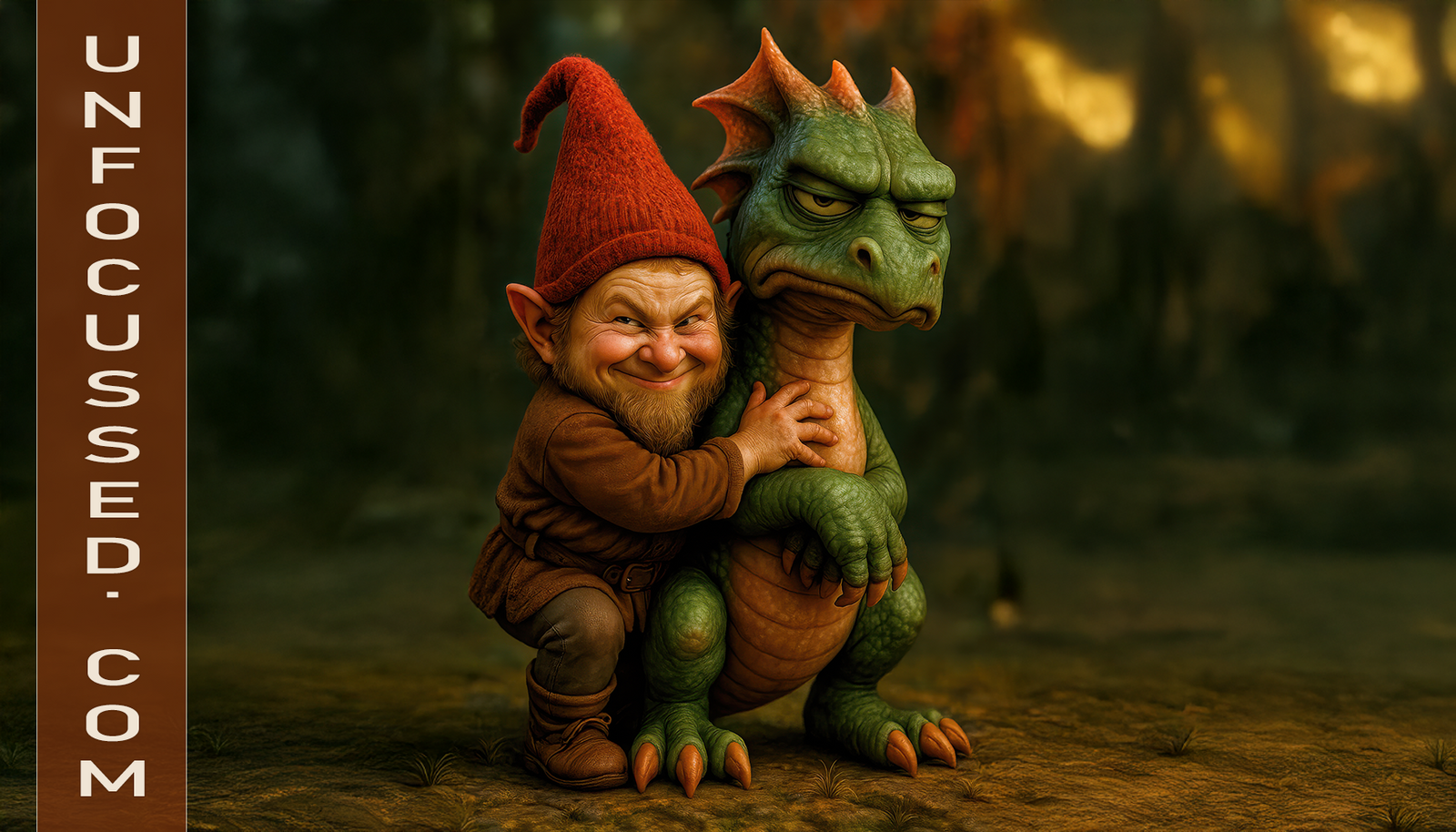
gnome

Cuentos capturados

View

Laughter in the Dark

por Bill Tiepelman

Laughter in the Dark

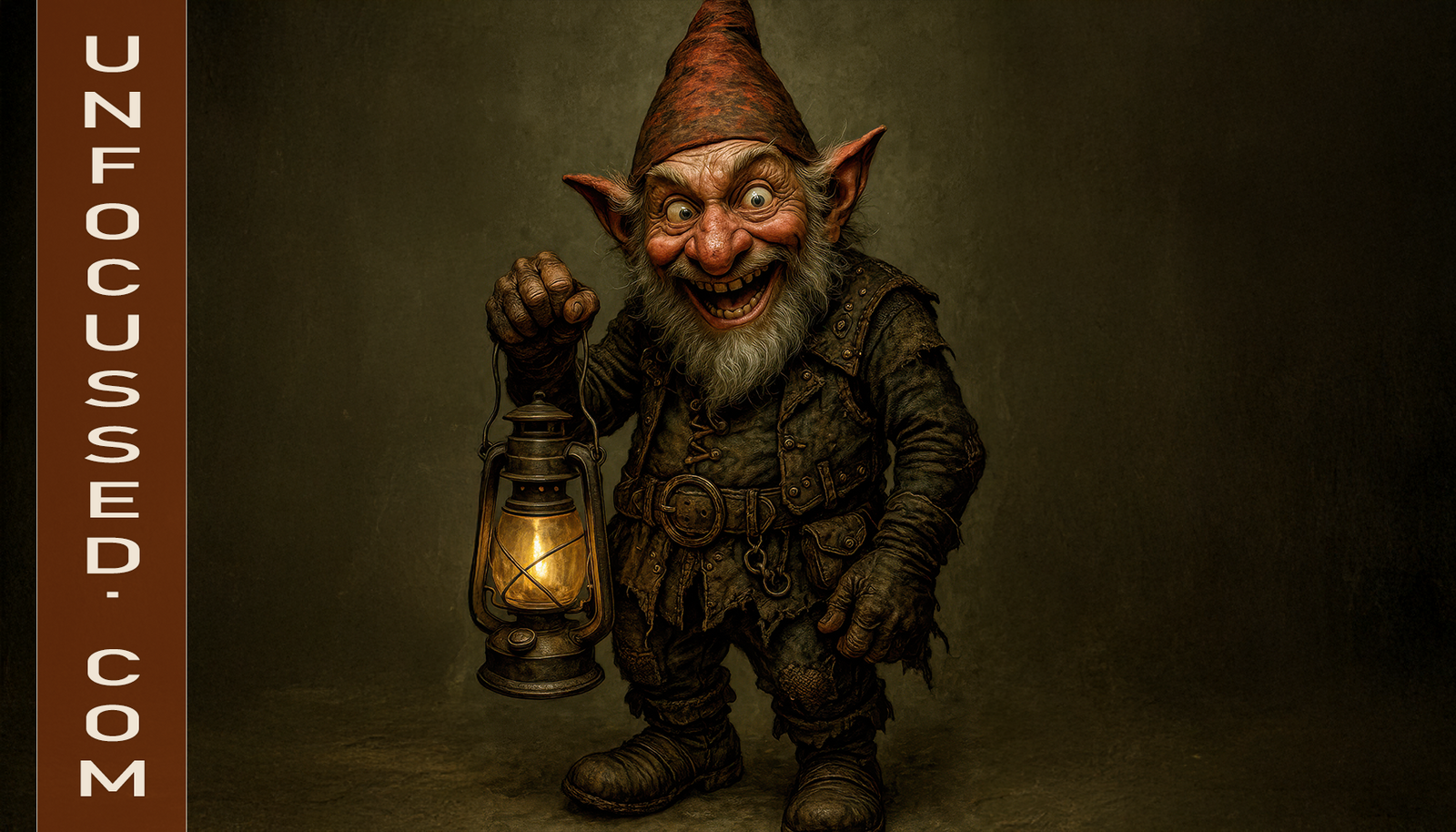
The Lantern-Bearer Appears Everyone in the village of Mirewood knew the rules about the forest. The elders taught them in school, the barkeep scrawled them on the back of ale-stained napkins, and old Grandmother Bipple would shout them at anyone walking too close to the edge of the trees. They were simple rules, easy enough to remember, though most ignored them until it was too late: Never whistle after dark. (It attracts unwanted attention.) Never follow the sound of laughter in the woods. (It is not your friends.) If you see a lantern swaying where no lantern should be—run. Of course, travelers passing through rarely knew these rules. And travelers, being what they are, tended to scoff at local superstition, right until the superstition waddled out of the bushes and introduced itself with a smile wide enough to make their teeth ache. That superstition had a name—or at least several variations of one. Some called him Grimble. Others called him Snagtooth. A few claimed his name was Darryl, but those people had been drinking heavily, and possibly had a habit of naming everything Darryl. Whatever his name, the truth remained: he was a lantern-bearer. Not a guide. Not a helper. Certainly not a friend. A lantern-bearer, and if you saw the light, you were already in trouble. The night our story begins was moonless, the sky clotted with heavy clouds, and the woods darker than the inside of a cow’s belly. A group of weary merchants, their donkeys sagging under bags of turnips, onions, and exactly one barrel of something suspiciously sloshy, were making their way down the Old Hollow Road. Their boots squelched in the mud, their tempers were thin, and their conversation had dwindled to muttered complaints about turnip prices. They didn’t notice it at first. A faint glow, like the last ember of a dying fire, bobbing between the trees. Perhaps it could have been a will-o’-the-wisp, perhaps moonlight glinting off wet bark—but then came the sound. The laugh. Oh, the laugh. It began as a hiccup, as though someone had swallowed a kazoo. Then it rose into a cackle that rattled the leaves, wheezed through the undergrowth, and echoed through the travelers’ bones until their spines tightened like violin strings. It was a laugh that said, Yes, I know exactly where you’re going. And no, you won’t like it when you get there. One of the donkeys brayed nervously. The youngest merchant whispered, “Did you hear that?” The oldest merchant pretended he hadn’t. Denial, after all, was cheaper than therapy. And then— He appeared. A squat figure, not more than four feet tall but twice as broad, stepping out of the trees as though the forest itself had coughed him up. His leather vest looked as though it had been stitched together by someone with poor eyesight and no sense of proportion. His boots sagged, patched so many times they had become more patch than boot. His gloves creaked with grime, and his belt buckle was bent in the shape of something that might once have been a circle. But the merchants weren’t staring at his outfit. They were staring at his face. At the pointed ears sticking out like dagger handles. At the eyes, round and bulging, that glistened with lunatic cheer. At the nose—red, bulbous, the sort of nose that spoke of centuries of bad life choices. And, of course, the mouth. That enormous, horrifying, magnificent mouth that stretched almost ear to ear and revealed a collection of teeth that looked like they had been borrowed from several different species and arranged without a clear plan. He grinned. The lantern in his hand swayed, casting a flicker of golden light that danced across the merchants’ pale, horrified faces. “HA! HA! HA! YOU’RE LOST, AREN’T YA?” The laugh that followed could not possibly have come from a creature of his size. It was thunderous, ridiculous, echoing through the trees like a drunk choir of demons trying to sing sea shanties. One of the donkeys sat down in protest. Another began chewing its reins. The merchants clutched their turnips for moral support. No one moved. The woods seemed to hold its breath. And then, in a voice far too chipper for the situation, the lantern-bearer said: “Don’t worry. I know a shortcut.” The Shortcut Now, in most tales, when a grinning goblin-like stranger pops out of the forest at midnight and offers you a shortcut, the sensible thing to do is refuse, bow politely, and run in the opposite direction until your shoes catch fire. Unfortunately, merchants are not known for their sense of adventure—or their sense of caution. They are, however, known for their greed and impatience. The youngest merchant cleared his throat nervously. “A shortcut, you say?” The lantern-bearer’s grin widened, which seemed medically impossible. “Oh aye. The quickest way to the village. Quick as a hiccup, quicker than a sneeze, quicker than a goose falling down a well.” “Goose falling down a—what?” the eldest merchant asked, eyebrows furrowing like angry caterpillars. The creature blinked at him, expression utterly serious, then threw back his head and howled with laughter so violent his hat nearly flew off. The woods joined in, the echoes clattering through the branches until it sounded as if the forest itself was giggling. That was the trouble with him: once he started laughing, everything laughed. The trees creaked in mirth. The wind wheezed. Even the donkeys let out startled, undignified hee-haws that sounded suspiciously like chuckles. The merchants shivered, because there is nothing more sinister than a donkey laughing at you. Still, the idea of shaving two days off their journey was too tempting. The merchants exchanged glances. Their boots were muddy, their tempers sour, and the barrel of suspiciously sloshy liquid was already half-empty. A shortcut would mean warmth, ale, and safety sooner. Surely, they reasoned, a creature with such excellent comedic timing couldn’t possibly be dangerous. “Lead on, good sir,” the youngest merchant said bravely, though his voice cracked in three different places. “Sir?” The lantern-bearer clutched his chest as if mortally wounded. “Do I look like a sir to you? My dear boy, I’m a professional!” “A professional…what?” the eldest merchant asked suspiciously. “A professional guide of lost things!” the creature bellowed, flourishing the lantern dramatically. “Lost sheep! Lost coins! Lost socks! Lost sense of direction! I find it all. Except virginity. That one tends to stay lost.” The merchants coughed uncomfortably. One donkey snorted. Somewhere in the distance, a crow cawed in disapproval.     And so, against the advice of every folktale ever written, the merchants followed the Lantern-Bearer off the main road. His lantern bobbed ahead of them like a firefly on caffeine, dipping and swaying, sometimes vanishing completely before popping up again with a sudden shout of “BOO!” that made the donkeys fart in terror. The path he led them on was no path at all. It twisted through undergrowth that snagged their clothes, across streams that soaked their boots, and under branches that seemed to duck too late on purpose. Each time they stumbled, each time they cursed, each time they tripped over a log that hadn’t been there a moment before—the Lantern-Bearer laughed. Loud, long, and wheezing, like a broken organ grinder trying to play itself to death. After what felt like hours, the merchants were panting, muddy, and less certain about their life choices. “Are you sure this is shorter?” one muttered. “Shorter than what?” the guide asked innocently, eyes gleaming. “Than the road!” “Oh aye,” he said, beaming. “Shorter than the road. Also shorter than eternity, shorter than a giraffe, shorter than—” he leaned in close, his nose nearly brushing the merchant’s cheek—“shorter than your patience.” He threw back his head and erupted into another gale of laughter. The sound was so loud and so infectious that the merchants found themselves chuckling nervously, then giggling, then outright cackling, though they couldn’t for the life of them explain why. Their laughter tangled with his, until the forest was a roaring carnival of giggles, howls, guffaws, and snorts. It went on and on, until they felt drunk on mirth, lightheaded and dizzy, stumbling through the dark with tears streaming down their cheeks. And then, just as abruptly, the laughter stopped. Silence. Heavy, suffocating silence. The kind of silence that pressed on your ears until you heard your own blood sloshing about like soup in a kettle. The merchants blinked, panting, and realized the lantern-bearer was no longer ahead of them. He was behind them. Grinning. Still. Always grinning. “Now,” he whispered, his voice sharp as a knife scraping bone. “Here we are.” The merchants looked around. They weren’t on a road. They weren’t anywhere near a village. They stood in a clearing ringed by trees with trunks warped and twisted into strange shapes. Knots in the bark seemed to watch them, faces frozen mid-laugh. Roots curled across the ground like skeletal fingers. And in the center of it all was a stone well, old and moss-eaten, its mouth blacker than the night sky. The Lantern-Bearer raised his light. His grin somehow grew wider. “The shortcut,” he declared proudly, “to exactly where you never wanted to be.” And then he laughed again. Louder than ever. The kind of laugh that promised Part Three of this story was going to get much, much worse. The Well of Echoes The clearing held its breath. The merchants stood huddled together, clutching their onions like holy relics, staring at the mossy stone well in the center. The air smelled damp and earthy, with a faint tang of iron, like the forest had been chewing on old nails. Somewhere far above, a crow cawed once, then thought better of it. Silence returned. “Well,” said the eldest merchant, forcing a laugh that sounded more like a hiccup, “thank you for your… services, friend. We’ll just, ah, be on our way now.” The Lantern-Bearer’s eyes bulged wider. His grin twitched. He leaned forward, lantern swinging, until the glow carved strange shadows across his face. “On your way? But you’ve only just arrived. Don’t you want to see what’s inside?” He jabbed a stubby finger toward the well. The moss shivered. The stones groaned as if they remembered something unpleasant. The youngest merchant squeaked. “Inside? No, no, we don’t—no time, really—” “INSIDE!” bellowed the Lantern-Bearer, and his laughter followed, booming, crashing, echoing off the trees until the roots quivered in glee. The merchants covered their ears, but it was no use. His laughter slid into their skulls, rattled around in their brains, and leaked out their noses like smoke. They couldn’t escape it. They couldn’t even think over it. The donkeys brayed in panic, tugging against their reins. One of them backed up, tripped over a root, and landed directly on the barrel of sloshy liquid. The barrel cracked, spilling a stream of something pungent that hissed as it hit the ground. The forest floor slurped it up hungrily, and the trees gave a collective shudder of delight. “Oh, that’s just lovely,” the Lantern-Bearer sighed dreamily, sniffing the fumes. “Reminds me of my childhood. Nothing like a good solvent to bring out the nostalgia.”     The eldest merchant, summoning what little courage remained in his wrinkled bones, stepped forward. “Look here, you little imp. We’ve had enough of your games. We demand—” He didn’t get to finish. The Lantern-Bearer’s lantern flared bright, dazzling white, so bright that the merchants staggered back, shielding their eyes. The clearing seemed to warp. The well stretched taller, wider, its stones groaning, until it loomed like a hungry mouth. From deep within, something shifted. Something giggled. Something very large, very old, and very awake. “You hear it?” whispered the Lantern-Bearer, suddenly quiet, reverent, almost tender. “That’s the Well of Echoes. It collects every laugh ever lost in the woods. Giggles from children who wandered too far. Chuckles from hunters who never came back. Even one or two cackles from priests who really should’ve known better.” The merchants shivered. The sound rose from the well—layered, overlapping laughter, hundreds of voices tangled together, some shrill, some guttural, some hysterical, some sobbing even as they laughed. It wasn’t just noise. It was hungry. The youngest merchant dropped his onion bag. The bulbs rolled across the clearing, tumbling toward the lip of the well. One onion tipped over the edge and fell. For a heartbeat, nothing happened. Then the laughter in the well swallowed it whole with a satisfied burp. “Well,” said the Lantern-Bearer, beaming proudly, “that’s dinner sorted.”     Panic set in. The merchants bolted for the trees, stumbling and shrieking. But no matter which way they ran, the clearing stretched with them. The well remained at the center. The trees curved back, folding the world like a cruel carnival tent. They were trapped inside a joke, and the punchline was coming fast. The Lantern-Bearer danced in circles, swinging his lantern, kicking his stubby legs, howling with mirth. His eyes glittered. His teeth gleamed. His voice rang out like a gleeful executioner. “Don’t you see? You’re part of it now! You came for a shortcut, and you’ll never leave! You’ll laugh, and laugh, and laugh, until there’s nothing left but echoes!” One by one, the merchants began to laugh. First a nervous chuckle. Then a wheeze. Then helpless, roaring hysteria. Their bodies doubled over, their faces twisted, tears streaming. They clutched their sides, unable to breathe, unable to stop. Their laughter tangled with the voices in the well, pulled downward, dragged into the hungry dark until their own echoes joined the eternal chorus. Even the donkeys giggled. A terrible, braying, soul-curdling laughter that would have been funny if it weren’t so horribly wrong. Their reins snapped as they bucked and rolled, their laughter tumbling down into the well, swallowed whole.     At last, silence fell again. The clearing was empty. Only the Lantern-Bearer remained, standing by the mossy stones, lantern glowing faintly gold. He hummed a little tune, tapping his foot, as if nothing strange had happened at all. “Well,” he said cheerfully, glancing around, “that was fun.” He adjusted his hat, burped, and wiped a tear from his bulging eye. “But I do hope the next lot brings better snacks. Onions, really? Pah.” He turned and waddled back into the forest, lantern bobbing. His laughter trailed behind him like smoke, curling through the trees, drifting down the Old Hollow Road toward the next group of travelers who thought superstition was just silly old stories. And the well waited. Always waiting. Hungry for the next laugh in the dark.     Bring the Lantern-Bearer Home (If You Dare) If the tale of Laughter in the Dark tickled your funny bone (or chilled it), you can invite the mischievous Lantern-Bearer into your own world. His eerie grin and glowing lantern live on in a series of high-quality art products—perfect for lovers of spooky whimsy and gothic humor. 🖼️ Framed Prints – Bring his unsettling charm to your walls in a beautifully crafted frame. ✨ Metal Prints – Make his lantern glow even brighter with bold, modern metal finishes. 💌 Greeting Cards – Send a little spooky cheer (and maybe a cackle or two) through the mail. 🔖 Stickers – Add a pop of creepy whimsy to your laptop, journal, or favorite potion bottle. Whichever form you choose, you’ll carry a piece of the Lantern-Bearer’s strange magic with you. Just… be careful when the lights go out. His laugh has a way of finding you.

Seguir leyendo

Acorn Express Airways

por Bill Tiepelman

Acorn Express Airways

Boarding & Questionable Safety Briefing Sprig Thistlewick, professional optimist and part-time mushroom taxidermist, had finally decided to launch his airline. Not a metaphorical airline. A literal one. His plan was simple: slap a hat on, grab a squirrel, and call it an enterprise. No paperwork, no infrastructure, just raw courage and a complete misunderstanding of physics. Now, to be fair, most gnomes lacked Sprig’s flair for disastrous entrepreneurship. The last time he tried to “modernize” gnome society, he had invented self-heating trousers. Unfortunately, they had worked too well, turning every family dinner into a small bonfire. The squirrels still referred to it as “the Winter of Screams.” And yet here he was, standing in the middle of a mossy runway—a fallen log painted with suspicious white stripes—preparing to launch his greatest venture yet: Acorn Express Airways, offering daily flights to “wherever the squirrel feels like going.” Helix, his squirrel pilot, had not signed a contract. In fact, Helix hadn’t even signed up. He was recruited at acorn-point (which is like gunpoint, but more adorable), bribed with promises of unlimited hazelnuts and a health insurance plan Sprig had scribbled on a leaf. The terms read: “If you die, you don’t have to pay premiums.” Helix considered this generous. The passengers—well, passenger—was also Sprig himself. “Every great airline begins with one brave traveler,” he announced, saluting the trees. “And also, technically, one brave mammal who doesn’t know what’s happening.” Mushrooms leaned out of the underbrush to watch. A pair of hedgehogs sold popcorn. Somewhere, a frog was taking bets. The entire forest knew this flight was a disaster waiting to happen, and they’d canceled their evening plans to spectate. Sprig climbed aboard Helix with all the dignity of a drunk librarian mounting a roller skate. His boots flopped, his beard snagged, his hat got caught on a twig and flung backward like a parachute that gave up halfway through deployment. “Preflight checklist!” he bellowed, gripping Helix’s fur like he was about to wrestle a particularly hairy pillow. “Tail: flamboyant. Whiskers: symmetrical. Nuts: accounted for.” Helix gave him a look. That look squirrels give when they’re not sure whether you’re about to feed them or ruin their entire bloodline. Sprig translated it generously as, “Permission granted.” With a solemn nod, he reached into his pocket and pulled out a rolled-up fern leaf. He cleared his throat and recited the safety briefing he’d written at 3 a.m. while delirious on dandelion wine: “In the unlikely event of a water landing, please scream loudly and hope a duck feels charitable.” “Acorns may drop from overhead compartments. These are for eating, not flotation.” “Please keep your arms and dignity inside the ride at all times.” “If you are seated next to an emergency exit, congratulations, you are also the emergency exit.” Helix twitched his whiskers and launched. Straight up. No runway, no build-up, just boom—vertical takeoff like a caffeinated rocket. Sprig’s scream ricocheted through the branches, equal parts thrill and bowel-loosening terror. Below, the fox ground crew waved fern fronds in professional arcs, guiding their ascent with the exaggerated confidence of someone who had absolutely no idea what air traffic control was. A badger in a neon vest blew a whistle. No one asked why. Through the canopy they burst, slicing through golden beams of morning light. Birds scattered. Leaves tore free. One owl muttered, “Unbelievable,” and went back to sleep. Sprig’s hat flapped behind him like a flag of questionable sovereignty. “Altitude: dramatic!” he shouted. “Dignity: postponed!” The forest below stretched into a dizzying swirl of fantasy woodland art, whimsical forest scene, and enchanted nature waiting to be marketed on Etsy. They whipped past a hawk who gave them the side-eye usually reserved for people who clap when the plane lands. A pair of sparrows debated filing a noise complaint. Helix ignored them all, laser-focused on the thrill of speed and the occasional possibility of spontaneous combustion. Then Sprig saw it: hanging impossibly in midair was a floating brass door, polished to a glow, stamped with an ornate sign: Gate A-Corn. Suspended by nothing, radiating authority, humming with magic, the doorway shimmered with the promise of destinations unknown. Sprig pointed dramatically. “There! First stop on the Acorn Express! Aim true, Helix, and mind the turbulence of existential dread!” Helix tightened his grip on physics, ignored several laws of aerodynamics, and arrowed straight toward the door. The air around them trembled, and Sprig’s grin stretched into the kind of manic expression only found on cult leaders and people who’ve had six espressos on an empty stomach. The adventure had begun, and neither gravity, reason, nor common sense was invited along for the ride.   The Turbulence of Utter Nonsense The brass door grew larger, looming like a bureaucratic nightmare in the middle of open sky. Helix, panting with the ferocity of a squirrel who’d once bitten into a chili pepper by mistake, powered forward. Sprig tightened his grip, shouting into the wind like a prophet who’d just discovered caffeine. “Gate A-Corn, our destiny!” he cried. “Or possibly our obituary headline!” The door creaked open midair. Not swung, not slid—creaked, as though it had hinges in the clouds themselves. From within, light spilled: golden, shimmering, and suspiciously judgmental. A sign above flickered in runes that translated, unhelpfully, to: “Now Boarding Group All.” Sprig adjusted his hat, which had migrated halfway down his back, and yelled at Helix, “This is it! Remember your training!” Helix, who had received no training beyond the words “don’t die,” chirped in squirrel profanity and barreled through. They shot into a void of impossible architecture. Corridors twisted like licorice sticks designed by an angry mathematician. Floors melted into ceilings, which politely excused themselves and became walls. A tannoy voice announced, “Welcome to Acorn Express Airways. Please abandon logic in the overhead compartment.” Sprig saluted. “Already did!” They weren’t alone. Passengers—other gnomes, pixies, at least one surprisingly well-dressed frog—floated in midair, clutching boarding passes made of bark. A centipede in a waistcoat offered complimentary peanuts (which were actually acorns, but the branding department insisted on calling them peanuts). “Can I get you a beverage, sir?” the centipede asked in a customer-service tone that implied violence. Sprig grinned. “Do you have dandelion wine?” “We have water that has looked at wine.” “Close enough.” Helix landed with a clumsy skid on what appeared to be carpeting woven from moss and gossip. A flight attendant—a raven in a bowtie—flapped forward, glaring. “Sir, your mount must be placed in an overhead compartment or under the seat in front of you.” Sprig snorted. “Do you see a seat in front of me?” The raven checked. The seats were currently in rebellion, galloping off toward the emergency exit while singing sea shanties. “Point taken,” the raven said, and handed him a complimentary sick bag labeled ‘Soul Leakage Only’. The tannoy boomed again: “This is your captain speaking. Captain Probability. Our cruising altitude will be approximately yes, and our estimated arrival time is don’t ask. Please enjoy your flight, and remember: if you feel turbulence, it’s probably emotional.” And turbulence there was. The corridor-airplane hybrid jolted violently, tossing passengers like dice in a cosmic gambling hall. A pixie lost her hat, which immediately filed for divorce. A goblin’s lunch turned into a live chicken mid-bite. Helix dug his claws into the moss carpet while Sprig flailed with the elegance of a man fighting off bees at a funeral. “Brace positions!” the tannoy announced. “Or just improvise. Honestly, no one cares.” The turbulence escalated into full chaos. Luggage compartments began spewing secrets: a suitcase burst open, releasing 47 unpaid parking tickets and a raccoon with diplomatic immunity. Another compartment exploded in confetti and existential dread. Sprig clung to Helix, shouting over the din, “THIS IS EXACTLY WHAT I EXPECTED!” which, frankly, made it worse. The gnome’s laughter blended with screams, creating a symphony of woodland absurdity that might’ve impressed Wagner if Wagner had been drunk and concussed. Then came the in-flight entertainment. A giant screen unfolded from thin air, flickering on to reveal a propaganda film: “Why Flying Squirrel Airlines Are the Future.” The narrator’s voice boomed with ominous cheer: “Tired of walking? Of course you are! Introducing high-speed, fur-lined, moderately rabid travel. Our pilots are trained in climbing trees and ignoring consequences. Book now, and you’ll receive a free hat you didn’t want.” Helix stared at the screen, tail twitching furiously. Sprig patted his neck. “Don’t take it personally, lad. You’re the pioneer. The Wright Brother. The… Wright Brother’s pet squirrel.” Helix squeaked indignantly, clearly offended at being demoted to sidekick status in his own narrative. But before Sprig could placate him with a bribe of candied pinecones, the tannoy blared once more: “Attention passengers: we are now entering the Anomalous Weather Zone. Please ensure your limbs are securely attached, and for the love of moss, don’t make eye contact with the sky.” The plane shook like a blender filled with bad decisions. Out the windows (which appeared and disappeared depending on mood), the sky warped into colors usually reserved for lava lamps and regrettable tattoos. Raindrops fell upward. Thunder clapped in Morse code, spelling out rude words. A lightning bolt high-fived another lightning bolt, then turned to wink at Sprig. “Friendly lot,” he muttered, before being slapped across the face by a passing cumulonimbus. The gnome realized this was no ordinary turbulence. This was orchestrated chaos. He sniffed the air. Yes—mischief. Sabotage. Possibly sabotage fueled by mushrooms, but sabotage nonetheless. Somewhere in this nightmare-aircraft, someone wanted them grounded. Literally. Sprig stood, wobbling like a marionette drunk on vinegar. “Helix!” he shouted over the madness. “Plot a course to the cockpit! Someone’s playing games with our lives, and it’s not even us this time!” Helix squeaked in agreement, lunged forward, and tore down the twisting corridor-airplane hybrid like a streak of vengeful fur. Gnomes, frogs, pixies, and at least one confused insurance salesman scattered out of the way. The journey to the cockpit was perilous. They dodged a stampede of seats still singing sea shanties, leapt over a snack cart staffed by an angry beetle demanding exact change, and sprinted through a cabin section where gravity had simply quit its job and gone home. Sprig clung on with the grim determination of a man who knew that heroism and idiocy were separated only by who wrote the history books. His beard streamed behind him like an untrustworthy flag. His heart pounded. The tannoy whispered seductively, “Please don’t die. It’s tacky.” Finally, at the end of a corridor that looped back on itself three times before giving up, they saw it: the cockpit door. Polished brass. Massive. Glowing faintly with the promise of answers. Sprig jabbed a finger toward it. “There, Helix! Destiny! Or perhaps indigestion!” The squirrel squealed, launched himself into a final sprint, and leapt for the handle. And that’s when the door began to laugh.   Cockpit of Chaos & the Final Boarding Call The cockpit door did not just laugh. It guffawed, a deep, rattling belly-laugh that shook the very air around it, as though someone had installed an entire comedy club into its hinges. Sprig froze mid-leap, dangling from Helix’s back like an accessory no one ordered. “Doors don’t laugh,” he muttered. “That’s page one of ‘How to Identify Things That Are Doors.’” Helix squeaked nervously, his tail puffing up like a feather duster in a thunderstorm. The brass rippled, and the handle twisted into a sneering smile. “You’ve come this far,” the door said, voice dripping with smugness. “But no gnome, squirrel, or tragically overdressed woodland creature has ever passed through me. I am the Cockpit Door, Guardian of Captain Probability, Keeper of the Flight Manifest, Judge of Carry-On Liquids!” Sprig puffed up his chest. “Listen here, you smug slab of hinges, I’ve faced trousers that spontaneously combusted and survived the aftertaste of mushroom brandy. I am not afraid of a talking door.” Helix, meanwhile, was quietly gnawing on the corner of the carpeting in stress. The door chuckled again. “To enter, you must answer my riddles three!” Sprig groaned. “Of course. Always three. Never two, never four, always three. Fine. Give me your worst, you squeaky furniture.” Riddle One: “What flies without wings, roars without a throat, and terrifies squirrels at picnics?” Sprig squinted. “That’s easy. Wind. Or my Aunt Maple after three cups of pine needle tea. But mostly wind.” The door shuddered. “Correct. Though your Aunt Maple is terrifying.” Riddle Two: “What is heavier than guilt, faster than gossip, and more unpredictable than your tax returns?” “Obviously time,” Sprig replied. “Or possibly Helix after eating fermented berries. But I’ll stick with time.” The door rattled angrily. “Correct again. But your tax returns remain suspicious.” Riddle Three: “What is both destination and journey, filled with laughter and terror, and only possible when logic takes a day off?” Sprig grinned, his eyes sparkling with manic triumph. “Flight. Specifically, Acorn Express Airways.” The door howled, cracked, and finally swung open with theatrical reluctance. “Ugh. Fine. Go on then. But don’t say I didn’t warn you when the captain gets weird.”     Inside, the cockpit defied comprehension. Buttons grew like mushrooms across every surface. Levers hung from the ceiling, dripping with condensation. The control panel was clearly designed by someone who had once seen an accordion and thought, “Yes, but angrier.” At the center sat Captain Probability, a massive owl wearing aviator goggles and a captain’s hat two sizes too small. His feathers gleamed like spilled ink. His eyes were orbs of mathematics gone rogue. “Ah,” Captain Probability hooted, voice a strange mix of dignified scholar and used-car salesman. “Welcome to my office. You’ve braved turbulence, riddles, and seating arrangements that defy Geneva Conventions. But why are you here? To fly? To question? To snack?” Sprig cleared his throat. “We’re here because the weather tried to eat us, the tannoy keeps flirting with me, and my squirrel has developed PTSD from peanuts.” Helix squeaked agreement, twitching his whiskers like an overstimulated antenna. “We demand answers!” Captain Probability leaned forward, his beak clicking ominously. “The truth is this: Acorn Express Airways is no mere airline. It is a crucible, a test of those who dare to reject the tyranny of logic. Each passenger is chosen, plucked from their quiet woodland lives, and hurled into chaos to see if they will laugh, cry, or order overpriced snacks.” “So it’s a cult,” Sprig said flatly. “Great. Knew it.” “Not a cult,” the owl corrected. “An adventure subscription service. Auto-renews every full moon. No refunds.” The cockpit lurched violently. Outside, the Anomalous Weather Zone roared with renewed fury. Clouds twisted into monstrous faces. Lightning spelled out, “HA HA NO.” The tannoy blared: “Brace yourselves! Or don’t. Honestly, mortality rates are included in the brochure.” Sprig gritted his teeth. “Helix, we’re taking over this flight.” The squirrel squealed, appalled but loyal, and scampered toward the controls. Captain Probability flared his wings. “You dare?” he bellowed. “Do you think you can outfly chaos itself?” “No,” Sprig said, grinning wildly. “But I can ride a squirrel into absolute nonsense, and that’s practically the same thing.”     Chaos erupted. Helix leapt onto the console, paws slamming random buttons with all the subtlety of a drunk orchestra conductor. Sirens wailed. Panels lit up with messages like ‘You Shouldn’t Press That’ and ‘Congratulations, You’ve Opened the Wormhole’. The floor tilted violently, sending Sprig skidding toward a lever labeled “Do Not Pull Unless You’re Feeling Spicy.” Naturally, he pulled it. The plane screamed, reality hiccupped, and suddenly they were no longer in sky or storm—they were in a tunnel of pure absurdity. Colors exploded. Acorns rained sideways. A choir of chipmunks sang “O Fortuna” while juggling flaming pinecones. Captain Probability flailed, hooting in outrage. “You’ll destroy everything!” Sprig whooped with joy, clinging to Helix as the squirrel steered them through collapsing geometry. “DESTROY? NO, MY FEATHERED FRIEND! THIS IS INNOVATION!” He slammed another button. The tannoy moaned sensually. The moss carpeting grew legs and began tap-dancing. Somewhere, a vending machine achieved enlightenment. At the end of the tunnel, a blinding light awaited. Not gentle, hopeful light. Blinding, obnoxious, migraine-inducing light, the kind that suggests a divine being really needs to adjust their dimmer switch. Sprig pointed. “That’s our exit, Helix! Take us home!” Helix gathered every ounce of rodent strength, tail blazing like a comet, and hurled them forward. Captain Probability lunged after them, screeching, “No passenger escapes probability!” But Sprig turned, hat askew, beard wild, and shouted back the most heroic nonsense ever uttered by a gnome: “MAYBE IS FOR COWARDS!”     They burst through the light— —and crash-landed on the forest floor with all the grace of a piano falling down stairs. Birds scattered. Trees groaned. A mushroom fainted dramatically. Sprig staggered to his feet, brushing moss from his beard, while Helix flopped onto his back, chest heaving. Silence reigned for a long moment. Then Sprig grinned, wide and maniacal. “Well, Helix, we’ve done it. We’ve survived the maiden voyage of Acorn Express Airways. I declare it a success!” He raised a triumphant fist, only to immediately collapse on his face. Helix chattered weakly, rolling his eyes. Behind them, the sky shimmered. The brass door flickered, laughed once more, and disappeared into nothing. The forest returned to normal—or at least as normal as a forest gets when one gnome and one squirrel have committed interdimensional hijinks. Sprig groaned, pushed himself upright, and looked at Helix. “Same time tomorrow?” The squirrel slapped him in the face with his tail. And thus ended the first and very possibly last official flight of Acorn Express Airways, an airline that operated for exactly forty-seven minutes, carried exactly one idiot and one reluctant squirrel, and somehow managed to change the fate of woodland absurdity forever.     Bring the Adventure Home If Sprig and Helix’s madcap maiden voyage made you laugh, gasp, or quietly worry about the state of gnome aviation safety, you can keep the magic alive with beautiful products featuring Acorn Express Airways. Perfect for adding whimsy to your space, gifting to a fellow daydreamer, or carrying a little absurd humor into everyday life. Framed Print — Elevate your walls with a polished, ready-to-hang piece that captures the soaring absurdity of Sprig and Helix’s adventure. Canvas Print — Bring texture and depth to your home with this gallery-style print, the perfect centerpiece for a whimsical space. Jigsaw Puzzle — Relive the chaos piece by piece, whether as a solo challenge or with friends who also enjoy gnomish nonsense. Greeting Card — Share a laugh and a touch of woodland magic with someone who could use a smile (or a squirrel-powered airline ticket). Weekender Tote Bag — Whether you’re packing for adventure or just grocery day, this bag lets you carry the absurd whimsy of the Acorn Express with you. Each product is crafted with care and high-quality printing, ensuring that the spirit of Acorn Express Airways shines bright—whether on your wall, your table, or over your shoulder. Because some journeys deserve to be remembered… even the ones powered by squirrels.

Seguir leyendo

Hammer of the High Skies

por Bill Tiepelman

Hammer of the High Skies

There are rules for gnomes. You don’t speak loudly in public unless you’re selling onions. You don’t drink before noon unless it’s mead (in which case it doesn’t count). And above all else, you don’t—under any circumstances—go around taming dragons. Dragons are for elves with cheekbones sharp enough to slice bread, or for dwarves who can drink molten iron and still belch politely afterward. Gnomes? Gnomes are supposed to tend gardens, paint doorframes cheerful colors, and keep their heads down when giants argue about who owns which mountain. Roderick Bramblehelm had never kept his head down in his life. At forty-three, he had the beard of a prophet, the patience of a mosquito, and the temper of a blacksmith whose anvil had just insulted his mother. He also had a hammer—a proper hammer, not one of those dainty mallets you use to hang shelves. This was forged steel with a handle of oak charred in dragonfire, the kind of hammer that made grown men step out of the way and priests start revising their wills. Roderick didn’t build with it. He didn’t fix with it. He raised it high as a promise to the world: if destiny won’t come knocking, I’ll bash the bloody door down myself. That philosophy is what led him into the Blacktooth Caverns on a storm-sick evening when most gnomes were at home, quietly admiring cabbages. The cavern was rumored to house something ancient and terrible. Villagers swore that every third Tuesday the mountains shuddered from within, as though the stones themselves had indigestion. Chickens went missing. Smoke rose where no fire had been lit. No one dared go inside—no one except Roderick, who had grown tired of hearing the elders whisper, “That one’s trouble,” whenever he entered the tavern. Trouble? He’d show them trouble. He’d show them wings slicing through thunder, jaws dripping with lightning, the kind of spectacle that made people drop tankards and soil breeches simultaneously. He found the beast curled among bones and broken wagons, snoring with the guttural rumble of earthquakes making love. The dragon was smaller than the legends promised, though “smaller” in this case meant only slightly less enormous than a cathedral. Its scales shimmered like wet stone, its horns were twisted corkscrews of ivory, and its teeth gleamed with the confidence of someone who had eaten several knights and found them bland. But the strangest thing of all was its grin—wide, feral, and utterly inappropriate for a creature that could end civilizations. The dragon’s name was Pickles. Roderick didn’t ask why; he suspected the answer would make his brain sprout mushrooms. “Oi, you scaly thunderchicken!” Roderick shouted, raising his hammer until it scraped the cavern roof. “Wake up, your nap’s over. The sky won’t conquer itself.” Pickles opened one saucer-sized eye, blinked once, and then let out a laugh so unholy that several bats dropped dead on the spot. It wasn’t a growl. It wasn’t a roar. It was the sound of madness having a tea party with chaos, and it rattled Roderick’s bones in the most satisfying way. “Finally,” the dragon croaked, its voice thick as burning tar. “A gnome with ambition. Do you know how long I’ve waited for one of you garden-tinkerers to grow a spine?” From that moment, their fates welded together like iron in a forge. Roderick climbed onto the beast’s back as if mounting a stubborn mule, and Pickles—after a ceremonial belch that scorched several stalactites—unfurled wings vast enough to slap the storm outside into submission. Together, they launched into the sky, shredding the night with fire and fury. The villagers of Cinderwhip, still sipping their weak ale and gossiping about the mayor’s suspicious mole, nearly dropped dead when they saw it: a gnome, of all things, astride a dragon the size of their bakery, laughing like a lunatic while waving a hammer that seemed far too big for his tiny arms. Their screams were immediate. Mothers dragged children indoors. Farmers dropped pitchforks. A priest fainted into his own soup. Yet there was no denying the magnificence of the spectacle. Pickles twisted through thunderheads, his wings scattering lightning like spilled jewels, while Roderick howled insults at the very clouds. “Is that all you’ve got?” he shouted into the storm, voice echoing across valleys. “I’ve seen scarier drizzle from a drunk donkey!” He slammed his hammer against his belt for emphasis, each clang like a war drum beating out the end of the old order. No one watching that night would forget it, no matter how hard they prayed. By dawn, the legend of Roderick Bramblehelm and Pickles the Dragon had been born. And legends, as everyone knows, are dangerous things. They don’t just change how others see you. They change what you are, and what you will have to face next. For the skies are never given freely—they are only won, and always at a price. The first night of flight was not graceful. Roderick Bramblehelm clung to Pickles’ scaly back like a barnacle strapped to a cannonball, his hammer raised high mostly because letting go meant falling to a very poetic death. The dragon’s wings pummeled the air with a sound like thunder being beaten into submission, and every dive threatened to eject the gnome into the clouds. But Roderick wasn’t afraid—not exactly. Fear, he’d decided long ago, was just excitement with poor posture. Besides, the view was intoxicating: lightning dancing through clouds, mountains carved in silver by the moon, and entire villages below, blissfully unaware that their future nightmares now came with a beard and a war hammer. Pickles was enjoying himself far too much. “Left, right, barrel roll!” he cackled, throwing his weight into aerial acrobatics that made falcons puke midflight. Roderick’s stomach lurched somewhere behind him, probably in a field. Yet he grinned, teeth bared against the wind, shouting back, “Is this all you’ve got, you overgrown newt? My aunt’s washing line gave me a rougher ride than this!” The insult delighted Pickles. He let out a wheezing, guttural laugh that sent sparks fizzing from his nostrils and set a cloud partially aflame. The cloud did not appreciate this and drifted off sulking, its edges smoldering like a badly rolled cigar. Their aerial chaos could not go unnoticed. By the second dawn, the news of a gnome atop a dragon spread faster than gossip about who’d been caught snogging behind the millhouse. Bards exaggerated, priests panicked, and kings muttered to their advisors, “Surely this is a joke, yes? A gnome? On a dragon?” Entire councils debated whether to laugh, declare war, or drink heavily until the memory passed. But memory does not pass when a dragon and rider scorch their names across the sky. And scorch they did. Their first target, entirely by accident, was a bandit camp nestled in the crook of the River Grell. Roderick had spotted their fire and, assuming it was a tavern, demanded a closer look. Pickles, never one to resist mischief, dove like a plummeting anvil. What followed was less a battle and more an extremely one-sided barbecue. Tents went up like parchment. Bandits screamed, scattering like cockroaches under divine judgment, while Roderick bellowed, “That’ll teach you to overcharge for ale!” He swung his hammer, obliterating a crate of stolen coins, sending silver raining into the dirt like divine confetti. The survivors later swore they had been attacked by the god of drunk lunatics and his pet apocalypse. From there, things escalated. Villages trembled when shadows darkened their skies. Noblemen soiled velvet trousers when Pickles swooped overhead, his grin a banner of impending chaos. Roderick found the whole affair intoxicating. He began inventing speeches to accompany their raids—grand, booming declarations that nobody could actually hear over the roaring wind but which made him feel dramatically important. “Citizens below!” he would shout into the gale, hammer aloft, “Your boring days are at an end! Behold your liberation in flame and glory!” To which Pickles would usually reply with a fart that set passing crows ablaze. Truly, they were poetry incarnate. But legends do not grow without enemies. Soon, the High Council of Stormwright Keep convened in their granite fortress. These were not sentimental people—they were the kind who measured morality in taxes and peace in tidy borders. A gnome with a dragon, unpredictable and ungovernable, was the sort of thing that sent their bowels into parliamentary panic. “This cannot stand,” decreed Archlord Velthram, a man whose face had all the warmth of a salted cod. “Summon the Knights of the Skyward Order. If a gnome believes he can own the clouds, then we shall remind him they are already under lease.” His advisors nodded gravely, though one or two scribbled furiously about whether they should trademark the phrase ‘lease of the skies’ for propaganda posters. Meanwhile, Roderick was utterly unaware that his name had become both battle cry and curse. He was too busy learning the mechanics of dragon flight. “Lean with me, you winged lunatic!” he barked during a sharp dive. “If I’m going to conquer the skies, I’ll not do it looking like a sack of potatoes flopping on your back.” Pickles snorted, amused, and adjusted his trajectory. Slowly, painfully, something resembling teamwork began to emerge from the chaos. Within a fortnight, they could slice through valleys like arrows, loop around storm spires with balletic grace, and terrify migrating geese for sport. Roderick even managed to stay in his saddle without swearing every third word. Progress. Their bond deepened not just through combat but through conversation. Around campfires of stolen logs, Roderick would drink bitter ale while Pickles roasted wild boars whole. “You know,” Roderick mused one night, “they’ll all come for us eventually. Kings, priests, heroes. They can’t stand the thought of a gnome rewriting their stories.” Pickles licked pork grease from his fangs and grinned. “Good. Let them come. I’ve been bored for centuries. Nothing tastes better than righteous indignation served on a silver spear.” And so the legend of Hammer and Dragon grew teeth. Songs carried their deeds across taverns. Children carved crude figures of a gnome with a hammer, standing triumphant atop a smiling beast. Merchants began selling counterfeit ‘dragon-scale charms’ and ‘authentic Bramblehelm beards’ at markets. For every cheer, though, there came a curse. Armies began to march. War horns blew across the realm. In storm clouds above, the first shadows of rival riders began to stir, knights with spears tipped in lightning, sworn to drag Roderick Bramblehelm screaming from the skies. But Roderick only laughed. He welcomed the challenge, hammer flashing in firelight. “Let them come,” he told Pickles, his eyes burning brighter than any dawn. “The skies were never meant for cowards. They were meant for us.” The first war horns sounded at dawn. Not the kind of dawn filled with rosy optimism and cheerful roosters, but the kind of dawn where the sun itself looked nervous about showing up. Across the valleys, banners unfurled—banners of lords, mercenaries, zealots, and anyone who thought killing a gnome on a dragon might look good on a résumé. The skies filled with armored gryphons, hawks so massive they could carry a cow in one talon, and the dreaded Knights of the Skyward Order: riders clad in polished steel, their spears tipped with bottled lightning. Their formation cut across the heavens like a razor. This was not a raid. This was an extermination. Pickles hovered at the edge of a storm, wings half-furled, grinning like a lunatic as always. His laughter boomed, rolling over the land like artillery. “Finally!” he crowed, sparks bursting from his teeth. “A proper audience!” His tail lashed through clouds, thunder growling like a hungry wolf. On his back, Roderick Bramblehelm tightened the straps of his saddle, the hammer across his shoulders heavy with promise. His beard whipped in the wind, his eyes gleamed with manic determination, and his grin matched his dragon’s. “That’s quite the reception,” he muttered. “I almost feel important.” “Almost?” Pickles snorted, then belched out a plume of fire so wide it startled a flock of starlings into immediate retirement. “You’re the most dangerous joke they’ve ever faced, hammer-boy. And jokes, when sharp enough, cut deeper than swords.” The enemy approached in waves. Trumpets shrieked. War drums thundered. Priests hurled curses into the gale, summoning holy fire and divine chains. But Roderick rose in his saddle, raised his hammer high, and bellowed a single word into the storm: “COME!” It wasn’t a plea. It was a command, and even the clouds flinched. The battle exploded like chaos uncaged. Gryphon riders dove, their beasts screaming, claws flashing in the stormlight. Pickles rolled, twisted, snapped one from the sky in his jaws, and spat the armored corpse into a village well three miles below. Roderick swung his hammer with glee, caving helmets, shattering shields, and occasionally smacking an unfortunate gryphon in the backside so hard it changed religions midflight. “Is that all?” he roared, laughter tearing from his throat. “My grandmother wrestled angrier chickens!” The Knights of the Skyward Order were no ordinary soldiers. They flew in flawless formations, their lightning-spears humming with captured storms. One spear struck Pickles square across the chest, sending sparks arcing over his scales. The dragon snarled, more annoyed than hurt, and let out a roar that cracked stone bridges below. Roderick nearly lost his grip, but instead of fear, his heart flooded with exhilaration. This was it—the storm he was born for. “Pickles!” he yelled, hammer aloft, “Let’s show these tin-plated pigeons how a gnome rewrites the sky!” What followed was not a battle. It was an opera of annihilation. Pickles spun through clouds, wings slicing wind into deadly vortices. His laugh—half shriek, half thunder—rolled over the field like doom itself. Roderick moved with lunatic precision, his hammer striking like punctuation in a poem written in blood and fire. He shattered the spear of one knight, dragged the rider from his saddle, and hurled him screaming into a thunderhead. Another knight lunged, only to find himself clotheslined by a gnome’s steel hammer in midair, which by all accounts should have been physically impossible. But legends care little for physics. Below, villagers stared upward, their lives frozen mid-task. Some prayed, some wept, some cheered. Children laughed at the absurdity of it—a tiny gnome slaying sky-knights while a dragon with a grin wider than the horizon shrieked in joy. Farmers swore they saw the gnome raise his hammer and strike lightning itself, splitting it into fragments that rained like molten silver. Entire churches would later form around the event, declaring Roderick Bramblehelm a prophet of chaos. Not that he’d ever attend a service. He thought sermons were dull unless someone caught fire halfway through. But legends always demand a price. The Archlord himself entered the fray atop a beast bred from nightmares—an obsidian wyvern, armored in spiked steel, eyes like black suns. Velthram was no fool. He carried no ordinary spear but the Spear of Dawnsbane, forged in storms older than empires, designed for a single purpose: killing dragons. His arrival hushed the battle for a breathless instant. Even Pickles’ grin faltered. “Ah,” the dragon hissed. “Finally, someone worth burping on.” The clash was cataclysmic. The wyvern slammed into Pickles midflight, talons tearing scales, tail smashing like a spiked whip. Roderick nearly flew from the saddle, clinging by one strap as the world spun into fire and shrieking metal. Velthram thrust the Dawnsbane, the spear’s lightning kissing Pickles’ ribs, carving a searing wound. The dragon roared in pain, fire exploding from his lungs, engulfing three unfortunate knights who had wandered too close. Roderick, dangling by one arm, swung his hammer with all the fury in his tiny body, smashing against Velthram’s armored face. The Archlord snarled, blood spraying, but did not fall. The battle raged across miles of sky. Villages below quaked as dragon and wyvern crashed through storm fronts, their roars louder than earthquakes. Roderick screamed insults with each swing—“Your wyvern smells like boiled cabbage!”—while Velthram countered with the cold silence of a man who hadn’t laughed since birth. Sparks rained, wings clashed, the very clouds tore apart beneath their fury. Finally, in a moment carved from madness, Roderick stood on Pickles’ neck, hammer raised, as the wyvern lunged in for the kill. Time slowed. The world held its breath. With a howl that shook heaven itself, Roderick leapt. He soared through the air—gnome beard streaming, hammer ablaze with stormlight—and brought it down upon Velthram’s spear. The impact cracked the Dawnsbane in two, thunder exploding outward in a wave that sent gryphons spiraling, shattered church bells across the realm, and split the storm into shreds of brilliant fire. Velthram, stunned, toppled from his saddle, his wyvern shrieking in panic as it dove to catch him. The sky was theirs. Pickles bellowed triumph, a laugh so wild it made the storm itself shudder into retreat. Roderick landed hard on his dragon’s back, barely clinging, lungs burning, body battered, but alive. Alive, and victorious. His hammer, cracked but unbroken, pulsed in his hands like a heartbeat. “That,” he rasped, spitting blood into the wind, “is how a gnome writes history.” The armies broke. The knights fled. The Council’s banners burned. Songs would be sung for centuries about the day a gnome and his dragon claimed the heavens. Some would call it madness. Others would call it legend. But for those who saw it with their own eyes, it was something greater: proof that the skies belonged not to kings, nor gods, nor armies, but to those mad enough to seize them. And so Roderick Bramblehelm and Pickles the Dragon carved their names into eternity, not as tyrants or saviors, but as chaos given wings. The hammer had fallen, the skies had been conquered, and the world—forever after—looked up in both terror and awe, waiting for the next roar of laughter to roll across the clouds.     Bring the Legend Home The tale of Roderick Bramblehelm and Pickles the Dragon doesn’t have to stay in the clouds. You can capture their chaos, triumph, and laughter in your own space. Hang their storm-scorched glory on your wall with a framed print or let the legend breathe boldly across a canvas that commands the room. Carry their madness wherever you go with a spiral notebook for your own daring plans, or slap their fearless grin onto your favorite surface with a battle-ready sticker. The skies may belong to legends, but the art can belong to you.

Seguir leyendo

Tooth & Twinkle

por Bill Tiepelman

Tooth & Twinkle

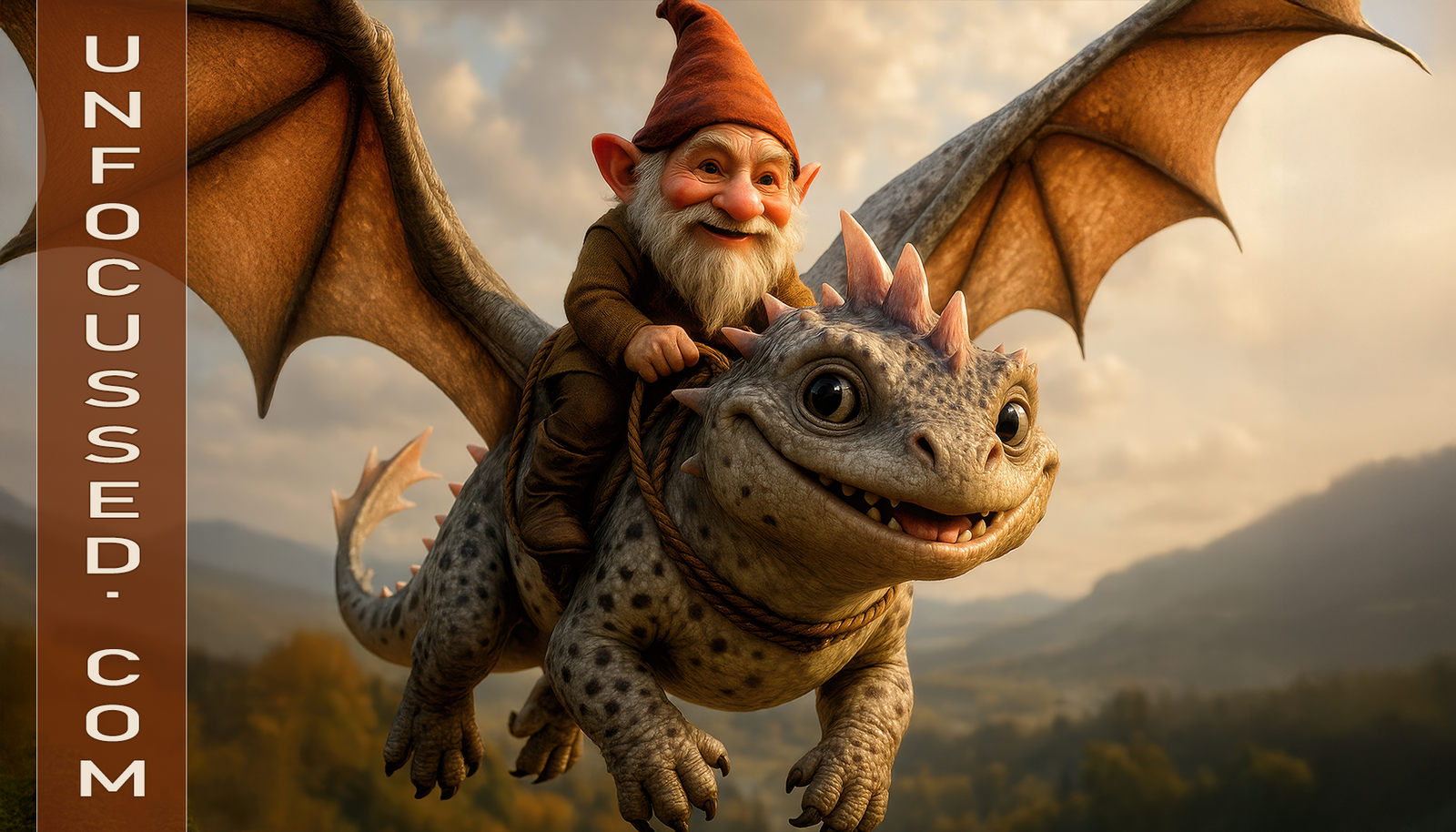
The Recruitment of Reginald Reginald the Gnome had always considered himself something of a specialist in doing as little as possible with as much flair as possible. While other gnomes were busy tending gardens, crafting fine tools, or running suspiciously profitable mushroom ale distilleries, Reginald preferred reclining beneath a toadstool, puffing on a pipe filled with herbs of questionable legality, and sighing dramatically whenever anyone asked him for help. His philosophy was simple: the world had more than enough heroes and martyrs, but a true master of loafing was a rare and valuable treasure. At least, that’s what he told himself as he dodged responsibility with the skill of an Olympic-level tax evader. So when a crooked-nosed wizard named Bartholomew appeared in his front yard one gray morning, waving a staff and muttering about “destiny” and “chosen companions,” Reginald naturally assumed he was being scammed. “Listen,” Reginald had said, clutching his tea with both hands, “if this is about signing me up for some ‘hero’s guild,’ forget it. I don’t do quests. I don’t fetch, I don’t fight, and I certainly don’t wear tights.” Bartholomew had only grinned in that unnerving way people do when they know something you don’t — or worse, when they think they’re funny. Before Reginald could protest further, the wizard had clapped his hands, shouted something about contracts, and introduced him to a creature that would change his life in ways he was not remotely ready for. Enter Twinkle: a baby dragon with eyes the size of soup bowls, wings like oversized laundry sheets, and the perpetually gleeful smile of a drunk bard who has just discovered free ale night. Twinkle’s scales shimmered faintly under the sun — not glittering like diamonds, but with the humble shine of a well-oiled frying pan. He was, in short, both ridiculous and terrifying. Reginald, on first sight, had uttered the words: “Absolutely not.” “Absolutely yes,” Bartholomew countered, already strapping a rope harness around the dragon’s chest. “You’ll fly together, bond together, and save something or other. Don’t worry about the details. Quests always sort themselves out in the middle. That’s the magic of narrative structure.” Now, Reginald was no scholar, but he knew when he was being railroaded into a plotline. And yet, despite all his protests, he found himself — ten minutes later — airborne, screaming into the wind as Twinkle flapped with all the grace of a goat learning ballet. The ground dropped away, and the landscape unfurled like a painted scroll beneath them: forests, rivers, hills, and, somewhere in the distance, the faint twinkle (no relation) of civilization. Reginald’s stomach, however, refused to be impressed. It preferred to lurch violently, reminding him that gnomes were creatures of burrows and soil, not open skies and feather-brained wizards. “If I fall to my death, I swear I will come back as a poltergeist and knock over all your soup pots,” Reginald bellowed, his voice whipped away by the wind. Twinkle turned his head slightly, flashing that infuriating, wide-mouthed grin that revealed rows of tiny, pearly teeth. There was no malice in it — only joy. Pure, unfiltered, puppy-like joy. And that, Reginald decided, was the most unsettling thing of all. “Stop smiling at me like that,” he hissed. “You’re not supposed to enjoy being the harbinger of doom!” The dragon’s wings dipped, then rose sharply, sending Reginald bouncing in the harness like a sack of turnips strapped to a catapult. He cursed in three languages (four, if you count the dialect of muttered gnomish reserved specifically for complaining). His hat nearly flew off, his beard whipped about like tangled yarn, and his grip on the rope tightened until his knuckles resembled pearl buttons. Somewhere in the back of his mind, he realized he had forgotten to lock his cottage door. “Brilliant,” he muttered. “I’ll come home to find raccoons playing cards in my kitchen. And if they’re anything like last time, they’ll cheat.” But for all his bellyaching, Reginald couldn’t entirely ignore the thrill crawling along his spine. The world below, usually so stubbornly out of reach, now lay like a map spread at his feet. The clouds parted, the sun caught Twinkle’s wings, and for one brief, treacherous moment, he felt something disturbingly close to… wonder. Of course, he smothered the feeling immediately. “Wonder is for poets and lunatics,” he said aloud, mostly to reassure himself. “I am neither. I am a sensible gnome in a highly insensible situation.” Twinkle, naturally, ignored him. The dragon flapped harder, dove with terrifying speed, then swooped upward in a maneuver that would have impressed any respectable knight but only made Reginald wheeze like an accordion dropped down a staircase. “By the beard of my ancestors,” he gasped, “if you break my spine, I will haunt you so relentlessly you’ll never nap again.” Twinkle chirped — yes, chirped — as though to say, deal. And so, the unlikely duo carried on: one gnome with the permanent expression of a man regretting all his life choices, and one dragon with the demeanor of an overeager puppy who had just discovered the concept of air travel. Together, they cut across the sky — not gracefully, not even competently, but loudly and with far too much enthusiasm from one side of the partnership. Reginald clung to the harness, muttering darkly, “This is how legends start: with someone else’s bad idea and my unpaid labor. Typical.” The Perils of Mid-Air Hospitality Reginald had always believed that traveling should involve two essential comforts: steady ground beneath one’s feet and a flask of something strong enough to burn regrets out of the bloodstream. Unfortunately, flying on the back of Twinkle offered neither. His backside was already numb, the rope harness dug into his ribs like a debt collector, and the flask he’d hidden in his pocket had sprung a leak sometime between the second nosedive and the third death spiral. The scent of elderberry brandy now drifted in the air behind them, forming a fragrant trail that would have made bees and bandits alike giddy. “Lovely,” he muttered, wringing out his sleeve. “Nothing says ‘professional adventurer’ like reeking of spilt liquor before the first crisis.” Twinkle, naturally, was having the time of his life. He banked, spun, and chirped in that oddly musical way, as though he were hosting an aerial cabaret. Reginald clutched the ropes tighter, his teeth rattling so hard they could’ve been used as castanets. “I know you think this is fun,” he grumbled into the wind, “but some of us are not equipped for spontaneous air acrobatics. Some of us have delicate spines, weak constitutions, and, might I remind you, absolutely no wings.” The dragon ignored him, of course, but Reginald wasn’t entirely alone. As they soared past a flock of geese, one particularly bold bird flew alarmingly close to Reginald’s face. He swatted at it half-heartedly. “Shoo! I don’t have time for avian harassment. I’m already being chauffeured by a reptilian maniac.” The goose honked indignantly, as if to say, your fashion sense offends us all, short one, before veering back to its flock. “Yes, well, take it up with the wizard,” Reginald snapped. “He’s the one who dressed me like a potato sack escaped from the laundry line.” As if things weren’t humiliating enough, Twinkle suddenly let out a sound suspiciously like a growling stomach. Reginald froze. “No,” he said firmly. “Absolutely not. We are not mid-flight snacking, not unless you’ve brought your own sandwiches.” Twinkle burbled happily and banked toward a small plateau sticking out of the forest below, wings flaring in what Reginald instantly recognized as the international signal for picnic landing. The dragon swooped down, wobbling slightly on his descent, and touched down with all the grace of a sack of flour being dropped from a barn roof. Reginald’s bones clattered, his beard went sideways, and when the dust settled, he slid off the dragon’s back like an exhausted potato peel. “Congratulations,” he wheezed. “You’ve invented the world’s least comfortable carriage ride.” Twinkle, meanwhile, sat happily on his haunches, panting like a dog and staring expectantly at Reginald. The gnome raised one bushy eyebrow. “What? You think I packed snacks? Do I look like your personal caterer? I barely remember to feed myself, and half the time that involves moldy bread and regret soup.” Twinkle tilted his enormous head, blinked twice, and let out the faintest, most pitiful whine imaginable. “Oh no,” Reginald groaned, covering his ears. “Don’t you dare weaponize cuteness against me. I have survived decades of guilt-tripping aunties and manipulative raccoons. I am immune.” He was not immune. Ten minutes later, Reginald was rooting around in his satchel, producing the sad remnants of his travel supplies: two crumbling biscuits, half a wheel of suspiciously sweaty cheese, and what might once have been an apple before time and neglect transformed it into a small weapon. Twinkle eyed the pile with such radiant joy you’d have thought Reginald had conjured a feast of roasted boar and honeycakes. “Don’t get too excited,” Reginald warned, snapping the apple in half and tossing it at him. “This is barely enough to feed a hungry hamster. You, meanwhile, are the size of a hay wagon.” Twinkle swallowed the apple whole, then burped, sending out a puff of smoke that singed the tips of Reginald’s beard. “Marvelous,” the gnome grumbled, patting out the sparks. “A flying furnace with indigestion. Just what I needed.” They sat in uneasy companionship on the plateau for a while. Twinkle gnawed happily on the stale cheese, while Reginald stretched his aching legs and muttered about how retirement had been within reach just yesterday. “I could be in my burrow right now, sipping tea, playing cards with badgers, and listening to the rain,” he complained to no one in particular. “Instead, I’m babysitting a dragon with the digestive habits of a goat.” Twinkle, finished with the cheese, scooted closer and nudged him with his snout, nearly knocking him into the dirt. “Yes, yes, I like you too,” Reginald said reluctantly, rubbing the dragon’s nose. “But if you keep looking at me like I’m your replacement mother, I’m buying you a nanny goat and calling it a day.” Before he could say more, the sky above them shifted. A shadow swept across the plateau, long and ominous. Reginald froze, squinting up. It wasn’t a cloud. It wasn’t a bird. It was something far larger, something with wings so vast they seemed stitched from night itself. Twinkle froze, too, his goofy grin vanishing, replaced by a wary flick of his tail. “Oh, splendid,” Reginald muttered, standing slowly. “Because what this day was missing was a larger, scarier dragon with a possible appetite for gnomes.” The shadow circled once, twice, and then descended in a slow, predatory spiral. Reginald felt the hairs on his neck bristle. He gripped the harness rope still dangling from Twinkle’s chest and whispered, “If this ends with me being swallowed whole, I just want it noted that I was right all along. Adventure is a racket.” Twinkle crouched, wings twitching, eyes wide, caught somewhere between terror and excitement — the look of a child about to meet a relative who may or may not bring candy. Reginald patted his scaly companion nervously. “Steady now, lad. Try not to look edible.” The massive figure landed with a ground-shaking thud just ten yards away. Dust billowed, pebbles rattled, and Reginald’s heart sank. Before him stood a dragon four times Twinkle’s size, scales black as obsidian, eyes glowing like molten gold. Its wings folded neatly with the calm precision of someone who knew they were in charge of every living thing within five miles. The elder dragon lowered its head, nostrils flaring as it sniffed Reginald first, then Twinkle. Finally, with a voice that rumbled like distant thunder, it spoke: “What… is this?” Reginald swallowed hard. “Oh, wonderful. It talks. Because it wasn’t intimidating enough already.” He straightened his hat, cleared his throat, and replied with all the bravado he could fake: “This is, uh… an apprenticeship program?” The Audition for Disaster The elder dragon’s molten eyes narrowed, flicking from Reginald to Twinkle and back again, as though trying to decide which looked more ridiculous. “An apprenticeship program,” it repeated, every syllable rumbling deep enough to rearrange Reginald’s organs. “This… is what the world has come to?” Reginald, being a gnome of resourceful cowardice, nodded vigorously. “Yes. That’s exactly it. Training the next generation. All very official. You know how it is — forms to fill, waivers to sign, nobody wants liability these days.” He gave a little laugh that sounded more like a cough, then glanced sideways at Twinkle, who wagged his tail like an overexcited puppy. “See? Enthusiastic recruit. Very promising. Could probably roast marshmallows with minimal collateral damage.” The elder dragon leaned in closer, nostrils flaring. The blast of hot breath nearly flattened Reginald’s beard. “This hatchling is weak,” it growled. “Its flame is untested. Its wings are clumsy. Its heart…” The golden eyes locked on Twinkle, who, instead of cowering, belched out a puff of smoke that came with a faint squeak — like a kettle left too long on the stove. The elder dragon blinked. “Its heart is absurd.” Reginald threw his arms wide. “Absurd, yes! But in an endearing way. Everyone loves absurd these days. It sells. Absurdity is the new black, haven’t you heard?” He was stalling, of course, desperately trying to keep from being fried, stomped, or eaten. “Give him a chance. He just needs… polish. Like an uncut gem. Or an un-housebroken goat. You know, potential.” The elder dragon tilted its massive head, clearly amused by the spectacle. “Very well. The hatchling may prove itself. But if it fails…” The golden eyes fixed on Reginald, glowing hotter. “…you will take its place.” “Take its place where?” Reginald asked nervously. “I should warn you, I’m not very good at laying eggs.” The elder dragon did not laugh. Dragons, it seemed, had a limited appreciation for gnomish humor. “There is a trial,” it rumbled. “The hatchling will demonstrate courage in the face of peril.” Its massive wings unfurled, blotting out the sun, before beating downward in a gale that nearly knocked Reginald on his backside. “Follow.” “Oh, splendid,” Reginald muttered, clambering back onto Twinkle with all the grace of a sack of disgruntled potatoes. “We’re off to prove your worth in some arbitrary dragon hazing ritual. Don’t worry, I’ll just be over here quietly dying of anxiety.” Twinkle chirped cheerfully, as if volunteering for a carnival ride. The trial site turned out to be a canyon split so deep into the earth that even sunlight seemed afraid to enter. The elder dragon landed on one side, its wings stirring whirlwinds of dust, while Reginald and Twinkle teetered on a narrow outcropping across the gap. Between them stretched a rope bridge so rickety it looked like it had last been maintained by squirrels with a death wish. “The hatchling must cross,” the elder dragon declared. “It must reach me, though the winds will fight it.” Reginald peered over the edge of the canyon. The abyss seemed bottomless. He could practically hear his ancestors shouting, we told you not to leave the burrow! He turned to Twinkle, whose wide grin had dimmed into something halfway between nervousness and excitement. “You realize,” Reginald said, adjusting his hat, “that I am not built for inspirational speeches. I don’t do ‘you can do it.’ I do ‘why are we doing it at all.’ But here we are. So… listen carefully. Do not look down, do not sneeze fire at the ropes, and for the love of all that is unholy, do not grin so hard you forget to flap.” Twinkle chirped, then waddled onto the bridge, the ropes creaking ominously under his weight. Reginald, of course, had no choice but to follow, clutching the ropes as though they were his last tether to sanity. The wind howled, tugging at his beard and hat, and somewhere far below came the echoing cackle of something that very much wanted to see them fall. “Perfect,” he muttered. “The canyon comes with an audience.” Halfway across, disaster struck — naturally, because stories thrive on disaster. A sudden gust of wind roared up, twisting the bridge so violently that Reginald found himself dangling sideways like laundry on a line. Twinkle screeched, flapping frantically, wings smacking against the canyon walls. Reginald yelled, “Flap UP, you lunatic, not SIDEWAYS!” Somehow — through sheer stubbornness and a good deal of physics-defying nonsense — Twinkle found his rhythm. He steadied himself, wings catching the air just right, propelling him forward with a grace that surprised even him. Reginald clung to the dragon’s harness, eyes squeezed shut, muttering every prayer he could remember and several he invented on the spot. (“Dear whoever runs the afterlife, please don’t assign me to raccoon duty again…”) At last, they reached the far side, tumbling into the dust at the elder dragon’s feet. Reginald lay on his back, gasping like a fish left out of water. Twinkle, on the other hand, puffed proudly, chest swelling, tail wagging like a flag of victory. The elder dragon studied them in silence, then let out a low rumble that might almost have been… approval. “The hatchling is reckless,” it said. “But brave. Its flame will grow.” A pause. “And the gnome… is irritating. But resourceful.” Reginald sat up, brushing dirt from his beard. “I’ll take that as a compliment, though I notice you didn’t say handsome.” The elder dragon ignored him. “Go. Train the hatchling well. The world will need such absurd courage sooner than you think.” With that, the great wings unfurled again, carrying the elder dragon skyward, its shadow shrinking as it vanished into the clouds. Silence settled over the canyon. Reginald glanced at Twinkle, who beamed at him with uncontainable joy. Against his better judgment, the gnome chuckled. “Well,” he said, adjusting his hat, “looks like we didn’t die. That’s new.” Twinkle nuzzled him affectionately, nearly knocking him over again. “Fine, fine,” Reginald said, patting the dragon’s snout. “You did well, you ridiculous furnace. Perhaps we’ll make something of you yet.” They climbed back onto the harness. Twinkle leapt into the air, wings beating steadily now, confidence growing with each flap. Reginald clutched the ropes, grumbling as usual, but this time there was the faintest trace of a smile hiding in his beard. “Adventure,” he muttered. “A racket, sure. But maybe… not entirely a waste of time.” Below them, the canyon faded into shadow. Ahead, the horizon stretched, wide and waiting. And somewhere in the distance, Reginald swore he could already hear the wizard laughing. “Bartholomew,” he muttered darkly. “If this ends with me fighting trolls before breakfast, I’m sending you the bill.” Twinkle chirped brightly, banking toward the sunrise. Their absurd journey had only begun.     Bring a piece of "Tooth & Twinkle" into your own world. Reginald and Twinkle’s absurd, sky-high adventure doesn’t have to live only in words — you can capture the whimsy, the humor, and the magic in your home. Whether you want to hang their tale on your wall, piece it together slowly, or send a little joy in the mail, there’s a perfect option waiting for you: Framed Print – Add character and charm to any room with this enchanting artwork, ready to hang and brimming with storybook spirit. Acrylic Print – Bold, glossy, and luminous, perfect for showcasing every detail of Reginald’s exasperation and Twinkle’s irrepressible grin. Jigsaw Puzzle – Relive the adventure piece by piece, with a puzzle as whimsical (and occasionally frustrating) as the journey itself. Greeting Card – Send a smile, a laugh, or a spark of magic to someone you love — Reginald and Twinkle make unforgettable messengers. Sticker – Take the absurdity with you anywhere: laptops, water bottles, journals — a little dragon-fueled cheer for everyday life. However you choose to enjoy it, “Tooth & Twinkle” is ready to bring a dash of adventure and humor to your day. Because every home — and every heart — deserves a touch of the ridiculous.

Seguir leyendo

The Acorn Avenger

por Bill Tiepelman

The Acorn Avenger

The Gnome, The Nut, and the Nonsense Somewhere in the leafy middle of nowhere, between the edge of “don’t go in there” and “oh hell, why did we come in here,” lived a legend. Not a tall legend. Not even an average-sized legend. No, this one came in just under three feet if you didn’t count the hat. And you had to count the hat, because it was about the only thing that gave him presence. He was The Acorn Avenger, and if you were expecting heroics involving dragons, maidens, or great bloody quests, you’ve come to the wrong wood. This was a gnome whose most daring battle to date had been against indigestion. But oh, did he strut. Bark armor clanked around his stubby frame like an overenthusiastic child wearing too many Lego pieces, while his face—ruddy cheeks, twinkling eyes, and a beard the exact shade of spilled cream ale—beamed with dangerous self-confidence. On his chest, slung by ropes that looked like they’d been borrowed from an old clothesline, bounced his closest companion: Nibbs the Acorn. And no, not just an ordinary acorn. Nibbs had a face. A wide-eyed, perpetually startled, wooden face. Worse yet, it talked sometimes. Or sang. Or squeaked. Depending on the mood. The locals called it cursed. The Avenger called it “backup vocals.” On this particular morning, The Acorn Avenger was stomping through the forest with the air of someone who believed the trees were secretly applauding him. His boots squelched in the mud, his bark armor creaked like an old door hinge, and Nibbs bounced merrily with every step. “Onward, noble steed!” he shouted at no one, since he owned no horse and was, in fact, simply walking. “I don’t think I like being referred to as a steed,” Nibbs muttered. His voice was somewhere between a kazoo and a squeaky drawer hinge. “I’m more of a sidekick. Or a tambourine.” “Sidekicks don’t usually hang off my sternum,” the Avenger replied, puffing his chest proudly. “Besides, you’re lucky. Some gnomes lug around pocket watches. Or shovels. You get to be the chosen nut.” “You say that like it’s a promotion,” Nibbs grumbled, then fell silent as a squirrel scampered past. The squirrel gave them both the kind of side-eye usually reserved for drunk relatives at weddings. You see, the animals of the forest had learned to endure The Acorn Avenger. He wasn’t malicious. He wasn’t cruel. He was just… loud. He once spent three consecutive nights challenging owls to staring contests. He accused raccoons of plotting against him because they wore “bandit masks.” And once, he drew his bark sword against a deer, declaring, “Unhand the grass, villain!” The deer continued chewing and, as expected, won the duel by default. Still, the gnome was tolerated. Mostly. Until the mushrooms began to organize. But I’m getting ahead of myself. That morning, the Avenger climbed atop a mossy rock, striking what he believed to be a heroic pose. His hat drooped left in protest, but otherwise it was magnificent. “Hear me, Whispering Wood!” he cried, his voice echoing weakly through the mist. “I am the Acorn Avenger, defender of twigs, scourge of beetles, the bane of damp socks, and—most importantly—the only one here with a musical nut!” Nibbs squeaked like a deflating balloon to punctuate the moment. Somewhere in the underbrush, a rabbit muttered something rude in Lapine. Birds ruffled their feathers and muttered to each other like gossipy grandmothers. Even the trees seemed unimpressed. But The Acorn Avenger didn’t notice—or chose not to. Confidence, after all, is the art of ignoring reality with enthusiasm. “Adventure awaits, Nibbs!” he boomed, hopping off the rock and immediately landing ankle-deep in a puddle. Bark armor is not waterproof. He squelched forward anyway, determined. “Today, destiny calls!” “Destiny sounds damp,” Nibbs said dryly. “And smells like wet bark.” “Nonsense,” the Avenger snapped. “Destiny smells like victory! And perhaps roasted chestnuts. But mostly victory!” They trudged deeper into the forest, unaware that something small, spongy, and deeply offended was already watching them from the shadows. Something that had had enough of his nonsense. Something… fungal. The Fungus Among Us Every great hero has a nemesis. Achilles had Hector. Sherlock had Moriarty. The Acorn Avenger? Well, he had mushrooms. Yes, mushrooms. Don’t laugh—it’s terribly rude. These weren’t your harmless “toss them on pizza” kind of mushrooms. These were the puffed-up, resentful, perpetually damp kind, with little round heads and a grudge against anyone who stepped on them (which, in fairness, the Avenger did frequently and with dramatic flair). Our gnome had a habit of kicking at toadstools whenever he wanted to “make an entrance.” He once leapt from behind a log shouting “Prepare to be astonished!” and stomped squarely onto a mushroom ring, scattering spores everywhere. To him, this was harmless fun. To the fungi, it was an act of war. And fungi, unlike squirrels or deer, didn’t forget. They multiplied. They whispered in damp corners. They waited. On this damp morning, as the Avenger sloshed deeper into the trees, an entire conclave of mushrooms gathered in the shadows. Puffballs, shiitakes, chanterelles, even a terrifyingly pompous porcini—all arranged in a circle that looked suspiciously like a committee meeting. Their leader, a massive, sulking morel with a voice like wet corduroy, cleared his nonexistent throat. “The gnome must go.” Gasps echoed around the ring. A portly button mushroom fainted. A deadly-looking Amanita tried to clap but succeeded only in wobbling. “He mocks us,” the morel continued, darkly. “He tramples our rings. He spreads our spores without consent. Worst of all, he makes jokes about ‘mushroom puns.’” The mushrooms shuddered collectively. One piped up timidly: “But… what if he’s the chosen one? You know, foretold by the prophecy?” “Prophecy?” the morel snapped. “That was just graffiti on the side of a log. It said ‘Fun Guys Rule.’ It wasn’t divine, it was vandalism.” Meanwhile, blissfully unaware of the fungal plot, The Acorn Avenger continued tromping through the wood, narrating loudly to himself like a bard who’d been fired for excessive enthusiasm. “Mark my words, Nibbs, today we shall encounter great peril, test our courage, and maybe—just maybe—find that legendary tavern with the half-priced mead pitchers!” “I’d settle for finding a towel,” Nibbs muttered, still squeaky with damp. The gnome paused. “Do you hear that?” “Hear what?” “Exactly. Silence. Too silent. The kind of silence that suggests dramatic tension.” He narrowed his eyes. His bark armor groaned like a cranky chair. “This can only mean one thing… ambush.” Of course, he was correct. But not in the way he thought. He expected goblins, maybe wolves, possibly tax collectors. What he got was… mushrooms. Dozens of them. They emerged slowly from the underbrush, wobbling like damp cupcakes, forming a circle around him. Some glowed faintly. Some spat spores into the air like smoke bombs. It was less intimidating than the Avenger’s imagination had promised, but still—he had to admit—eerily organized. “Oh no,” Nibbs groaned. “Not them again.” “Aha!” The Avenger puffed out his chest. “Villains! Foes! Fungus fiends!” He raised his barky fist. “You dare stand against the Acorn Avenger?” “We dare,” said the morel leader, his voice damp and gurgling, like soup simmering resentfully. “We are the Mycelium Collective. And you, sir, are a menace to soil stability, spore sovereignty, and good taste in general.” “I’ll have you know I am beloved by all creatures of the forest!” The Avenger shouted, though the birds, squirrels, and one deeply unimpressed fox nearby rolled their eyes in unison. “Beloved?!” scoffed the Amanita, wobbling forward dramatically. “You’ve urinated in no fewer than three fairy rings.” “That was ONE TIME!” the Avenger shouted. “And technically, twice. But who keeps count?” “We do,” the mushrooms intoned together. It was like a choir of damp towels. Nibbs sighed. “You’ve really done it now. You don’t anger mushrooms. You don’t mock mushrooms. And above all, you don’t step on mushrooms. You should’ve known better. You’re basically at war with a salad bar.” “Silence, acorn!” the morel roared. “You, too, are complicit. You hang upon the chest of this fool, squeaking your support.” “Oh, don’t drag me into this,” Nibbs snapped. “I’ve been trying to unionize for years. He doesn’t listen.” The Avenger gasped. “Unionize? You… you traitor!” Before Nibbs could respond, the mushrooms began to advance. Slowly, yes, because they were mushrooms and their legs—well, they didn’t technically have legs, but they sort of shuffled in a way that implied locomotion. Still, there were many of them, and they encircled the gnome with grim determination. Spores drifted into the air, glowing faintly in the morning light. It looked less like a battle and more like an aggressively weird festival. “This is your end, Acorn Avenger,” the morel declared. “The forest will no longer suffer your antics. Prepare to be… composted.” The Avenger tightened his fists, bark creaking. His hat twitched heroically in the breeze. “Very well. If it is war you want, it is war you shall have.” He grinned madly. “I’ll make mulch of the lot of you!” “That’s a terrible pun,” Nibbs whispered. “Please don’t say that again.” And with that, the battle of gnome versus fungus officially began—though whether it would end in glory, disaster, or the world’s weirdest soup recipe remained to be seen. The Spores of War The air grew thick with spores, glowing like fireflies on a drunken bender. The mushrooms shuffled closer, their damp caps glistening with menace. To the casual observer, it might have looked like a salad slowly closing in on a man who really should’ve stayed home. But to the Acorn Avenger, this was destiny. Finally, a battle worthy of his legend—or at least a battle that would look impressive in his memoirs if he exaggerated the details (which, of course, he would). “Nibbs!” he barked, striking a pose so heroic that his bark armor immediately squealed in protest. “Today we make history. Today we show these fungal fiends what it means to face the power of gnome-kind!” “Power of gnome-kind?” Nibbs muttered. “The last time you flexed that power, you lost an arm-wrestling contest to a dandelion stem.” “That stem had been working out,” the Avenger snapped back. He unslung his bark sword—really just a sharpened plank he’d stolen from a picnic table—and brandished it with wild confidence. “Face me, spongy scoundrels!” The Mycelium Collective advanced, puffing spores like disgruntled chimneys. The morel leader stepped forward dramatically. “You will fall, gnome. You will rot beneath our caps. The forest shall sprout from your foolish remains.” “Over my hat!” the Avenger bellowed. He leapt forward, which was impressive in spirit if not in distance (gnomes don’t leap very far). His sword came down with a thwack, cleaving a puffball in two. Spores exploded everywhere like someone had shaken a bag of flour in a sauna. He coughed, sneezed, and shouted, “First blood!” “That’s not blood,” Nibbs squeaked, muffled by spores. “That’s fungus dust. You’re basically sneezing on your enemies.” “Sneezing is my weapon!” the Avenger declared proudly, before unleashing an almighty sneeze that blew three button mushrooms onto their backs. The mushrooms retaliated. One Amanita hurled spores like a smoke bomb, filling the clearing with a choking haze. Another launched itself bodily at the gnome, smacking into his armor with a wet splut. The Avenger staggered but remained upright, laughing maniacally. “Is that all you’ve got?!” “This is getting ridiculous,” muttered a fox, watching from the sidelines. “I came here for a quiet breakfast and now I’m in the middle of a fungal circus.” The Avenger swung his sword in wild arcs, chopping down mushrooms left and right. But for every one that fell, three more shuffled forward. The forest floor pulsed with life, the hidden network of mycelium beneath the soil whispering, summoning reinforcements. Tiny mushrooms sprouted instantly at his feet, tripping him. He fell backward with a grunt, his hat sliding sideways. “Victory… is slipping…!” he groaned dramatically, flailing like an upturned turtle. Nibbs swung against his chest with each movement, squeaking in protest. “Stop rolling, you idiot, you’re crushing my face!” Just as the mushrooms prepared to bury him beneath a tide of damp caps, the gnome’s eyes lit up. “Of course!” he cried. “Their weakness!” He yanked Nibbs free from his chest straps and held the acorn aloft like a divine relic. “Nibbs, unleash your secret weapon!” “What secret weapon?!” Nibbs squealed. “The one I’ve been saving for this very moment! You know, the… uh… thing!” “I don’t have a thing!” “Yes, you do! Do the… squeaky scream!” Nibbs blinked his wooden eyes, then sighed. “Fine.” He opened his tiny acorn mouth and let out a noise so shrill, so piercing, it made bats drop from the treetops and worms evacuate the soil in protest. The mushrooms froze. The spores quivered in midair. The forest itself seemed to pause, as though embarrassed to witness such a sound. The gnome seized the moment. He scrambled to his feet, sword raised, and shouted, “Behold! The power of the Acorn Avenger—and his terrible, terrible nut!” With one final, heroic sneeze (it was mostly phlegm, honestly), he charged through the stunned mushrooms, scattering them like bowling pins. Caps flew, spores popped, and the morel leader toppled into a puddle with an indignant splush. When the spores finally cleared, the battlefield was a mess of trampled fungi and damp gnome footprints. The Avenger stood panting, his hat askew, his armor smeared with questionable goo. He raised his sword triumphantly. “Victory!” “You’re covered in fungus,” Nibbs observed flatly. “You smell like a compost bin. And I think you have mold in your beard.” “All part of the heroic aesthetic,” the gnome replied, striking a pose despite his dripping state. “From this day forth, let it be known: The Acorn Avenger fears no fungus! I am the champion of the Whispering Wood! Protector of squirrels! Defender of damp places!” The fox watching nearby rolled its eyes. “Congratulations,” it muttered. “You’ve won a war against side salad.” Then it trotted off, unimpressed. And so the forest quieted again, the Mycelium Collective scattered but not entirely defeated. Somewhere beneath the soil, spores whispered their vows of revenge. But for now, the Acorn Avenger strutted home, squeaky nut in tow, already planning how he’d embellish this tale at the tavern. And if anyone doubted him? Well, he’d simply shout louder until they gave up. That, after all, was the true power of the Acorn Avenger: unstoppable confidence, questionable hygiene, and an acorn with lungs strong enough to wake the dead.     Bring The Acorn Avenger Home If you enjoyed the absurd saga of bark armor, squeaky nuts, and mushroom mayhem, you don’t have to leave it in the forest. The Acorn Avenger can march straight into your life with a range of whimsical treasures. Dress up your walls with a Framed Print or a bold Metal Print, perfect for adding a splash of fantasy and humor to your décor. Prefer something more personal? Jot down your own epic gnome-versus-fungus chronicles in a handy Spiral Notebook, or carry a piece of his mischief everywhere with a quirky Sticker. Each item features the playful, richly detailed imagery of The Acorn Avenger—perfect for fans of fantasy art, woodland whimsy, or anyone who just really, really hates mushrooms.

Seguir leyendo

Ritualist of the Forgotten Forge

por Bill Tiepelman

Ritualist of the Forgotten Forge

The Circle No One Sweeps The village had long since stopped asking why their forge was haunted. Honestly, it was easier to pretend that the glowing sigil carved into the soot-stained floor was just “decorative rustic lighting.” Everyone knew better, of course. They whispered about the little figure who appeared only at midnight: a gnome, pale as moonlight, with chains jingling around his tattered boots. He had the kind of beard that screamed, “I’ve got secrets,” and eyes that glowed as though he’d mainlined battery acid. They called him the Ritualist, though behind closed doors they also called him less flattering things—like “that cranky little goth garden statue reject.” No one dared sweep the forge anymore. The glowing circle on the ground? Untouched. The puddle of neon goo dripping endlessly from nowhere? Nobody even mopped. It was simply understood that those were the Ritualist’s toys, and tampering with them meant your cows went dry or your husband suddenly started reciting poetry about toenail fungus. The Ritualist didn’t mess around with subtle curses. He went straight for the weird and humiliating. Some swore he had once been a smith—back when the forge actually forged, before it became a paranormal Airbnb for things with too many teeth. They said he hammered armor so sharp it sliced shadows, swords that bled smoke, and helmets that whispered to their owners at night, telling them secrets about who farted in the tavern. But that was centuries ago. Now he sat in the dust, crouched low, muttering over runes that pulsed in colors even the rainbow didn’t claim. The strangest part wasn’t his magic, though. It was his attitude. The Ritualist wasn’t your solemn, robe-wrapped mystic. He was snark incarnate. Villagers swore they’d heard him heckle wandering spirits. “Boo? Really? That’s the best you’ve got?” he’d sneer, or worse, “Wow, Casper, I’m shaking in my boots—oh wait, those are YOUR boots, nice try.” His reputation as the village’s resident paranormal troll was both feared and begrudgingly respected. No ghost dared linger, no demon dared pout—he roasted them harder than the forge’s old flames. Yet, beneath all the eye-rolling bravado, there was something else. A mystery thicker than his beard oils. Why did he keep that circle glowing? Why did he never leave the forge, never step into daylight? And why—on that particular midnight—did he look up from the circle with an expression that wasn’t snarky at all, but genuinely… afraid? Forge Gossip, Bad Omens, and a Gnome Who Knows Too Much Midnight again, and the forge was already humming like a drunk monk chanting off-key. The sigil burned hotter, violet sparks shooting into the air like the world’s most pretentious fireworks display. The Ritualist crouched at its center, muttering in a language that sounded half like incantation and half like he was trying to beatbox with bronchitis. His beard swayed with each whispered syllable, and the chains on his boots rattled in rhythm, giving him the vibe of an off-brand gothic metronome. What no villager ever knew—because they valued their lives too much to peek—was that the Ritualist didn’t just sit there looking spooky for kicks. He was working. Sort of. Every night he argued with the circle. Yes, argued. The runes hissed at him, the neon goo sloshed with disapproval, and occasionally a voice would bubble up from beneath the floor with the passive-aggressive tone of someone’s dead aunt. “You should have cleaned up better when you had the chance,” the voice would say. “You were always so lazy.” The Ritualist would snarl back, “Oh, put a rune in it, Agnes. Your casseroles were terrible.” He wasn’t entirely wrong—the runes were haunted. Each stroke of glowing script was an IOU signed in blood and sass centuries ago. The Forgotten Forge had been the playground of entities that thought blacksmiths were the best kind of pen pals: they sent anvils in exchange for souls, hammers for promises, tongs for secrets. And the Ritualist? He was the last smith standing. He kept the debts balanced—or at least juggled them long enough to keep the forge from imploding into an interdimensional sinkhole. Glamorous, it was not. And yet, for someone whose job was essentially to babysit eldritch graffiti, he had style. He leaned into the goth aesthetic so hard it practically squeaked. Black leather jacket stitched with runes no one could read? Check. Tall, pointed hat that looked like it could stab a squirrel at twenty paces? Double check. Boots heavy enough to stomp through the bones of the damned? Triple check, plus steel toes. The Ritualist didn’t half-ass his look, not even when summoning things that could liquify him faster than an overripe tomato in a blender. On this night, however, the look wasn’t enough to hide the twitch in his eye. The circle was glowing wrong. Too bright. Too… needy. Like a cat at 3 a.m. demanding snacks. He could feel the forge floor thrumming under his palms, the metal veins in the stone vibrating as though something beneath was stretching after a long nap. He didn’t like it. He didn’t like it one damn bit. “Oh, you’ve got to be kidding me,” he muttered, squinting at the neon goo now bubbling like a pot of suspicious soup. “Not tonight. I’ve got things to do. I’ve got beard oil to apply, curses to polish. Do you even realize how much unpaid overtime I’ve got stacked up?” The circle hissed louder, like a chorus of angry snakes. Sparks showered the air, scorching little burn marks into the rafters. A shadow slithered along the forge walls, longer than it should’ve been, sharper, hungrier. The Ritualist pulled a jagged little knife from his belt and pointed it lazily, like he was too tired for this nonsense but still willing to stab something if it ruined his evening. “Don’t test me,” he growled. “You know I’m cranky after midnight. You wouldn’t like me when I’m cranky.” But the thing did test him. From the circle rose a figure: not demon, not ghost, but something worse—the village gossip. Or, more precisely, the spirit of every bit of gossip the village had ever spewed. The thing formed from whispers and rumors, stitched together with petty envy and judgmental eyebrow raises. It oozed into shape like smoke made of disapproving sighs. It was hideous. It was relentless. It was the kind of entity that didn’t just eat souls—it ate your self-esteem. “Oh look at you,” the whisper-spirit crooned in a thousand voices. “All alone. Playing witch-doctor with chalk scribbles. Not even a real gnome—more like a washed-up lawn ornament with a hot topic gift card.” The Ritualist snarled, jabbing his knife at the thing. “Say that again, you whispering pile of mildew.” “Oh, we’ll say more,” it hissed, circling him. “We’ll say everything. We’ll tell them you’re scared. That you’re failing. That the forge is breaking, and you’re too busy being dramatic to fix it. We’ll tell them you wear eyeliner in the dark even though no one’s watching.” He squinted. “First off, eyeliner is a mood, not an audience event. Second—” He slashed the knife through the air, sending a spark of violet lightning across the circle. The gossip-wraith recoiled, shrieking in overlapping voices. But it didn’t vanish. Not yet. The Ritualist stood straighter now, his pale skin aglow with the circle’s fire, his beard practically sparkling with static. “Listen, you pile of spectral trash,” he said, voice dripping with mockery. “I’ve dealt with banshees who sang off-key, revenants with bad breath, and one very angry ghost donkey. Do you think a walking pile of rumor-mill nonsense is going to rattle me?” He grinned, baring teeth too sharp for a gnome. “Newsflash: I am the rumor. I am the punchline. And I’m not afraid to burn your little whispering ass back to whatever cosmic sewing circle you crawled out of.” The wraith hissed again, but the forge itself shook this time—rafters groaning, iron chains rattling, embers bursting like fireworks. The Ritualist’s grin faltered. Just a little. Because behind the gossip-thing, something bigger was pressing against the circle, something too large for words, too old for jokes. And for the first time in a very long while, his sarcasm didn’t feel like enough. The Forge Throws a Tantrum The gossip-wraith shimmered like static, circling the Ritualist with the smugness of a cat that just knocked over your last glass of wine. It was annoying enough, but the real problem was what was happening behind it. The forge floor was cracking. The neon sigil pulsed like a diseased heartbeat, veins of glowing violet spiderwebbing through the stone. Whatever was pressing from below was no polite house spirit—it was old, it was hungry, and it was stretching like it hadn’t had a snack since the Dark Ages. “Well,” the Ritualist muttered, shoving his knife back into its sheath, “this is officially above my pay grade. And I don’t even get paid. You’d think babysitting a haunted forge would come with benefits. Dental? A retirement plan? Hell, I’d settle for a beer tab.” The gossip-wraith cackled in overlapping voices. “You’re slipping. They’ll see it. They’ll whisper it. They’ll laugh.” He scowled, then jabbed a finger at it. “Do me a favor and choke on your own smug. I’ve got bigger problems than your commentary track.” That’s when the floor gave out. A crack split the circle wide open, neon goo splattering like someone tipped over a vat of radioactive jam. From the fissure rose a claw—gnarled, metallic, dripping molten sparks. Then another. Then something enormous heaved itself halfway out of the earth, forcing the rafters to quake and the iron beams to groan. It was like the forge itself had decided it was done being a workplace and wanted to be a boss monster instead. And what emerged wasn’t exactly a demon. Or a ghost. Or even something describable in polite company. It was all of them, a mashup of nightmare tropes rolled into one hideous, jaw-dropping monstrosity. Think dragon made out of chainmail and resentment, stitched together with the bad attitude of every villain who ever monologued too long. Its eyes blazed with the light of exploding suns. Its teeth looked like they’d flossed with barbed wire. And its voice—when it opened its maw—sounded like a garbage disposal trying to sing opera. “Well, shit,” said the Ritualist, dusting off his hands. “Guess I’m working overtime.” The gossip-wraith, now reduced to a shadow clinging to the forge wall, squeaked, “You can’t stop it!” “Oh honey,” the Ritualist drawled, pulling a jagged black hammer from behind the anvil, “I don’t need to stop it. I just need to piss it off enough that it leaves me alone for another hundred years.” The hammer wasn’t just a hammer—it was the hammer. The last artifact of the Forgotten Forge, etched with runes so ancient even the gossip-thing shut up for a moment. When he swung it, it didn’t just hit metal. It hit concepts. You could bash someone’s hope with it. You could smash irony across the jaw. Once, legend said, he had flattened an entire bureaucracy just by tapping their paperwork with it. True story. The Ritualist raised the hammer as the monstrous thing hauled itself higher, its claws gouging trenches into the floor. “Alright, Stretch,” he called out, voice sharp as a whip. “You woke up on the wrong side of the apocalypse. I get it. But here’s the deal—this is my forge. My circle. My neon goo puddle. And if you think you’re going to waltz in here like you own the place, well…” He smirked, baring sharp teeth. “You’re about to get hammered.” The fight that followed would’ve made the gods lean in with popcorn. The creature lunged, jaws snapping, molten spit sizzling on the stone. The Ritualist swung, hammer connecting with a roar that rippled through dimensions. Sparks flew, each one a memory burned into existence, each one stinging like sarcasm flung at the wrong time. The monster reeled back, screeching. The circle pulsed harder, trying to contain the chaos, but cracks spread wider, glowing brighter, like a rave held by tectonic plates. “You can’t win!” the gossip-wraith shrieked. “You’re just one cranky gnome with eyeliner!” “Correction,” the Ritualist snarled, dodging a claw swipe that nearly took his hat, “I’m the crankiest gnome with eyeliner, and that makes me unstoppable.” Another swing of the hammer cracked one of the beast’s claws clean off. It hit the floor with a clang, rattling the rafters. The monster screamed, retaliating with a wave of molten sparks that lit the forge in blinding firelight. Shadows danced across the walls, and for a moment the Ritualist looked less like a gnome and more like a god—a tiny, furious god in black boots, standing defiant against something ten times his size. The villagers outside woke to the sound of explosions, groaning metal, and one very loud gnome screaming things like, “I SAID NO TRESPASSING!” and “GET YOUR OVERGROWN ASS OUT OF MY CIRCLE!” Windows rattled. Cows panicked. Someone tried to pray, but their words got drowned out by a particularly nasty clang followed by the monster’s howl of defeat. By dawn, the forge was quiet again. The villagers crept up, peeking from behind fences, half-expecting to find nothing but rubble. Instead, they found the forge intact, glowing faintly. The Ritualist sat in the middle of it all, cross-legged, hammer resting across his lap, beard singed at the edges, boots steaming. His hat was crooked, his jacket torn, and his glare dared anyone to ask questions. “What happened?” one brave idiot finally asked. The Ritualist looked up slowly, eyes glowing with leftover fire. “What happened,” he said dryly, “is that you owe me a beer. Actually, three. No, make it five. And if anyone so much as thinks about sweeping this forge, I swear I’ll curse your entire family tree with flatulence until the seventh generation.” And that was that. The forge remained standing, the circle glowing. The villagers never asked again. Because they knew better. The Ritualist of the Forgotten Forge wasn’t just a guardian. He was a professional problem, and sometimes—just sometimes—he was the only thing standing between their little world and complete annihilation. With sarcasm as sharp as his hammer, and eyeliner dark enough to shame the night, he would keep the circle burning, one snarky midnight at a time.     Epilogue: Beard Oil and Beer Tabs Days passed, and the villagers noticed something odd. The forge wasn’t just glowing anymore—it was purring. A low, steady hum, like the sound of a very smug cat that had eaten its fill of eldritch horrors. The Ritualist himself was seen less often, mostly because he spent more time napping in the forge with his hammer across his chest like a gnome-sized guard dog. When questioned, he’d wave them off with a grunt. “Circle’s fine. Big ugly went back to sleep. Don’t touch my goo puddle. That’s all you need to know.” The gossip-wraith? Still lurking in the rafters, but quieter now. Occasionally it would whisper mean things, but the Ritualist had perfected the art of flipping it off without even opening his eyes. He claimed he’d “domesticated it,” like one might with a raccoon or a very rude parrot. Nobody wanted to test him on that. Legend spread. Children dared each other to peek at the forge windows at night, hoping to see sparks of violet lightning or hear the gnome muttering insults at unseen enemies. Merchants made jokes about bottling the neon goo as a tonic—though no one had the guts to try. The Ritualist, meanwhile, enjoyed the attention only in the sense that it annoyed him. “Great,” he said, rolling his eyes. “I’m a tourist attraction now. Next thing you know, you’ll want to put me on a damn postcard.” And yet, every night at midnight, he still crouched over the circle. Still muttered his strange half-incantations, half-insults. Still kept the balance. Because deep down—even beneath the eyeliner, the sarcasm, and the layers of cranky attitude—he knew what the villagers would never admit: that without him, their world would’ve cracked open long ago. He didn’t need their gratitude. He just needed their beer. And maybe, on a good day, someone to bring him a new bottle of beard oil. So the forge burned, the circle glowed, and the Ritualist endured—snark, curses, neon goo puddle and all. Because sometimes the world doesn’t need a hero. Sometimes it just needs a goth gnome with attitude and a hammer that can smack concepts in the teeth.   Bring the Ritual Home If the Ritualist of the Forgotten Forge made you laugh, cringe, or secretly wish you had your own goo puddle of eldritch neon power, you can bring a piece of his world into yours. Whether you want a bold statement for your walls, a cozy snark-filled blanket, or even a notebook to scribble your own questionable runes, we’ve got you covered. Hang the Ritualist’s midnight snarl in your living room with a Framed Print, or go sleek and modern with a fiery Metal Print. Need a sidekick for your ideas (or curses)? Grab the Spiral Notebook and jot down every sarcastic prophecy that pops into your head. For those who like their goth gnomes portable, slap him anywhere with a Sticker—on your laptop, your water bottle, or straight onto your neighbor’s broom (no judgment). And when the night grows long, curl up under the dark comfort of a Fleece Blanket glowing with his mysterious energy. Because sometimes the world doesn’t need a hero. It just needs a goth gnome with an attitude—and now, so do you.

Seguir leyendo

The Agave Whisperer

por Bill Tiepelman

The Agave Whisperer

The Barrel-Bottom Prophet It was said in the whisperiest of taverns — between shots of regret and beers of poor decisions — that somewhere deep in the groves of Tuscagave, there lived a gnome who could speak to tequila. Not about tequila. To it. And worse still... it whispered back. His name was Bartó the Brash, and legend had it he was born in a bootleg still, cradled in blue agave husks, and teethed on fermented lime peels. The midwife had slapped his ass, and he belched a perfect margarita mist. His mother passed out from pride. Or mezcal. Or both. Bartó lived alone, if you didn’t count the raccoons (whom he called his “spirit consultants”) and the near-empty bottle of Tequila Yore N. Abort he carried like a talisman. He claimed the bottle contained the voice of an ancient agave god named Chuchululululul — or “Chu” for short — who had chosen him as the last Tequilamancer, a sacred order long disbanded due to liver failure and questionable pants choices. “I don’t drink to forget,” Bartó would slur at passing squirrels, “I drink to remember what the hell I’m meant to be doing.” Then he’d usually pass out face-first into a cactus and have visions of the future, or at least hallucinate himself into a screaming match with a talking gecko wearing a fedora. But fate — that wobbly barstool of destiny — was about to spin beneath him. On a morning dripping in sun and hangover dew, Bartó squinted into the olive grove horizon and saw it: a caravan of bureaucrats in beige capes, clipboards clenched like holy relics. The Department of Magical Overreach and Beverage Regulation (DMOBR) had arrived — and they were pissed. “Unauthorized intoximancy! Public incantation while under the influence! Summoning of unlicensed limes!” barked the lead official, a sour-faced elf named Sandra with a severe bob and the moral flexibility of a corkscrew. “You, sir, are a fermenting menace!” “Oh please,” Bartó scoffed, adjusting his mossy, sagging hat. “I’ve fermented things that would make your clipboard cry.” Sandra raised a pen. “By the authority of subsection 3B of the Intoxicating Enchantments Code, I hereby revoke your right to whisper to any agave-derived spirit for a period not less than—” CRACK! Lightning struck a nearby clay jug. A sizzling bolt carved the words “BITE ME” into the side of an olive tree. Chu, the bottle god, was awake. “OH SH*T,” Bartó grinned. “He’s back.” The tequila began to glow. The raccoons began to chant. The olives rolled uphill. Somewhere, a mariachi band formed out of thin air. And just like that, our story — soaked in alcohol, mischief, and prophecy — had begun. The Rise of the Drunken Oracle As the tequila bottle pulsed with a holy light that smelled vaguely of lime zest and bad decisions, the air around Bartó the Brash thickened like a triple-distilled vision quest. The gnome stood — or rather, teetered confidently — on the barrel like a demented squirrel messiah, arms raised high, eyes crossed but determined. “Chu has spoken,” he announced, “and he says you’re all a bunch of cork-sniffing, oak-aged fun vampires.” Sandra, lead pencil-pusher of DMOBR, adjusted her clipboard with bureaucratic menace. “That bottle is unauthorized and unregistered. Its mouthpiece—you—are in direct violation of thirteen beverage communion laws, four forbidden fermentation rites, and one very specific restraining order involving a sacred cactus.” “That cactus liked it,” Bartó muttered under his breath, then belched out a tiny lightning bolt. A nearby stone frog sculpture twitched and winked. The raccoons began circling in a loose formation resembling a pentagram made entirely of bad intentions and spilled mezcal. Their eyes glowed with a dangerous mix of mysticism and dumpster trauma. One was wearing a tiny cape made from a bar mat that said "Lick, Sip, Regret." From the tequila bottle came the rumbling voice of Chu — ancient, boozy, and oddly flirtatious. “THE AGAVE AWAKENS. THE TIME OF DISTILLED PROPHECY IS NIGH. BRING ME TACOS.” Bartó gasped. “It’s the Prophecy of the Blistered Tongue!” Sandra rolled her eyes so hard they almost filed a complaint. “There is no such prophecy. That was debunked in a 2007 memo titled ‘Delirium-Driven Distillery Delusions.’” “Delusions?! You bureaucratic bottle cap!” Bartó roared. “I have seen visions in the foam of my beer, heard sermons in the slosh of a margarita! I AM THE AGAVE WHISPERER!” He chugged from the bottle like a man possessed by both the divine and several questionable life choices. The sky dimmed. Olive trees trembled. Somewhere in the distance, a goat screamed in what might have been Latin. BOOM! A wave of golden vapor exploded from the bottle and blasted across the grove. Everyone within a fifty-foot radius was hit with a sudden wave of intoxicated clairvoyance. One elf dropped to his knees sobbing about his childhood toothbrush. Another began giggling and drawing phallic doodles in the dirt with his wand. Sandra’s clipboard snapped in half. “This… this is unauthorized revelatory broadcasting!” “This,” Bartó grinned, “is happy hour at the end of the f*cking world.” And with that, he flung the bottle skyward. It hovered. Hovered! Swirling with magical carbonation, it began to rotate, casting symbols in the air — ancient agave runes, each one glowing and dripping with tequila logic. The runes formed into a flaming piñata goat, which promptly exploded into glitter and regret confetti. The raccoons began to chant in tongues. Literal tongues. They had stolen some from a taco truck. “We are the Chosen Few!” Bartó shouted. “We are the Drunk, the Damned, the Slightly Sticky! Rise, my festive minions! The world must be unbuttoned!” At this, the caravan of DMOBR agents began to panic. Their enchanted clipboards were now possessed by spirits (both bureaucratic and alcoholic), their regulation sashes turned into salsa-scented snakes, and several of them had started twerking involuntarily to an invisible mariachi band echoing through the hills. Sandra screamed. “Code Vermouth! I repeat, Code Vermouth!” Bartó, now somehow riding a summoned barrel like a tequila-powered chariot, pointed at her dramatically. “You wanna regulate joy? License laughter? Tax my farts? Over my pickled body!” Chu’s voice thundered once more. “ONE AMONG YOU SHALL SQUEEZE THE SACRED LIME. THEY SHALL UNCORK THE FINAL FIESTA.” A hush fell. Even the raccoons stopped licking their toes. Everyone stared at Bartó. His eyes sparkled. His beard blew dramatically in the wind. He dropped the tequila bottle into the crook of his arm like a baby made of danger. “I must find the Sacred Lime,” he whispered. “Only it can complete the Rite of the Salty Rim.” “That’s not a real thing,” Sandra snapped. “It is now,” Bartó said, then mounted his raccoon-pulled barrel chariot and disappeared into the grove at full squeaky wheel speed, laughing like a gremlin who just farted in a cathedral. The DMOBR team was left in stunned silence. Sandra stared at the bottle, now lying innocently in the dirt, leaking a faint trail of glowing liquid that spelled the word “WHEEEE” in cursive. The prophecy had begun. And Bartó the Brash? He was off to save the world — armed with only a bottle, some cursed citrus, and the unwavering belief that destiny was best pursued while hammered. The Sacred Lime & the End of the Pour Deep in the sunburnt olive groves of Tuscagave, under skies marbled with hangover clouds and divine indecision, Bartó the Brash thundered through the underbrush on his raccoon-powered barrel-chariot of destiny. His eyes were bloodshot with purpose. His beard? Windswept. His bottle? Glowing like a disco ball in a frat house bathroom. “THE SACRED LIME!” he cried, yanking hard on the reins (which were actually shoelaces tied to raccoon tails). “It calls to me!” “SQUEEEEE!” squealed the lead raccoon, who had been mainlining moonshine since breakfast and was now entirely committed to whatever this mission was. He tore through a grove of enchanted citrus trees, where oranges screamed motivational quotes and grapefruits sobbed about their father issues. But there, on a mossy pedestal carved from a petrified margarita glass, pulsed the Sacred Lime — the one foretold in soggy bar napkin prophecies and whispered about in inebriated dreams. It was perfect. Glossy. Green. Slightly smug. And guarded by a beast of legend: a giant horned badger with a salt-rimmed collar and a body carved from hardened party fouls. It reeked of expired guacamole and regret. Its name was only spoken in the lost language of Jell-O shots. “BEHOLD!” Bartó yelled, drawing forth his corkscrew wand. “I demand tequila-based trial by combat!” The badger hissed like a shaken can of LaCroix and lunged. Bartó countered with a savage swirl of his tequila bottle, spraying a hypnotic mist that hit the beast right in the dignity. It staggered, disoriented, and tripped over a lime wedge from 1983. “Chug, raccoons, chug!” Bartó bellowed. The raccoons formed a circle, chanting and doing something that looked suspiciously like a conga line of doom. He seized the Sacred Lime and held it aloft. The heavens parted. Trumpets farted a triumphant tune. Somewhere, a mariachi band combusted into pure joy. Chu’s voice echoed once more from the tequila bottle: “YOU HAVE THE LIME. NOW UNCORK THE FINAL FIESTA.” “Oh, we’re about to fiesta so hard the gods will need aspirin,” Bartó whispered with a drunken reverence only achievable at blood-alcohol levels considered biologically implausible. He rolled back into town like a legend carved from leftover nachos, raccoons flanking him like intoxicated bodyguards. The villagers of Tuscagave were already halfway through their annual Tax-Free Liquor Festival and thus barely blinked at the sight of their drunken savior astride a squeaky wheel of destiny. Sandra, DMOBR’s fun-hating elf enforcer, awaited him at the gates, looking slightly more frazzled and extremely more sticky than last we saw her. “You’ve violated more ordinances than the Great Whiskey Riots of 1824,” she spat. “What say you in your defense, gnome?” “I say this,” Bartó declared. He raised the Sacred Lime in one hand, the tequila bottle in the other. “Let the world know: regulation without celebration is just constipation in a cocktail glass.” He squeezed the lime into the bottle. Time stopped. Reality hiccupped. A geyser of fluorescent tequila shot into the air like a golden volcano of freedom. It rained down on Tuscagave like divine margarita mist. People screamed. People stripped. One man achieved enlightenment while motorboating a vat of salsa. The olive trees danced. The raccoons ascended. Sandra’s clipboard melted into a poem about forgiveness and nachos. The Final Fiesta had begun. And what a fiesta it was. For seven days and six blurry nights, the world paused for celebration. Debts were forgiven, enemies made out in alleyways, and the moon was replaced with a glowing disco lime. Bartó became both messiah and cautionary tale, immortalized in limericks, bar songs, and a regrettable tattoo on someone’s buttock in a village far away. When the fog of booze and prophecy finally cleared, the town was different. Happier. Wilder. Sticky. Bartó the Brash? He vanished into the hills, bottle in hand, raccoons in tow. His final words to Sandra (who, by then, had retired from DMOBR to open a margarita spa for burned-out auditors) were simple: “If the lime fits… squeeze it.” And from that day forward, bartenders in every realm would raise their glasses to the sky and whisper a toast to the Agave Whisperer — gnome, oracle, and sacred party goblin. May your salt be fine, your lime be sacred, and your hangovers blessed with purpose. Fin.     Take Bartó home with you! Immortalize the legendary Agave Whisperer on something equally bold and occasionally questionable. Whether you're sipping inspiration or summoning chaos, we've bottled his mischievous magic into a wood print worthy of a cantina wall, or a sleek acrylic print that glows with prophecy and poor decisions. Need something for your wild journeys? Sling the tote bag over your shoulder and smuggle sacred limes like a true believer. Prefer your revelations in doodle form? The spiral notebook is perfect for recording drunken prophecies and raccoon conspiracy theories. And if you just want to slap Bartó’s face somewhere totally inappropriate, there’s always the sticker. Go ahead — join the cult of Chu. Tequila not included… but strongly encouraged.

Seguir leyendo

How to Lose a Dragon in 10 Hugs

por Bill Tiepelman

How to Lose a Dragon in 10 Hugs

The Hug Heard 'Round the Forest There once lived a gnome named Brambletug who had two core beliefs: that all creatures secretly longed for his affection, and that personal space was a myth perpetuated by introverts and elves. He wore a hat the color of fermented cherries, a smile that bordered on litigation, and had the emotional intelligence of a wet rock. One fine morning — the kind where the sun peeks through the trees just enough to blind you and a squirrel poops on your head for luck — Brambletug set out to do something noble. “Today,” he declared to absolutely no one, “I shall befriend a dragon.” He even brought a friendship starter pack: a pinecone (gift-wrapped in moss), a cinnamon-scented hug, and three wildly outdated knock-knock jokes. Meanwhile, not far from where Brambletug was rehearsing his icebreakers, lurked a dragon. Not a fire-breathing, village-burning sort of dragon. No, this one was more... emotionally scorched. His name was Krivven, and he had the perpetual expression of someone who just discovered oat milk in their coffee after asking for cream. He had scales the color of swamp envy, horns that curved like a passive-aggressive eyebrow, and the aura of a grumpy librarian who was denied tenure. Krivven wasn’t *technically* evil — just very, very tired. He’d moved to the quiet forest glade after centuries of babysitting unstable sorcerers and being summoned by teenagers with bad Latin and worse tattoos. All he wanted now was to sulk in peace and maybe binge-watch the sun setting through the trees. Alone. Unhugged. So when Brambletug crept into his clearing, arms wide and teeth bared in what was legally considered a smile, Krivven knew — with a deep, resigned exhale — that his day had just gone to hell. “GREETINGS!” Brambletug hollered, as if the dragon were hard of hearing or hard of tolerating nonsense. “My name is Brambletug Bartholomew Bramblewhack the Third, and you, sir, are my destined bestie.” Krivven blinked. Once. Slowly. In a tone that could curdle sap, he responded, “No.” “A classic!” Brambletug giggled. “You're funny! That’s good. Friendships should be built on humor. Also: hugging. Prepare yourself.” Before Krivven could retract into his sulky little safe space (read: three perfectly arranged rocks and a Do Not Disturb sign carved into a tree), Brambletug lunged like a caffeinated chipmunk on a sugar bender and latched onto his scaly midsection. And there it was — the first hug. Krivven’s soul sighed. Birds scattered. Somewhere, a butterfly died out of secondhand embarrassment. “You smell like toasted anxiety,” Brambletug whispered, delighted. “We’re going to be *so* good for each other.” Krivven began counting backward from ten. And then forward. And then in Elvish. None of it helped. Of Singed Moss and Questionable Boundaries Krivven, to his credit, didn’t immediately immolate Brambletug. It was a close call — his nostrils flared, a single puff of smoke leaked out, and he did momentarily imagine the gnome roasting like a festive meatball — but ultimately, he decided against it. Not out of mercy, mind you. He simply didn’t want to get gnome stench in his nostril vents. Again. “You are... still here,” the dragon said, half observation, half prayer for this to be a hallucination caused by expired toadstools. “Of course I’m still here! Hugging is not a one-time event. It’s a lifestyle,” Brambletug chirped, still firmly attached to Krivven’s side like a burr with daddy issues. Krivven sighed and attempted to peel the gnome off. Unfortunately, Brambletug had the cling strength of a raccoon on Adderall. “We are not friends,” Krivven growled. “Oh Krivvy,” the gnome said with a wink so aggressive it should’ve come with a warning label, “that’s just your trauma talking.” The dragon’s left eye twitched. “My what?” “Don’t worry,” Brambletug said, patting Krivven’s chest like he was a wounded house cat, “I read a scroll once about emotional baggage. I’m basically your life coach now.” It was around this time Krivven made a mental list of potential witnesses, legal consequences, and whether gnome meat counted as poultry. The math didn’t add up in his favor. Yet. Over the next three days, Brambletug launched a full-scale, unsolicited friendship offensive. He moved into Krivven’s territory with all the subtlety of a bard in heat. First came the *"snack bonding."* Brambletug brought marshmallows, mushrooms, and something he called “squirrel crack”—a suspiciously crunchy trail mix that made Krivven mildly paranoid. The gnome insisted they roast things together “like real adventuring bros.” “I do not eat marshmallows,” Krivven said, as Brambletug jammed one onto the tip of his horn like a skewered confection of shame. “Not yet you don’t!” the gnome chirped. “But give it time. You’ll be licking caramel off your claws and asking for seconds, Krivvy-doodle.” “Never call me that again.” “Okay, Krivster.” Krivven's eye twitched again. Harder. The marshmallow did, against his better instincts, catch fire — spectacularly. Brambletug squealed with glee and shouted, “YES! CHARRED OUTSIDE, GOOEY SOUL. Just like you!” Krivven, too stunned to reply, simply watched as Brambletug proceeded to eat the flaming lump directly from his claw, singing his tongue and squealing, “PAIN IS JUST SPICY FRIENDSHIP.” Then came the *"trust-building games,"* which included: falling backward off a log while expecting Krivven to catch him (“It builds vulnerability!”), shadow puppets in the firelight (“Look, it’s you... being sad!”), and a roleplaying exercise where Brambletug played a “sad forest orphan” and Krivven was expected to “adopt him emotionally.” Krivven, staring blankly, responded, “I am this close to developing a new hobby that involves gnome launch velocity and trebuchets.” “Awwwwww! You’re thinking of crafts! That’s progress!” One night, Brambletug declared they needed a **Friendship Manifesto**, and tried to tattoo it on a tree using Krivven’s claw while the dragon was asleep. Krivven woke to find the word “CUDDLEPACT” etched into bark and Brambletug humming what suspiciously sounded like a duet. From both parts. “Are you... singing with yourself?” “No, I’m harmonizing with your inner child,” Brambletug said, deadpan. Krivven reconsidered his moral stance on gnome-flicking. Hard. Despite all this, something bizarre began to happen. A shift. A crack — not in Krivven’s emotional carapace (that thing was still fortified like a dwarven panic room), but in his routine. He was... less bored. More annoyed, yes. But that was technically a form of engagement. And every now and then — between the monologues, the unsolicited riddles, and the horrifying “hug sneak attacks” — Brambletug would say something... almost profound. Like the time they watched a snail cross the path for 45 minutes and Brambletug said, “You know, we’re all just goo-filled meat tubes pretending we have direction.” Or when he sat on Krivven’s tail and whispered, “Everyone wants to be a dragon, but no one wants to be misunderstood.” It was annoying. It was invasive. It was kind of true. And now, Krivven couldn’t help but wonder if maybe, just *maybe*, this annoying, clingy, wildly codependent fuzzball... wasn’t trying to change him. Just... annoy him into healing. Which was worse, really. And then, on the fourth day, Brambletug said the most horrifying thing yet: “I’ve planned a group picnic. For your social skills.” Krivven froze. “A what.” “I invited some unicorns, a banshee, two dryads, and a sentient puddle named Dave. It’s going to be adorable.” The dragon began to quake. “There will be snacks,” Brambletug added, “and a group activity called ‘Affirmation Volleyball.’” Krivven’s left eye twitched so hard it dislocated a horn ridge. Somewhere in the forest, birds paused in terror. Somewhere else, Dave the puddle prepared emotionally for volleyball. The Picnic of the Damned (and Slightly Moist) Krivven tried to flee. Not metaphorically. Literally. He spread his wings, launched six feet into the air, and was immediately tackled mid-lift-off by a gnome clutching a wicker basket full of “snack bonding opportunities.” “WE HAVE TO MAKE AN ENTRANCE TOGETHER,” Brambletug yelled, riding him like a therapy gremlin. “LIKE A POWER COUPLE. YOU'RE THE GRUMPY ONE, I’M THE CHAOTIC OPTIMIST. IT’S OUR BRAND!” “This is a hostage situation,” Krivven muttered as they crash-landed beside a checkered blanket and a crowd of creatures who looked like they deeply regretted RSVPing ‘yes’ to the tiny scroll that had been left under their respective mossy doorsteps. The picnic was a fever dream. A banshee in a sunhat handed out herbal tea and screamed compliments at everyone. The dryads brought “root-based tapas” and spent twenty minutes arguing about whether hummus had ethical implications. Dave the sentient puddle kept trying to infiltrate the fruit bowl and flirted openly with Krivven’s tail. Unicorns — plural — stood off to the side, quietly judging everything with the passive-aggressive elegance of wine moms at a PTA meeting. One wore horn glitter. Another smoked something suspicious and kept muttering about “manifesting stable energy.” “This,” Krivven hissed, “is social terrorism.” “This,” Brambletug corrected, “is growth.” The nightmare crescendoed with **Affirmation Volleyball**, a team sport in which you could only spike the ball after shouting a compliment at someone across the field. If the compliment was “lazy,” the ball turned to custard. (That was Dave’s rule. Don’t ask.) Krivven was cornered, emotionally and literally, as Brambletug served him a volleyball and screamed, “YOUR EMOTIONAL WALLS ARE JUST A SIGN OF VULNERABILITY MASKED AS STRENGTH!” The ball hit Krivven in the snout. No custard. Which meant the compliment was, by this game’s logic, valid. He stared down at it, then at Brambletug, who beamed like the world’s most self-satisfied anxiety demon. And for one fleeting moment — just a flicker — Krivven... almost smiled. Not a full smile, of course. It was more of a muscle spasm. But it terrified the unicorns and made Dave do a sexy ripple. Progress! The picnic eventually dissolved into chaos. The banshee got wine drunk and started singing breakup ballads from the cliffside. One of the dryads turned into a shrub and refused to leave. The unicorns gentrified the nearest field. Dave split into three smaller puddles and declared himself a commune. Amidst it all, Brambletug sat next to Krivven, gnawing contentedly on a cookie shaped like a dragon butt. “So... what did we learn today?” he asked, crumbs flaking down his tunic like snow from a cursed bakery. Krivven exhaled — not a sigh, not smoke, just... air. “I learned that hugs are a form of magical assault,” he said flatly. “And?” “...That sometimes being annoyed is better than being alone.” “BOOM!” Brambletug shouted, launching himself into Krivven’s lap. “THAT, MY SCALY DUDE, IS CHARACTER ARC.” Krivven did not incinerate him. Instead, with a noise that was not a growl but could pass for one at parties, he muttered, “You may continue... existing. In my vicinity.” Brambletug gasped. “That’s the nicest thing anyone’s ever said to me! Quick! Someone write it on a mug!” And from that day on — against every law of nature and common sense — the gnome and the dragon became companions. Not friends. Not exactly. But... tolerable cohabitants with joint custody of a cursed picnic blanket and a banshee who now slept on their porch. Every few days, Brambletug would initiate a new hug, call it “installment number whatever,” and Krivven would groan and accept it with all the grace of a barbed-wire hug vest. He’d never admit it, but by the tenth hug — the one with the extra sparkles and a sarcastic unicorn DJ playing Enya — Krivven actually leaned in for half a second. Not long. Just enough. And Brambletug, bless his deranged heart, whispered, “See? Told you I’d wear you down.” Krivven rolled his eyes. “You’re insufferable.” “And yet... hugged.” The moral of the story? If you ever find yourself emotionally constipated in a forest, just wait. A gnome will show up eventually. Probably uninvited. Definitely holding marshmallows. And absolutely ready to violate your boundaries into emotional progress.     Need a daily reminder that unsolicited gnome affection is the purest form of emotional growth? Bring Brambletug and Krivven’s chaotic friendship to your own world with beautifully crafted collectibles from the Unfocussed shop. Whether you're decorating your lair, scribbling questionable poetry, or just want to send a passive-aggressive greeting to your favorite introvert, we've got you covered: Metal Print: Give your walls the grumpy, glossy dragon energy they never knew they needed. Framed Print: Because every magical forest disaster deserves a place of honor in your home gallery. Greeting Card: Perfect for birthdays, breakups, and emotionally unavailable cryptids. Spiral Notebook: Jot down your trauma, sketch your inner gnome, or track your personal hug quota. Shop the full lineup now and carry a little enchanted chaos wherever you go. Brambletug approved. Krivven… tolerated.

Seguir leyendo

The Laughing Grovekeeper

por Bill Tiepelman

The Laughing Grovekeeper

There are two types of gnomes in the deepwood wilds: the silent, mysterious kind who guard ancient secrets and never speak above a whisper… and then there’s Bimble. Bimble was, by most measurements, a disaster of a gnome. His hat was perpetually askew, like it had fought a raven and lost. His boots were tied with spaghetti vines (which, yes, eventually molded and had to be replaced with slightly more practical slugs), and his beard looked like it had been combed with a squirrel in heat. But what truly set him apart was his laugh—a high-pitched, rusty-kettle wheeze that could startle owls off branches and make fairies reconsider immortality. He lived atop a mushroom throne so large and suspiciously squishy that it probably had its own zip code. The cap was dotted with tiny, bioluminescent freckles—because of course it was—and the stem occasionally sighed under his weight, which was concerning, because fungi aren’t known to breathe. To the untrained eye, Bimble’s job title might have been something lofty like “Steward of the Grove” or “Elder Guardian of Mossy Things.” But in truth, his primary responsibilities included the following: Laughing at nothing in particular Terrifying squirrels into paying “mushroom taxes” And licking rocks to “see what decade they taste like” Still, the forest tolerated Bimble. Mostly because no one else wanted the job. Ever since the Great Leaf Pile Incident of '08 (don’t ask), the grove had struggled to recruit competent leadership. Bimble, with his complete lack of dignity and a knack for repelling centaurs with his natural musk, had been reluctantly voted in by a council of depressed badgers and one stoned fox. And honestly? It kind of worked. Every morning, he sat on his mushroom throne, sipping lukewarm pine-needle tea from a chipped acorn cap and cackling like a lunatic at the sunrise. Occasionally, he’d shout unsolicited advice at passing deer (“Stop dating does who don’t text back, Greg!”) or wave at trees that definitely weren’t waving back. Yet, somehow, the forest thrived under his watch. The moss grew thicker, the mushrooms puffier, and the vibes? Immaculate. Creatures came from miles around just to bask in his chaotic neutrality. He wasn’t good. He wasn’t evil. He was just... vibing. Until one day, he wasn’t. Because on the fourth Tuesday of Springleak, something stomped into his grove that wasn’t supposed to exist anymore. Something that hadn’t been seen since the War of the Wandering Toenails. Something large. Something loud. Something wearing a name tag that read: “Hi, I’m Dennis.” Bimble squinted into the foliage, his smile slowly spreading into the kind of grin that made fungi wilt out of fear. “Well, piss on a possum. It’s finally happening,” he said. And with that, the Laughing Grovekeeper rose—creaking like a haunted accordion—and adjusted his hat with all the regal grace of a raccoon unhinging a trash can lid. The grove held its breath. The mushroom trembled. The squirrels armed themselves with acorns sharpened into tiny shivs. Whatever Dennis was, Bimble was about to meet it. Possibly fight it. Possibly flirt with it. Possibly offer it tea made of moss and sarcasm. And thus began the weirdest week the forest had ever known. Dennis, Destroyer of Vibes Dennis was, and this is putting it gently, a lot. He crashed into the grove like a drunken minotaur at a yoga retreat. Birds evacuated. Moss curled up like it didn’t want to be perceived. Even the notoriously unbothered toads let out little amphibian swear words and flopped off into the underbrush. He was seven feet of horned fury, with arms like tree trunks and the emotional intelligence of a toaster oven. His armor clanked like a marching band falling down a well, and his breath smelled like someone had boiled onions in regret. And yet, somehow, his name tag still gleamed with a wholesome cheerfulness that just screamed, “I’m here for the icebreaker games and free granola bars!” Bimble didn’t move. He just sipped his tea, still grinning like the world’s oldest toddler who just found scissors. The mushroom squelched softly beneath him. It hated confrontation. “Dennis,” Bimble said, dragging the name out like it owed him money. “I thought you got banished to the Realm of Extremely Moist Things.” Dennis shrugged, sending a cascade of rust flakes from his shoulder plates into a nearby fern that immediately turned brown and died of sheer inconvenience. “They let me out early. Said I’d been ‘reflective.’” Bimble snorted. “Reflective? You tried to teach a pack of nymphs how to do CrossFit using actual centaur corpses.” “Character building,” Dennis replied, flexing a bicep. It made a sound like a creaking drawbridge and an old sandwich being stepped on at the same time. “But I’m not here for the past. I’ve found purpose.” “Oh no,” Bimble said. “You’re not selling essential oils again, are you?” “No,” Dennis said with alarming solemnity. “I’m building a wellness retreat.” A squirrel gasped audibly from a nearby tree. Somewhere, a pixie dropped her latte. Bimble’s left eye twitched. “A wellness retreat,” the Grovekeeper repeated slowly, like he was tasting a new kind of poison. “In my grove.” “Oh, not just in the grove,” Dennis said, pulling out a scroll so long it unrolled across half a clearing and landed in a puddle of salamanders. “We’re gonna rebrand the whole forest. It’s gonna be called… Tranquil Pines™.” Bimble made a noise somewhere between a gag and a bark. “This isn’t Aspen, Dennis. You can’t just gentrify a biome.” “There’ll be juice cleanses, crystal balancing, and meditation circles led by raccoons,” Dennis said dreamily. “Also, a goat that screams motivational quotes.” “That’s Brenda,” Bimble muttered. “She already lives here. And she screams because she hates you.” Dennis knelt dramatically, nearly flattening a mushroom colony. “Bimble, I’m offering you a chance to be part of something bigger. Picture it: branded robes. Organic pinecone foot soaks. Gnome-themed retreats with hashtags. You could be the Mindfulness Wizard.” “I once stuck my finger in a beehive to find out if honey could ferment,” Bimble replied. “I’m not qualified for inner peace.” “All the better,” Dennis beamed. “People love authenticity.” The mushroom let out a despairing gurgle as Bimble stood up slowly, dusted off his tunic (which accomplished nothing except releasing a cloud of glitter spores), and exhaled through his nose like a dragon who just found out the princess eloped with a blacksmith. “Alright, Dennis,” he said. “You can have one trial event. One. No tiki torches. No vibe consultants. No spiritual tax forms.” Dennis squealed like a man twice his size and half his sanity. “YES! You won’t regret this, Bimbobuddy.” “Don’t call me that,” Bimble said, already regretting this. “You won’t regret this, Lord Vibe-A-Lot,” Dennis tried again. “I swear on my spores, Dennis…” — One week later — The grove was chaos. Absolute, glorious chaos. There were 47 self-proclaimed influencers, all arguing over who had exclusive rights to film near the ancient wishing stump. A group of elves was stuck in a group therapy circle, sobbing over how nobody respected their leaf arrangement skills. Three bears had started a kombucha stand, and one raccoon had declared himself “The Guru of Trash,” charging six acorns per enlightened dumpster dive. Bimble, meanwhile, sat on his mushroom throne wearing sunglasses carved from smoked quartz and a shirt that read “Namaste Outta My Grove.” He was surrounded by candles made of scented wax and bad decisions, while a lizard in a crop top played ambient didgeridoo next to him. “This,” he muttered to himself, sipping something green and suspiciously chunky, “is why we don’t say yes to Dennis.” Just then, a goat trotted by screaming “YOU’RE ENOUGH, BITCH!” and somersaulted into a moss pile. “Alright,” Bimble said, standing up and cracking his knuckles. “It’s time to end the retreat.” “With fire?” asked a chipmunk assistant who had been documenting the whole thing for his upcoming memoir, ‘Nuts and Nonsense: My Time Under Bimble.’ “No,” Bimble said with a grin, “with performance art.” The grove would never be the same. The Great De-influencing Bimble’s performance art piece was called “The Untethering of the Grove’s Colon.” And no, it wasn’t metaphorical. At precisely dawn-o-clock, Bimble rose atop his mushroom throne—which he had dramatically dragged to the center of Dennis’s crystal-tent-studded “serenity glade”—and clanged two ladles together like a possessed dinner bell. This immediately startled five “forest wellness coaches” into dropping their sage bundles into a communal smoothie vat, which began smoking ominously. “LADIES, LICHES, AND PEOPLE WHO HAVE NOT POOPED SINCE STARTING THIS DETOX,” he bellowed, “welcome to your final lesson in gnome-led spiritual reclamation.” Someone in tie-dye raised a hand and asked if there would be gluten-free seating. Bimble stared into the middle distance and didn’t blink for a full thirty seconds. “You’ve colonized my glade,” he said finally, “with your hollow laughter, your ring lights, your whispery-voiced content reels about ‘staying grounded.’ You’re standing on literal ground. How much more grounded do you want to be, Fern?” “It’s Fernë,” she corrected, because of course it was. Bimble ignored her. “You took a wild, chaotic, fart-scented miracle of a forest and tried to brand it. You named a wasps’ nest ‘The Self-Care Pod.’ You’re microdosing pine needles and calling it ‘nectar ascension.’ And you’ve turned my goat Brenda into a cult leader.” Brenda, nearby, stomped dramatically on a vintage yoga mat and screamed “SURRENDER TO THE CRUMBLE!” A dozen acolytes collapsed into grateful sobs. “So,” Bimble continued, “as Grovekeeper, I have one last gift for you. It’s called: Reality.” He snapped his fingers. From the underbrush, a hundred forest critters poured out—squirrels, opossums, an owl wearing a monocle, and something that may have once been a porcupine but now identified as a ‘sentient pincushion named Carl.’ They weren’t violent. Not at first. They simply began un-decorating. Lamps were chewed. Tents were deflated. Sound bowls were rolled down hills and into a creek. A raccoon found a ring light and wore it like a hula hoop of shame. The kombucha bears were tranquilized with valerian root and tucked gently into hammocks. Bimble approached Dennis, who had climbed onto a meditation swing that was now hanging from a birch tree by a single desperate rope. “Dennis,” Bimble said, arms folded, beard billowing in the gentle breeze of justified fury, “you took something sacred and turned it into… into influencer brunch.” Dennis looked up, dazed, and sniffed. “But the hashtags were trending…” “No one trends in the deepwoods, Dennis. Out here, the only algorithm is survival. The only filter is dirt. And the only juice cleanse is getting chased by a boar until you puke berries.” There was a long pause. A wind rustled the leaves. Somewhere in the distance, Brenda screamed “EGO IS A WEED, AND I AM THE FLAME.” “I don’t understand nature anymore,” Dennis whispered. “You never did,” Bimble replied gently, patting his metal-clad shoulder. “Now go. Tell your people. Let the woods heal.” And with that, Dennis was given a backpack filled with granola, a canteen of mushroom tea, and a firm slap on the behind from a very aggressive chipmunk named Larry. He was last seen stumbling out of the forest muttering something about chakra parasites and losing followers in real time. The grove took weeks to recover. Brenda stepped down from her goat cult, citing exhaustion and a newfound passion for interpretive screaming in private. The influencers scattered back to their podcasts and patchouli farms. The mushroom throne grew back its natural glisten. Even the air smelled less of sandalwood disappointment. Bimble returned to his duties with a little more grey in his beard and a renewed appreciation for silence. The animals resumed their non-taxed existence. Moss thrived. And the sun once again rose each day to the sound of gnome laughter echoing through the trees—not hollow, not recorded, not hashtagged. Just real. One day, a small sign appeared at the entrance to the grove. It read: “Welcome to the Grove. No Wi-Fi. No smoothies. No bullshit.” Below it, scrawled in crayon, someone had added: “But yes to Brenda, if you bring snacks.” And thus, the Laughing Grovekeeper remained. Slightly weirder. Slightly wiser. And forever, delightfully, unfollowable.     Love Bimble’s vibes? Carry a little Grovekeeper mischief into your world! From a poster that immortalizes his chaotic smirk, to a tapestry that'll make your walls 73% weirder (in the best way), we’ve got you covered. Snuggle up with a fleece blanket woven with woodland nonsense, or take notes on your own gnome encounters in this handy spiral notebook. Each item is a little wink from the woods, guaranteed to confuse at least one guest per week.

Seguir leyendo

Sassy Shroom Shenanigans

por Bill Tiepelman

Sassy Shroom Shenanigans

Tongue Wars and the Forest Code of Sass In the deepest thicket of the Glibbergrove, where mushrooms grew big enough to get parking tickets and squirrels wore monocles unironically, there perched a gnome with absolutely no chill. His name? Grimbold Butterbuttons. His vibe? Absolute chaos in wool socks. Grimbold wasn't your average gnome. While the others busied themselves polishing snail shells or whittling toothbrushes from elder twigs, Grimbold had an entire *reputation* for being the forest’s number one instigator. He made faces at butterflies. He photobombed the Council of Owls. Once, he’d even replaced the Queen Badger’s royal tea with flat root beer just to watch her snort. So naturally, it made perfect sense that Grimbold had a pet dragon. A tiny pet dragon. One that barely came up to his belt buckle but acted like she ruled the canopy. Her name was Zilch, short for Zilcharia Flameyfangs the Third, but no one called her that unless they wanted to get singed eyebrows. That morning, the two of them were doing what they did best—being complete little shits. "Bet you can't hold that face for longer than me," Grimbold snorted, sticking out his tongue like a drunken goose and widening his eyes so far they looked like boiled turnips. Zilch, wings flaring, narrowed her gold-slitted eyes. "I INVENTED this face," she rasped, then mimicked him with such perfect deranged accuracy that even the birds stopped mid-tweet. The two locked in a battle of absurdity atop a giant red-capped mushroom—their usual morning perch-slash-stage. Tongues out. Eyes bugged. Nostrils flaring like melodramatic llamas. It was a face-off of epic immaturity, and they were both thriving. "You’re creasing your eyebrows wrong!" Zilch barked. "You’re blinking too much, cheater!" Grimbold fired back. A fat beetle waddled by with a judgmental glance, muttering, "Honestly, I preferred the mime duel last week." But they didn’t care. These two lived for this kind of nonsense. Where others saw an ancient, mysterious forest full of magic and mystery, they saw a playground. A sass-ground, if you will. And so began their day of shenanigans, with their sacred forest motto etched in mushroom spores and glitter glue: “Mock first. Ask questions never.” Only they didn’t realize that today’s game of tongue wars would unlock an accidental spell, open an interdimensional portal, and quite possibly awaken a mushroom warlord who’d once been banned for excessive pettiness. But hey—that’s a problem for later. The Portal of Pfft and the Rise of Lord Sporesnort Grimbold Butterbuttons’ tongue was still proudly extended when it happened. A *wet* sound split the air, somewhere between a cosmic zipper and a squirrel flatulating through a didgeridoo. Zilch’s pupils dilated to the size of acorns. “Grim,” she croaked, “did you just... open a thing?” The gnome didn’t answer. Mostly because his face was frozen mid-snarl, one eye twitching and tongue still glued to his chin like a sweaty stamp. Behind them, the mushroom shivered. Not metaphorically. Like, the actual mushroom. It quivered with a noise that sounded like giggling algae. And from its spore-speckled surface, a jagged tear opened in the air, like reality had been cut with blunt safety scissors. From within, a purple light pulsed like an angry disco ball. "...Oh," said Grimbold finally, blinking. "Oopsie-tootsie." Zilch smacked her forehead with a tiny claw. "You broke space again! That’s the third time this week! Do you even read the warnings in the moss tomes?" "No one reads the moss tomes," Grimbold said, shrugging. "They smell like foot soup." With a moist belch of spores and questionable glitter, something began to emerge from the portal. First came a cloud of lavender steam, then a large floppy hat. Then—very slowly—a pair of glowing green eyes, slitted like a grumpy cat that hadn’t had its brunch pâté. “I AM THE MIGHTY LORD SPORESNORT,” boomed a voice that somehow smelled like truffle oil and unwashed gym socks. “HE WHO WAS BANISHED FOR EXCESSIVE PETTINESS. HE WHO ONCE CURSED AN ENTIRE KINGDOM WITH ITCHY NIPPLES OVER A GRAMMAR MISTAKE.” Zilch gave Grimbold the longest side-eye in the history of side-eyes. "Did you just summon the ancient fungal sass-demon of legend?" "To be fair," Grimbold muttered, "I was aiming for a fart with echo." Out stepped Lord Sporesnort in full regalia—moss robes, mycelium boots, and a walking staff shaped like a passive-aggressive spatula. His beard was made entirely of mold. And not the cool, forest-sorcerer kind. The fuzzy fridge kind. He radiated judgment and lingering disappointment. "BEHOLD MY REVENGE!" Sporesnort roared. "I SHALL COVER THIS FOREST IN SPORE-MODED MISCHIEF. ALL SHALL BE IRRITATED BY THE SLIGHTEST INCONVENIENCES!" With a dramatic swirl, he cast his first spell: “Itchicus Everlasting!” Suddenly, a thousand woodland creatures began scratching themselves uncontrollably. Squirrels tumbled from branches in mid-itch. A badger ran by shrieking about chafing. Even the bees looked uncomfortable. "Okay, no. This won’t do," said Zilch, cracking her knuckles with tiny thunderclaps. "This is our forest. We annoy the locals. You don’t get to roll in with your ancient mushroom face and out-sass us." "Hear hear!" shouted Grimbold, standing proudly with one foot on a suspicious mushroom that squelched like an angry pudding. "We may be chaotic, bratty, and tragically underqualified for any real leadership, but this is our turf, you decomposing jockstrap." Lord Sporesnort laughed—an echoing wheeze that smelled of old salad. “Very well, tiny fools. Then I challenge you... to the TRIAL OF THE TRIPLE-TIERED TONGUE!” A hush fell across the glade. Somewhere, a duck dropped its sandwich. "Uh, is that a real thing?" Zilch whispered. "It is now," Sporesnort grinned, raising three slimy mushroom caps into the air. "You must perform the ultimate display of synchronized facial sass—a three-round tongue duel. Lose, and I take over Glibbergrove. Win, and I shall return to the Sporeshade Realms to wallow in my own tragic flamboyance." "You're on," said Grimbold, his face twitching with a growing smirk. "But if we win, you also have to admit that your cloak makes your butt look wide." "I—FINE," Sporesnort spat, turning slightly to cover his rear fungus flare. And thus the stage was set. Creatures gathered. Leaves rustled with gossip. A beetle vendor set up a stand selling roasted aphids on sticks and “I ♥ Sporesnort” foam fingers. Even the wind paused to see what the hell was about to happen. Grimbold and Zilch, side by side on their mushroom stage, cracked their necks, stretched their cheeks, and waggled their tongues. A hush fell. Sporesnort’s fungal beard trembled in anticipation. "Let the tongue games begin!" shouted a squirrel with a referee whistle. The Final Tongue-Off and the Scandal of the Sassy Underwear The crowd leaned in. A snail fell off its mushroom seat in suspense. Somewhere in the distance, a fungus chime rang out one somber, reverberating note. The *Trial of the Triple-Tiered Tongue* had officially begun. Round One was a classic: The Eyeball Stretch & Tongue Combo. Lord Sporesnort made the first move, his eyes bugging out like a pair of grapefruit on springs as he whipped out his tongue with such velocity it created a mild sonic pop. The crowd gasped. A field mouse fainted. “BEHOLD!” he roared, his voice echoing through the mushroom caps. “THIS IS THE ANCIENT FORM KNOWN AS ‘GORGON’S SURPRISE’!” Zilch narrowed her eyes. “That’s just ‘Monday Morning Face’ in dragon preschool.” She casually blew a tiny flame to toast a passing marshmallow on a stick, then locked eyes with Grimbold. They nodded. The duo launched into their countermove: synchronized bug-eyes, nostril flares, and tongues waggling side to side like possessed metronomes. It was elegant. It was chaotic. A raccoon dropped its pipe and screamed, “SWEET GRUBS, I’VE SEEN THE TRUTH!” “ROUND ONE: TIED,” announced the squirrel referee, his whistle now glowing from sheer stress.     Round Two: The Sass Spiral For this, the goal was to layer expressions with insult-level flair. Bonus points for eyebrow choreography. Lord Sporesnort twisted his fungal lips into a smug, upturned frown and performed what could only be described as a sassy interpretive dance using only his eyebrows. He finished by flipping his cloak, revealing fungus-embroidered briefs with the words “BITTER BUT CUTE” stitched across the rear in glowing mycelium thread. The crowd lost their collective minds. The beetle vendor passed out. A hedgehog screamed and launched into a bush. “I call that,” Sporesnort said smugly, “the Sporeshake 9000.” Grimbold stepped forward slowly. Too slowly. Suspense dripped off him like condensation off a cold goblet of forest grog. Then he struck. He wiggled his ears. He furrowed one brow. His tongue spiraled into a perfect helix, and he puffed out his cheeks until he looked like an emotionally unstable turnip. Then, with a slow, dramatic flourish, he turned around and revealed a patch sewn into the seat of his corduroy trousers. It read, in shimmering gold thread: “YOU JUST GOT GNOMED.” The forest exploded. Not literally, but close enough. Owls fainted. Mushrooms combusted from joy. A badger couple started a slow chant. “Gnome’d! Gnome’d! Gnome’d!” Zilch, not to be outdone, reared back and made the universal hand-and-claw gesture for *“Your fungus ain’t funky, babe.”* Her tail flicked with weaponized sass. The moment was perfect. "ROUND TWO: ADVANTAGE — GNOME & DRAGON!" the referee squeaked, tears running down his cheeks as he blew the whistle like it was possessed.     Final Round: Wildcard Mayhem Sporesnort snarled, spores puffing from his ears. “Fine. No more cute. No more coy. I invoke... the SACRED MUSHUNDERWEAR TECHNIQUE!” He ripped open his robes to reveal undergarments enchanted with wriggling fungal runes and vines that wove his sass into the very fabric of the universe. “This,” he bellowed, “is FUNGIFLEX™ — powered by enchanted stretch and interdimensional attitude.” The forest fell into a hush of pure, horrified admiration. Grimbold simply looked at Zilch and smirked. “We break reality now?” “Break it so hard it apologizes,” she growled. The gnome clambered atop the dragon’s back. Zilch flared her wings, eyes burning gold. Together they launched into the air with a mighty WHEEEEEEE and a burst of glitter confetti summoned from a leftover prank spell. As they twirled through the sky, they performed their final move: a dual loop-de-loop followed by simultaneous tongue-wagging, face-contorting, and butt-shaking. From Grimbold’s trousers, a secret pocket opened, revealing a banner that read, in flashing enchanted letters: “GNOME SWEAT DON’T QUIT.” They landed with a thump, Zilch belching sparkles. The crowd was in chaos. Tears. Screaming. An impromptu interpretive dance broke out. The forest was on the brink of a vibe collapse. “FINE!” Sporesnort yelled, voice cracking. “YOU WIN! I’LL GO! BUT YOU... YOU SHALL RUE THIS DAY. I’LL BE BACK. WITH MORE UNDERWEAR.” He swirled into his own portal of shame and unresolved mushroom trauma, leaving behind only the faint scent of garlic and regret. Zilch and Grimbold collapsed atop their favorite mushroom. The glade shimmered under the setting sun. Birds chirped again. The badger couple kissed. Someone started roasting victory marshmallows. "Well," said Grimbold, licking his thumb and smearing moss off his cheek. "That was... probably the third weirdest Tuesday we’ve had." "Easily," Zilch agreed, biting into a celebratory beetle snack. "Next time we prank a warlord, can we avoid the fungal lingerie?" "No promises." And so, with tongues dry and reputations elevated to mythical status, the gnome and the dragon resumed their sacred morning ritual: laughing at absolutely everything and being gloriously, unapologetically weird together. The end. Probably.     Want to bring the sass home? Whether you're a certified mischief-maker or just deeply appreciate the sacred art of tongue-based warfare, you can now take a piece of Grimbold and Zilch’s legendary moment into your own lair. Frame the chaos with a gallery-quality print, wrap yourself in their ridiculousness with this fleece blanket, or go full forest-chic with a wood print that'll make even Lord Sporesnort jealous. Send cheeky greetings with a whimsical card, or slap some mushroom-powered attitude onto your stuff with this top-tier Sassy Shroom Shenanigans sticker. Because let’s be honest—your life could use more dragons and fewer boring walls.

Seguir leyendo

The Keeper of My Love

por Bill Tiepelman

El guardián de mi amor

La cerradura, la llave y el gnomo que sabía demasiado La boda fue exactamente a las 4:04 p. m. Porque los gnomos no son conocidos por ser puntuales, pero sí por su simetría. Y según los ancianos, nada fija el amor como un par de números reflejados. Así que eran las 4:04, en un claro tan rebosante de flores y perfume de hadas que hasta los hongos estaban un poco achispados. Allí estaba, con su encaje y su actitud desafiante: Lunella Fernwhistle, la tercera hija del clan Fernwhistle, conocida en los jardines por sus cautivadores arreglos florales y su tendencia a añadir algo de sabor al compost. Su cabello era una tempestad de rizos plateados, envuelto en una corona de gardenias recién cortadas y caos. ¿Su ramo? Forjado a mano con flores recién liberadas y lo que no se hubieran comido los caracoles esa mañana. Olía a madreselva, misterio y tal vez un toque de licor casero. A propósito. ¿Y él? Bueno. Bolliver Thatchroot era el partido más inesperado de todo el bosque. No porque no fuera guapo —con su aspecto corpulento y huesudo—, sino porque Bolliver había sido un soltero empedernido con llave de todo : la despensa, la bodega, el alijo de cerveza de emergencia del ayuntamiento, incluso la bóveda del diario de la vieja Ma Muddlefoot (no preguntes). Si cerraba, Bolliver la abría. Y si no cerraba, la arreglaba enseguida. Era cerrajero, embaucador y un blando, todo en un bulto de barba y cuadros escoceses, amante de las galletas. Pero ese día, en ese momento, Bolliver sostenía solo una llave —ligeramente grande, inequívocamente simbólica— y la abrazaba con sus pequeños dedos como si fuera el objeto más frágil y preciado que jamás había conocido. Colgaba de un anillo de plata en su cinturón, reflejando la luz del sol mientras se inclinaba para besar a Lunella con un beso tan suave que las abejas se sonrojaron y las ardillas apartaron la mirada cortésmente. La multitud suspiró. En algún lugar, un flautista falló una nota. Un pétalo cayó a cámara lenta. Y el oficiante, un sapo cascarrabias pero querido llamado Sir Splotsworth, se secó una lágrima de su mejilla verrugosa y graznó: «Adelante, tortolitos. Algunos tenemos renacuajos que encontrar en casa». Pero Lunella no lo oyó. Solo oía el latido de su propio corazón, el susurro del viento entre las dedaleras y el pequeño y chillón "¡eep!" que Bolliver siempre emitía cuando estaba a punto de hacer algo atrevido. Y, en efecto, atrevido era. El beso, aunque breve, llegó con un susurro. "¿Esta llave? No es solo para la puerta de nuestra cabaña", murmuró. "Es para ti. Para todos. Incluso las partes de compost y vino". Lunella sonrió. «Entonces será mejor que estés preparado para una vida de fermentaciones extrañas y jardinería descalza a medianoche, mi amor». Los pétalos llovieron como aplausos. La multitud estalló en aplausos y zapateos. Bolliver hizo una reverencia dramática y, sin querer, dejó caer el llavero en la ponchera. Burbujeó. Brilló. Podría haber seguido una pequeña explosión. A nadie le importó. El beso había sido perfecto. La novia estaba radiante. Y el novio... bueno, todavía olía vagamente a óxido y frambuesas, lo que a Lunella le pareció alarmantemente excitante. La boda puede haber terminado, pero las verdaderas travesuras apenas estaban comenzando... La cabaña, las maldiciones y la inesperada disposición de los muebles La cabaña era heredada de la tía abuela de Bolliver, Twibbin, quien supuestamente había salido con un erizo. Estaba en la curva del arroyo Sweetroot, a poca distancia del círculo de tejido local (que también servía de fábrica de rumores del pueblo), y estaba cubierta de hiedra trepadora, campanillas de viento caducadas y una veleta sorprendentemente testaruda con forma de ganso. Graznaba «lluvia» todos los días, sin importar el pronóstico. Bolliver cruzó el umbral con Lunella en brazos, como era tradición, pero calculó mal la altura del marco de la puerta y se golpeó la cabeza a ambos. Rieron, frotándose la frente al entrar, ante una escena de encantador caos: sillas con forma de hongo, un sillón que eructaba al sentarse y una lámpara de araña hecha completamente de cucharillas derretidas y saliva de duendecillo. Lunella arrugó la nariz y abrió todas las ventanas al instante. "Aquí huele a tres décadas de soltero y malas decisiones". "Así es como sabes que está en casa", dijo Bolliver radiante, abriendo ya los armarios con su llave maestra. Dentro: dos frascos de nabos encurtidos (etiquetados como "snack de emergencia - 1998"), una bola de naftalina que parecía un bollo de canela, y algo que podría haber sido queso, pero que ahora tenía patas. Lunella suspiró. «Tendremos que bendecir todo este espacio con salvia. Quizás con fuego». Pero antes de que comenzara la descontaminación, notó algo peculiar. El llavero de Bolliver, ahora libre de la efervescencia del ponche, brillaba suavemente. No agresivamente. Más bien como un zumbido amistoso. Un zumbido que decía: *"Oye, abro cosas raras. ¿Quieres saber qué?"* "¿Por qué hace eso tu llave?", preguntó, rozando el metal con los dedos. Cálido. Hormigueante. Ligeramente excitante. Bolliver parpadeó. «Ah. Eso. Podría ser la clave de la luna de miel». “¿Y ahora qué?” Es una antigua reliquia de la familia Thatchroot. La leyenda dice que si se usa en la puerta correcta, abre una cámara secreta de deleite conyugal. Llena de almohadas de seda, iluminación romántica y... muebles ajustables. —Arqueó las cejas—. Pero aún no hemos encontrado la puerta. Desafío aceptado. Durante las siguientes tres horas, Lunella y Bolliver recorrieron la cabaña como locos, revisando cada rincón. ¿Detrás del armario? No. ¿Debajo de la alfombra? Solo polvo y un gusano que los miraba fijamente como si hubieran interrumpido algo íntimo. ¿La chimenea? No, a menos que la "ducha de hollín caliente" les excitara. Incluso revisaron el retrete, aunque eso provocó un pequeño incidente de plomería y un mapache muy confundido. Finalmente, se encontraron ante el último lugar intacto: el armario del ático. Antiguo, ligeramente deformado, y exudando aroma a cedro y sospecha. La llave vibró en la mano de Bolliver como un cachorrito aturdido. Lunella, sin inmutarse, abrió la puerta de golpe con un gesto florido... Y desapareció. —¡¿LUNELLA?! —gritó Bolliver, lanzándose tras ella. La puerta se cerró de golpe. La veleta con forma de ganso gritó "¡LLUVIA!" y el viento rió como un alma en pena chismosa. No se adentraron en un trastero, sino en una auténtica cámara encantada de sensuales disparates. La iluminación era tenue y favorecedora. La música —una especie de cruce entre arpas y banjo lento— flotaba en el aire. Faroles con forma de corazón flotaban perezosamente en el aire. ¿Y los muebles? Ah, los muebles. Afelpados, aterciopelados, cubiertos con bordados vagamente románticos como «Kiss Me Again» y «Nice Beard». Una silla tenía un posavasos y un sugerente brillo en su tallado. Otra se reclinó con un suspiro dramático y sacó una trufa de chocolate de su cajón. Lunella se sentó, probando el rebote de un sofá particularmente provocativo. "Vale. Lo admito. Esto es... impresionante". Bolliver se deslizó junto a ella; la llave ahora brillaba como una vela presumida. «Te lo dije. El Guardián de Mi Amor no solo abre puertas. Abre experiencias». Puso los ojos en blanco con tanta fuerza que casi se salieron de su órbita. "Por favor, dime que no lo ensayaste". —Un poco. —Se inclinó—. Pero sobre todo sabía que algún día, en algún lugar, encontraría al que encajara la cerradura. —Eres un cabrón sentimental —susurró Lunella antes de tirarlo al suelo, contra el terciopelo. La habitación se cerró con suavidad. Las linternas se atenuaron. Afuera, la veleta sonó en señal de celebración. En algún lugar, a lo lejos, el círculo de tejido del pueblo se detuvo en medio de sus chismes, todos presentiendo de repente que algo picante se estaba gestando en el ático de Thatchroot. Y tenían razón. Pero ahí no termina la historia. ¡Ay, no! Porque si bien Bolliver era muy bueno abriendo puertas, resulta que Lunella tenía sus propios secretos, y no todos eran de esos que se ríen de la "dulce y picante". Digamos que la suite de luna de miel no permanecería privada por mucho tiempo... Secretos, escándalos y el gran deslumbramiento de los gnomos A la mañana siguiente, Lunella despertó envuelta en una maraña de terciopelo, extremidades y un cojín bordado con la frase "Thatchroot It to Me". Parpadeó. La suite encantada seguía ronroneando a su alrededor. Bolliver roncaba a su lado como una suave sirena de niebla, con una mano aún protectora alrededor de su tintineante llavero, y la otra sobre su cadera desnuda como si reclamara territorio. Lo cual, para ser justos, en cierto modo lo hacía. Ella sonrió, le alborotó la barba solo para hacerlo gruñir en sueños y se levantó en silencio para investigar. La puerta tras ellos había desaparecido. De nuevo. Típico comportamiento de una suite de luna de miel. Pero lo que le preocupaba no era la puerta que desaparecía, sino el tenue sonido de voces ... y el olor a bollos. Voces. Plural. Scones. Inconfundible. Se puso su bata (que al parecer estaba hecha de plumas de colibrí y un ligero sarcasmo) y bajó de puntillas por la escalera encantada que había aparecido donde antes había un armario de escobas. Al abrir la última puerta, la recibió lo último que cualquier recién casado quiere ver al día siguiente de un mágico encuentro amoroso: Todo el vecindario de Fernwhistle-Figpocket de pie en su cocina. Y cada uno de ellos sosteniendo un pastelito. "¡Sorpresa!", exclamaron a coro. Una masa de pastel salió volando por la sala, emocionada. “¿Qué… cómo… por qué…?” tartamudeó Lunella. —Bueno —dijo la señora Wimpletush, una general chismosa de alto rango y la única gnoma conocida con alergia a la brillantina—, ya ​​olíamos la luna de miel. “¿El qué ?” —Cariño, activaste la cámara del deleite conyugal. Esa cosa no se ha abierto desde 1743. Salió un boletín informativo al respecto. Es básicamente una leyenda de gnomos. —Se ajustó las gafas—. Y, bueno, los marcadores de olor explotan como fuegos artificiales. Hicieron que mis begonias se sonrojaran. Lunella gimió. "¿Así que entraste en nuestra casa?" “¡Trajimos muffins!” Antes de que pudiera replicar, Bolliver apareció en lo alto de la escalera, gloriosamente desaliñado, vestido solo con sus pantalones a cuadros y lleno de confianza. «Ah», dijo. «Parece que mi reputación me ha precedido una vez más». Bajó las escaleras con aires de alguien que había visto muchas cosas y las había disfrutado al máximo. La multitud se apartó respetuosamente. Incluso la veleta con forma de ganso que había afuera asintió brevemente. La Sra. Wimpletush resopló. "Así que... los rumores son ciertos. La llave ha regresado." —La llave ha estado ocupada —murmuró Lunella, sacando un panecillo de la bandeja de alguien y comiéndolo con rencor. Pero los muffins fueron solo el principio. Durante los siguientes días, la cabaña se convirtió en el centro de atención del municipio. Los visitantes acudían con la excusa de traer "piedras de bendición" y "mermelada de zanahoria", pero sobre todo querían echar un vistazo a los recién casados ​​y su infame cámara de amor. A Lunella no le importaba la atención (le encantaba el espectáculo), pero se puso límites cuando dos gnomos solteronas entrometidas de Upper Fernclump intentaron sobornar a Bolliver para que les hiciera una visita guiada. —Para nada —espetó Lunella, cerrando la puerta con una pala—. Este es nuestro mágico ático sexual. No una atracción de jardín. Bolliver, por una vez, pareció avergonzado. «Ofrecieron veinte bellotas de oro». “¡No puedes vender nuestra experiencia en la suite de luna de miel!” “¿Pero qué pasa si ofrezco actualizaciones?” Lunella le dio una bofetada con una bolsita de lavanda y entró furiosa al jardín. La situación estuvo tensa durante unas horas. Le trajo bollitos de disculpa. Ella respondió con una limpieza pasivo-agresiva. Finalmente, dejó una nota pegada a la llave: «Solo quiero abrir puertas si estás detrás de ellas. Lo siento». Además, enceré la lámpara de araña con forma de cuchara. Esa cosa fue una pesadilla. Ella lo perdonó. Sobre todo porque nadie enceraba cubiertos malditos como Bolliver. Pasaron las semanas. Los chismes se apagaron. La señora Wimpletush se distrajo con un nuevo escándalo relacionado con un calabacín gigante de alguien. La habitación de luna de miel volvió a la hibernación. Los muebles se sumieron en gemidos ocasionales y suspiros dramáticos, como suele ocurrir con los muebles. La llave, ahora desgastada por las aventuras, ocupaba un lugar de honor junto a las tazas de té y la tetera que no dejaba de cantar canciones marineras. Lunella y Bolliver se casaron como siempre: con descaro, dulzura y un toque de caos. Bailaron descalzos en jardines iluminados por la luna. Elaboraron vino de hongos con efectos secundarios sospechosos. Organizaron fiestas donde los muebles ofrecían consejos de pareja no solicitados. Y una vez, incluso dejaron que la veleta de ganso oficiara una ceremonia de renovación de votos para dos caracoles. Fue hermoso. Húmedo, pero hermoso. Y cada noche, justo antes de acostarse, Bolliver hacía sonar el llavero y guiñaba un ojo. “Sigues siendo el guardián de mi amor”, decía. "Por supuesto que lo eres", sonreía Lunella, arrastrándolo por el cinturón hacia arriba. Y así vivieron felices, traviesos, románticos y completamente para siempre, recordándole a todos en Fernwhistle-Figpocket que el amor no solo abre puertas... también ocasionalmente hace explotar poncheras, rompe umbrales mágicos y huele un poco a salvia quemada y pecado. Lleva un poco de travesura y magia a casa… Si la historia de amor de Bolliver y Lunella te hizo reír, desmayar o reconsiderar seriamente el potencial romántico de los muebles de ático, no dejes que la magia se detenga aquí. Puedes capturar su momento mágico en tu propio reino con un lienzo que rebosa de romance caprichoso, o envolverte en sus travesuras con un tapiz suave y vibrante, digno de la mismísima suite de luna de miel. Para abrazos acogedores, está el encantador cojín decorativo , o comparte un poco de gnomismo con una adorable tarjeta de felicitación : perfecta para bodas, aniversarios o para enviar mensajes de amor un poco inapropiados. Y si te sientes atrevido (o un poco caótico), pon a prueba tu paciencia y devoción con un rompecabezas mágico que incluye el beso de ensueño de la pareja y el llavero del destino. Ya seas fan de los muebles de terciopelo o de la veleta sarcástica, esta colección tiene algo para todos los gustos. Porque, seamos sinceros, un amor como este merece un lugar en tu pared, tu sofá y tu mesa de centro.

Seguir leyendo

Last Call at Gnome O’Clock

por Bill Tiepelman

Última llamada a la hora del gnomo

El provocador en miniatura Hay tabernas, y luego está The Pickled Toadstool , un lugar tan remoto que ni siquiera Google Maps lo pudo encontrar. Enterrado bajo un tocón de sauce torcido en el extremo más alejado de Hooten Hollow, este pequeño y acogedor rincón de taburetes de madera, suelos pegajosos y licores de dudosa procedencia era un secreto bien guardado entre la gente del bosque. Solo tenía dos reglas: no se permitían duendes los jueves, y si el gnomo Old Finn bebía tequila, simplemente lo dejaba. El viejo Finn no era solo un cliente habitual. Era la razón por la que el camarero tenía siempre gajos de lima en reserva y el papel pintado olía constantemente a sal y malas decisiones. Ataviado con una gorra roja torcida y un chaleco que llevaba décadas sin abotonarse, Finn era una leyenda, una historia con moraleja y un problema de salud frecuente, todo a la vez. Técnicamente no era viejo (los gnomos vivían eternamente si se mantenían alejados de las cortadoras de césped), pero desde luego bebía como si no tuviera nada que demostrar. Esa noche, Finn entró a trompicones en El Hongo Encurtido con una arrogancia que solo los borrachos más ebrios podían lograr. Abrió de una patada la puerta con bisagras de bellota, se detuvo dramáticamente bajo el umbral como un pistolero con zapatos puntiagudos y lanzó una amenaza silenciosa en la habitación. Se hizo el silencio. Incluso los duendes se detuvieron a medio aletear. "Quiero", dijo, señalando con un dedo rechoncho y nudoso a nadie en particular, "tu mejor botella de lo que me haga olvidar el llamado de apareamiento del ganso pechirrojo". Jilly, la camarera, una coqueta duendecilla con forma de hongo, un piercing en la ceja y nada de paciencia, puso los ojos en blanco y metió la mano bajo la barra. Sacó una botella de Oro de la Madera Oscura: tequila de calidad gnomo, añejado tres meses en una calavera de ardilla y, según se rumoreaba, ilegal en tres reinos. Ni siquiera se molestó en servirla. Simplemente la entregó como si fuera un arma cargada. Finn sonrió, descorchó la botella con los dientes y dio un trago tan fuerte que desmayó el único helecho decorativo de la taberna. Golpeó su vaso de chupito contra la mesa (aunque había traído el suyo de una pelea anterior en el bar), cortó una lima con un cuchillo que guardaba en la bota y gritó: "¡A LAS MALAS DECISIONES Y A LOS INTESTINOS IRRITABLES!". La ovación que siguió sacudió las raíces del árbol que se alzaba sobre sus cabezas. Un erizo balbuceó algo sobre correr desnudo, un sátiro se desmayó antes de poder objetar, y alguien (nadie admite quién) convocó una conga que pisoteó una partida de ajedrez entera. El caos floreció como un nabo mohoso, y Finn estaba en el centro, más borracho que un trol en el Oktoberfest, con los ojos brillantes como un mapache que acaba de encontrar un contenedor de basura abierto. Pero a medida que avanzaba la noche, el tequila se acababa, la música se volvía más rara y Finn empezó a hacer preguntas existenciales que nadie estaba preparado para responder, como "¿Alguna vez has visto llorar a una ardilla?" y "¿Cuál es el peso moral de beber salmuera de pepinillos por dinero?". Y ahí fue cuando las cosas dieron un giro… Revelaciones de tequila y jolgorio de hongos Ahora, seamos claros: cuando un gnomo empieza a filosofar con una botella medio vacía de Murkwood Gold y una rodaja de lima agarrada en la mano como si fuera un cítrico para apoyar las emociones, es hora de salir corriendo o grabarlo todo para el folclore. Pero ninguno de los borrachos degenerados de The Pickled Toadstool tenía el buen juicio —ni la sobriedad— para ninguna de las dos cosas. Así que, en cambio, se inclinaron. Finn se había plantado encima de la barra como un profeta del trono de porcelana, con la barba manchada de tequila, una bota faltante y la otra misteriosamente conteniendo un pez dorado. Señaló a una zarigüeya confundida con un monóculo —Sir Slinksworth, que estaba allí principalmente por los cacahuetes gratis— y gritó: «TÚ. Si los hongos pueden hablar, ¿por qué nunca contestan los mensajes?». Sir Slinksworth parpadeó una vez, se ajustó el monóculo y retrocedió lentamente hacia un armario de escobas, donde permanecería durante el resto de la velada fingiendo ser un perchero. La mirada de Finn recorrió la barra. Agarró una cuchara cercana y la levantó como la varita de un director de orquesta. «Damas. Caballeros. Hongos inteligentes ilegales. Es hora... de historias ». Un grillo picó dramáticamente en una hoja cercana. Alguien se tiró un pedo. Y con eso, el bar volvió a quedar en silencio mientras Finn se inclinaba hacia su leyenda. —Una vez —empezó, tambaleándose un poco—, besé a una trol bajo un puente. Era hermosa, como si me matara. Cabello como algas y aliento como col fermentada. Mmm. Era joven. Era estúpido. Estaba... desempleado. Jilly, mientras limpiaba el mostrador con algo que alguna vez pudo haber sido una toalla, murmuró: "Aún estás desempleado". “ Técnicamente ”, respondió, “soy un catador de bebidas y consultor espiritual independiente”. “¿Consultor espiritual?” Consulto a los espíritus. Me dicen: «Bebe más». La taberna estalló en carcajadas. Un duendecillo se cayó de su taburete y volcó un tazón de nueces de babosa brillantes. Una ardilla bailaba en la barra con dos bellotas estratégicamente colocadas donde no debería haber ninguna. La conga hacía tiempo que se había convertido en un gateo interpretativo, y un mapache vomitaba detrás de una maceta llamada Carl. Pero luego llegó la cal. Nadie sabe quién lo empezó. Algunos dicen que fue la vieja Gertie, la mascota del cantinero. Otros culpan a las gemelas: dos comadrejas bípedas llamadas Fizz y Gnarle, a quienes habían expulsado de tres comunas de hadas por "mordisquear en exceso". Pero lo cierto es esto: la pelea de limas empezó con un inocente lanzamiento... y se convirtió en una guerra de cítricos a gran escala. Finn recibió un cuadrado de lima en la frente y ni se inmutó. En cambio, se lo metió en la boca y escupió la cáscara como si fuera una semilla de sandía, dándole a un unicornio en la oreja. Ese unicornio tenía problemas de ira. El caos subió de nivel. El cristal se hizo añicos. Alguien sacó un mirlitón. La lámpara de araña de la taberna —en realidad, solo un fajo enredado de seda de araña y luciérnagas— se desplomó sobre un grupo de druidas que estaban demasiado ocupados cantando Fleetwood Mac al revés como para darse cuenta. El aire se densificó con pulpa de lima y rocío salino. Finn fue subido a hombros por dos ratones de campo ebrios y declarado, por votación popular, el «Ministro del Mal Momento». Saludó majestuosamente. "¡Acepto esta nominación no consensuada con gracia y la promesa de una destrucción moderada!" Y así, el Ministro Finn presidió lo que la leyenda local conocería como la Gran Rebelión de la Lima de Hooten Hollow. A medianoche, el bar era una zona de guerra. A las 2 de la madrugada, se había convertido en un improvisado concurso de poesía con un centauro borracho que rimaba todo con "butt" (trasero). A las 3:30, todo el establecimiento se había quedado sin tequila, sal, limas y paciencia. Fue entonces cuando Jilly tocó la campana. Un único sonido metálico que atravesó el ruido como un cuchillo cortando un brie demasiado maduro. Último llamado, criaturas del caos. Terminen sus bebidas, besen a alguien sospechoso y lárguense antes de que empiece a convertir a la gente en hongos decorativos. Todos gimieron. Alguien lloró. Finn, todavía tambaleándose, ahora con un sombrero de pirata que sin duda era una hoja de lechuga, levantó su vaso para brindar por última vez. —¡Por decisiones terribles! —gritó—. ¡Por recuerdos que no recordaremos y arrepentimientos que repetiremos con entusiasmo! Y con eso, todo el bar le repitió con reverencia ebria: "¡A LA HORA DEL GNOMO!" Afuera, el amanecer comenzaba a teñir el cielo de rosa. Los primeros pájaros cantaban dulces canciones anunciando la inminente resaca. Los juerguistas salieron a trompicones, cubiertos de purpurina, manchados de hierba y parcialmente sin pantalones, pero profundamente y sinceramente contentos. Excepto Finn. Finn aún no había terminado. Se le ocurrió una idea más. Una idea terrible, hermosa y llena de cal. Y se trataba de una carretilla, una jarra de miel y el preciado ganso del alcalde... El ganso, la gloria y el gnomo El rocío matutino brillaba sobre las briznas de hierba como si el universo mismo estuviera en resaca. Una neblina se extendía por Hooten Hollow, perturbada solo por el leve bamboleo de una rueda chirriante. Esa rueda pertenecía a una carretilla oxidada y ligeramente manchada de sangre, que descendía por una pendiente con la gracia de una cabra en patines. ¿Y al timón? Lo adivinaste: Finn, el gnomo, sonriendo como un loco que no tenía ni idea de qué hacer con maquinaria agrícola. El jarro de miel estaba atado a su pecho con un cordel. El ganso del alcalde, Lady Featherstone III, estaba bajo su brazo como un acordeón indignado. ¿Y el plan? Bueno, "plan" es una palabra generosa. Era más bien una visión inducida por el tequila que incluía venganza, espectáculo animal y un intento profundamente equivocado de fundar una nueva religión centrada en el agave fermentado y la sabiduría avícola. Retrocedamos cinco minutos. Tras ser expulsado ceremoniosamente de La Seta Encurtida con una honda (una tradición anual), Finn aterrizó de lleno en un seto y murmuró algo sobre «iluminación divina a través de las aves acuáticas». Salió cubierto de abrojos, con la mirada perdida y con una misión. Esa misión, por lo que se sabía, consistía en glasear con miel la preciada gansa del alcalde y declararla la reencarnación de una diosa gnoma olvidada llamada Quacklarella. Ahora bien, Lady Featherstone no era una gansa cualquiera. Era una mordedora. Una experta. Se rumoreaba que una vez persiguió a un enano por tres provincias por insultar su plumaje. Había sobrevivido a dos inundaciones mágicas, a una noche de karaoke que salió mal y a una breve temporada como campeona de un club de lucha clandestino. No era, en ningún ámbito, apta para la explotación religiosa. Pero Finn, ebrio de ego y licor de maíz que encontró tras un tronco, no estuvo de acuerdo. Untó a la gansa con miel, le colocó una corona hecha con sombrillas de cóctel y se subió a un tocón para dar su sermón. —¡Compañeros del bosque! —declaró a un público desconcertado de ardillas listadas y dos dríades con resaca—. ¡Contemplen a su pegajosa salvadora! ¡Quacklarella exige respeto, comida y exactamente dos minutos de graznidos sincronizados en su honor! El ganso, ahora furioso y reluciente como un jamón glaseado con miel, graznó una vez: un sonido atroz y vengativo que provocó que varias ardillas reaccionaran con furia. Luego, cerró el pico alrededor de la barba de Finn y tiró. Lo que siguió fue un caos, puro y dulce como la miel que aún se le pegaba a los calcetines. La carretilla volcó. Finn cayó sobre un matorral de ortigas. El ganso huyó aleteando hacia el amanecer, dejando tras de sí sombrillas de cóctel y maldiciones de gnomo. Los habitantes del pueblo se despertaron y encontraron plumas por todas partes, la campana del pueblo sonando (nadie sabía cómo) y un panfleto clavado en la puerta del alcalde titulado "Diez lecciones espirituales de un ganso que sabía demasiado". Estaba prácticamente en blanco, salvo por el dibujo de una copa de martini y un haiku profundamente inquietante sobre ensalada de huevo. Más tarde ese mismo día, encontraron a Finn desmayado en la fuente del pueblo, vestido solo con un monóculo y una bota llena de puré de guisantes. Sonreía. Cuando le preguntaron qué demonios había pasado, abrió un ojo y susurró: «Revolución... sabe a pollo y a vergüenza». Luego eructó, se dio la vuelta y empezó a tararear una versión lenta y melódica de «Livin' on a Prayer». Esa semana, el alcalde aprobó una moción que prohibía tanto las coronaciones de gansos como los sermones dirigidos por gnomos dentro del municipio. Finn fue puesto en libertad condicional, lo cual no significaba nada, ya que no había seguido las normas desde la invención de los nabos encurtidos. Aún hoy, cuando hay luna llena y los tilos florecen, se escuchan susurros por Hooten Hollow. Dicen que se puede oír el aleteo de alas empapadas en miel y el leve sonido de un vaso de chupito al golpearse contra un roble antiguo. Y si uno guarda silencio... quizá pueda vislumbrar una figura barbuda tambaleándose por el bosque, murmurando sobre los tilos y la realeza perdida. Porque algunas leyendas llevan coronas. Otras cabalgan sobre corceles nobles. ¿Y algunas? Algunas llevan un sombrero de lechuga y gobiernan la noche... una mala decisión a la vez. Trae la leyenda a casa: Si el caos de Finn, alimentado por el tequila, te hizo reír o cuestionar tus decisiones de vida, estás en buena compañía. Conmemora esta historia de borrachera con productos exclusivos de nuestra colección "Última Llamada a la Hora del Gnomo" . Ya sea que te gusten las impresiones metálicas nítidas, las impresiones de madera acogedoras, una tarjeta de felicitación atrevida para enviar a tu compañero de copas o un cuaderno de espiral para tus propias ideas cuestionables, esta colección captura cada gramo de travesuras alimentadas por el bosque y disparates empapados de lima. Advertencia: puede inspirar congas espontáneas y sermones no solicitados.

Seguir leyendo

The Howling Hat of Hooten Hollow

por Bill Tiepelman

El sombrero aullador de Hooten Hollow

El sombrero que mordió Para cuando Glumbella Fernwhistle cumplió noventa y siete años y medio, ya había dejado de fingir que su sombrero no estaba vivo. Borboteaba cuando bostezaba, eructaba cuando comía lentejas y, en una ocasión, le dio una bofetada a una ardilla que se cayó de un árbol por mirar mal sus setas. Y no setas metafóricas, claro está, sino hongos de verdad que brotaban del lateral de su tocado flexible y desmesurado. Lo llamaba Carl. Carl el Sombrero. Carl no aprobaba la sobriedad, la vergüenza ni las ardillas. Esto le sentaba de maravilla a Glumbella. Vivía en una cabaña adoquinada con forma de hongo al borde de Hooten Hollow, un lugar tan lleno de travesuras que los árboles tenían cambios de humor y el musgo tenía opiniones. Glumbella era de esas gnomas que no se visitaban a menos que llevaras una botella y una disculpa (de qué, no siempre se sabía con certeza). Tenía una carcajada como una cabra en terapia y sacaba la lengua con tanta frecuencia que se había bronceado. Pero lo que realmente hizo famosa a Glumbella fue la noche en que hizo sonrojar a la luna. Todo empezó, como suele ocurrir con los triunfos más lamentables, con un reto. Su vecina, Tildy Grizzleblum —la renombrada inventora del caldero de salsa que se agita solo— apostó con Glumbella diez botones de cobre a que no podría seducir a la luna. Glumbella, con tres vinos de saúco y descalza, había subido a la cima del Acantilado del Destellador, esbozó una sonrisa espectacular y sin filtro, y gritó: "¡Oye! ¡LUNA! ¡Gran provocadora! ¡Enséñanos tus cráteres!" La luna, antes considerada emocionalmente distante, se volvió rosa por primera vez en la historia. Tildy nunca pagó. Afirmó que el rubor era una perturbación atmosférica. Glumbella maldijo su salsa para que supiera a arrepentimiento durante una semana. Fue la comidilla del Hueco hasta que Glumbella se casó accidentalmente con un sapo. Pero ese es otro asunto, con un velo de novia maldito y un caso de identidad equivocada durante la temporada de apareamiento. Aun así, nada en su larga y escandalosamente inapropiada vida la preparó para la llegada de ÉL. Un sendero en el bosque, una brisa sospechosa y un gnomo macho muy desaliñado con ojos como castañas borrachas. Podía oler problemas. Y un toque de calcetines viejos. Su combinación favorita. "¿Perdiste, cariño?" preguntó ella, con los labios curvados y Carl estremeciéndose de interés. No parpadeó. Simplemente sonrió con una sonrisa torcida y dijo: «Solo si dices que no». Y así, de repente, el Hueco dejó de ser lo más extraño en la vida de Glumbella. Él sí lo era. Hechizos, descaro y un problema lamentable Se hacía llamar Zarza. Sin apellido. Solo Zarza. Lo cual, por supuesto, era sospechoso o atractivo. Posiblemente ambas cosas. Glumbella lo miró con los ojos entrecerrados como quien examina el moho en el queso, intentando decidir si le daba sabor o le causaría alucinaciones. Carl el Sombrero se inclinó ligeramente en lo que podría haber sido una muestra de aprobación. O gases. Con Carl, nadie podía saberlo. —Entonces —dijo Glumbella, apoyándose en un poste torcido con toda la gracia de un crítico de poesía borracho—, ¿apareces aquí con esas botas embarradas, encantadoras, criminalmente desgastadas, y esa barba que claramente nunca ha sido peinada, y esperas que no te pregunte dónde escondes tus motivos? Bramble rió entre dientes, un sonido bajo y suave como la grava que despertó sus instintos musgosos. "Solo soy un vagabundo", dijo, "buscando problemas". —Lo encontraste —dijo sonriendo—. Y muerde. Intercambiaron palabras como pociones: algunas rebosantes de insinuaciones, otras de sarcasmo. Los gnomos de Hooten Hollow no eran conocidos por su sutileza, pero incluso el sapo del porche de Glumbella dejó de tomar el sol para observar las chispas que saltaban. En menos de una hora, Bramble había aceptado una invitación a su cocina, donde las tazas eran desiguales, el vino era de saúco y desafiante, y cada mueble tenía al menos una historia vergonzosa. "Esa silla de ahí", dijo, señalando con un cucharón, "albergó una orgía de duendes durante una fiesta lunar de verano. Todavía huele a purpurina y escaramujos fermentados". Bramble se sentó sin dudarlo. «Ahora estoy aún más cómodo». Carl dejó escapar un leve zumbido. El sombrero siempre estaba un poco celoso. Una vez había hechizado la barba de un pretendiente para convertirla en un nido de colibríes furiosos. Pero Carl... Carl quería a Bramble. No confianza, todavía no. Pero interés. Carl solo babeaba por las cosas que quería conservar. A Bramble se le babeaba. Mucho. A medida que el vino fluía, la conversación se volvió turbia. Intercambiaban hechizos como chistes verdes. Glumbella mostró su preciada colección de calcetines malditos, todos robados de misteriosas desapariciones en lavanderías a través de las dimensiones. Bramble, a su vez, reveló un tatuaje en su cadera que podía susurrar insultos en diecisiete idiomas. —Di algo en galimatías —ronroneó. "Simplemente te llamó 'una descarada de calavera brillante con energía salvaje'". Casi se atragantó con el vino. «Es lo más bonito que me han dicho en esta década». La velada se convirtió en un pong de pociones (ella ganó), una justa de escobas uno contra uno (ella también ganó, pero él se veía genial al caer) y un acalorado debate sobre si la luz de la luna era mejor para los hechizos o para nadar desnudo (aún no se ha decidido). En algún momento, Bramble la retó a dejar que Carl lanzara un hechizo sin supervisión. "¿Estás loco?", gritó. "Una vez, Carl intentó convertir un ganso en una hogaza de pan y terminó con una baguette chillona que todavía ronda mi despensa". —Vivo peligrosamente —dijo Bramble con una sonrisa—. Y a ti, obviamente, te gusta el caos. —Bueno —dijo, poniéndose de pie dramáticamente y tirando una botella de tónica con gas—, supongo que no es un martes como es debido hasta que algo se incendia o alguien recibe un beso. Y así fue como Bramble terminó pegado al techo. Carl, en un inusual estado de ánimo cooperativo, había intentado conjurar un "hechizo de levitación romántica". Funcionó. Demasiado bien. Bramble flotaba boca abajo, agitándose, con un calcetín cayéndose mientras Glumbella reía a carcajadas y tomaba notas en una servilleta titulada "ideas para futuros juegos previos". "¿Cuánto dura esto?" preguntó Bramble desde arriba, girando lentamente. "Oh, supongo que hasta que el sombrero se aburra o hasta que me felicites por las rodillas", sonrió. Observó sus piernas. «Robusta como un roble hechizado y el doble de encantadora». Con un dramático "fwoomp", cayó directamente en sus brazos. Ella lo soltó, naturalmente, porque estaba hecha para los insultos y el vino, no para los portes nupciales. Aterrizaron en un montón de extremidades, encaje y un sombrero bastante presumido que se deslizó despreocupadamente de la cabeza de Glumbella para reclamar la botella de vino. —Carl se ha vuelto rebelde —murmuró. "¿Eso significa que la cita va bien?" preguntó Bramble sin aliento. —Cariño —dijo ella, quitándole el confeti de hojas de la barba—, si esto fuera mal, ya serías una rana con tutú pidiendo moscas. Y así, un nuevo tipo de problema se arraigó en Hooten Hollow: una conexión traviesa, magnética y absolutamente desaconsejable entre una bruja gnomo sin filtro y un vagabundo rebelde que sonreía como si supiera cómo iniciar incendios con elogios. Los sapos empezaron a cotillear. Los árboles se acercaron. Carl se afiló el ala. Resacón en Las Vegas, La maldición y La luna de miel (no necesariamente en ese orden) La mañana siguiente olía a arrepentimiento, bellotas asadas y barba quemada. Bramble despertó colgado boca abajo en una hamaca hecha completamente de ropa encantada, con la ceja izquierda desaparecida y la derecha crispándose en código Morse. Carl estaba sentado a su lado con una cantimplora vacía y un brillo amenazador en el borde. —Buenos días, degenerado del bosque —gorjeó Glumbella desde el jardín, vestida con una túnica escandalosamente musgosa y blandiendo una paleta como si fuera una espada—. Gritaste en sueños. O soñabas con auditorías fiscales o eres alérgico al coqueteo. —Soñé que era un calabacín —gimió—. Siendo juzgado. Por ardillas. Se rió tan fuerte que un tomate se sonrojó. "Entonces vamos bien". El Hueco estaba en pleno auge de los chismes. Los gnomitos murmuraban sobre un cortejo forjado en el caos. El Consejo de Ancianos envió a Glumbella un pergamino con fuertes palabras que instaba a «discreción, decencia y pantalones». Ella lo enmarcó encima de su retrete. Bramble, ahora semi-residente y completamente desnudo el 60% del tiempo, encajaba en el ecosistema como un virus encantador. Las plantas se inclinaban hacia él. Los grillos componían sonetos sobre su trasero. Carl siseaba cuando se besaban, pero solo por costumbre. Y luego vino el incidente de Pickle. Todo empezó con una poción. Siempre. Glumbella había estado experimentando con un elixir de "Ámame, Odíame, Lámeme", supuestamente un potenciador suave del coqueteo. Lo dejó en el estante de la cocina con la etiqueta "No apto para Bramble" , lo que, por supuesto, aseguró que Bramble se lo bebiera sin querer mientras intentaba encurtir remolacha. ¿El resultado? Se enamoró perdida y dramáticamente de un frasco de pepinos fermentados. —Me entiende —declaró, sosteniendo el frasco con los ojos llorosos—. Es compleja. Salada. Un poco picante. Glumbella respondió con un hechizo tan potente que lo convirtió brevemente en un sándwich consciente. Todavía tiene pesadillas con la terapia de mayonesa. Una vez que el elixir pasó (con la ayuda de dos hadas sarcásticas, una bofetada de Carl y un beso tan agresivo que sobresaltó a una bandada de cuervos), Bramble recuperó el sentido. Se disculpó escribiéndole una carta de amor con hojas encantadas que gritaba halagos al leerla en voz alta. Los vecinos se quejaron. Glumbella lloró una vez, en silencio, mientras se vertía vino en las botas. Con el tiempo, el Hollow empezó a aceptar al dúo como un mal necesario. Como las inundaciones estacionales o los erizos emocionalmente inestables. La panadería del pueblo empezó a vender pan de masa madre "Carl Crust". La taberna local ofrecía un cóctel llamado "Latigazo de la Bruja": dos partes de brandy de saúco y una parte de arrepentimiento seductor. Los turistas se adentraban en el bosque con la esperanza de ver a la infame bruja del sombrero y a su peligrosamente atractivo consorte. La mayoría se perdió. Uno se casó con un árbol. Sucede. ¿Pero Glumbella y Bramble? Simplemente... prosperaron. Como hongos en un cajón húmedo. No se casaron al estilo tradicional. No hubo palomas, ni anillos, ni declaraciones solemnes. En cambio, una mañana brumosa, Glumbella se despertó y descubrió que Bramble había grabado sus iniciales en la luna usando un hechizo meteorológico robado y una cabra con problemas de ansiedad. La luna parpadeó dos veces. Carl cantó una canción marinera. Y eso fue todo. Lo celebraron emborrachándose en una casa del árbol, haciendo carreras de botes de hojas en el río e ignorando agresivamente el concepto de monogamia durante seis meses seguidos. Fue perfecto. Algunos dicen que su risa aún resuena por el Valle. Otros afirman que Carl organiza una partida de póquer los miércoles y hace trampa con su sombrero. Una cosa es segura: si alguna vez te pierdes en el Valle de Hooten y te encuentras con una bruja de pelo alborotado y una sonrisa malvada y un hombre a su lado que parece haber besado un tornado, los has encontrado. No mires fijamente. No juzgues. Y, por supuesto, no toques el sombrero. Muerde. Lleva la magia a casa Si el descaro de Glumbella, el encanto de Bramble y el ala impredecible de Carl te hicieron reír, sonrojarte o considerar abandonar tu carrera por una vida de caos encantado, ¿por qué no invitar su travesura a tu espacio? Explora una gama de recuerdos bellamente impresos inspirados en El sombrero aullador de Hooten Hollow , cada uno elaborado con cuidado para traer un toque de fantasía forestal y deleite gnomo a tu mundo cotidiano: Tapiz : transforme cualquier habitación con este tapiz tejido ricamente detallado que presenta a Glumbella en todo su esplendor salvaje. Impresión en madera : agregue un encanto rústico a sus paredes con esta vibrante obra de arte impresa en vetas de madera suaves, tal como Carl lo hubiera querido (suponiendo que lo aprobara). Impresión enmarcada : una opción clásica para los amantes del arte fantástico y la energía caótica de los gnomos: enmarcada, lista para colgar y con la garantía de que sus invitados se harán preguntas. Manta de vellón : acurrúcate con una manta que captura la calidez, la fantasía y la seducción discreta de una noche mágica en Hooten Hollow. Tarjeta de felicitación : envía una risita, un guiño o un suave hechizo por correo con una tarjeta que presente esta escena inolvidable. Cada artículo es perfecto para los amantes de la fantasía extravagante, las historias traviesas y el tipo de arte que se siente vivo (posiblemente sensible, definitivamente con opiniones firmes). Encuentra tu favorito en shop.unfocussed.com y deja que el espíritu de Hooten Hollow te atrape, y tal vez hasta la habitación de invitados.

Seguir leyendo

The Woodland Wisecracker

por Bill Tiepelman

El chistoso del bosque

El ladrido detrás de la risa En lo profundo de las entrañas susurrantes del Bosque de Saúco, donde los helechos chismean más fuerte que los cuervos y los hongos forman camarillas, vive un gnomo con una risa como la de una ardilla estrangulada y una lengua más rápida que la de una ardilla en hidromiel. ¿Su nombre? Nadie lo sabe con certeza. La mayoría lo llama "Ese Maldito Gnomo" o, con más respeto, "El Chismoso del Bosque ". Tiene la edad de un gnomo, lo cual ya es decir, porque a los gnomos les empiezan a salir bigotes grises antes de que les dejen los pañales. Pero este lleva aquí lo suficiente como para hacerle una broma al árbol sagrado de una dríade, vivir para contarlo y volver a hacerle una broma solo porque no le gustó el tono sentimental que usó cuando lo atrapó la primera vez. Su sombrero es un collage de indiscreciones pasadas: bayas que robó de los bolsos de las brujas, setas "prestadas" de los círculos de las hadas y un mechón de cola de ardilla terrible que, según él, ganó en una partida de póquer (nadie le cree, y menos las ardillas). Sus días son un tapiz de travesuras. Hoy, había manipulado a una familia de ranas arbóreas para que croaran al unísono cada vez que alguien pasaba por la vieja letrina de cedro. Ayer, deletreó la madriguera del tejón para que oliera a perfume de flor de saúco, un incidente que aún se litiga en el tribunal forestal no oficial de "¿Qué demonios acabas de hacer, Gary?". Pero no siempre fue así. El Chismoso había sido en su día un prometedor historiador de bosques, con notas a pie de página impecables y una auténtica afición por la clasificación del musgo. Eso fue hasta el Gran Incidente: un desacuerdo académico sobre si el musgo azul era simplemente musgo verde con descaro. Terminó con un simposio arruinado por bombas de purpurina, un boicot furioso de las dríades y un trol furioso con destellos donde ningún trol debería brillar. Desde entonces, el Chismoso había optado por una vida más... recreativa. Vivía en un tronco ahuecado, lleno de pergaminos, chistes de ranas y un frasco de licor de remolacha fermentado que se reponía constantemente. Nadie sabía de dónde venía. Simplemente estaba ahí. Como sus opiniones. En voz alta. Sin invitación. Y normalmente seguido de una broma con pulimento de raíz resbaladizo o calzoncillos animados mágicamente. Fue en una mañana brillante y fresca por el rocío —una de esas asquerosamente poéticas que inspiran a las criaturas del bosque a tararear melodías de espectáculos— que el Chismoso decidió que era hora de subir la apuesta. El bosque se había vuelto demasiado acogedor. Demasiado educado. Hasta las comadrejas estaban organizando clubes de lectura. —Inaceptable —murmuró a su asiento de hongo, rascándose la barbilla con una ramita que había afilado solo para darle un toque dramático—. Si quieren algo sano... les daré algo sano. Con una guarnición de mermelada de bayas explosiva. Y así comenzó la Gran Guerra de Bromas del Bosque de la Temporada, una campaña destinada a escandalizar a las ninfas, enfurecer a los escarabajos y cimentar firmemente el legado de Wisecracker como el pequeño bastardo más impenitente que el bosque alguna vez había amado odiar. De bromas, feromonas y erupciones de pociones inoportunas El Chismoso, gnomo de refinadas tonterías, sabía que la clave de una broma memorable no era la simple humillación, sino la humillación poética. Tenía que haber ritmo. Arte. Un arco dramático. Idealmente, sin pantalones. Y así, la primera fase de la Gran Guerra de Bromas del Bosque de la Temporada comenzó al amanecer... con una cesta de bayas encantadas y un hechizo de feromonas tan potente que podría convertir un pino piñonero en un abrazo. Dejó la cesta al pie del Claro del Consejo, donde los habitantes del bosque se reunían para su círculo semanal de "Mediación y Chillido Mutuo". Dentro había bayas infusionadas con aceite de hoja de risa, esporas de cosquilleo y una pizca de algo que él llamaba "feroblaster de hadas", una sustancia prohibida en al menos siete condados y un convento de hadas muy traumatizado. Al mediodía, el claro se había convertido en un caos absoluto. Una ardilla mayor empezó a bailar lentamente con una piña. Dos ninfas del bosque iniciaron un acalorado debate sobre la ética de lamer la savia de los árboles directamente de la corteza, con una demostración completa. Y un desafortunado búho empezó a ulular a su propio reflejo en un charco, proclamándolo «el único pájaro que me entiende». Cuando el Consejo intentó investigar, no encontró nada más que una tarjeta de visita debajo de la cesta: un dibujo tosco de un gnomo mostrando el trasero a un pino con la palabra “BESEN ESTO, ABRAZADORES DE ÁRBOLES” escrita con una agresiva tinta de hongo. —Es él otra vez —gimió el Anciano Wyrmbark, un tronco parlante centenario con la paciencia de un caracol budista y la libido de un tronco solitario—. El Chismoso ha atacado de nuevo. Como era de esperar, la comunidad forestal estaba dividida. La mitad declaró la guerra. La otra mitad pidió consejos sobre recetas. Mientras tanto, el propio gnomo estaba ocupado con la Fase Dos: Operación Bollos Calientes. Esto implicaba desviar el manantial termal feérico mediante un sistema de mangueras encantadas (que había tomado prestadas, para siempre, de un elemental de agua caído en desgracia con problemas de intimidad). A media tarde, el Maratón de Bronceado anual de Luna Llena de los duendes era un géiser humeante y burbujeante de chillidos y un pudor que se evaporaba rápidamente. " Estuvieron a punto de inventar la línea del bikini", le susurró con orgullo a un escarabajo cercano, que le devolvió la mirada con la mirada perdida de alguien que ha visto cosas que ningún escarabajo debería ver. Pero no todos los planes salieron a la perfección. Tomemos, por ejemplo, el desvío romántico. Verán, el Sabio tenía una relación complicada con una tal señorita Bramblevine, una hechicera mitad duende, mitad zarza, que una vez lo besó, lo abofeteó y luego le hechizó las cejas para que crecieran al revés. Él aún no la había perdonado. O había dejado de escribir cartas que nunca enviaba. Una noche, la encontró en un claro, murmurando conjuros y tocando acordes de arpa con un aire sospechosamente romántico. Estaba evocando un aura de amor para una cita rápida en el bosque. Naturalmente, no podía dejar que esta farsa de intimidad se desarrollara sin tocarla. Se acercó a ella con su encanto habitual, sin llevar nada más que una sonrisa, una correa de hojas y una bota (la otra estaba siendo utilizada por una familia de erizos por razones fiscales). —Qué suerte encontrarte por aquí —le guiñó un ojo, apoyándose seductoramente en un tronco que se desmoronó al instante—. ¿Te apetece probar un poco de brebaje casero de gnomo? Tiene notas de arrepentimiento y frambuesa silvestre. "¿Sigues intentando seducir a toda la maleza con tus tonterías fermentadas?", sonrió con sorna, pero cogió la petaca. Inhaló, sintió arcadas y se la bebió de un trago. "Todavía sabe a promesas rotas y a pis de murciélago". “Siempre dijiste que yo era constante.” Hubo un momento. Un momento peligroso, chispeante, de "¿deberíamos o no deberíamos volver a hacer esto?". Entonces su cabello se incendió. Suavemente. Suavemente. Porque el gnomo, lamentablemente, había condimentado el lote con helecho de fuego para darle más sabor. “¿ACABAS DE—” ¡Me entró el pánico! ¡Se suponía que iba a ser seductor! ¡No vuelvas a explotar las ranas! Era demasiado tarde. Su hechizo de furia detonó el coro decorativo de ranas que había escondido en el arbusto cercano. La explosión dispersó a los anfibios músicos por el claro. Uno de ellos graznó los primeros compases de una canción de Barry White antes de callarse para siempre. El Chismoso huyó, con su única bota ondeando, el pelo como cuerdas de arpa, el corazón latiendo al ritmo de sus propias travesuras. Tendría que esconderse, tal vez en los túneles de tejones. Tal vez en el corazón de Bramblevine. Tal vez en ambos. Le gustaba lo complicado. Y, sin embargo, el bosque ahora rebosaba energía. Las bromas se propagaban como esporas en primavera. Arte callejero de erizos. Batallas de rap con mapaches. Una misteriosa nueva tendencia donde las ardillas llevaban bigotitos y inspeccionaban bellotas. La influencia del Wisecracker se filtraba por las raíces. Ya no se trataba solo de risas. Era una revuelta. Un movimiento de sarcasmo y subversión que se extendía por todo el bosque. Y en el centro de todo, el pequeño gnomo de la sonrisa desmesurada, un arsenal de bromas peligrosamente desbordante y una absoluta incapacidad para parar. Se subió a su trono cubierto de musgo esa noche, con los brazos abiertos hacia las estrellas, y gritó hacia el dosel: “¡QUE COMIENCE LA TERCERA FASE!” En algún lugar de la oscuridad, un búho defecó. Una rana volvió a cantar. Y los árboles se prepararon para lo que venía después. Mayhem, Moss y el Tribunal de Travesuras Iluminado por la Luna El bosque había llegado a un punto crítico de estupidez. Las ardillas se habían sindicalizado. Las ranas habían formado un trío de jazz. Un zorro empezó a cobrar entrada para ver a un mapache y un tejón pelear en una danza interpretativa. Por todas partes, la influencia del Chismoso rezumaba como savia brillante: travesuras, caprichos, caos y solo un toque de incendio provocado de baja intensidad. Ya era hora. No para otra broma. No. Esto fue más que una travesura. Esto fue un legado. Esto... fue la broma final . Pero primero, necesitaba una distracción. Así que recurrió a sus aliados más leales: los Bailarines de Trufas, un grupo de tejones corpulentos y semi-retirados que le debían un favor por aquella vez que les ayudó a esconder su alambique de aguardiente de hongos de los faunos guardabosques. “Necesito que hagas una actuación”, dijo, ajustándose el sombrero ceremonial de broma (un sombrero normal, pero cubierto de plumas, manchas de mermelada y escarabajos vivos entrenados para deletrear palabras groseras). “¿Interpretativo?”, preguntó Bunt, el tejón líder, mientras ya se untaba las articulaciones de la cadera con resina de pino. —Explosivo —dijo el gnomo—. Habrá brillo. Habrá jazz. Puede que haya gritos. Al anochecer, el claro tras el Bosque de Corteza de Saúco se llenó de un público de sobriedad cuestionable y con niveles de consentimiento muy dispares. Bramblevine estaba allí, con los brazos cruzados y los ojos entrecerrados, sosteniendo ya una pequeña bola de fuego en una mano y un ungüento curativo en la otra. Dualidad. La actuación comenzó. Niebla. Una luz de antorchas dramática. Bunt girando como un rollo de canela furioso. Los tejones se movían. Un hurón lloraba. En algún lugar, un cuervo graznó el grito de Wilhelm. Pero justo cuando comenzaba el gran final, con un coro de ranas lanzando cohetes de sus bocas , todo se congeló . Un trueno resonó por el bosque. El claro quedó en un silencio sepulcral. Incluso los escarabajos que deletreaban «FLAPSACK» se detuvieron a media A. Del cielo descendió un par de sandalias gigantes cubiertas de musgo, unidas a la forma espectral del abuelo Spriggan , el antiguo espíritu del bosque y renuente ejecutor del orden natural (y, lamentablemente, de los pantalones). —BASTA —bramó el espíritu, con una voz como un trueno envuelto en ortigas—. ¡SE HA REINTERRUMPIDO EL EQUILIBRIO! El tribunal forestal se reunió en el acto. Los espectadores se transformaron en un jurado de nobles del bosque: una cigüeña, tres ardillas indignadas, un topo desaprobador con gafas bifocales y un sapo que parecía demasiado absorto en el drama. ¿La acusación? Delitos contra la quietud, encantamiento temerario, encantamiento no autorizado de accesorios de cola de mapache y violación deliberada del Artículo 7B del Código Forestal: «No instalarás ruidos de pedos en cañadas sagradas». El Chismoso se quedó acusado. Sin camisa. Glorioso. Sosteniendo una botella de agua de pantano casera con gas y aún ligeramente quemado por un incidente anterior con brillantina. —¿Cómo se suplica? —preguntó el abuelo, mientras sus sandalias crujían amenazadoramente. "Te lo suplico... ¡fabuloso !", dijo el gnomo, haciendo una pirueta y soltando una bomba de humo con forma de pato. El pato graznó. Dramáticamente. Se oyeron jadeos por el claro. En algún lugar, una piña se desvaneció. El tribunal se sumió en el caos. El jurado prorrumpió en una discusión. Las ardillas querían el exilio. El topo exigía humillación pública. El sapo propuso algo con mermelada y un bidé embrujado. Bramblevine lo observaba todo con una mirada que mezclaba admiración e irritación homicida. Pero luego... silencio. El abuelo levantó una mano. «Que el acusado haga su última declaración». El Wisecracker subió al estrado (un tocón con una rana sospechosamente familiar posada sobre él) y se aclaró la garganta. Amigos. Enemigos. Chupa savias de todo tipo. No niego mis travesuras. Las abrazo. Las selecciono . Este bosque se estaba volviendo monótono. Las ardillas empezaban a citar a Platón. El musgo había formado un cuarteto de jazz llamado "Suave y Húmedo". Nos estábamos volviendo... elegantes. Se estremeció. Y el musgo de jazz también. Sí, aderezé tus festivales de primavera con mapaches desnudos y silbatos encantados. Sí, hechicé a todo un coro de comadrejas para que cantaran limericks obscenos frente al Valle Sagrado. Pero lo hice porque amo este bosque. Y porque soy justo el tipo de duende del caos emocionalmente atrofiado que me parece gracioso. Una pausa. Un silencio más denso que la salsa de tejón. Entonces... el sapo aplaudió. Lentamente. Luego, con furia. La multitud lo siguió. Una rana estalló de alegría (literalmente, era parte globo). Incluso el abuelo Spriggan esbozó lo que podría haber sido una sonrisa de suficiencia. —Muy bien —dijo el viejo espíritu—. Tu castigo... es continuar. “...Espera, ¿qué?” dijo el gnomo. Por la presente, se te nombra Guardián Oficial de Bromas del Bosque de Saúco. Equilibrarás la travesura con la magia. Sembrarás el caos donde hay orden. Y orden donde hay demasiado potaje de frijoles. Deberás reportarte directamente a mí y a Bramblevine, porque alguien tiene que evitar que mueras en un accidente relacionado con una rana. —Acepto —dijo el gnomo, ajustándose el sombrero de plumas de escarabajo con sorprendente gravedad. Luego se volvió hacia Bramblevine—. Entonces... ¿unas copas? Ella puso los ojos en blanco. "Uno. Pero si tu petaca vuelve a oler a arrepentimiento, te voy a prender fuego al pezón izquierdo". "Trato." Y así fue como el Chismoso del Bosque ascendió, no a la gloria, sino a la leyenda . Un gnomo de bromas, un profeta de las travesuras, un mesías de travesuras mágicas cuyas acciones resonarían entre las raíces y las hojas durante siglos. Las ranas cantaban. Los escarabajos deletreaban tributos. Y en algún lugar, en el cálido seno del bosque, un tejón meneaba las caderas... solo para él. Larga vida al Wisecracker. ¡Trae las travesuras a casa! Si las travesuras del Chismoso del Bosque te hicieron reír, reír o cuestionar las decisiones de vida de ciertos anfibios, ahora puedes inmortalizar su caos en tu propio reino. Ya sea que estés decorando una guarida digna de tejones encantados o buscando el regalo perfecto para ese adorable alborotador de tu vida, lo tenemos cubierto: Adorna tus paredes con un tapiz vibrante que capture su gloria gnomónica en plena floración caótica, o atrévete con una impresión metálica brillante o una deslumbrante exhibición de acrílico digna de un tribunal. Para noches acogedoras de travesuras planeadas (o de arrepentimientos introspectivos), envuélvete en nuestra lujosa y suave manta de polar . Y no olvides enviarle una risa (o una amable advertencia) con nuestra encantadora e irreverente tarjeta de felicitación del mismísimo Wisecracker. Reclame una parte del legado del bromista y deje que su decoración rebose carácter.

Seguir leyendo

Florals and Folklore

por Bill Tiepelman

Flores y folclore

El Bloomfather La primavera había llegado oficialmente a la aldea de Mossbottom, y el polen se emborrachaba por sí solo. Los pájaros piaban consejos no solicitados, las abejas se apresuraban a buscar a toda prisa cada flor, y las ardillas meneaban sus peludos traseros ante cualquiera que pareciera mínimamente molesto por la alegría. Y justo en medio de esta locura floreciente se encontraba el único gnomo que los gobernaba a todos: Magnus Bloomwhiff, conocido en los círculos de jardinería clandestina como El Padre de la Floración . Magnus no era el típico gnomo de jardín. Para empezar, se negaba a usar sombreros rojos, calificándolos de "clichés extravagantes". En cambio, lucía un gorro de punto color mostaza que supuestamente le había robado a un hipster despistado en Portland durante un festival de tulipanes que se había vuelto loco. ¿Su barba? Trenzada como una saga nórdica con ramitas de lavanda y purpurina rebelde, de esas que te embrujan hasta la Navidad. Hoy era el Día. La Fiesta de la Floración del Equinoccio. Una tradición sagrada, con un toque de alcohol, en la que toda criatura del bosque con mano, pata o tentáculo para la jardinería traía su mejor ramo al Gran Tocón Musgoso del Juicio. Magnus, que nunca dejaba flores a medias, se había estado preparando para esto desde finales de febrero, cuando la mayoría de los demás gnomos aún estaban acurrucados en mantas de hibernación con aroma a canela, viendo telenovelas de críptidos. "Te estás excediendo otra vez", murmuró su primo Fizzle, un gnomo cuya expresión predeterminada era una mirada crítica y que creía que la albahaca era "demasiado picante". —No puedes exagerar con la primavera, Fizzle —respondió Magnus, acunando su creación con la tierna admiración de una partera que atrapa la placenta brillante de un unicornio—. Solo puedes elevarte para recibirla, como un valiente soldado que avanza por un campo lleno de alergias estacionales y abejas que quieren salir contigo. El ramo era glorioso. No solo tulipanes, no, no, eso sería predecible. El ramo de Magnus fue una **experiencia**: tulipanes naranjas con un toque de polvo dorado brillante, fresias moradas enroscadas en una espiral seductora, narcisos que literalmente reían al tocarlos, y algo sospechosamente mágico que brillaba cuando nadie lo miraba directamente. Para cuando llegó al tocón, la competencia ya estaba en su apogeo. Hadas de helecho con leggings de lentejuelas se miraban fijamente por encima de sus arreglos de pensamientos como si se prepararan para una batalla de baile. Un tejón con corbata presentó un ramo con la forma de la Reina Barkliza III. Alguien incluso se había presentado con una exhibición carnívora titulada "La primavera devora". Magnus se acercó. La multitud guardó silencio. Incluso las abejas, agresivamente excitadas, se detuvieron a mitad de la embestida. Sostuvo el ramo en alto como una Excalibur recién nacida y gritó con su famosa voz escandalosa: "¡Contemplen! ¡La Bloominación!" Jadeos. Aplausos. Un haiku espontáneo compuesto por una ardilla con un laúd. Iba viento en popa, hasta que el ramo estornudó y una nube de polen con purpurina explotó en todas direcciones, provocando ataques de alergia a las hadas y convirtiendo temporalmente la corbata del tejón en una sombrilla con motivos de tulipanes. —Uy —susurró Magnus—. Quizá usé demasiado polen de ent. —¡Idiota! —siseó Fizzle, ahora brillando contra su voluntad—. ¡Usaste tus flores como arma! Pero ya era demasiado tarde. El ramo del Bloomfather estaba... evolucionando. Y el bosque, tan amante del orden y del desenfreno permitido por el polen, estaba a punto de recibir una seria transformación. El Apocalipsis de los Pétalos El aire brillaba con un tono antinatural, entre rosa dorado y un "¡uy!". Magnus Bloomwhiff, aún aferrado a su ramo rebelde, observaba con asombro cómo el polen de entes sobrealimentaba sus flores, convirtiéndolas en lo que solo podría describirse como un teatro botánico sensible. A los tulipanes les crecieron bocas. Hermosas, con pucheros y sonrisas burlonas, susurrando secretos de jardín con acento francés. La fresia empezó a recitar a Shakespeare. Al revés. ¿Los narcisos? Ahora tenían patas. Varias parejas. Y taconeaban. —Dulce semilla de Sunroot —gimió Fizzle, escondido bajo una sombrilla compostable—. Están formando... un coro. Magnus, por otro lado, estaba alegre. «Sabía que la primavera acabaría convirtiéndose en canción». Fue por esa época que el Mossbottom Bloom-Off pasó de ser una competición desenfadada a un Petalpocalipsis a gran escala. Nubes de polen se extendieron por el cielo. Las enredaderas brotaron del ramo como chismes de los labios de un duende, enredando a jueces, concursantes y a unas cuantas ardillas que intentaban orinar discretamente detrás de un helecho. El ramo encantado levitaba, girando lentamente como una diva haciendo su entrada a cámara lenta en un reality show. La multitud entró en pánico. Las hadas gritaron y chocaron entre sí. Un duendecillo del bosque hiperventiló en una seta venenosa. Alguien acusó al ramo de ser un agente de la Rebelión de Primavera, un movimiento radical clandestino que exigía temporadas de apareamiento más largas y una renta universal basada en pétalos. “Así es exactamente como empezaron los disturbios de Blossom de 2009”, se quejó un hongo anciano. Pero Magnus, siempre el showman, subió a la cima del Gran Tocón Musgoso con toda la calma de un gnomo que una vez salió con una dríade con problemas de ira y no tenía nada más que temer. —¡Tranquilos todos ! —bramó—. Esto es simplemente una manifestación del caos salvaje y fértil de la primavera. Le pedimos que floreciera. Y lo hizo. ¡Ahora dejen que hable! El ramo, ahora girando en su lugar y brillando con polen como una bola de discoteca botánica, habló en una armonía colectiva y susurrante: « Prepárense para la Era de la Floración. Todos florecerán, nadie podará». "¿Un ramo parlante?", se burló un duende. "Lo próximo que sabrás será que mis begonias se estarán sindicalizando". Pero lo hicieron. No solo la suya. Todas las plantas en un radio de 300 yardas se animaron, se movieron como si hubieran oído chismes y empezaron a bailar. El musgo saludó. La hiedra se envolvió en cursiva y empezó a deletrear limericks obscenos. Incluso el liquen tenía ahora sus opiniones, y la mayoría eran sarcásticas. En algún lugar del caos, Magnus y Fizzle se vieron arrastrados a una conga improvisada, liderada por un trillium bailarín de claqué llamado Bev. "Deberíamos arreglar esto", refunfuñó Fizzle, esquivando el avance de un helecho coqueto. —O acércate —dijo Magnus con los ojos encendidos—. Podríamos negociar la paz entre la planta y el gnomo. ¡Ser el puente! ¡Los susurradores de flores! ¡Los diplomáticos de la clorofila! “Sólo quieres ser el rey de las flores danzantes”. No rey. Emperador. Después de tres horas de conga, polen burlesco y una extraña boda grupal entre una piña, un pensamiento y un mapache confundido, el ramo comenzó a marchitarse y su poder se desvaneció con la puesta del sol. Con un suspiro y un reluciente soplo, el caos mágico se desvaneció. Las flores recuperaron su habitual ser no verbal. El musgo volvió a ser suave y crítico. Incluso los narcisos, que bailaban claqué, se inclinaron y dejaron de existir cortésmente, como si supieran que su tiempo había terminado. Magnus estaba de pie en el tocón, sin camisa (¿cuándo había pasado eso?), con el pecho agitado, la barba llena de flores y dos mariquitas confundidas. La multitud —desaliñada, desconcertada y parpadeando para quitarse la purpurina de las pestañas— observaba en silencio. Y entonces, un aplauso atronador. Confeti. Un tejón sollozando entre un ramo de azafranes. Un hada se desmayó y cayó directamente en el ponche, donde permaneció bebiendo con una pajita el resto de la velada. Magnus, aún bajo el efecto de la embriagadora mezcla de polen y aprobación, se volvió hacia la multitud. «La primavera no es una estación, amigos. Es un estado de gloria caótica, floreciente y salvaje ... ¡Y yo, Magnus Bloomwhiff, soy su embajador!» El alcalde de Mossbottom, un antiguo erizo con monóculo, le entregó a regañadientes a Magnus una banda que decía "Gran Campeón de la Floración y Mesías Floral Reacio". Fizzle, mientras bebía algo sospechosamente gaseoso, arqueó una ceja. "¿Y ahora qué?" Magnus sonrió con suficiencia. «Ahora descansamos. Mañana floreceremos de nuevo». Y con esto, se pavoneó descalzo hacia su casa a través de un campo de margaritas que de alguna manera se abrían en reverencia, dejando atrás destellos, escándalo y una leyenda que viviría en los pétalos de cada flor traviesa durante generaciones. Y en algún lugar del fondo, el ramo de tulipanes reía silenciosamente... conspirando. Si el encanto caótico de Magnus Bloomwhiff y su legendario ramo te hizo reír, sonreír o desear un narciso bailarín de claqué, no te preocupes: ahora puedes traer ese descaro primaveral a tu propia casa. "Florals and Folklore" está disponible en una variedad de formatos encantadores. Adorna tus paredes con una lámina enmarcada o una elegante lámina metálica , perfecta para capturar cada arruga con purpurina y detalle. Lleva a Magnus de viaje con una vibrante bolsa de tela que grita "energía caótica de jardín" o envía un poco de travesuras primaverales por correo con una tarjeta de felicitación coleccionable. Cada artículo está impregnado de esa misma magia lúdica, menos el polen que provoca alergias, lo prometemos.

Seguir leyendo

Corona and Companions

por Bill Tiepelman

Corona y compañeros

La espuma antes de la tormenta Todo empezó un martes, lo cual fue problemático, porque Mortimer el Gnomo se había prometido a sí mismo mantenerse sobrio al menos hasta el miércoles. Pero el martes tenía otros planes. En concreto, planes que incluían una caja de Corona, una rodaja de lima ligeramente mohosa y un cachorro de labrador llamado Tater Tot con la capacidad de atención de un pez dorado con cafeína. Mortimer había sido un orgulloso gnomo de jardín. Ya saben a qué me refiero: estoico, alegre, siempre señalando mariposas invisibles. Pero esos días habían quedado atrás, enterrados bajo capas de mantillo y trauma emocional por demasiados incidentes con la desbrozadora. Tras fingir su propia muerte relacionada con la cortadora de césped y huir de los suburbios, ahora vivía detrás de un Taco Bell en ruinas, al que llamaba "La Casita de Chillin'". "#RELAJATE", decía la camiseta sin mangas que no lavaba desde el Cinco de Mayo de 2011. La etiqueta se había desvanecido, pero la actitud se había consolidado como el biberón calentito que ahora acunaba como un recién nacido. Junto a él estaba sentado su compañero de aventuras, Tater Tot, el cachorro golden retriever apasionado por las limas y sin ningún sentido de límites personales. "¿Le traes otra lima a papá, pequeño duendecillo cítrico?", preguntó Mortimer arrastrando las palabras con cariño, derramando cerveza en su regazo por quinta vez. Tater Tot dejó caer la rodaja en su regazo como un sommelier orgulloso. Mortimer, por supuesto, falló por completo y se metió la lima dramáticamente en la fosa nasal izquierda. Fue ese tipo de día. En algún momento entre la sexta botella y una conversación muy confusa con una araña llamada Cheryl, Mortimer empezó a delinear su plan maestro para crear el primer dúo de influencers gnomo-cachorro del mundo. "Lo llamaremos Gnome & Tots ", dijo con hipo. "Mercancía. TikToks. Un NFT de tu trasero. Seremos leyendas, Tater". Tater Tot parpadeó. Luego eructó. La habitación olía a ralladura de lima y arrepentimiento. Pero antes de que Mortimer pudiera redactar un plan de negocios sobre una tortilla rancia, una sombra oscureció la pared de estuco agrietada tras él. Una figura alta se alzaba, cargando algo que se movía amenazadoramente. Los ojos inyectados en sangre de Mortimer se entornaron hacia arriba. —Vaya, vaya —dijo la voz, con un tono amenazante y una ligera congestión nasal—. Pero si es el gnomo del jardín que me dejó plantado hace tres cervezas. El bigote de Mortimer se crispó. "¿Clarence?" Clarence. El flamenco de jardín que Mortimer dejó una vez en una parada de camiones en Yuma. De vuelta. Furioso. Con una pizca de tequila y venganza en su pequeño corazón de plástico. La lima se le escapó de la nariz a Mortimer y cayó con un ruido sordo en su botella. —Tater —susurró, levantándose lentamente—, tráeme… el sombrero de emergencia. La venganza de los flamencos y las guerras de lima del 25 Tater Tot entró en acción de un salto, derrapando por el suelo pegajoso como un robot de cuatro patas con una misión. De detrás de un churro a medio comer y un frasco de salsa vacío, recuperó el preciado Sombrero de Emergencia de Mortimer: un sombrero desvencijado y enorme, cubierto de purpurina, manchas de queso nacho y tres abrebotellas oxidados cosidos en el ala como medallas de guerra. "Buen chico", jadeó Mortimer, poniéndose el sombrero en la cabeza con el estilo dramático de un hombre que ha visto demasiadas telenovelas y muy pocas sesiones de terapia. Clarence dio un paso al frente. Sus piernas de plástico rosa chillón crujieron de rabia. «Me dejaste, Morty. Bajo el sol de Arizona. Derritiéndome. Viendo a camioneros comer burritos de gasolinera y contemplar a sus exesposas». —¡Dijiste que necesitabas espacio! —protestó Mortimer, usando la lima de su Corona como si fuera una pelota antiestrés. “¡Dije que necesitaba protector solar!” Antes de que la confrontación pudiera derivar en sollozos y violencia entre flamencos y gnomos, una botella rodó por el suelo: sin abrir, llena y fría. La habitación quedó en silencio. Clarence parpadeó. "¿Esa es... es una Modelo fría?" "Es tuyo si te sientas y te relajas de una vez", dijo Mortimer, con voz grave y noble, como un Clint Eastwood borracho haciendo un anuncio de cerveza. Clarence dudó. Entrecerró sus ojos pequeños y brillantes. Luego, lentamente, metió la botella de tequila bajo el ala y se dejó caer como un flamenco en el cojín de un puf viejo y desgastado, suspirando como una diva a la que por fin le dan protagonismo. Tater Tot, ahora con su propio minisombrero (no preguntes dónde lo consiguió), se acercó con brincos y se dejó caer a su lado. Se restableció la paz. Pero no por mucho tiempo. Tres mapaches irrumpieron por la ventana rota como pequeños ninjas peludos, todos con pañuelos y oliendo a fruta fermentada. "¿Dónde está el tequila, Clarence?", chilló el líder, moviendo las garras. "¡Nos quedamos sin lima!", lamentó otro mapache al ver al perro con el último gajo. Tater gruñó suavemente, guardando su tesoro de cítricos bajo la pata como un dragón guardando un tesoro. "¡Nadie le quita la lima a mi cachorro!", bramó Mortimer, levantándose tambaleándose y blandiendo una chancla rota como si fuera una katana. La sala estalló. Los mapaches chillaron. Clarence gritó. Tater ladró como un pirata borracho. El puf explotó bajo la presión del peso del flamenco. Se desató una lucha libre con tres vasos de chupito, dos cervezas y alguien gritando "¡AY CARAMBA!" desde el callejón. Tras 18 minutos de caos y dos llamadas al puesto de churros del barrio pidiendo refuerzos, la pelea terminó con todos desmayados y hechos un ovillo. Mortimer yacía roncando encima de Clarence, Tater Tot se acurrucaba sobre un montón de limas como si fuera un pan con aroma cítrico. Un mapache usaba una botella de Corona como almohada, otro llevaba la camiseta de Mortimer como capa. El tercero, inexplicablemente, abrazaba la figura de un gnomo de jardín y susurraba: «Perdóname, papá». El sol salió suavemente al día siguiente sobre "La Casita de Chillin'". Los pájaros cantaban. Un mariachi resonó bajo una pila de tacos. Mortimer se movió, parpadeando con un ojo enrojecido. —Papa —dijo con voz áspera—. ¿Ganamos? Tater eructó en respuesta y el inconfundible aroma a ralladura de lima y a victoria de bajo riesgo se extendió por toda la habitación. Clarence abrió un ojo. "Creo que me oriné en tu cerveza". Mortimer lo pensó un buen rato y luego se encogió de hombros. «Le da personalidad». Y así nació la leyenda de las Grandes Guerras del Limón del 25. Nunca llegaron a ser influyentes. Pero sí los prohibieron en tres licorerías y, de alguna manera, acabaron en una camiseta vendida exclusivamente en gasolineras de Nuevo México. ¿Y el sombrero? Ahora yace sobre una cerca de alambre de púas, ondeando noblemente con la brisa, vigilando a borrachos, perros y flamencos vengativos por doquier. #Relajándonos , para siempre. Si el caos de lima de "Corona and Companions" te hizo reír a carcajadas, llorar lágrimas de tequila o simplemente te identificaste profundamente con un gnomo con una camiseta sin mangas sucia, puedes hacerte con un pedazo de este legendario desastre. Ya sea que estés decorando tu bar con una lámina metálica , resolviendo tus malas decisiones con un rompecabezas divertidísimo o simplemente necesites una pegatina para pegar en tu nevera que diga "Yo también luché una vez contra mapaches sedientos de lima", lo tenemos cubierto. Envíale saludos de gnomos a tu amigo más raro con una tarjeta de felicitación , o dale un toque de elegancia a tu baño (aunque dudoso) con una lámina rústica de madera . Mortimer estaría orgulloso. Tater Tot menearía la cola. ¿Y Clarence? Exigiría regalías.

Seguir leyendo

Soaked in Sunshine and Mischief

por Bill Tiepelman

Empapado de sol y travesuras

Era el tipo de lluvia que hacía que el mundo oliera a vida: tierra húmeda, hojas aplastadas y ese embriagador perfume de hongos que fermentaban secretos en la tierra. La mayoría de las criaturas corrieron a esconderse. Pero no Marlow y Trixie. Al fin y al cabo, eran gnomos. Y los gnomos nacían con buen juicio o sin él en absoluto, según se preguntara a los ancianos o a los cantineros del pueblo. Hoy, descalzos en el claro lleno de charcos, Marlow y Trixie eran la definición misma de una alegre estupidez. "¡Vamos, cotorrita, antes de que se te oxiden las bragas!", ululó Marlow, con la camiseta tie-dye colgando y pegada a su barriga como un arcoíris empapado. Agarró la mano de Trixie, manchada de barro, y la giró con un gesto que casi los tira al charco más profundo. El agua salpicó, empapándolos de nuevo. ¡Ja! ¡Lo dice el hombre cuya barba está enmohecida! —Trixie rió entre dientes, mientras las flores de su corona desprendían pétalos como confeti. Su cabello azul, cargado de lluvia, se le pegaba a las mejillas en mechones pegajosos, enmarcando una sonrisa pícara que haría sonrojar a una monja. Sus gritos vertiginosos resonaban por el claro mientras pisoteaban y giraban, salpicando charcos del tamaño de pequeños estanques. Cada paso elevaba el lodo hasta que parecían menos gnomos y más adornos de jardín embarrados, de esos que incluso las abuelas dudarían en poner en la entrada. Sobre ellos, hongos gigantes se hundían bajo el peso del agua, dejando caer gruesas gotas que impactaron a Marlow de lleno en la calva, provocando que Trixie casi se ahogara de la risa. Cerca de allí, una rana disgustada croó su enfado antes de zambullirse de cabeza en un charco con el dramatismo de un actor de telenovela. "¡La lluvia no nos puede!", bramó Marlow, ejercitando lo que aún llamaba con orgullo sus "músculos del amor", que ahora se mantenían en su mayor parte gracias a la terquedad y la cerveza. Trixie dio vueltas, con el vestido pegado al cuerpo, deliciosamente escandalosa, como solo las criaturas del bosque con ideas muy liberales sobre la ropa consideraban normal. Posó como una modelo, movió una cadera y alzó los brazos al cielo, gritando: "¡Que llueva, nena! ¡Que sea picante!". Marlow se dobló de la risa y casi se cae en un charco. "¡Si sigues pavoneándote así, todo el bosque pensará que es la época de apareamiento de los gnomos!" Ante eso, Trixie le guiñó un ojo como si fuera un faro y se acercó lo suficiente para que él oliera la lluvia en su cabello. Tiró de él por el cuello empapado, sus narices casi rozándose. "Quizás", susurró, con la indirecta goteando más densa que la lluvia, "eso es justo lo que tenía en mente". Antes de que pudiera responder —probablemente algo muy poco caballeroso y muy divertido—, el suelo bajo sus pies chapoteó de forma amenazante. Con un grito salvaje y caricaturesco, la pareja se deslizó hacia atrás, agitando los brazos, y aterrizó con un monumental chapoteo en el charco más grande del prado. Se quedaron allí, parpadeando hacia el cielo gris y lloviznoso, con la lluvia golpeteando sus caras y la risa burbujeando desde algún lugar profundo dentro del lío fangoso en el que se habían convertido. "La mejor. Cita. De. Mi. Vida." Trixie suspiró con aire soñador, golpeando con su mano embarrada la camisa igualmente arruinada de Marlow con un descuidado golpeteo. "Aún no has visto nada, dulcecito", canturreó Marlow, moviendo sus pobladas cejas, que ahora lucían sus propios pequeños charcos. Sobre ellos, las nubes se arremolinaban y la niebla se espesaba, dando a entender que su empapada aventura estaba lejos de terminar y que las travesuras apenas comenzaban. El charco chapoteaba a su alrededor mientras finalmente se separaban, cada uno intentando sin éxito parecer digno mientras goteaban de las cejas a los pies. Marlow se incorporó apoyándose en un codo, entrecerrando los ojos dramáticamente como un héroe aventurero, si los héroes aventureros llevaran ropa teñida empapada por la lluvia y olieran ligeramente a hongos mojados. "¿Sabes lo que esto requiere?" dijo, dándole a Trixie una sonrisa tan grande que podría haber cabido un tercer gnomo entre sus dientes. "¿Una pinta de emergencia?", supuso, intentando escurrir el vestido sin éxito. El agua salía del dobladillo como una manguera descuidada, empapando sus botas, aunque no podían mojarse más. "Casi." La señaló con un dedo gordo. "Concurso de deslizamiento en charcos de emergencia." Los ojos de Trixie se iluminaron como el cartel de una taberna en plena hora feliz. "Estás listo, bribón". Sin decir una palabra más, se arrojó de bruces sobre la hierba resbaladiza y salió disparada hacia adelante con un grito que sobresaltó a una bandada de pájaros. Marlow, que nunca se echaba atrás ante un desafío —ni ante la oportunidad de impresionar a una dama sin ningún pudor—, se lanzó tras ella, agitando los brazos y meneando el vientre. Se deslizaron por el claro en un glorioso y fangoso caos, chocando con un erizo sobresaltado que, después de un chillido indignado, decidió que había visto cosas peores y se alejó murmurando en voz baja sobre "malditos gnomos y sus malditos juegos de amor". Cuando finalmente se detuvieron, empapados y sin aliento, al pie de un gran hongo, Marlow estaba medio encima de Trixie, y Trixie se reía tanto que la corona de flores se le deslizó sobre un ojo. Él la levantó con cuidado, dejando una línea de barro en su mejilla con su áspero pulgar. "Eres", jadeó, "la ninfa cubierta de barro más hermosa junto a la que he tenido el placer de casi ahogarme". "Adulador", bromeó, dándole un codazo en las costillas. "Cuidado, Marlow, sigue hablándome así y puede que tengas suerte". Se acercó más, con agua goteando de la punta de su nariz. "¿Qué suerte tienes... otra carrera en charcos?" "Qué suerte..." Arqueó una ceja y sonrió con suficiencia, "... de poder ayudarme a quitarme esta ropa mojada antes de que me roce las partes más guapas". Marlow parpadeó. En lo más profundo de su ser, podría jurar que un coro de ángeles borrachos empezó a cantar. O eso, o estaba a punto de desmayarse de la emoción. "¿Ayuda?", graznó, con la voz una octava más aguda de lo normal. —Ayuda —confirmó ella, deslizando su mano en la de él, con un brillo travieso en sus ojos llorosos—. ¡Pero primero, tienes que atraparme! Con un chillido y un chapoteo, se lanzó hacia arriba, levantando chorros de agua con los pies descalzos mientras corría hacia la espesura del bosque. Marlow, impulsado por la adrenalina, el romance y unas ocho pintas de cerveza de más que tenía guardadas en reserva, se incorporó tambaleándose y la siguió como un búfalo enamorado. La persecución fue un desastre glorioso. Trixie zigzagueando entre los árboles, riendo a carcajadas, Marlow yendo tras ella a toda velocidad, siendo golpeado por ramas bajas y resbalando en traicioneras manchas de musgo. —¡Eres rápido para ser tan pequeño! —jadeó, casi tropezando con una raíz del tamaño de su manada. "¡Eres lento para ser un gran fanfarrón!", gritó por encima del hombro, lanzándole un guiño atrevido que casi lo envió de cara a un grupo de hongos que sonreían con sospecha. Finalmente, se detuvo junto a un pequeño arroyo, cuyo agua brillaba como joyas líquidas, y esperó, con los brazos cruzados y el vestido aferrándose a cada curva perversa como la pintura más escandalosa de la naturaleza. "Lo lograste", dijo ella en tono burlón, mientras Marlow se tambaleaba y jadeaba como un acordeón en apuros. "Te lo dije... ya... todavía lo tienes..." resopló, con el pecho agitado y la barba goteando. Trixie se adelantó despacio, seductoramente, trazando una línea con un dedo sobre su camisa embarrada. "Bien", susurró. "Porque lo vas a necesitar". Con un movimiento rápido y audaz, agarró el dobladillo de su vestido empapado y se lo quitó por la cabeza, arrojándolo a una rama cercana, donde gotearon gotas de lluvia como aplausos. Debajo, no llevaba... absolutamente nada más que una sonrisa pícara y una piel bañada por la lluvia. El cerebro de Marlow sufrió un cortocircuito. En lo más profundo de su ser, su voz interior —esa voz sensata que solía sugerir cosas como «Quizás no bebas ese vino de hongos tan cuestionable»— murmuró: «Estamos perdidos», y silenciosamente preparó una maleta para irse. Pero su corazón (y, francamente, varias otras partes de él) aplaudieron ruidosamente. Con un gruñido que hizo que las ardillas cercanas apartaran la mirada y un escarabajo particularmente atrevido diera un lento aplauso, se quitó la camisa y cargó hacia el arroyo, recogiendo a Trixie en sus brazos con un chapoteo que los empapó a ambos nuevamente. Cayeron al agua poco profunda, besándose ferozmente, riendo entre besos, la lluvia caía más fuerte ahora como si el cielo mismo los estuviera apoyando. En algún lugar del bosque, las ranas entonaron un coro de risas. Los árboles se acercaron, los hongos sonrieron radiantes, e incluso el erizo gruñón se detuvo para sacudir la cabeza y murmurar: «Bueno, supongo que ya era hora». Mucho después de que la lluvia parara, después de que la última gota se aferrara obstinadamente a la hoja y a la brizna de hierba, Marlow y Trixie permanecieron enredados juntos, empapados de travesuras, empapados de sol y, sobre todo, empapados de amor. El final. (O el principio, depende a quién le preguntes.) ¡Trae un poco de "sol y travesuras" a tu mundo! Si te encantó la danza de la lluvia de Marlow y Trixie tanto como a nosotros, ¿por qué no te llevas un trocito de su historia a casa? Nuestro vibrante tapiz te permite proyectar esa alegre energía en tus paredes, mientras que una impresionante impresión metálica añade un toque mágico, brillante y audaz a cualquier habitación. ¿Te apetece un poco de travesuras? ¡Llévate nuestra colorida bolsa de tela , perfecta para tus aventuras de compras o para saltar en los charcos! ¿Quieres enviar una sonrisa? Nuestra encantadora tarjeta de felicitación te permite compartir un poco de travesuras por correo. Y para esos días de sol (o lluvias inesperadas), envuélvete de alegría con nuestra suave y divertida toalla de playa . Independientemente de cómo lo celebres, deja que Marlow y Trixie te recuerden: la vida es mejor cuando estás bañado por el sol... y un poco de travesuras.

Seguir leyendo

Grin and Gnome It

por Bill Tiepelman

Sonríe y gnomea

El asunto Mushy En el corazón del Bosque de Flores Coloradas, donde las setas crecían tan altas como los chismes y el doble de coloridas, vivía una pareja de gnomos cuyo amor era tan ruidoso como una orgía de ranas en primavera. Bucklebeard "Buck" Mossbottom, el más travieso del claro, tenía una risa tan potente que una vez hizo que un hada se bajara los pantalones en pleno vuelo. Y luego estaba Petalina "Pet" Thistlewhip, la lengua más afilada al este de Toadstool Bend y orgullosa dueña del único delantal del bosque prohibido por "exceso de descaro" por el Gremio de Jardineros Gnomos. Ahora bien, Buck y Pet no eran los típicos gnomos de cuento de hadas que se pasaban el día tejiendo calcetines o viendo crecer el musgo. No, estos dos eran famosos por sus travesuras en el bosque, sus carcajadas nocturnas y la extraña pero curiosamente sensual forma en que se untaban las setas con mantequilla. Cada mañana, Pet le cogía una margarita del tamaño de su trasero y le guiñaba el ojo como una moza en una melodía subida de tono. Buck, a cambio, se pasaba por su taller de setas con un ramo de hojas de helecho empapadas de rocío y una sonrisa que prácticamente gritaba: «Traje polen y sé cómo usarlo». Una brumosa mañana de primavera, Buck entró pisando fuerte en su cocina de troncos de setas, con las mejillas ya sonrojadas como si lo hubieran pillado con los pantalones enredados en madreselva. "Cariño, amor de mi vida, arruga en mis tirantes", bramó, "¡hoy te invito a salir! ¡Una cita de verdad! Nada de carreras de sapos. Nada de concursos de conteo de esporas. Reservé en Fung du Licious". Pet arqueó una ceja tan alto que casi pinchó a una ardilla. "¿Te refieres a ese lugar escandaloso donde sirven sopa en conchas de caracol y sus camareros solo llevan pétalos de rosa y una sonrisa de confianza?" ¡Exactamente! Nos lo merecemos. Quiero vino. Quiero algo raro. Te quiero a ti y a mí a la luz de las velas, susurrando chistes verdes sobre hongos hasta que el camarero nos suplique que nos vayamos. Pet rió entre dientes, con los ojos brillando con una maliciosa alegría. "Qué suerte que me afeité las piernas ayer con una piña. Dame mi corsé, ese que pica con el escándalo del mapache bordado". Esa noche, la pareja de gnomos atrajo miradas por todo el camino de musgo. Buck llevaba su mejor camisa a cuadros, con botones tan brillantes que hasta las luciérnagas se pusieron celosas. Pet se pavoneaba a su lado con una falda que prácticamente desprendía un coqueteo y una corona de flores tan agresiva que casi le declaraba la guerra a una colmena de avispas. Al entrar en Fung du Licious, tomados de la mano y con sonrisas de suficiencia, todo el bosque pareció contener la respiración. Estaban sentados bajo una lámpara de araña de hongos resplandeciente, les sirvieron cócteles de jugo de escarabajo resplandeciente y un cuarteto de tritones cornudos con saxofones sospechosamente sensuales los amenizó. Cada plato que salía se volvía más sugerente: las «Colillas Gemidoras Rellenas» casi provocaron un toqueteo indecente, y el intento de Buck de describir el «Montón de Raíces Picantes» les valió una mirada severa de una delicada pareja de erizos en la esquina. Pero fue durante el postre —una tarta humeante llamada "El Cremoso Puff Puff de la Lujuria"— cuando Pet miró a Buck y le dijo: "Cariño, vámonos a casa. Necesito que te lances con tanta fuerza que fertilicemos el siguiente código postal". Y Buck, limpiándose el pudín de la barba, susurró con la sutileza de un trueno: "Sonríe y diviértete, cariño". Ni siquiera terminaron su segunda calada. Pet le lanzó unas monedas al camarero, vestido de pétalos, quien les guiñó un ojo y les ofreció una botella de vino de zarzamora, susurrando: «Para lo que viene... hidrátense». Irrumpieron en el aire nocturno, mareados y ligeramente pegajosos, haciendo una carrera loca a través de los hongos brillantes, tropezando con el musgo y arrancando pétalos de sus propias coronas como lunáticos del bosque borrachos de amor. Pero justo cuando llegaron a su antigua casa, algo inesperado los esperaba en la puerta... Sporeplay y travesuras De pie en su porche musgoso, ligeramente empapados de vino y susurrando insinuaciones sobre hojaldre y bocaditos pegajosos, Buck y Pet se quedaron paralizados. Porque sentado sobre su felpudo no había un mapache, ni un caracol díscolo, ni siquiera ese búho crítico del callejón; no, esto era algo mucho más aterrador. Una cesta. "No funciona", dijo Pet con cautela, mientras lo pinchaba con una cuchara que guardaba en su corsé para emergencias tanto románticas como violentas. —Tampoco se trata de un pedo —añadió Buck—. Así que no es mi tío Sput. Pet desató el lazo de cuadros con la misma gracia y cuidado con que desvistió a Buck; es decir, se lo arrancó como si le debiera dinero. Dentro había una nota y una gran bola de pelusa que se retorcía con dos orejas enormes y una cola que se movía como si tuviera opiniones. ¡Felicidades! ¡Es un Fuzzle! Se quedaron mirando a la criatura. Esta estornudó, y una nube de destellos le dio a Buck de lleno en la barba, cubriéndolo con una fina capa de purpurina y feromonas. "¿Un... Pelusa?", preguntó Pet. "¿Quién demonios nos deja a una bestia de apoyo emocional semiconsciente cuando estamos a dos copas de una noche de fiesta?" "Parpadea en código Morse", dijo Buck. "Creo que juzga nuestras decisiones de vida". “Se trata de vernos ganar más”. Llevaron a Fuzzle adentro y lo dejaron caer en el foso de los cojines, donde enseguida se quedó dormido, roncando como un erizo en una armónica. Buck cerró la puerta con llave. Pet se quitó la corona con el aire de un gnomo listo para pecar. Se miraron a los ojos. Se tomaron de la mano. Sonrieron... Y entonces el Fuzzle explotó. No violentamente, sino dramáticamente: una nube de esporas brotó de su pequeño cuerpo peludo, llenando el aire con un aroma a canela, vainilla y rizos mal reprimidos. Buck se tambaleó. Pet se balanceó. La habitación se volvió rosa. Las velas parpadearon formando pequeños corazones. Su reflejo en el espejo de repente lució lencería a juego. —Buck... —susurró Pet, con la voz repentinamente varias octavas más baja y sugestivamente húmeda—. ¿Qué... demonios... está pasando? —Creo que el Fuzzle es un Familiar de Esporas de Lujuria —jadeó—. ¡Esos bichos fueron prohibidos después del Gran Incendio de la Ingle del 62! Se desplomaron en el colchón de hongos en una maraña de extremidades, risas y tonterías alimentadas por feromonas. El corsé de Pet se rompió solo. Los pantalones de Buck se desintegraron en un polvo fino, posiblemente por el tiempo o por un hechizo; a nadie le importó. La hora siguiente fue un torbellino de besos, cosquillas, risas y un momento con miel batida, un cucharón y la frase "LLÁMAME PAPI HONGO". Más tarde, sudorosos y exhaustos, se quedaron uno al lado del otro mientras Fuzzle ronroneaba entre ellos, ahora brillando débilmente y usando el calcetín de Buck como una capa. —Eso fue… algo —suspiró Pet, pasándose los dedos por su cabello enredado en flores. —Vi colores para los que no tengo nombre —dijo Buck con voz entrecortada—. Además, me mordiste el muslo. Me gustó. "Lo sé." Se quedaron dormidos en una pila de extremidades cálidas y esporas roncantes, enredados en el amor y la travesura y el tipo de magia que solo se encuentra en las profundidades de los bosques encantados, el tipo de historia de amor que nunca aparece en los libros para dormir, sino que es susurrada por duendes traviesos detrás de hongos venenosos durante generaciones. Por la mañana, los Peluches habían redecorado. Su sala de estar era ahora un salón con forma de hongo y corazón. Todo olía a vino y a secretos no confesados. Buck se despertó con un mapache enroscado en su pie y sin tener ni idea de cómo había llegado allí. La mascota, ahora envuelta en una manta hecha de musgo y malas decisiones, bebió té de zarzamora y sonrió. "Bueno, mi amor", dijo, "sonreímos. Lo hicimos. Y la próxima vez, revisamos la cesta antes de cenar". Buck levantó su taza, derramando té sobre un helecho. «Por la locura de los hongos, la fornicación alimentada por Fuzzle, y por amarte hasta que mi barba se convierta en zarza». Y el Pelusa, todavía brillando, lanzó un pedo de corazón de amor al aire. EL FIN (hasta que consigan un segundo Fuzzle…) ¡Lleva la risa a casa! Si Buck y Pet te hicieron reír, sonrojar o te dieron ganas de una tarta de hojaldre, ¿por qué no capturar su caos mágico? Desde el corazón de los bosques mágicos hasta tu rincón acogedor, "Risas en el País de los Gnomos" ya está disponible en una cuidada selección de encantadores regalos y decoración para el hogar. Acurrúcate con un cojín decorativo lleno de sensaciones de cuentos de hadas, lleva tus travesuras contigo con un bolso de mano o escribe tus propios y atrevidos cuentos de gnomos en un cuaderno en espiral . Para quienes buscan un impacto visual mágico, cuelguen una impresión en lienzo o una elegante impresión metálica y dejen que la risa del bosque ilumine su espacio. Ya seas un romántico del bosque o un alma traviesa, estas joyas son para quienes creen que el amor siempre debe venir con una sonrisa... y quizás con un toque de pelusa.

Seguir leyendo

Striped Socks & Secret Smiles

por Bill Tiepelman

Calcetines de rayas y sonrisas secretas

En las afueras de Whimblewood, justo donde los tulipanes empiezan a cotillear sobre los narcisos, vivía una pequeña gnomita llamada Tilly Twinklenthistle. Tilly no era la típica duendecilla de jardín que se dedica a sentarse en los hongos y a beber gotas de rocío. No, Tilly tenía ambición. Una gran ambición. De esas que no caben en una seta común ni en la boca cuando una abeja vuela demasiado cerca y uno intenta parecer digno. Las mañanas de Tilly empezaban estirando los pies hacia el sol, encaramada en un tocón que había proclamado su "Trono del Caos General". Su pasatiempo favorito era quedarse quieta como una rana, sonriendo lo justo para que las mariposas cercanas sospecharan. Verán, Tilly era famosa por aquí por dos cosas: el misterio indescifrable de su sonrisa secreta... y por poner trampas explosivas en los parterres con piedritas empapadas en miel. ¿La sonrisa? Nadie la descifró del todo. ¿Las trampas? ¡Ah, eran legendarias! Un pobre erizo acabó con cinco mariquitas pegadas a la nariz y un complejo por los tulipanes. Las facturas de la terapia eran desorbitadas. Sin embargo, hoy no era un día cualquiera. Hoy eran los Juegos de Gnomos del Equinoccio de Primavera, una celebración de todo lo fangoso, con olor a pétalos y vagamente inapropiado. Había concursos para el "Sombrero de Musgo Más Impresionante", la "Siesta de Tulipán Más Larga" y el famoso "Lanzamiento de Botas Empapadas". Tilly tenía un plan completamente diferente. Mientras todos los demás se ahuecaban sus pelucas de diente de león y preparaban danzas interpretativas de polen, ella se preparaba para una travesura como la que resonaría en las raíces del bosque durante generaciones. Verán, escondida bajo su gorra —oculta tras margaritas, bajo los tulipanes y camuflada con astutos ranúnculos— estaba la legendaria **Espina de las Pedorretas**. Un artilugio de broma tan potente, tan escandalosamente provocador de esnifados, que incluso los elfos lo prohibieron tras el incidente con el unicornio y la peluca del alcalde. ¿El plan de Tilly? Esperar al discurso de clausura de los Juegos de Gnomos, pronunciado por el estirado y trágicamente flatulento Canciller Greebeldorf... y dejar que la Espina de las Pedorretas hiciera su trabajo sinfónico justo cuando se inclinara para recibir su cucharón ceremonial. Por supuesto, planes tan gloriosos nunca salen bien. Justo cuando Tilly se inclinaba hacia adelante, con la barbilla apoyada en sus pequeños puños, un crujido se escuchó detrás de un tulipán. No era una brisa. No era un escarabajo. Un crujido... con intención. El tipo de sonido que hace que las orejas de un gnomo tiemblen y sus instintos griten: «Alguien está a punto de gastarte una broma». Y ahí, querido lector, es donde las cosas empiezan a salirse gloriosamente de control. El susurro tras el tulipán resultó ser, de entre todos los intrusos inoportunos, Spriggle Fernflick, el autoproclamado "Ministro de la Alegría de Whimblewood". Spriggle, con sus hombreras de piña y el eterno olor a zumo de saúco fermentado pegado a su barba, tenía una única pasión: arruinar los planes mejor trazados de Tilly al mejorarlos accidentalmente. —¡HASTAAAAAAA! —susurró con la voz más estridente que un elfo o un gnomo conoce—. ¿Te acordaste de pulir la Espina Whoopee? ¡No puedes desatar una alegría audible con una boquilla seca! Resuena en lugar de chirriar. ¡Terminarás con más vergüenza que explosión! Tilly, con la mirada fija en el escenario donde el canciller Greebeldorf se aclaraba la garganta y se ajustaba las ligas ceremoniales, no se inmutó. "Spriggle, te lo juro por mis calcetines a rayas, si vuelves a decir una palabra más te enterraré bajo un montón de dientes de león desobedientes". Pero Spriggle, impertérrito e incapaz de respetar el sagrado arte de la sincronización cómica, tropezó con una raíz de margarita y se desplomó en el pasillo central, justo frente al podio del Canciller. Una inhalación colectiva inundó a la multitud. En algún lugar, un hongo se desmayó. Tilly se dio una palmada en la cara con tanta fuerza que perdió el conocimiento momentáneamente y se imaginó viviendo una vida tranquila pastoreando caracoles en algún lugar muy, muy lejano. Pero aquí es donde el destino, ese bribón brillante, intervino. Mientras Spriggle se ponía de pie, pisó de lleno la **Espina de la Victoria**, que se había caído del sombrero de Tilly durante el alboroto. La Espina, ofendida por su despliegue prematuro, desató un crescendo gaseoso tan majestuoso e implacable que incluso las nubes de arriba detuvieron su movimiento para escuchar. Comenzó como un graznido, evolucionó a un gárgaras y terminó en lo que los eruditos gnomos luego describirían como "el sonido de un ganso luchando por el dominio en una fábrica de tubas". El canciller Greebeldorf dejó caer su cucharón. Un fauno cercano rompió a llorar. La rana encantada de alguien chilló en francés. El prado se sumió en el caos. Risas. Aplausos. Dos gnomos se desmayaron en éxtasis. La dríade local presentó una queja por ruido con una piña. Incluso el consejo de hongos, conocido por su falta de sentido del humor, se quebró. Uno de ellos rió tan fuerte que se rompió la gorra y tuvieron que llevárselo con una sombrilla y un trago de whisky de corteza. Tilly, inicialmente mortificada, se dio cuenta de algo hermoso: no importaba que su plan hubiera fracasado, ni que Spriggle se hubiera convertido accidentalmente en el héroe del momento. Lo que importaba era que la alegría había florecido, más ruidosa, más apestosa y más divertida de lo que ella misma podría haber orquestado. Así que se puso de pie. Se subió al tocón de su árbol. Se quitó el sombrero de flores con un amplio lazo, mientras las margaritas caían como confeti. Y declaró, con una sonrisa tan amplia que avergonzaría a un zorro en un gallinero: Que se sepa de ahora en adelante, en las colinas cubiertas de cardos y en las llanuras sembradas de pétalos de Whimblewood... que hoy la risa reinó. Que hoy nuestro Canciller se tiró un pedo, y resonó en nuestros corazones. Aplausos atronadores. Spriggle se desmayó de alegría. Greebeldorf renunció al instante y se hizo apicultor. ¿Y Tilly? Regresó a su tocón a la mañana siguiente, con una margarita entre los dientes y su espina de pedorretas bien guardada en un tulipán. Tenía ideas nuevas. Grandes. Posiblemente relacionadas con escarabajos con pajaritas y un barril de natillas. Pero eso, querido lector, es otra historia traviesa para otro día salvaje de primavera. Epílogo: Las secuelas de un glorioso toque En las semanas siguientes, las historias de «El gnomo que hizo que el canciller soplara latón» se extendieron por Whimblewood más rápido que una ardilla sobre sasafrás. Tilly se convirtió en una leyenda local, su imagen grabada en pasteles, mosaicos de guijarros y una cerveza de champiñones de edición limitada con un ligero sabor a arrepentimiento y manzanilla. Spriggle Fernflick también se convirtió en un personaje de culto, accidentalmente, por supuesto. Intentó dar discursos inspiradores sobre "aceptar los tropiezos", pero solía caer del podio a la tercera frase. El bosque lo adoraba aún más por ello. ¿Y el canciller Greebeldorf? Ahora vivía en un tranquilo claro con abejas, y su cucharón ceremonial había sido reconvertido en cucharón para miel. Afirmaba estar más feliz, aunque las abejas le decían que aún pitaba nervioso durante las tormentas. ¿Y nuestra traviesa heroína? Tilly Twinklenthistle se mantenía pegada a su tocón, con su sombrero siempre recién decorado con flores y secretos. Cada mañana, saludaba al amanecer con la misma sonrisa cómplice, con los calcetines a rayas ajustados a los tobillos, lista para el siguiente día glorioso y caótico. Porque en Whimblewood, la primavera no solo significaba nuevos brotes. Significaba risas que resonaban por los pasillos llenos de musgo y pequeños corazones que latían un poco más rápido al verla sonreír. Y en algún lugar, en lo profundo de la tierra, debajo del tocón, la Espina Whoopee pulsaba suavemente… esperando su bis. 💫 Lleva un toque de la travesura de Tilly a casa Si las travesuras primaverales de Tilly Twinklenthistle te hicieron sonreír (o te hicieron esnifar té), ahora puedes incorporar su encanto, que te hará reír, a tu día a día. Ya sea que estés soñando despierto en un rincón soleado o planeando tu próxima broma, estos encantadores productos inspirados en "Calcetines a Rayas y Sonrisas Secretas" están listos para añadir un toque de fantasía y asombro a tu mundo. Impresión en metal: una impresión vibrante, digna de una galería, con detalles intensos y colores lo suficientemente nítidos como para poner celosos a los tulipanes. 🌿 Tapiz: Cubre tus paredes con el encanto de la primavera y trae la pradera a tu espacio. Tarjeta de felicitación: envía una risita y un guiño travieso por correo: perfecto para cumpleaños, bromas o simplemente porque es la alegría de un gnomo. ☀️ Toalla de playa: lleva a Tilly a la orilla y sécala con mucho estilo. 📝 Cuaderno en espiral: ideal para registrar risitas sospechosas, planes de bromas o poesía sincera bajo la luz del sol salpicada de pétalos. Porque seamos honestos: a tu mundo le vendría bien un poco más de magia de calcetines rayados y muchas más sonrisas secretas.

Seguir leyendo

Flirtation Under the Fungi

por Bill Tiepelman

Coqueteo bajo los hongos

Hongos, travesuras y ¿tal vez? Era el tipo de bosque donde los hongos eran sospechosamente grandes, las ardillas llevaban monóculos y se podía oler el coqueteo en el aire como a pino y feromonas. Los elfos lo llamaban *Arboleda Brillante*, pero los gnomos tenían un nombre mucho menos poético: *Ese Lugar Donde Una Vez Nos Perdimos Por Completo y Accidentalmente Nos Casamos con un Árbol*. Larga historia. En medio de este mágico caos estaba Bunther Wobblepot , un gnomo con una sonrisa que parecía indicar que sabía algo que tú desconocías, y normalmente sí. Robusto, con una camisa a cuadros y tirantes que apenas se le sostenían tras una competencia de volteretas mal ejecutada, Bunther era lo que se llamaría "robusto y seguro de sí mismo". Y con una barba tan frondosa que hasta el musgo le tenía envidia. Él estaba sentado en un tronco cubierto de musgo, con las botas cubiertas de polen de hadas y orgullo, observándola. Lyliandra Blushleaf era toda curvas, rizos y sonrisitas tímidas que podían convertir a un príncipe rana en un sapo si se ponía demasiado arrogante. Vestía un corsé con cordones y una falda que ondeaba como susurros en una taberna, lucía una corona de flores tan extravagante que requería su propio código postal. —¿Vienes por aquí a menudo? —preguntó Bunther, arrancando la tapa de un hongo y fingiendo que era un sombrero fedora. —Solo cuando los hongos están en plena floración —respondió ella, con la voz suave como la miel del hidromiel—. Dicen que crecen mejor en... compañía cálida. Bunther arqueó sus pobladas cejas. "Bueno, soy prácticamente un montón de carisma". Lyliandra soltó una risita, un sonido que hizo sonrojar un trébol cercano, y se acercó un poco más. "Qué curioso. No hueles a compost. Más bien a... humo de leña y decisiones cuestionables". Sacó pecho. "Esa es mi colonia. Se llama 'Malas Decisiones de Vida, Volumen III'". En ese momento, una luciérnaga se posó en la barba de Bunther, brillando como si la naturaleza lo hubiera bendecido. No la espantó. Le guiñó un ojo. —Entonces —ronroneó Lyliandra—, ¿qué trae a un gnomo como tú a un claro como este? —Ah, ya sabes —dijo Bunther, rascándose la rodilla pensativo—. Buscar setas, evitar exes, quizá conocer a una elfa guapa a la que no le importe un poco de vello en el pecho y mucha carga emocional. Ella se rió. "Qué suerte tienes. Me encanta la decoración de jardín emocionalmente compleja". El bosque se detuvo, expectante. Incluso los hongos se inclinaron. —Entonces —dijo Lyliandra—, ¿quieres... esporear juntas alguna vez? Bunther abrió mucho los ojos. «Los elfos no se andan con rodeos, ¿verdad?» Se acercó, su aliento cálido con toques de lila y travesura. "No, cariño. Jugamos con gnomos". Excitación por Agaricus Bunther Wobblepot no era ajeno al riesgo. Una vez intentó impresionar a una ninfa haciendo malabarismos con erizos. Había practicado el moonwalk sobre puentes de trolls. Había comido bayas brillantes por un reto (y por un instante creyó estar casado con un helecho). Pero nada lo había preparado para esto . —No eres como los demás gnomos —susurró Lyliandra, pasando un dedo delicado por la corteza áspera de un árbol cercano, que usaba, de forma bastante sugerente, como respaldo—. Tienes... una vibra especial. La barba de Bunther se contrajo de orgullo. «Ah, sí. Ese sería mi toque personal: encanto puro y almizcle del bosque. Una combinación potente. Como el vino y el arrepentimiento». Se rió, sacudiendo el pelo con tanta fuerza que una ardilla cercana se desmayó. "¿Y a qué juegas, Wobblepot? ¿Intentas conquistarme con datos sobre hongos y caprichos agresivos?" —Quizás —dijo, acercándose—. ¿Sabías que ciertas esporas de hongos solo crecen en pares? "¿Es eso un hecho científico o una frase para ligar?" —Cariño —dijo con la voz ronca por el peso de las tonterías no dichas—, en este bosque, la ciencia y la seducción son prácticamente la misma cosa. Cuando él extendió la mano, ofreciéndole un hongo azul vibrante como un ramo de flores, ella se lo arrancó de la mano —lentamente— y luego mordió el borde como si fuera una trufa en una comedia romántica. Bunther casi sufrió un cortocircuito. —Cuidado —advirtió—. Ese causa alucinaciones leves y sueños vívidos de intimidad con criaturas del bosque. “Eso explica por qué de repente quiero besar a un gnomo”, ronroneó. Bunther miró a su alrededor. «Oye, si hay dríades vigilando, pueden pagar extra». Se acercaron un poco más, una sinfonía de grillos que aumentaba el ritmo como una banda sonora romántica demasiado entusiasta. Su rodilla rozó la de él. Arqueó una ceja como un puente en el bosque a punto de derrumbarse bajo la presión romántica. “¿Alguna vez… bailaste bajo hongos bioluminiscentes?” preguntó. —No, pero una vez bailé lento en un charco con un mapache. Soy versátil. Bien. Porque no me gustan los cortejos a medias. Si vamos a hacer esto, lo haremos como un cuento de hadas. ¿Necesito matar a alguien? ¿O quizás darte una serenata con una mandolina? —No —dijo ella, levantándose de repente y ofreciéndole la mano—. Tienes que venir a saltar entre hongos conmigo. Y si sobrevives... quizá te deje trenzarme el pelo. O tocar mis alas. “Espera, ¿tienes alas?” Ella le guiñó un ojo. "Eso lo sé yo y tú puedes coquetear para descubrirlo". Bunther tomó su mano, ignorando el musgo que vibraba sospechosamente debajo de ellos, y la siguió hacia el bosque brillante, donde los hongos pulsaban suavemente con una luz que susurraba: *Alguien tiene suerte esta noche*. Saltaron. Giraron. Rieron. Cayeron, dos veces. Casi siempre uno sobre el otro. Y entre esquivar esporas encantadas y enredarse en los accesorios del otro, Bunther se dio cuenta de que tal vez se estaba enamorando de esta ridícula y radiante elfa que olía a luz de luna y a malas decisiones. Mientras se desplomaban, sin aliento y riendo, en un montón de musgo fragante, ella lo miró a los ojos y susurró: —Sabes, Bunther... Creo que somos la mezcla perfecta de fantasía y hongos. Sonrió. "Y un toque de alegría del bosque". —Exacto. Ahora cállate. Los hongos nos observan. Y bajo las anchas copas de los hongos brillantes, el bosque suspiró de satisfacción. Una nueva historia había comenzado, llena de sarcasmo, esporas y escandalosas posturas de cucharita, solo conocidas por seres del bosque con gran flexibilidad y moral más baja. El final (hasta que se queden sin setas...) Si el encanto descarado de Bunther y Lyliandra te hizo reír, desmayar o cuestionar tus estándares de relación, ¡puedes llevarte un poco de su magia a casa! Compra impresiones acrílicas que brillan como el bosque, lienzos dignos de la cueva del amor de un gnomo, cojines suaves para siestas después del coqueteo y un rompecabezas divertido y complejo que puedes armar con alguien a quien te apetezca besar. Los hongos se venden por separado.

Seguir leyendo

Trippy Gnomads

por Bill Tiepelman

Gnómadas psicodélicos

Hongos, travesuras y almas gemelas En algún lugar entre las raíces musgosas de la lógica y el frondoso dosel del "¿qué demonios?", vivían un par de gnomos tan geniales que hacían que Woodstock pareciera una venta de pasteles de iglesia. Se llamaban Bodhi y Lark, y no solo vivían en el bosque, sino que vibraban con él. Cada sombrero de hongo era una pista de baile, cada brisa un coro, cada ardilla un posible pandereta en su improvisación diaria con la existencia. Bodhi tenía la barba de un mago, la barriga de un místico bien alimentado y el aura de alguien que alguna vez intentó meditar dentro de una colmena "por el subidón". Vestía ropa teñida como si fuera una armadura sagrada y afirmaba haber levitado una vez durante una tanda de té de lavanda particularmente potente (Lark dijo que simplemente se cayó de la hamaca y rebotó). Lark, por su parte, era una radiante diosa del caos en forma de gnomo. Su cabello cambiaba de color según la luna, el té o su estado de ánimo. Su vestuario estaba compuesto por un 80% de telas arcoíris vaporosas, un 15% de brazaletes que tintineaban con intención y un 5% de lo que había adornado con su brillo divino. Era de esas mujeres que podían hacer que un símbolo de la paz pareciera un micrófono caído, y a menudo lo hacía. No eran solo una pareja: eran una armonía cósmica de bufidos, incienso y una innegable fusión de almas. Se conocieron hace décadas en el Festival anual Shroomstock, cuando Bodhi entró bailando accidentalmente en el templo de té emergente de Lark en pleno hechizo. La explosión resultante de manzanilla, purpurina y graves los arrojó a ambos a un montón de musgo encantado... y amor. Un amor profundo, brillante, a veces un poco ilegal en algunos ámbitos. Ahora, décadas después, vivían cómodamente en una mansión ahuecada hecha de hongos venenosos, justo al lado del sendero principal, tras un portal camuflado en un mapache muy crítico. Pasaban los días elaborando elixires cuestionables, organizando círculos de tambores desnudos para ardillas y escribiendo poesía inspirada en patrones de corteza y escarabajos. Pero algo peculiar había perturbado la paz de su utopía tecnicolor. Comenzó sutilmente: hongos que brillaban incluso sin invitación, pájaros piando hacia atrás, y su helecho parlante favorito, que de repente adquirió acento francés. Bodhi, naturalmente, culpó a Mercurio retrógrado. Lark sospechó que el equilibrio cósmico se había alterado. ¿La verdadera causa? Ninguno de los dos lo sabía, todavía. Pero definitivamente estaba a punto de convertir su dichoso paseo por el bosque en un viaje inesperado de lo más salvaje. Desvíos cósmicos y confusiones gloriosas Bodhi se despertó y encontró su barba enredada alrededor de una mandolina. No era del todo inusual. Lo inusual era que la mandolina se tocaba sola, tarareando suavemente algo sospechosamente parecido a «Stairway to Heaven» en gnomo menor. Lark levitaba quince centímetros por encima de su almohada con una sonrisa satisfecha, los brazos extendidos como si estuviera haciendo caídas de confianza con el universo. El aire olía a canela quemada, ozono y a uno de sus cuestionables experimentos de «aromaterapia emocional». Algo no andaba bien en el claro. —Alondra, nena —murmuró Bodhi, frotándose los ojos para quitarse el sueño, que aún brillaban levemente por la inhalación de hierbas de la noche anterior—, ¿por fin hemos roto el velo entre las dimensiones o he vuelto a lamer ese hongo demasiado feliz? Lark descendió lentamente, con el cabello ondeando como zarcillos galácticos. "Ninguno", dijo, bostezando. "Creo que el bosque está pasando por una crisis de la mediana edad. O eso, o el espíritu de la tierra está intentando controlar nuestras vibraciones". Antes de que ninguno de los dos pudiera profundizar en sus diagnósticos espirituales, una serie de golpes sordos resonaron en el claro. Una hilera de hongos —gordos, bioluminiscentes y con aspecto cada vez más molesto— marchaba hacia su casa de hongos. No caminaban. Marchaban . Uno de ellos tenía un pequeño cartel de protesta que decía: «NO SOMOS SILLAS». Otro se había pintado con aerosol las palabras «LOS HONGOS NO SON GRATIS». —Son las esporas —dijo Lark, abriendo mucho los ojos—. ¿Recuerdas la mezcla de té de empatía que tiramos la semana pasada porque nos convirtió el vello de las axilas en musgo? Creo que se filtró en la red de raíces. Ya despertaron. "¿Te refieres a consciente?" No. Despertados. Como sindicalizados y con inteligencia emocional. Mira, están formando un círculo de tambores. Efectivamente, se había formado un círculo de hongos, algunos golpeando piedras con palos, uno cantando rítmicamente: "¡Somos más que escabeles! ¡Somos más que escabeles!". Bodhi miró a su alrededor con nerviosismo. "¿Deberíamos disculparnos?" —Para nada —dijo Lark, sacando ya su ukelele ceremonial—. Colaboramos. Y así comenzó la ceremonia de negociación más psicodélica y pasivo-agresiva de la historia del bosque. Lark dirigió el cántico. Bodhi lió porros del tamaño de bellotas, llenos de hierbas de disculpa. Los hongos exigieron una celebración anual llamada el Día de Apreciación del Micelio y un día libre a la semana sin ser pisados. Bodhi, abrumado por la sinceridad de un portobello llamado Dennis, rompió a llorar y les ofreció la ciudadanía consciente plena bajo la Ley Común del Claro: "¡Vaya, tío, qué justo!". Mientras la luna salía y lo teñía todo de un tono plateado, el recién formado GAME (Gnomos y Entente de Micelio) firmó su Compromiso de Paz en pergamino de corteza, sellado con purpurina y besos de esporas de hongo. Bodhi y Lark se dejaron caer en su hamaca arcoíris, emocionalmente exhaustos y mareados por lo que podría haber sido una diplomacia histórica o simplemente una alucinación compartida; ya era difícil saberlo. "¿Crees que somos... realmente buenos en esto?", preguntó Bodhi, acurrucándose en su hombro. "¿Diplomacia?" No. Vida. Amor. Flotando con lo extraño y disfrutando de la onda. Lark miró las estrellas, una de las cuales le guiñó un ojo en evidente aprobación. "Creo que lo estamos logrando. Sobre todo en la parte en la que nos equivocamos lo suficiente como para seguir aprendiendo". "Eres mi error favorito", dijo Bodhi, besándola en la frente. "Eres mi sueño febril recurrente". Y con eso, se desvanecieron en el sueño, rodeados por un círculo de hongos sensibles que roncaban suavemente, el bosque finalmente en paz, por ahora. Porque mañana estaba prevista la llegada de una piña consciente con un ukelele y ambiciones políticas. Pero ese es un viaje para otra historia. Epílogo: De esporas y almas gemelas En las semanas posteriores al Gran Despertar de los Hongos, el bosque latía con una armonía extraña pero alegre. Los animales empezaron a dejar notas escritas a mano (y reseñas de Yelp ligeramente pasivo-agresivas) en la puerta de Bodhi y Lark. Los hongos sintientes lanzaron una compañía de improvisación dos veces por semana llamada "Esporas del Pensamiento". El guardián del portal mapache empezó a cobrar entrada a los saltadores de dimensión, utilizando las ganancias para financiar clases de danza interpretativa para zarigüeyas. Bodhi construyó un nuevo espacio de meditación con forma de símbolo de la paz, solo para que las ardillas recién sindicalizadas lo reclamaran como un "nido creativo de quejas". Lark inició un podcast de "Astrología Gnómica" que se volvió increíblemente popular entre búhos y ardillas rebeldes que buscaban "encontrar su alineación con la luna". La vida nunca había sido más caótica. Ni más completa. Y durante todo aquello, Bodhi y Lark danzaron. En la niebla matutina. Bajo las hojas bañadas por la luna. En las copas de los árboles. En las mesas. En los hongos que ahora requerían un consentimiento entusiasta y una autorización firmada. Bailaron como gnomos que comprendían que el mundo no estaba destinado a ser perfecto, solo apasionadamente extraño, deliciosamente imperfecto e infinitamente vivo. El amor, después de todo, no se trataba de terminar las frases del otro. Se trataba de empezar nuevas. Con risas. Con brillo. Con ese tipo de beso que huele ligeramente a romero y rebeldía. Y en el corazón del bosque, donde la lógica dormía largas siestas y la alegría se adornaba con campanas, dos gnomadas alucinantes seguían bailando. Siempre un poco fuera de ritmo, y en perfecta sintonía. Trae la vibra a casa Si sentiste la onda, la libertad, o tal vez simplemente te enamoraste un poco del caos caleidoscópico de Lark y Bodhi, puedes invitar su espíritu a tu espacio. Envuélvete en la magia con una manta de polar supersuave que prácticamente tararea símbolos de la paz. Deja que el arte invada tus paredes con un tapiz del tamaño de un bosque o un vibrante lienzo que convierte cualquier habitación en un remanso de buenas vibras. Y para quienes aún creen en el correo postal y las notas del alma, incluso hay una tarjeta de felicitación lista para enviar un toque de fantasía con un guiño. Celebra el amor extraño. Honra el caos mágico. Apoya a los hongos sindicalizados. Y sobre todo, mantén la psicodelia, amigo.

Seguir leyendo

The Ale and the Argument

por Bill Tiepelman

La cerveza y la discusión

Todo empezó, como sucede con la mayoría de los desastres, con una pinta de más y unos pantalones de menos. El viejo Fernbeard, un recolector de hongos retirado, autoproclamado “Alethlete” y usuario de tirantes sospechosamente ajustados, llevaba tres jarras de cerveza en su rutina de celebración de “Es martes” cuando los problemas irrumpieron en el claro en la forma de su esposa, Beryl. Beryl Toadflinger no era una esposa gnoma cualquiera. No, era una Esposa con W mayúscula . De esas que podían coser encaje con una mano mientras lanzaban un zapato con la otra. Tenía mejillas como manzanas de invierno, una mirada capaz de esterilizar el musgo y una voz capaz de romper bellotas a cincuenta pasos. Su sombrero coronado de flores se bamboleaba con cada pisada, como una delicada bengala de advertencia. —¡Barba de Helecho! —chilló, provocando un paro cardíaco en una mariposa cercana—. ¡¿Qué demonios haces, chupa hongos?! ¡Te dije que arreglaras el techo, no que ajustaras tu nivel de alcohol en sangre! —Beryl, mi dulce portobello —dijo Fernbeard arrastrando las palabras, sonriendo con su barba salpicada de espuma—. Me estoy hidratando. ¿Quieres que me deshidrate en un tejado? ¿Y si me desmayo en medio de una teja? “¡Te desmayaste en una zanja la semana pasada después de beber aguardiente de saúco e intentar bailar en barra con una espadaña!” —¡Estaba honrando la tradición! —gritó, inflándose como una ardilla borracha—. El solsticio de verano requiere movimiento y humedad. Traje ambos. ¡Trajiste vergüenza y sarpullido! ¡Aún no podemos volver al claro de los helechos! Mientras Beryl se lanzaba a un apasionado monólogo sobre "responsabilidades maduras" y "décadas de trauma por el flamenco en el jardín", Fernbeard, aún sonriendo, intentó tomar un trago de su cuarta pinta. No funcionó. Extendió la mano como un halcón que atrapa un ratón, agarró la taza y la arrojó, con la espuma primero, a un hongo con un húmedo *pum*. —¡Ese fue mi último barril de Cerveza Barbuda! —aulló Fernbeard—. ¿Sabes lo que tuve que hacer para conseguirlo? ¡Bailé por un tejón! ¡Un tejón , Beryl! “¡Entonces tal vez ese tejón pueda ayudarte a rellenar el inodoro con hongos!” Los gnomos de los tocones vecinos empezaron a asomarse tras las cortinas musgosas, observando con el interés que suelen reservar las tormentas eléctricas y los troles desnudos. Ya corría el rumor de que «Toadflinger había alcanzado la DEFCON Daisy». Fernbeard entrecerró los ojos. "¿Sabes qué, Beryl? ¡Quizás lograría cosas si no me regañaran más que a una ardilla en la temporada de impuestos de nueces!" Beryl parpadeó. Lentamente. Como un depredador preparando su siguiente movimiento. "¡Bueno, quizá no me regañaría si tuviera un marido que supiera distinguir entre una llave inglesa y la tuerca izquierda de un gnomo de jardín!" ¡ Una vez , Beryl! ¡Una vez arreglé la carretilla con un artefacto reproductivo y de repente me expulsaron del Depósito de Gnomos! Los gritos crecieron, sus sombreros floreados vibraban de rabia. Una ardilla se desmayó por el estrés. En algún lugar, un duendecillo tomaba notas para una futura obra de teatro. Y entonces, silencio. Un silencio embarazoso e incómodo. De esos que solo ocurren cuando dos personas se dan cuenta a la vez: están en el bosque, gritando sobre nueces y tejones, con coronas de flores como mascotas enfadadas de un centro de jardinería. Fernbeard se rascó la barba. Beryl se frotó las sienes. Un único eructo de cerveza se escapó al aire como una frágil paloma de la paz. “Entonces…” comenzó, “¿Cena?” "No, a menos que quieras que te lo sirvan con una pala." Beryl se marchó furiosa, dejando un rastro de pétalos de flores y furia como un huracán floral. Fernbeard se quedó un momento en el claro, tambaleándose por el temor existencial y el vértigo provocado por la cerveza. Murmuró algo sobre "terrorismo emocional a través de tulipanes" y pateó una piña con el entusiasmo de un niño pequeño achispado con botas. De vuelta en su casa de troncos, Beryl estaba inmersa en un reordenamiento pasivo-agresivo. Tiró por la ventana el "trozo de corteza de la suerte" de Fernbeard, trasladó su colección de cucharas de colección al retrete y garabateó una lista de la compra que incluía "huevos, leche y un nuevo marido". Mientras tanto, Fernbeard se había retirado a su diario de ideas, una percha cubierta de musgo junto al arroyo donde a menudo resolvía problemas importantes, como “¿Qué pasa si los gusanos son solo fideos con ansiedad?” y “¿Puedo fermentar dientes de león sin otra explosión?”. Necesitaba un plan. Uno grande. Más grande que aquella vez que intentó construirle un spa y accidentalmente inundó el parlamento de los topos. Reflexionó. Se tiró un pedo. Volvió a reflexionar. —Bien —murmuró—. Necesitamos las tres R: Romance, Arrepentimiento... y Ridiculez. ¿Primera parada? El claro prohibido. Aquel al que técnicamente les prohibieron entrar después de que Fernbeard intentara impresionar a Beryl con un ballet interpretativo de gnomos. Aterrizó en un arbusto, se expuso a un erizo y traumatizó a tres mariquitas, que tuvieron que ir a terapia. Pero hoy fue el escenario de la Operación: Maquillarse o morir en el intento. Él preparó el escenario: luces de colores hechas con luciérnagas (prestadas con consentimiento), una manta hecha con capas de polilla reutilizadas y un festín de las cosas favoritas de Beryl: pan de bellota, rizos de caracol confitados y ese queso extraño que siempre fingía que no le gustaba, pero que devoraba a las 3 a. m. Para rematar, sacó el Arma Secreta : una taza tallada a mano con la inscripción "Para mi esposa: Eres más sexy que el sudor de un troll", rodeada de corazoncitos y el dibujo, un tanto cuestionable, de un hongo. ¿Dentro? Cerveza Beardbanger, añejada una semana en un dedal embrujado. Fernbeard se quedó allí esperando, nervioso como un duendecillo en una tienda de tejidos, hasta que Beryl finalmente llegó, con los brazos cruzados y una ceja tan levantada que casi atrapó una nube. "¿Me arrastraste hasta aquí para qué? ¿Para rogar?", preguntó, observando el escenario. ¿Rogar? No. ¿Suplicar? Quizás. ¿Ofrecer vulnerabilidad emocional disfrazada de queso y cerveza? Sin duda. Intentó disimular su enfado, pero le dolió la nariz al oler los rizos de caracol confitado. «Más vale que esto no sea otra trampa como aquella vez que me "sorprendiste" con un túnel romántico y resultó ser una guarida de tejones». —Fue un error de navegación —dijo con solemnidad—. Y nos adoraban . Nos invitaron a su orgía del solsticio. “Que abandonamos en cinco minutos exactos.” ¡Porque eras alérgico al musgo perfumado! ¡Hice esa llamada por tu seguridad! Beryl resopló. Pero sus brazos se soltaron. Y su pie dejó de golpear el suelo. Buena señal. —¿Tú hiciste todo esto? —preguntó, tocando la manta de polilla—. Y usaste la taza. La... taza de hongos. —Todo gnomo necesita un poco de vergüenza para fortalecerse —respondió Fernbeard, acercándole la taza con suavidad—. Como fertilizante, pero para el alma. Ella lo tomó. Dio un sorbo. Se lamió la espuma del labio de una manera que le hizo temblar la barba. —Eres un idiota —dijo en voz baja—. Un idiota borracho, con la cabeza hueca y roncando como un ladrido. "Pero soy tu idiota." Ella suspiró. Se sentó. Partió un trozo de pan de bellota como si le hubiera hecho daño personalmente. Luego, sin contemplaciones, se apoyó en él. Se sentaron allí, bajo el resplandor de las luciérnagas robadas, bebiendo cerveza mala y un silencio mejor. Él extendió la mano, inseguro, y entrelazó sus dedos con los de ella. Ella lo dejó. —No estamos bien, tú y yo —murmuró—, pero estamos lo suficientemente equivocados como para encajar. "Como musgo y moho", asintió, un poco demasiado orgulloso. "No lo presiones." El claro, que antaño había sido escenario de un gran escándalo y de un incidente accidental en el que un gnomo se desnudaba, fue testigo de algo mucho más raro esa noche: una tregua entre dos criaturas maravillosamente salvajes que lucharon con fuerza, amaron con más fuerza y ​​perdonaron con la misma pasión con la que gritaron sobre tejas y calcetines fermentados. Más tarde, cuando regresaron a casa tambaleándose un poco borrachos y totalmente reconciliados, Fernbeard le sonrió a Beryl a la luz de la luna. “Entonces… ¿qué hay de esa espadaña del pole dance?” "Inténtalo de nuevo", dijo ella sonriendo, "y lo meteré tan lejos en tu conducto de abono que estornudarás polen durante todo el otoño". Y así, la historia de amor de La Cerveza y la Discusión generó otra tanda de caos, afecto grosero y un gnomo muy afortunado que siempre sabía que las mejores discusiones terminaban en postre y con el ego herido. ¿Te encanta el apasionado romance de Fernbeard y Beryl? Mantén viva su historia con los ingeniosos recuerdos de nuestra colección Cuentos Capturados , perfectos para quienes creen que el amor es ruidoso, la risa es desordenada y cada discusión merece una segunda ronda (de cerveza o besos, tú decides). Enmarca el caos con una vibrante lámina enmarcada o metálica , y deja que estos gnomos adornen tus paredes con su ingenio boscoso. Resuelve sus problemas —literalmente— con un encantador rompecabezas , o envía una atrevida tarjeta de felicitación al hongo de tu vida que aguanta tus tonterías. Explora más amor caótico y risas de gnomos en shop.unfocussed.com , porque algunos cuentos son demasiado extraños como para no enmarcarlos.

Seguir leyendo

The Eggcellent Trio

por Bill Tiepelman

El trío Eggcellent

En el corazón de Whimwood Glen , entre troncos musgosos y cerezos silvestres en flor, vivían tres excéntricos hermanos gnomos: Bramble, Tilly y Pip. Conocidos colectivamente (y con orgullo) como "El Trío Excelente", su reputación iba mucho más allá de su tamaño, que medía aproximadamente dos zanahorias y media. No eran famosos por ser sabios ni por ser especialmente serviciales. No, su fama provenía de una habilidad estacional muy específica: el contrabando de huevos de Pascua. No contrabandeaban *de* nadie, claro está, sino contrabandeaban *a*. ¿Su misión? Entregar huevos misteriosos y extrañamente mágicos a desprevenidos habitantes del bosque que, claramente, no los habían pedido. "Se llama alegría sorpresa , Pip", decía Bramble, puliendo un huevo verde azulado particularmente brillante mientras su barba se movía de emoción. "La mejor alegría es la que no se pide". "Como hongos en el té", añadió Tilly, colocando alegremente un huevo que brilla en la oscuridad dentro del cajón de calcetines de una ardilla. No estaba segura de si la ardilla usaba calcetines, pero el cajón tenía una bisagra y eso era motivo suficiente. Cada huevo era una obra de arte peculiar: algunos chirriaban al abrirse, otros despedían confeti con risas, y una creación memorable colocaba un pequeño malvavisco cada luna llena. No eran prácticos, pero la practicidad rara vez estaba en el menú de Whimwood. El trío se coordinó con precisión militar. Pip estaba a cargo del reconocimiento, sobre todo porque era escurridizo y, en una ocasión, accidentalmente salió con un topillo durante dos semanas sin que nadie se diera cuenta. Bramble elaboró ​​los huevos con recetas que podían o no incluir gominolas fermentadas. ¿Y Tilly? Ella era la conductora de la huida, usando su carreta de hojas artesanal, que solo ocasionalmente se incendiaba en las cuestas. La misión de este año era diferente. Más grande. Más audaz. Casi ilegal en tres condados (si alguna vez se aplicara la ley de los gnomos, lo cual, por suerte, no ocurrió). Tenían la mira puesta en High Hare Haven , la comunidad de élite de madrigueras del mismísimo Conejo de Pascua. —Vamos a colarnos en la bóveda de huevos del Conejo —declaró Bramble, con la nariz crispada por la anticipación—, y dejar nuestros huevos allí. Robo a la inversa. Robo de alegría. Una bomba de huevos de felicidad. —Eso es… atrevido —dijo Pip, ya a medio camino entre los arbustos para vigilar—. Además, podríamos morir. Pero… de forma festiva. —Imagínate la cara del Conejito —suspiró Tilly con aire soñador, metiendo un huevo de risa bajo su gorro—. Abrirá su bóveda y estará confundido y encantado ... O con una ligera conmoción cerebral. En cualquier caso, un recuerdo. Así que tramaron. Y empacaron. Y quizá bebieron demasiado vino de saúco. Al amanecer, con las mejillas sonrosadas y los sombreros ladeados, el Trío Excelente rodó hacia la leyenda, tambaleándose en su pequeña carreta de hojas llena de caos, brillo y alegría. Apenas el sol había bostezado sobre Whimwood Glen cuando el Trío Excelente se detuvo tras un hongo sospechosamente grande que, según Tilly, tenía una acústica excelente para escuchar a escondidas. Ante ellos se alzaba el Refugio de las Liebres Altas, un extenso recinto subterráneo camuflado en una colina, con un topiario con forma de conejo presumido y un cartel de "Prohibido el paso" que Pip estaba seguro de que alguna vez había sido un gnomo. —De acuerdo —susurró Bramble, ajustándose su enorme gorro con pompón como un general de guerra poniéndose el casco—. Vamos a entrar sigilosamente, rápido y de la forma más deliciosamente ilegal, gnomónicamente posible. "¿Estamos seguros de que esto no es solo un allanamiento?", preguntó Tilly, ajustándose los pantalones de punto. "Como un allanamiento pascual, claro. Pero aun así..." —No. Es un robo a la inversa —insistió Bramble—. Totalmente diferente. Estamos dejando cosas. Eso es regalar con estilo. El Refugio de las Liebres Altas estaba custodiado por un pelotón de conejitos exageradamente serios con gafas de aviador y chalecos ajustados con la palabra "EggSec" bordada. Pip, el más pequeño y escurridizo de los tres, ejecutaba su movimiento característico: el "Saltar y Caer". Consistía en saltar como un conejito, caer como un gnomo y, en general, confundir a todos en un radio de tres metros. Se escabullía de los guardias usando un señuelo de cartón con la forma de una cita motivacional sobre zanahorias. Dentro, los pasillos resplandecían con protecciones mágicas: runas pastel que brillaban tenuemente y susurraban frases como «Acceso denegado», «Hippity Hop no» y «Ni lo intentes, Chad». Pip resopló y forzó la cerradura con un bastón de caramelo afilado hasta la punta. Había entrado. Mientras tanto, Bramble y Tilly se acercaron por la retaguardia, escalando un canal de drenaje de gominolas. Estaba resbaladizo. Estaba pegajoso . No cumplía con las normas. —¿Por qué todo aquí es comestible y también una trampa mortal? —siseó Tilly, mordiéndose la manga distraídamente. —Eso se llama marcar —respondió Bramble—. Ahora, sube. Después de lo que pareció una vida entera arrastrándose por un túnel de viento con aroma a regaliz, llegaron a la bóveda: un enorme huevo dorado con las palabras en relieve "BunVault 9000 - Solo Whiskers Autorizados". Pip ya estaba allí, masticando nervioso un huevo señuelo de malvavisco. "Malas noticias", susurró. "El Conejo está ahí dentro. Como en la bóveda ... Durmiendo. Sobre una pila de copias de seguridad de Fabergé y prototipos de Cadbury. Se ve muy... sereno". —Así que nos escabullimos —dijo Bramble con los ojos como platos—. Tiramos los huevos, no despertamos al bollo, salimos. Como ninjas del folclore. “Con sombreros”, añadió Tilly. Entraron sigilosamente, balanceando sus huevos del caos cuidadosamente seleccionados en manos enguantadas. Pip caminó de puntillas sobre una alarma brillante con forma de zanahoria, mientras Tilly usaba su bufanda para amortiguar el sonido de la purpurina que salía de su huevo bomba sorpresa. Bramble, demasiado redondo para ser sigiloso, rodó como una bala de cañón extrañamente suave detrás de una pila de dispensadores de Peep conmemorativos. Entonces sucedió. Alguien —y los historiadores nunca se pondrían de acuerdo sobre quién— estornudó. No fue un estornudo leve. Fue un estornudo del tamaño de un gnomo, provocado por el polen y alimentado por una alergia, que resonó en las paredes de la bóveda como un solo de jazz con sales de baño. El conejito se movió. Su oreja izquierda se movió nerviosamente. Abrió un ojo de golpe... y se fijó en Pip, que se quedó paralizado en medio del huevo como un pequeño delincuente de Pascua atrapado en medio de un regalo. —...El pelusón —gruñó el conejito, con una voz profunda y extrañamente seductora para ser un conejo—. ¿ Quién eres, pelusón? El trío entró en pánico. Bramble lanzó un Huevo de Confeti de Distracción Táctica™. Explotó en una ráfaga de serpentinas con aroma a rosas y tenues risitas. Tilly se zambulló bajo una mesa de terciopelo. Pip hizo una voltereta tan perfecta que casi le ganó un patrocinador. —¡Somos los insurgentes de la alegría! —gritó Bramble, arrastrándose hacia la salida—. ¡Traemos alegría no solicitada! —¡Y huevos artesanales! —añadió Tilly, lanzando una granada de malvavisco que desprendía un olor a nostalgia. El Conejo parpadeó. Parpadeó de nuevo. Se levantó lentamente, quitándose la brillantina de la cola con un toque dramático. "Tú..." …para darme huevos?” —Bueno, no íbamos a quedárnoslos —murmuró Pip, algo insultado. Durante un largo instante, la sala contuvo la respiración. El Conejo observaba el caos. El arcoíris de huevos raros que ahora se encontraban entre su selecta colección. Los gnomos, con los ojos como platos, cubiertos de brillo, uno de ellos mordiéndose el sombrero de los nervios. Entonces el Conejo… rió. Una risita suave y enfadada al principio, que pronto se convirtió en una carcajada profunda y estruendosa. "Están todos locos ", dijo. "Y posiblemente sean mis nuevos favoritos". Les ofreció una taza de espresso de zanahoria y un puro de chocolate. «Nadie me ha sorprendido en cien años», admitió. «Había olvidado lo que se siente al decir tonterías. Es delicioso. Peligroso, pero delicioso». El Trío Excelente de Huevos sonreía radiante. Bramble lloró un poco, culpando al espresso. Pip intentó robar un Fabergé por los viejos tiempos. Tilly le regaló al Conejo un "Huevo de Cosquillas" que resoplaba cada vez que alguien pasaba. No los arrestaron. Los invitaron a regresar. Oficialmente. Como consultores del caos. Desde ese día, cada mañana de Pascua en Whimwood y sus alrededores, aparecían huevecillos raros donde antes no había ninguno: en pomos de puertas, en zapatos, debajo de tazas de té. No incubaban ningún ser vivo, pero a menudo silbaban cumplidos o susurraban canciones desafinadas. Nadie sabía de dónde venían. Excepto que todos lo hicieron. Y sonrieron. Porque en algún lugar, tres gnomos con ropa de punto probablemente estaban riendo disimuladamente detrás de un arbusto, dando volteretas entre el peligro y redefiniendo el significado de dar alegría... un huevo a la vez, desesperadamente innecesario. La primavera se convirtió en verano, y el verano en temporada de sidra, pero los susurros del *Trío Excelente* solo se hicieron más fuertes. Los niños se despertaban y encontraban huevos que eructaban haikus. Las abuelas descubrían esferas de pastel en sus paneras que contaban chistes escandalosos en gnomo antiguo. Un obispo juró que las notas de su sermón fueron reemplazadas por una yema parlante que recitaba a Shakespeare al revés. El Conejo, ahora su mayor cómplice, los nombró "Agentes de la Anarquía y la Alegría" oficiales, con fajas bordadas que nunca usaron porque Pip usaba la suya para contrabandear tartas. Su carro de hojas se convirtió en un trineo flotante propulsado por regaliz, que explotaba con frecuencia y entre grandes aplausos. De vez en cuando, otros gnomos intentaban imitarlos. Un trío intentó una maniobra de "Maypole Mayhem" con caramelos explosivos. Terminó con zapatos derretidos y una cabra con problemas de confianza. La verdad era simple: solo Bramble, Tilly y Pip tenían el equilibrio perfecto entre corazón, humor y total desprecio por la planificación sensata. De vez en cuando, en mañanas especialmente mágicas, si sigues un rastro de risitas y envoltorios de caramelos hasta llegar a Whimwood Glen, es posible que te topes con una escena bajo un cerezo en flor: tres gnomos, con la barriga llena de risas, los brazos llenos de tonterías y los ojos brillantes con planes que probablemente no deberían compartir. Y en algún lugar de una bóveda, en el corazón de High Hare Haven, un solo huevo reposa sobre una almohada de terciopelo. Zumba suavemente. Huele ligeramente a galletas. Y una vez al año, se abre, no con un pollito, sino con una nueva idea. Una idea tan alocada como para ganarse su lugar en la leyenda del Trío de los Huevos Excelentes... ...los únicos gnomos que alguna vez entraron en una bóveda para celebrar una festividad. ¿Te encanta el cuento de Bramble, Tilly y Pip? Lleva su encanto travieso a tu hogar con los ingeniosos recuerdos de nuestra colección Cuentos Capturados . Ya sea que quieras sonreír cada mañana con un acogedor cojín , descubrir la magia de los gnomos con un encantador rompecabezas o enviar alegría por correo con una divertida tarjeta de felicitación , el espíritu legendario de este trío está listo para conquistar tu corazón y tu espacio. Adorna tus paredes con la magia de la travesura con nuestra vibrante impresión metálica o transforma un espacio sencillo en un rincón divertido con nuestro encantador tapiz . No es solo arte: es una aventura excepcional que espera ser exhibida. Explora más arte de Captured Tales en shop.unfocussed.com y deja que la leyenda siga viva... un huevo, una risa, un gnomo a la vez.

Seguir leyendo

Tongues and Talons

por Bill Tiepelman

Lenguas y garras

De huevos, egos y explosiones Burlap Tinklestump nunca planeó ser padre. Apenas podía con la edad adulta, entre las deudas de cerveza, las multas por jardinería mágica y un problema sin resolver con el coro de ranas local. Pero el destino —o, más precisamente, un erizo ligeramente ebrio llamado Fergus— tenía otros planes. Todo empezó, como suele ocurrir con estas cosas, con un desafío. —Lame —dijo Fergus arrastrando las palabras, señalando un huevo roto e iridiscente en las raíces de un árbol de baya de fuego—. Apuesto a que no. "Seguro que sí", replicó Burlap, sin siquiera preguntar a qué especie pertenecía. Acababa de beberse una cerveza de raíz fermentada tan fuerte que podía arrancar la corteza. Su juicio, generosamente, estaba comprometido. Y así, con una lengua que ya había sobrevivido a tres concursos de comer chile y a un desafortunado hechizo de abejas, Burlap le dio al huevo un golpe completo y baboso. Se quebró. Siseó. Se quemó. Nació un bebé dragón: diminuto, verde y ya furioso. El recién nacido chilló como una tetera en crisis existencial, extendió las alas y mordió a Burlap en la nariz. Saltaron chispas. Burlap gritó. Fergus se desmayó en un campo de narcisos. —Bueno —jadeó Burlap, apartando las diminutas mandíbulas de su cara—, supongo que eso es ser padre ahora. Llamó al dragón Singe , en parte por cómo carbonizaba todo lo que estornudaba, y en parte porque ya había reducido a cenizas sus pantalones favoritos. Singe, por su parte, adoptó a Burlap con esa actitud distante y vagamente amenazante que solo los dragones y los gatos dominan. Cabalgaba a hombros del gnomo, silbaba a las figuras de autoridad y desarrolló un gusto por los insectos asados ​​y el sarcasmo. En cuestión de semanas, se volvieron inseparables y completamente insoportables. Juntos perfeccionaron el arte de las travesuras en la Espesura de Dinglethorn: mezclando té de hadas con elixires de bolas de fuego, redirigiendo las rutas migratorias de las ardillas con señuelos de nueces encantadas y, en una ocasión, intercambiando las monedas del Estanque de los Deseos con brillantes fichas de póker de duendes. Los habitantes del bosque intentaron razonar con ellos. Fracasaron. Intentaron sobornarlos con pasteles de champiñones. Casi funcionó. Pero no fue hasta que Burlap usó a Singe para encender un tapiz élfico ceremonial —durante una boda, nada menos— que las verdaderas consecuencias llamaron a la puerta. La Autoridad Postal Élfica, un gremio temido incluso por los troles, emitió un aviso de mala conducta grave, alteración del orden público y «alteración no autorizada de objetos con llamas». Llegó mediante una paloma en llamas. —Tenemos que ir bajo tierra —declaró Burlap—. O hacia arriba. A terreno más alto. Ventaja estratégica. Menos papeleo. Y fue entonces cuando descubrió el Hongo. Era colosal: un hongo venenoso antiguo e imponente, del que se rumoreaba que era consciente y ligeramente pervertido. Burlap se instaló de inmediato. Talló una escalera de caracol sobre el tallo, instaló una hamaca hecha de seda de araña reciclada y clavó un letrero torcido en la tapa: El Alto Consulado de Hongos – Inmunidad Diplomática y Esporas para Todos . "Ahora vivimos aquí", le dijo a Singe, quien respondió incinerando una ardilla que le había pedido alquiler. El gnomo asintió con aprobación. "Bien. Nos respetarán". El respeto, como se vio después, no fue la primera reacción. El Consejo Forestal convocó un tribunal de emergencia. La Reina Glimmer envió un embajador. Los búhos redactaron sanciones. Y el inspector élfico regresó, esta vez con su propio lanzallamas y un pergamino de acusación de 67 cargos. Burlap, con una túnica ceremonial de musgo y botones, lo recibió con una sonrisa frenética. «Dile a tu reina que exijo reconocimiento. Además, lamí el formulario de impuestos. Ahora es legalmente mío». El inspector abrió la boca para responder, justo cuando Singe estornudaba una bola de fuego del tamaño de un melón en sus botas. El caos apenas había comenzado. El fuego, los hongos y la caída del derecho forestal Tres días después del incidente de las botas en llamas, Burlap y Singe fueron juzgados en el Tribunal del Gran Claro, un antiguo trozo de bosque sagrado convertido en juzgado por unos abedules muy críticos. La multitud era enorme: duendes con pancartas de protesta, dríades con peticiones, un grupo de erizos anarquistas coreando "¡NO HAY HONGOS SIN REPRESENTACIÓN!" y al menos un centauro confundido que pensó que se trataba de una exposición de herbolarios. Burlap, con una túnica hecha de hojas cosidas y envoltorios de sándwich, estaba sentado sobre un trono de terciopelo con forma de hongo que había traído a escondidas de su «consulado». Singe, ahora del tamaño de un pavo mediano e infinitamente más inflamable, estaba acurrucado en el regazo del gnomo con una expresión de suficiencia que solo una criatura nacida del fuego y el derecho podía mantener. La Reina Destello presidía. Sus alas plateadas revoloteaban con furia contenida mientras leía los cargos: «Domesticación ilegal de dragones. Expansión no autorizada de hongos. Abuso de flatulencia encantada. Y un cargo por insultar a un sacerdote arbóreo con danza interpretativa». —Eso último fue arte —murmuró Burlap—. No se puede cobrar por expresarse. “Bailaste en su altar mientras gritabas ‘¡SPORE ESTO!’” “Él lo empezó.” A medida que avanzaba el juicio, la situación se desmoronó rápidamente. La milicia de tejones presentó pruebas carbonizadas, incluyendo medio buzón y un velo de novia. Burlap citó como testigo de cargo a un mapache llamado Dave, quien en su mayoría intentó robar el reloj de bolsillo del alguacil. Singe testificó con bocanadas de humo y un leve incendio provocado. Y entonces, cuando la tensión se disparó, Burlap reveló su as bajo la manga: un documento diplomático con fuerza mágica, escrito en antigua escritura fúngica. —¡Miren! —gritó, colocando el pergamino sobre el tocón del testimonio—. ¡Las Esporas del Acuerdo del Santuario! Firmado por el mismísimo Rey Hongo; que sus branquias florezcan por siempre. Todos se quedaron sin aliento. Sobre todo porque olía fatal. La Reina Destello lo leyó con atención. «Este... este es el menú de un bar de hongos de dudosa reputación en las Marismas de Meh». —Aún está encuadernado —respondió Burlap—. Está plastificado. En el caos que siguió (donde un delegado ardilla lanzó una bomba de nuez, un duendecillo se volvió rebelde con hechizos a base de brillantina y Singe decidió que era el momento adecuado para su primer rugido real), el juicio se derrumbó en algo más parecido a un festival de música organizado por niños pequeños con fósforos. Y Burlap, que nunca se perdía una salida espectacular, silbó para anunciar su plan de escape: una carretilla voladora impulsada por gas de gnomo fermentado y antiguos hechizos pirotécnicos. Subió con Singe, saludó a la multitud con dos dedos y gritó: "¡El Alto Consulado de los Hongos se alzará de nuevo! ¡Preferiblemente los martes!". Desaparecieron en un rastro de humo, fuego y un olor sospechoso a ajo asado y arrepentimiento. Semanas después, la Embajada de los Hongos fue declarada un peligro público y se incendió, aunque algunos afirman que volvió a crecer de la noche a la mañana, más alta, más extraña y tarareando jazz. Burlap y Singe nunca fueron capturados. Se convirtieron en leyendas. Mitos. De esos que susurran los bardos de taberna que sonríen con sorna cuando las cuerdas del laúd desafinan un poco. Algunos dicen que ahora viven en la Zarza Exterior, donde la ley teme pisar y los gnomos crean sus propias constituciones. Otros afirman haber abierto un food truck especializado en tacos de champiñones picantes y sidra de dragón. Pero una cosa está clara: Dondequiera que haya risas, humo y un hongo ligeramente fuera de lugar... Burlap Tinklestump y Singe probablemente estén cerca, planeando su próxima ridícula rebelión contra la autoridad, el orden y los pantalones. El bosque perdona muchas cosas, pero nunca olvida un pergamino de impuesto élfico bien preparado. EPÍLOGO – El gnomo, el dragón y las esporas susurrantes Pasaron los años en la Espesura de Dinglethorn, aunque "años" es un término confuso en un bosque donde el tiempo se curva cortésmente alrededor de los anillos de hongos y la luna ocasionalmente descansa los martes. La historia de Burlap Tinklestump y Singe echó raíces y alas, mutando con cada relato. Algunos decían que derrocaron a un alcalde goblin. Otros juraban que construyeron una fortaleza hecha completamente de timbres robados. Un rumor afirmaba que Singe engendró una generación entera de wyvernlings de carácter irascible, todos con un don para la danza del fuego interpretativa. La verdad fue, como siempre, mucho más extraña. Burlap y Singe vivían libres, nómadas y alegremente irresponsables. Vagaban de claro en claro, revolviendo el caos como una cuchara en una olla hirviendo. Se colaban en fiestas feéricas en los jardines, reescribían las políticas de peaje de los troles con marionetas y abrieron una efímera consultora llamada Negocios de Gnomo , especializada en sabotaje diplomático y bienes raíces con hongos. Los expulsaron de diecisiete reinos. Burlap enmarcaba cada aviso de desalojo y lo colgaba con orgullo en cualquier tronco hueco o cenador encantado donde se refugiaran. Singe se hizo más fuerte, más sabio y no menos caótico. De adulto, podía quemar un tallo de frijol en el aire mientras deletreaba palabras groseras en humo. Había desarrollado una afinidad por la flauta de jazz, el tocino encantado y los concursos de estornudos. Y durante todo ese tiempo, permanecía encaramado, ya fuera en el hombro de Burlap, en su cabeza o en el objeto inflamable más cercano. Burlap envejeció solo en teoría. Su barba se alargó. Sus travesuras se volvieron más crueles. Pero su risa —oh, esa carcajada sonora y atolondrada— resonó por el bosque como un himno travieso. Incluso los árboles empezaron a inclinarse a su paso, ansiosos por escuchar qué idiotez diría a continuación. Finalmente, desaparecieron por completo. Ningún avistamiento. Ningún rastro de fuego. Solo silencio... y hongos. Hongos brillantes, altos y nudosos aparecieron dondequiera que hubieran estado, a menudo con marcas de quemaduras, mordeduras y, ocasionalmente, grafitis indecentes. El Alto Consulado de los Hongos, al parecer, simplemente se había ido... por los aires. Hasta el día de hoy, si entras en el Dinglethorn al anochecer y dices una mentira con una sonrisa, podrías oír una risita en el viento. Y si dejas atrás un pastel, un poema malo o un panfleto político empapado en brandy, bueno, digamos que ese pastel podría regresar flameante, con anotaciones, exigiendo un lugar en la mesa del consejo. Porque Burlap y Singe no eran solo leyendas. Eran una advertencia envuelta en risas, atada con fuego y sellada con un sello de hongo. Trae la travesura a casa: compra los coleccionables de "Lenguas y Garras" ¿Te apetece crear tu propio caos mágico? Invita a Burlap y Singe a tu mundo con nuestra exclusiva colección Lenguas y Garras , creada para rebeldes, soñadores y amantes de las setas. Impresión en metal: Audaz, brillante y diseñada para soportar incluso el estornudo de un dragón, esta impresión en metal captura cada detalle del encanto caótico del dúo gnomo-dragón con una resolución nítida. Impresión en lienzo: Dale un toque de fantasía y fuego a tus paredes con esta impresionante impresión en lienzo . Es narrativa, textura y la gloria de una seta, todo en una pieza digna de enmarcar. 🛋️ Cojín: ¿Necesitas un compañero acogedor para tu próxima siesta llena de travesuras? Nuestro cojín Lenguas y Garras es la forma más suave de mantener la energía del dragón en tu sofá, sin quemaduras. 👜 Bolso de mano: ya sea que estés transportando pergaminos prohibidos, bocadillos encantados o documentos diplomáticos cuestionables, este bolso de mano te respalda con un estilo resistente y un estilo fascinante. Compra ahora y lleva contigo un poco de caos, risas y hongos legendarios, dondequiera que te lleve tu próxima aventura.

Seguir leyendo

Explore nuestros blogs, noticias y preguntas frecuentes

¿Sigues buscando algo?