
La galería donde el aire contenía el aliento
La primera vez que Mara vio Ensueño de Orquídea Marea, no habló.
No era un silencio reverente, del tipo que la gente se pone como una bufanda cuando quiere parecer culta y ligeramente superior. Era el tipo de silencio que ocurre cuando tu cerebro está ocupado reclasificando la realidad. El tipo en el que tu boca olvida que tiene una función.
La galería se llamaba Hollow & Hunt, que sonaba menos a un espacio de arte y más a una boutique de apariciones de origen ético. Todo dentro estaba curado para parecer caro de una manera que implicaba que debías disculparte por estar hecho de poros. Los suelos eran de hormigón pulido. La iluminación era deliberada. Las paredes blancas estaban tan limpias que parecían hostiles a las huellas dactilares y, por extensión, a la humanidad.
Mara solo había ido porque su amiga Elodie había insistido —insistido— como si negarse constituyera un fracaso moral personal.
“Necesitas esto”, había dicho Elodie ese mismo día, como si estuviera recetando arte de la misma manera que la gente normal receta vitamina D. “Has estado viviendo como una persona que teme que un buen sentimiento pueda venir con términos y condiciones”.
Mara había puesto los ojos en blanco y había respondido: “Si la felicidad viene con una prueba gratuita, siempre se renueva automáticamente”.
Elodie solo había sonreído, como si el cinismo de Mara fuera una peculiaridad cariñosa y no un muro fronterizo cuidadosamente mantenido.
Ahora, bajo las cuidadosas luces de la galería, Mara se quedó muy quieta y observó una sola pieza montada sola en una amplia pared como si necesitara espacio para respirar.
O tal vez necesitaba espacio para moverse.
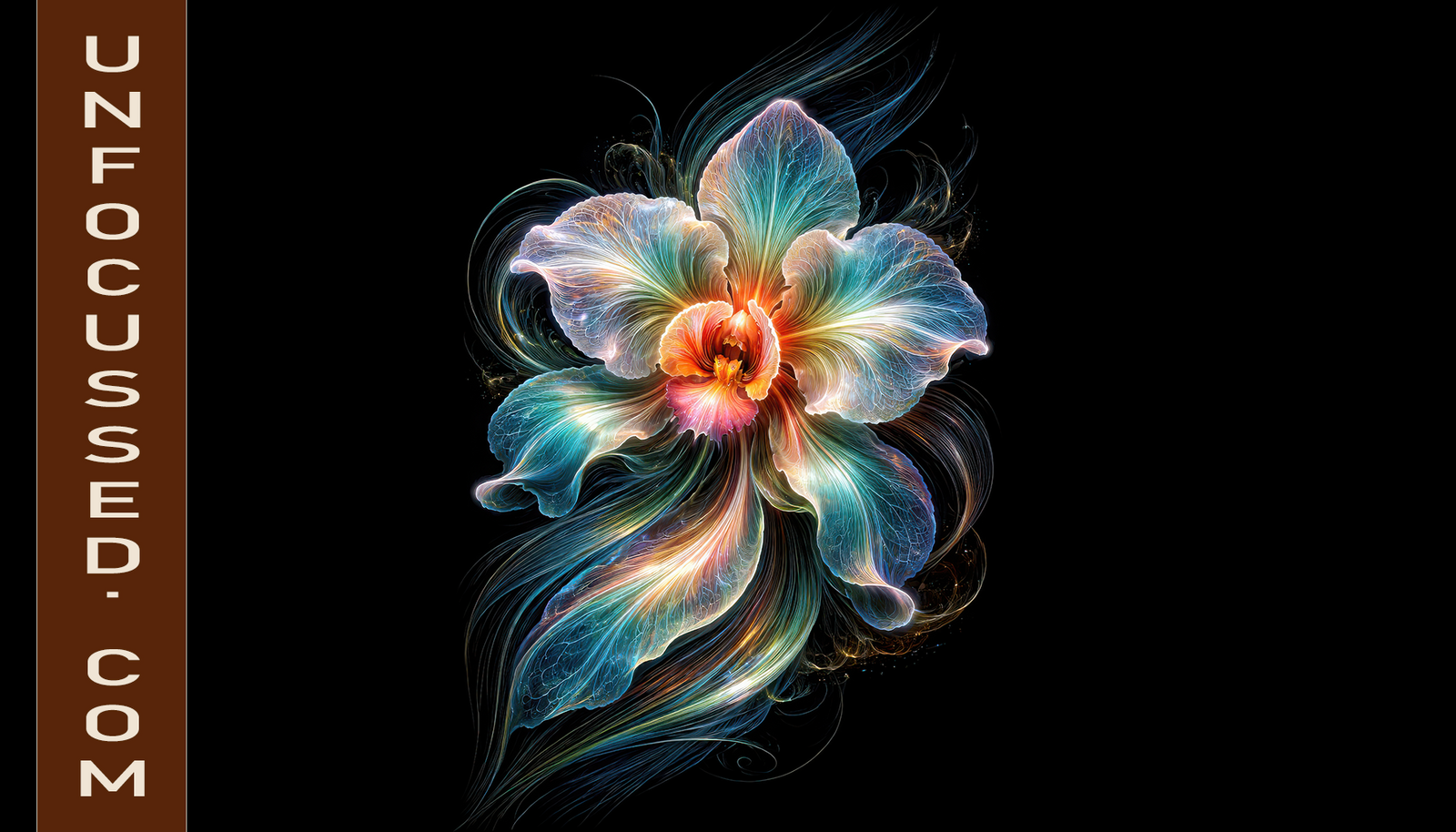
La flor en la obra de arte era una orquídea, pero llamarla orquídea era como llamar a una nube de tormenta “tiempo”. Sus pétalos eran vastos, translúcidos y luminosos —espuma de mar y azul verdoso, rubor y coral, con hilos de oro fundido que recorrían las venas como venas vivas de luz. El centro brillaba cálido y secreto, como una brasa detrás de unos labios.
Y los pétalos no solo estaban allí. Parecían haber sido capturados a medio balanceo, a media deriva, a medio suspiro, sus bordes se extendían en corrientes acanaladas que se derramaban en el fondo negro como si la orquídea estuviera sangrando el océano.
El pecho de Mara se apretó con una sensación para la que no tenía nombre. Ni admiración. Ni deleite.
Reconocimiento.
Se acercó, no porque quisiera inspeccionar la pincelada o la técnica, sino porque su cuerpo había decidido que la distancia entre ellos era de repente insultante.
Cuanto más se acercaba, más el fondo negro dejaba de parecer pintura y empezaba a parecer profundidad —como un lugar al que podrías entrar y ser tragado de la manera más suave posible.
Un escalofrío le recorrió los brazos.
Y entonces sucedió.
Parpadeó y la orquídea le devolvió el parpadeo.
No literalmente, sin párpados. Nada de tonterías de dibujos animados. El brillo del centro cambió, solo un poco, como si hubiera inhalado. Una cinta de luz cerca de la parte inferior de los pétalos pareció curvarse más hacia ella —sutil, casi plausiblemente imaginada… excepto que Mara había vivido su vida aprendiendo la diferencia entre lo imaginado y lo real. Lo había aprendido por las malas, una y otra vez, después de confiar en las personas equivocadas y creer en las promesas equivocadas y confundir el potencial con la prueba.
Esto era una prueba.
“Es nuevo”, susurró Elodie a su lado, la voz suavizada como si las luces de la galería hubieran llegado a su garganta. “Acaba de ser inaugurado esta noche. El artista ni siquiera les permitió fotografiarlo hasta la revelación”.
Mara no respondió. No confiaba en que su voz no se quebrara y derramara algo vergonzoso en el suelo.
En cambio, estudió la placa del título con la intensidad de alguien que esperaba que las palabras pudieran explicar lo que estaba haciendo su sistema nervioso.
Ensueño de Orquídea Marea
Técnica mixta sobre panel de archivo
Colección privada pendiente
No había nombre de artista en la placa.
Solo eso ya era lo suficientemente pretencioso como para ser sospechoso. Pero Mara apenas lo registró, porque la orquídea estaba haciendo algo extraño —algo personal.
Cuanto más la miraba, más el centro parecía pulsar al mismo ritmo que su propio latido. No de una manera metafórica de “guau, el arte es conmovedor”. De una manera literal, rítmica y sincronizada que la hizo consciente de lo fuerte que estaba su sangre dentro de su cráneo.
Mara levantó una mano, deteniéndose antes de que sus dedos pudieran cruzar la línea invisible entre “mirar” y “tocar”. La galería tenía seguridad. Y, lo que es más importante, Mara tenía vergüenza. Mantuvo la mano a unos centímetros de la superficie.
El calor era real.
No imaginado. No psicosomático. El calor irradiaba débilmente en el aire, como si la pieza tuviera un núcleo vivo. Como si no se contentara con ser vista, quería ser sentida.
Elodie notó la mano de Mara y emitió un pequeño sonido de advertencia. “Mara. No. Este lugar te derribará a cámara lenta. A la gente rica le encanta el drama”.
Mara bajó la mano, pero sus ojos permanecieron fijos en la orquídea.
“¿Quién lo hizo?”, preguntó finalmente, su voz salió más áspera de lo que pretendía.
Elodie se encogió de hombros. “Se están haciendo los misteriosos. Algo sobre el artista que quiere que la obra sea experimentada sin prejuicios. Aparentemente, el nombre se revelará más tarde”.
Mara casi se rió. “Esa es una forma elegante de decir ‘estrategia de marca misteriosa’”.
Pero la orquídea no parecía estrategia. Parecía… memoria. Como un lugar en el que había estado antes en un sueño que olvidó en el momento en que despertó. Como estar en el mismo lugar exacto donde comenzó un desamor, excepto que esta vez sostienes un fósforo.
La mirada de Mara siguió el veteado de los pétalos —finas e intrincadas redes de luz como ríos vistos desde el aire. Los patrones no eran aleatorios. Se curvaban y agrupaban de maneras que le hacían sentir un vuelco en el estómago con una familiaridad inquietante.
Ella conocía esas líneas.
No de ningún libro de botánica. No de ningún estilo artístico.
De sí misma.
Las venas en los pétalos trazaban formas que coincidían con la cicatriz pálida en su muñeca derecha, la que se hizo cuando tenía dieciséis años y estaba enojada, descuidada y decidida a fingir que no tenía miedo. La curva, la ramificación, el ligero pliegue donde la curación había tensado la piel.
La respiración de Mara se detuvo.
Su mano se dirigió a su muñeca instintivamente, los dedos presionando la cicatriz como para confirmar que todavía estaba allí.
Lo estaba.
Y allí, en el pétalo de la orquídea, también estaba.
Su primer pensamiento fue racional: coincidencia. Reconocimiento de patrones. Imaginación hiperactiva. Al cerebro le encanta encontrar significado donde no lo hay.
Su segundo pensamiento fue inmediato y violento: ¿Quién diablos me está observando?
Se alejó de la pieza, escaneando la habitación. La galería estaba llena de gente sosteniendo copas de champán como accesorios. Las parejas se inclinaban una hacia la otra, murmurando sobre “composición” y “espacio negativo” como si acabaran de inventar los ojos. Un hombre con una barba agresivamente cuidada estaba cerca de una escultura y asentía solemnemente, como si le estuviera rezando. Dos mujeres con vestidos de colores de joyas se turnaban para poner sus bocas pequeñas y pensativas.
Pero nadie parecía estar mirando a Mara.
Excepto la orquídea.
Brilló un poco más cuando se movió.
La piel de Mara se erizó. Volvió a mirar la placa. Las palabras se emborronaron ligeramente, como si sus ojos quisieran rechazar la realidad de lo que estaba viendo.
Ensueño de Orquídea Marea.
Ensueño significaba sueño. Un estado de deriva, semiconsciente. Un vagar de la mente.
Mara había pasado la mayor parte de su vida tratando de no desviarse. Desviarse significaba perder el control. Perder el control significaba ser sorprendida por el dolor, cegada por la alegría, atrapada desprevenida por la intimidad, atrapada expuesta.
Pero aquí, de pie frente a una flor imposible que parecía reconocer sus cicatrices, sintió algo completamente diferente.
Se sintió recordada.
No de la manera en que los amigos recuerdan tu bebida favorita o tu cumpleaños. De la manera en que una habitación recuerda el sonido de una discusión que ocurrió hace años. De la manera en que un cuerpo recuerda un toque incluso después de que ha dejado de echarlo de menos.
Elodie se acercó, con la voz baja. “¿Estás bien? Pareces como si acabaras de ver a tu ex en la fila del DMV”.
Mara tragó saliva. “Creo que esta pieza…”
Se detuvo.
Porque el centro de la orquídea cambió de nuevo. El brillo cálido se tensó y profundizó, como si se estuviera enfocando. Como si hubiera escuchado su voz y le hubiera prestado toda su atención.
Y entonces —silenciosamente, imposiblemente— el fondo negro detrás de los pétalos se onduló.
No como pintura. Como agua.
El corazón de Mara dio un vuelco. Parpadeó fuerte. La ondulación permaneció. Una delicada ola de oscuridad, empujando hacia afuera desde la flor, como si la obra de arte acabara de hacer espacio para que algo pasara.
Se le secó la boca.
Elodie no se dio cuenta. Estaba mirando su teléfono, probablemente escribiendo un pie de foto que decía algo como Arte, pero hazlo existencial.
Mara se inclinó de nuevo, muy lentamente, como si pudiera acercarse sin asustarlo. El aire se sentía más denso cerca de la pieza, zumbando débilmente —como la electricidad silenciosa de una tormenta que aún no ha decidido si arruinar tu noche.
Volvió a levantar la mano, con cuidado, vacilante.
Esta vez, antes de que siquiera alcanzara la superficie, una de las cintas de luz en la parte inferior de la orquídea se curvó hacia sus dedos, como un gato estirándose hacia un toque que fingía no querer.
Mara se quedó paralizada.
La cinta se detuvo en el aire, suspendida dentro de la obra de arte —o fuera de ella, y la diferencia de repente importaba menos que el hecho de que parecía estar esperando su permiso.
La garganta de Mara se apretó. Su voz salió como un susurro solo para ella.
“¿Tú… me conoces?”
La orquídea no respondió con palabras.
Respondió mostrándole algo.
Por una fracción de segundo —tan rápido que su cerebro casi no pudo captarlo— las venas de los pétalos se reorganizaron. Cambiaron a una forma que no había visto en años.
El resplandor de una farola.
Una acera mojada por la lluvia.
La sombra de una persona sosteniendo un paraguas demasiado pequeño para dos, inclinada cerca, diciendo su nombre como si significara hogar.
Mara aspiró bruscamente, el recuerdo la golpeó con la fuerza de una puerta que se abre de golpe.
Y el centro de la orquídea brilló más, como si estuviera satisfecha.
Como si hubiera estado esperando que ella recordara.
Las cosas que fingimos no sentir
Mara no retrocedió.
Solo eso habría sorprendido a cualquiera que la conociera bien.
Su estrategia de supervivencia siempre había sido la distancia —emocional, física, estratégica. Si algo dolía, se retiraba. Si algo deslumbraba, evaluaba. Si algo le agitaba el pecho de una manera que amenazaba con reorganizar los muebles de su identidad, se disculpaba discretamente y encontraba la salida metafórica más cercana.
Pero la orquídea acababa de reorganizar un recuerdo que ella había enterrado bajo capas de seca competencia.
Y ella seguía allí.
La imagen dentro del pétalo se desvaneció, disolviéndose de nuevo en venas de verde azulado y oro. La lluvia. La farola. El paraguas. Desaparecieron. Como si la flor simplemente hubiera abierto un archivo, le hubiera mostrado el contenido y lo hubiera cerrado de nuevo.
Su pulso retumbaba en sus oídos.
“Viste eso”, susurró, apenas audible incluso para ella misma. “Tú también viste eso”.
La cinta de luz cerca de sus dedos tembló —no salvajemente, no teatralmente. Solo lo suficiente para confirmar que esto no era una coincidencia, no una proyección.
La orquídea no estaba mostrando una belleza aleatoria.
Le estaba mostrando a ella.
Mara tragó saliva con dificultad y bajó la mano, pero no retrocedió. En cambio, se inclinó más, su aliento rozando la superficie.
“¿Qué eres?”
Por un momento, no pasó nada.
Detrás de ella, un grupo de invitados de la galería rió demasiado fuerte por algo trivial. Las copas de champán tintinearon. Un curador de traje negro impecable pasó flotando con una sonrisa tan afilada como para cortar fruta. El mundo continuó, brillante y despreocupado.
Pero frente a ella, la orquídea se oscureció de color.
Los pétalos de espuma de mar se volvieron índigo en sus bordes, como el crepúsculo que se convierte en noche. El centro brillaba más cálido —menos brasa ahora, más núcleo fundido.
Y entonces el fondo negro se onduló de nuevo.
Esta vez, la ondulación no se detuvo en el borde del marco.
Se extendió hacia afuera.
No dramáticamente. No lo suficiente como para que alguien más gritara o se desmayara. Solo lo suficiente como para que el aire alrededor de la pieza se sintiera diferente —más denso, cargado. Mara podía sentirlo contra su piel, una suave presión, como la primera ola de una marea tocando sus tobillos antes de que se diera cuenta de que estaba de pie en el océano.
Miró a su alrededor.
Nadie más reaccionó.
Un hombre con cabello plateado entrecerró los ojos hacia la pieza desde el otro lado de la habitación y asintió solemnemente, como si acabara de confirmar su cosmovisión. Una mujer levantó su teléfono discretamente, solo para ser interceptada por un asistente de la galería con la autoridad silenciosa de alguien que hace cumplir las reglas sobre los niveles de luz.
Ellos vieron color.
Ellos vieron técnica.
Ellos vieron potencial de inversión.
Mara vio su propia vida interior reflejada como si hubiera sido catalogada.
“No solo me recuerdas”, murmuró. “Me estás leyendo”.
La orquídea respondió.
Un pétalo se desplegó un poco más —lo suficiente como para que el veteado interior cambiara de nuevo. Esta vez la imagen era más nítida, más larga.
Una cocina. Luz del sol entrando por las persianas. Dos tazas en el mostrador. Un mensaje de texto sin leer.
Su aliento se atascó.
El recuerdo no era trágico. No era catastrófico. Era pequeño. Ordinario. El tipo de momento que parece inofensivo mientras ocurre y solo más tarde se revela como un punto de inflexión.
Ella había elegido el silencio ese día.
Eligió el orgullo. Eligió dejar el mensaje sin respuesta porque responderlo significaba admitir que le importaba más de lo que quería admitir.
El resplandor de la orquídea parpadeó —no juzgando. No condenando.
Curioso.
Como si preguntara, ¿Por qué?
Mara sintió un calor subir por su cuello.
“Porque es más fácil”, susurró a la defensiva, olvidando por completo que estaba en público. “Porque si no respondes, no tienes que arriesgarte a ser la que quiere más”.
El centro de la orquídea pulsó una vez —lento, deliberado.
La cinta de luz cerca de su mano se extendió más esta vez. No rompió la superficie, pero la presionó, como si el límite entre el arte y el aire fuera de repente negociable.
El pecho de Mara se apretó con una sensación diferente ahora —no miedo. No exactamente.
Exposición.
Le estaba mostrando los momentos en los que se había encogido. Donde había cerrado los pétalos en lugar de abrirlos. Donde había elegido el control sobre la conexión.
Y no se estaba burlando de ella.
No la estaba regañando.
Estaba recordando la versión de ella que había querido florecer de todos modos.
Presionó su palma contra el espacio justo frente a la superficie.
El calor se intensificó instantáneamente.
Su visión se volvió borrosa —no con lágrimas, todavía no— sino con una sutil distorsión, como el calor que se eleva del asfalto. Los bordes de la galería se suavizaron. Las conversaciones se atenuaron. El brillo del champán se desvaneció en un ruido distante.
La orquídea llenó su campo de visión.
Y entonces, imposiblemente, sintió algo rozar su palma.
Suave.
Como seda arrastrándose lentamente por la piel.
La respiración de Mara se quebró.
La cinta de luz había cruzado el umbral.
No completamente. No dramáticamente. Solo la más tenue curva de ella presionando contra su mano, fría y cálida al mismo tiempo —como la marea al anochecer.
Sus rodillas casi cedieron.
Ella no se apartó.
El contacto no fue invasivo. No fue forzado. Fue… una invitación.
La galería se disolvió aún más. El sonido retrocedió como si alguien hubiera cerrado una puerta pesada al mundo.
El centro de la orquídea brilló más, y el negro detrás de ella se abrió —no rasgándose, no desgarrándose, sino ensanchándose, como una pupila dilatándose en la penumbra.
Dentro de esa profundidad, Mara vio movimiento.
No el océano. No el espacio.
Patrones.
Corrientes de luz superpuestas que se asemejaban a las venas de los pétalos —pero vastas. Infinitas. Interconectadas.
Entonces lo sintió, una comprensión que se asentó en sus huesos.
Esta flor no la recordaba porque la hubiera observado.
La recordaba porque estaba hecha de lo mismo que ella.
No carne. No hueso.
Elección.
Cada momento en que se había abierto. Cada momento en que se había cerrado. Cada riesgo que había tragado. Cada confesión que había retenido.
La orquídea no estaba reproduciendo su pasado para atormentarla.
Le estaba mostrando la marea que había mantenido dentro.
La energía que había reprimido tan fuertemente que no tenía adónde ir sino hacia adentro.
La cinta contra su palma pulsó suavemente, sincronizada de nuevo con su latido.
Esta vez, ella entendió.
No le preguntaba por qué se había cerrado.
Le preguntaba si tenía la intención de permanecer así.
La respiración de Mara era superficial y rápida.
Pensó en el mensaje de texto sin respuesta. En las casi-confesiones. En las veces que había dicho “Estoy bien” cuando había querido decir “Estoy aterrada pero esperanzada”.
Pensó en lo seguro que se sentía estar autocontenida.
Pensó en lo solitaria.
- Al seleccionar una opción, se actualiza toda la página.