
L'année où j'ai appris à regarder
Tout a commencé comme la plupart des habitudes qui sauvent des vies : non pas avec un tableau de visualisation, un livre de développement personnel ou une envie soudaine de devenir le genre de personne qui porte des gilets kaki sans ironie, mais un mardi matin à Wentzville, dans le Missouri, où j’ai réalisé que je ne pouvais plus vivre un seul jour de plus comme avant.
L'année m'avait tout pris avec la désinvolture d'un raton laveur s'emparant d'une poubelle non verrouillée. Le sommeil. La certitude. La joie des conversations anodines. Cette sensation de légèreté et de simplicité qu'on avait l'habitude de trimballer comme de la monnaie dans sa poche. C'était le genre d'année qui vous fait oublier que vous avez un corps jusqu'à ce que la douleur vous étonne, et que vous avez un cœur jusqu'à ce qu'il vous surprenne en battant encore.
Je ne me souviens même plus de ce qui m'a précisément brisée ce matin-là. Peut-être un courriel. Peut-être le goût amer du café, comme un regret. Peut-être ce ciel qui semblait avoir renoncé à tout et qui laissait couler silencieusement ses larmes sur tout.
Ce dont je me souviens, c'est d'avoir mis le pied sur la véranda, mes chaussettes aussitôt trempées par le bois humide, et d'avoir réalisé que l'air sentait bon, d'une odeur fraîche et propre, comme après une nuit blanche — comme si le monde avait été lavé et n'avait pas encore fini.
Je suis restée là un instant, les mains enfoncées dans les poches d'un sweat à capuche que j'avais tellement porté qu'il était devenu moins un vêtement qu'une version portable du « ça va ». La pluie tombait comme une douce insistance, pas une averse torrentielle, mais suffisamment pour faire briller la rambarde de la terrasse et rendre la pelouse plus sombre, plus riche — comme si la terre avait enfin bu.
Au-delà de la clôture, le lotissement se fondait dans les arbres. Pas la nature sauvage, pas exactement. Mais une limite suffisante pour que le rectangle net et soigné de pelouse tondue laisse place à la géométrie plus ancienne et chaotique des branches, des feuilles et du temps.
Quelque chose a bougé dans le pommier sauvage près de la limite du jardin. Un battement d'ailes rapide. Un saut. Une pause.
Je n'avais pas encore de jumelles. Je n'avais pas d'application. Je n'avais pas de carnet. Je ne possédais aucune qualification dans la longue et noble tradition des ornithologues. Je n'avais qu'un cerveau qui ne cessait de raconter des catastrophes et un corps qui semblait allergique au calme.
Mais ce mouvement attira mon attention comme un fil tendu.
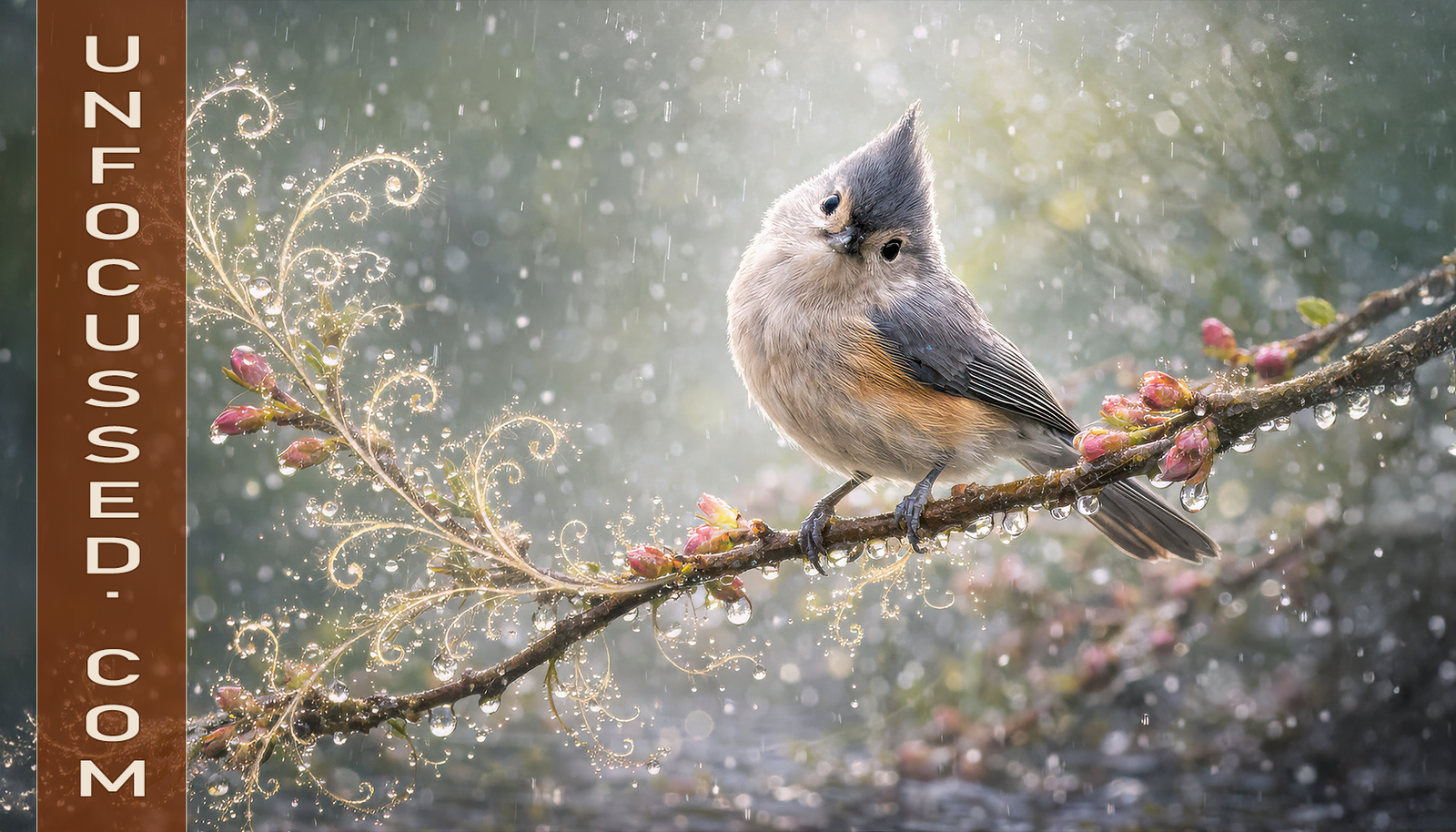
Là, sur une fine branche perlée de gouttes de pluie, se tenait un minuscule oiseau à la crête grise qui lui donnait un air perpétuellement alerte, toujours prêt, toujours indifférent à tout ce que j'avais accompli dans ma vie. Ses yeux noirs étaient vifs et concentrés, et il se tenait avec la dignité imperturbable d'une créature qui n'avait jamais trop réfléchi à une phrase prononcée trois jours auparavant.
Elle tourna la tête sur le côté, comme si elle écoutait.
Et ça — c'est la partie stupide, simple, presque insultante — mon esprit s'est tu.
Pas définitivement. Pas comme un miracle. Mais l'espace d'un instant, comme si quelqu'un avait baissé le volume. Comme si le monde avait cessé de crier et s'était mis à parler d'une voix qu'il fallait tendre l'oreille pour entendre.
L'oiseau resta là, la pluie lui lissant le plumage, la crête légèrement dressée, comme s'il ne se contentait pas de survivre aux intempéries, mais les surveillait.
Au fond de moi, une petite partie qui se contractait depuis des mois s'est relâchée. J'ai pris une inspiration que je retenais depuis… un an. Deux ans ? Assez longtemps pour que mes côtes en aient été surprises.
Il sautilla une fois le long de la branche, s'arrêtant sur un bourgeon – serré et pâle, le printemps encore à l'état de projet. Il l'examina comme un auditeur vérifiant des reçus, puis picora légèrement, sans frénésie ni désespoir. Juste… faisant ce qu'il fallait faire.
J'ai regardé. C'est tout. J'ai regardé, et parce que je regardais, je ne sombrais pas dans le désespoir. Je ne repassais pas les conversations en boucle. Je ne prévoyais pas de catastrophes. Je n'essayais pas de résoudre tous mes problèmes d'un seul coup.
La pluie continuait, et l'oiseau n'y prêtait aucune attention. Il ne négociait pas avec les éléments. Il ne marchandait pas. Il ne demandait pas au ciel d'être plus clément. Il se contentait d'exister, soumis aux conditions qui lui étaient imposées, et d'une certaine manière, j'avais le sentiment que c'était une leçon que j'aurais dû apprendre depuis longtemps.
Derrière moi, la maison bourdonnait du mécanisme silencieux des responsabilités qui n'attendaient qu'à ressurgir. Le téléphone à l'intérieur allait afficher des notifications. Il y aurait des nouvelles. Il y aurait des problèmes. Il y aurait le devoir quotidien de faire semblant d'aller suffisamment bien pour fonctionner.
Mais ici, sur ce porche, je n'étais qu'une personne observant un petit oiseau sous la pluie.
Et l'oiseau — cette minuscule chose grise avec une crête comme une virgule dans la phrase du matin — ressemblait au genre de créature capable d'arrêter une tempête simplement en refusant d'être emportée par elle.
Je ne connaissais pas encore son nom. J'ignorais que c'était une mésange bicolore. J'ignorais qu'elle deviendrait, d'une certaine manière, la présence la plus constante de ma pire année – apparaissant sans prévenir et sans faire de bruit, comme un rappel discret que le monde recèle encore de petits miracles qu'il distribue gratuitement.
Je ne savais que ceci :
Pour la première fois depuis longtemps, j'avais envie de rester dehors.
Alors je l'ai fait. Je suis restée là, sous la douce persistance de la pluie, les épaules voûtées, les chaussettes humides, le cœur meurtri mais toujours fonctionnel, et j'ai regardé le petit oiseau poursuivre sa matinée comme si de rien n'était.
Et à ce moment-là, ce n'était pas le cas.
Pas entièrement.
Pas tant que la mésange restait perchée sur sa branche perchée de gouttes de pluie, regardant le jour comme si elle en avait vu d'autres et qu'elle était toujours prête à se montrer.
Quelque part à Wentzville, une tempête faisait rage.
Et sur mon porche, un oiseau m'apprenait à y vivre.
Carnets de terrain de la mauvaise année
Je n'ai dit à personne que j'avais commencé à observer les oiseaux.
Pas tout de suite. Ça ne semblait pas être le genre de chose qu'il fallait crier sur tous les toits. C'était fragile, comme avouer avoir trouvé une fissure dans un mur et y coller son visage pour respirer à nouveau. On ne se vante pas d'avoir de l'oxygène. On respire, tout simplement, en espérant que personne ne remarque à quel point on était désespéré une minute auparavant.
Mais la surveillance a continué.
Cela s'est fait par bribes : des minutes volées entre deux obligations, des matins à moitié vécus, des pauses pluvieuses où le monde extérieur me paraissait plus gérable que mes propres pensées. J'ai commencé à reconnaître les rythmes du jardin de Wentzville comme on reconnaît les humeurs d'un être cher sans savoir comment l'apaiser.
Le cardinal se faisait toujours entendre comme s'il était actionnaire du soleil levant. Les moineaux arrivaient en groupe, bruyants et opiniâtres. Les geais bleus criaient comme s'ils venaient de se souvenir d'une vieille rancune.
Et puis il y avait la mésange bicolore.
Il… elle ? Je n’en ai jamais su. J’ai vite cessé de m’en soucier. La mésange était… la mésange, tout simplement. Toujours matinale. Toujours précise. Apparaissant toujours comme par magie quand la journée me pesait particulièrement, comme si elle avait décidé de déverser tout son poids sur ma poitrine avant même le petit-déjeuner.
Un après-midi, après une réunion qui m'avait laissé l'impression d'avoir été peu à peu effacé, tout en restant techniquement présent, j'ai acheté des jumelles dans un grand magasin. Je suis resté planté dans l'allée, les jumelles à la main, retournant la boîte, lisant des mots comme « clarté » et « champ de vision » , et me demandant à quel moment ma vie était devenue une collection de spécifications techniques que je ne comprenais pas, mais dont j'espérais qu'elles me seraient utiles.
La première fois que je les ai utilisés, j'ai éclaté de rire.
La mésange remplissait tout le champ de vision – chaque plume paraissait soudain énorme, d'une précision absurde, d'une intimité presque indécente. Son œil cligna. Sa poitrine se souleva et s'abaissa. Sa crête se dressa puis retomba, telle une ponctuation dans une phrase que je commençais à peine à lire.
Ce n'était plus seulement un oiseau. C'était un voisin. Un habitué. Un témoin minuscule et impassible de mon effondrement.
J'ai commencé à prendre des notes, pas des notes formelles. Pas le genre qui exige discipline ou régularité. Juste des bribes. Des pense-bêtes mentaux. Des observations qui me permettaient de garder l'équilibre quand le reste de la journée menaçait de se dissiper dans le brouillard.
La pluie ne les arrête pas.
Ils ne se pressent pas sauf s'ils y sont obligés.
Ils marquent une pause avant de bouger.
C'est cette dernière qui m'a marqué.
La mésange se posait, puis s'arrêtait. Point final. Comme si l'atterrissage n'était pas l'essentiel. Comme si arriver ne signifiait pas forcément agir. Elle penchait la tête – à gauche, à droite – écoutant, évaluant, décidant. Alors, et alors seulement, elle agissait.
Je me suis rendu compte à quel point je le faisais peu.
La plupart du temps, je réagissais impulsivement. Courriels, gros titres, attentes : tout exigeait une réponse immédiate. La réaction primait sur la réflexion. Le bruit primait sur la nuance. L’année m’avait habituée à me crisper constamment, comme si l’impact était inévitable et que se préparer signifiait serrer les dents encore plus fort.
La mésange ne serra jamais les dents.
Elle avait confiance en sa branche. En ses pattes. En sa capacité à s'adapter au moindre changement de vent. Et lorsqu'elle sautait, elle sautait avec assurance, précision et sans hésitation.
Il y avait des jours où je regardais par la fenêtre de la cuisine, car aller sur le porche me semblait trop difficile. Des jours où la vitre qui nous séparait avait une signification symbolique que je préférais ne pas explorer. Des jours où je tenais une tasse de café et oubliais de la boire, observant la vapeur s'élever tandis que l'oiseau vaquait à ses occupations, imperturbable face à mon inertie.
Parfois, la pluie redoublait d'intensité. La pluie du Missouri est capricieuse : soudaine, dramatique, elle n'hésite pas à semer le chaos. La cour s'assombrissait, les feuilles devenaient glissantes et lourdes, et le monde semblait se brouiller les contours.
Et pourtant, la mésange est apparue.
Plumage ébouriffé, crête humide, regard perçant. Ni provocateur, ni héroïque. Juste présent.
Un matin, après une semaine particulièrement éprouvante – une de ces périodes où tout semble sur le point de s'effondrer sans que personne d'autre ne s'en aperçoive –, je me suis surprise à murmurer : « Tu es là », comme si cela avait une quelconque importance. Comme si je saluais un vieil ami qui n'avait pas bronché quand la situation s'était dégradée.
L'oiseau ne m'a pas remarqué. Ce qui, honnêtement, me semblait juste.
J'ai appris que l'observation des oiseaux est un exercice de consentement. On ne les appelle pas. On n'exige rien. On observe ce qui se présente. On accepte ce don sans vouloir qu'il devienne plus qu'il n'est.
Cette leçon a eu des répercussions.
J'ai commencé à laisser les moments être des moments. À accepter que les journées soient irrégulières. À me permettre d'être imparfaitement présente au lieu de me préparer de manière obsessionnelle. Je n'ai pas réparé ma vie. Je n'ai pas dompté l'année. J'ai simplement… cessé d'essayer de tout contrôler.
La mésange ne s'attardait jamais. C'était en partie ce qui faisait son charme. Une minute. Deux. Parfois moins. Suffisamment pour me rappeler que l'attention, lorsqu'elle est pleinement portée, n'a pas besoin de se prolonger pour être significative.
Par un après-midi gris, sous une pluie battante, j'ai réalisé quelque chose qui me semblait à la fois évident et profond :
L'oiseau ne me sauvait pas.
Je me sauvais en regardant.
En choisissant, encore et encore, de sortir de mes pensées et de m'immerger dans les petites vies précises qui se déroulent juste hors de ma portée. En observant au lieu de m'anesthésier. En me tenant debout dans une cour du Missouri, trempée et incertaine, et en laissant une créature pas plus grande que mon poing me montrer comment vivre sans constamment craindre le désastre.
L'année a continué d'être difficile. Cela n'a pas changé. Les pertes continuaient de s'abattre sur moi sans prévenir. L'inquiétude continuait de me réveiller à trois heures du matin, avec son bloc-notes et son humeur maussade.
Mais il y eut alors des pauses.
Et puis, il y eut un oiseau qui se posa comme un point d'exclamation dans la phrase interminable de mes journées.
Il y avait certes de la pluie, mais cela ne signifiait pas automatiquement la ruine.
Et chaque fois que la mésange apparaissait — crête dressée, perlée de pluie, sans hâte —, je sentais en moi quelque chose me rappeler comment faire de même.
Pause.
Évaluer.
Puis bougez.
Non pas parce que la tempête était terminée.
Mais parce que ce n'était pas le cas.
Ce qui est resté après la tempête
Quand l'année a enfin relâché son emprise, je connaissais le jardin comme on apprend à reconnaître un visage familier : par accumulation. Pas d'un coup. Pas de façon spectaculaire. Juste par la répétition, l'attention et la compréhension tranquille qui naît de la présence, même quand rien de remarquable n'est promis.
Je pouvais reconnaître la saison rien qu'à la lumière. L'optimisme pâle du printemps. L'assurance sans détour de l'été. La beauté fragile et mélancolique de l'automne. L'honnêteté brute de l'hiver. Wentzville a cette façon de feindre l'ordinaire tout en vous intimant discrètement de rester vigilant si vous voulez y survivre en conservant votre sensibilité intacte.
La mésange est restée.
Pas tous les jours. Pas assez régulièrement pour que ce soit une garantie. Mais assez souvent pour que son absence soit significative, et son retour, mérité. C'est devenu un repère plus qu'un miracle : un rappel que la stabilité n'est pas synonyme de permanence, et que le confort ne requiert pas la possession.
Un matin, en fin d'année, après une nuit de fortes pluies et de profondes réflexions, je suis sorti sans consulter mon téléphone au préalable.
Cela me semblait important.
L'air était suffisamment froid pour me réveiller en douceur. Le jardin embaumait les feuilles humides et la légère odeur minérale de la terre retournée par le temps et les intempéries. Le pommier sauvage était presque nu, ses bourgeons fanés depuis longtemps, ses branches exposées créant une impression presque intime.
Je ne m'attendais à rien voir.
C'est comme ça que j'ai su que j'allais mieux.
Je ne cherchais pas à me rassurer. Je ne marchandais pas avec le matin. J'étais simplement là, les bottes sur le sol humide, le souffle visible, les mains vides. J'observais, car observer était devenu l'essentiel, et non la récompense.
La mésange est arrivée sans prévenir.
Un léger battement d'ailes. Un atterrissage précis. La crête s'est dressée, puis l'oiseau s'est immobilisé. Il a tremblé une fois, laissant échapper quelques gouttelettes tenaces, et a fixé son regard au-delà de moi, vers un avenir auquel je n'avais pas besoin d'accéder.
J'ai souri. Pas d'un sourire de façade. De celui qui survient quand quelque chose s'aligne discrètement en vous.
C’est alors que j’ai réalisé à quel point j’avais changé sans m’en apercevoir.
La mauvaise année n'avait pas disparu. Elle n'avait pas été effacée, ni ne m'avait effacée. Elle subsistait sous la forme de cicatrices, d'habitudes et de réflexes que je traînerais avec moi. Mais elle ne rythmait plus mes journées. Elle ne commentait plus tout d'une voix qui présumait toujours le pire.
Observer les oiseaux ne m'avait pas guéri.
Cela m'avait cloué au sol.
Cela m'a appris que l'attention est un acte de résistance dans un monde qui tire profit de la distraction. Que le calme n'est pas de la paresse. Que les petits bonheurs constants n'ont pas besoin de se justifier par des parcours de transformation ou des indicateurs de productivité.
La mésange a fait un saut, puis deux, puis s'est arrêtée — toujours cette pause — avant de filer dans les arbres au-delà du jardin. Disparue aussi discrètement qu'elle était apparue.
Je ne me suis pas sentie abandonnée.
Je me sentais comblée.
À l'intérieur, la journée s'annonçait. Courriels. Nouvelles. Responsabilités. L'implacable machinerie de la vie moderne poursuivait son cours, que je m'y mette ou non. Rien n'avait changé.
Mais j'en avais eu.
J'avais appris à affronter les intempéries sans exiger qu'elles se comportent comme elles le souhaitent. À observer sans chercher à s'approprier l'instant. À me contenter de l'instant présent, même lorsqu'il était bref, même lorsqu'il était silencieux, même lorsqu'il ne promettait pas de suite.
À un moment donné, la tempête a cessé d'être quelque chose dont j'avais besoin de m'échapper.
C'est devenu un espace dans lequel je savais vivre.
Je suis finalement rentrée. J'ai fait du café. J'ai ouvert l'ordinateur portable. J'ai repris contact avec le monde extérieur. Mais cette pause persistait, comme une douce hésitation entre l'impulsion et la réaction, tel un espace en forme d'oiseau où la panique avait coutume de se percher.
Plus tard dans la journée, la pluie est revenue – légère, persistante, sans pitié. J’ai jeté un coup d’œil par la fenêtre par réflexe.
Pas d'oiseau.
Et pourtant, je me sentais stable.
Car la leçon n'avait jamais porté sur le fait que la mésange reste.
Il s'agissait de ce qui restait après.
La façon dont l'attention ralentit le temps juste assez pour respirer.
La façon dont la présence interrompt le désespoir.
La façon dont un petit oiseau gris perché sur une branche du Missouri peut vous apprendre — sans mots, sans effort, sans même connaître votre nom — comment arrêter une tempête simplement en refusant de se laisser emporter par elle.
Et une fois que vous aurez appris cela, que vous l'aurez vraiment appris, vous n'aurez plus besoin que l'oiseau se présente à chaque fois.
Vous savez comment regarder.
Tu sais attendre.
Tu sais comment vivre au rythme des intempéries.
« Une mésange bicolore apaise la tempête » ne s'achève pas avec l'histoire ; elle persiste, silencieusement, comme le font toujours les moments précieux. Cette œuvre d'art incarne cette même sérénité profonde, que ce soit sous forme d'estampe encadrée ou de toile, à placer là où commence ou termine votre journée. Pour des instants plus lents et plus conscients, l'image se fait tactile comme un puzzle , invitant à la patience pièce par pièce, ou vous accompagne partout, sous la forme d'un sac week-end à l'allure discrètement rebelle ou d' une pochette du quotidien. Chaque format porte en lui le même message : la vie continue même après la tempête ; il suffit de savoir faire une pause au cœur même de celle-ci.

 The Emerald Stair of the Sleeping Fern
 The Honey-Lipped Budnewt Who Couldn’t Swallow the Evidence
 The Amethyst Moth Shrine of Palebranch