

El jardín detrás de la última verja
Había lugares en el mundo que sobrevivían por no ser escritos.
Ni en mapas. Ni en registros del condado. Ni en libros de cuentas de iglesias o Biblias familiares o en los frágiles cuadernos de hombres que creían que nombrar algo les daba posesión de ello. Algunos lugares se escurrían del lenguaje a propósito. Dejaban que las carreteras los olvidaran. Dejaban que las vallas se cayeran frente a ellos. Dejaban que las zarzas, los espinos y el tiempo hicieran las relaciones públicas.
Este era uno de esos lugares.
Los lugareños, cuando se les presionaba, señalaban vagamente el borde este de Rosethorn Bloom y decían cosas como: solía haber un vivero por allí, o mi abuela juraba que había un cementerio privado pasando el arroyo, o, si tenían suficiente bourbon como para dejar de censurarse: no vayas más allá de la última verja de hierro a menos que estés preparado para volver a casa sin algo tierno.
La gente decía muchas cosas en los pueblos pequeños. La mayor parte era chismorreo de bota de trabajo. Parte de ello, sin embargo, tenía raíces.
Eleanor Vale había regresado a Rosethorn Bloom porque su madre había muerto un jueves por la mañana a las 6:12, mientras la tetera todavía estaba caliente y los pájaros apenas comenzaban su petulante coro fuera de la ventana de la cocina.
Ese era el tipo de detalle que el duelo grapaba en el interior de tu cráneo.
No las verdades más grandes y nobles. No la gran revelación emocional. No, el duelo era un archivista insignificante. Conservaba la inclinación exacta de la taza dejada en el fregadero, el paño de cocina medio doblado, el libro de bolsillo boca abajo en el brazo del sofá, el lomo doblado como una mala espalda. Recordaba el color de la luz matutina como si eso importara. Como si un día pudieras poner todos los detalles en el orden correcto y de alguna manera deshacer el final.
Eleanor lo había intentado, a su manera.
Había tramitado el papeleo, cancelado las suscripciones, firmado los formularios que la funeraria deslizaba suavemente sobre la madera pulida como si la muerte fuera un paquete de lujo con extras opcionales. Había elegido flores que su madre habría despreciado por ser demasiado caras. Había permanecido junto a las cacerolas dispuestas por vecinos que de repente desarrollaron la energía de ojos suaves de la gente que audicionaba para la santidad. Había aceptado abrazos de mujeres que olían a polvos, almidón y antigua compasión.
Y luego, cuando todos se fueron y la casa se hundió en el silencio, Eleanor hizo lo que no había hecho en diecisiete años.
Se quedó.
La casa de los Vale se encontraba en el extremo más alejado del pueblo, donde el pavimento terminaba y los campos comenzaban a fingir que todavía estaban civilizados. Era estrecha, blanca una vez, menos ahora, con un porche que se quejaba bajo los pies y un rosal trepador que se había vuelto semi-salvaje en su ausencia. El jardín detrás de ella había sido el reino de su madre: peonías del tamaño de platos, dedaleras con su drama vertical petulante, ipomeas, rudbeckias, lavanda, romero, tomillo rastrero y media docena de plantas que Eleanor no podía nombrar porque a su madre le encantaba retener el conocimiento fácil.
«Si te lo cuento todo», solía decir, quitando las rosas marchitas con la concentración solemne de un sacerdote, «dejarás de prestar atención».
Su madre había sido así. Amorosa, pero con dientes. Tierna, pero nunca empalagosa. El tipo de mujer que creía que el sentimiento debía ganarse el sustento.
Eleanor había heredado el duelo, pero no el jardín.
A los treinta y seis años, podía gestionar contratos, clientes imposibles y el tipo de indiferencia pulcra que se esperaba de una mujer en Chicago que trabajaba en diseño y hacía que frases como jerarquía visual sonaran lo suficientemente importantes como para facturar por horas. Pero no podía mantener vivo el albahaca durante agosto. Una vez había matado una suculenta de forma tan completa que parecía personal.
Ahora estaba en el patio trasero de su madre con unas botas de goma prestadas, contemplando un desorden de floración, verde y vida descontrolada, sintiéndose como una impostora a las puertas de una religión de la que se había burlado demasiado joven y que había echado de menos demasiado tarde.
El aire olía a tierra mojada y dulzura demasiado madura. Las abejas se movían aturdidas entre las dedaleras. En algún lugar más profundo del jardín, algo se agitaba con la confianza merecida de una criatura que no pagaba hipoteca y no temía impuestos.
Eleanor metió las manos en los bolsillos de su cárdigan y miró hacia el viejo seto en el extremo de la propiedad.
Más allá de ese seto, cuando era niña, había historias.
No de su madre, que trataba la superstición de la misma manera que trataba las invitaciones de mercadeo multinivel —con una sonrisa fina y una violencia interna inmediata—, sino de su abuela, que había vivido a dos pueblos de distancia y olía a menta, alcanfor y secretos. Su abuela contaba historias solo mientras desgranaba guisantes o cosía dobladillos, como si el folclore fuera un oficio práctico como cualquier otro.
Había, había dicho una vez, una verja detrás del seto que aparecía solo cuando la pena maduraba lo suficiente como para abrir ciertos ojos.
Detrás de esa verja, decía, había un jardín que nadie plantaba y nadie poseía.
Y en ese jardín vivía un guardián.
No un ángel. No un demonio. No un fantasma. Algo más viejo que las categorías y mucho menos interesado en las etiquetas humanas. Recogía la dulzura final de las cosas que morían, no para robarla, sino para preservarla. La última ternura de una vida. La nota brillante final antes del silencio. El calor que quedaba después de que el cuerpo ya hubiera comenzado sus negociaciones con la quietud.
«¿Por qué?», había preguntado Eleanor, porque incluso a los ocho años desconfiaba del misterio decorativo.
Su abuela había sonreído sin levantar la vista de su costura.
«Porque los finales no deben desperdiciarse».
En ese momento, Eleanor puso los ojos en blanco con tanta fuerza que casi vio su propio futuro. Lo que, para ser justos, habría ahorrado tiempo a todos.
Después de eso, había olvidado la historia. O, mejor dicho, la había enterrado bajo la escuela, el trabajo, las facturas, el desamor, la edad adulta y todos los demás tediosos escombros que la gente llama vida real.
Ahora, sin embargo, con la casa demasiado tranquila y su madre demasiado ausente, y el dolor en su pecho habiendo alcanzado la residencia permanente, la vieja historia había regresado en un momento inoportuno.
Regresó como lo hacían ciertas melodías: no invitada, medio recordada, imposible de apagar.
Tres noches después del funeral, incapaz de dormir y reacia a llorar de nuevo porque incluso el dolor podía volverse repetitivo, Eleanor se puso un abrigo sobre la camisa del pijama y salió al jardín justo después de medianoche.
El cielo estaba nublado pero luminoso, plateado desde algún lugar más allá de la capa de nubes. El jardín relucía húmedo. Cada hoja parecía delineada por el tipo de luz suave que hacía que el mundo pareciera a medias perdonado.
No sabía por qué caminaba hacia el seto.
Eso no era del todo cierto. Lo sabía. Simplemente no le gustaba la respuesta.
Porque una parte de ella —una parte vergonzosamente antigua, irracional, vergonzosamente humana— deseaba que hubiera algo. Alguna mecánica oculta de la misericordia. Alguna habitación trasera del universo donde la pérdida no solo se soportaba, sino que se contabilizaba. Algún lugar tranquilo donde el amor que no tenía adónde ir no se pudriera simplemente dentro de ti.
El seto se alzaba más alto de lo que recordaba, enmarañado con zarzas y enredaderas pálidas. Eleanor se abrió paso por un estrecho hueco entre las ramas, murmurando «Jesucristo» mientras una espina le atrapaba la manga con la insistencia de un ex pegajoso.
Al otro lado, la tierra descendía suavemente.
Y allí estaba.
Una verja de hierro, a la altura de la cintura y medio tragada por las rosas trepadoras.
Eleanor se detuvo tan abruptamente que el aliento se le atascó en la garganta.
La verja era lo suficientemente vieja como para haber renunciado a la simetría. Sus barrotes se curvaban en una herrería floral oxidada en las juntas. El musgo suavizaba los bordes inferiores. Pequeñas flores pálidas se entrecruzaban por el metal como si hubieran firmado un contrato de alquiler allí hace décadas. Más allá se extendía un estrecho sendero de guijarros blancos triturados que desaparecía en una oscuridad que no era del todo oscuridad.
Todo el conjunto parecía menos una entrada y más un pensamiento que el mundo casi había logrado olvidar.
Se quedó mirando durante un largo rato, esperando que la lógica llegara y organizara el desorden en cubos sensatos.
No lo hizo.
En su lugar, el pestillo se levantó con el más leve clic metálico.
Por sí mismo.
Lo cual, para ser claros, era profundamente grosero.
Eleanor miró por encima de cada hombro, como si algún jardinero oculto pudiera aparecer y explicar el truco con humillante facilidad. No había nadie. Solo la noche, el seto, el suave murmullo de las hojas y la verja ahora ligeramente entreabierta, como si tuviera toda la paciencia del mundo para su escepticismo.
«Esto es dolor», susurró Eleanor, «o estoy a punto de ser asesinada en el escenario más bonito posible».
Nadie respondió.
Ella cruzó.
El aire cambió primero.
Se volvió más cálido, aunque no más denso. Más suave, de alguna manera, como si cada arista afilada de la atmósfera hubiera sido lijada. El aroma también cambió. No solo a rosas y tierra húmeda, sino a miel, hojas de té, lila, cedro viejo, peonía, lluvia sobre piedra, y algo ligeramente dorado que no podía nombrar, excepto para pensar: sí, así olería el consuelo si dejara de fingir ser simple.
El camino se curvaba entre densos lechos de flores diferentes a cualquier jardín que hubiera visto jamás.
Nada aquí parecía arreglado, sin embargo, nada parecía salvaje. Flores altas se inclinaban bajo el rocío enjoyado. Una pálida luminescencia brillaba entre raíces y ramas. Flores de colores tan sutiles que casi escapaban al lenguaje: azul-pena, violeta-magulladura, ceniza-perla, rosa-amanecer, crema-vela, oro-viejo. Enredaderas se entrelazaban en bajos muros de piedra. Árboles de corteza plateada se arqueaban sobre ella, sus hojas produciendo un murmullo como un aplauso lejano.
Y por todas partes había flores a punto de abrirse o a punto de marchitarse, como si este lugar existiera en un permanente y reverente "casi".
Eleanor caminaba lentamente, el miedo a raya por el asombro y por la extraña ausencia de amenaza. No seguridad exactamente. Esto era demasiado vasto y demasiado antiguo para ser seguridad. Pero no había crueldad en ello. Ningún hambre que se extendiera hacia ella. El jardín no parecía una trampa.
Se sentía como un umbral.
Entonces vio el primero.
Una flor más grande que sus dos manos juntas, pálida como seda colorete, que emergía sola de un lecho de musgo. Resplandecía débilmente desde su centro. Al acercarse, una imagen se movió por los pétalos interiores, no reflejada, no imaginada, sino presente. Una mujer riendo, con la cabeza echada hacia atrás. El destello duró solo un segundo. Luego desapareció, dejando a Eleanor paralizada con la boca ligeramente abierta de una manera que le habría parecido poco halagadora en otras circunstancias.
Se acercó a otra flor cercana, de un dorado intenso y pesada.
Esta vez escuchó un sonido: la risa entrecortada de un niño, breve y brillante como una gota de luz solar caída.
Otra flor desprendía el olor a tabaco de pipa y lana invernal. Otra, el olor limpio y almidonado de sábanas de hospital y loción de manos. Otra, el sabor metálico de la lluvia en las vías del tren y la impresión de alguien susurrando: Estoy aquí.
Eleanor se enderezó lentamente.
Las flores estaban llenas de gente.
No atrapados. No hechizados. No literalmente, quizás. Pero marcados por ellos. Preservando algo. Un rastro. Una dulzura final.
Pensó en la voz de su abuela: La última ternura de una vida.
Algo revoloteó en la penumbra.
Eleanor se volvió.
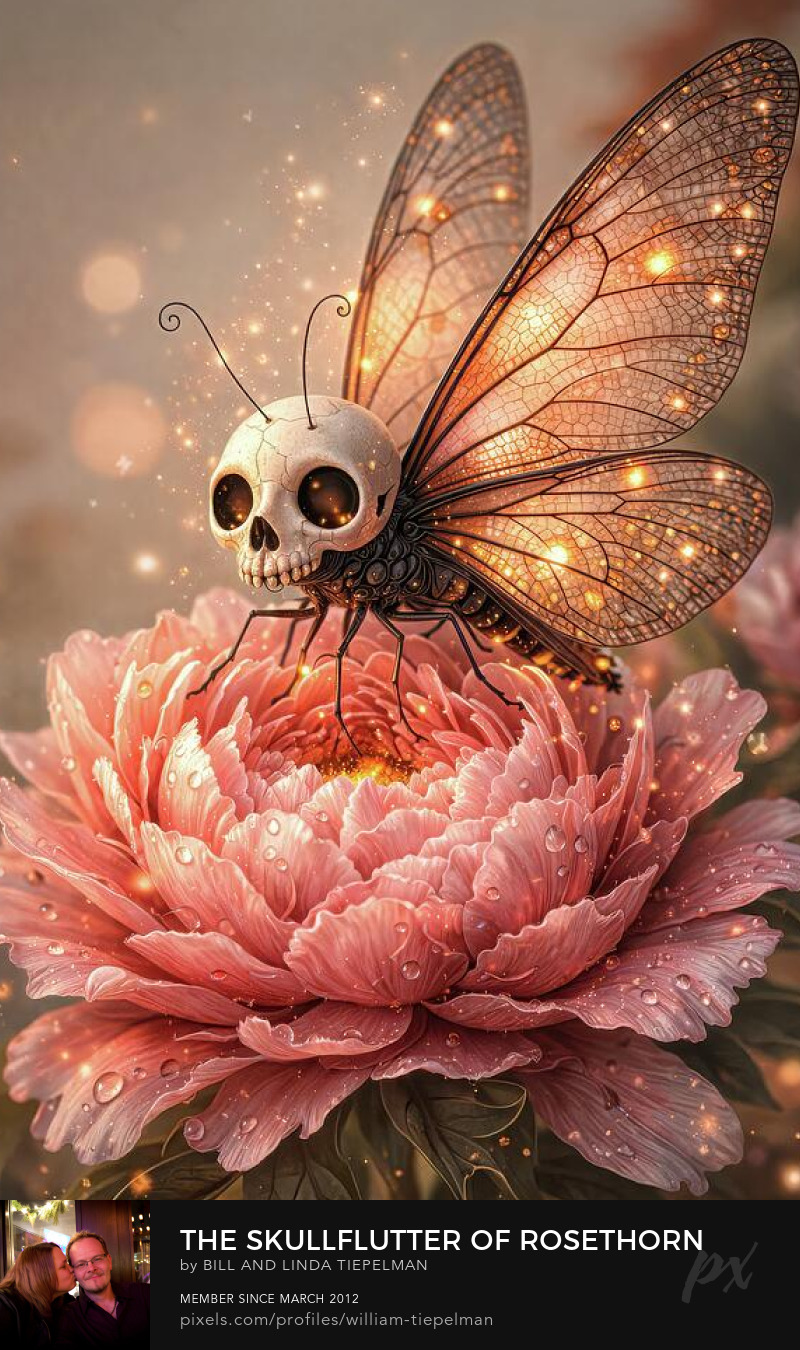
Al principio pensó que era una polilla. Una polilla muy grande, hay que admitirlo, y con un inoportuno sentido del momento. Flotaba por el aire iluminado por la plata con una gracia imposible, el polvo luminoso temblando a su paso. Luego se posó en una peonía cercana y el mundo, ya irrazonable, se volvió aún más.
Sus alas eran delicadas y translúcidas, veteadas como cristal antiguo e iluminadas desde dentro por un cálido resplandor ámbar. Pequeñas constelaciones de oro bioluminiscente brillaban a través de ellas como estrellas atrapadas en encaje. Su cuerpo era oscuro, segmentado y de huesos exquisitamente finos. Dos finas antenas rizadas se alzaban con una elegancia casi teatral.
Y donde debería haber estado su cara, había una pequeña calavera de marfil.
No grotesca. No monstruosa. En todo caso, desgarradoramente serena.
Sus cuencas oculares vacías contenían una tenue luz interior, suave y paciente como brasas. La contemplaba con una quietud tan completa que Eleanor tuvo la inquietante impresión de no ser solo vista, sino suavemente comprendida de maneras para las que no había dado permiso.
«Bueno», dijo después de un largo silencio, porque el cerebro humano a menudo manejaba la revelación sobrenatural volviéndose agresivamente mediocre, «eres inquietantemente hermosa».
La criatura ladeó la cabeza.
Eleanor se llevó una mano al esternón, como si eso pudiera evitar que su corazón se lanzara de lleno a la peonía más cercana.
«¿Eres la guardiana?»
La polilla con rostro de calavera no asintió. No habló. Simplemente extendió sus alas más, y la luz dorada que pasaba a través de ellas se hizo más profunda hasta que la flor debajo pareció iluminada desde abajo.
Luego, con exquisito cuidado, se posó en el centro de la peonía.
Sus finas patas tocaron los pétalos.
La flor se estremeció, no de dolor, sino de liberación.
Un hilo de luz surgió desde lo más profundo de la flor, delgado como el aliento en el cristal frío. Dorado al principio, luego perla, luego teñido de rosa y azul y algo parecido a un sonido hecho visible. La criatura lo aspiró con una lentitud tan reverente que Eleanor se olvidó de respirar.
Cuando la luz se liberó, el aire a su alrededor cambió.
Sintió, no su propio recuerdo, sino el final de otra persona.
Un porche al atardecer. Una mano sostenida hasta el último segundo. El olor a sopa en la estufa. Una mujer cansada sonriendo porque alguien a quien amaba finalmente había regresado a casa. No miedo. No angustia. Solo esa pequeña y preciosa dulzura que quedaba cuando todo el ruido se había quemado.
Luego desapareció.
La peonía se atenuó. Sus pétalos se relajaron. No muerta, no colapsada, simplemente completa, como una frase terminada exactamente donde debía terminar.
Los ojos de Eleanor escocieron.
La criatura se levantó de nuevo y la encaró.
No había nada depredador en ella. No había robo. No había triunfo. No había tomado algo para sí misma. Había recogido algo que de otro modo podría haber desaparecido sin dejar rastro.
Algo sagrado, pensó Eleanor, e inmediatamente se odió a sí misma por la palabra porque sonaba a tontería decorativa. Pero allí estaba de todos modos, imposible y verdadera.
«¿Eso es lo que haces?», susurró. «¿Guardas lo que queda cuando más importa?»
La guardiana abrió sus alas una vez, lentamente.
Y desde algún lugar más profundo del jardín, una flor comenzó a brillar.
No suavemente. No a lo lejos.
Se encendió con un color que Eleanor conocía antes de saber cómo lo conocía: el particular rosa cálido de las peonías favoritas de su madre a finales de junio. El resplandor tembló en la oscuridad plateada como un pulso.
Eleanor sintió que cada músculo de su cuerpo se paralizaba.
La guardiana se volvió hacia la luz, luego hacia ella, como si esperara.
Invitando.
O advirtiendo. En ese lugar, ambos parecían incómodamente cercanos.
Eleanor tragó con dificultad. Tenía la boca seca. Su dolor, que había pasado días posado en su pecho como una iglesia de piedra, de repente tenía alas.
«Esa es suya», dijo, y no fue una pregunta.
La guardiana se elevó en el aire, brillando suavemente mientras se dirigía hacia el camino más profundo.
Después de una única y temblorosa vacilación, Eleanor la siguió.
El peso de lo que queda
El camino se estrechó a medida que Eleanor seguía a la guardiana más adentro del jardín, como si el lugar mismo requiriera una especie de acuerdo silencioso antes de permitirle avanzar.
Las ramas se arqueaban más abajo sobre su cabeza. El aire se volvía aún más cálido, llevando una dulzura que ya no se sentía como una simple fragancia, sino como algo en capas: memoria, emoción, tiempo, todo impregnado como un té dejado demasiado tiempo y que, de alguna manera, lo hacía mejor.
La flor brillante que tenía delante volvió a pulsar.
Los pasos de Eleanor se ralentizaron.
El dolor había sido pesado antes —denso, asfixiante, inamovible. Pero esto era diferente. Esto era un dolor agudizado. Enfocado. Con una dirección. Ya no se posaba en su pecho como una piedra. La atraía como un hilo.
«No lo pones fácil, ¿verdad?», murmuró, sin estar del todo segura de si se refería al jardín, a la criatura o a cualquier fuerza silenciosa e indiferente que había decidido que esa noche su vida dejaría de fingir ser estable.
La guardiana flotaba adelante, imperturbable ante los comentarios, brillando lo justo para guiar pero no para consolar.
Típico, pensó Eleanor. Incluso la magia tenía límites.
Mientras avanzaba, las flores a su alrededor cambiaron.
Crecieron más. Se hicieron más densas. Sus colores se intensificaron en tonos más ricos e íntimos: rojos vino, morados atardecer, ámbares cálidos. Las tenues impresiones dentro de ellas también se hicieron más claras. No eran recuerdos completos, ni narrativas, sino fragmentos que se insinuaban suavemente en su conciencia mientras pasaba.
Una mano quitando harina de una encimera.
El eco hueco de la risa en una casa vacía.
Un beso presionado en el pelo que olía a humo y a lluvia.
Una voz diciendo quédate, y otra diciendo no puedo.
La garganta de Eleanor se apretó.
«¿Guardas todo esto?», preguntó, más suave ahora.
La guardiana no respondió, pero algo en el jardín sí.
Un suave movimiento. Un silencio que no era ausencia de sonido, sino atención.
Como si el lugar mismo hubiera escuchado su pregunta y estuviera considerando si merecía la respuesta.
La flor brillante apareció a la vista.
Estaba sola en un pequeño claro, su tallo grueso, sus pétalos anchos y en capas de ese inconfundible rosa suave que Eleanor había visto cada junio de su infancia. Era la peonía de su madre, la que siempre florecía primero, la que su madre nunca cortaba para arreglos, insistiendo en que se veía mejor donde elegía estar.
Brillaba desde dentro.
No con el brillo distante de las demás, sino con algo más brillante. Más cálido. Familiar.
Eleanor se detuvo al borde del claro.
Respiraba con dificultad.
«Eso… eso no es posible», dijo, porque los humanos se aferraban a la palabra imposible como si tuviera autoridad legal.
La guardiana se posó ligeramente sobre la flor.
Los pétalos temblaron bajo su peso, no por debilidad, sino por reconocimiento.
Eleanor dio un paso adelante. Luego otro.
«¿Qué pasa ahora?», preguntó, con la voz quebrada de una manera que más tarde fingiría que no había sucedido.
La criatura giró su calavera hacia ella.
Y por primera vez, algo cambió.
El tenue resplandor en sus ojos huecos se intensificó, no más brillante, sino más lleno, como si algo detrás de ellos se hubiera acercado.
No habló.
Pero Eleanor entendió.
Claro que sí.
Este no era un lugar de instrucciones. Era un lugar de decisiones.
Exhaló lentamente.
“Está bien”, dijo, asintiendo una vez, como si aceptara términos que no comprendía del todo. “Está bien.”
El guardián se inclinó hacia el centro de la peonía.
El pecho de Eleanor se contrajo.
“Espera.”
La criatura hizo una pausa.
Dios, pensó, estoy negociando con una polilla calavera en un jardín fantasma. Esta es oficialmente mi vida ahora.
Tragó saliva con dificultad.
“Si tú… te lo llevas… ¿qué le sucede?”
La pregunta quedó en el aire, frágil y demasiado importante.
El jardín respondió, no con palabras, sino con sensaciones.
Un recuerdo —no suyo— se introdujo suavemente en su conciencia.
Un hombre de pie junto a una cama, exhausto y aliviado a la vez.
Una mujer que se desvanecía, no con miedo, sino con un suave suspiro.
Un momento final conservado con cuidado, no perdido.
Luego, algo más.
Esa misma calidez se mantuvo, no borrada, no disminuida, entrelazada en algo más grande, algo más allá del momento mismo.
Preservada.
No para regresar.
Pero no desaparecida.
Los ojos de Eleanor se llenaron de lágrimas.
“Así que no desaparece”, susurró.
El guardián no se movió.
Soltó un aliento que no se dio cuenta de que había estado conteniendo durante días.
“¿Y si no te lo llevas?”
El jardín volvió a cambiar.
Esta vez la sensación fue diferente.
Un desvanecimiento.
Un adelgazamiento.
No violento. No cruel.
Simplemente… se fue. Como el calor que abandona una taza de té. Como un aroma que se disipa en el aire.
No borrado. Solo suelto.
Eleanor cerró los ojos.
“Claro”, murmuró. “Claro que ese es el trato.”
Porque nada tan honesto sería gratis.
Se acercó a la peonía.
El resplandor se intensificó, reaccionando a su proximidad, y de repente—
La sintió.
No un recuerdo.
No del todo.
Algo más cercano.
La presencia de su madre rozó contra ella como un aroma familiar en una habitación que creía vacía.
Cálida.
Intensa.
Completamente indiferente a los dramatismos.
“Siempre tuviste un pésimo sentido de la oportunidad”, susurró Eleanor, escapándosele una risa ahogada a pesar de sí misma.
Los pétalos temblaron.
Y entonces llegó el recuerdo.
No un fragmento esta vez.
Un momento completo.
Su madre en el jardín, arrodillada en la tierra, con las manos hundidas en el suelo, regañando a una planta como si la hubiera ofendido personalmente. El sol atrapado en su cabello. Sudor en su frente. Esa misma energía obstinada y viva que siempre había llenado la casa, la apreciara Eleanor o no.
“Si no echas raíces adecuadas”, había dicho su madre, sin levantar la vista, “pasarás toda tu vida preguntándote por qué todo se siente temporal.”
Eleanor soltó un aliento ahogado.
“Sí”, dijo en voz baja. “Lo recuerdo.”
El recuerdo cambió.
Su madre en el mostrador de la cocina, revolviendo algo que olía a ajo y consuelo, poniendo los ojos en blanco ante algo que Eleanor había dicho con esa mezcla característica de afecto y exasperación.
“Crees que puedes superar de dónde vienes”, había dicho. “No puedes. Solo puedes decidir qué llevas contigo.”
Eleanor apretó los labios.
“Lo sé”, susurró. “Solo que… no pensé que tendría que llevarlo sola.”
El resplandor palpitó.
El momento se suavizó.
Y entonces—
El último.
La cocina esa mañana.
La tetera aún caliente.
La silla ligeramente fuera de lugar.
El silencio que había seguido.
Pero esta vez, fue diferente.
No había pánico en ello.
No había una lucha frenética por arreglar algo ya terminado.
Solo una quietud silenciosa y completa.
Y debajo de ella—
Algo que Eleanor no se había permitido sentir.
Paz.
No del tipo dramático. No del tipo que se anunciaba.
Del tipo tranquilo.
Del tipo que no pedía permiso.
Las lágrimas rodaron libremente por el rostro de Eleanor.
“Estuviste bien”, respiró.
Los pétalos temblaron.
Y en ese momento, Eleanor comprendió el peso de la elección que tenía ante sí.
Si el guardián se llevaba esto, si recogía esa dulzura final, este momento, esta claridad, esta quietud, se preservarían.
Guardadas.
Llevadas hacia lo que viniera después.
Pero ella no lo tendría.
No así.
No esta cercanía inmediata, vívida e insoportable.
Se convertiría en otra cosa.
Más suave.
Distante.
Aún suyo, pero no así.
Si lo detenía, si lo conservaba, podría aferrarse a este momento. A esta sensación exacta. A esta conexión que parecía una laguna en el universo.
Pero se desvanecería.
Finalmente.
Inevitablemente.
Y cuando lo hiciera, desaparecería por completo.
Eleanor rió débilmente entre lágrimas.
“Así que mis opciones son… soltarlo ahora o perderlo después.”
El guardián esperó.
Paciente como la gravedad.
Eleanor se secó la cara con el talón de la mano.
“Eso es… agresivamente injusto”, murmuró.
Miró la flor de nuevo.
Al suave resplandor rosa que había dado forma a su infancia, sus frustraciones, su amor, su complicada, hermosa y exasperante relación con la mujer que la había criado.
“Nunca hiciste nada fácil”, susurró.
Por un momento, nada sucedió.
Entonces, apenas, lo sintió de nuevo.
Esa presencia.
No empujando.
No tirando.
Simplemente… ahí.
Como siempre lo había estado.
Firme.
Inquebrantable.
Confiando en que ella lo resolvería.
Eleanor soltó un largo suspiro.
Sus hombros se relajaron.
La lucha en su pecho —la necesidad desesperada y desgarradora de retener, de aferrarse, de rechazar la forma de la pérdida— comenzó a ceder.
No a desaparecer.
Sino a suavizarse.
“De acuerdo”, dijo en voz baja.
Dio un paso hacia atrás.
Lo suficiente.
“Haz lo que tengas que hacer.”
El guardián se movió.
Lo que el Jardín Guarda
El guardián no se apresuró.
Nunca lo había hecho.
Se posó en el centro de la peonía con la misma reverencia silenciosa que Eleanor había visto antes, pero ahora, ahora entendía lo que estaba presenciando. No una toma. No un robo. Un cuidado.
Una culminación.
Los pétalos de la flor temblaron, su suave resplandor rosado se intensificó hasta sentirse casi vivo con aliento. La luz se concentró en el corazón de la flor, temblante como si, también, comprendiera lo que venía a continuación.
Eleanor juntó las manos, apretándolas lo suficiente como para sentir el hueso y el pulso, anclándose en algo sólido mientras todo lo demás se movía hacia lo intangible.
“Está bien”, susurró de nuevo, aunque no estaba del todo segura si era tranquilización o rendición.
El guardián aterrizó.
Y el momento se abrió.
Un hilo de luz se elevó desde el centro de la peonía, más brillante que los otros que había visto, más rico, con capas de colores que parecían menos tonos y más experiencias vividas. Oro, sí, pero también el azul pálido de las cocinas matutinas, el suave ámbar de la luz de una lámpara en noches tranquilas, el verde intenso de las hierbas frescas aplastadas entre los dedos, el cálido rosa de risas que nunca necesitaron ser educadas.
Eleanor inhaló bruscamente mientras se elevaba.
El recuerdo surgió, no fragmentos ahora, sino plenitud.
La voz de su madre, firme y seca, cortando la tontería con precisión quirúrgica.
Sus manos, siempre en movimiento, siempre haciendo, nunca contentas de dejar un momento inactivo.
La forma en que amaba —no ruidosa, no extravagante— sino de maneras que se arraigaban profundamente y se negaban a ser sacudidas.
“Si te lo cuento todo”, la voz de su madre hizo eco, tenue y familiar, “dejarás de prestar atención.”
Eleanor soltó una risa pequeña y rota.
“Sí”, dijo suavemente. “Ahora estoy prestando atención.”
La luz subió más alto.
El guardián la absorbió, lenta y cuidadosamente, como si fuera consciente de que algo tan particular, tan específico, requería más que una simple recolección.
Eleanor se preparó para la pérdida.
Para el vacío repentino.
Para la caída aguda y hueca que había sentido en el momento en que se dio cuenta de que su madre se había ido.
Pero eso no fue lo que vino.
En cambio—
El momento cambió.
No desapareció.
Se desplegó.
Los bordes afilados se suavizaron. La inmediatez disminuyó. La cercanía insoportable —esa sensación de que casi podía estirar la mano y tocar a su madre de nuevo— se transformó en algo más suave.
Algo más constante.
La presencia no se desvaneció.
Se asentó.
No delante de ella.
No fuera de ella.
Dentro.
Eleanor parpadeó, sorprendida por la ausencia de pánico.
Por la ausencia de ese instinto desesperado de aferrarse que había definido su dolor desde el jueves por la mañana a las 6:12.
Se llevó una mano al pecho de nuevo.
Su corazón seguía allí.
Aún dolido.
Aún suyo.
Pero ya no sentía que le hubieran arrancado algo.
Se sentía… cambiado.
Reorganizado.
Como una habitación donde los muebles se habían movido a una mejor disposición sin pedir permiso antes.
El guardián se elevó de la flor.
La peonía se atenuó, pero no se derrumbó. No se marchitó ni se pudrió. Simplemente… terminó. Sus pétalos se relajaron, su resplandor se desvaneció en un color suave y tranquilo que ya no exigía atención.
Completa.
Eleanor exhaló lentamente.
“¿Eso es todo?”, preguntó, su voz ahora más suave, más firme. “¿Eso es lo que pasa?”
El guardián flotaba ante ella.
Sus alas palpitaron una vez, enviando una tenue deriva de luz dorada al aire entre ellos.
Y Eleanor entendió.
Claro que sí.
El jardín no borraba.
No quitaba cosas.
Cambiaba la forma en que se sostenían.
Lo insoportable se volvió soportable.
Lo inmediato se volvió duradero.
La frágil dulzura que podría haber desaparecido en la nada, en cambio, se convirtió en algo que podía ser llevado.
No aferrado.
No atesorado.
Llevado.
Eleanor se secó la cara, aunque nuevas lágrimas ya habían reemplazado las viejas.
“No te lo llevas”, dijo lentamente. “Tú… te aseguras de que no se pierda.”
El guardián inclinó ligeramente su calavera, la tenue luz en sus ojos huecos cálida, casi divertida.
Lo suficientemente cerca.
Eleanor soltó un silencioso suspiro de algo que no era exactamente alivio, pero tampoco desesperación.
Algo intermedio.
Algo real.
Miró de nuevo la peonía.
“A ella le habría gustado esto”, dijo. “No lo de la… calavera. Habría tenido opiniones al respecto. Pero esto.”
Señaló vagamente el jardín, las flores, el equilibrio tranquilo e imposible de la vida y el final y todo lo demás.
“Esto tiene sentido.”
El guardián se elevó ligeramente, como si reconociera el pensamiento sin necesidad de comentarlo.
Eleanor permaneció allí un momento más, dejando que el espacio se asentara a su alrededor, dejando que la ausencia de urgencia se hundiera.
Por primera vez desde el jueves por la mañana, no sentía que estuviera persiguiendo algo que ya la había superado.
No estaba tratando de arreglar el final.
No estaba tratando de rebobinar el momento.
Simplemente… estaba allí.
Y de alguna manera, eso era suficiente.
Finalmente, se volvió hacia el camino.
“Supongo que debería irme”, dijo, mirando por encima del hombro al guardián. “Tengo… una casa de la que ocuparme. Un jardín que probablemente voy a arruinar. Facturas. Vida. Todas esas cosas glamorosas.”
El guardián la observó.
Sin juzgar.
Sin urgencia.
Solo una presencia silenciosa.
Eleanor hizo una pausa.
“¿La gente vuelve aquí?”, preguntó.
La criatura no respondió directamente.
Pero en algún lugar más profundo del jardín, otra flor se encendió.
No la suya.
La de otra persona.
Otro momento.
Otro final, recién comenzando a ser recogido.
Eleanor asintió lentamente.
“Cierto”, dijo. “Claro que sí.”
Dudó una última vez, luego esbozó una pequeña sonrisa, casi avergonzada.
“Gracias”, añadió. “Por… lo que sea que esto signifique.”
El guardián abrió sus alas.
Luz dorada se derramó hacia afuera en un suave y fugaz destello.
No una despedida.
Tampoco del todo una bienvenida.
Algo intermedio.
Algo que no necesitaba un nombre para importar.
Eleanor se giró y caminó de regreso por el sendero.
El jardín cambió sutilmente a medida que ella se alejaba, el resplandor se suavizó, los colores se mezclaron de nuevo en ese estado casi onírico donde todo existía justo al borde de convertirse.
Cuando llegó a la verja de hierro, estaba abierta, esperando.
Ella pasó a través.
El aire cambió de nuevo.
Más fresco. Más cortante. Familiar de una manera que ahora se sentía ligeramente incompleta.
Se volvió.
El seto permanecía sólido y sin nada destacable.
Sin verja.
Sin camino.
Sin un jardín imposible que mantuviera el mundo unido en formas por las que nadie le daría las gracias apropiadamente.
Solo ramas. Espinas. Cosas ordinarias pretendiendo ser suficientes.
Eleanor se quedó allí un largo momento.
Luego sonrió, pequeña, cansada, pero real.
“Imaginaba”, murmuró.
Caminó de regreso hacia la casa.
El porche seguía crujiendo.
El paño de cocina seguía medio doblado.
El silencio seguía allí, pero ya no sentía que se hubiera tragado todo.
Se sentía como espacio.
Espacio para que algo existiera de manera diferente.
Eleanor se detuvo en la puerta de la cocina, mirando la escena familiar, imperfecta y completamente inalterada.
Luego se arremangó.
“Bien”, dijo a nadie y a todo. “No arruinemos el jardín por completo.”
Afuera, en algún lugar más allá de la vista, en un lugar que no estaba en ningún mapa y nunca lo estaría, una pequeña criatura luminosa flotaba de flor en flor.
Recogiendo lo que importaba.
Guardando lo que podía perderse.
Y asegurándose de que incluso en los finales —especialmente en los finales—
algo dulce permanecía.
El Aleteo del Cráneo de la Peonía Rosada perdura bellamente más allá de la historia misma, permitiéndote llevar su suavidad inquietante a tu espacio de maneras que se sienten elegantes y un poco deliciosamente extrañas. Ya sea que desees el detalle luminoso de una impresión en lienzo, el rico resplandor de una impresión acrílica, la acogedora y oscura comodidad de una manta polar, la audaz e inesperada declaración de una cortina de ducha, o el encanto tranquilo de una tarjeta de felicitación, esta obra de arte lleva la misma ternura misteriosa que hizo que la historia floreciera en primer lugar. Es el tipo de pieza que parece pertenecer a cualquier lugar donde la belleza y un toque de lo insólito son bienvenidos: suave, luminosa y lo suficientemente extraña como para hacer que la gente la mire un poco más.
 The Emerald Stair of the Sleeping Fern
 The Honey-Lipped Budnewt Who Couldn’t Swallow the Evidence
 The Amethyst Moth Shrine of Palebranch